Your browser is out-of-date!
For a richer surfing experience on our website, please update your browser. Update my browser now!
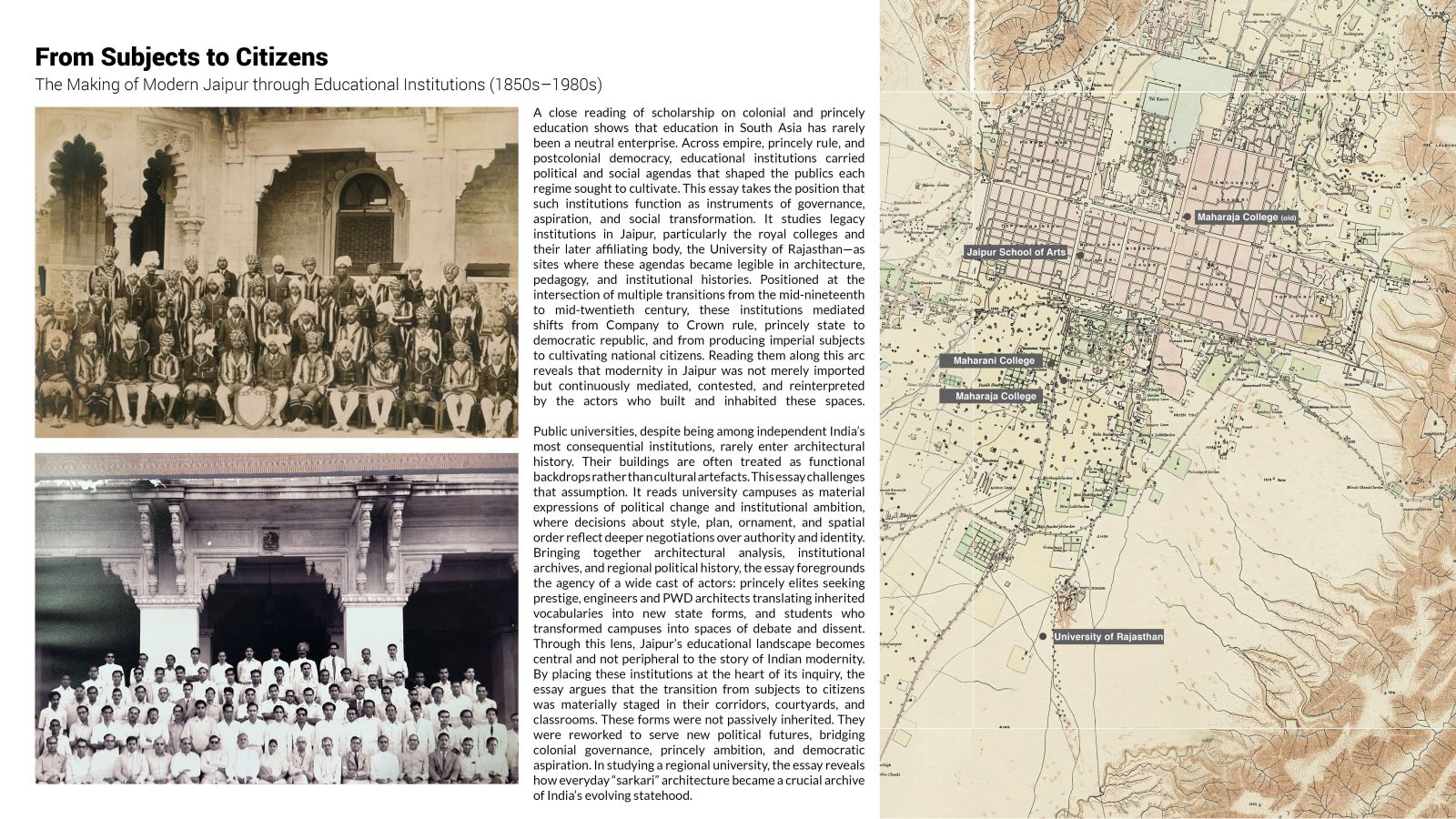
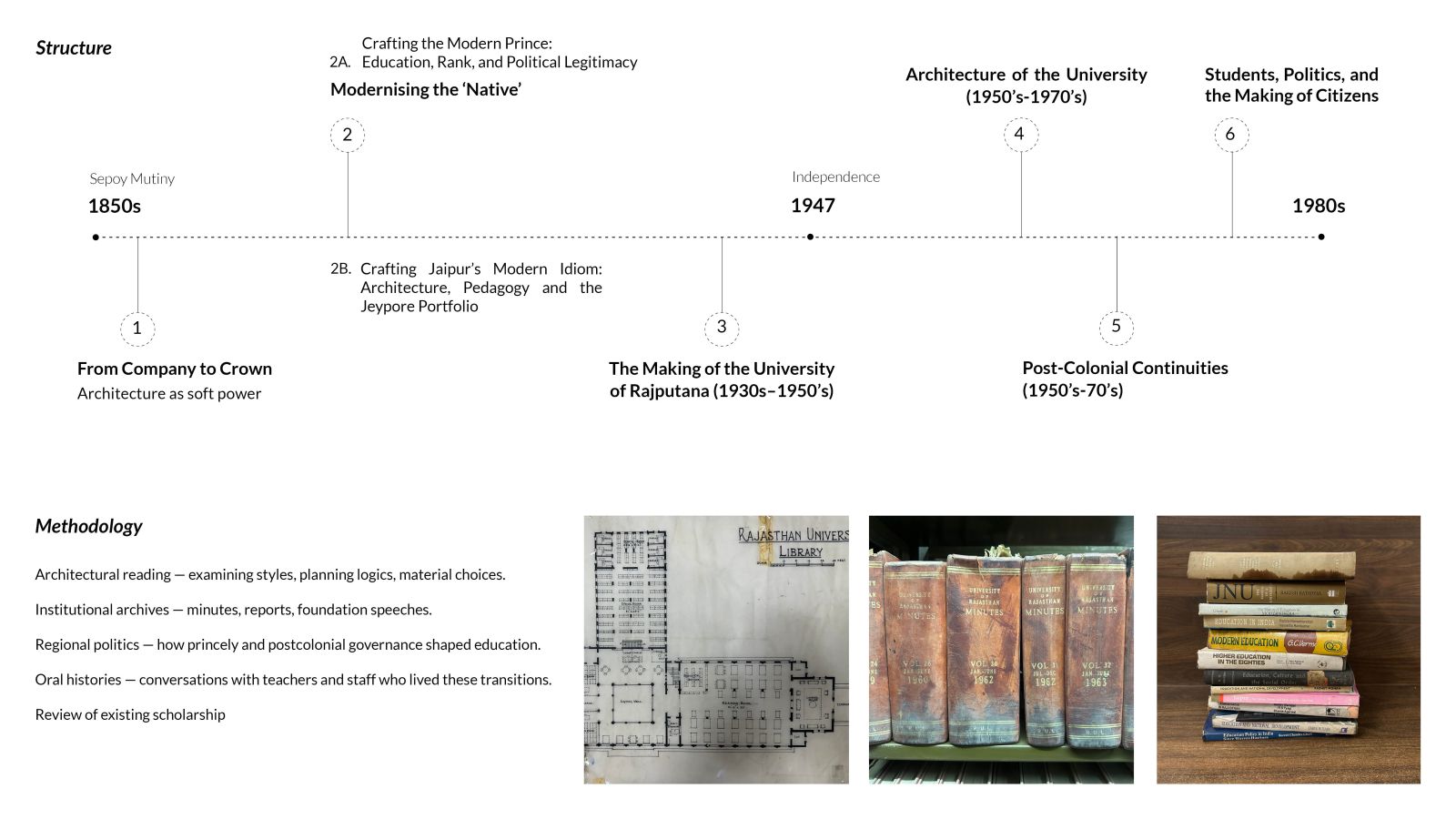
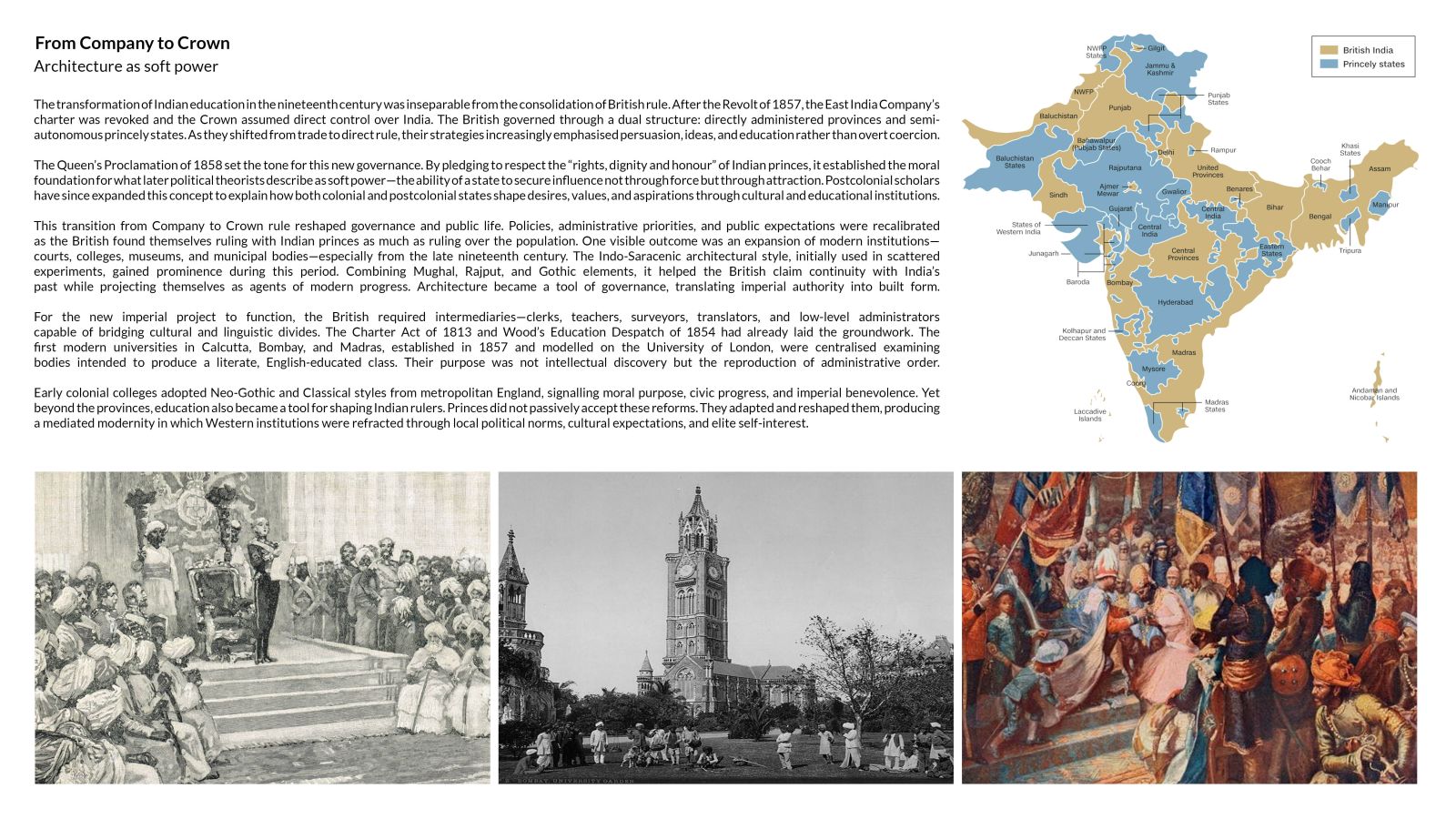
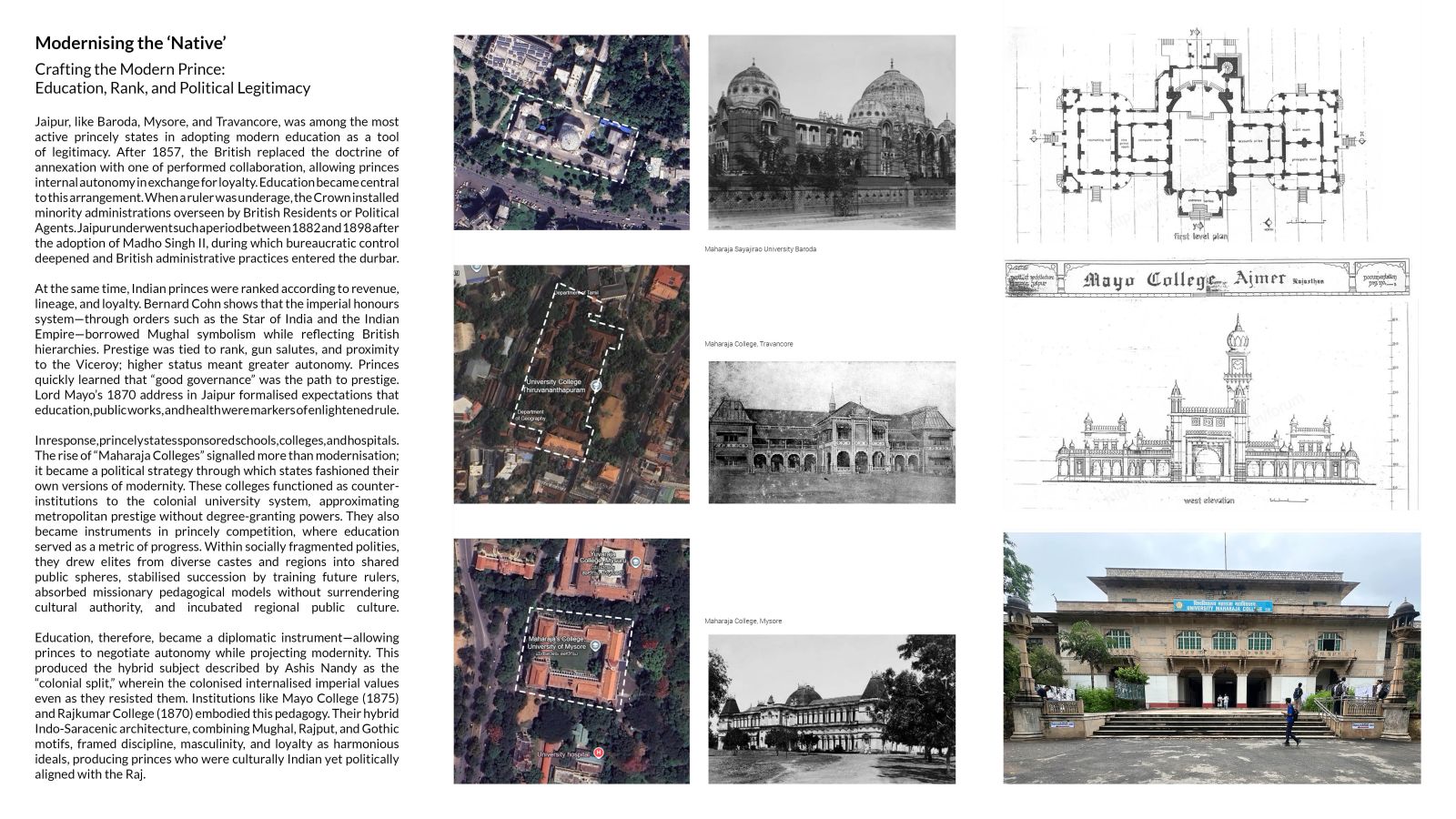
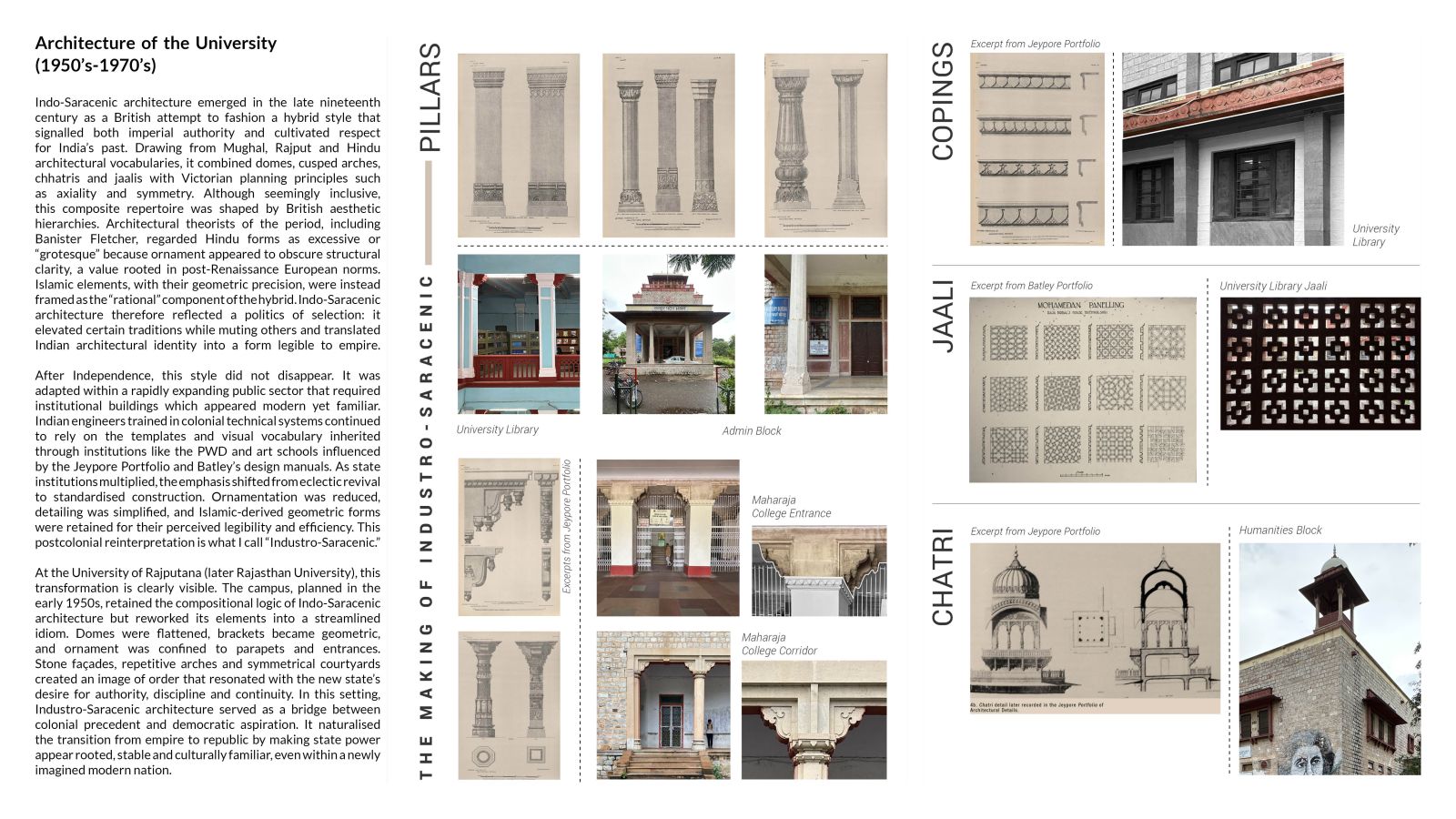
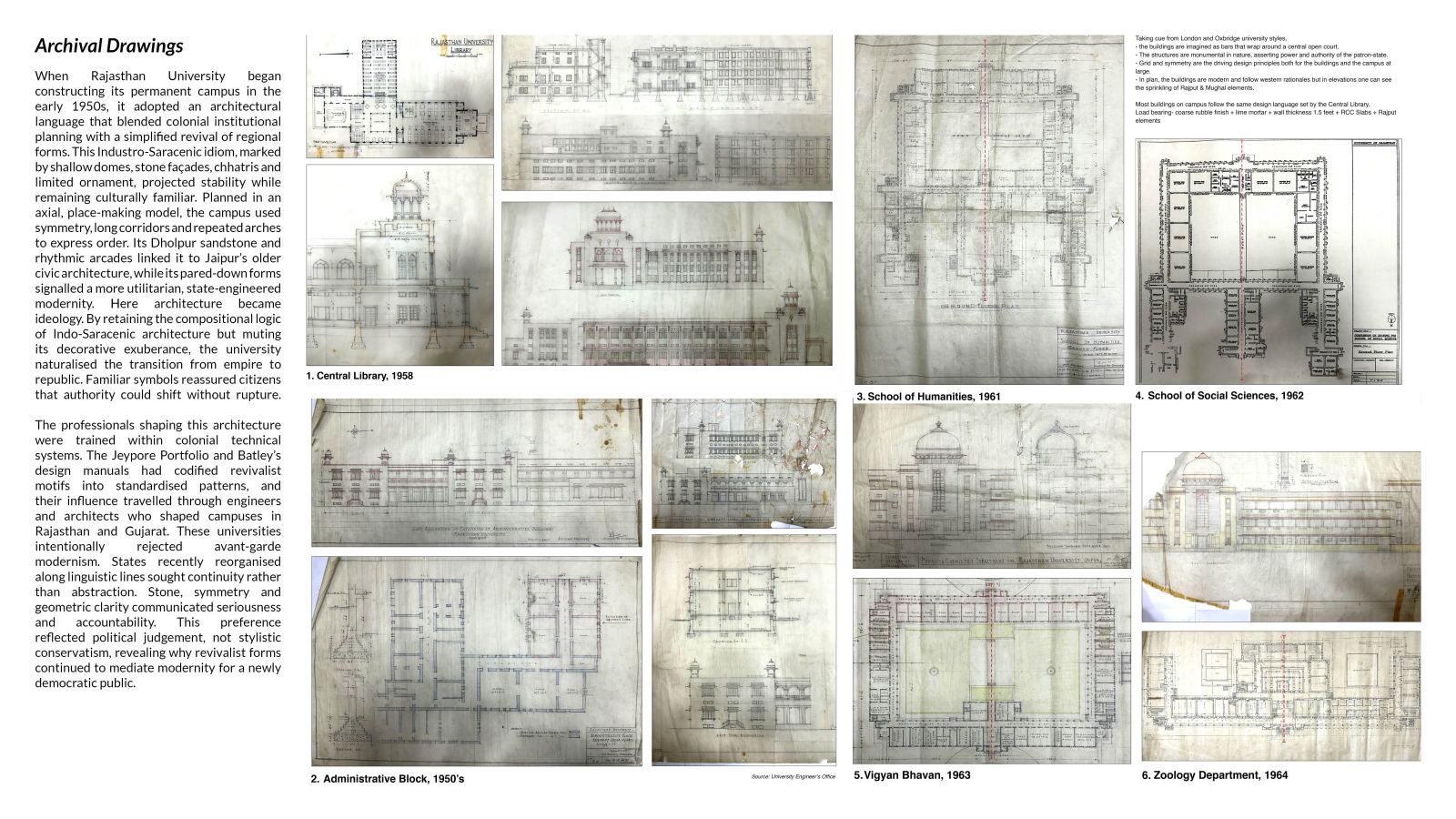
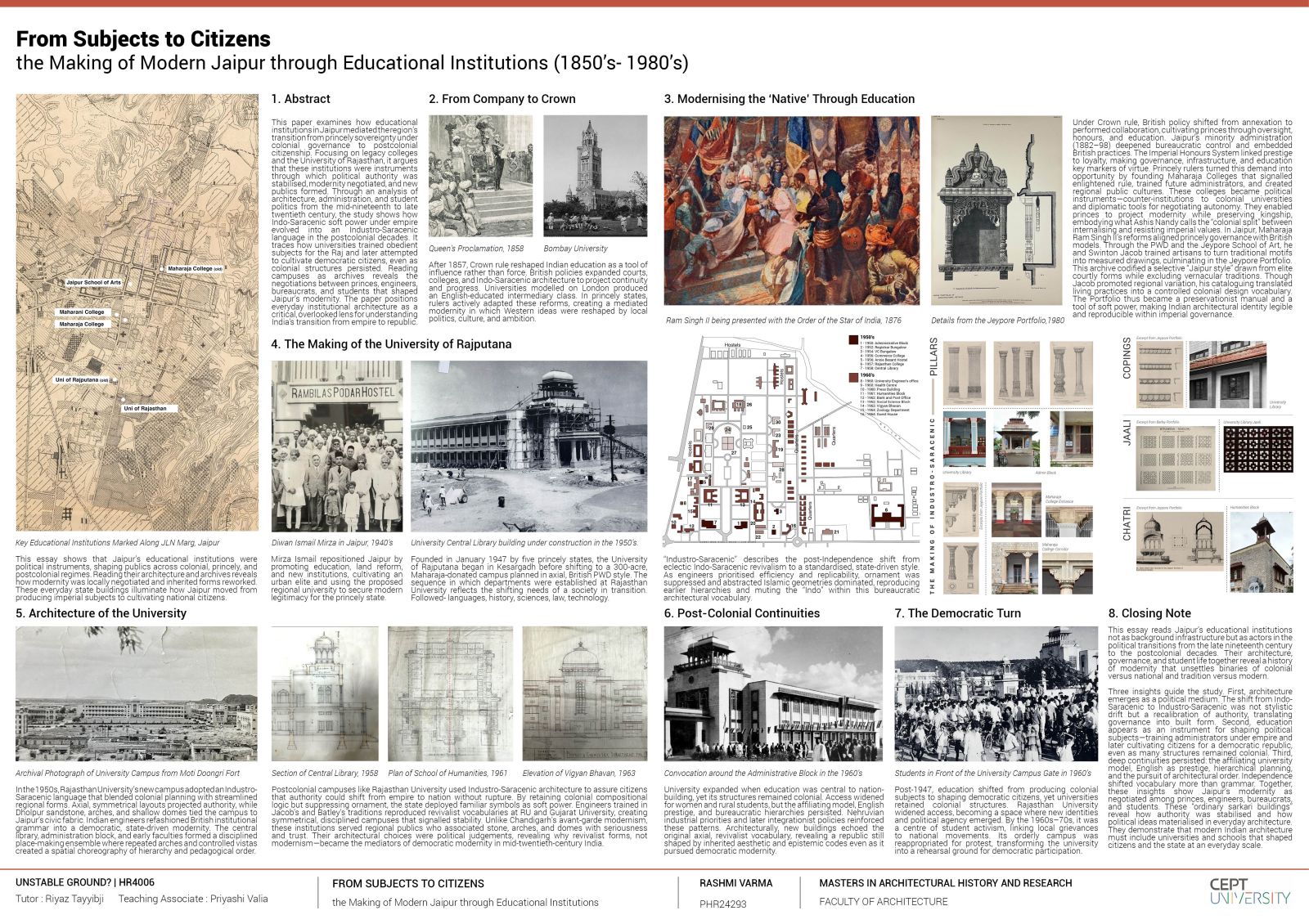
This paper examines how educational institutions in Jaipur mediated the region’s transition from princely sovereignty under colonial governance to postcolonial citizenship. Focusing on legacy colleges and the University of Rajasthan, it argues that these institutions were instruments through which political authority was stabilised, modernity negotiated, and new publics formed. Through an analysis of architecture, administration, and student politics from the mid-nineteenth to late twentieth century, the study shows how Indo-Saracenic soft power under empire evolved into an Industro-Saracenic language in the postcolonial decades. It traces how universities trained obedient subjects for the Raj and later attempted to cultivate democratic citizens, even as colonial structures persisted. Reading campuses as archives reveals the negotiations between princes, engineers, bureaucrats, and students that shaped Jaipur’s modernity. The paper positions everyday institutional architecture as a critical, overlooked lens for understanding India’s transition from empire to republic.
View Additional Work