Your browser is out-of-date!
For a richer surfing experience on our website, please update your browser. Update my browser now!
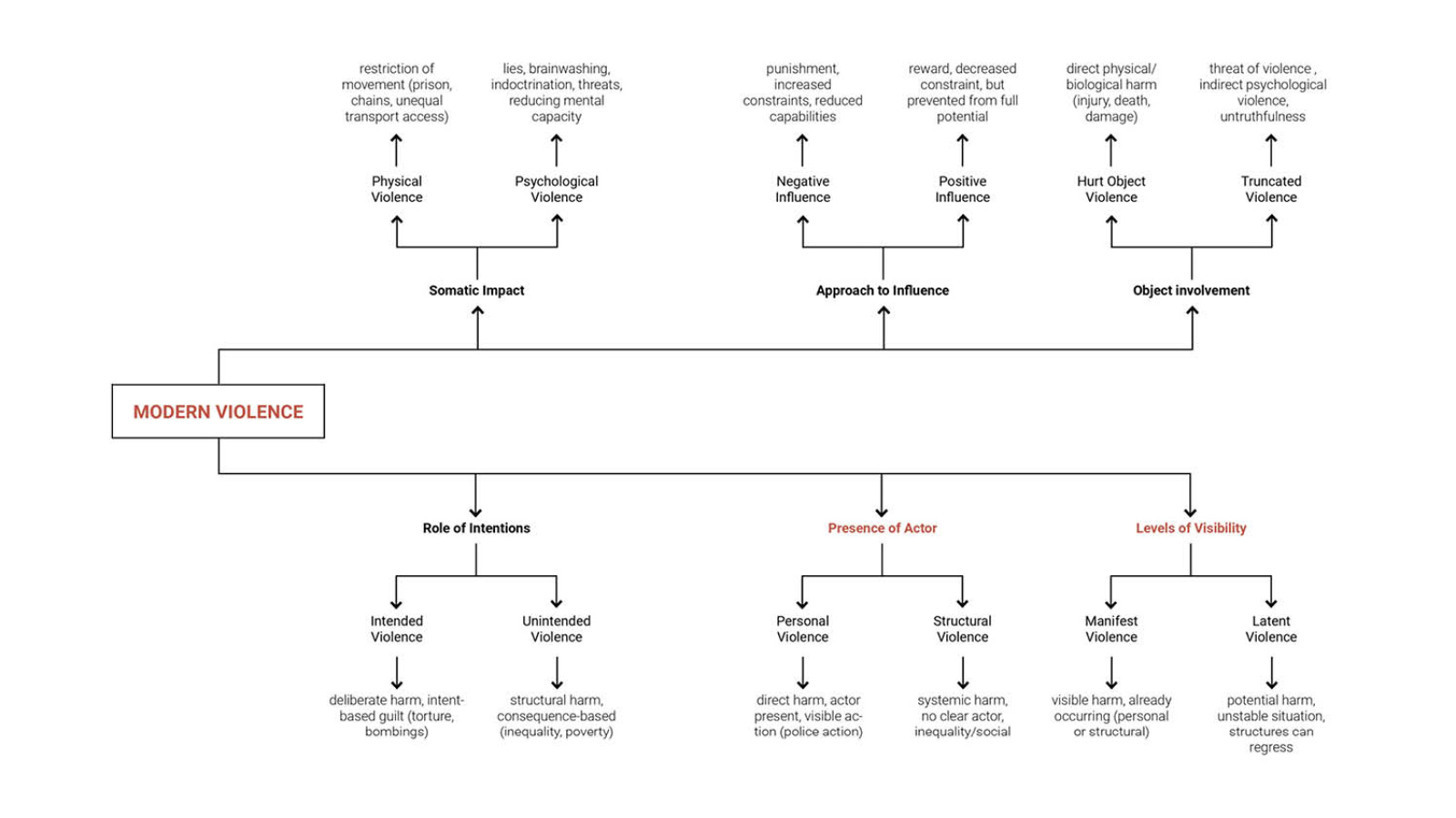
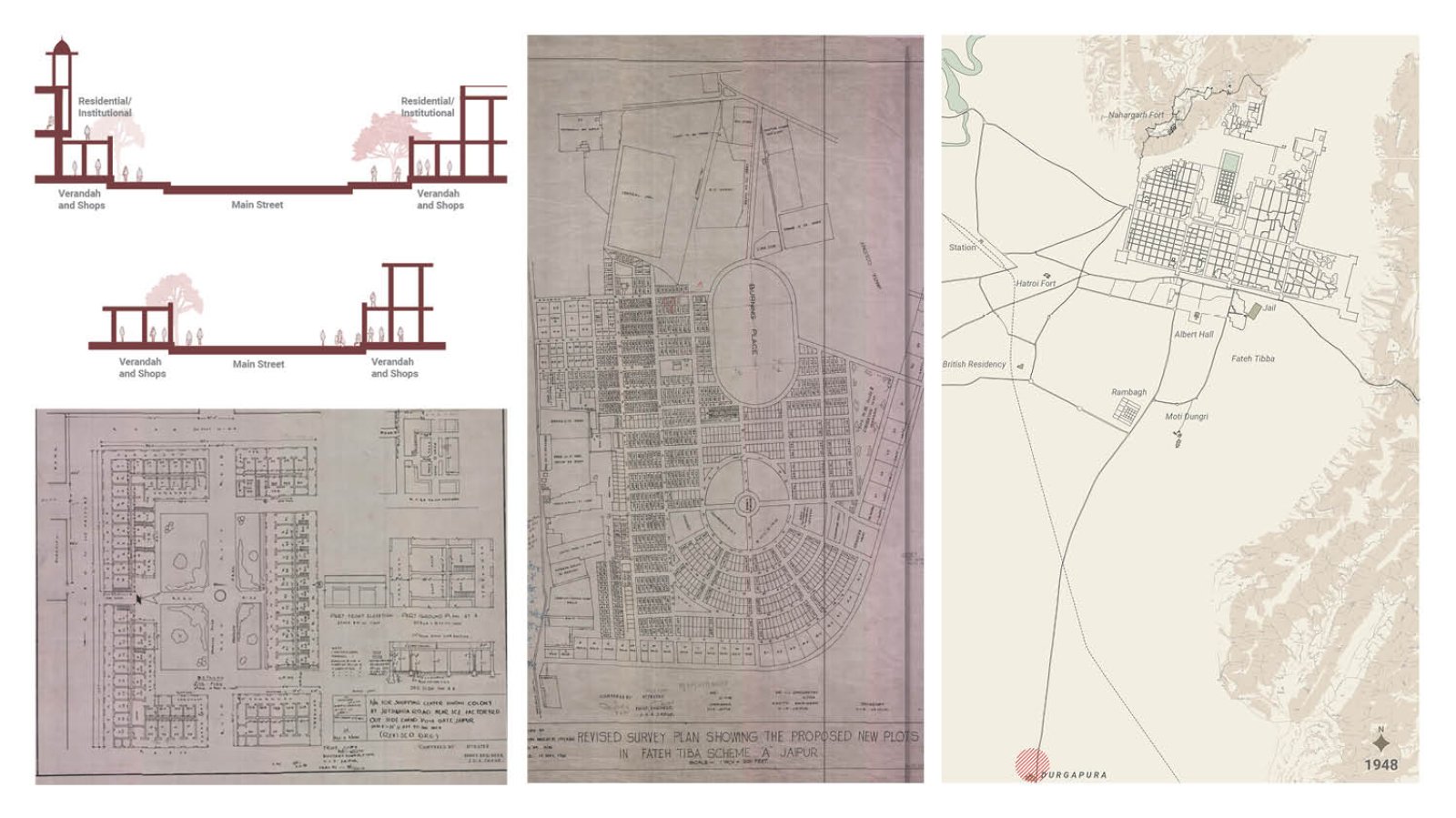
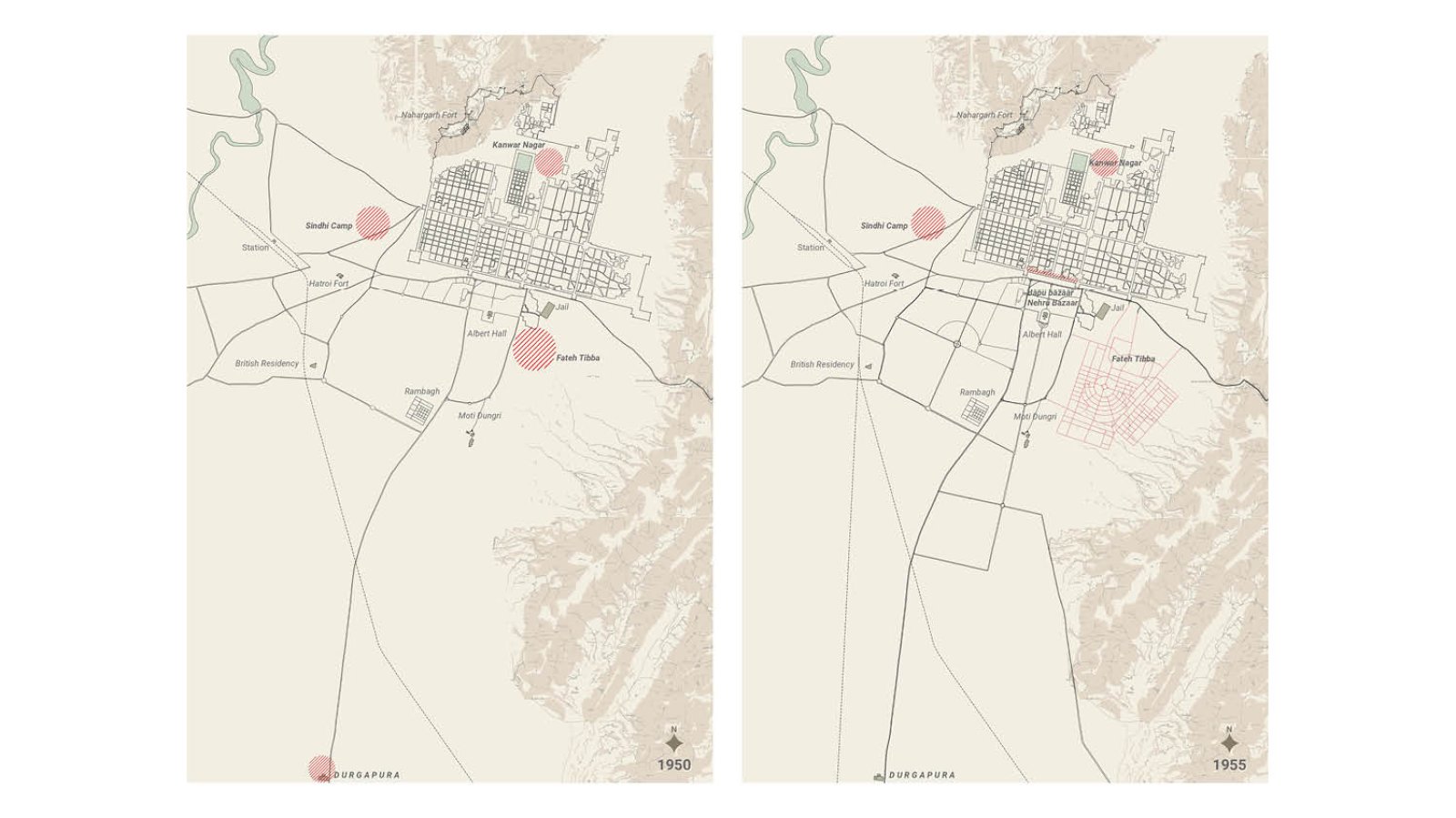
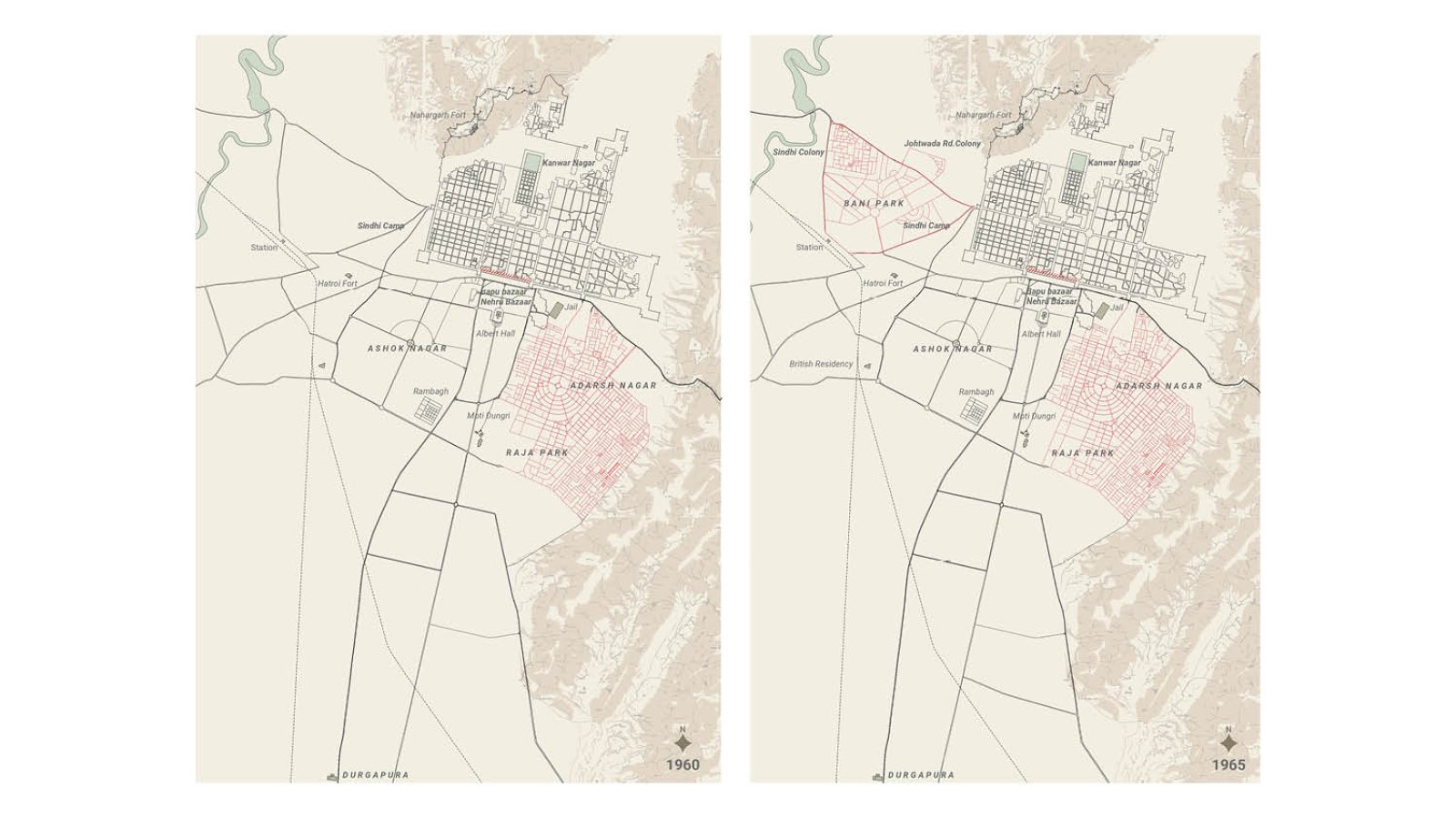
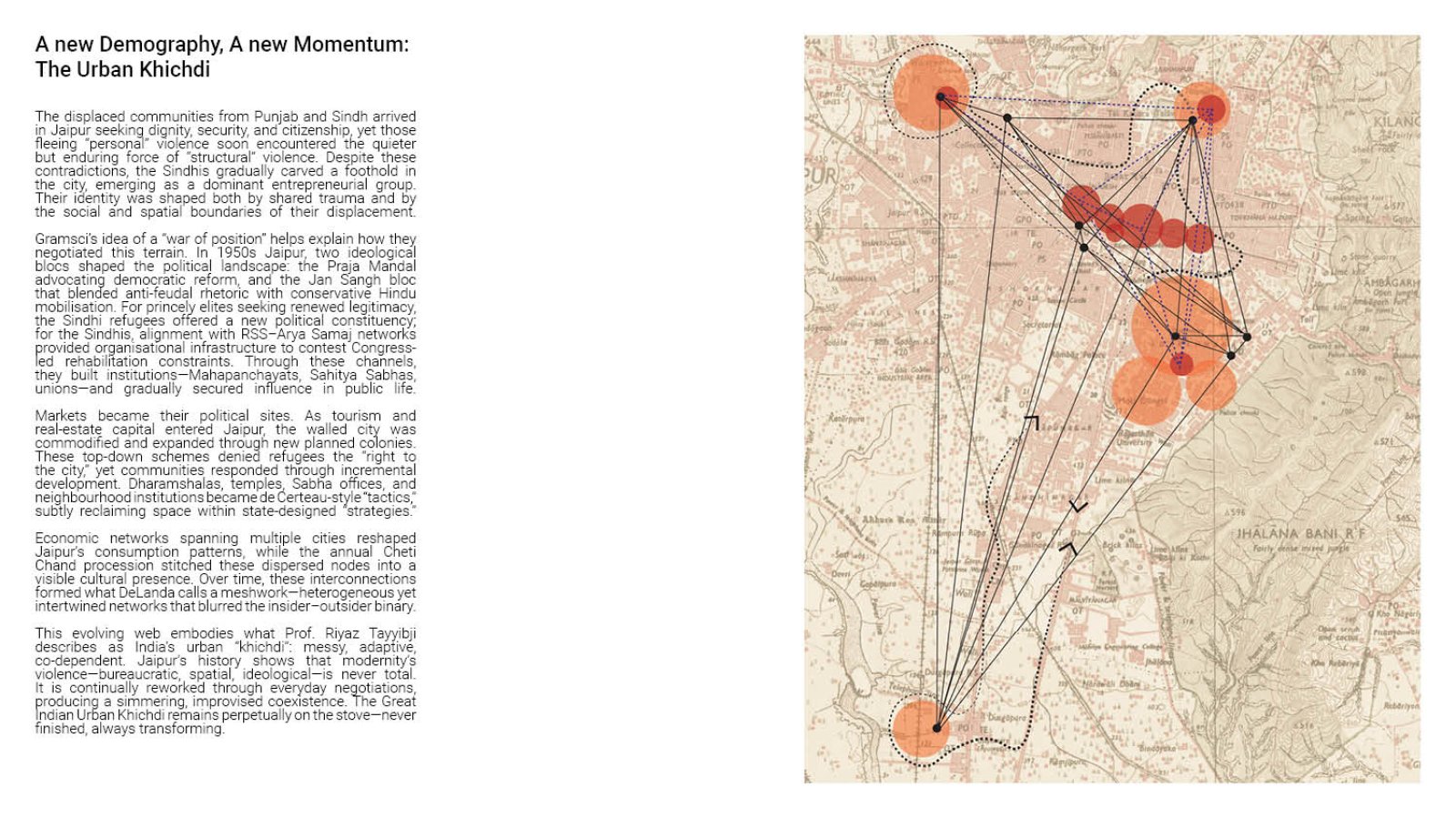
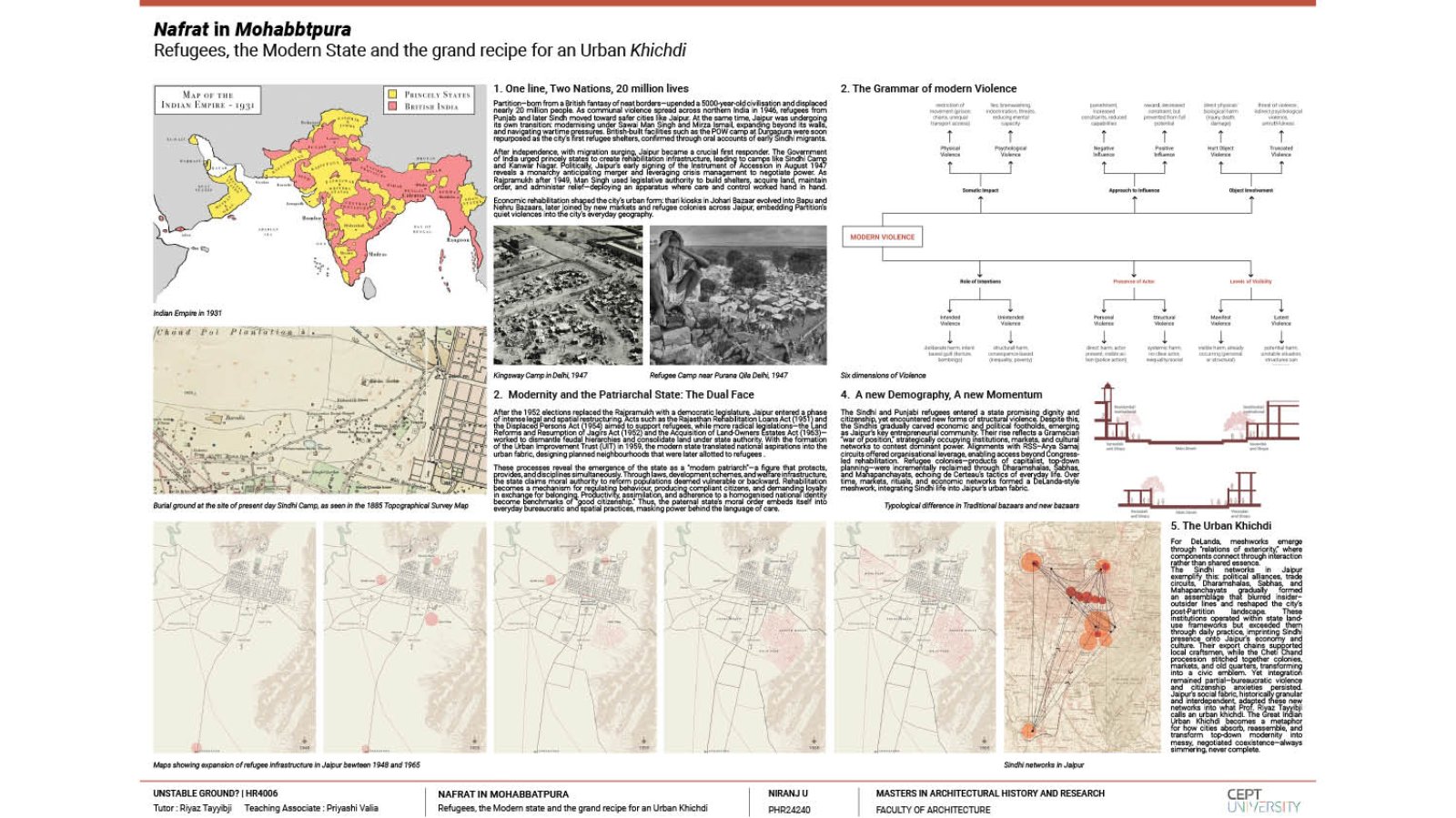
What is violence in the age of modernity, when the state appears as a dual-faced patriarch—offering welfare with one hand while enacting structural harm with the other? This essay traces Jaipur’s post-Partition transformation through the experiences of Sindhi refugees, revealing how planning, care, and capitalist intent reshaped social and spatial hierarchies. Drawing on slow violence, Gramscian hegemony, pastoral power, and the right to the city, it shows how welfare, surveillance, and exclusion operate as a single apparatus. Yet Sindhi everyday networks tactically negotiated belonging, producing a meshwork—an urban khichdi—where coexistence and coercion simmer together as inseparable conditions of modernity.