Your browser is out-of-date!
For a richer surfing experience on our website, please update your browser. Update my browser now!
There is a street in Jaipur that shouldn’t exist. Not in the cosmic order that Vidhyadhar Chakraborty laid out in 1730, anyway. It was the place where waste went, where buffalo carts hauled night soil through the southern gates, where gas works belched smoke away from the palace, where the city’s underbelly did its unglamorous work.
Its name was Ganda Naala ka Rasta. The Waste Channel Road.
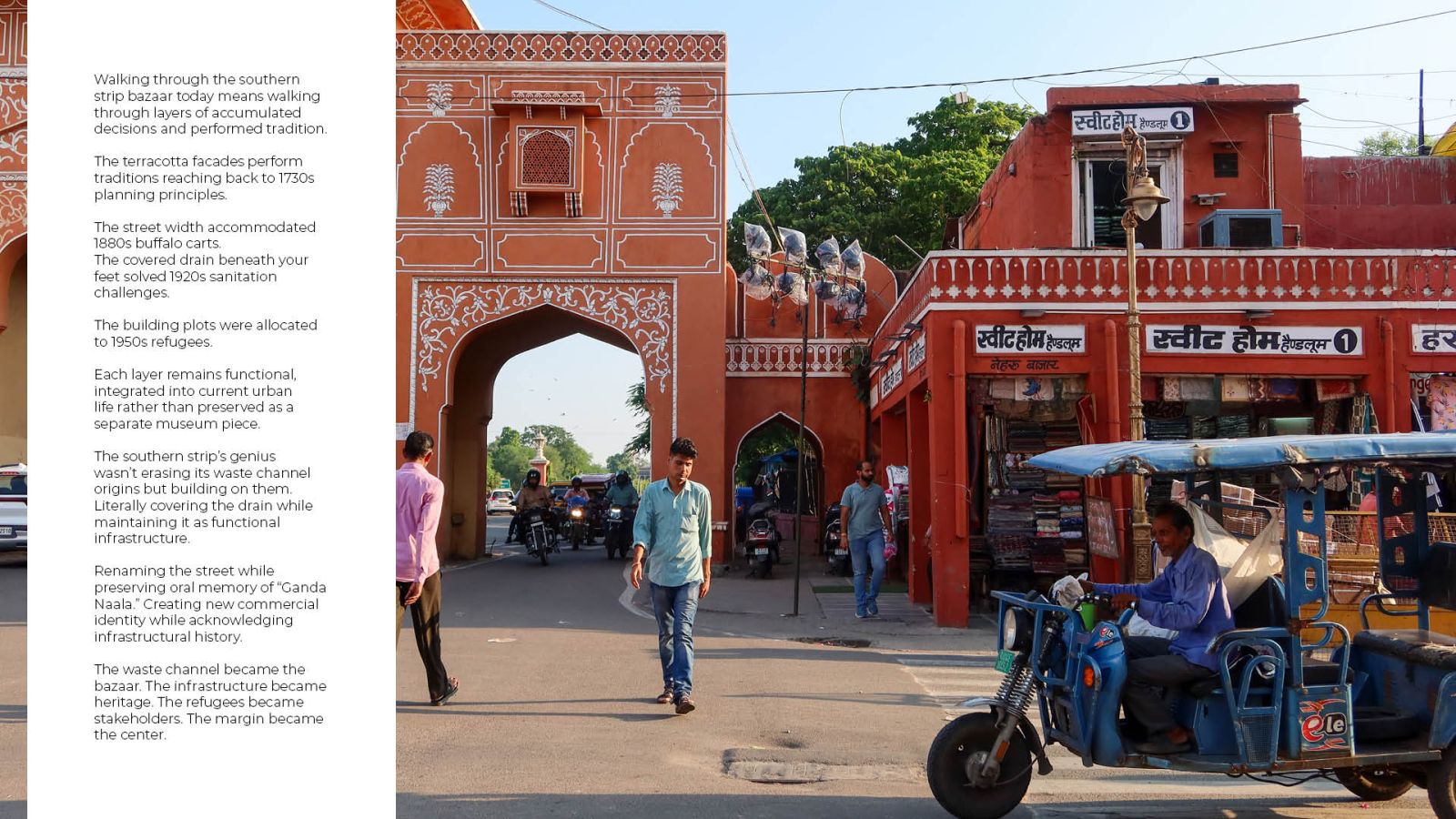
Today, we call it Bapu Bazaar.
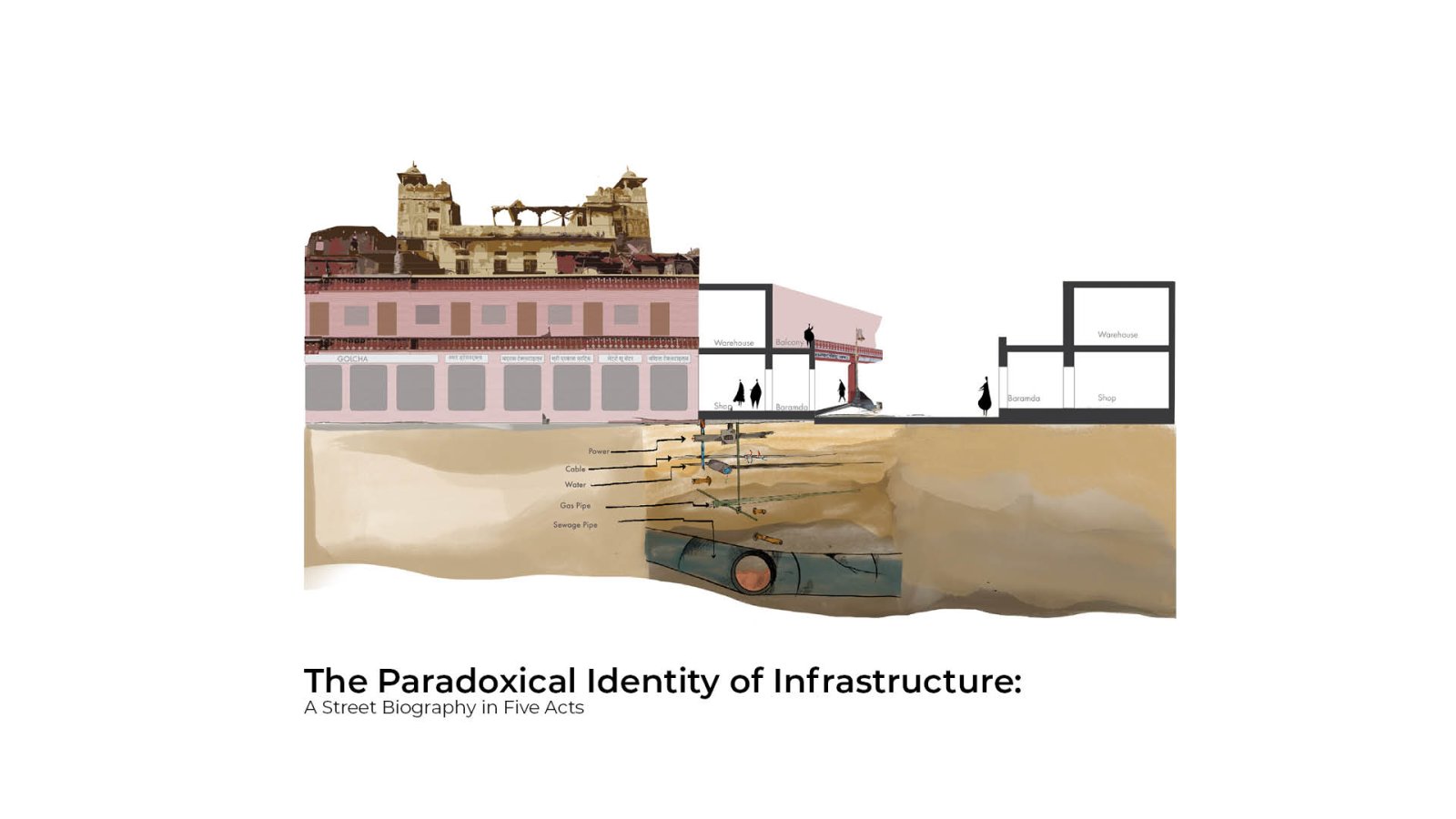
This chapter tells the story of how that transformation happened: not as a single moment of urban planning genius, but as a 250-year accumulation of choices, accidents, technologies, and people.
It’s the biography of a street that reinvented itself completely and if you know where to look, the drain is still there, covered over but never quite erased, running beneath the shops and stalls like a secret the street keeps about its past.