Nandita Chandra

BD2044

Sonic Pathways

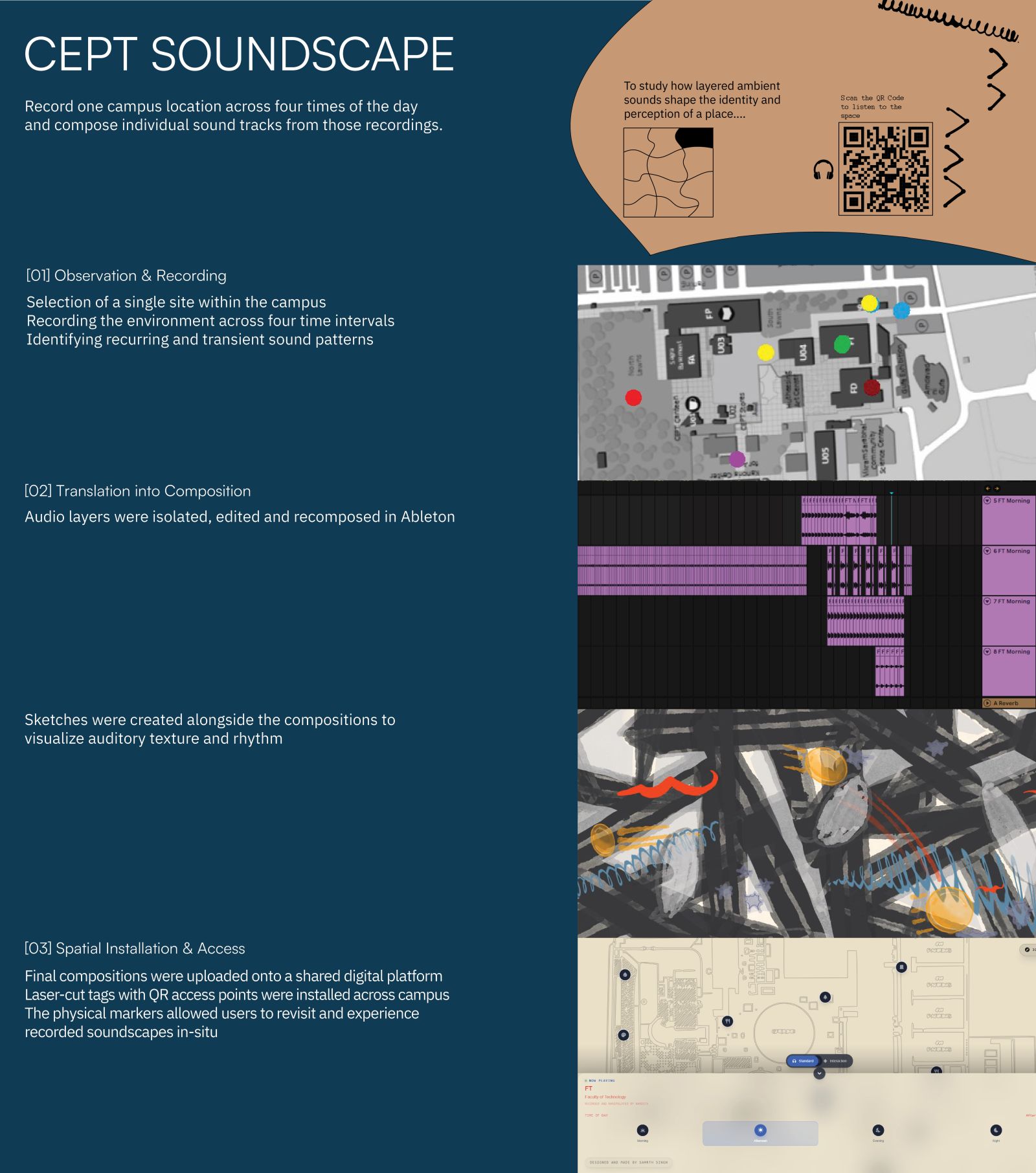
This semester explored how sound can function as a spatial material rather than background ambience. Through field recordings, soundscape mapping, ecological listening studies, and interactive systems, the work examined how architecture carries traces of movement, activity, rhythm, and memory through sound.
Using recording technologies, sound analysis, Ableton-based composition, and spatial interaction design, the projects gradually evolved from observing environments to constructing immersive auditory experiences.
The final installation translates these investigations into an interactive pathway where movement activates layered sonic fragments, allowing spaces to be experienced through listening as much as through sight. 
View Additional Work

Report Content

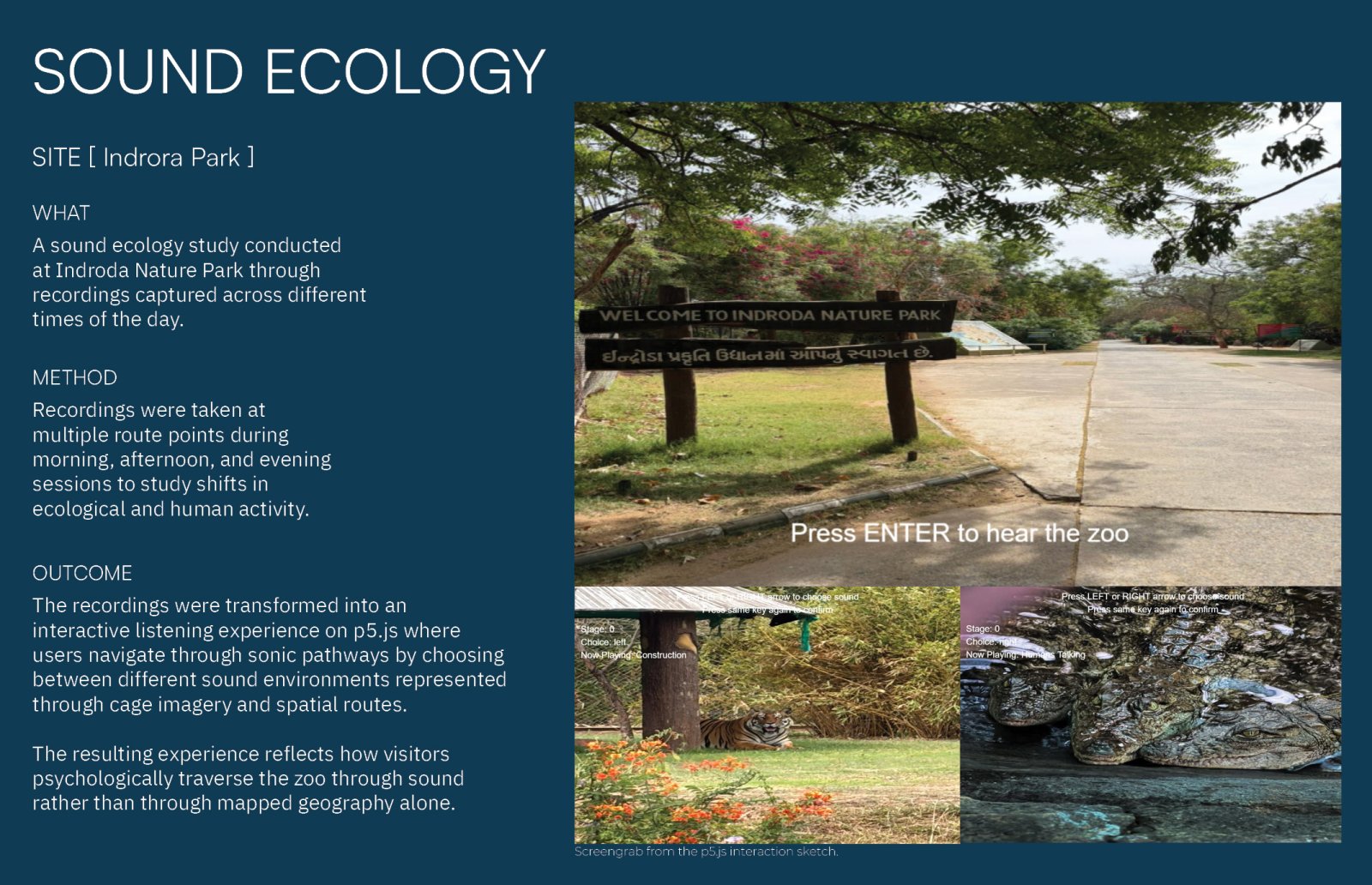
Understanding how ambient sound shapes the identity, rhythm, and emotional perception of space.

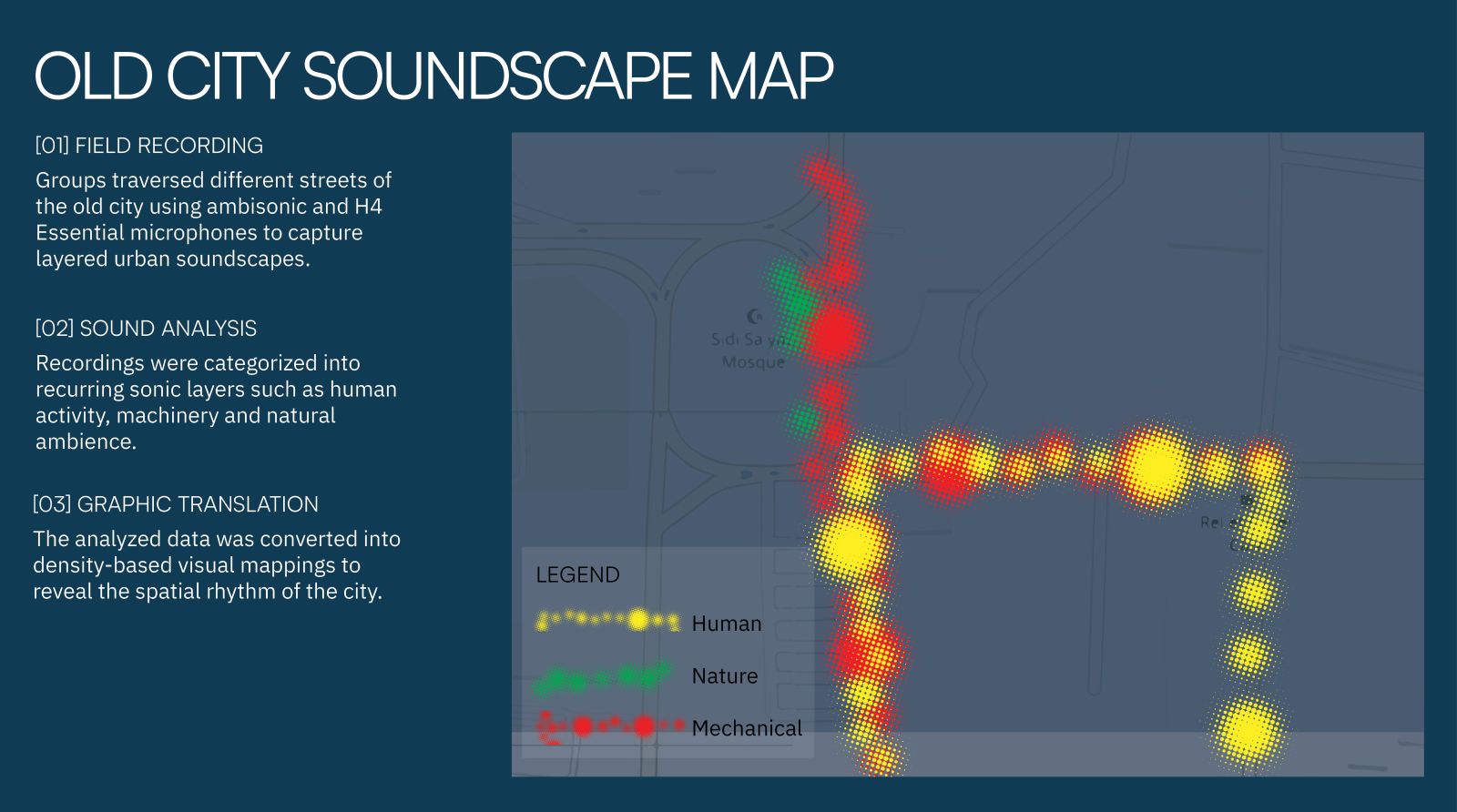
Exploring methods of analyzing and visualizing layered urban sound through spatial mapping and sonic categorization.

Investigating sound as a primary mode of navigation, interaction, and behavioral guidance within interactive systems.

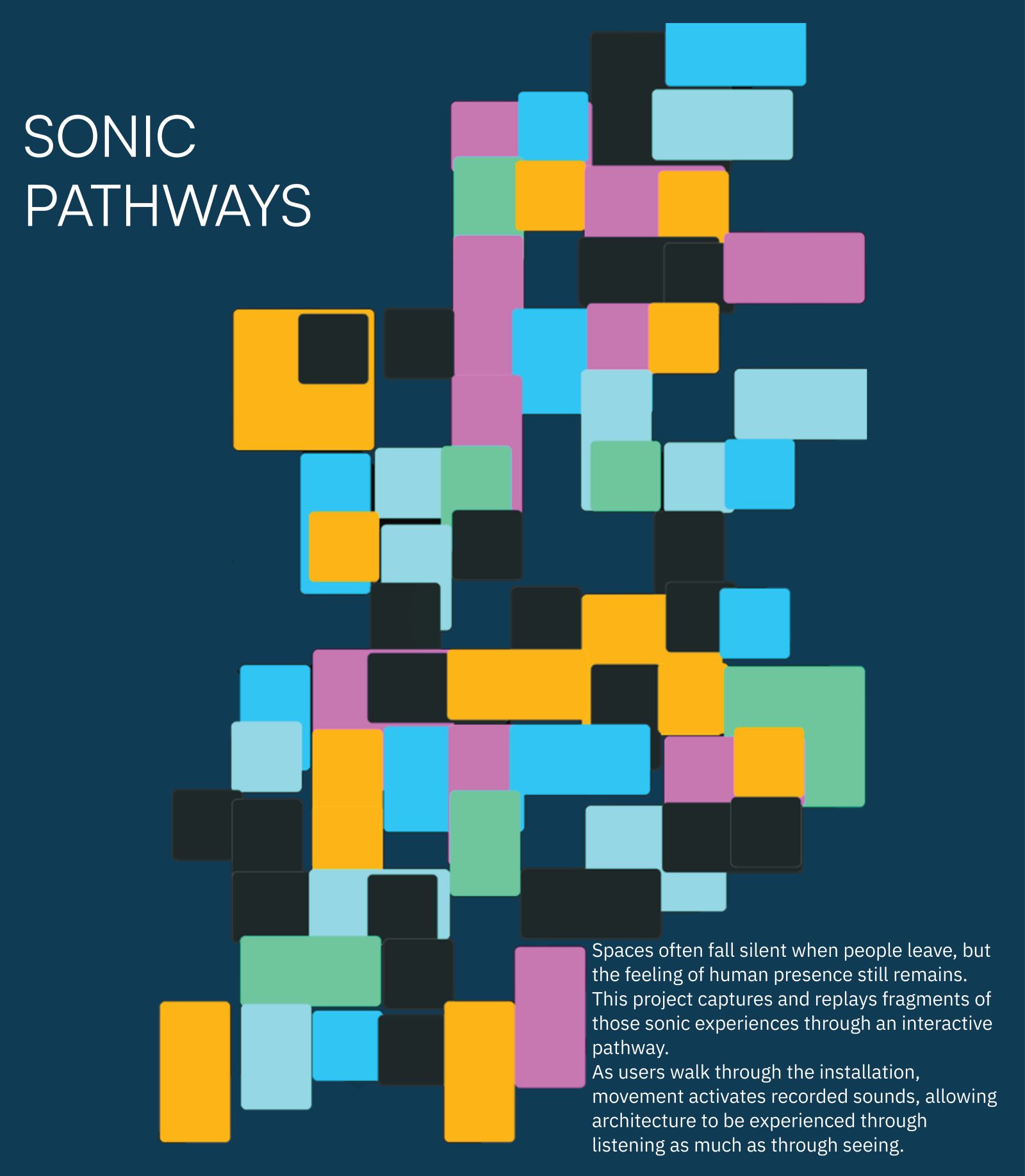
These earlier explorations converged into an interactive installation where movement activates recorded sound fragments. The project investigates how architecture can be experienced through listening and bodily movement.

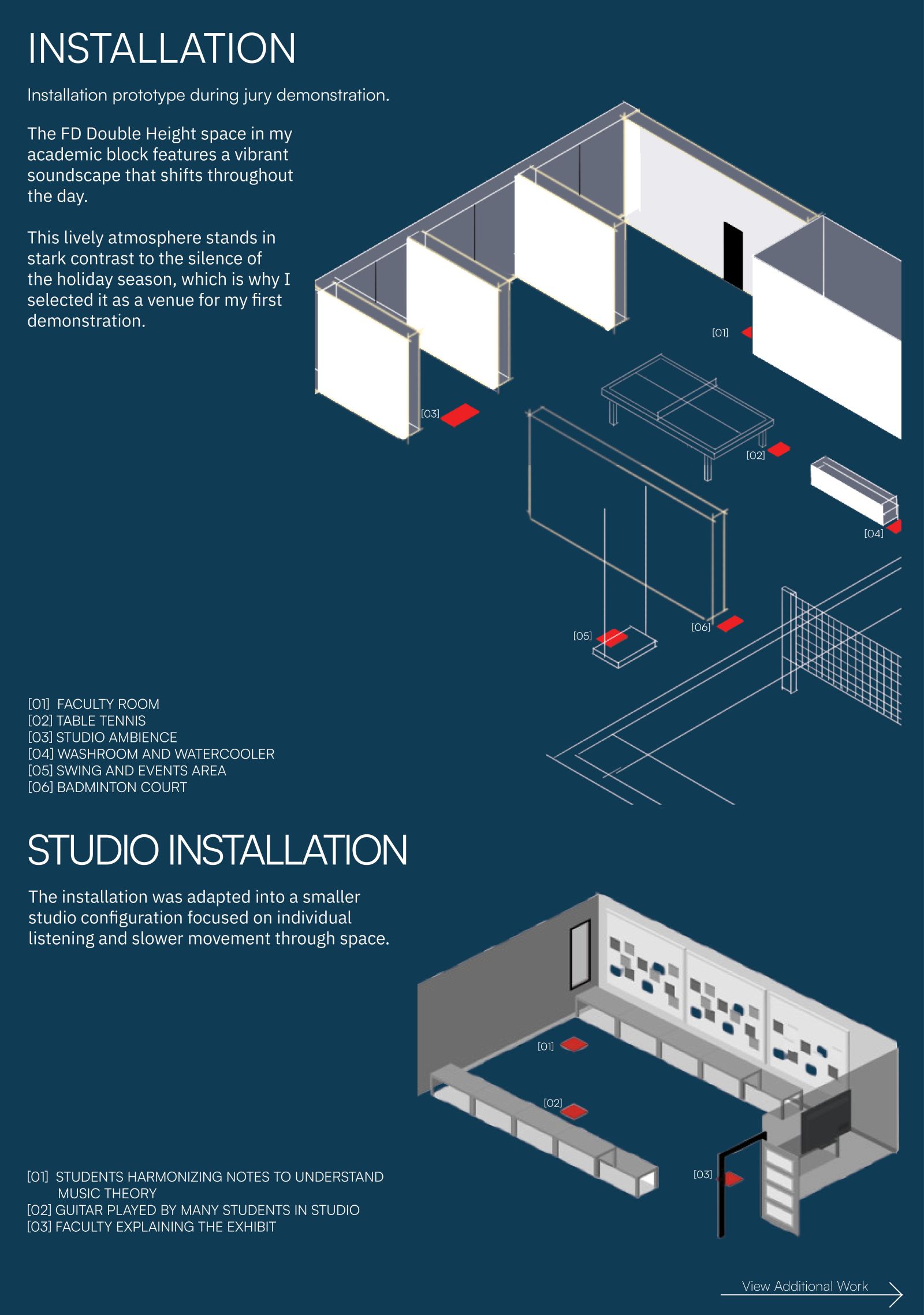
The installation combines physical interaction and spatial audio. Detection based inputs are translated into dynamic sound responses through Arduino and TouchDesigner, creating an intuitive walk-and-listen experience.

The installation explored how sound could preserve traces of human presence within silent architectural spaces, hence different spatial configurations were tested to study intimacy, pacing, and auditory attention.

Project Video