Poornima Ashokkumar Solunke

UM4005

Innovation and Entrepreneurship Ecosystem

This study examines Ahmedabad–Gandhinagar's current innovation and entrepreneurship ecosystem within the Economic Structures unit of the studio. It begins by mapping the key actors and linkages, including government, universities, incubators, investors and founders, and frames three research questions on ecosystem structure, support effectiveness and gaps. The analysis then reviews policy instruments across the idea-to-scale journey, university R&D, patent and intellectual property output, incubation infrastructure, startup reach and the incubation process. It concludes that the ecosystem is institution-led and broad but fragmented, with prototype-to-market conversion as its weakest link.
Report Content

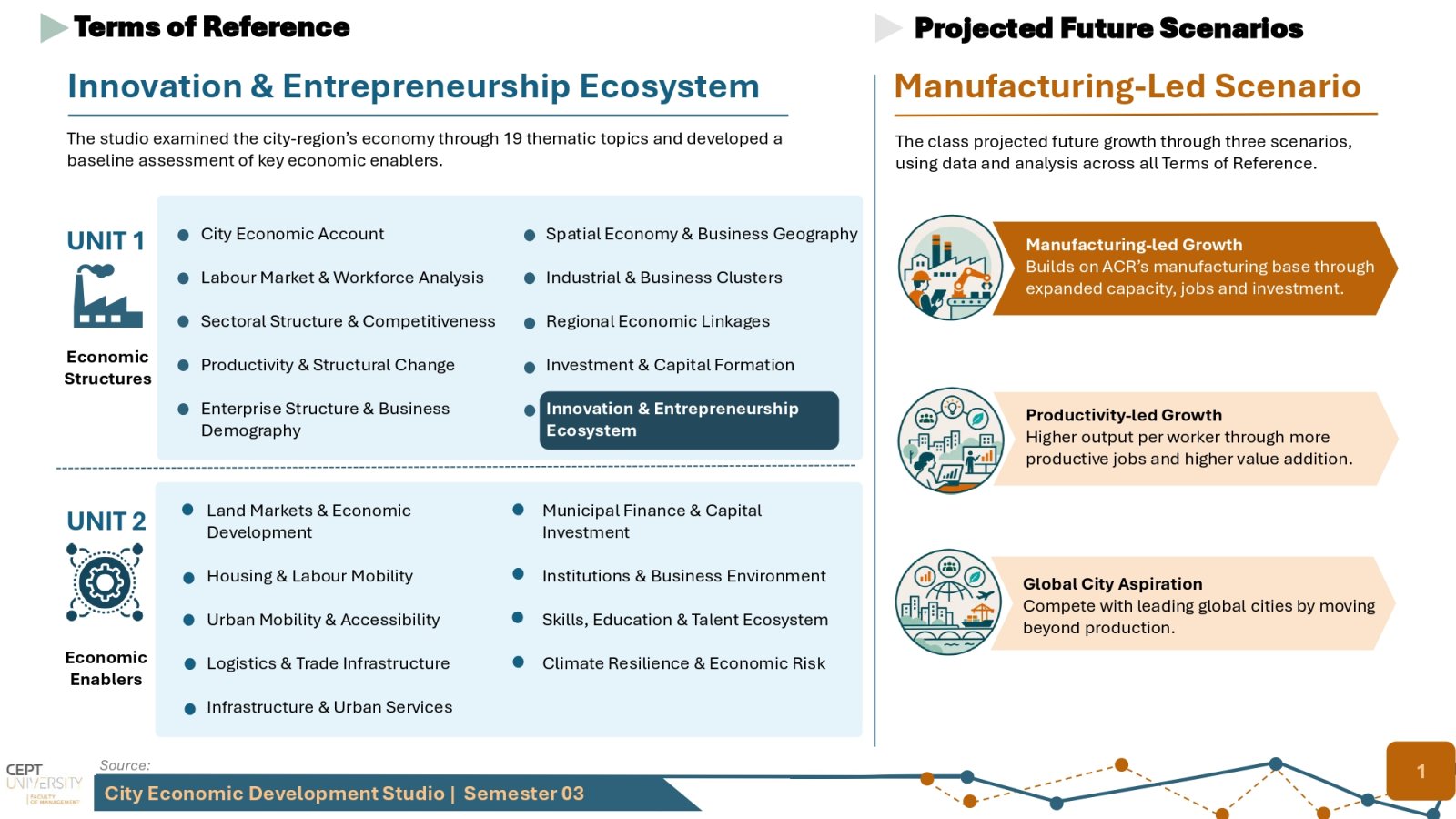
Introduces the City Economic Development Studio, with its 19 thematic topics across Economic Structures and Economic Enablers, and the three projected growth scenarios (Manufacturing-led, Productivity-led, Global City Aspiration).

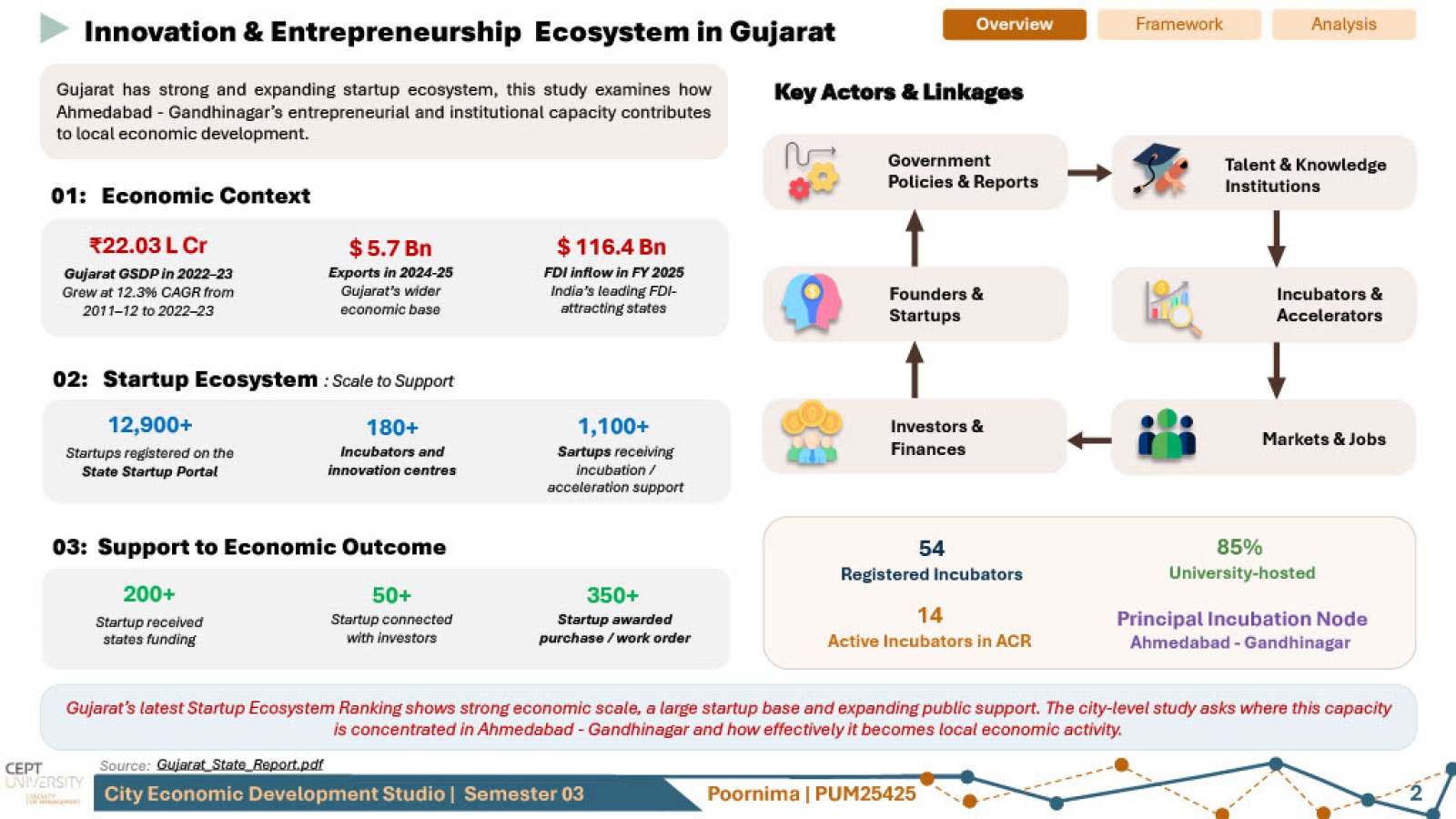
Innovation & Entrepreneurship Ecosystem: Sets the economic context of Gujarat's startup ecosystem, from GSDP, exports and FDI to registered startups and incubators, and maps the key actors linking policy, talent, incubation, markets and finance in Ahmedabad-Gandhinagar.

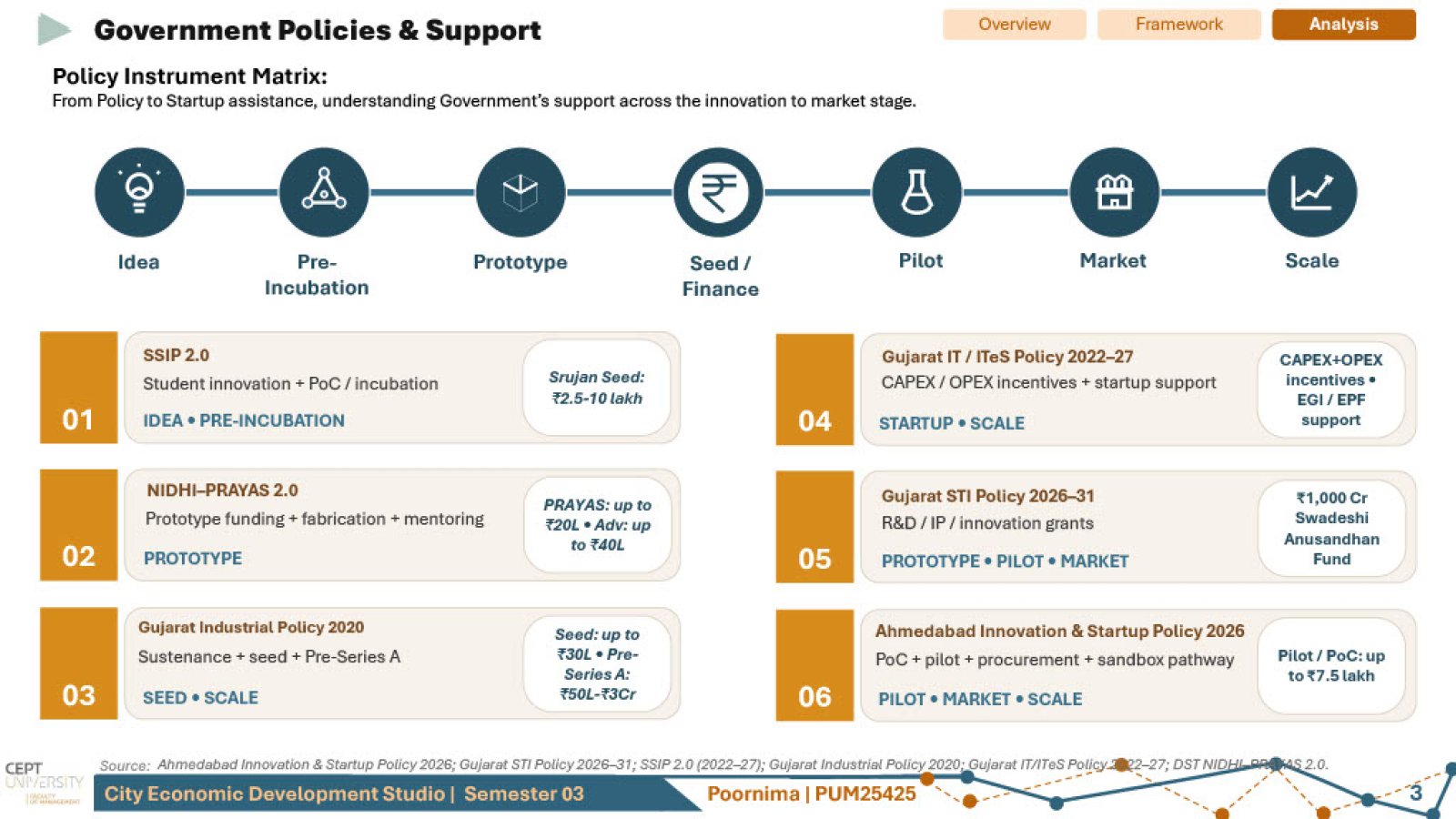
Maps major government policies and schemes (SSIP 2.0, NIDHI–PRAYAS 2.0, Industrial, IT/ITeS, STI and Ahmedabad Startup Policy) against the stages from idea to scale.

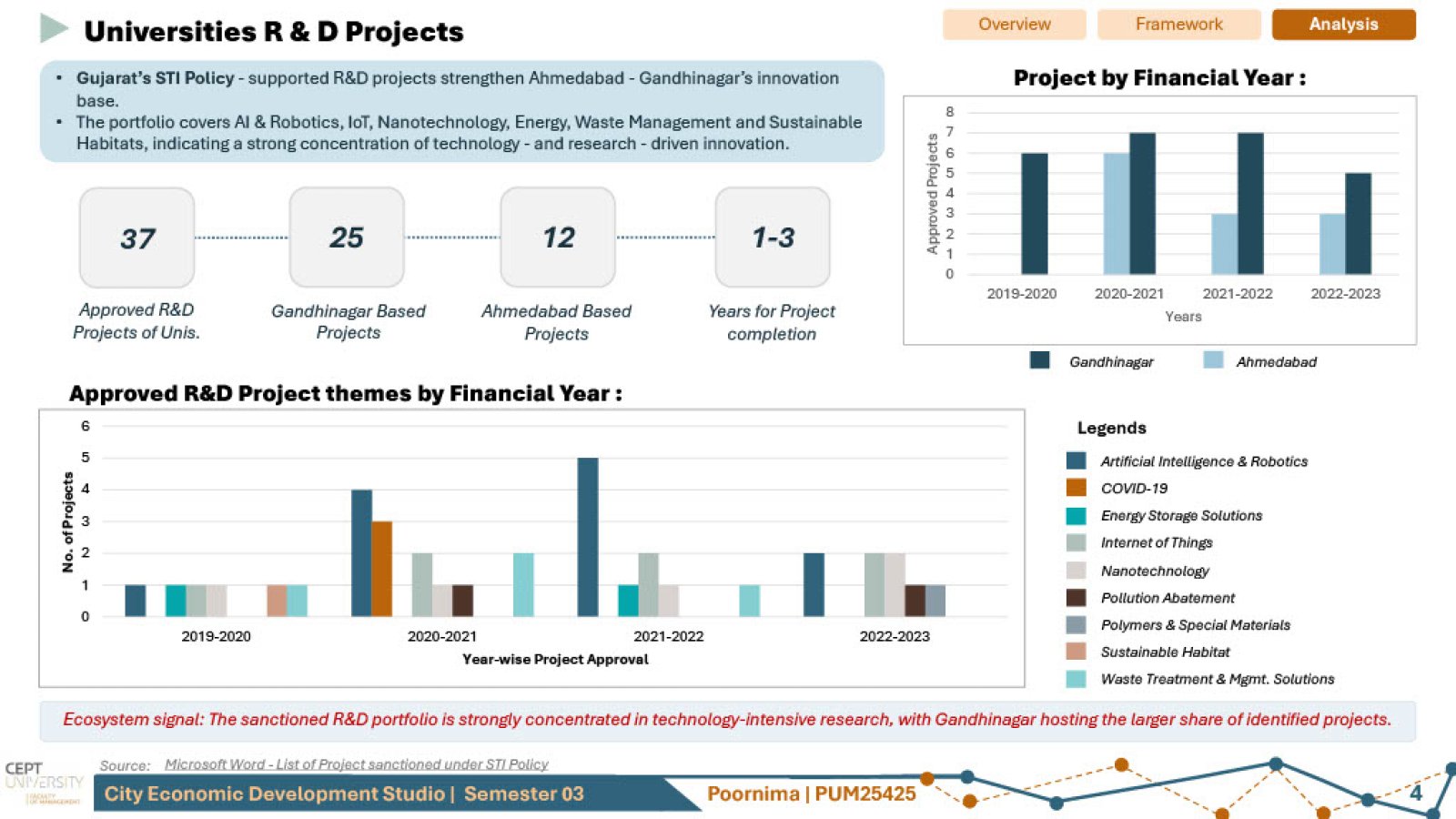
Analyses 37 STI Policy-approved university R&D projects (25 in Gandhinagar, 12 in Ahmedabad) by year and theme, showing a strong concentration in technology-intensive research.

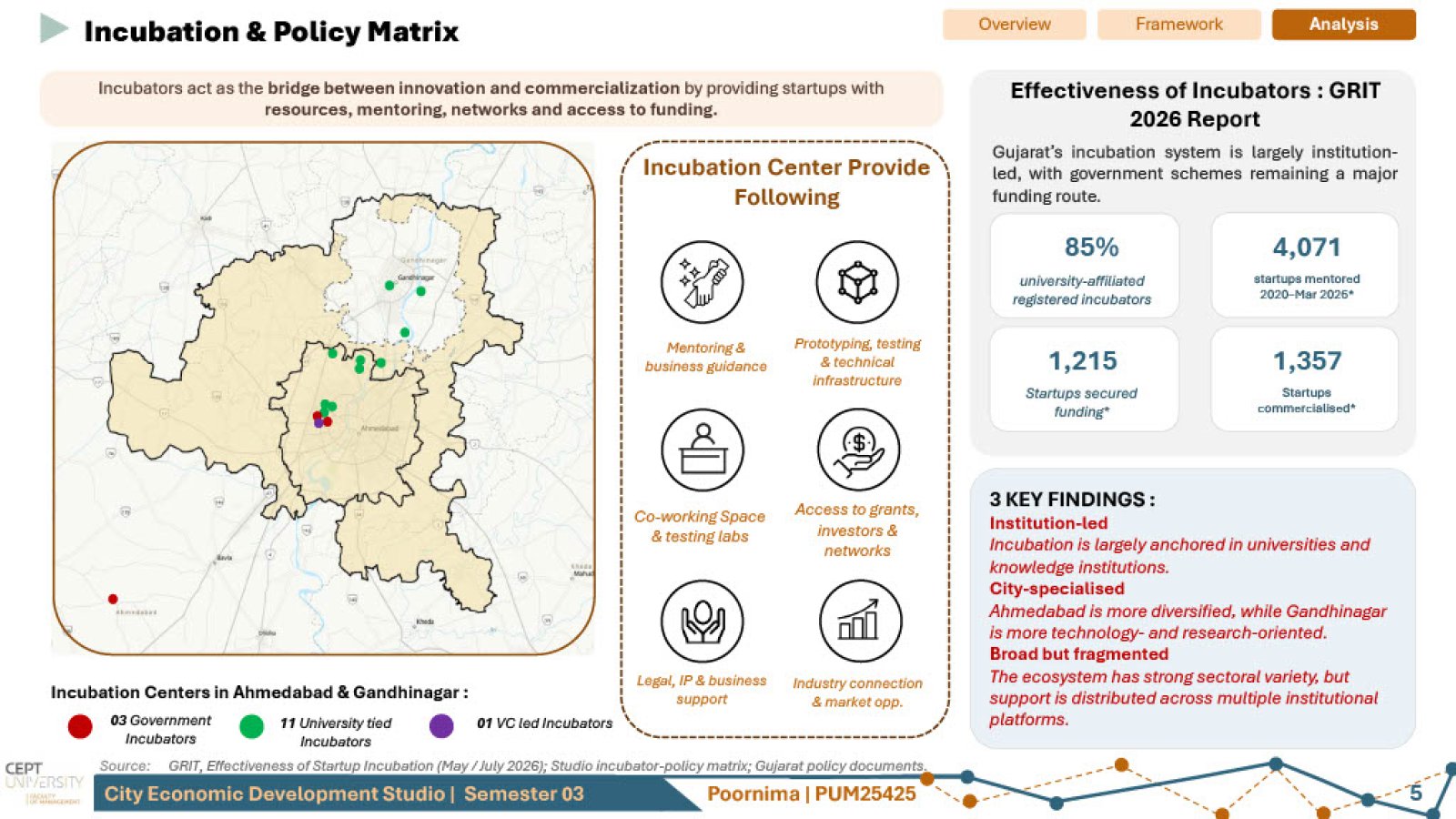
Maps incubators across Ahmedabad and Gandhinagar and referred GRIT 2026 data to show an institution-led, city-specialized but fragmented incubation system.

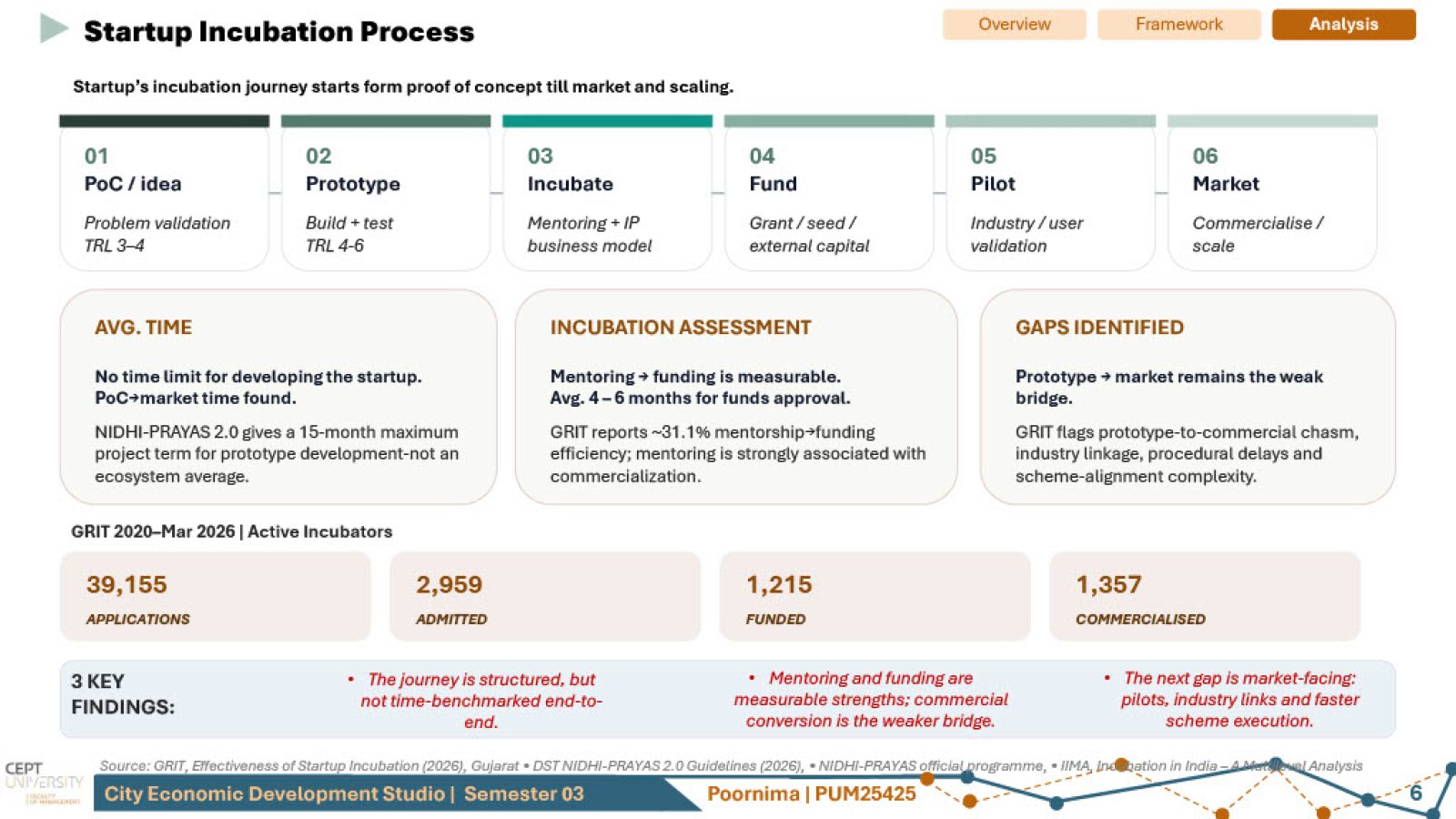
Traces the startup incubation journey from PoC to market and identifies the prototype-to-market conversion as the weakest link, using the GRIT funnel from 39,155 applications to 1,357 commercialized startups.

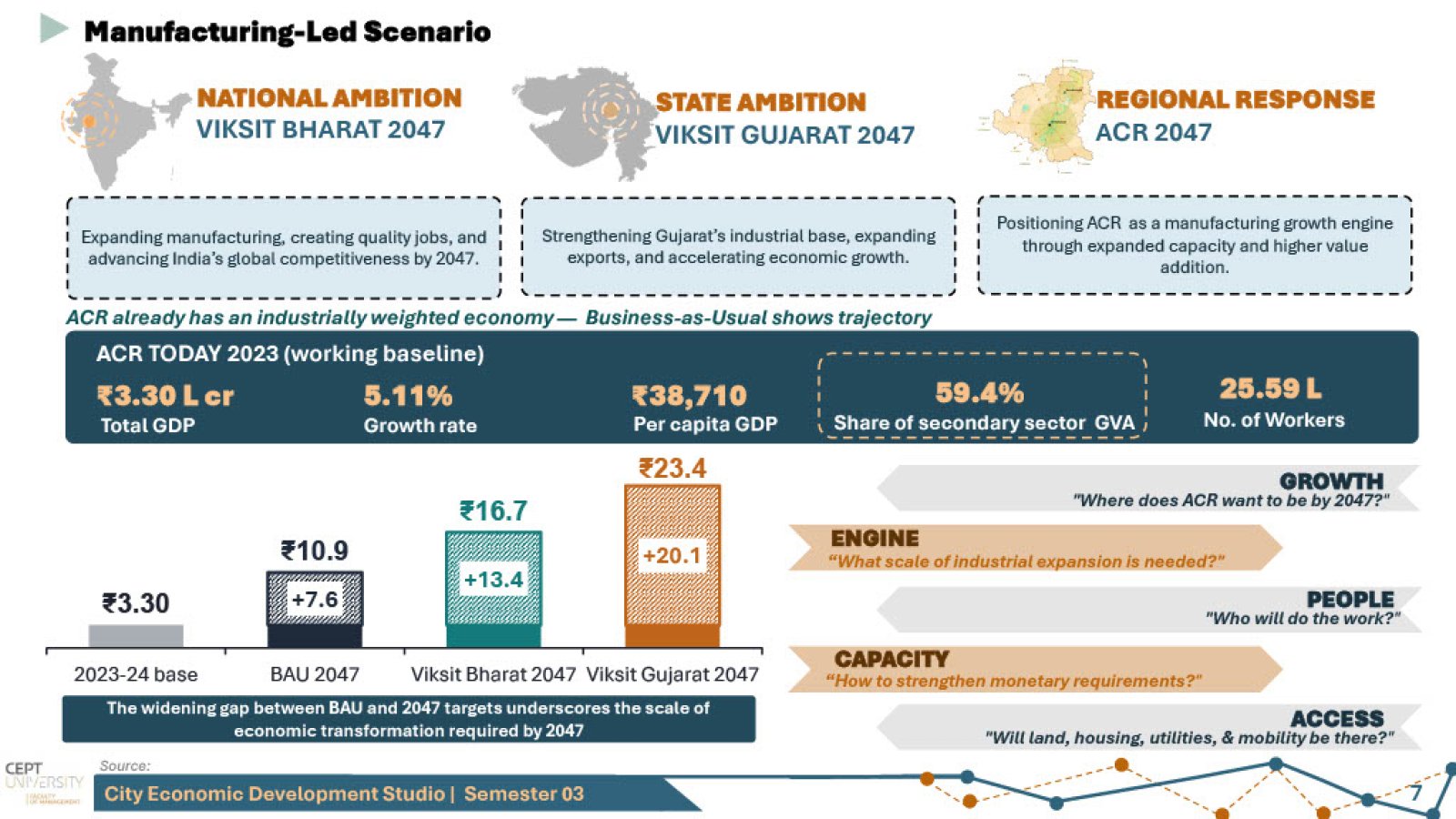
Introduces Scenario 1 by linking Viksit Bharat, Viksit Gujarat and ACR 2047 ambitions to ACR's 2023 baseline (?3.30 L cr GDP), and contrasts BAU with the 2047 GDP targets.

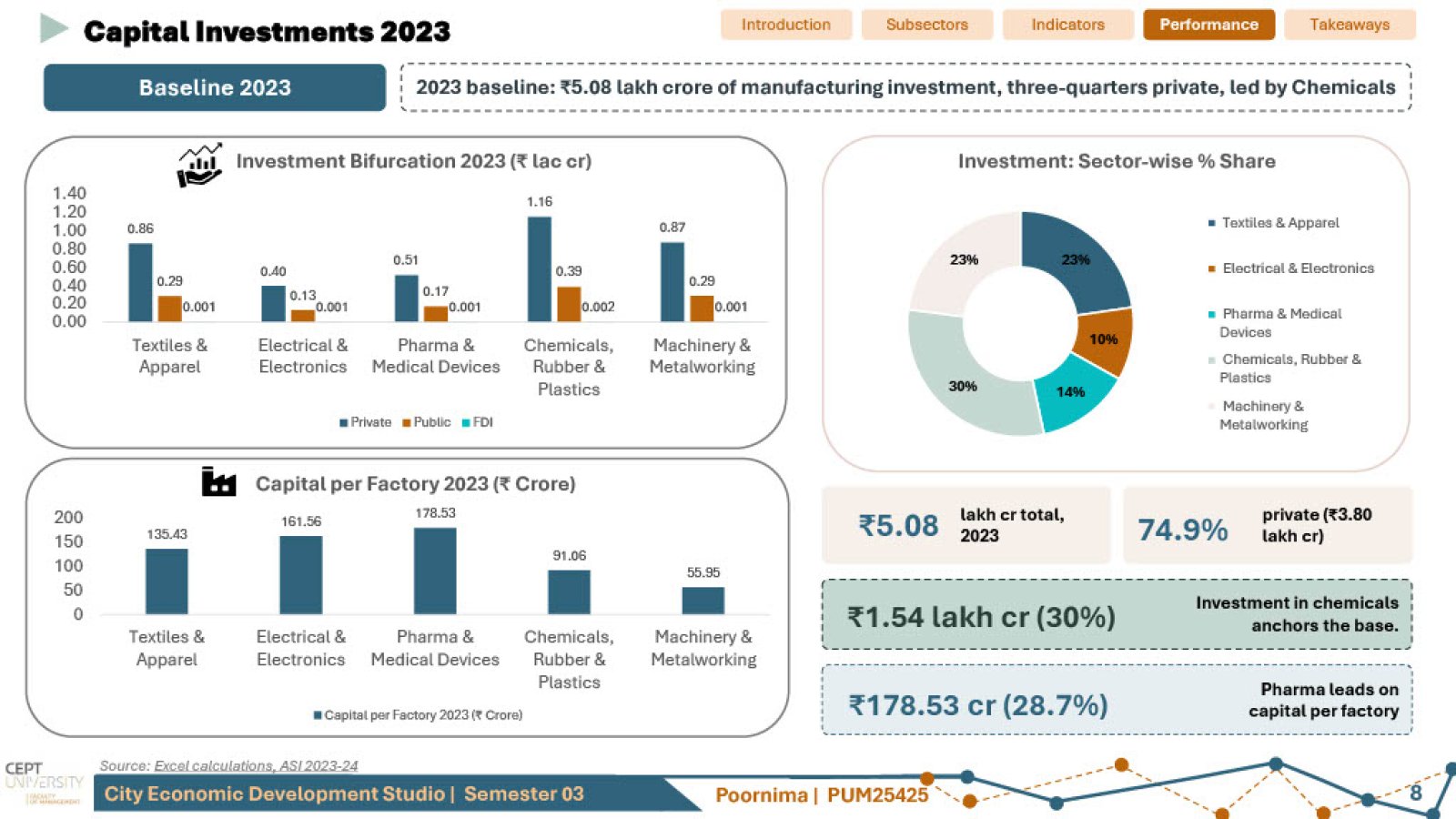
Establishes the 2023 capital investment baseline of ?5.08 lakh crore, which is three-quarters private and led by chemicals, with pharma leading on capital per factory.

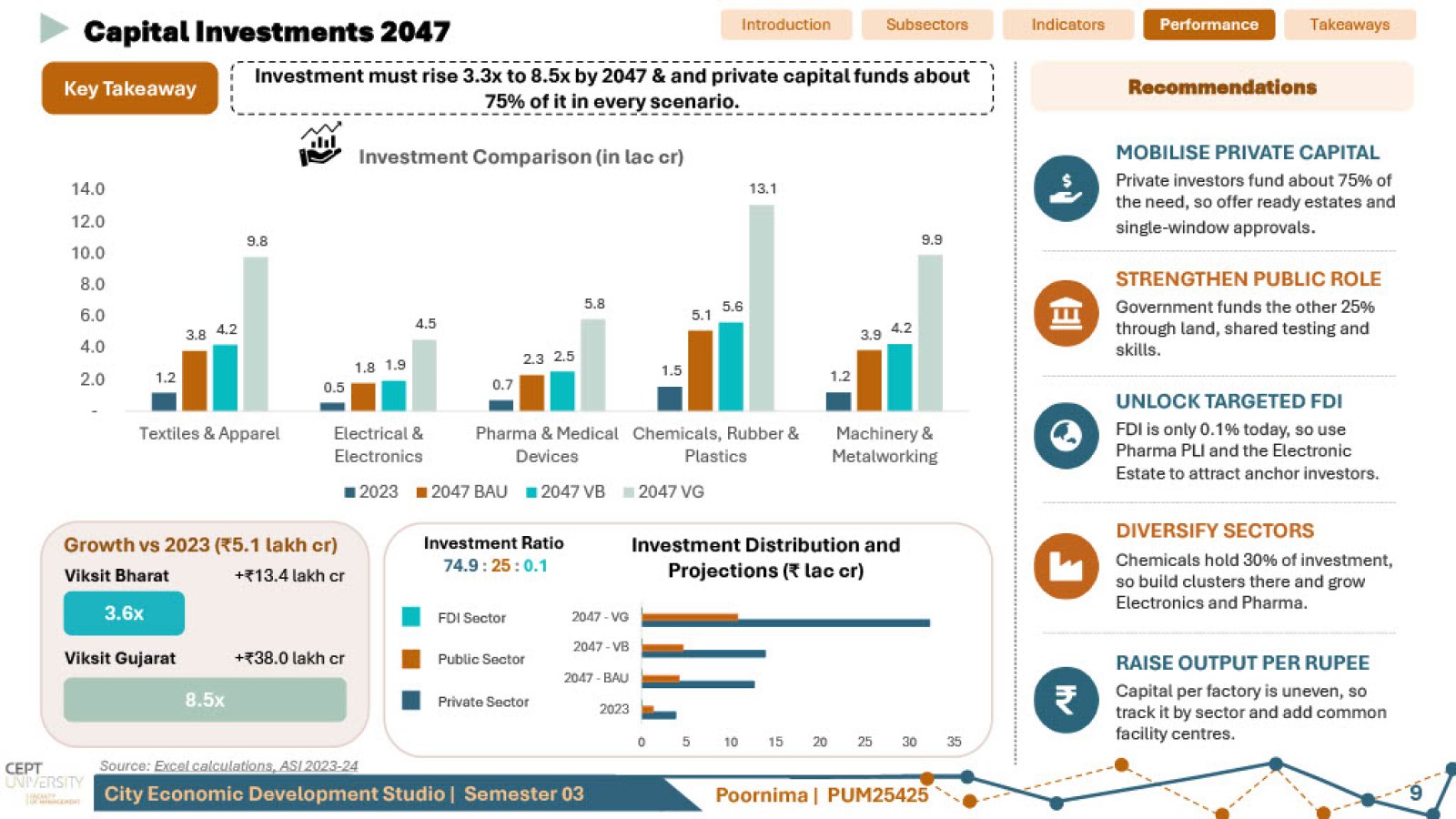
Projects investment to 2047 under BAU, Viksit Bharat and Viksit Gujarat, showing it must rise several-fold with private capital funding about 75%, and gives five recommendations.

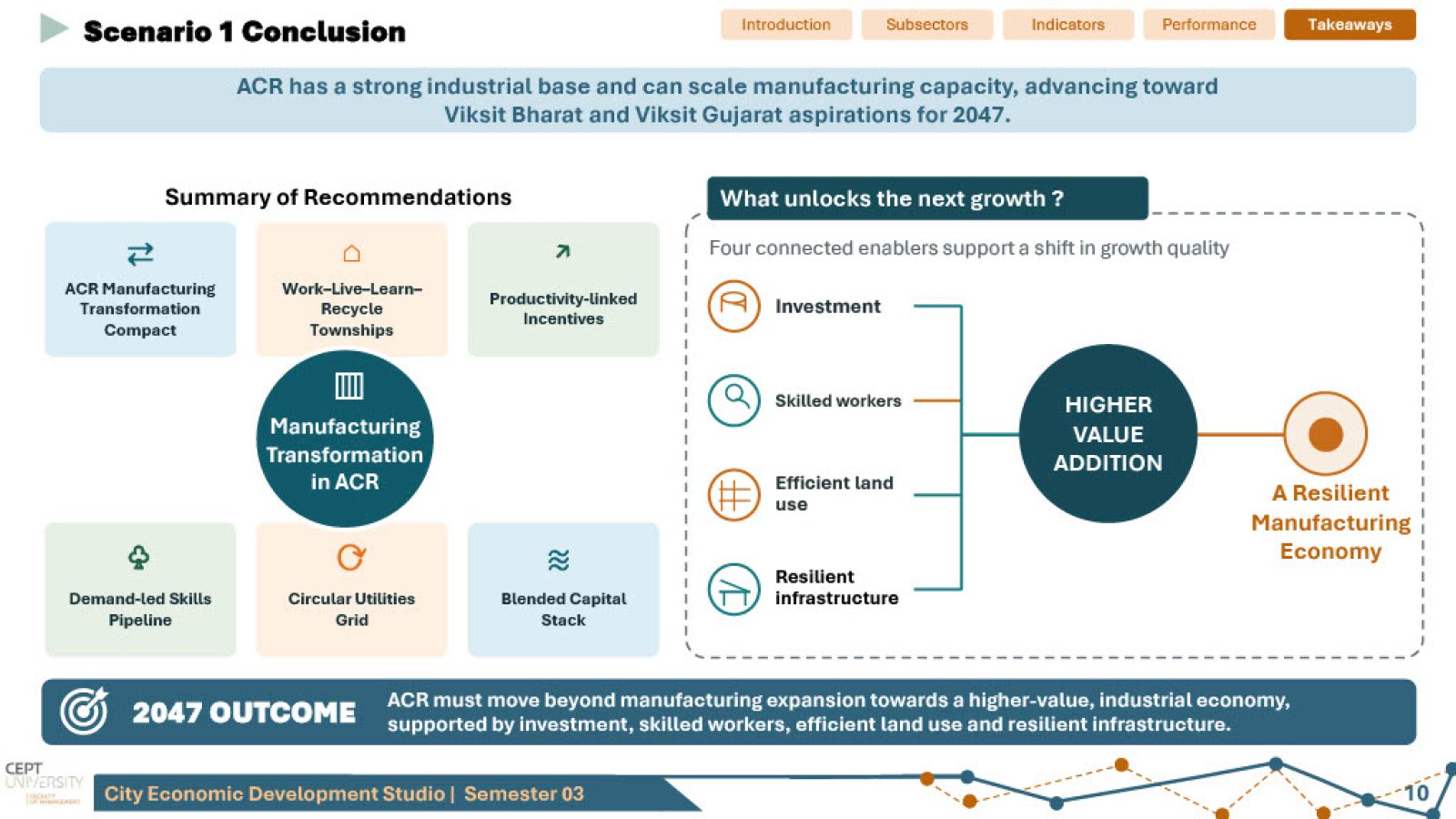
Concludes Scenario 1 by summarizing six recommendations built on enablers (investment, skilled workers, efficient land use, resilient infrastructure) to shift ACR toward higher-value manufacturing.

Project Video