Pragya Chopra

UM4005

Sectoral Structure and Competitiveness

ToR 03, Sectoral Structure and Competitiveness, under the Economic Structure unit, identifies which sectors drive Ahmedabad City Region's economy and how competitive they are, grounded in Economic Base Theory, Location Theory, and Structural Transformation. It answers five questions: which sectors form the economic base, which are more specialized than Gujarat or India, how the structure has changed over time, which sectors can drive future growth, and how it should evolve by 2047. The method combines sectoral composition analysis, Location Quotient, benchmarking against peer cities, and trend analysis on PLFS and MOSPI employment data, producing a sectoral profile, LQ analysis, economic base sector identification, peer city comparison, and priority sectors for 2047 that feed directly into the studio's 2047 transformation scenario.

View Additional Work
Report Content

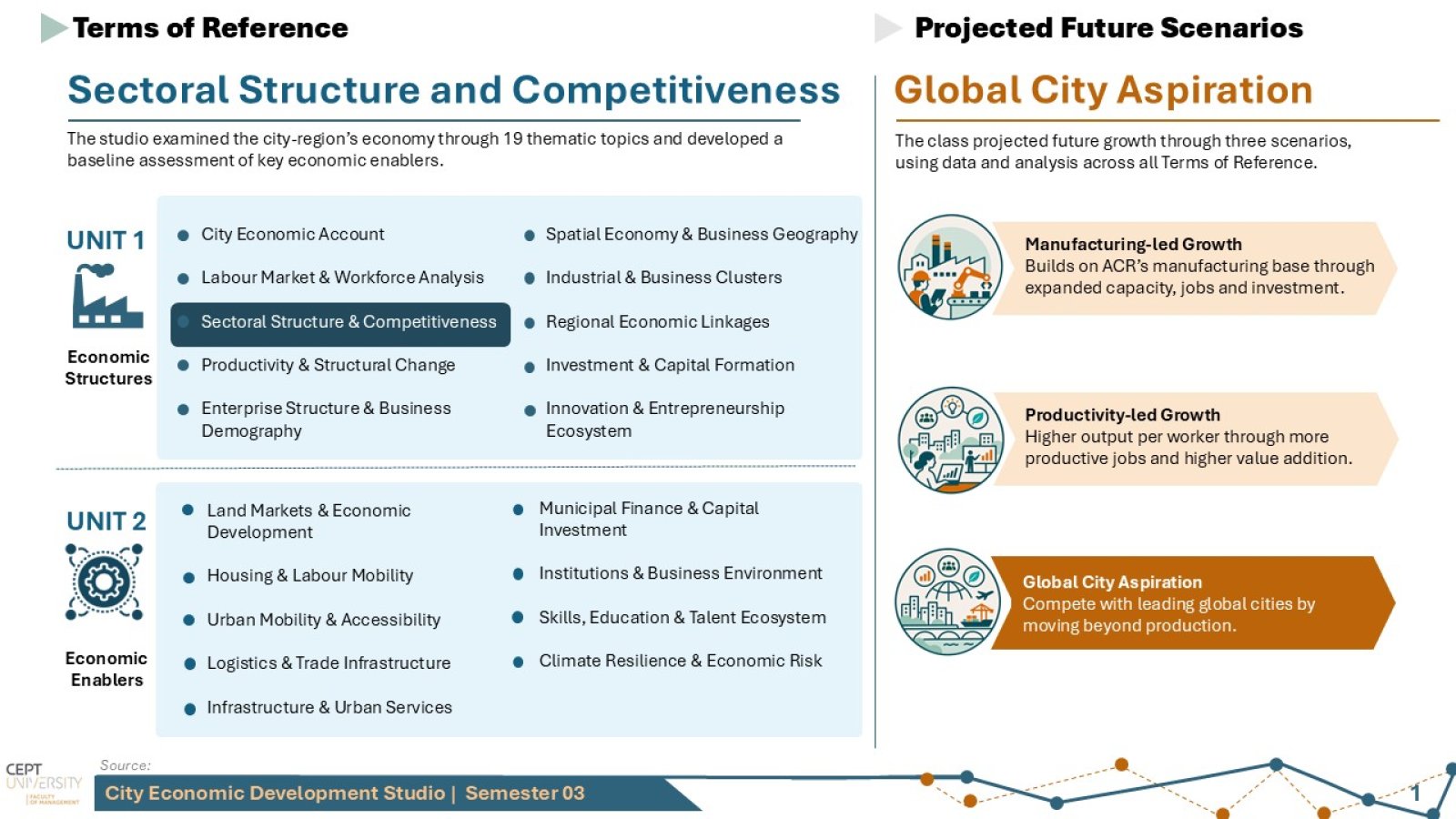
Overview: Intro to the studio's 19 TORs feeding three future scenarios: Manufacturing led, Productivity led, Global City Aspiration.

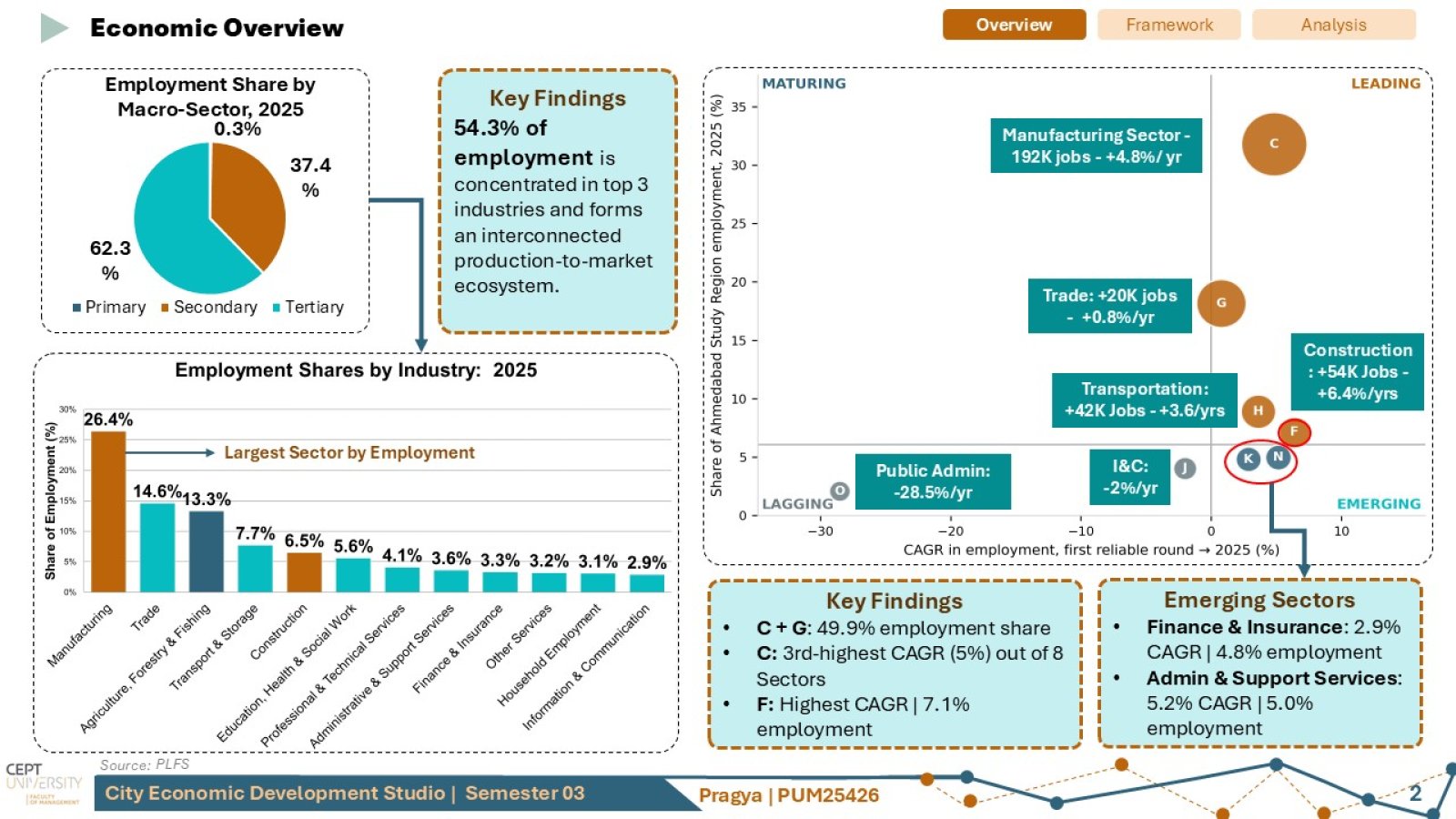
Economic Overview: 2025 employment mix by macro sector; tertiary led overall, but Manufacturing is still the single largest industry and Construction with highest CAGR.

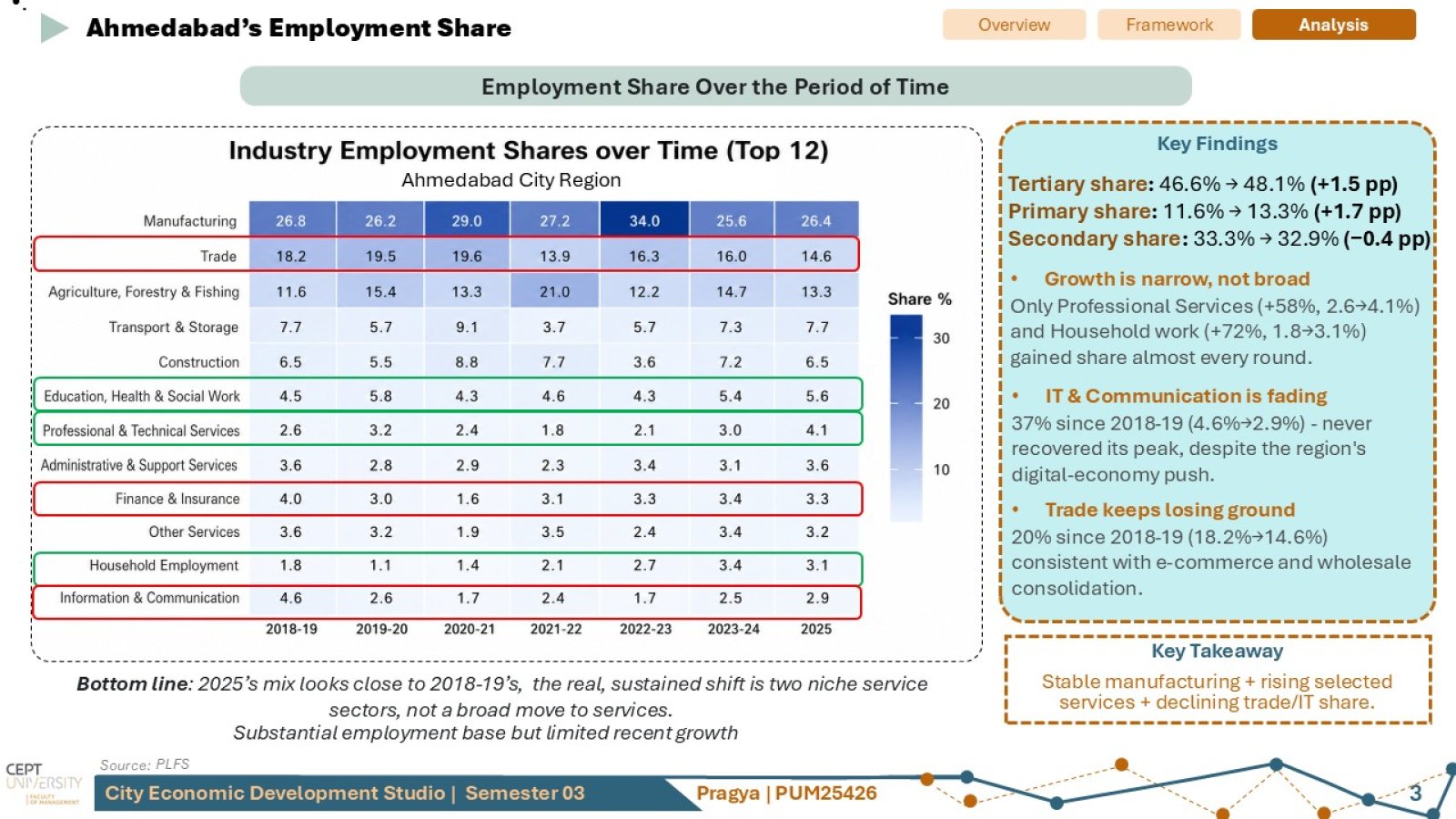
Employment Share Over Time: Manufacturing stays stable; Trade and IT&Comm decline; only Professional Services and Household work gain, a narrow shift, not a broad services move.

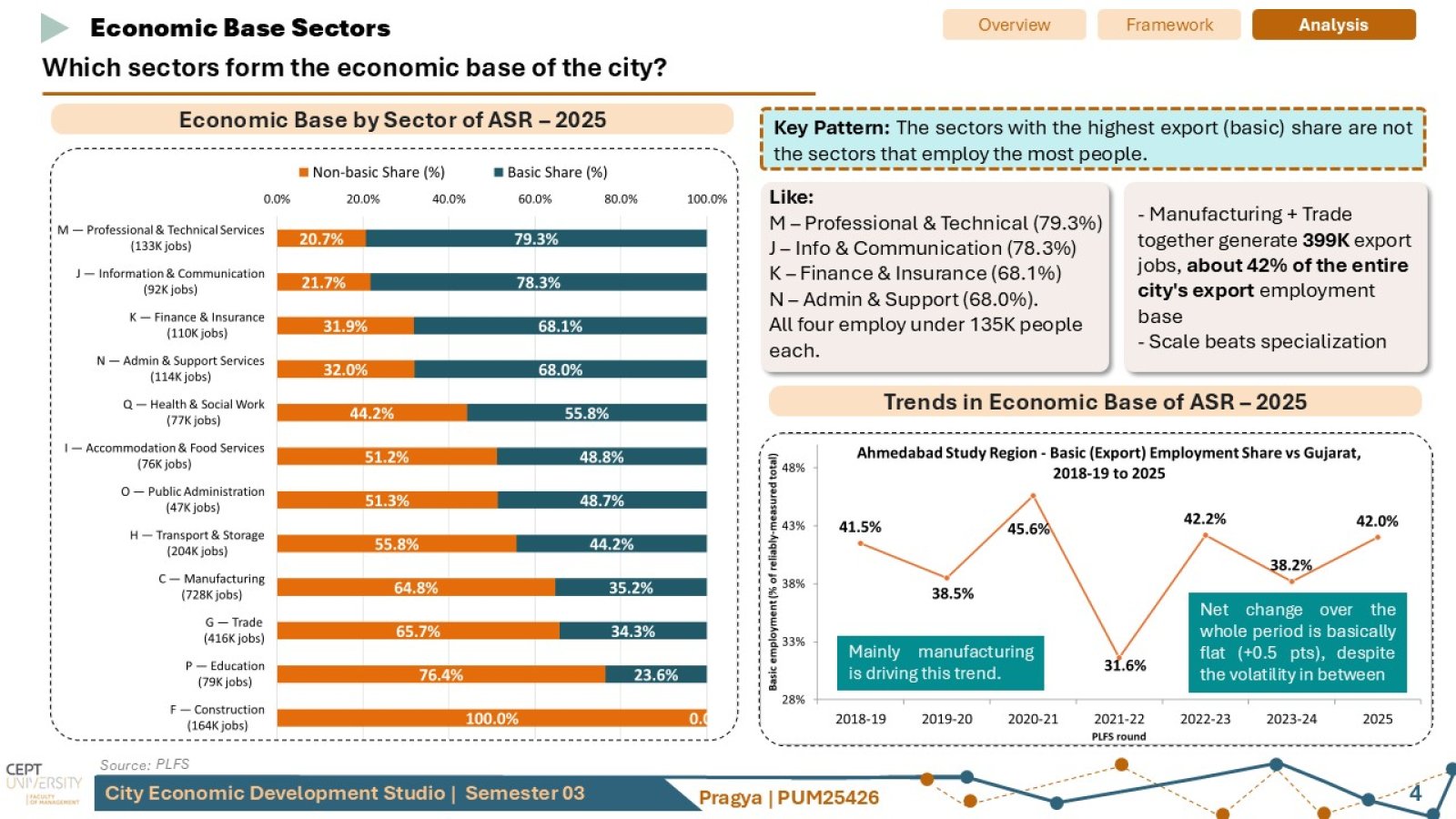
Economic Base Sectors: Most specialized sectors (Professional, IT, Finance, Admin) employ few people; Manufacturing and Trade drive the export base through scale.

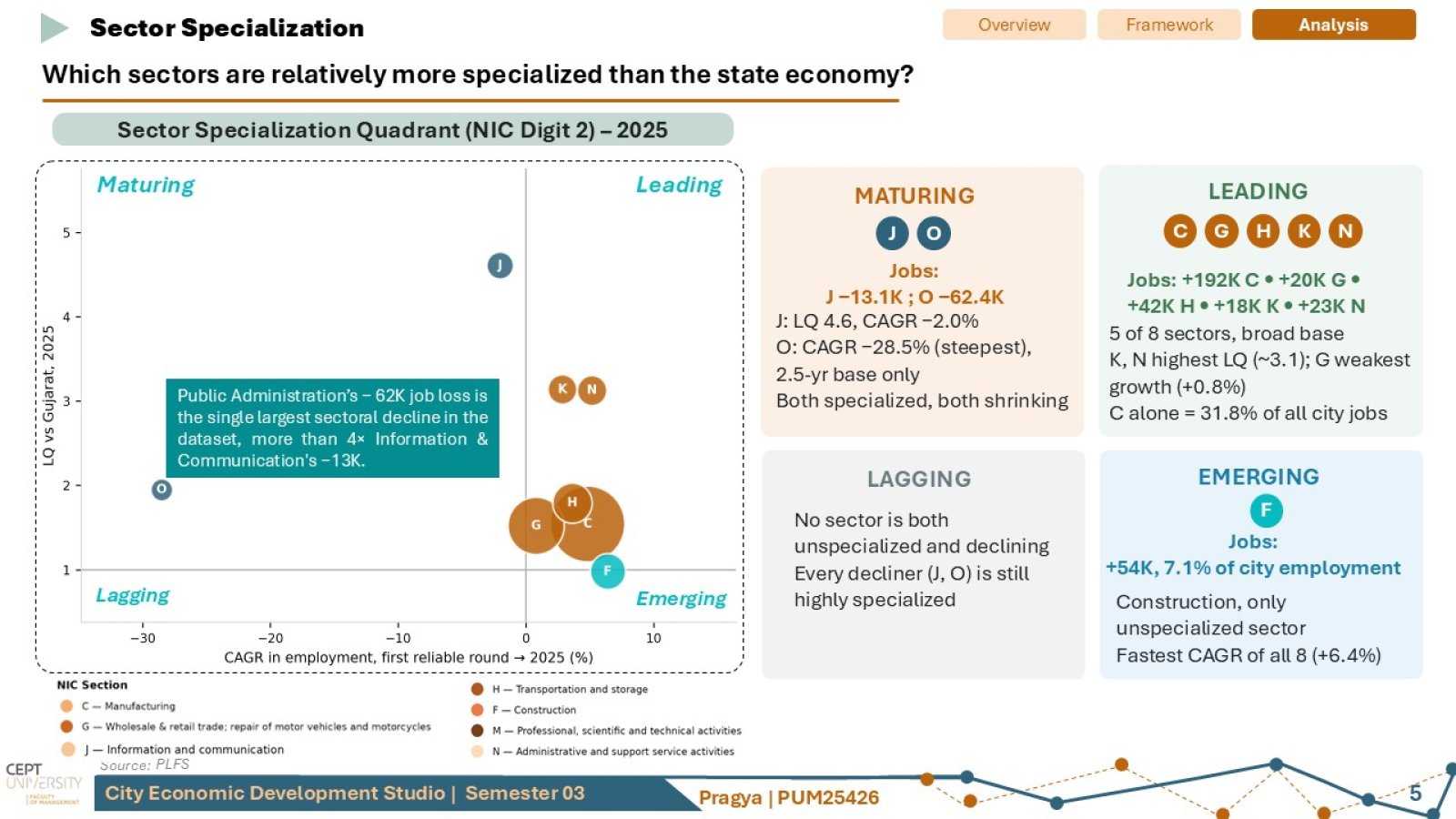
Sector Specialization (NIC 2 digit): Classifies all 8 sectors on a specialization vs growth quadrant against Gujarat, pinpointing which are genuinely competitive and growing, not just large.

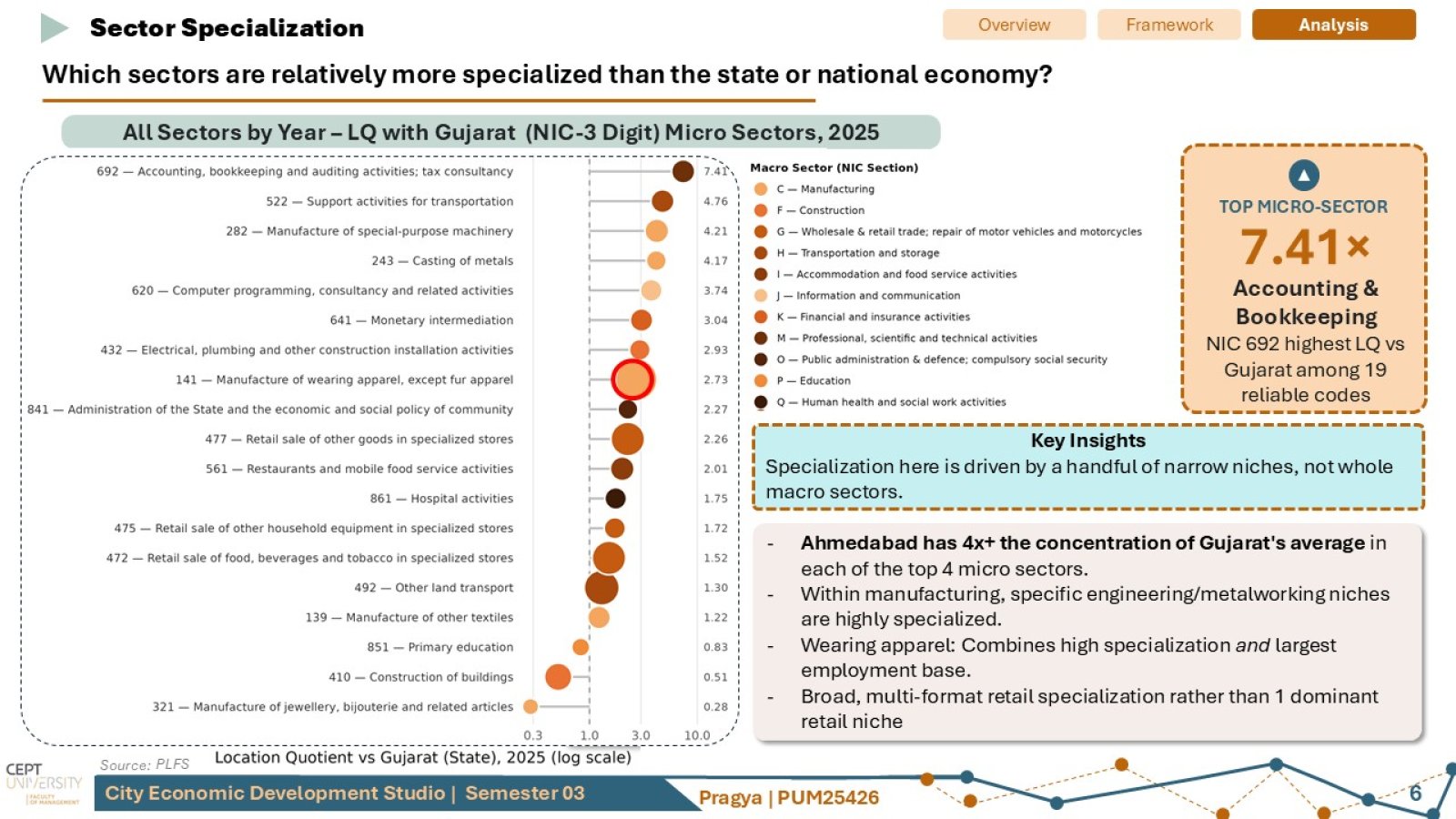
Sector Specialization (NIC 3 digit): Surfaces the top 5 specialized micro sectors, led by Accounting & Bookkeeping; Wearing Apparel uniquely pairs high specialization with the largest employment base.

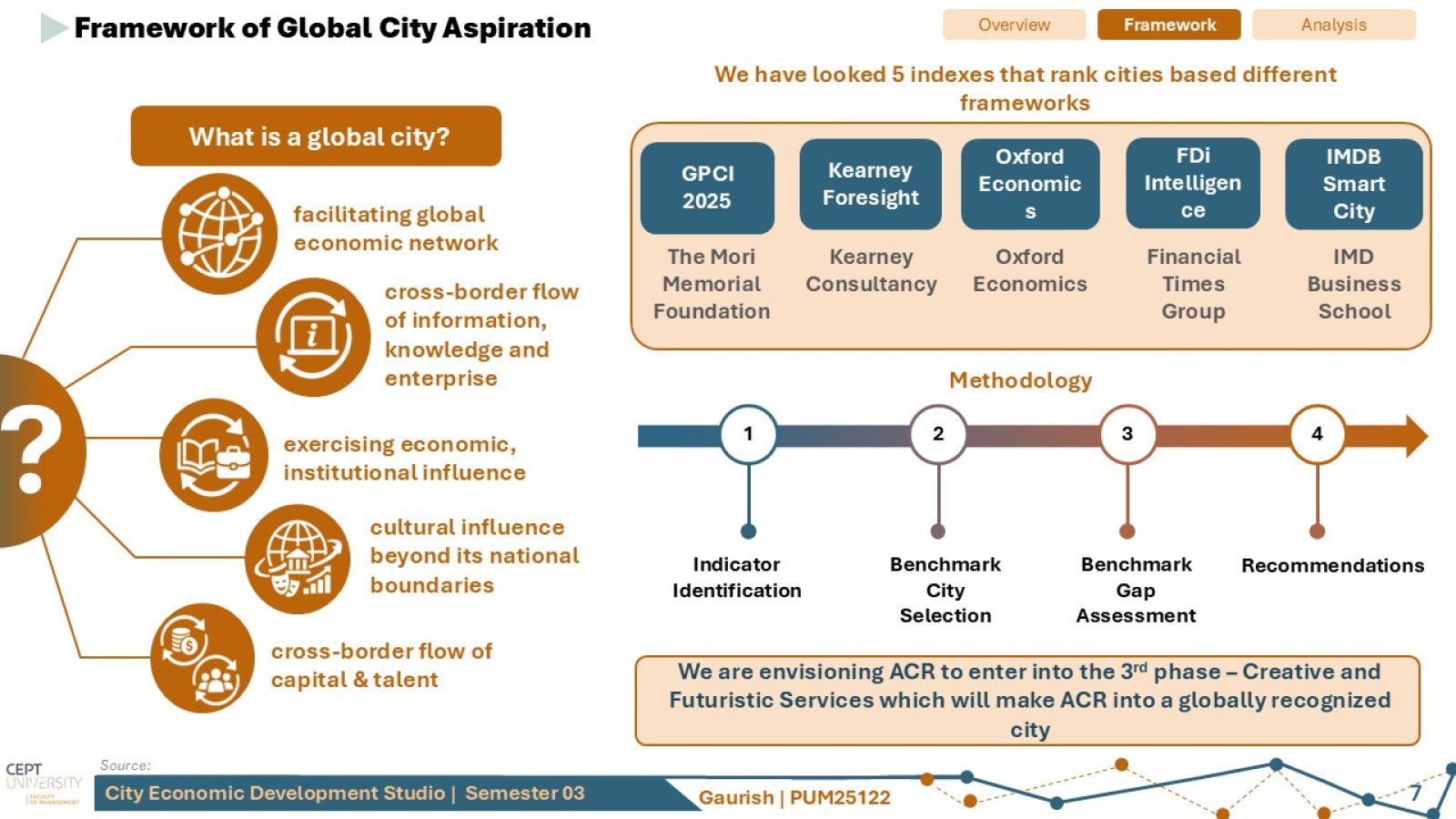
Global City Aspiration Framework: Defines "global city" via five frameworks; sets methodology for benchmarking ACR toward a Creative and Futuristic Services phase.

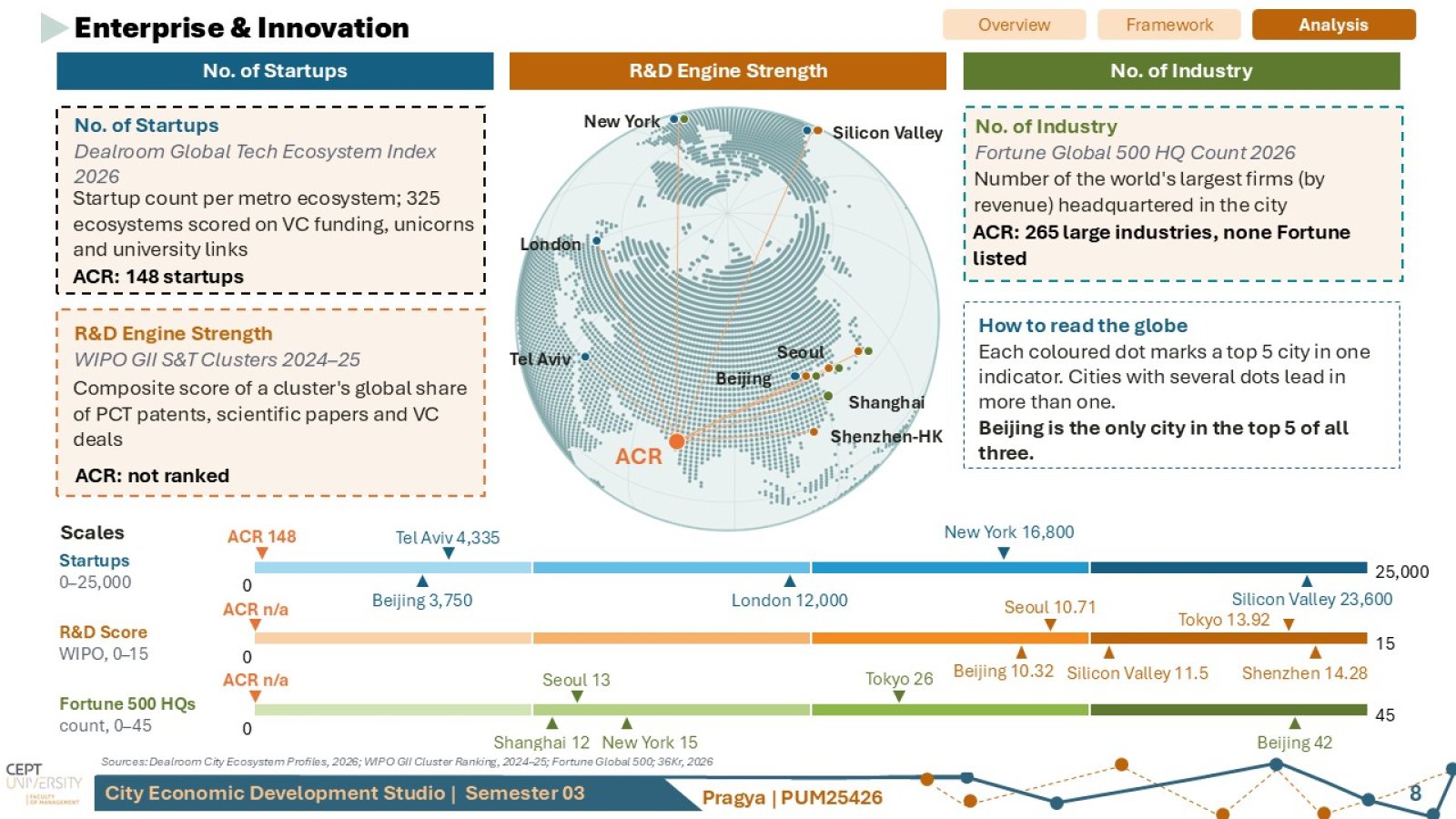
Enterprise & Innovation Benchmarking: Compares ACR to global hubs (Silicon Valley, Beijing, Seoul) on startups, R&D strength, Fortune 500 HQs.

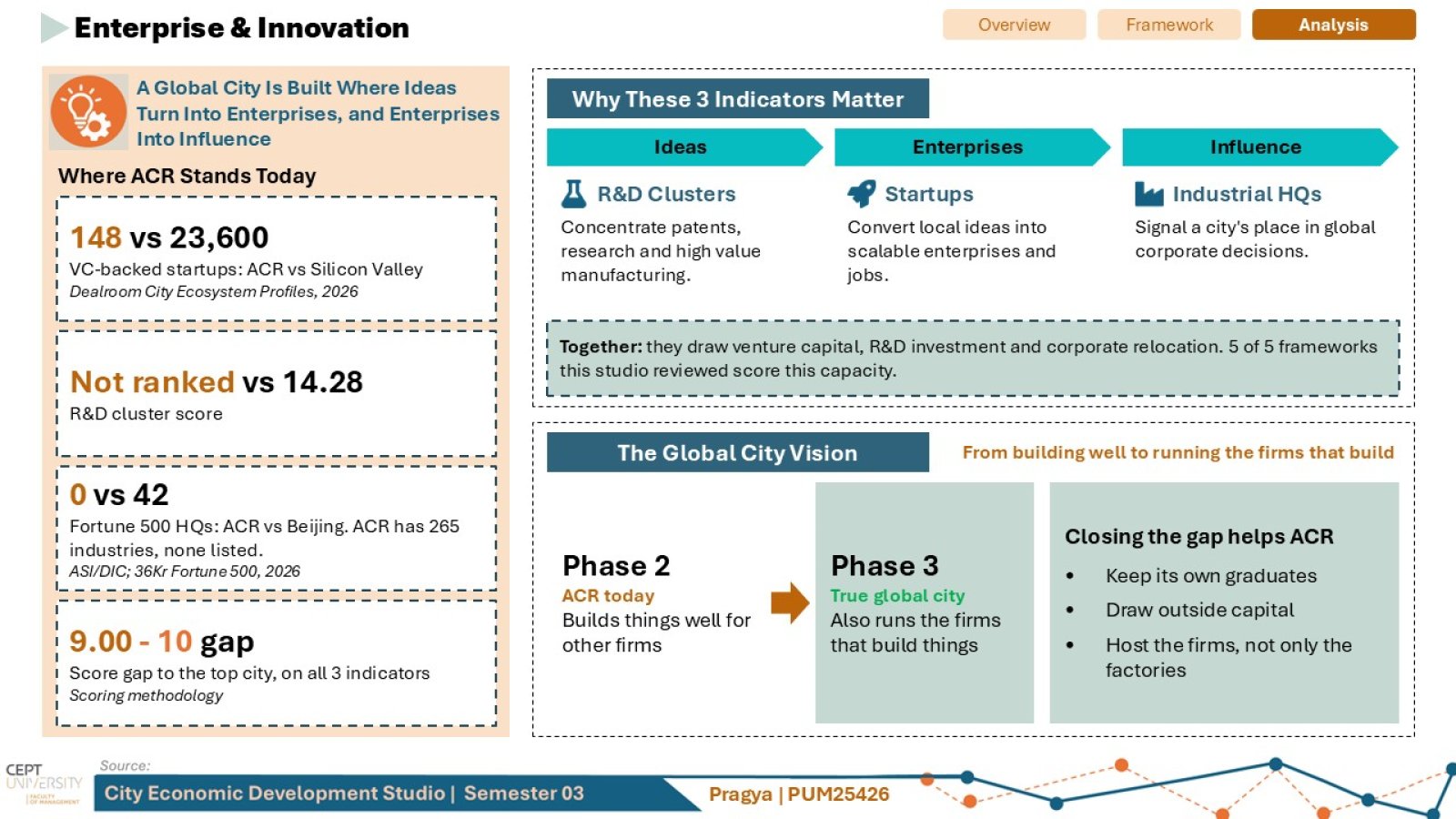
Enterprise & Innovation Gap: Quantifies ACR's gap (148 vs 23,600 startups; 0 vs 42 Fortune 500 HQs); path from "builds well" to true global city.

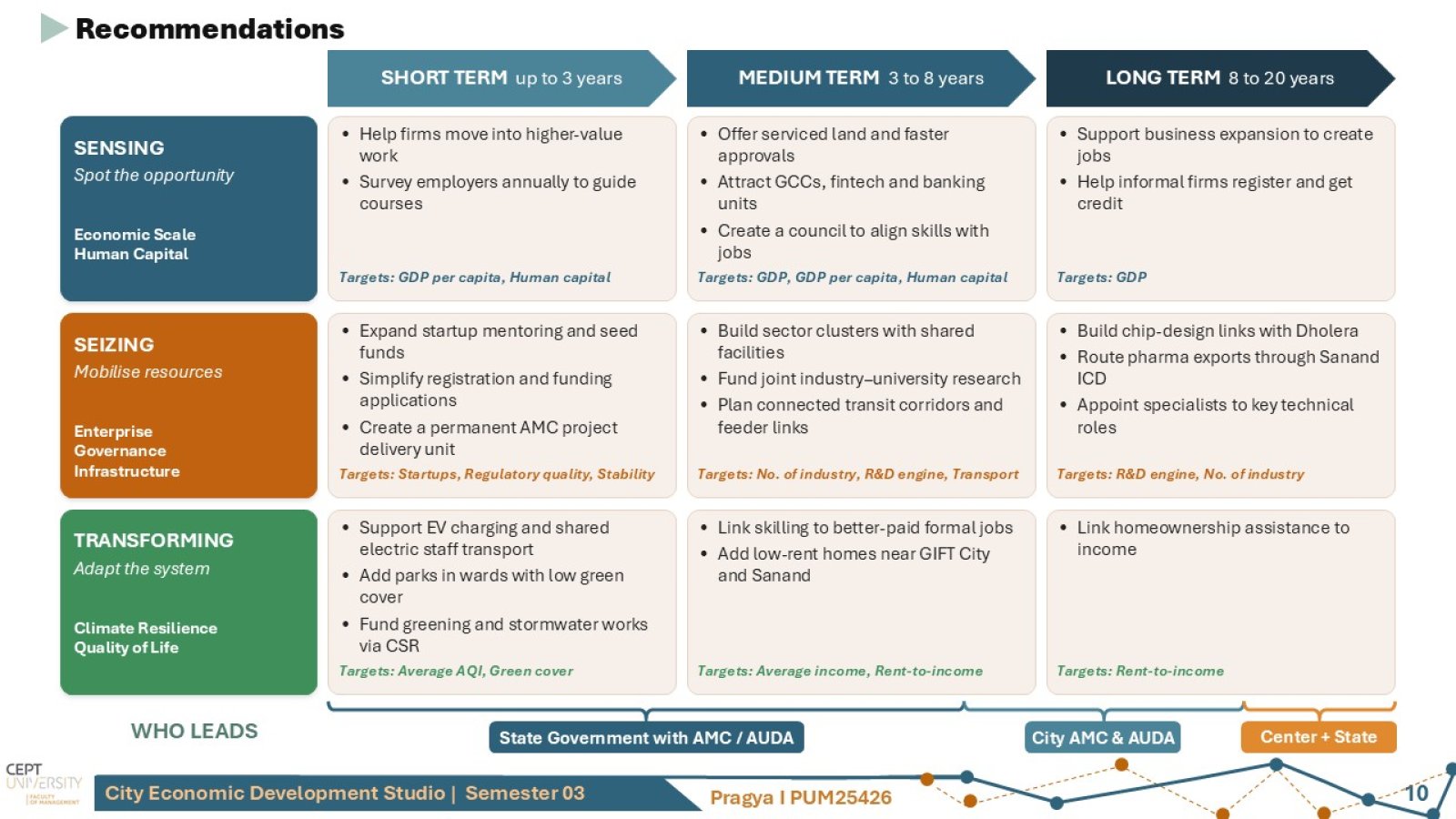
Recommendations: Short/medium/long term action plan via Sensing, Seizing, Transforming framework, with stakeholders named per action.

Project Video