Sandra Mary Antony

UM4002-2

Sustainability _Ahmedabad Metro

The study examines sustainability interventions in the Ahmedabad Metro to enhance energy efficiency, passenger comfort, and environmental performance. Field observations and policy reviews highlight key challenges such as high HVAC loads, limited renewable use, and heat discomfort at elevated stations. Proposed solutions include water-mist cooling, occupancy-based HVAC control, bifacial solar panels, and vertical greening. Guided by IGBC standards and primary data, these measures aim to create a climate-responsive, energy-efficient, and commuter-friendly metro system that sets a model for sustainable urban transit.
Report Content

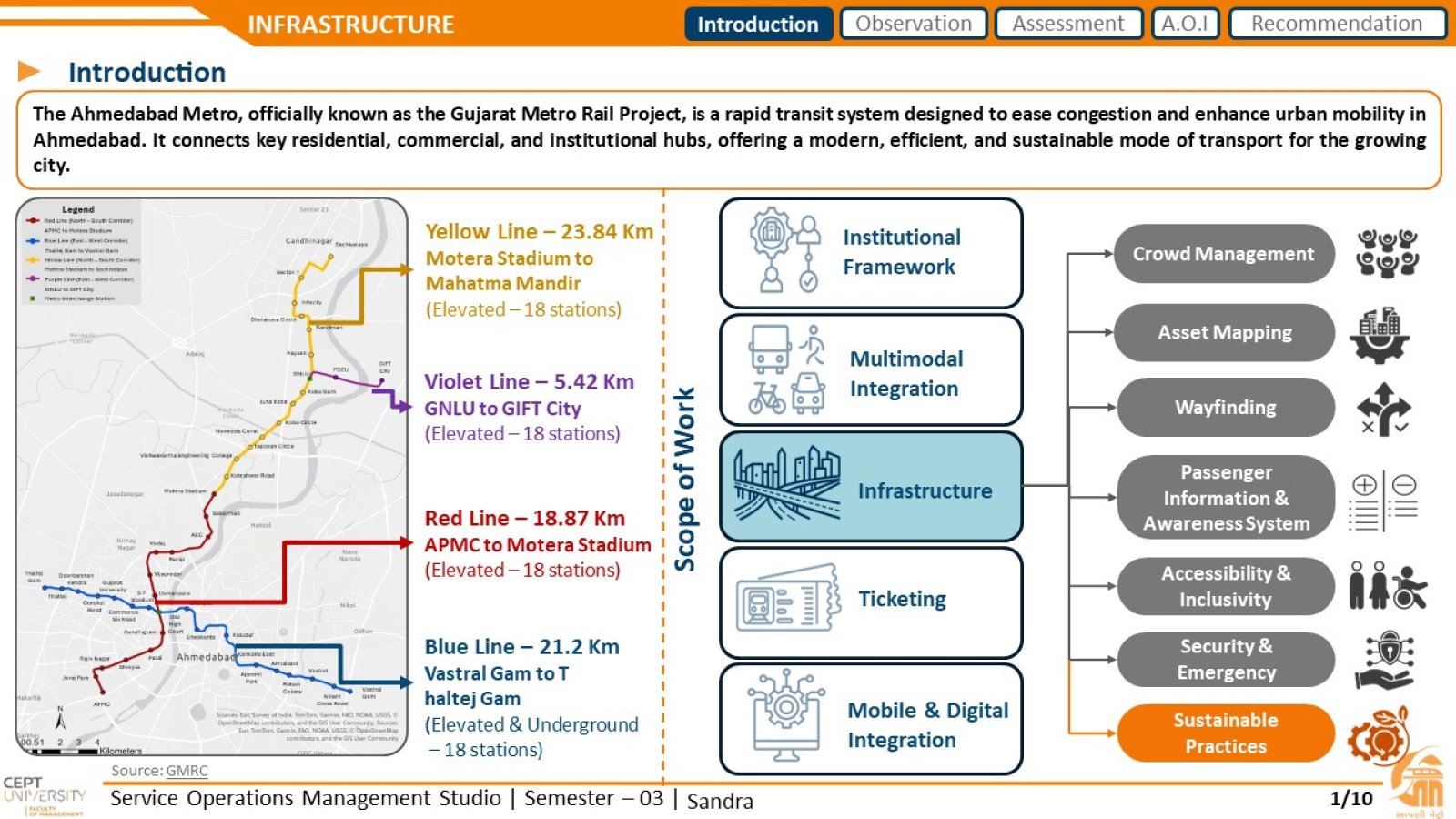
Ahmedabad Metro marks a shift toward modern, sustainable urban mobility. The four corridors connect key city zones while integrating systems for accessibility, safety, and green practices setting the foundation for a future-ready transport network.

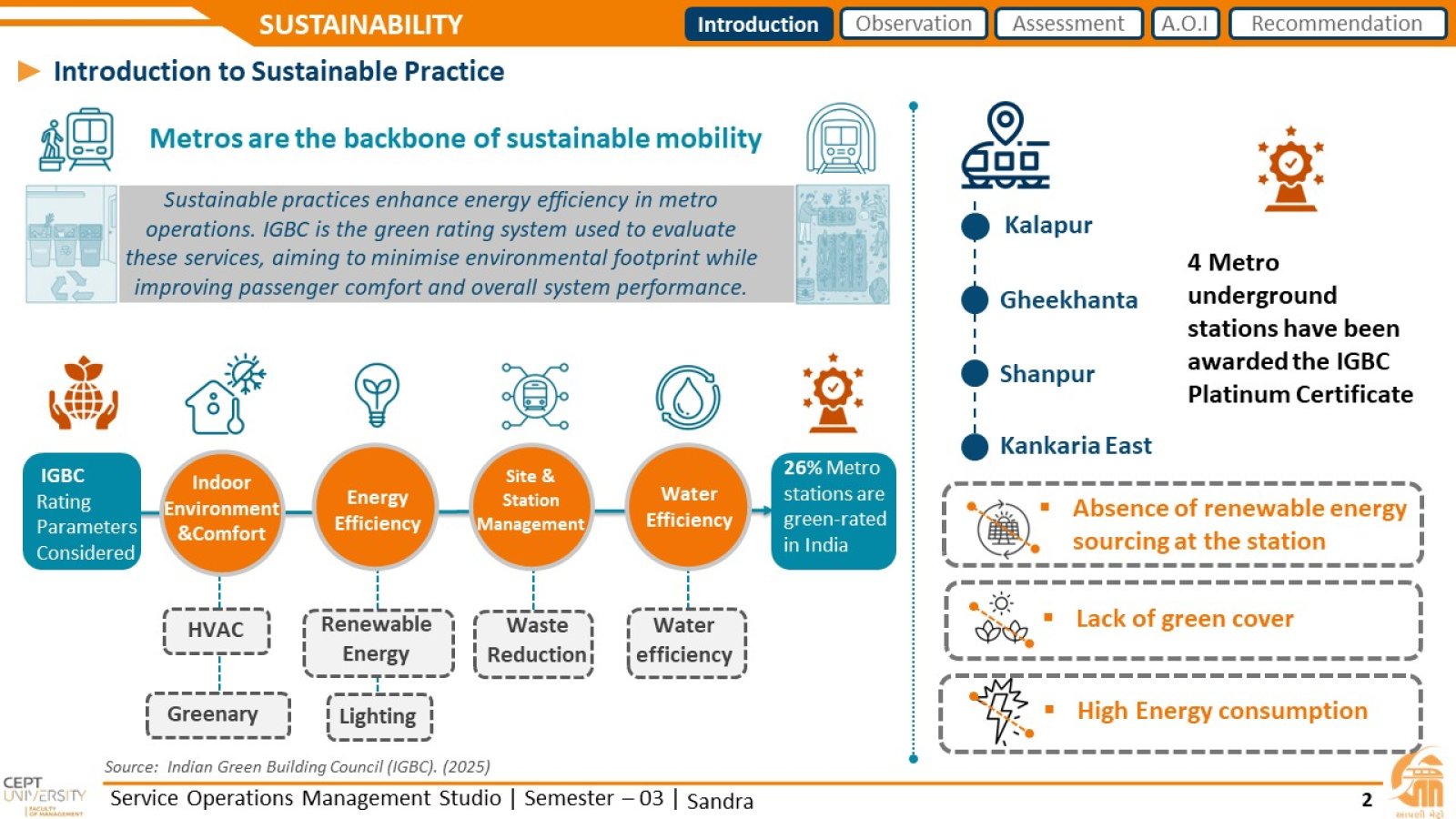
Sustainability lies at the heart of metro operations. Guided by IGBC standards, the focus is on enhancing energy efficiency, indoor comfort, and resource conservation yet challenges like high energy use and lack of green cover remain.

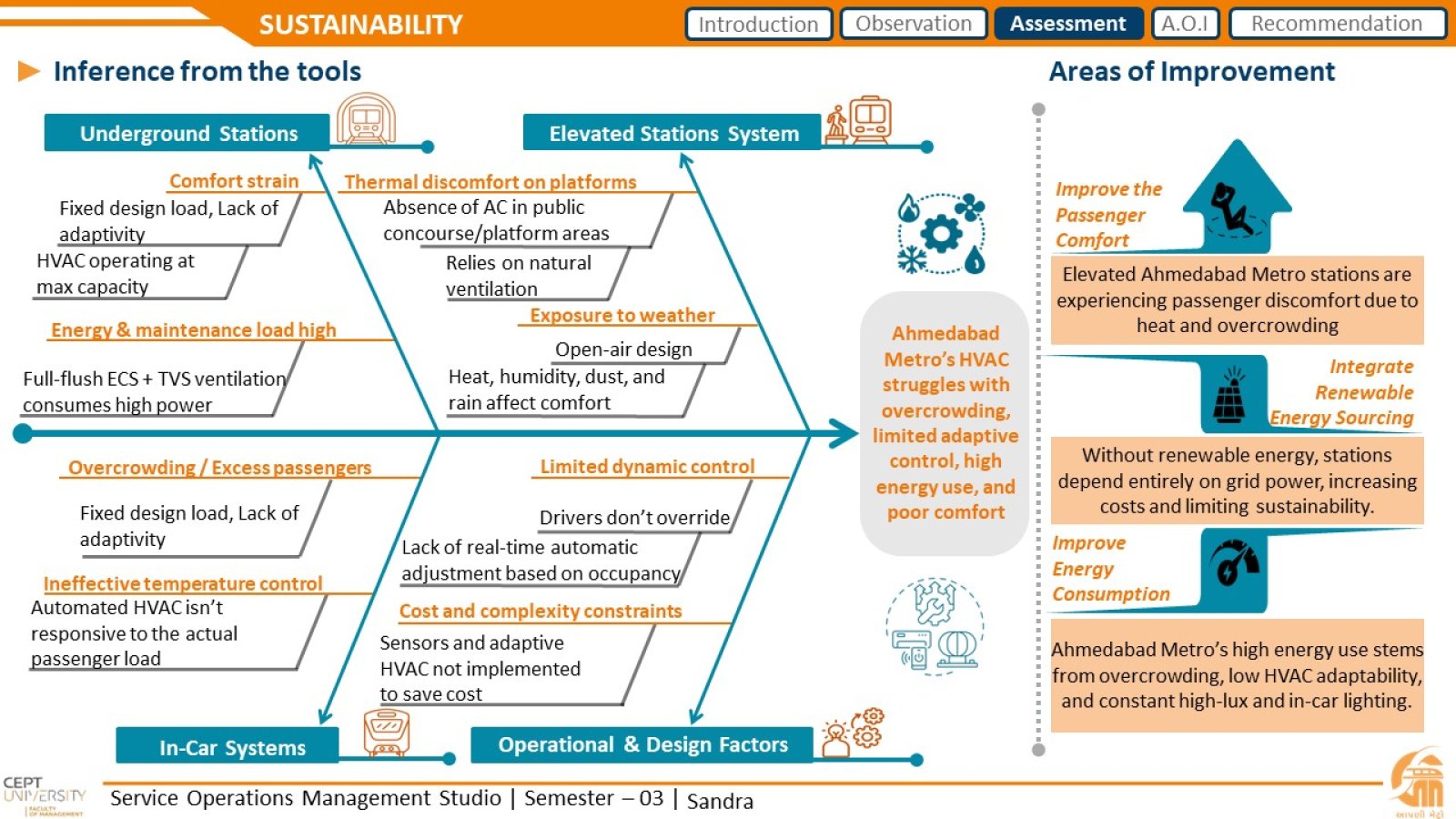
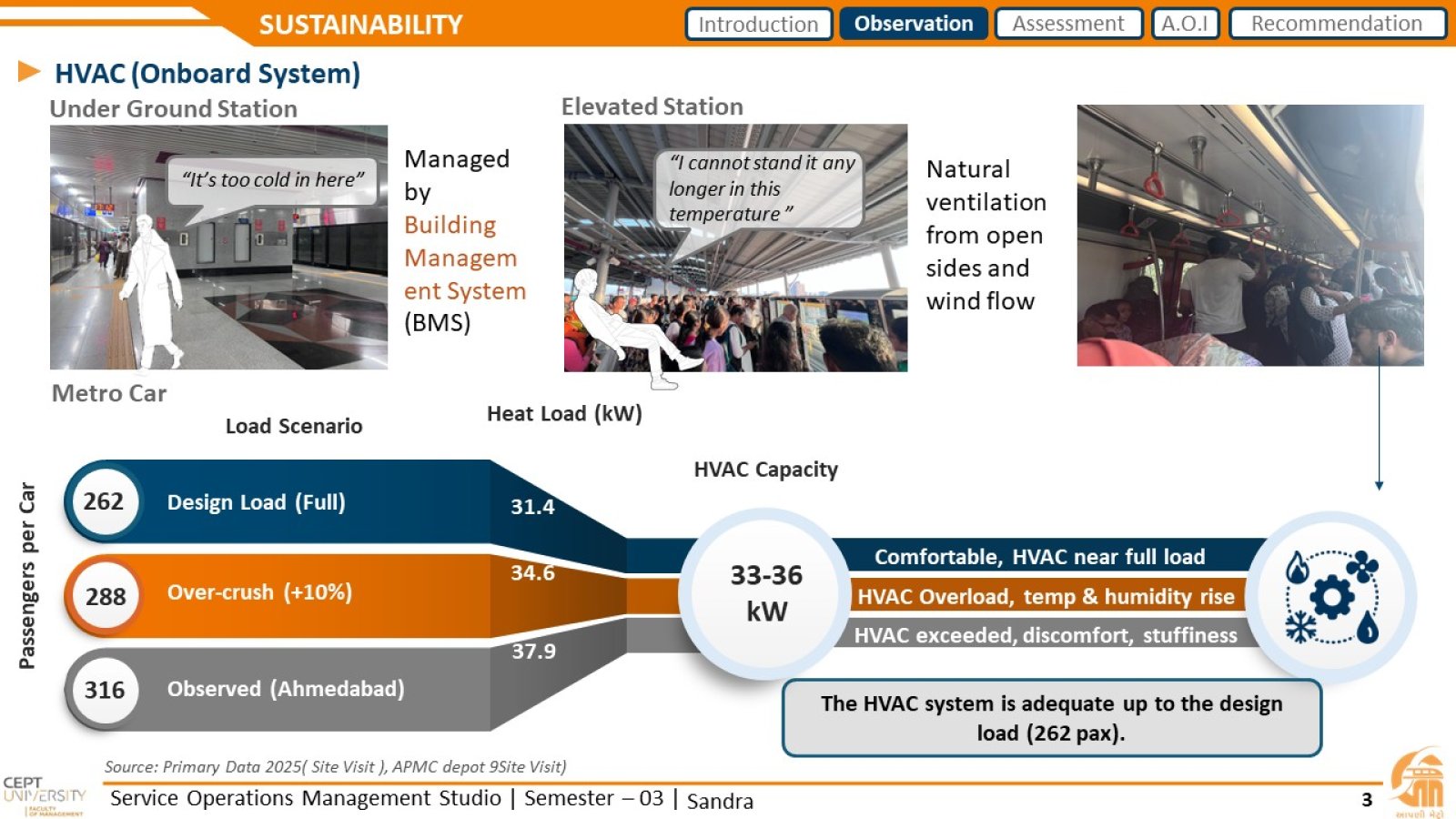
Thermal comfort varies across station types. Underground stations are well-cooled but energy-intensive, while elevated stations depend on natural airflow, leading to heat discomfort and inconsistent passenger experience during peak hours.

System analysis reveals key gaps limited adaptive control, high power use, and overcrowding-driven inefficiency. The insight calls for renewable integration and technology-driven climate management to enhance comfort and reduce energy strain.

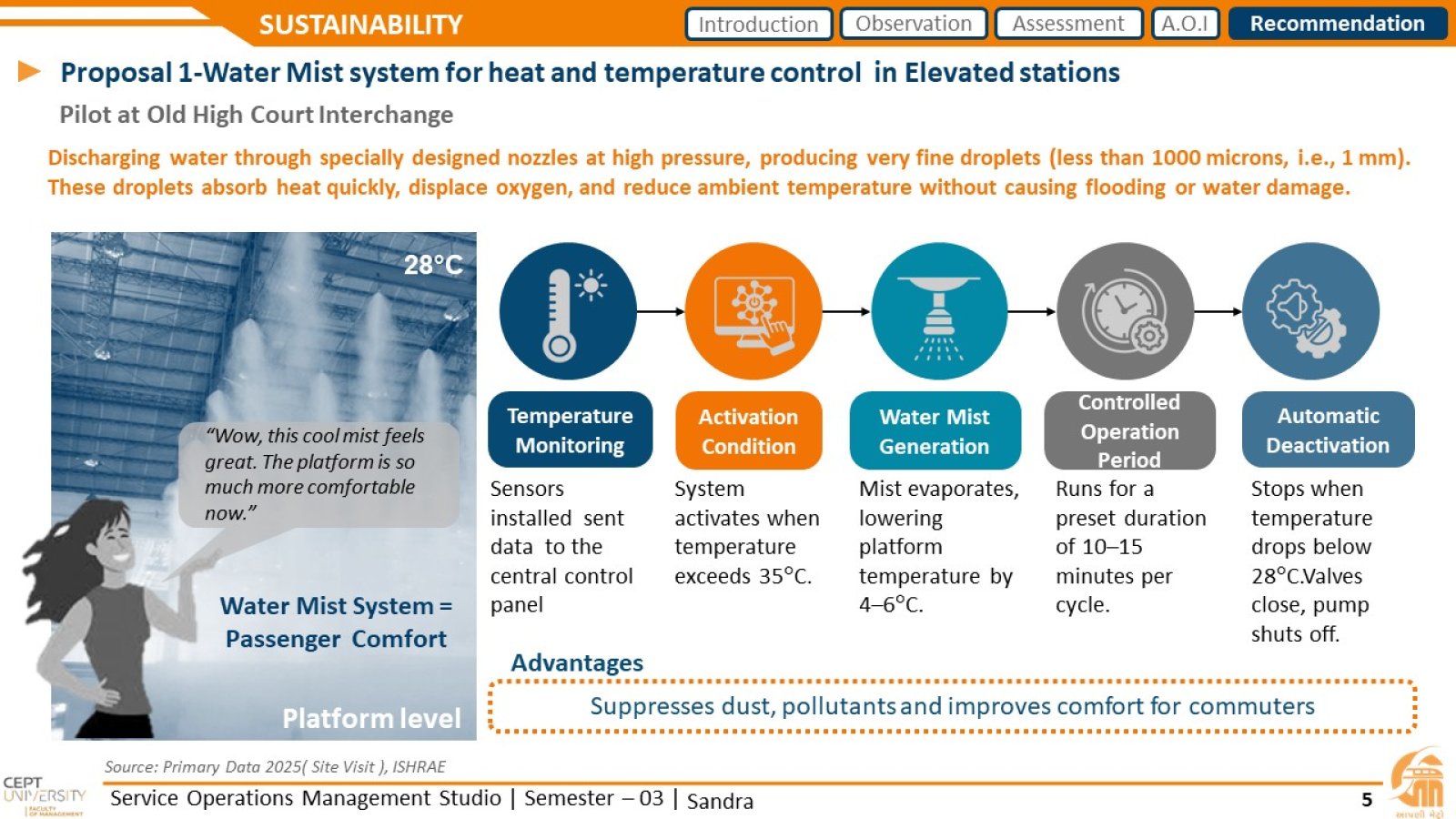
A smart misting system activates automatically during high temperatures, lowering platform heat by 4–6°C. It offers an affordable, low-energy solution to improve comfort at open, elevated stations.

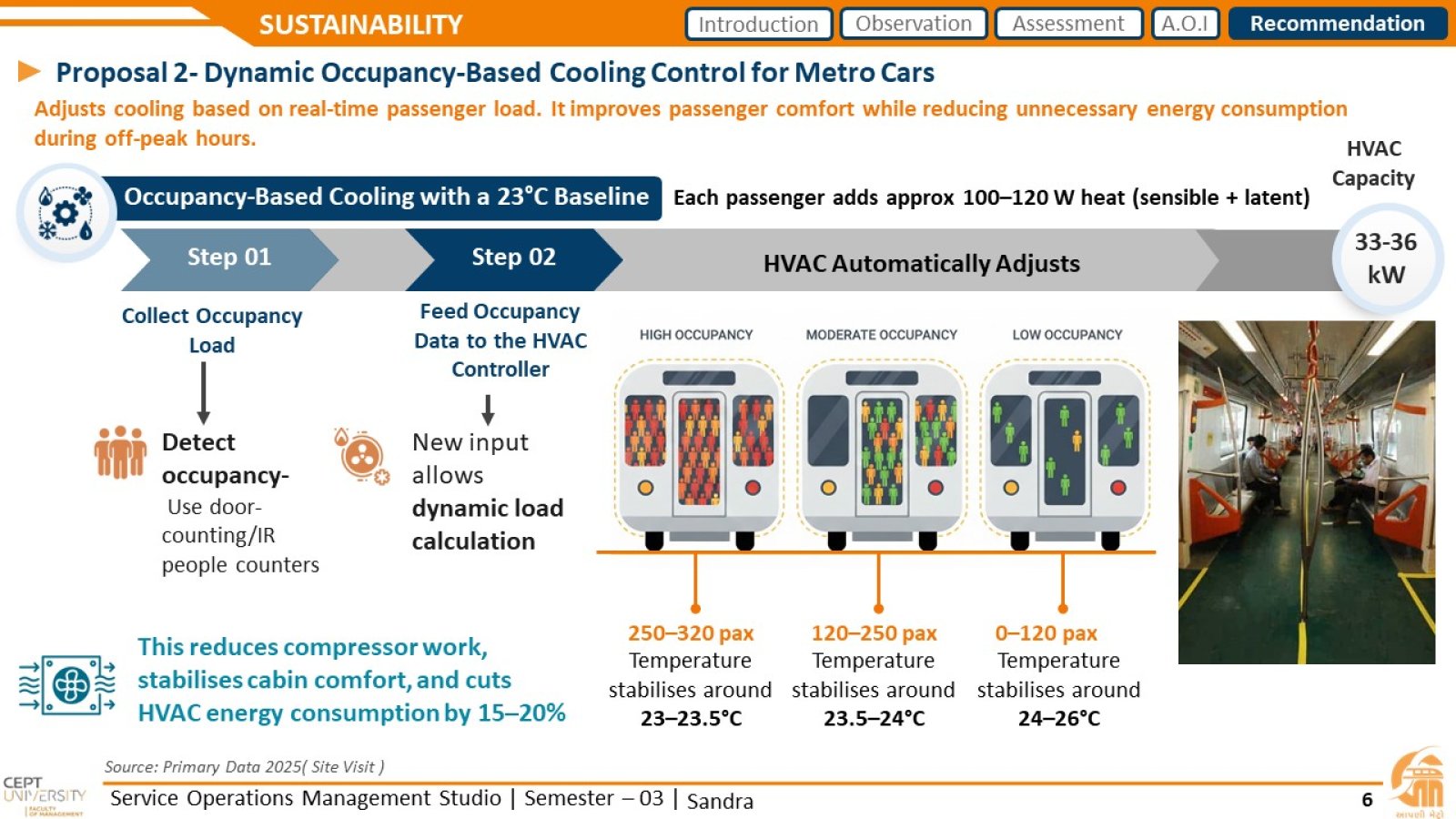
Real-time passenger detection allows the HVAC system to adjust cooling levels automatically. This approach maintains comfort, reduces compressor load, and cuts energy use by up to 20%, ensuring efficient climate control inside trains.

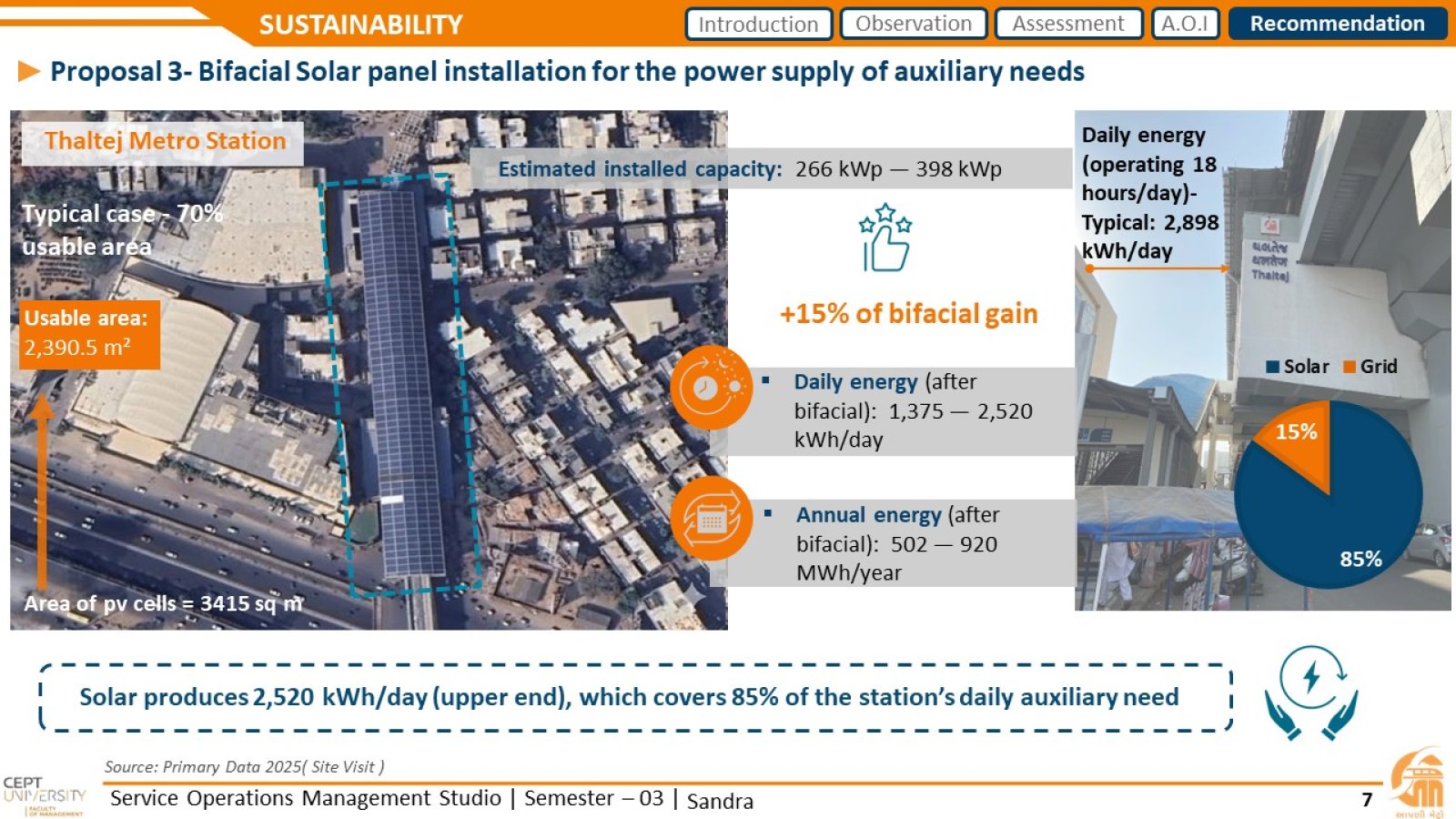
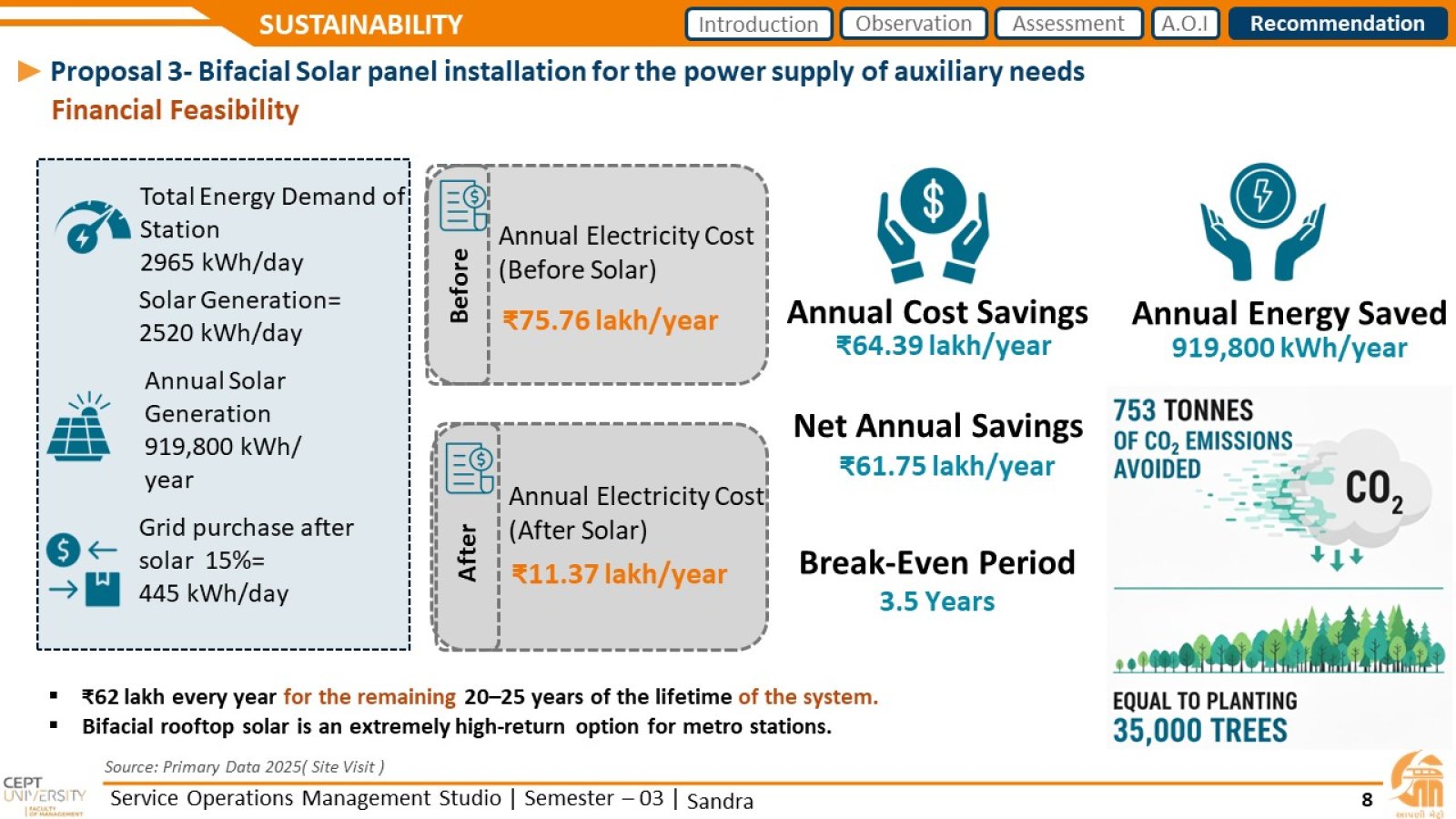
Bifacial solar panels on Thaltej Station rooftops harness light from both sides, generating 85% of the station’s daily power needs. The system maximizes renewable use while reducing dependency on the grid.

Solar integration proves financially sound saving ?62 lakh annually with a payback period of 3.5 years. Along with 753 tonnes of CO? reduction, it shows how sustainability and economics can align effectively.

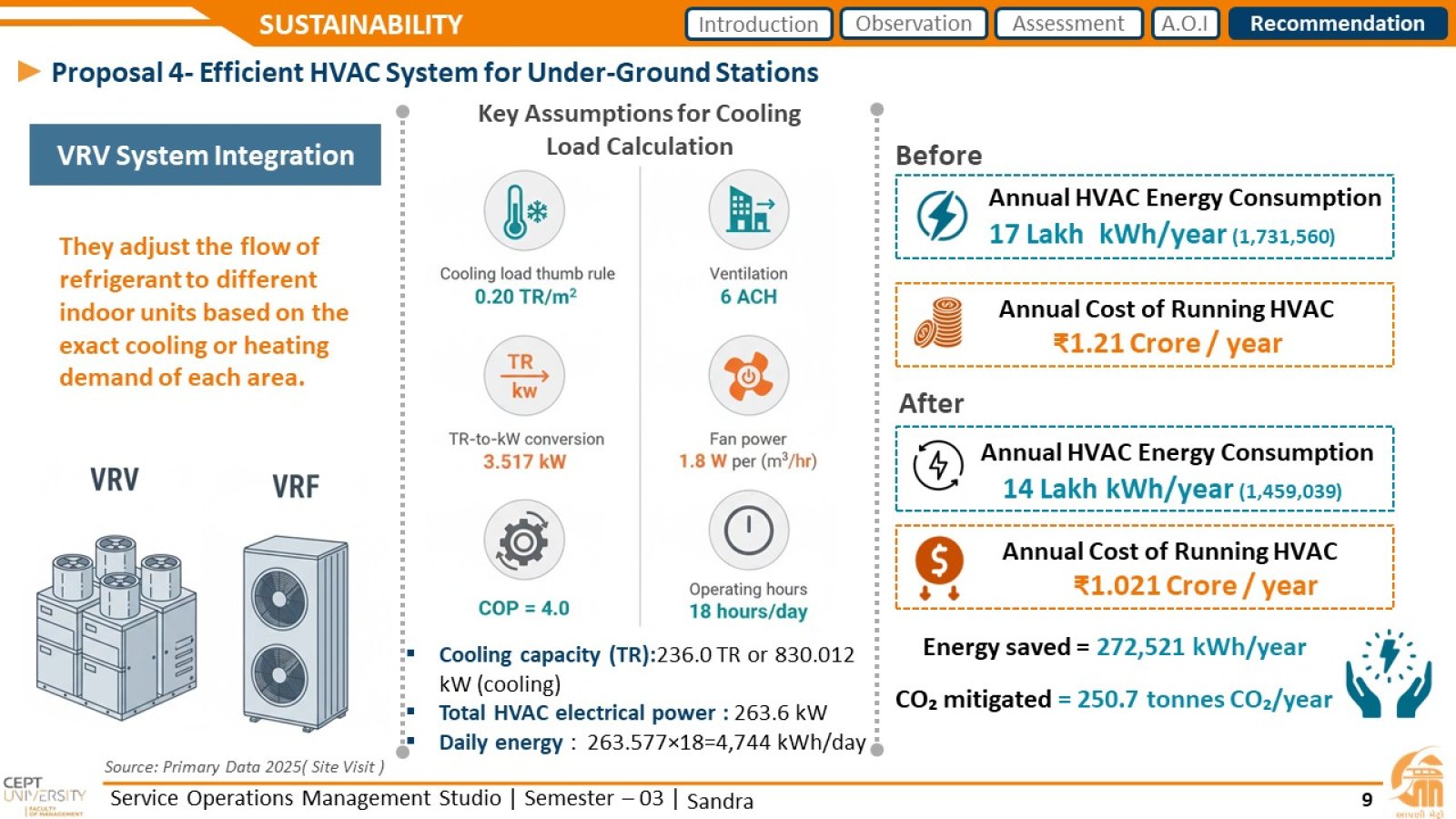
The VRV system provides adaptive cooling based on zone demand, improving efficiency and comfort. It saves over 272,000 kWh annually and reduces 250 tonnes of CO?, optimizing underground station performance.

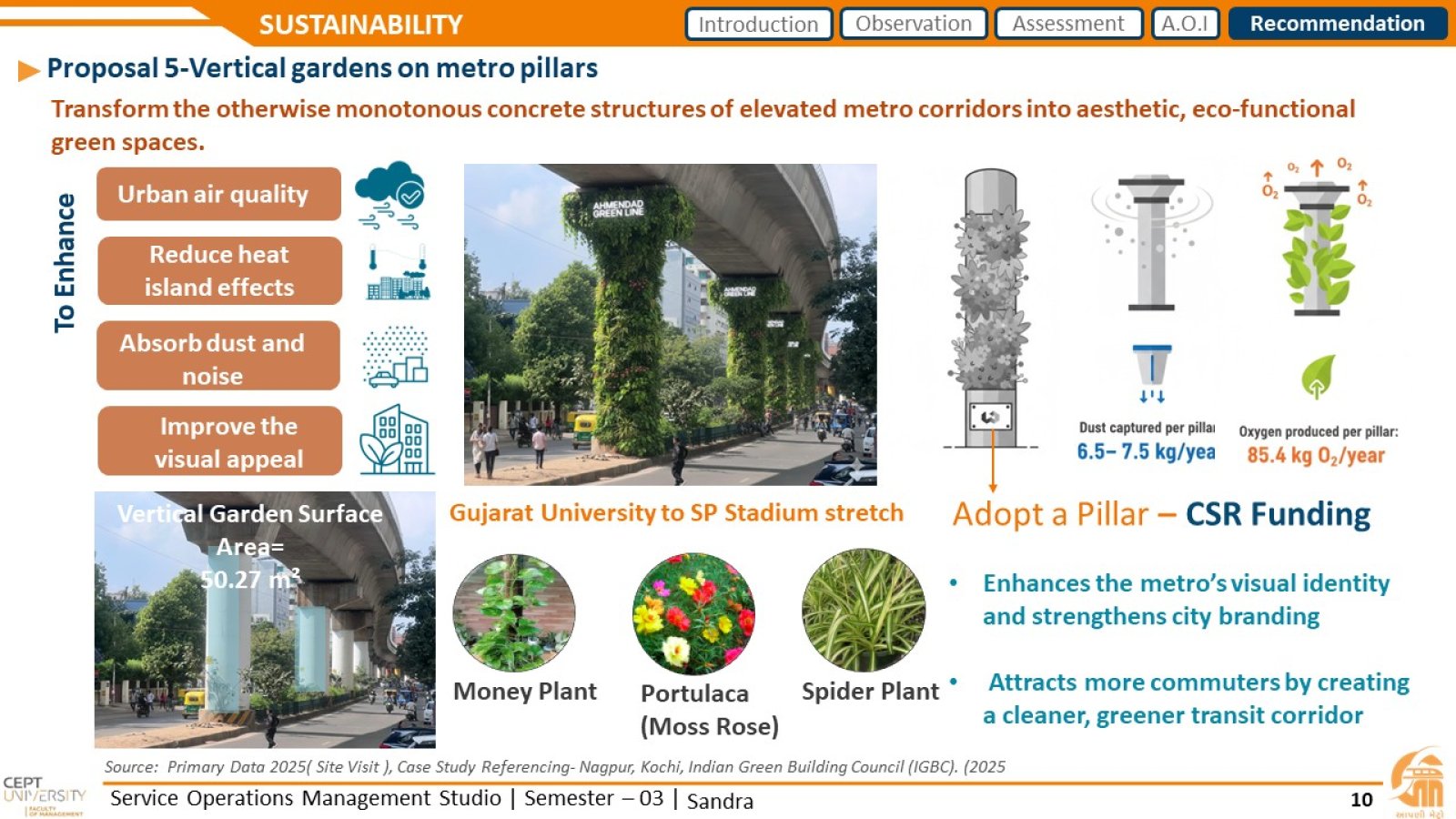
Green pillars along metro corridors transform dull structures into vibrant eco-assets. They purify air, reduce heat, absorb dust, and elevate the city’s visual identity promoting a cleaner, greener urban image.

Project Video