Christa Ann Billy

UM4000-2

City Identity and Branding

“Identity is cause; brand is effect.” — Larry Ackerman.
The study on Mahesana’s city identity and branding revealed a significant gap between the city’s rich historic assets and the way the city is currently perceived and expressed. Despite having strong cultural, economic, and historical anchors, it continues to be viewed largely as a transit or “pass-by” city. The absence of a unified visual identity, weak communication strategies, fragmented institutionalisation, and underutilized public spaces have reduced the city’s recall value and emotional connection among residents and visitors. This disconnect has limited the city’s accessibility, experiential value, tourism potential, and long-term brand recognition. The study therefore focuses on developing a cohesive, context-led branding framework through built elements and public realm interventions that can strengthen Mahesana’s identity, improve public perception, and transform the city into a recognizable experiential destination. As city identity is shaped not only by infrastructure, but also by the stories, memories, spaces, and experiences people associate with it, a strong city brand has the potential to transform a place from being merely visited to being remembered.
Report Content

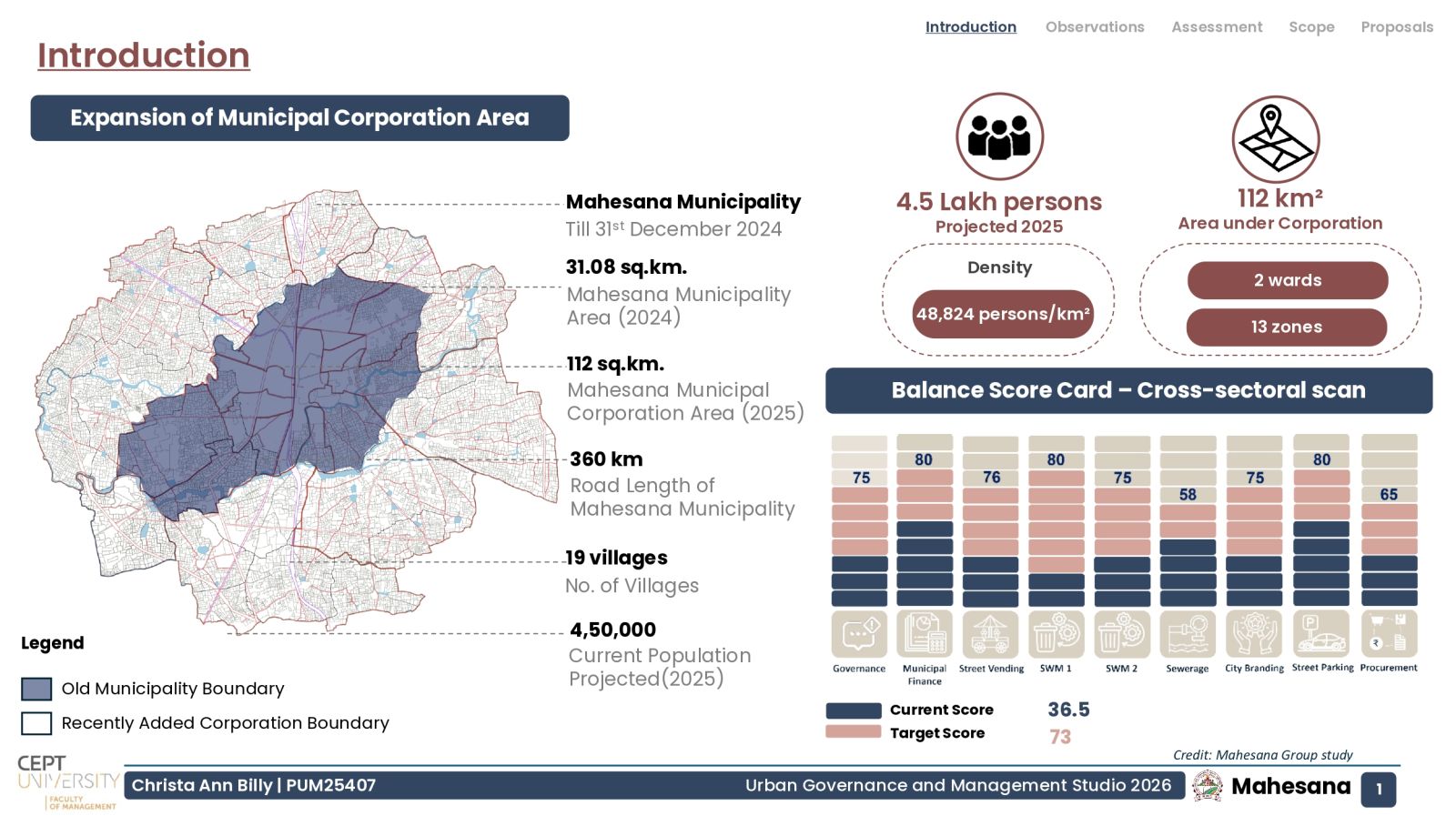
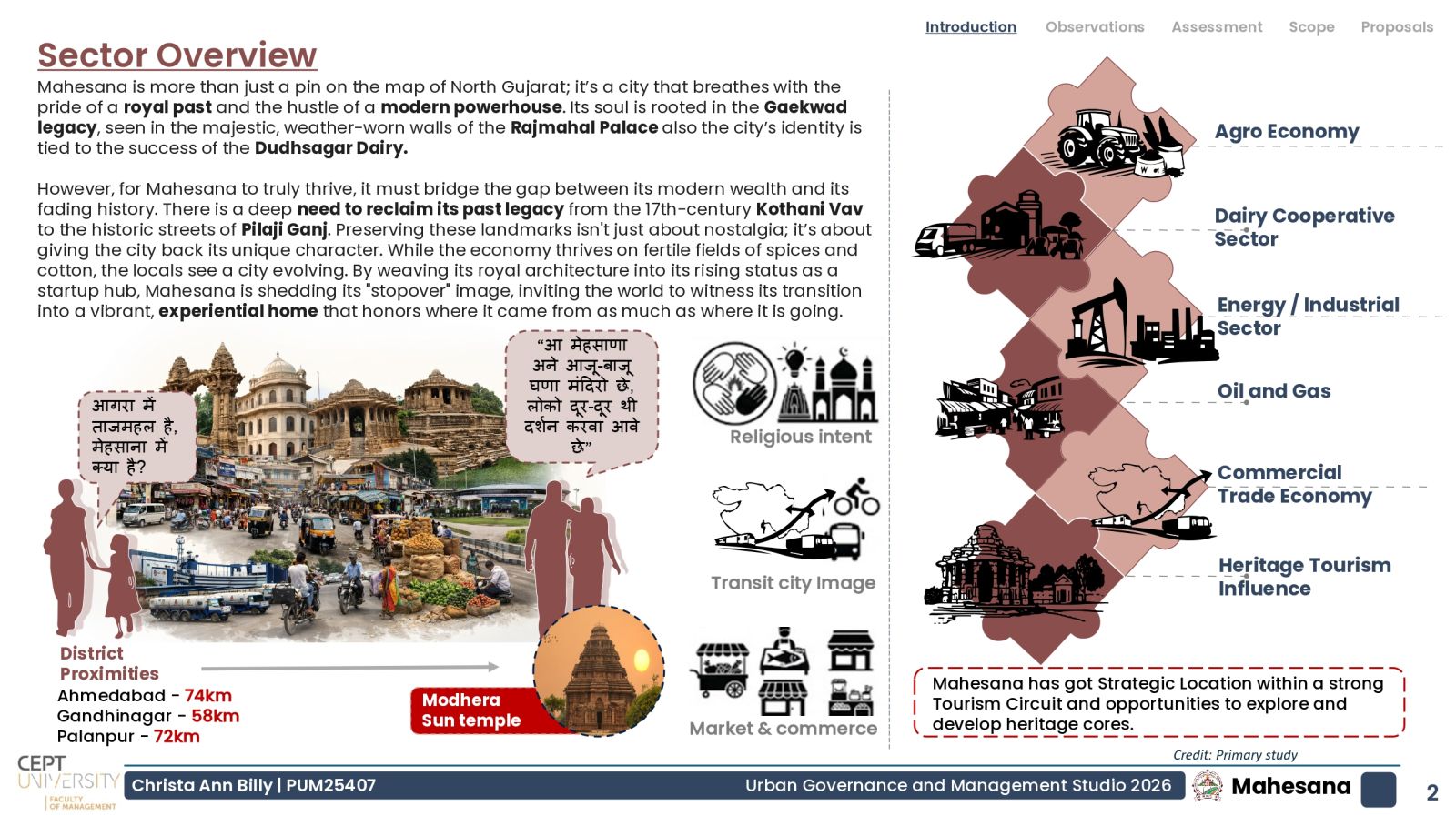
Mahesana’s rapid urban expansion and governance transition create opportunities for redefining its city identity and branding. A combined BSC study over all major sectors within Mahesana.

What people perceive? Why do people come to Mahesana and what does the city has to ffer? Mahesana sectoral study and its current interpretation as a largely transit-oriented city.

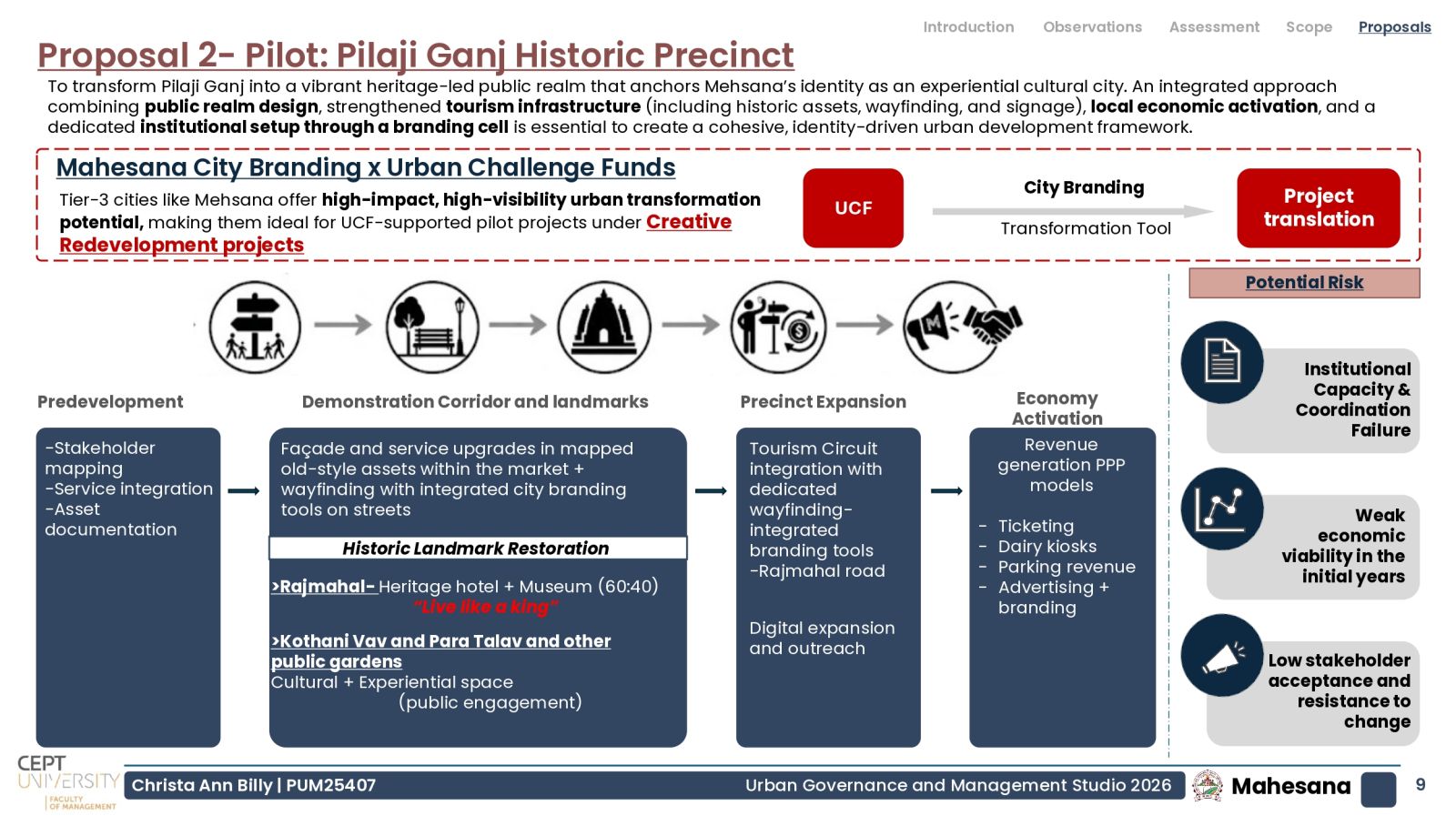
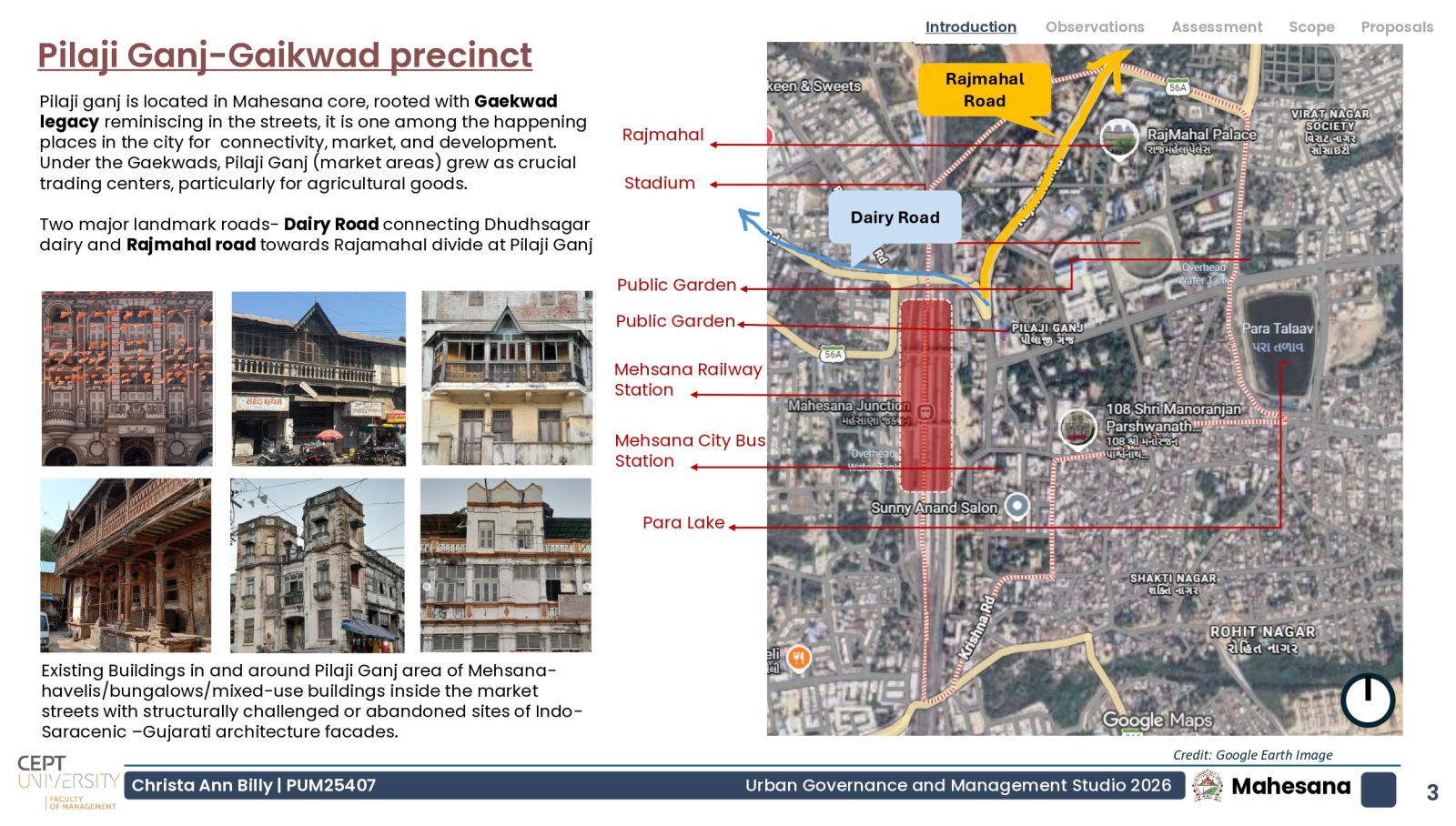
Pilaji Ganj reflects Mahesana’s historic Gaekwad legacy and built traces within the markets and streets - but faces decline, underutilization, and identity loss.

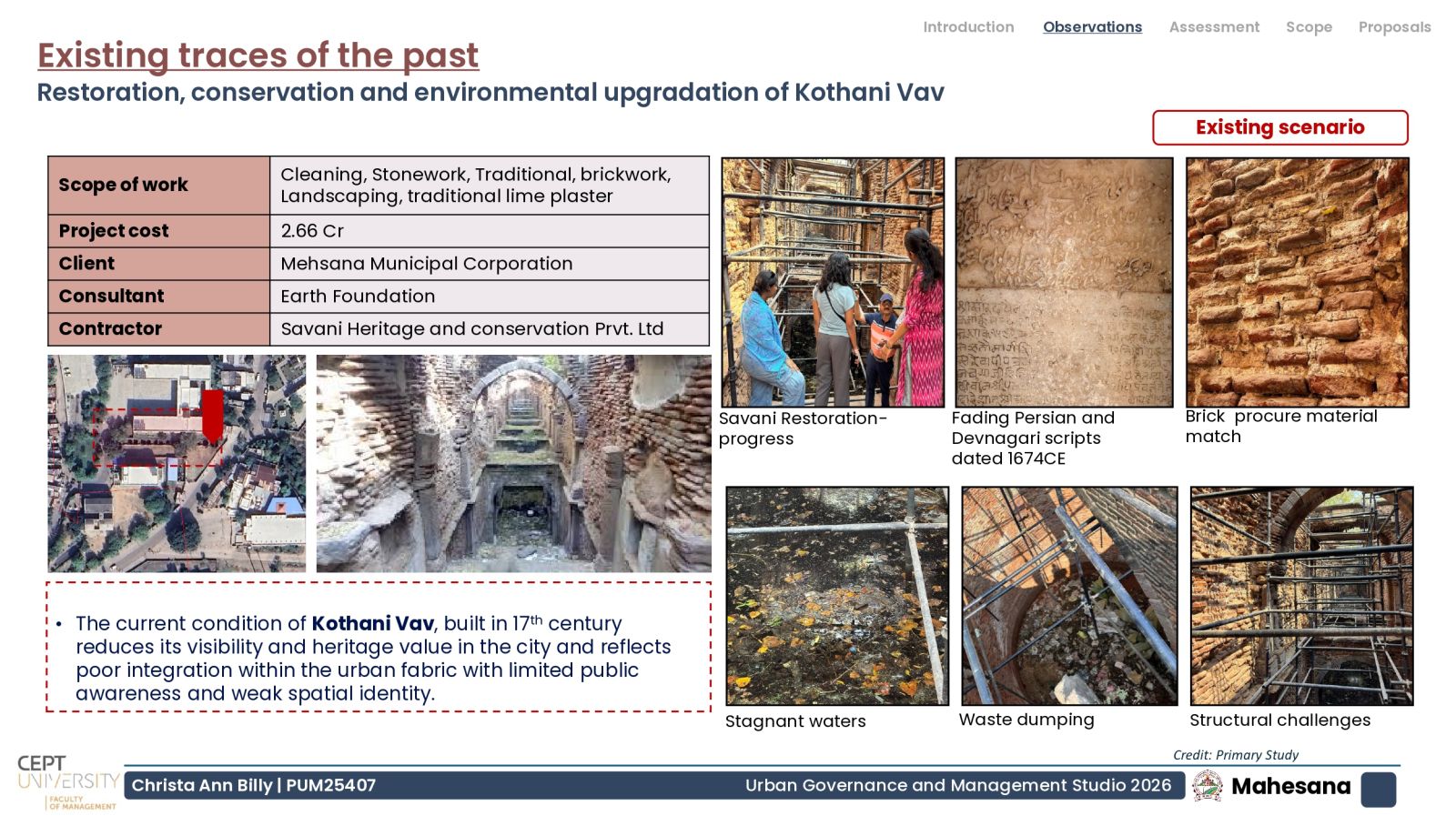
The deteriorating condition of Kothani Vav highlights the weakening visibility and integration of heritage within the urban fabric.

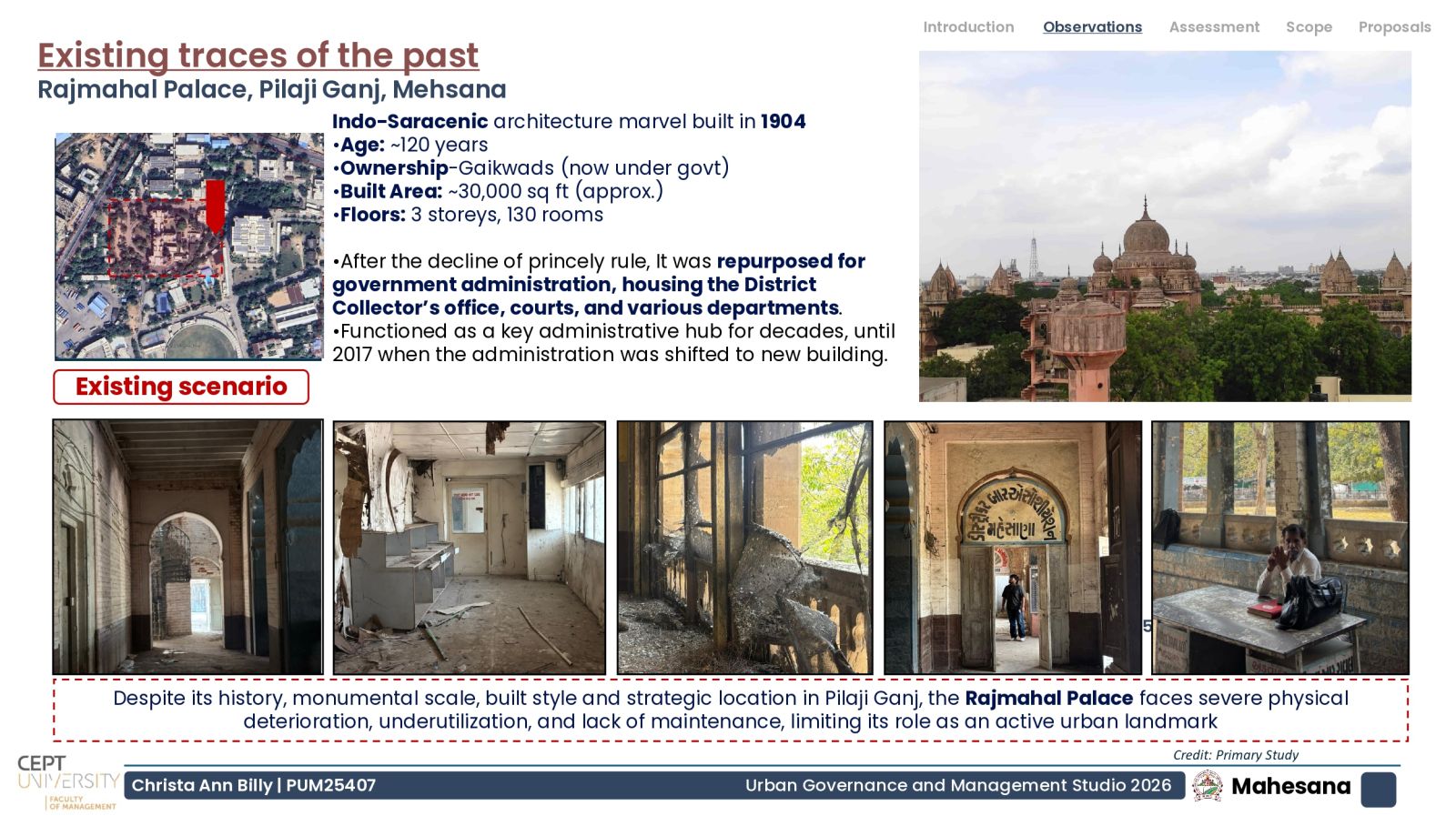
Rajmahal Palace remains a monumental yet underutilized landmark with potential to anchor the city’s heritage identity.

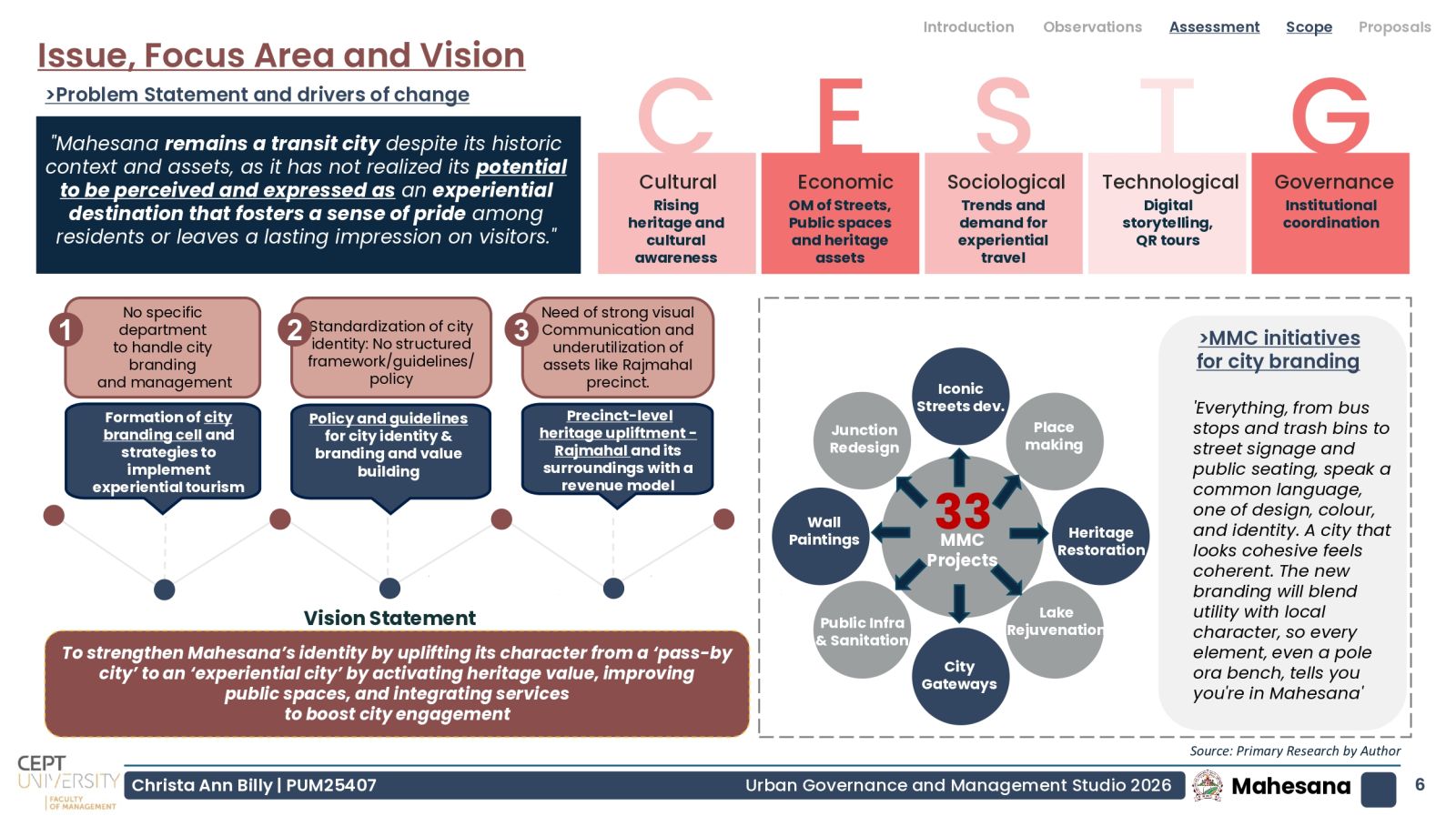
The vision focuses on repositioning Mahesana from a transit city into an experiential and identity-driven urban destination, with identified drivers of change that can support current MMC projects and upcoming strategies to address gaps in visual identity, governance, and public experience that weaken the city’s brand perception.

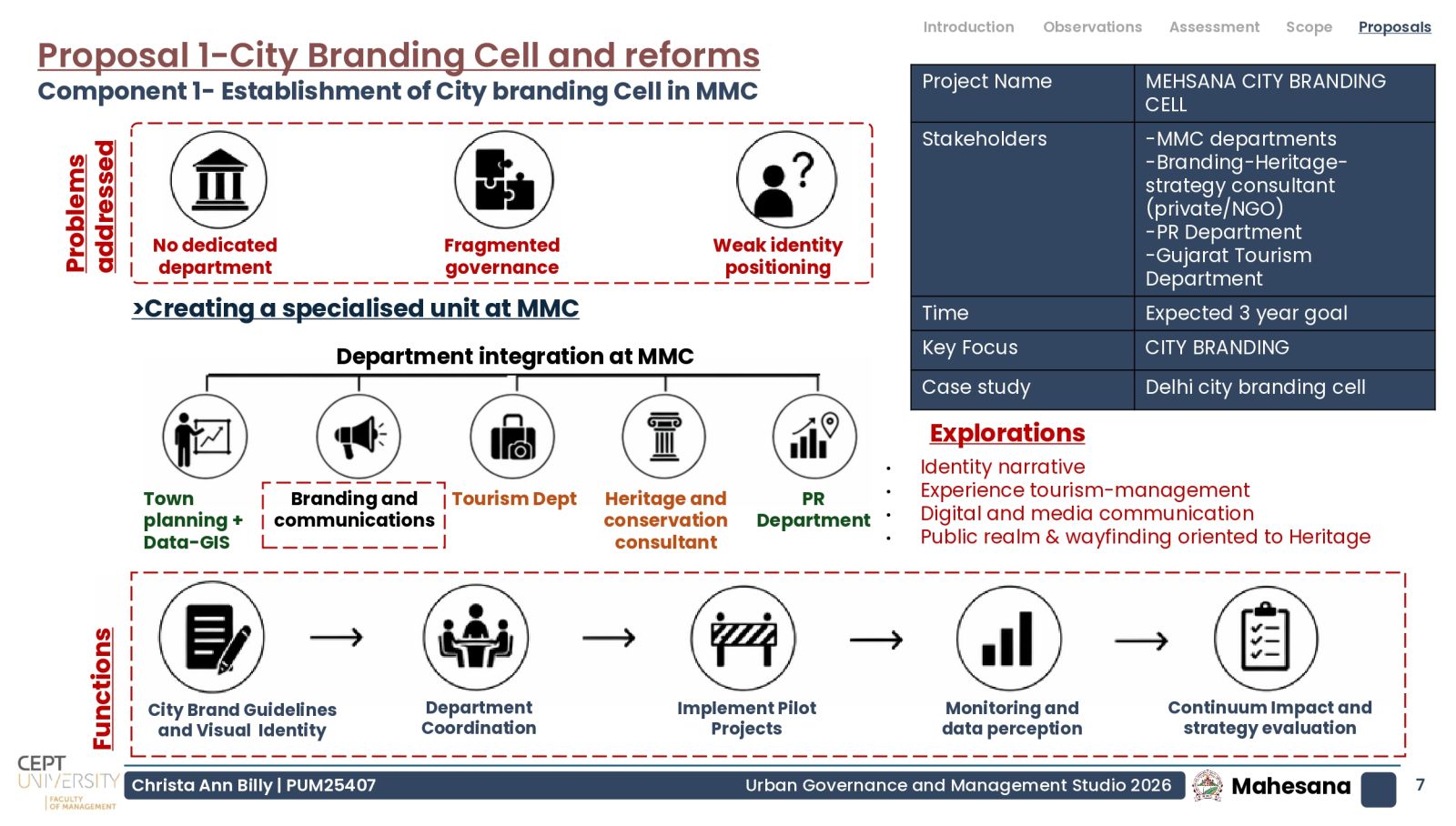
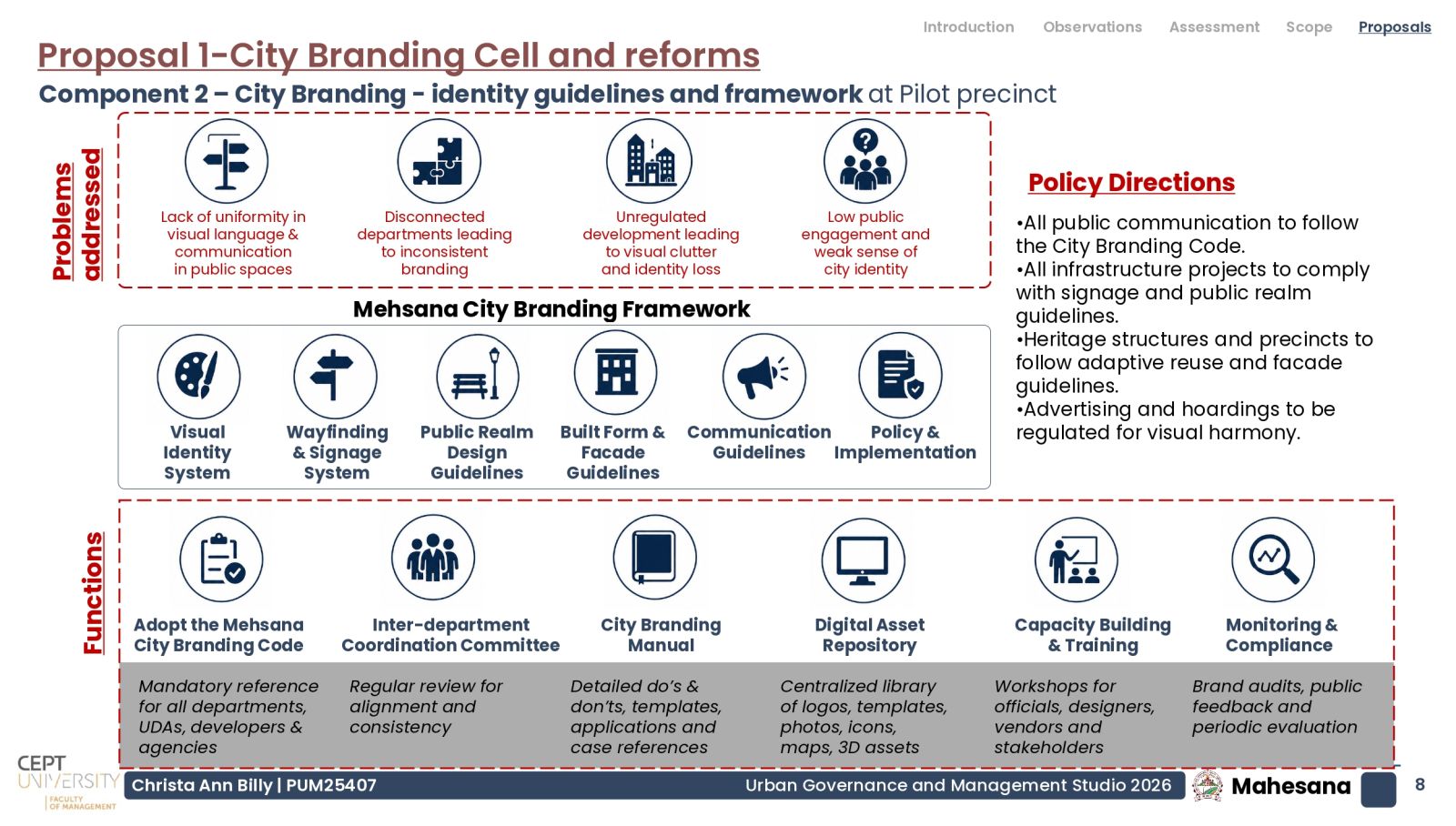
Fragmented governance, weak visual communication, and underutilized assets have weakened Mahesana’s overall city brand perception. The proposal establishes a City Branding Cell to institutionalize branding strategies and inter-department coordination.

City Branding guidelines and policy for developing public realm interventions that can translate Mahesana’s identity into a cohesive city under a unified branding framework.

Pilot precinct development- Pilaji Ganj as a dedicated historic precinct with the integration of identity guidelines proposed.

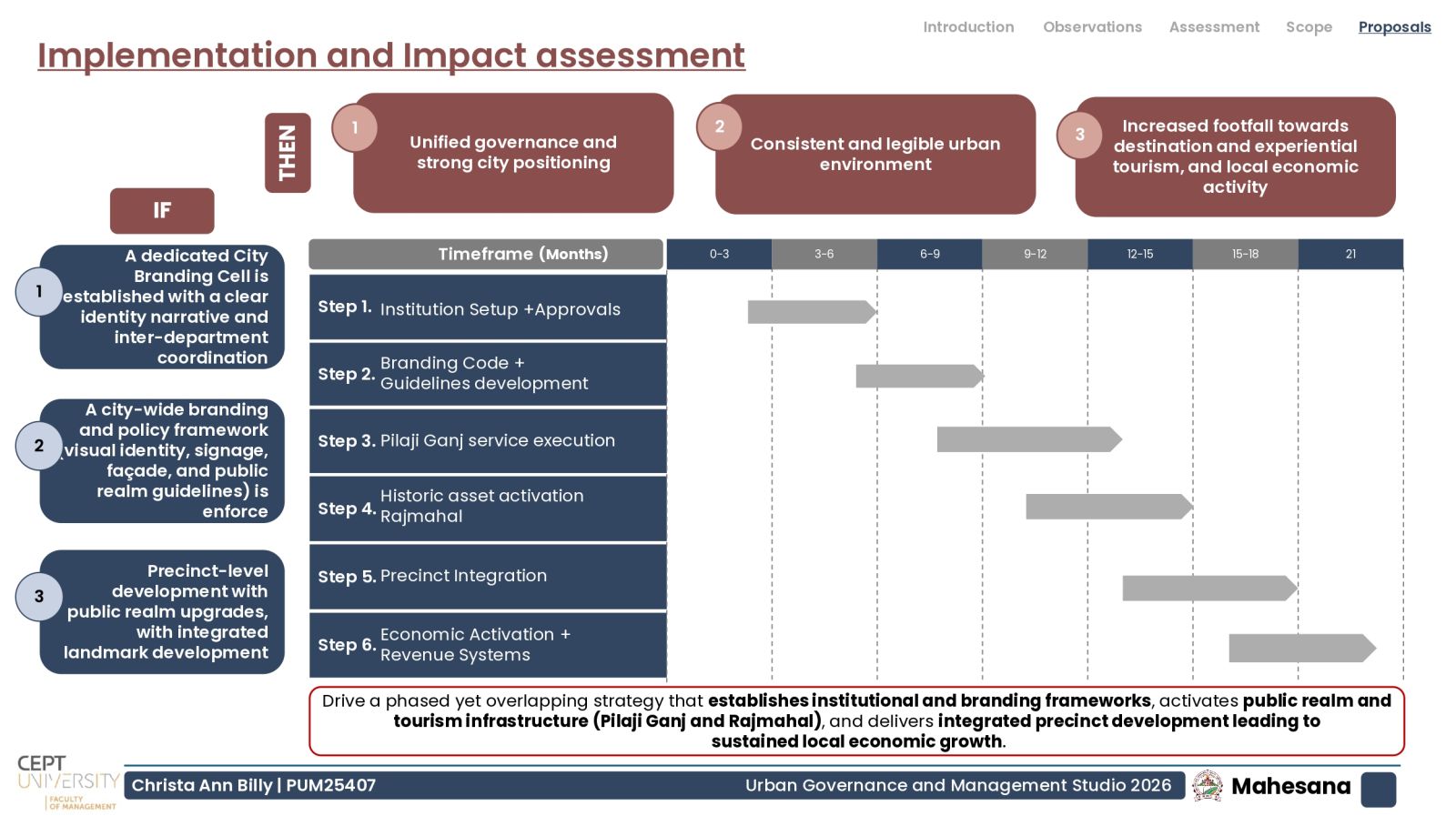
Proposal Implementation and future positioning of Mahesana