Shinde Kimaya Kiran Manjusha

UM4004

Beyond the Lake - Vastrapur, Ahmedabad.

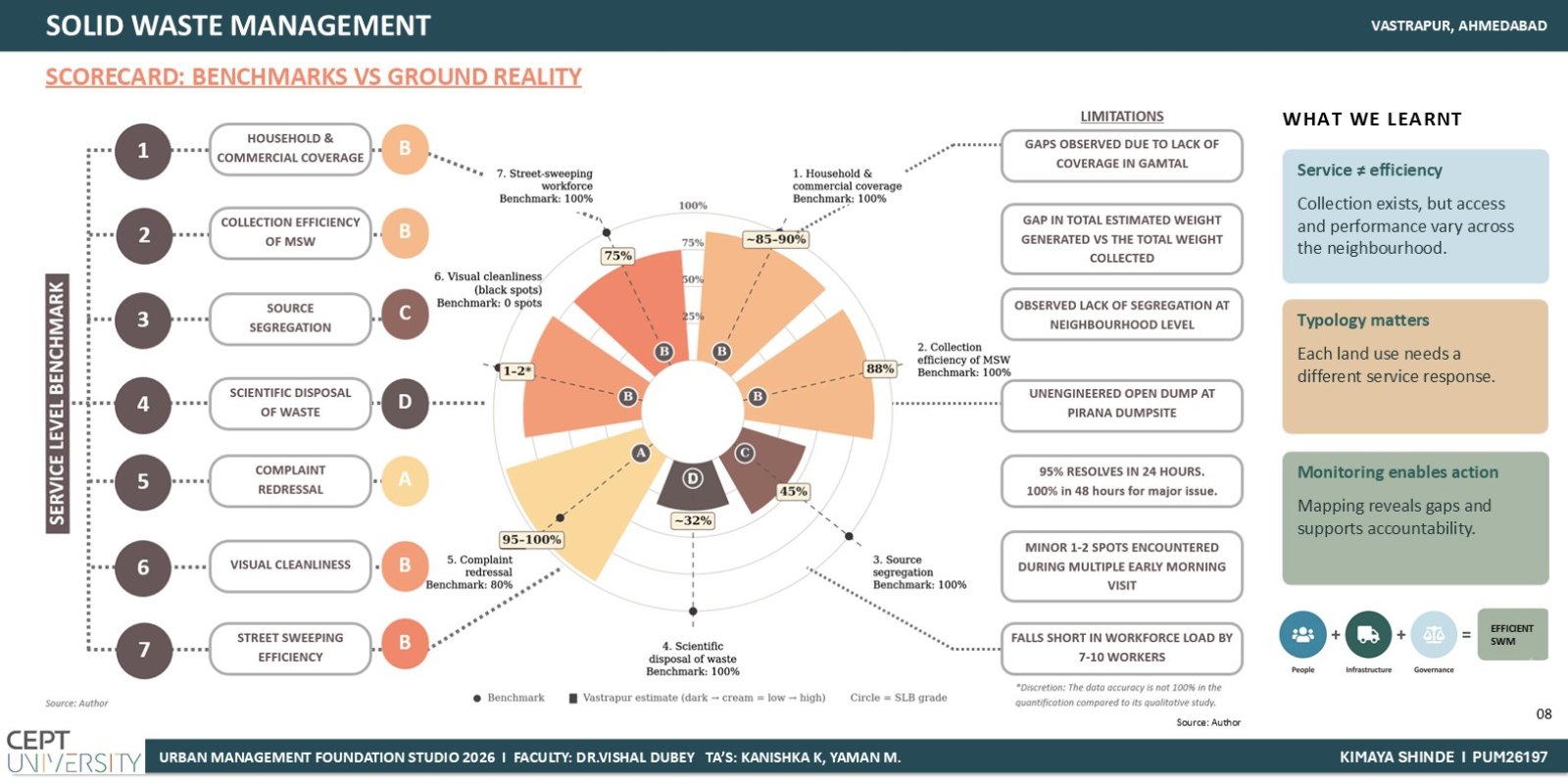
Vastrapur is a diverse western neighbourhood of Ahmedabad, comprising traditional Gamtal settlements, residential communities, commercial establishments and major public activity spaces like Vastrapur lake. This study explores the neighbourhood’s Solid Waste Management (SWM) system, tracing how waste is generated, collected, segregated, transported and disposed of across different land uses. The research draws upon on-site observations, geographic mapping, stakeholder interactions and quantitative analysis to assess waste management practices and service delivery. It evaluates the sector through Service Level Benchmarks (SLBs), identifying existing gaps and opportunities to improve the efficiency and sustainability of neighbourhood-level waste management.
Report Content

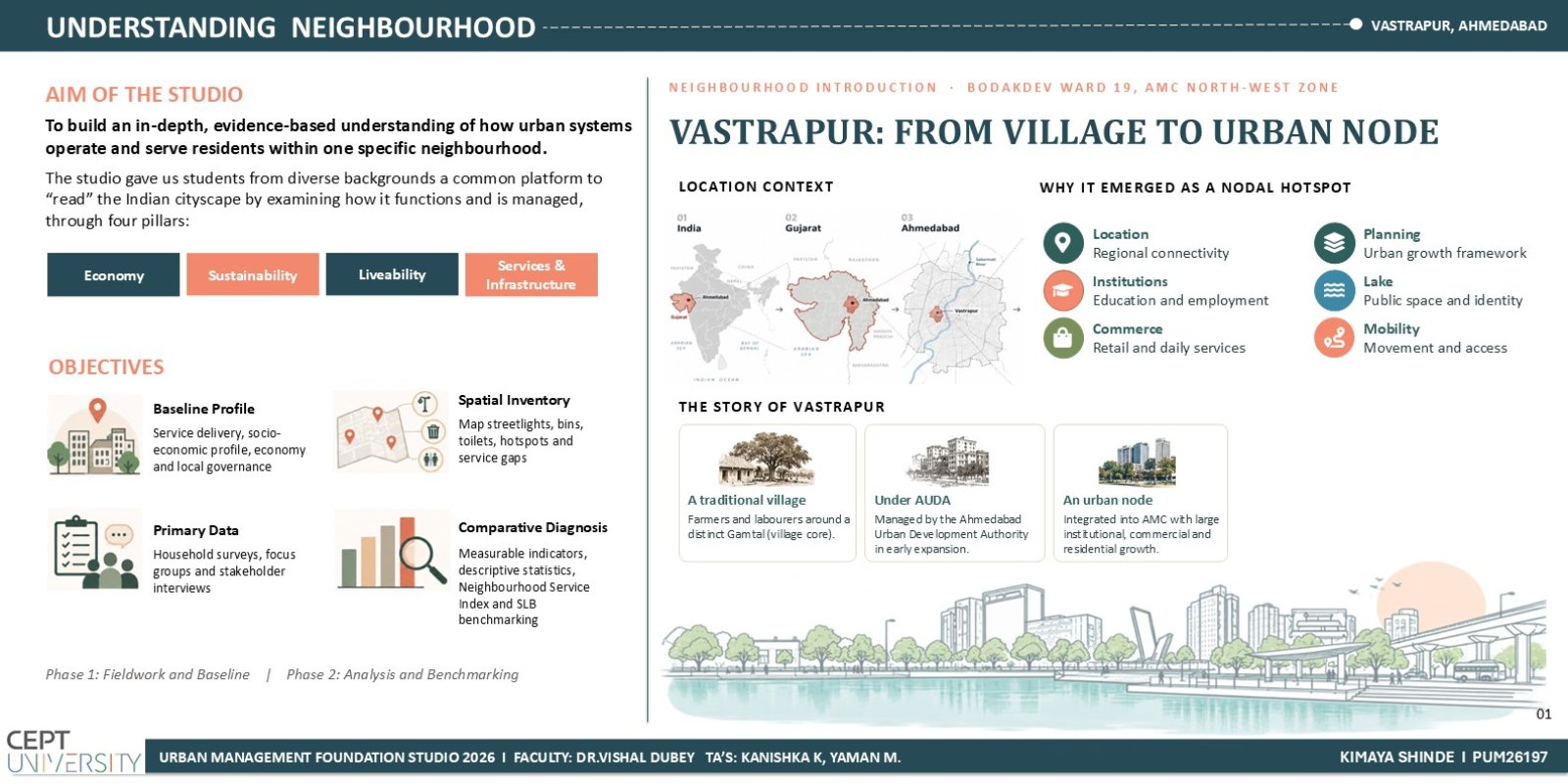
Neighbourhood Context and Evolution: Studio methodology and Vastrapur’s transformation from a rural village (Gamtal) to a major urban node.

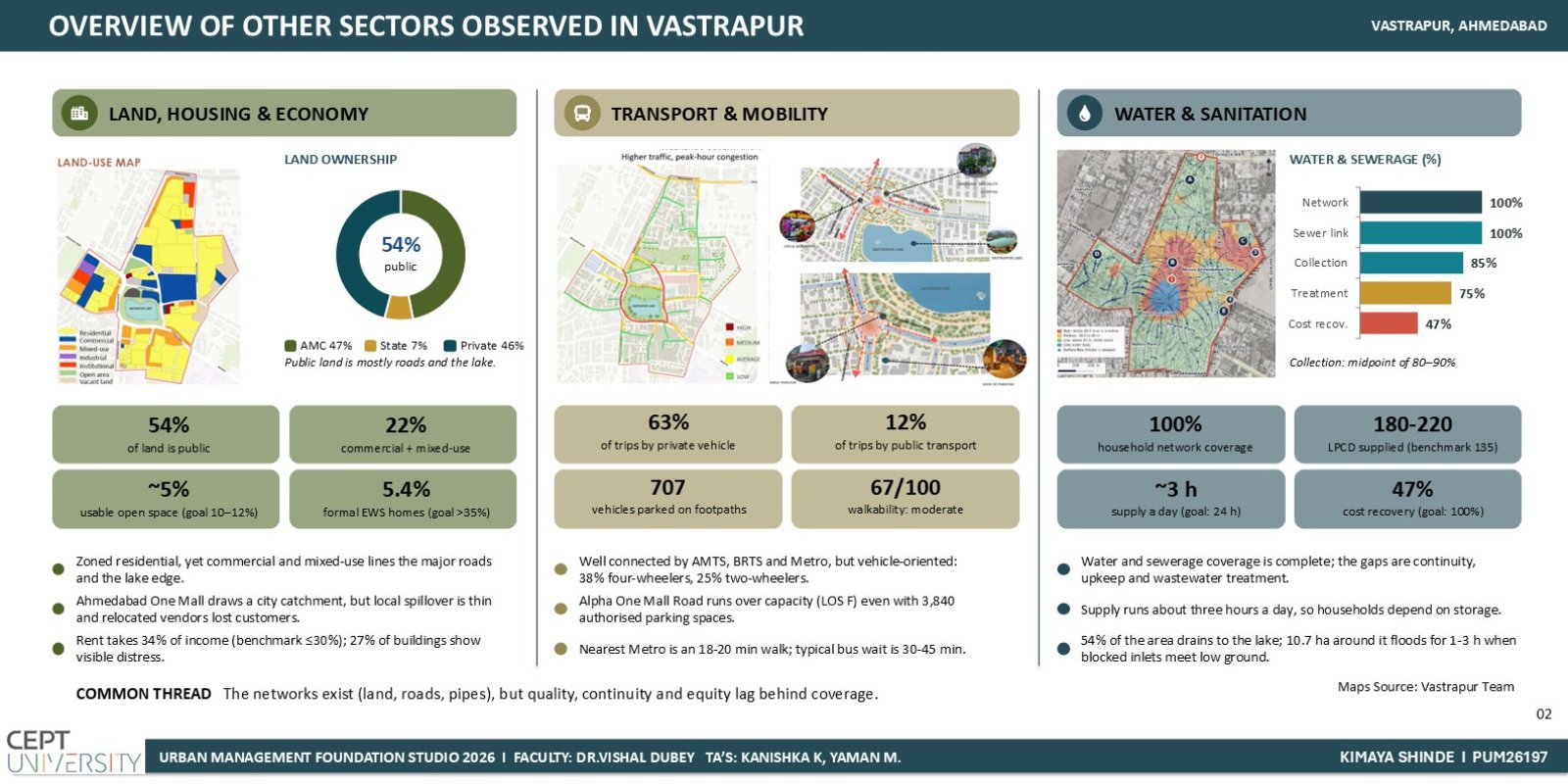
Cross-Sectoral Urban Overview: Baseline performance and infrastructure gaps across land use, mobility, and water/sanitation networks.

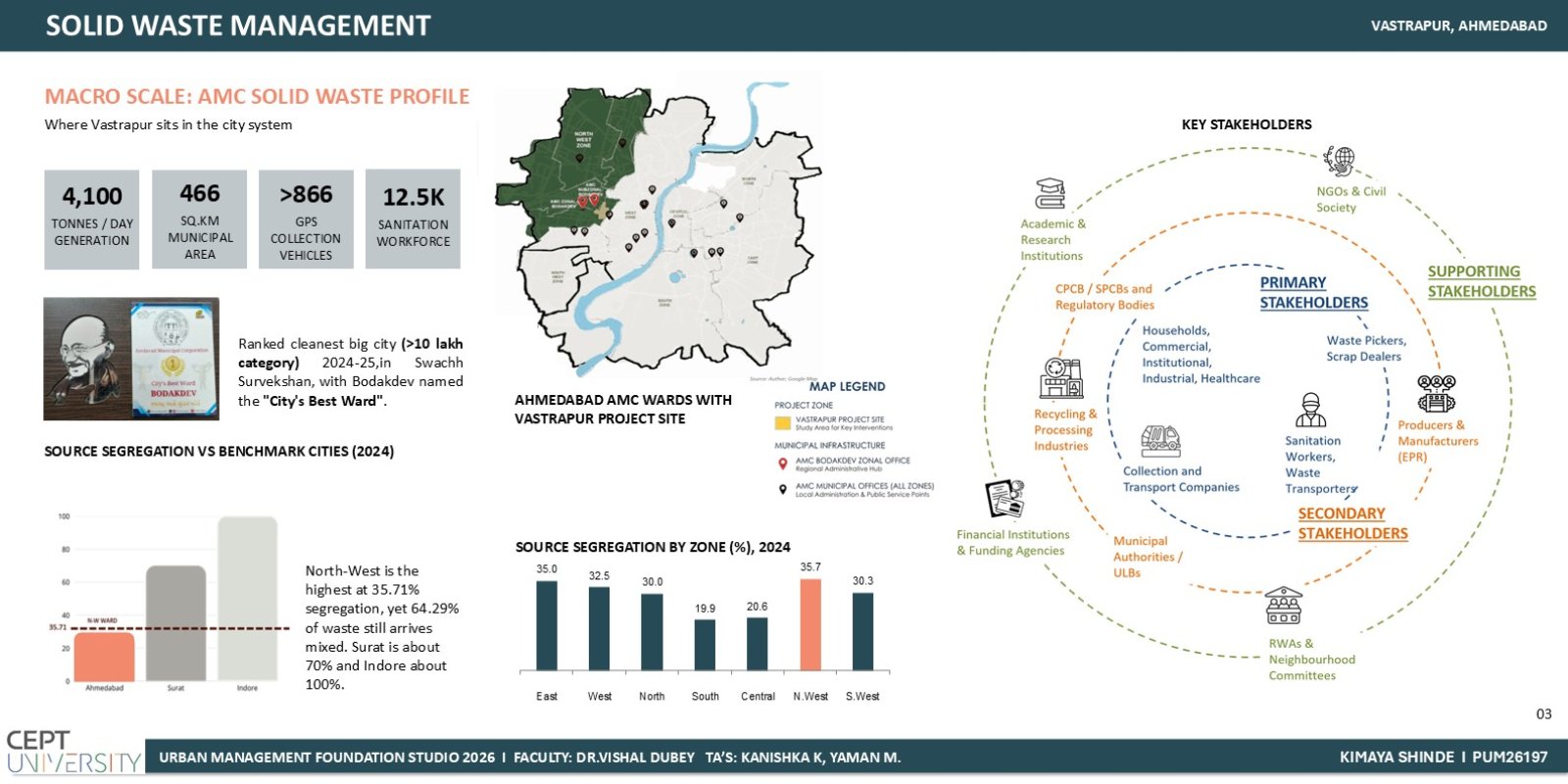
Macro SWM Profile & Stakeholders: City-wide waste metrics, source segregation benchmarks, and the multi-tiered stakeholder ecosystem.

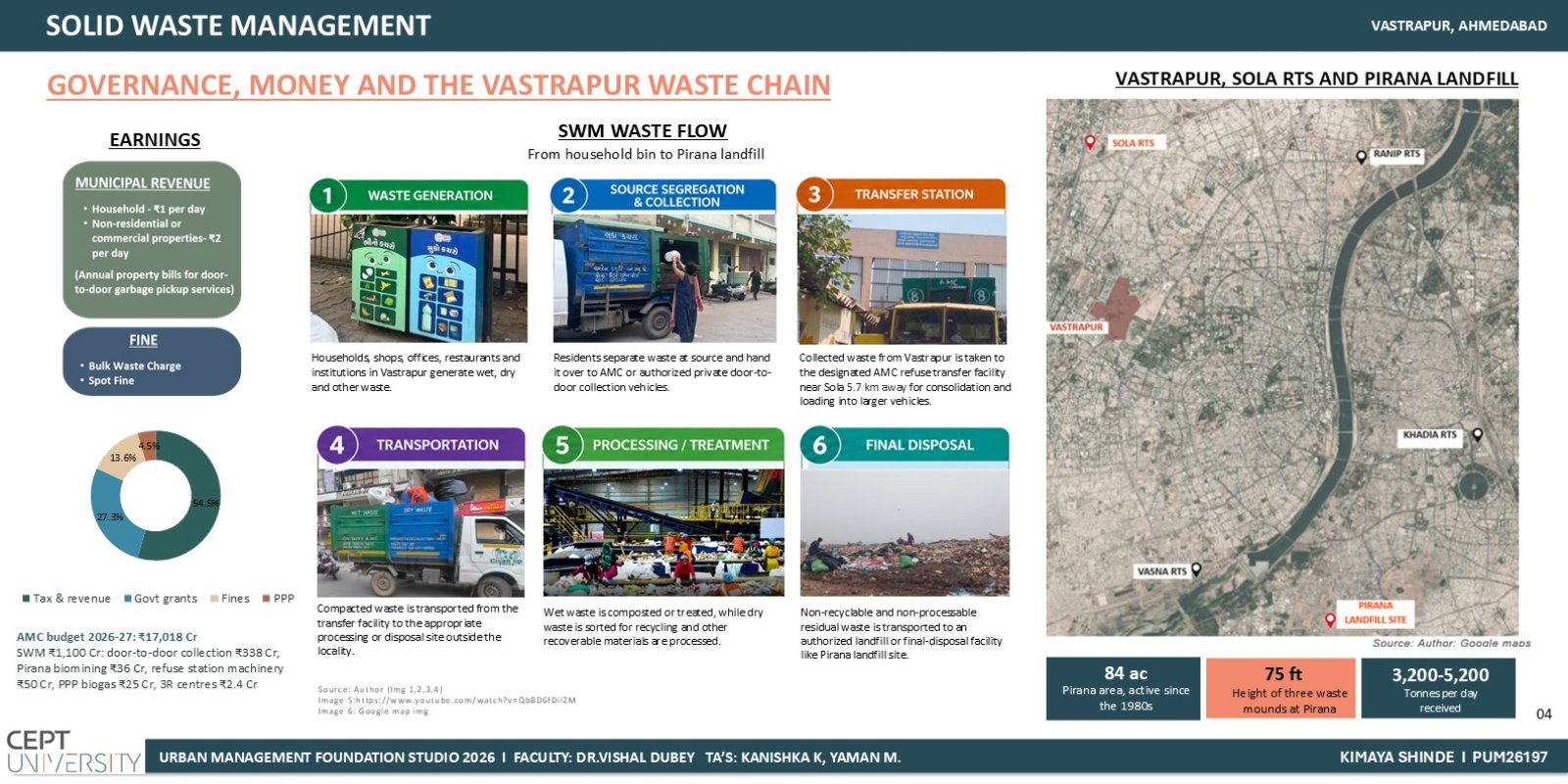
Governance, Finance & Waste Value Chain: Municipal revenue streams and the six-stage physical flow of waste from Vastrapur to Pirana landfill.

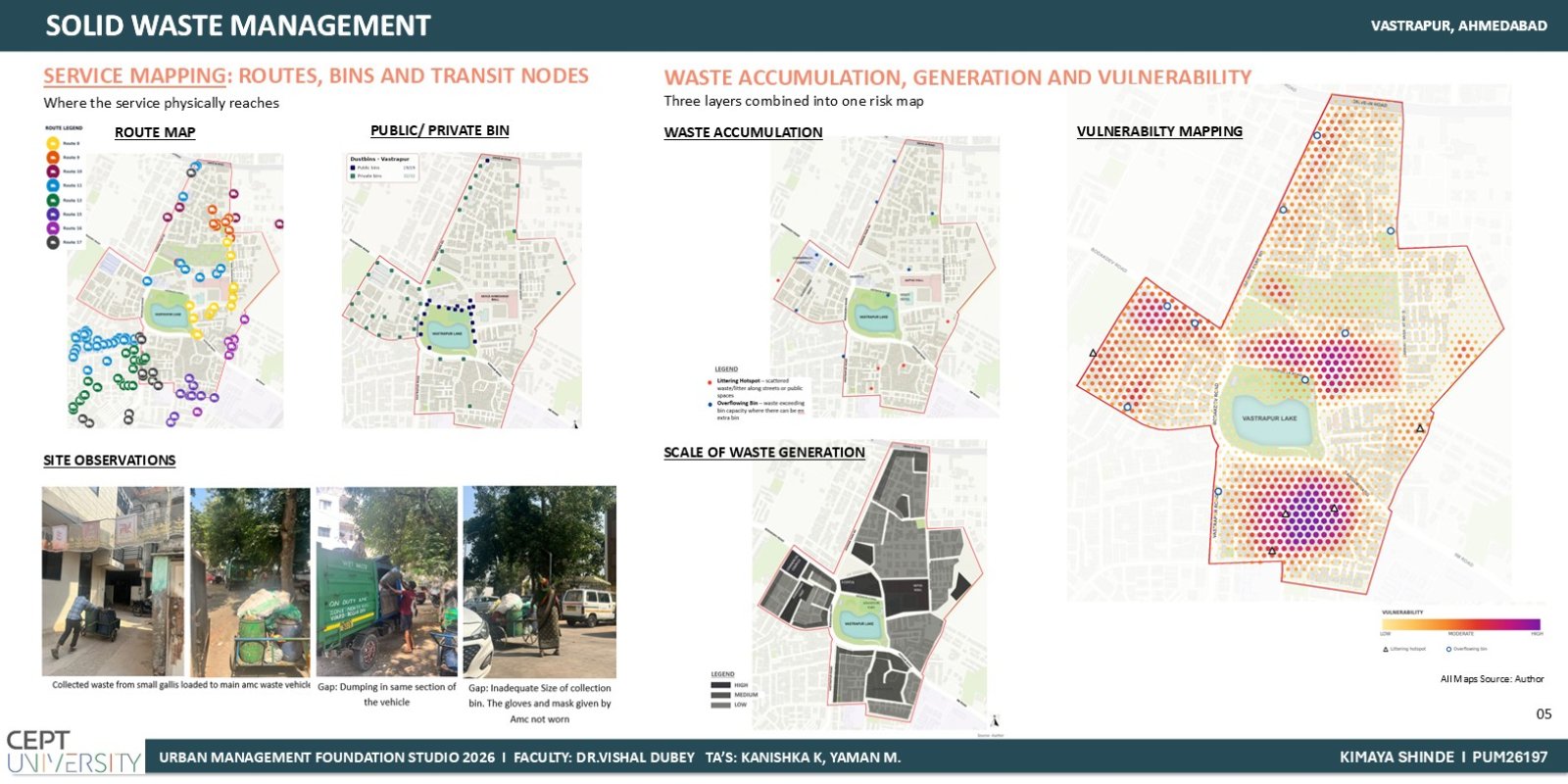
Spatial Service & Vulnerability Mapping: Overlay of collection routes, bin distribution, and waste accumulation to identify high-risk vulnerability hotspots.

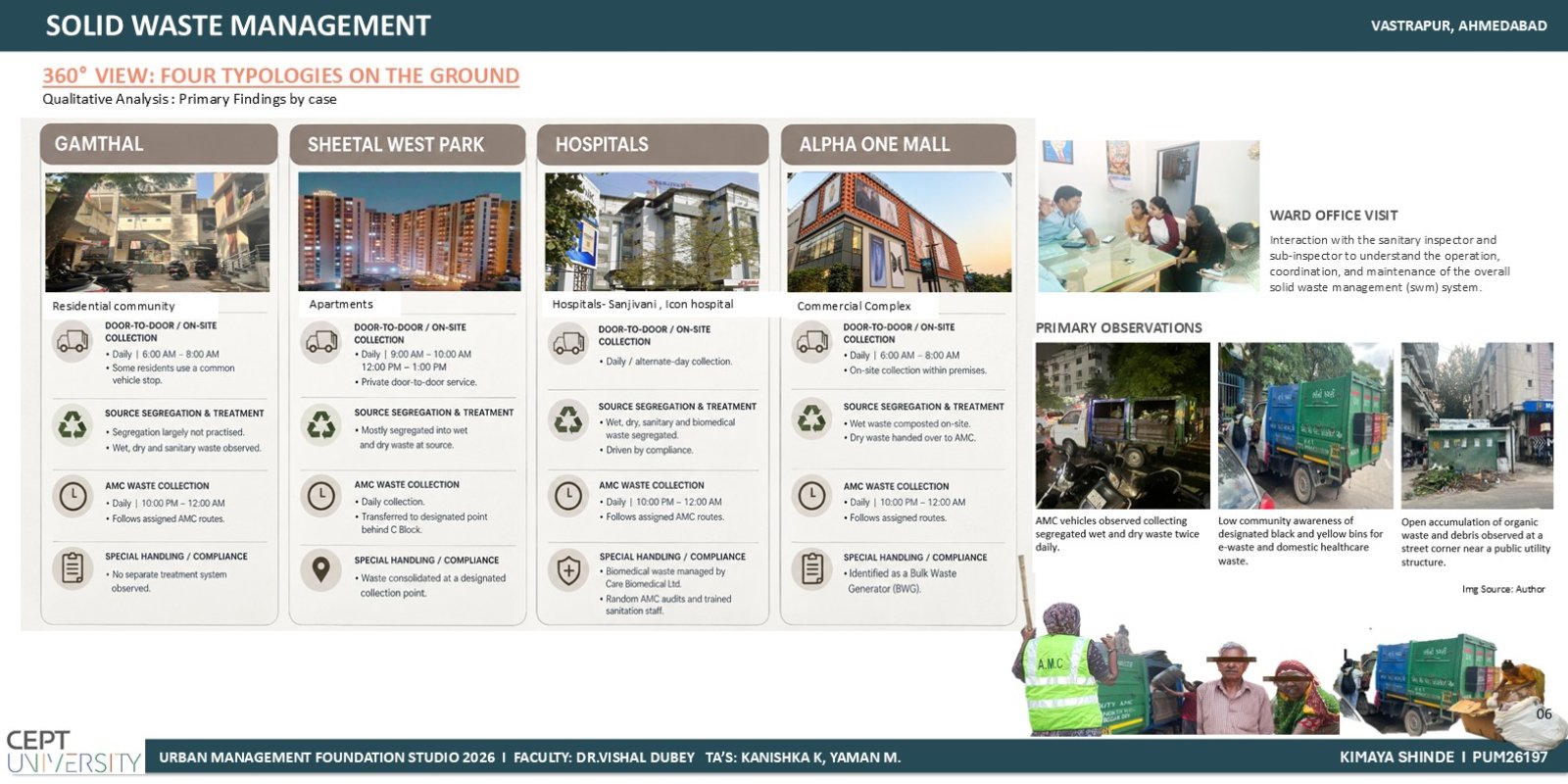
Qualitative Ground Truth by Typology: On-site operational findings across four distinct urban typologies (Gamtal, housing societies, hospitals, and malls).

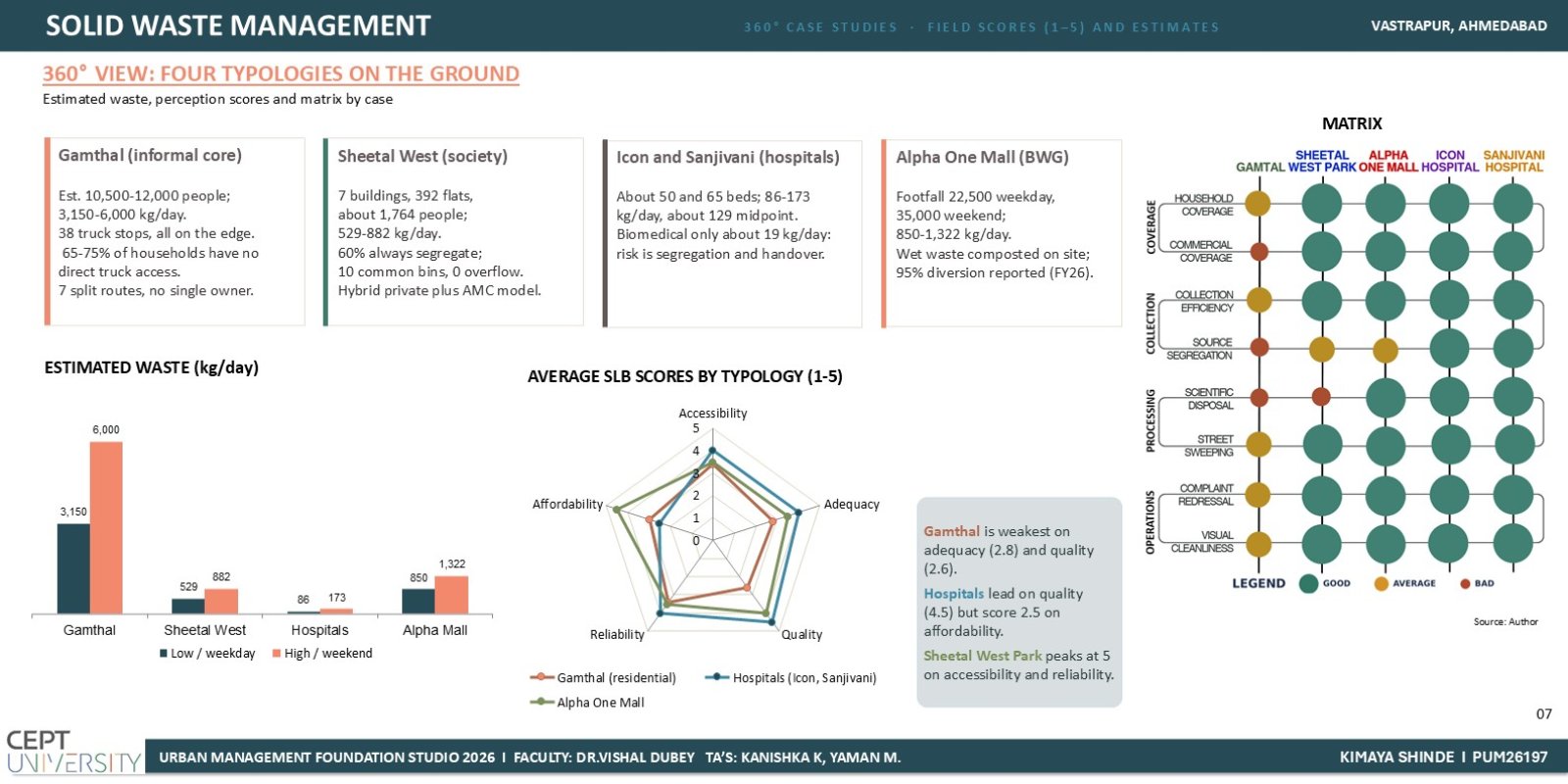
Quantitative Performance & SLB Matrix: Comparative waste generation estimates, perception scores, and service-level evaluations across case studies.

SWM Scorecard & Key Takeaways: Benchmarking Vastrapur’s ground reality against national Service Level Benchmarks (SLBs) to synthesize core lessons.