Your browser is out-of-date!
For a richer surfing experience on our website, please update your browser. Update my browser now!
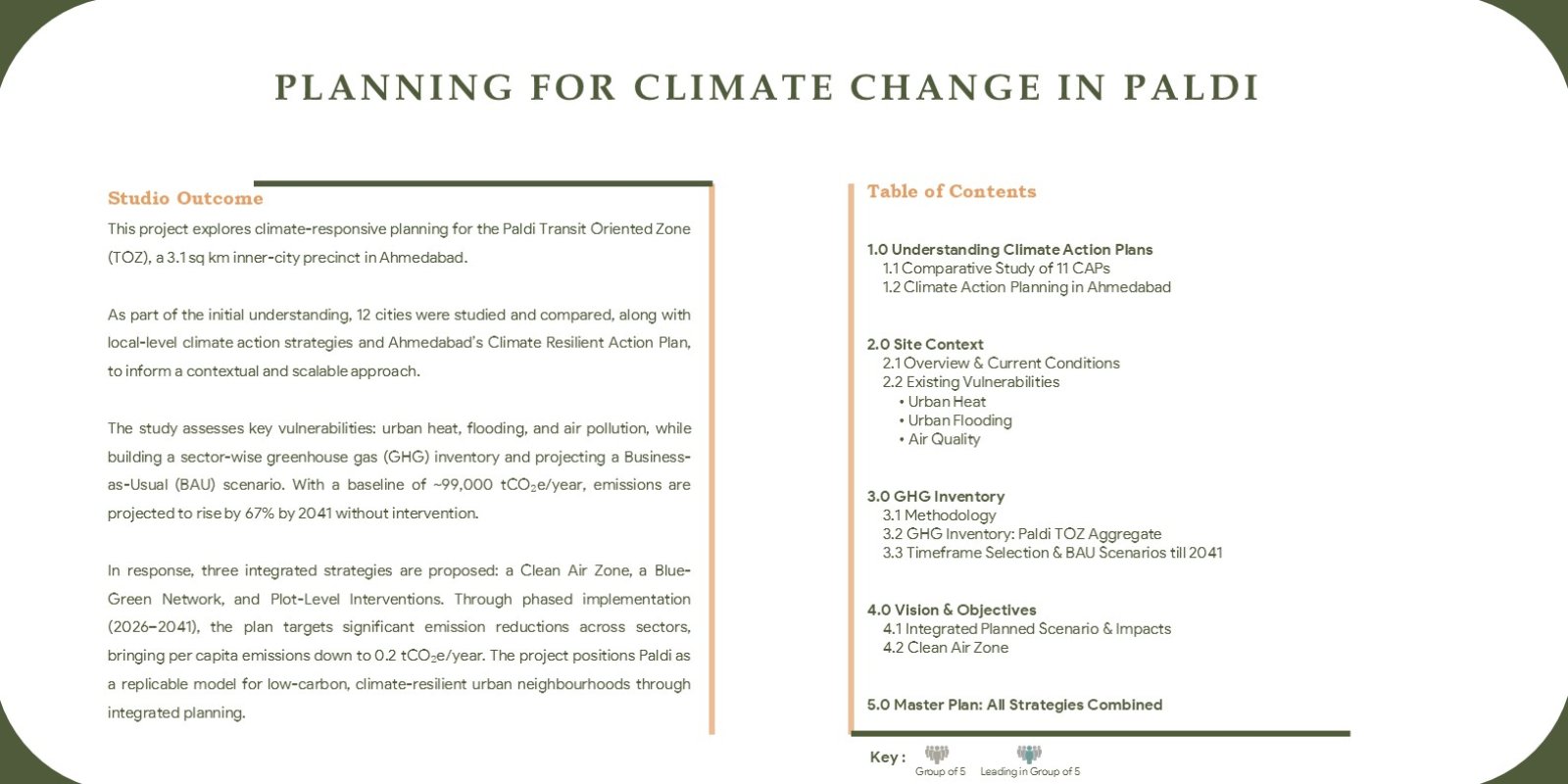
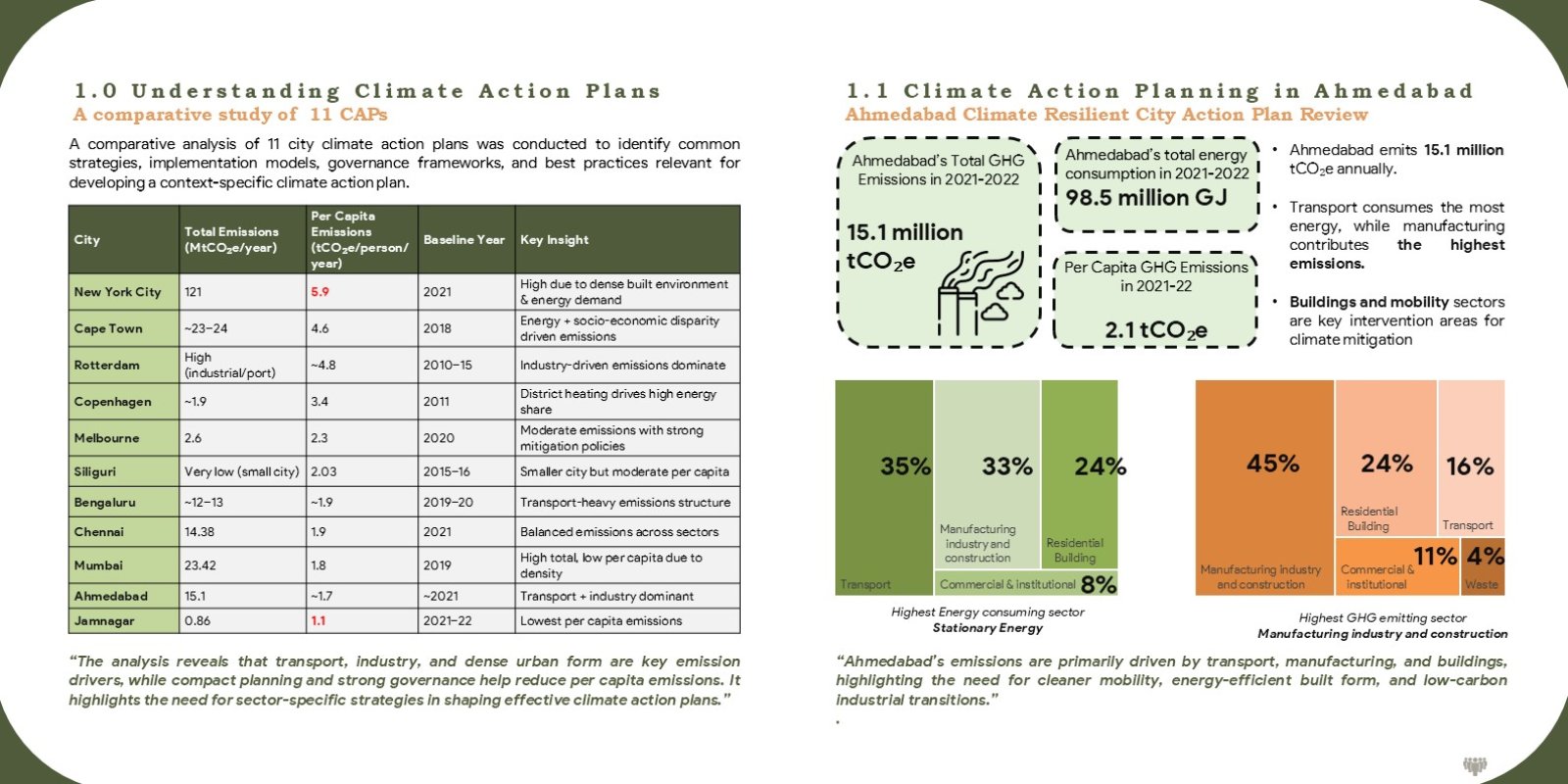
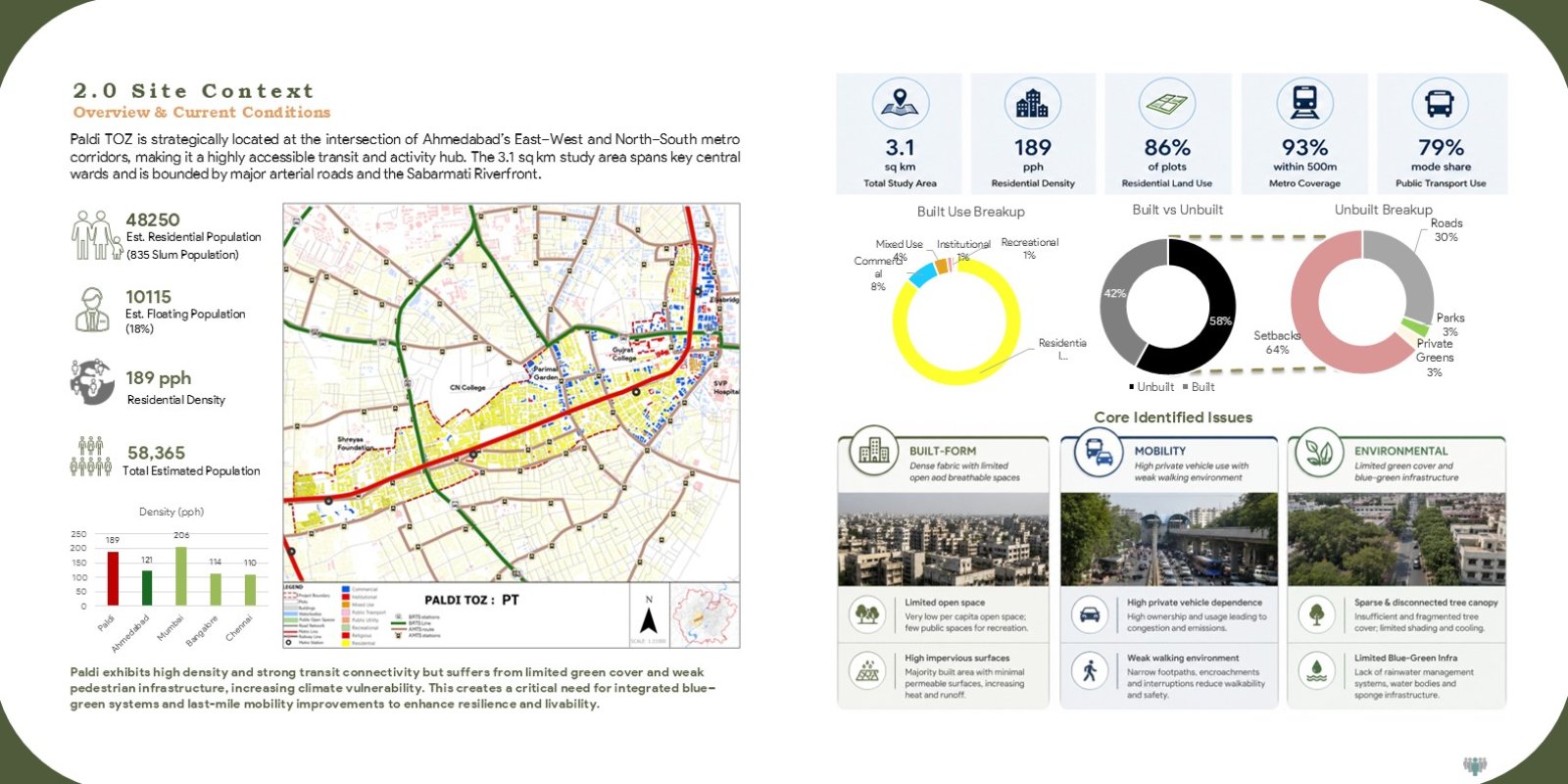
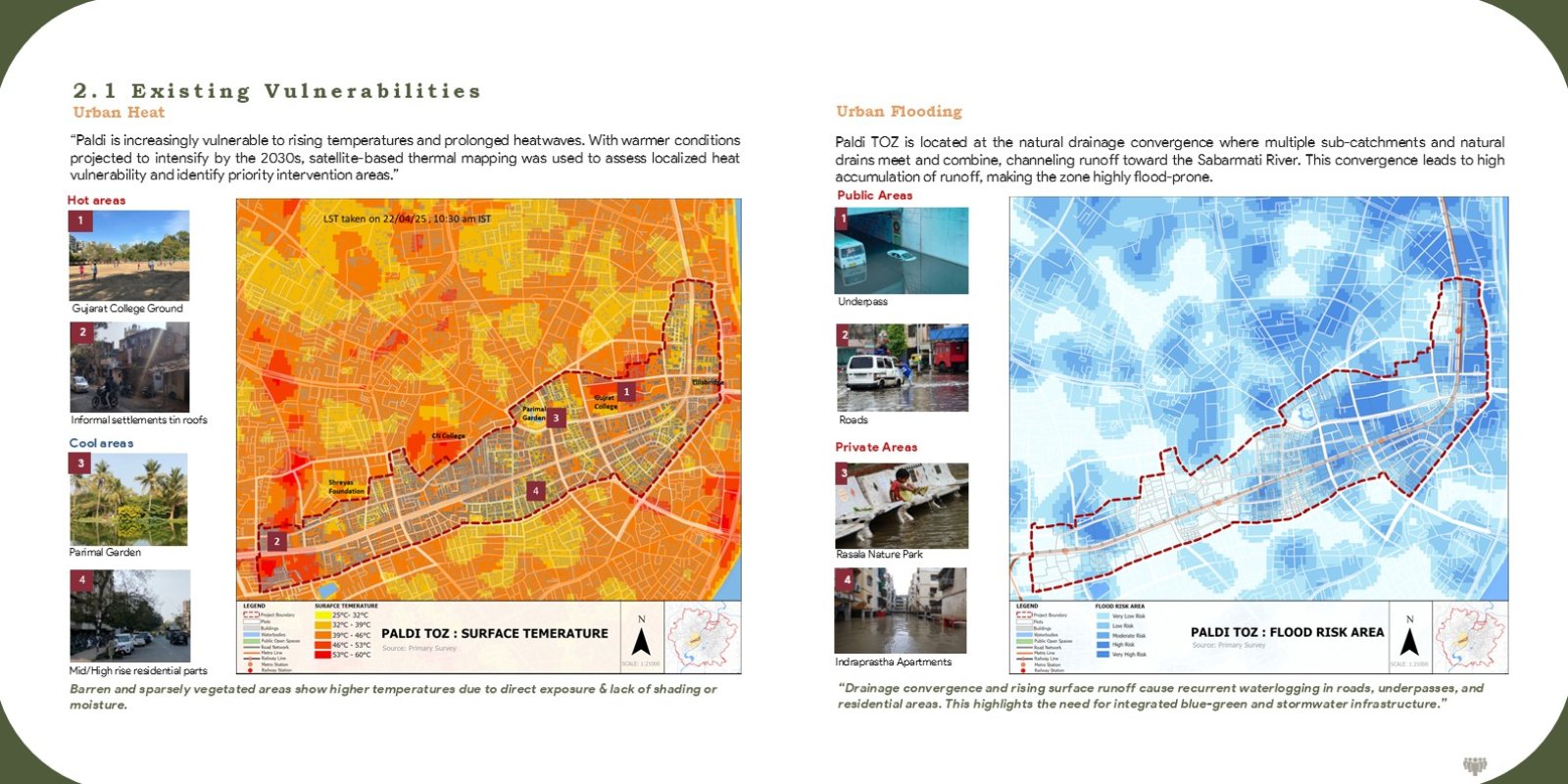
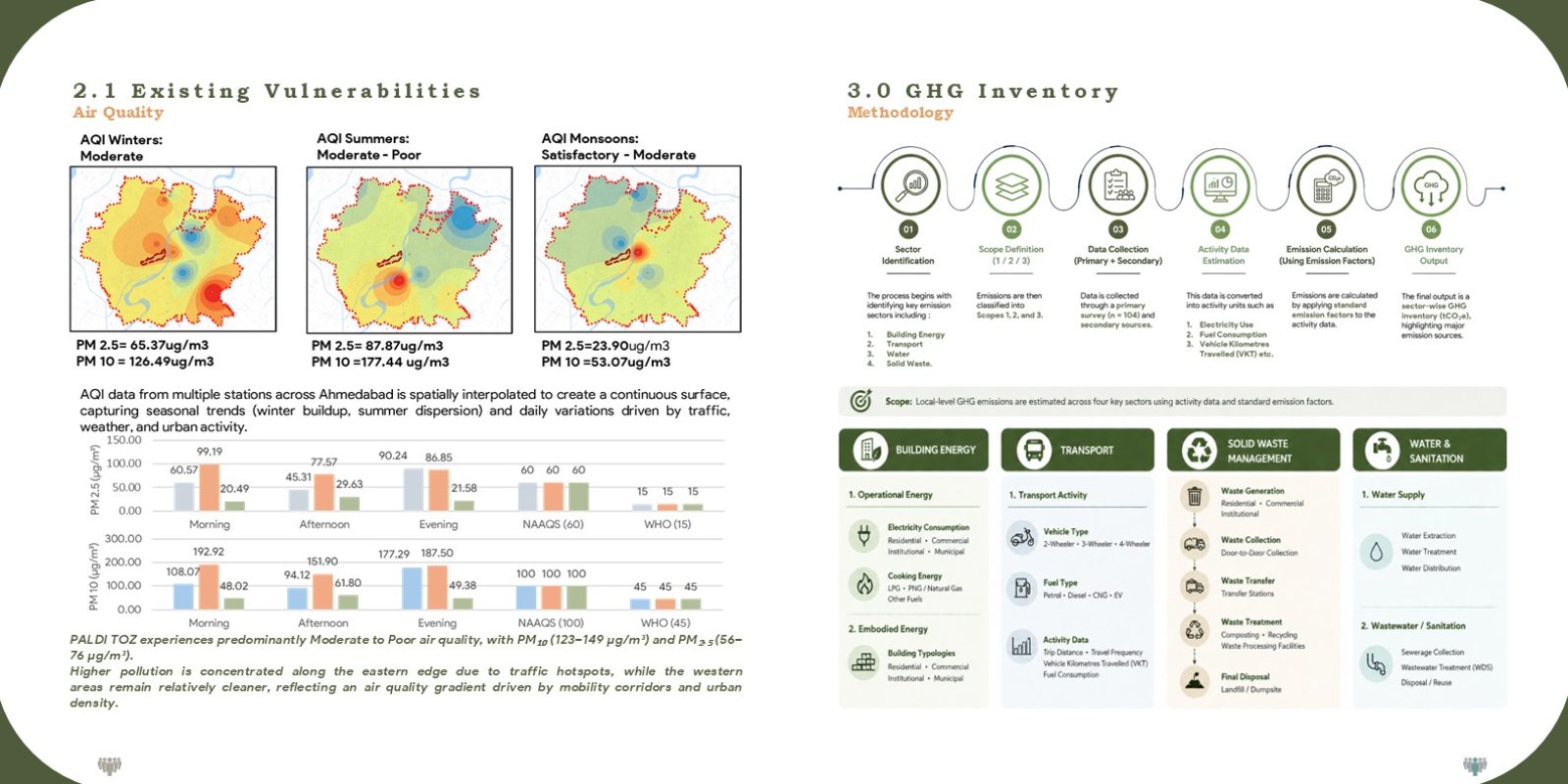
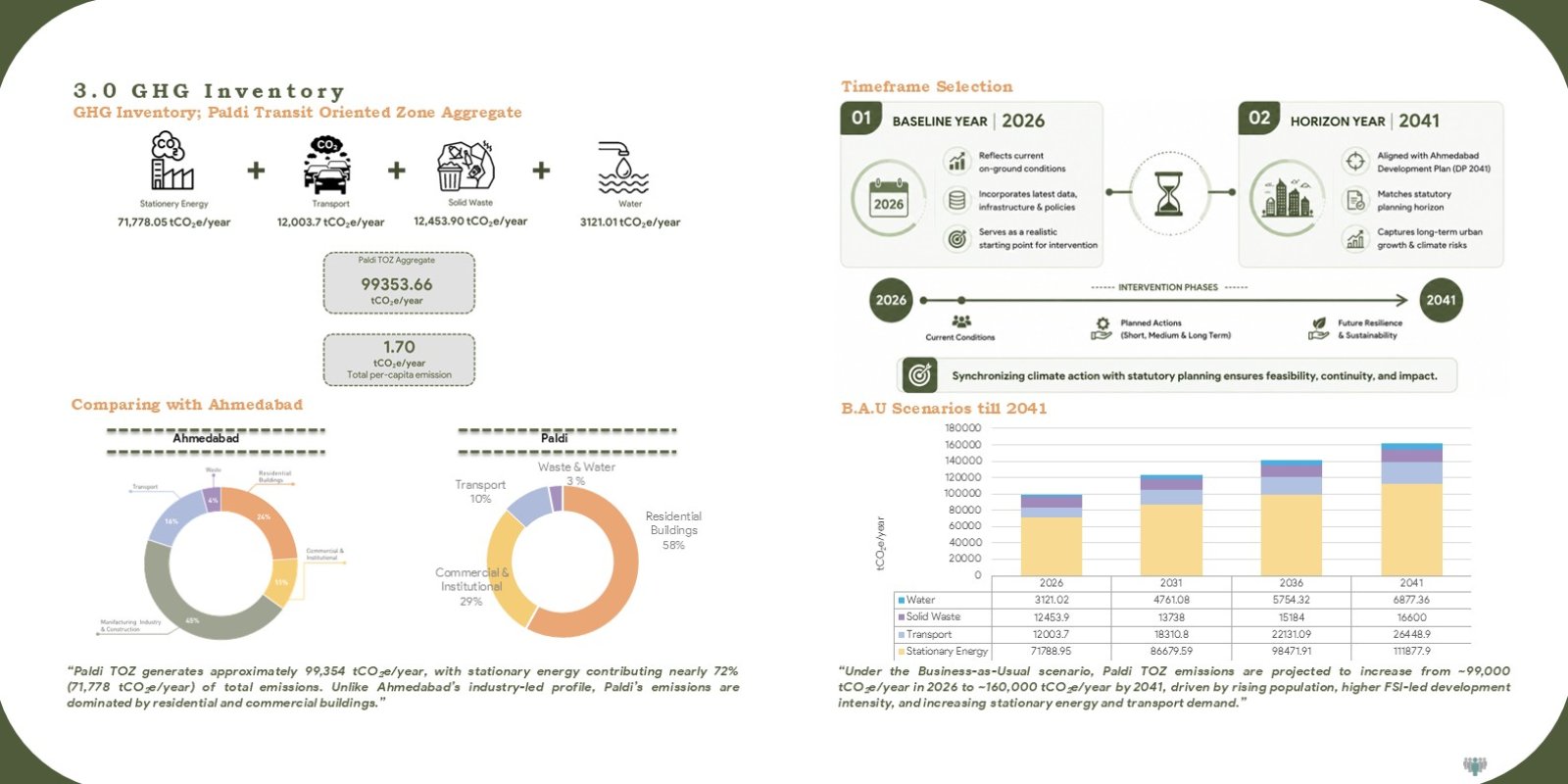
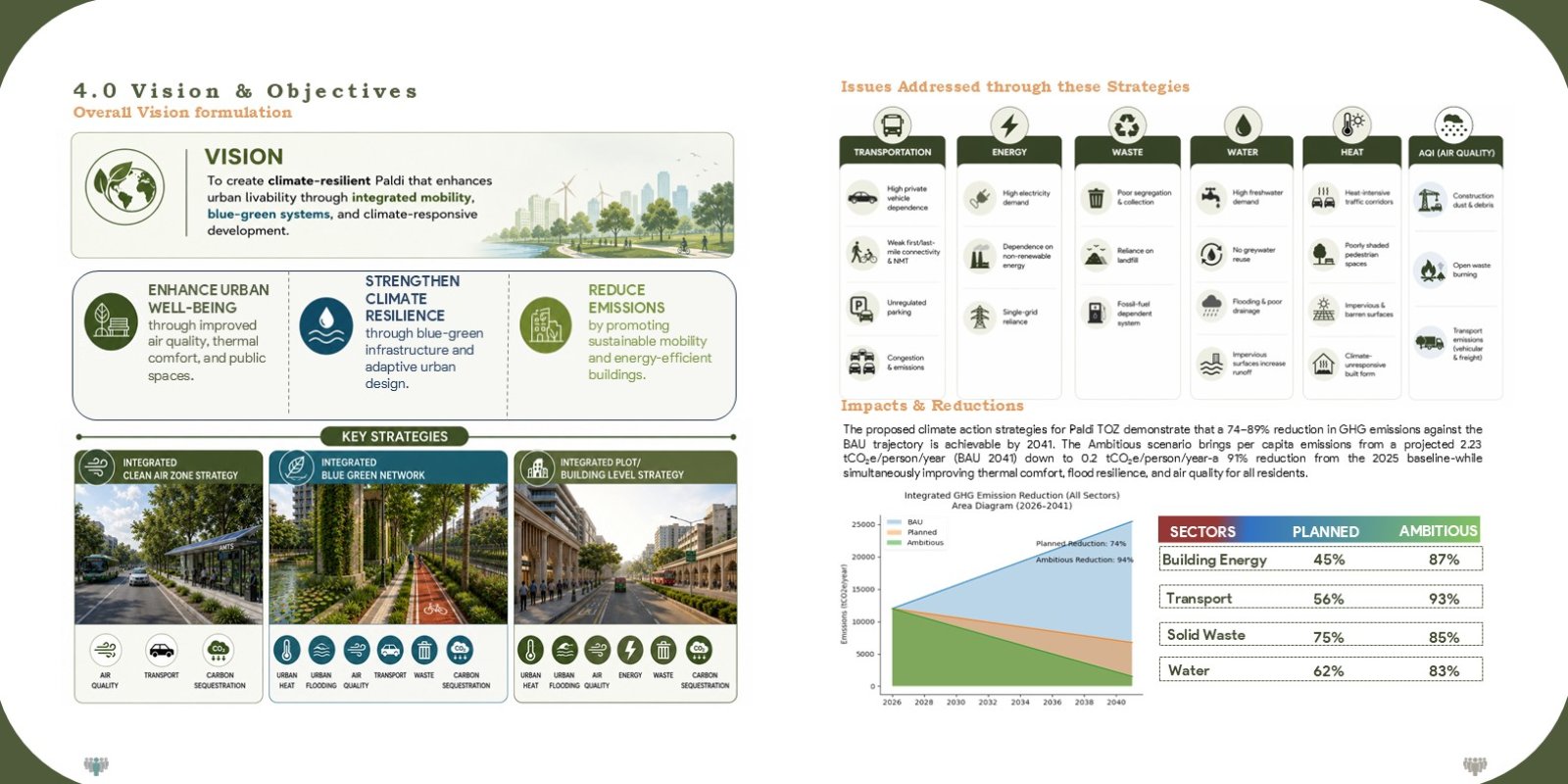
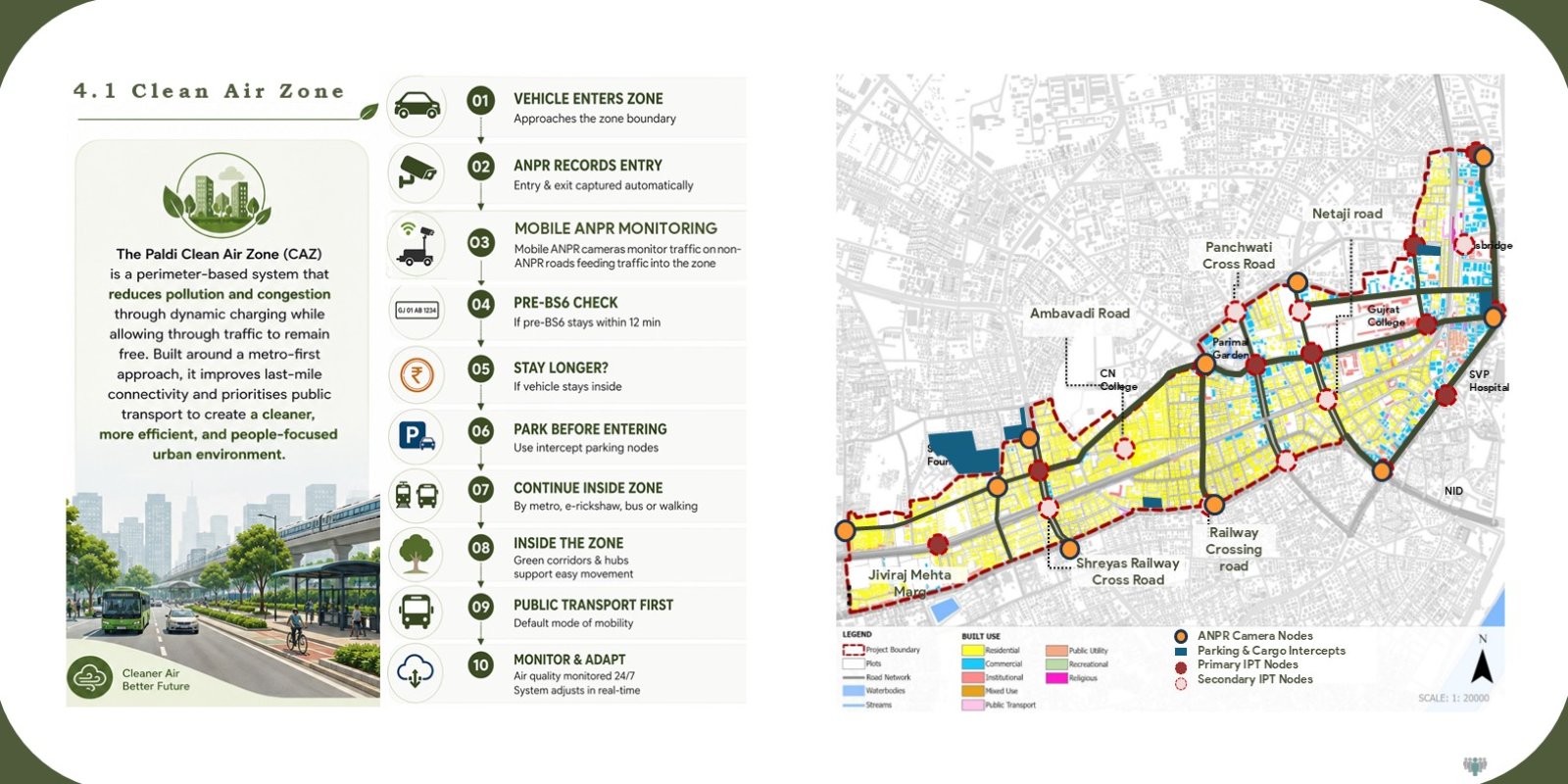
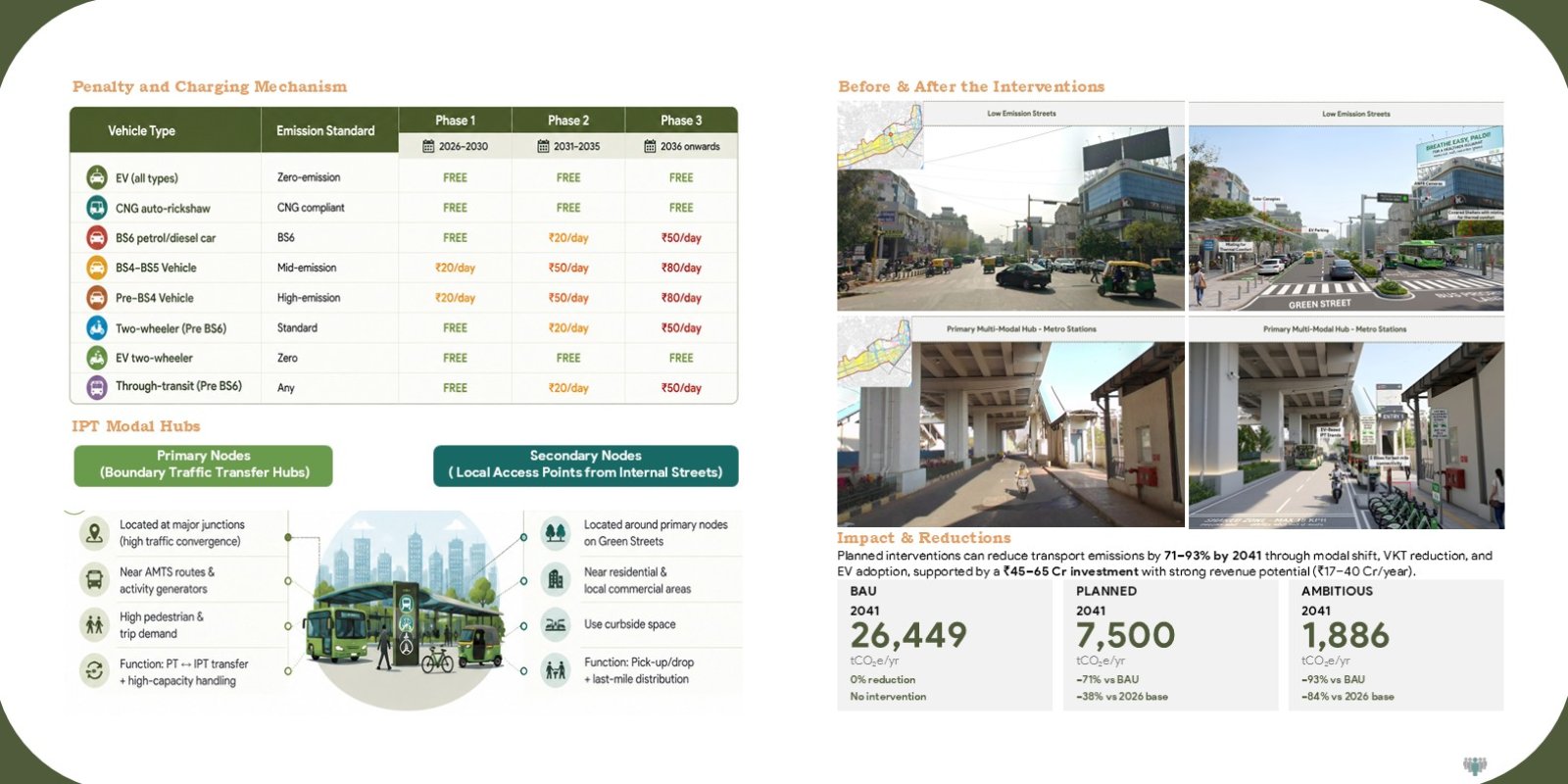
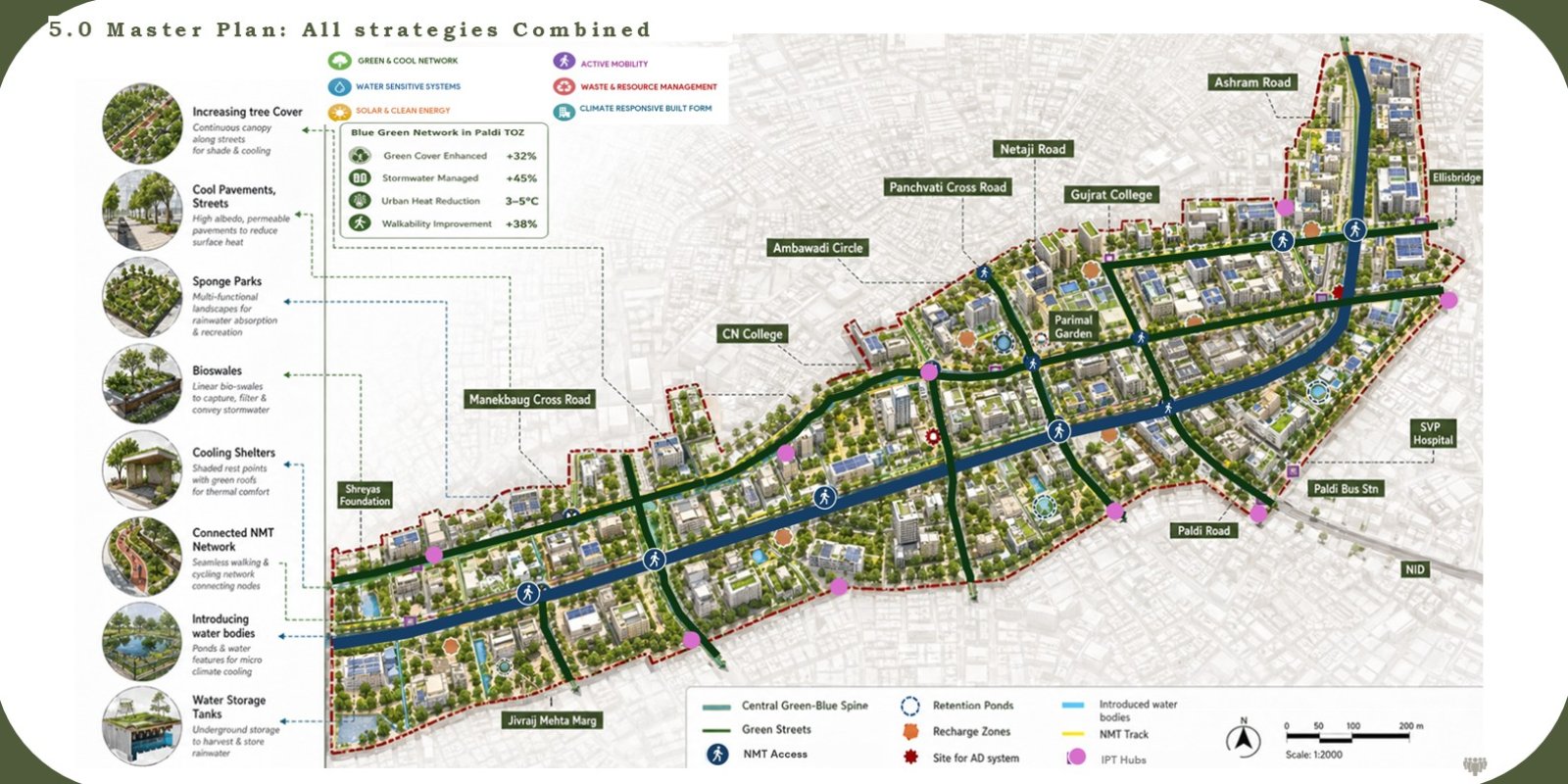
This project explores climate-responsive planning for the Paldi Transit Oriented Zone (TOZ), a 3.1 sq km inner-city precinct in Ahmedabad. As part of the initial understanding, 12 cities were studied and compared, along with local-level climate action strategies and Ahmedabad’s Climate Resilient Action Plan, to inform a contextual and scalable approach. The study assesses key vulnerabilities: urban heat, flooding, and air pollution, while building a sector-wise greenhouse gas (GHG) inventory and projecting a Business-as-Usual (BAU) scenario. With a baseline of ~99,000 tCO2e/year, emissions are projected to rise by 67% by 2041 without intervention. In response, three integrated strategies are proposed: a Clean Air Zone, a Blue-Green Network, and Plot-Level Interventions. Through phased implementation (2026–2041), the plan targets significant emission reductions across sectors, bringing per capita emissions down to 0.2 tCO2e/year. The project positions Paldi as a replicable model for low-carbon, climate-resilient urban neighbourhoods through integrated planning.