• Home
  • FP
  • UH4003
  • Private Housing Redevelopment at Gulbai Tekra

Tambat Anushka Bhuvaneshwar Harsha

UH4003

Private Housing Redevelopment at Gulbai Tekra

This redevelopment project in Gulbai Tekra, Ahmedabad, transforms three aging housing societies and an adjoining commercial block into a high-density mixed-use development under the Transit-Oriented Zone policy with an FSI of 4. The proposal rehabilitates 149 units with 25–40% additional area while unlocking strong free-sale potential through premium 3BHK and 4BHK residences, office spaces, and high-street retail. Supported by excellent transit connectivity and a prime micro-market location, the project delivers a robust IRR of 33.5% over a seven-year cycle. By integrating strategic phasing and modern infrastructure, the redevelopment revitalizes an underutilized site into a vibrant, sustainable urban asset.

View Additional Work
Report Content

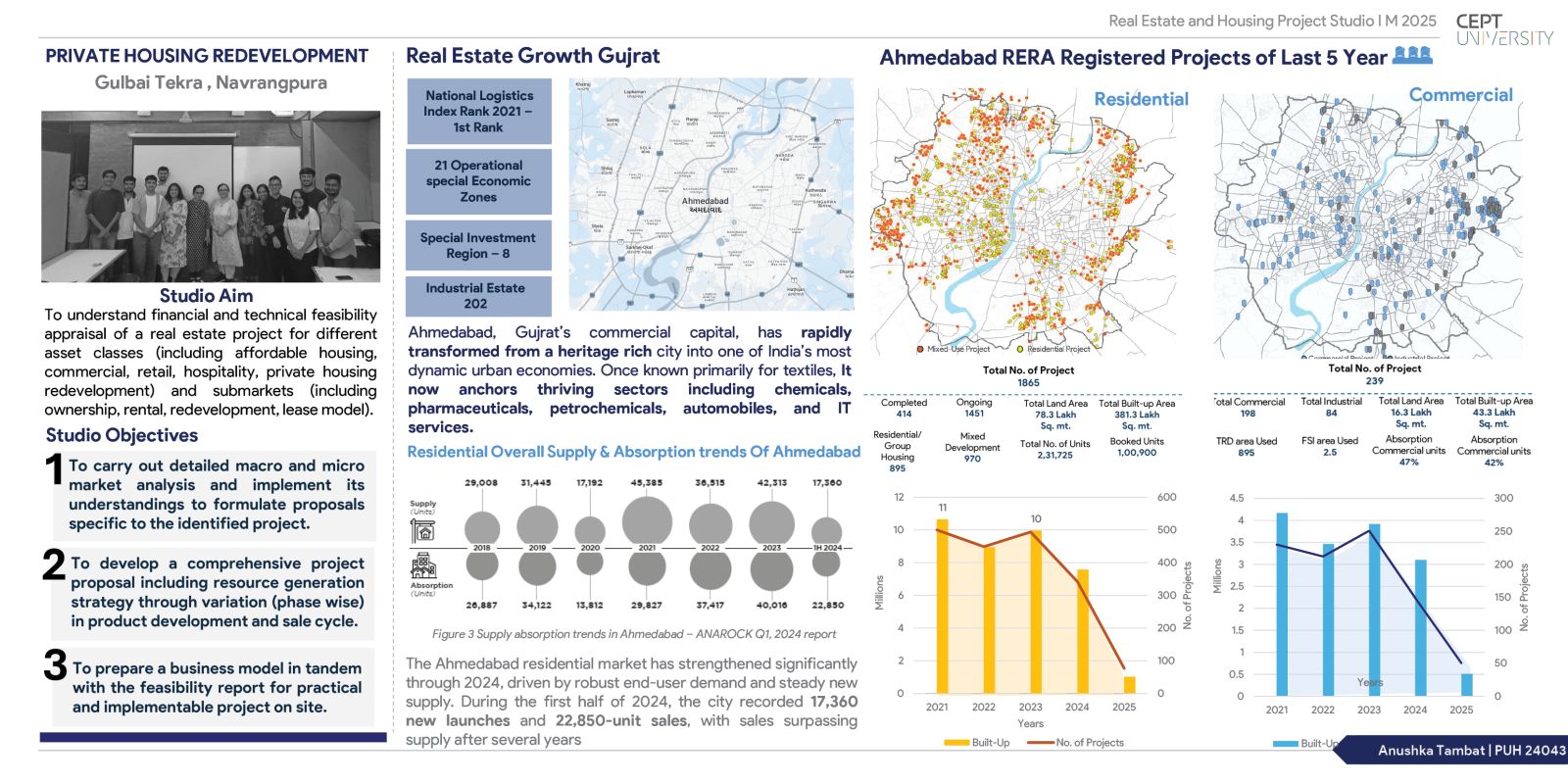
A foundational overview of Gujarat’s rapidly expanding real estate landscape, Ahmedabad’s strong market fundamentals, and the broader regulatory context shaping residential and commercial development trends across the city.

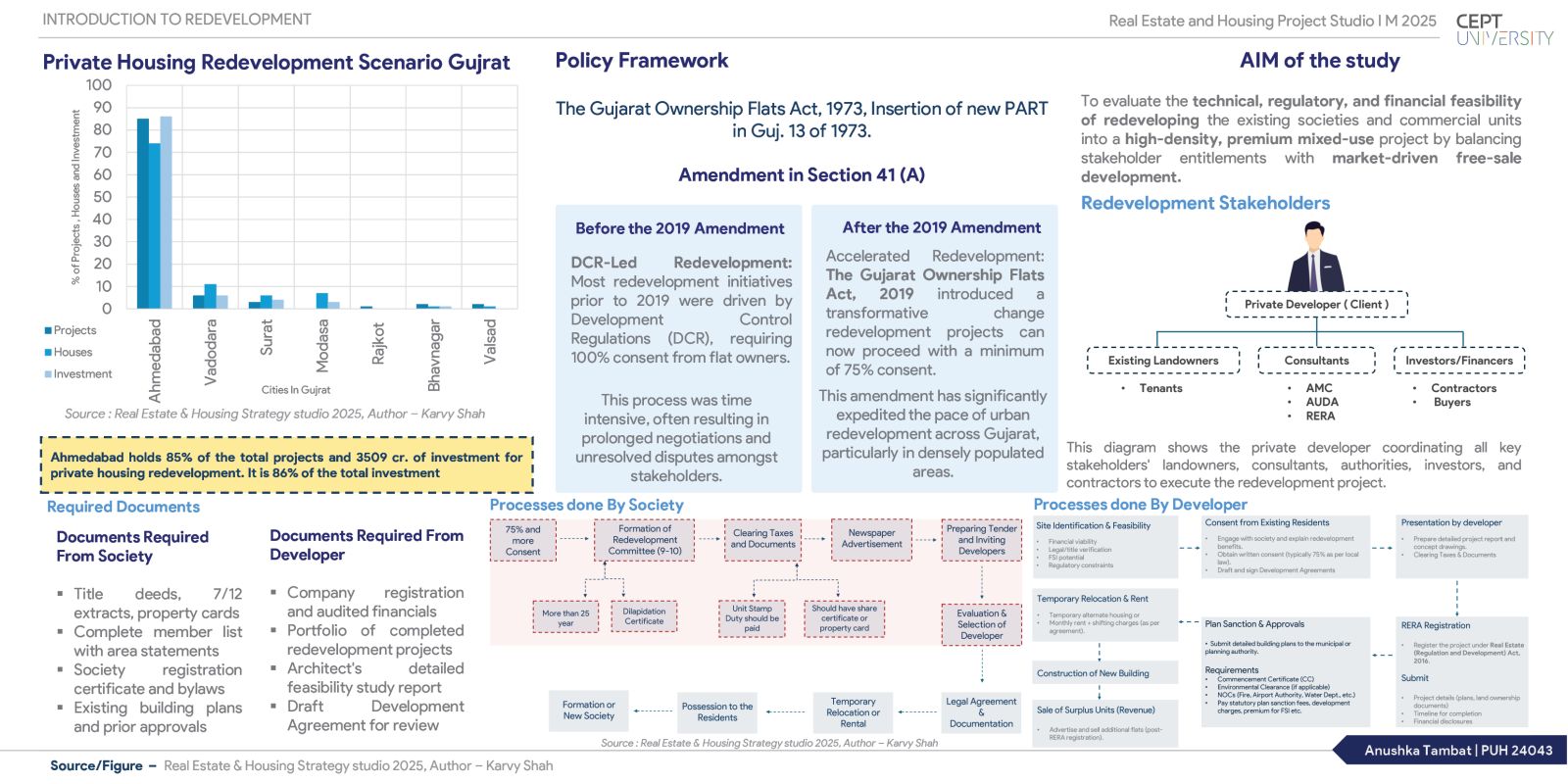
Overview of Gujarat’s redevelopment framework, policy amendments, stakeholder roles, and the procedural pathway guiding society-led private redevelopment.

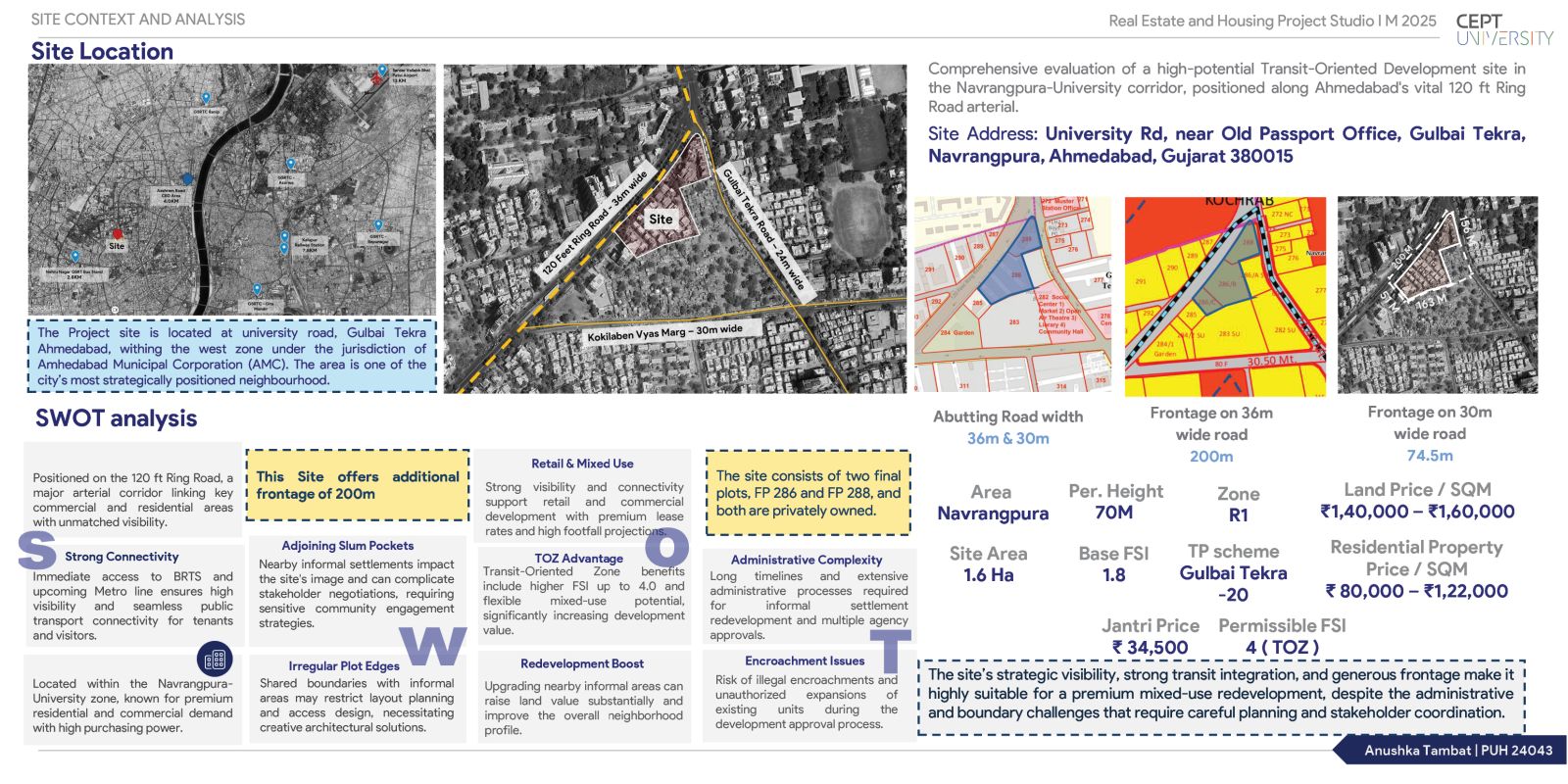
Strategic evaluation of the site’s location, connectivity, regulatory context, and SWOT, establishing its suitability for a high-density mixed-use redevelopment.

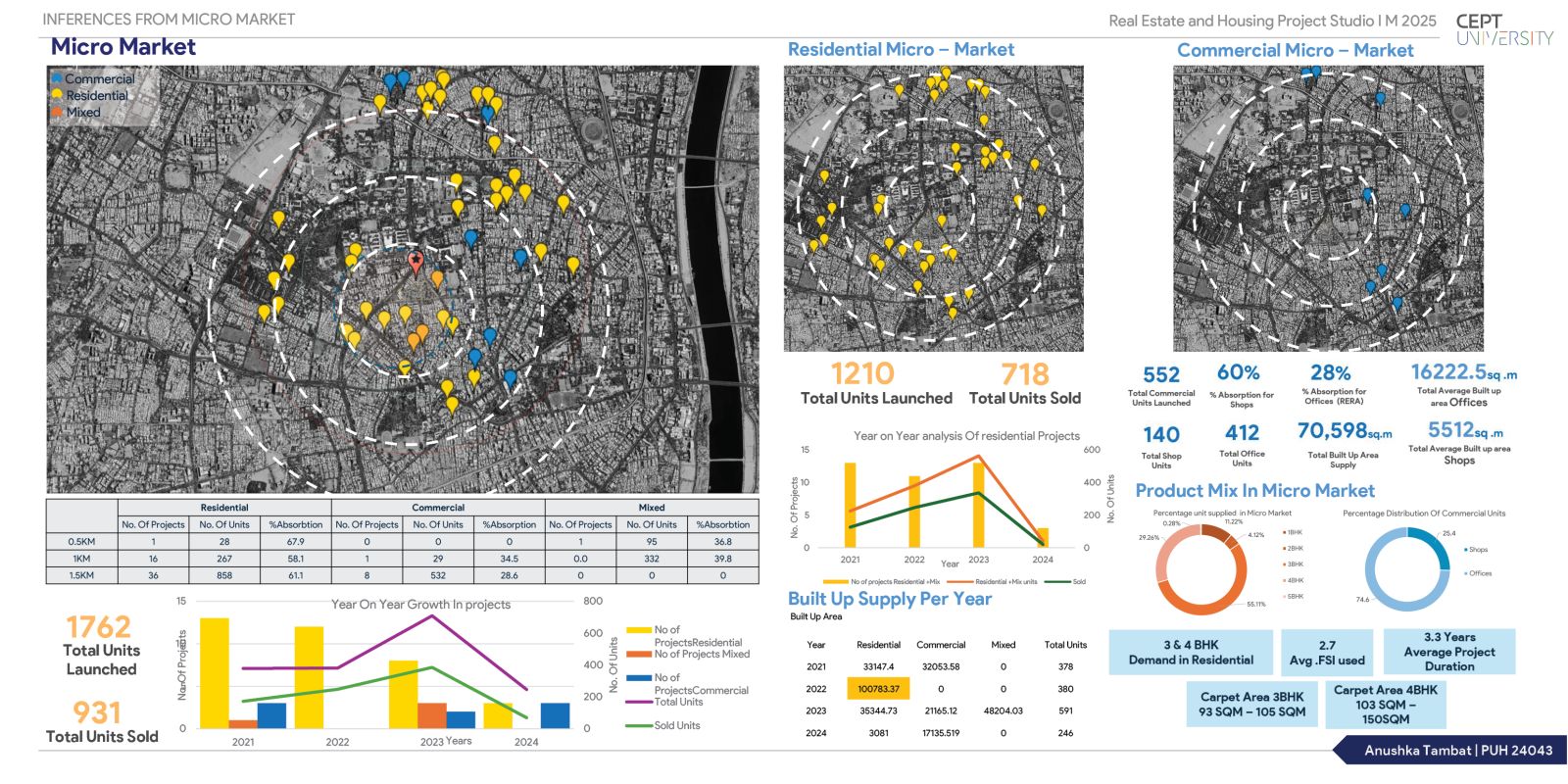
Spatial and quantitative analysis of residential, commercial, and mixed-use projects within the influence zone, identifying demand trends, absorption patterns, and product preferences.

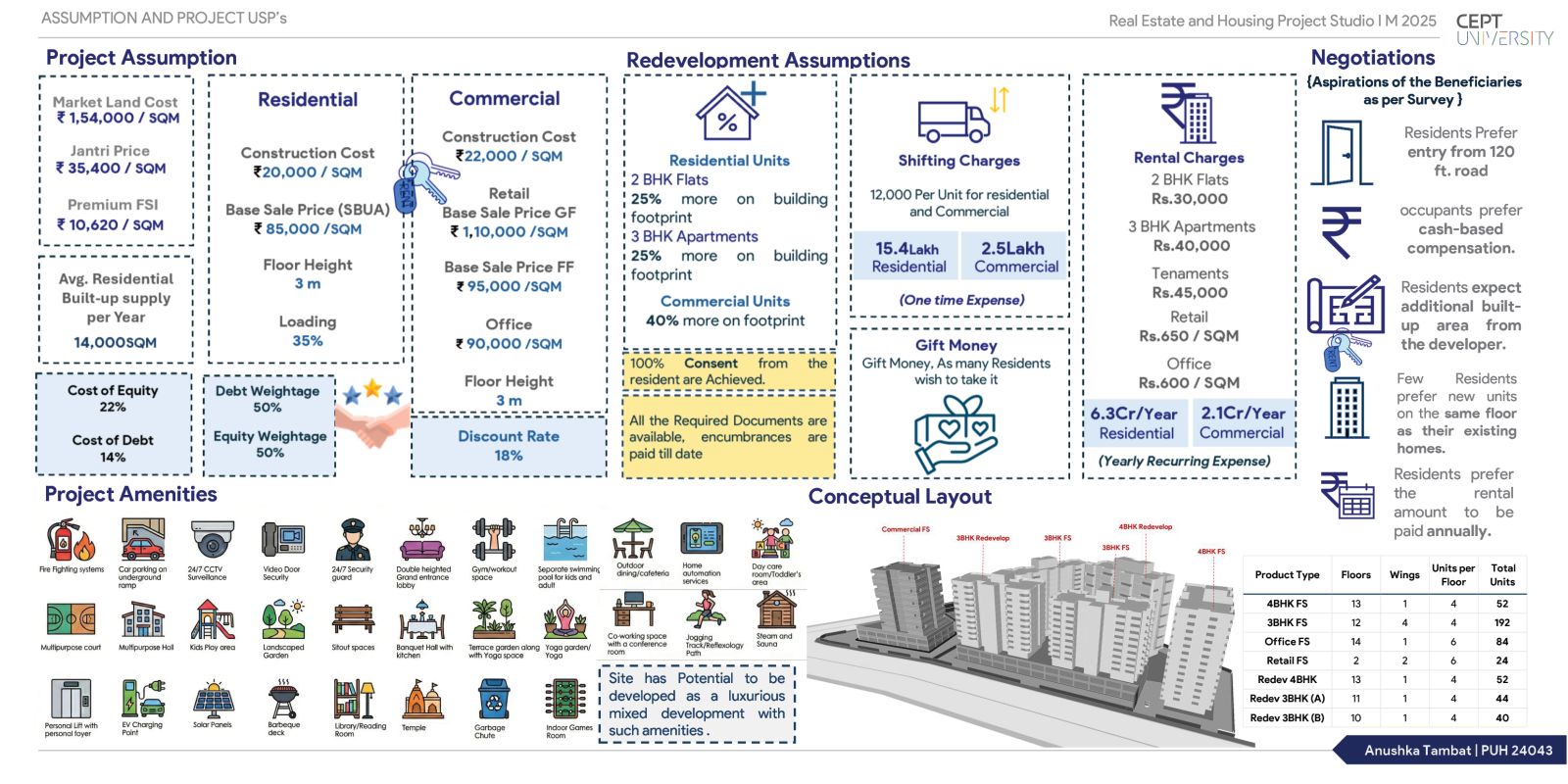
Key land, financial, and construction assumptions paired with redevelopment entitlements, stakeholder expectations, and amenity-led USPs defining the project’s value proposition.

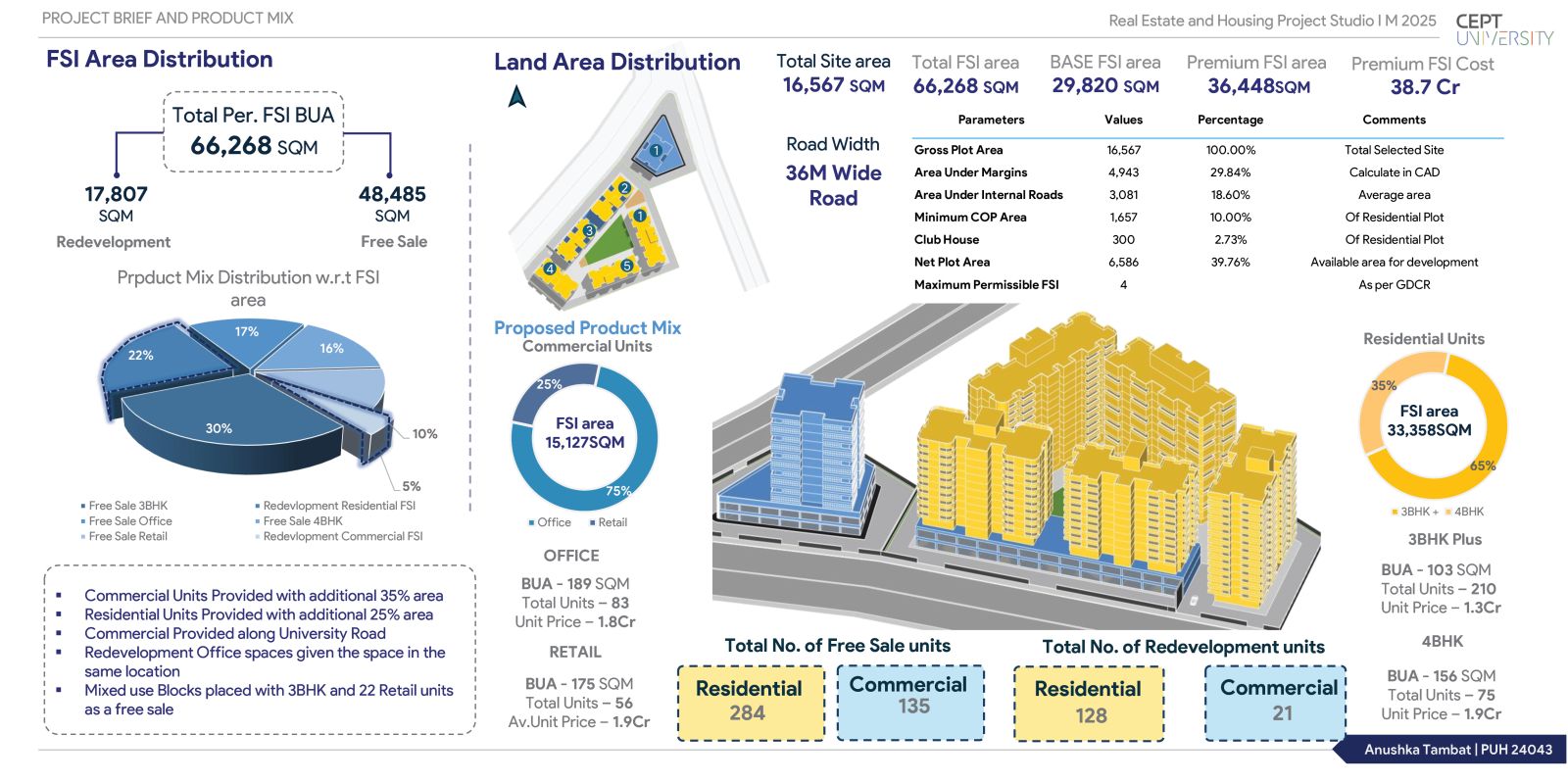
A detailed breakdown of FSI allocation, land utilization, and the proposed mixed-use product mix, demonstrating how redevelopment and free-sale components are strategically balanced to optimize density, market value, and planning efficiency.

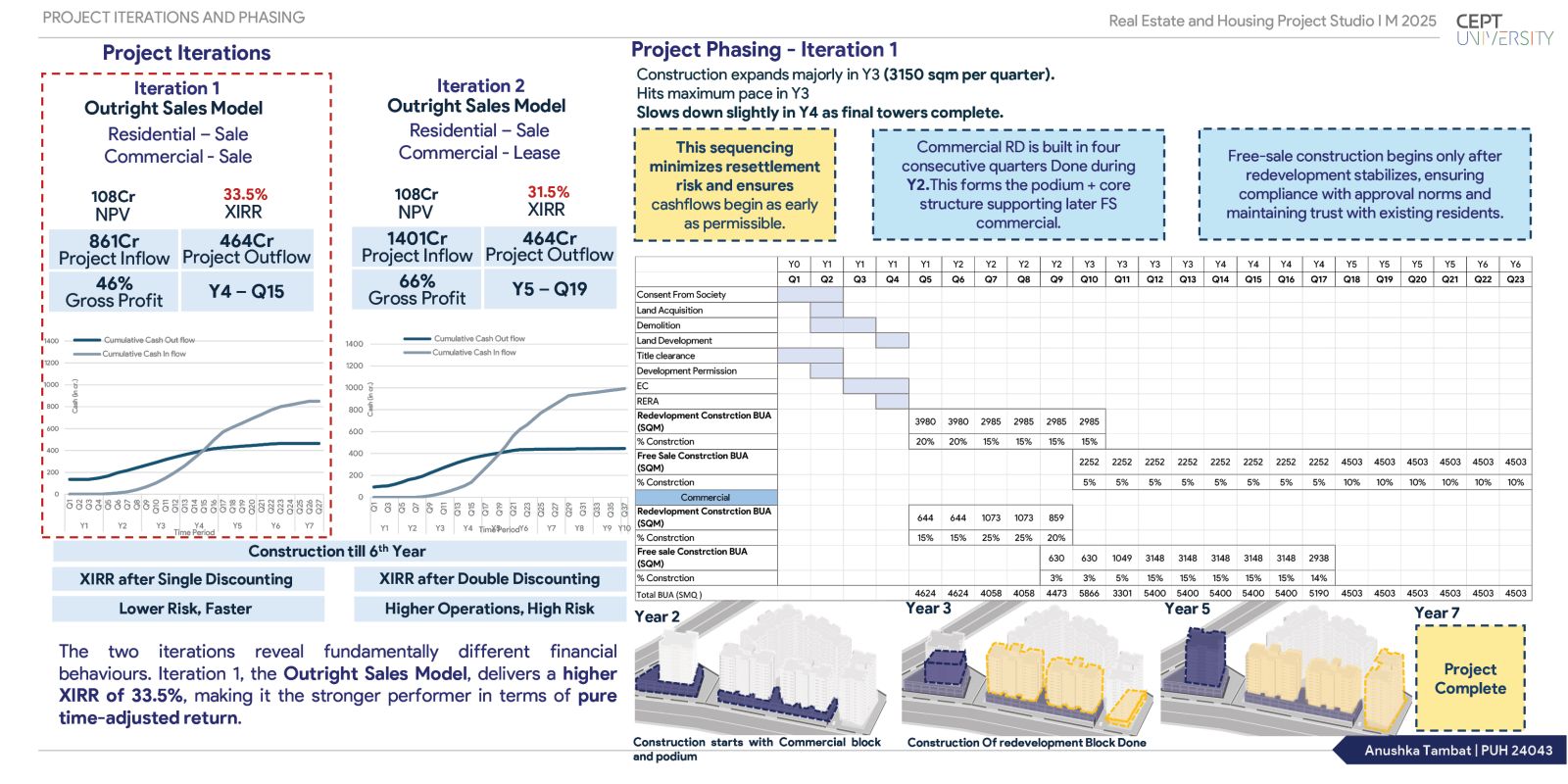
Comparison of two financial iterations supported by a structured construction phasing plan designed to optimize cashflows, reduce resettlement risk, and ensure timely delivery.

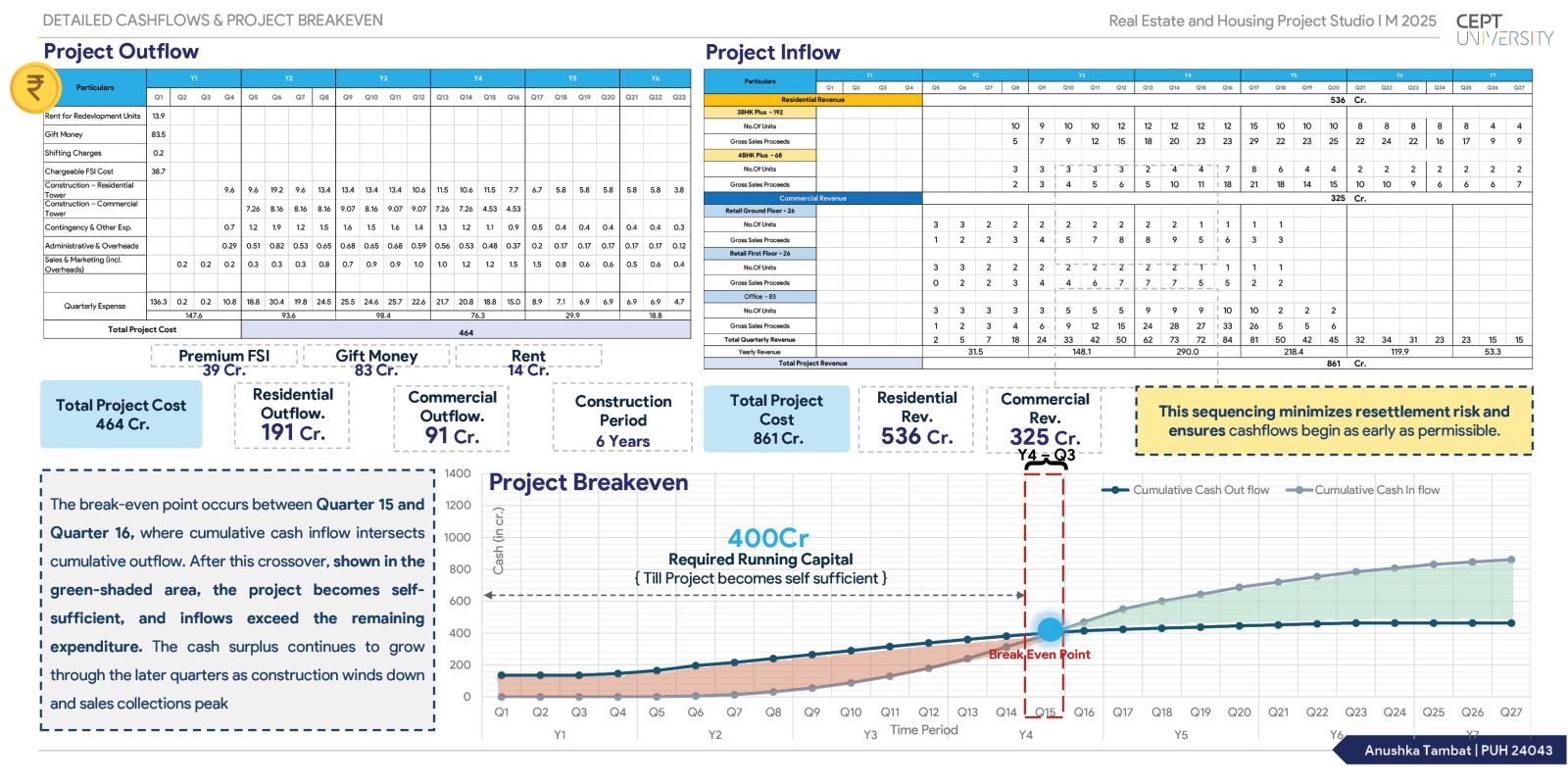
Quarter-wise cash inflow–outflow mapping illustrating key cost components, sales phasing, and the breakeven point where the project becomes self-sustaining.

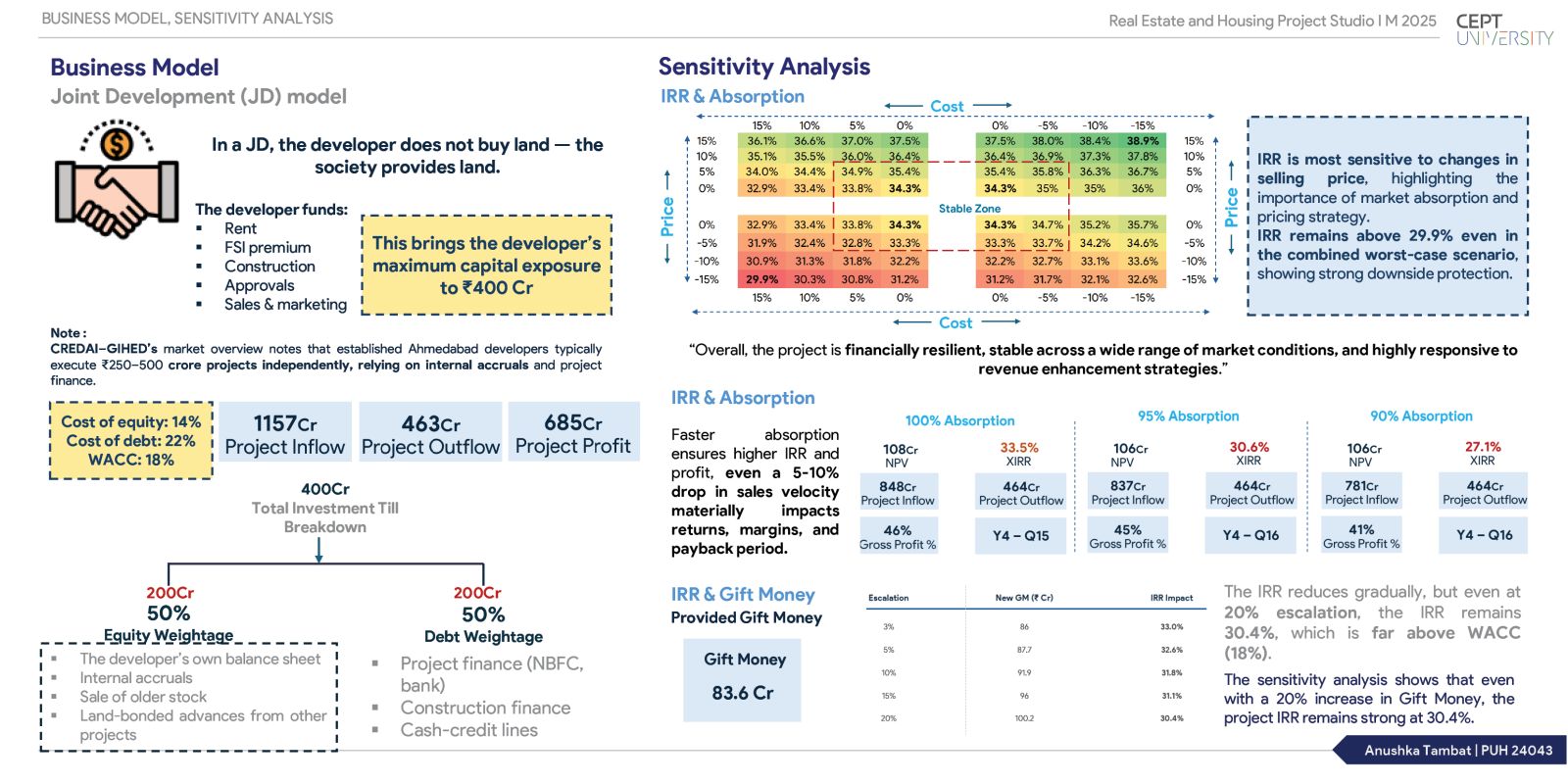
Evaluation of the Joint Development model alongside price–cost–absorption sensitivity, confirming high financial robustness and minimal downside risk even under stressed scenarios.

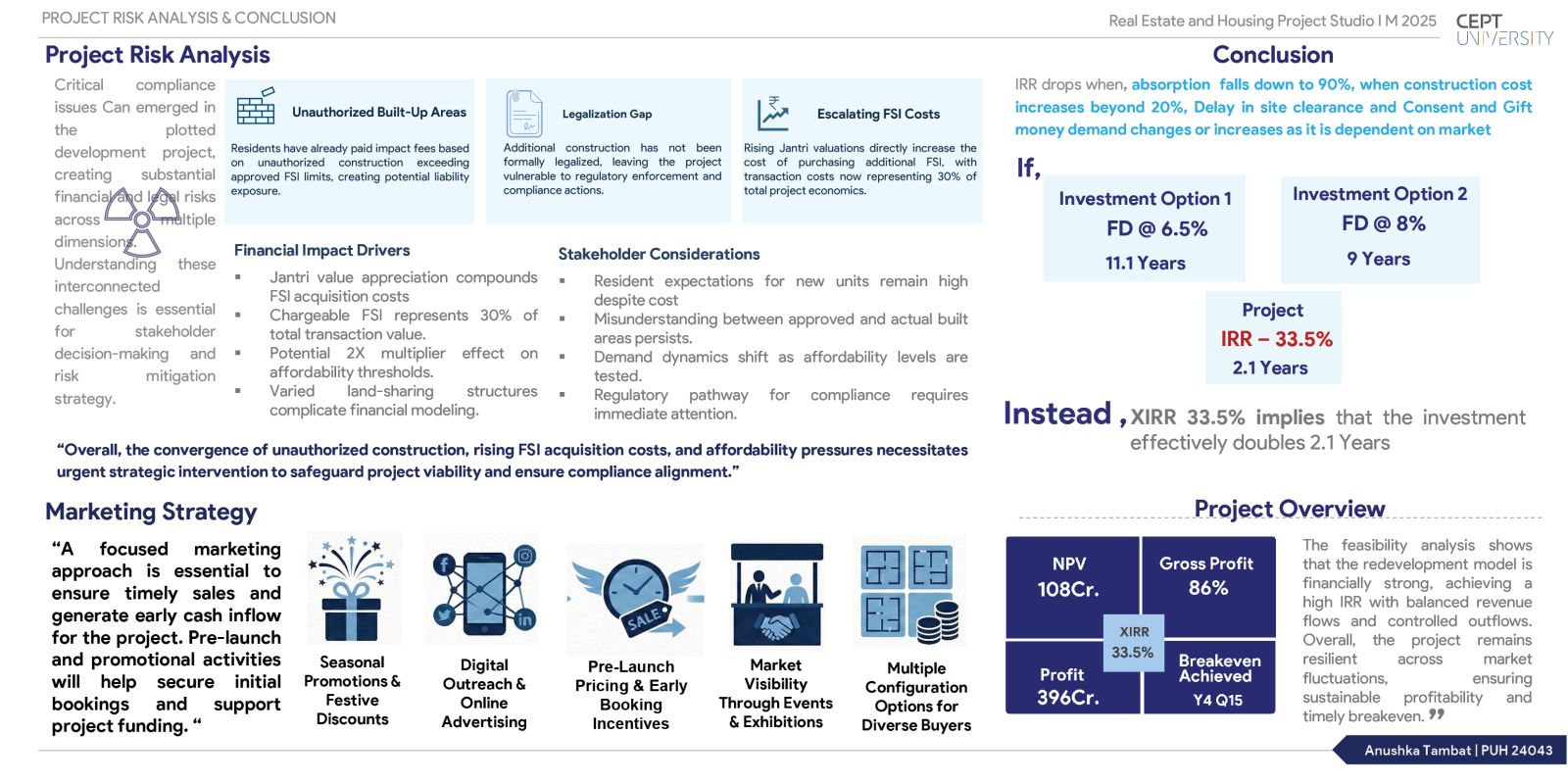
A comprehensive assessment of regulatory, financial, and stakeholder risks, highlighting sensitive cost drivers and demonstrating the project’s resilience through strong IRR performance and breakeven stability.