Your browser is out-of-date!
For a richer surfing experience on our website, please update your browser. Update my browser now!
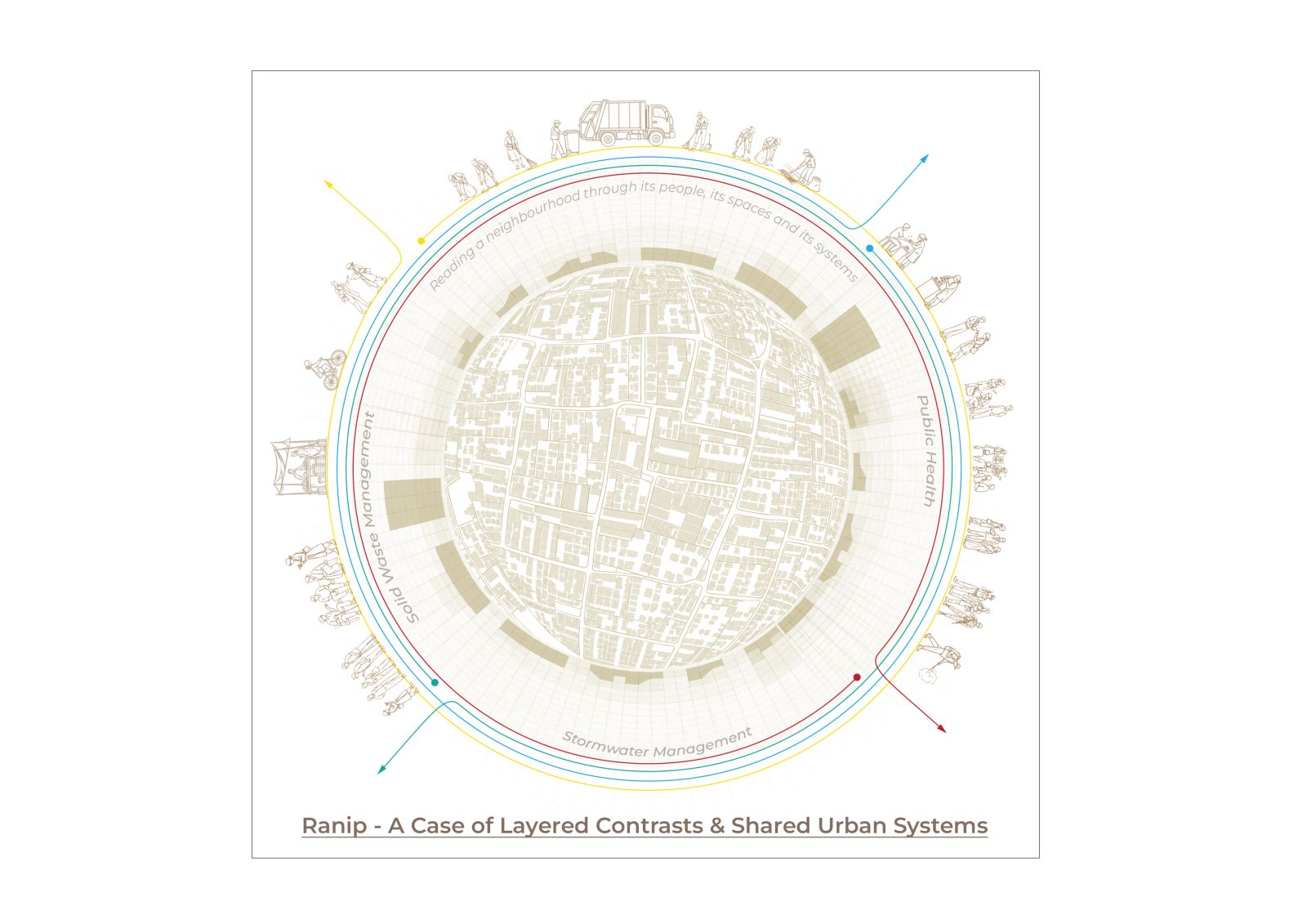
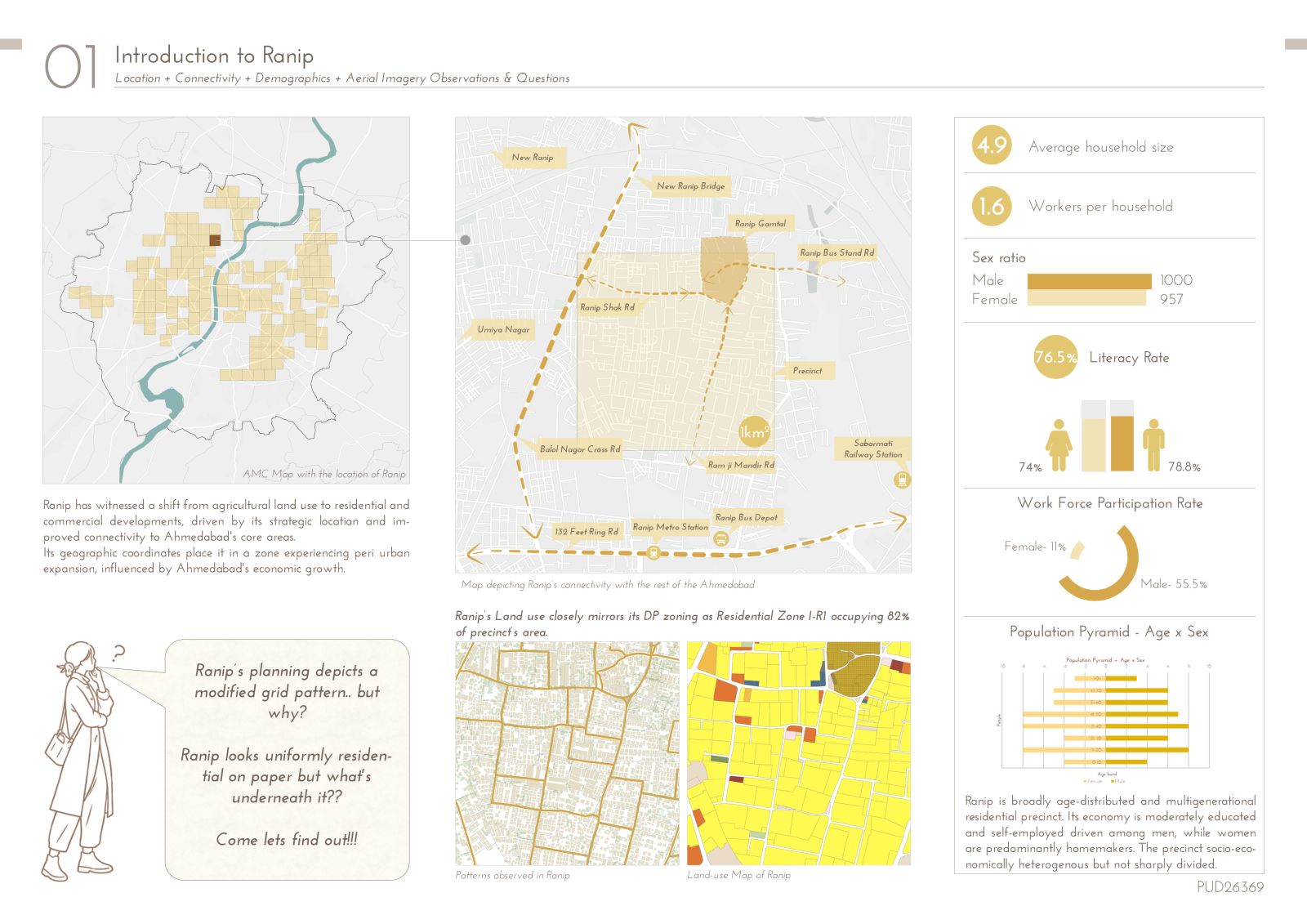
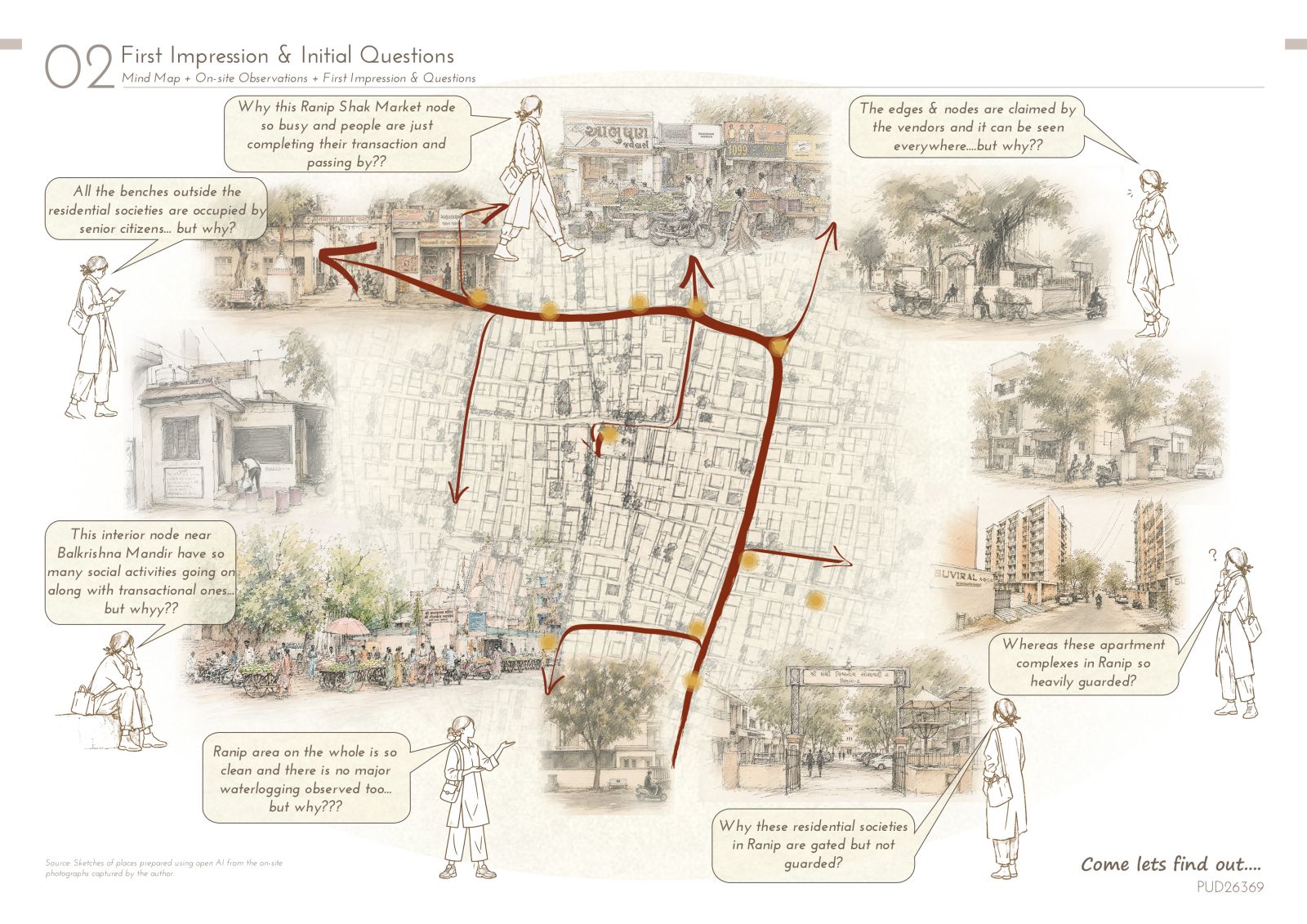
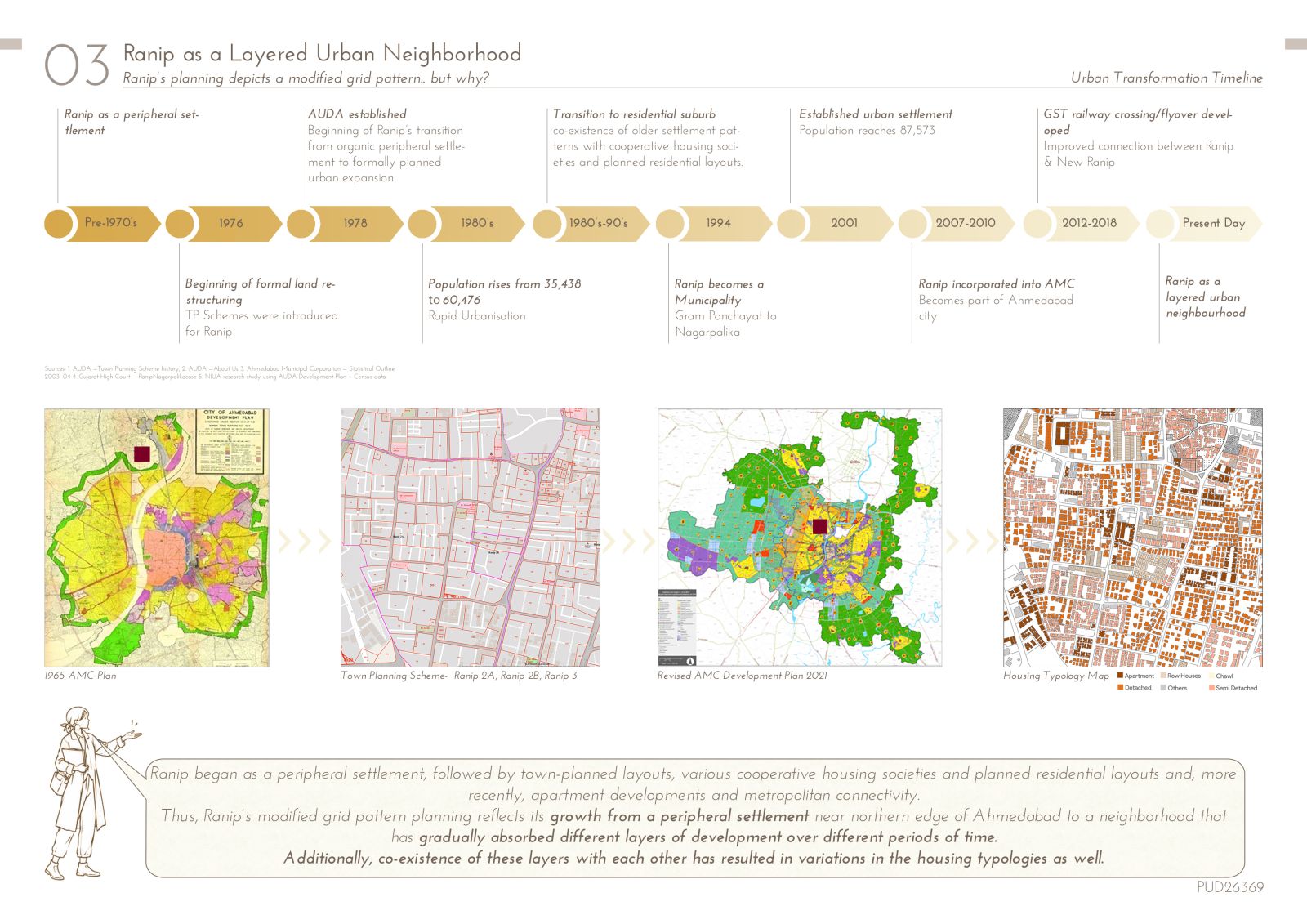
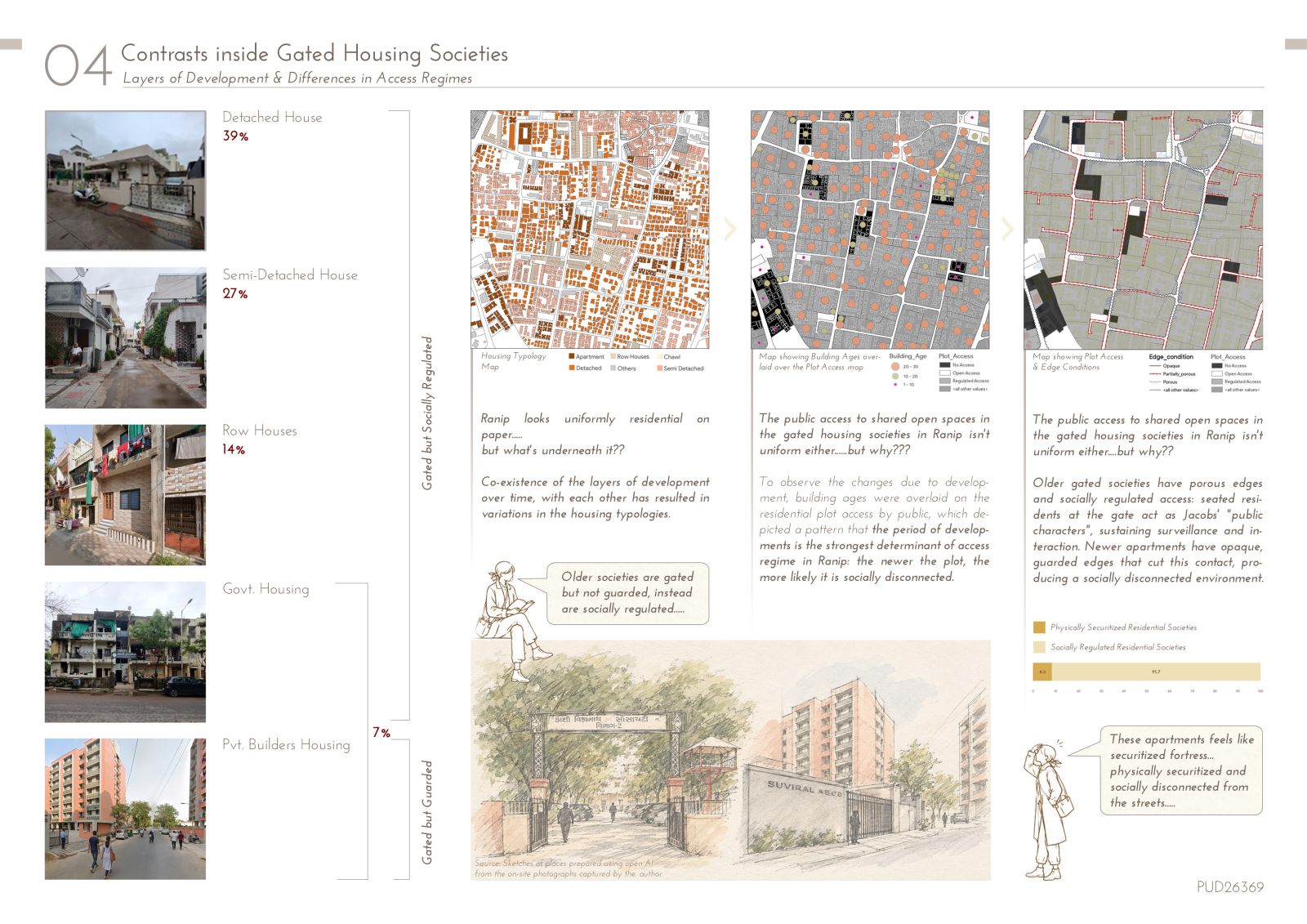
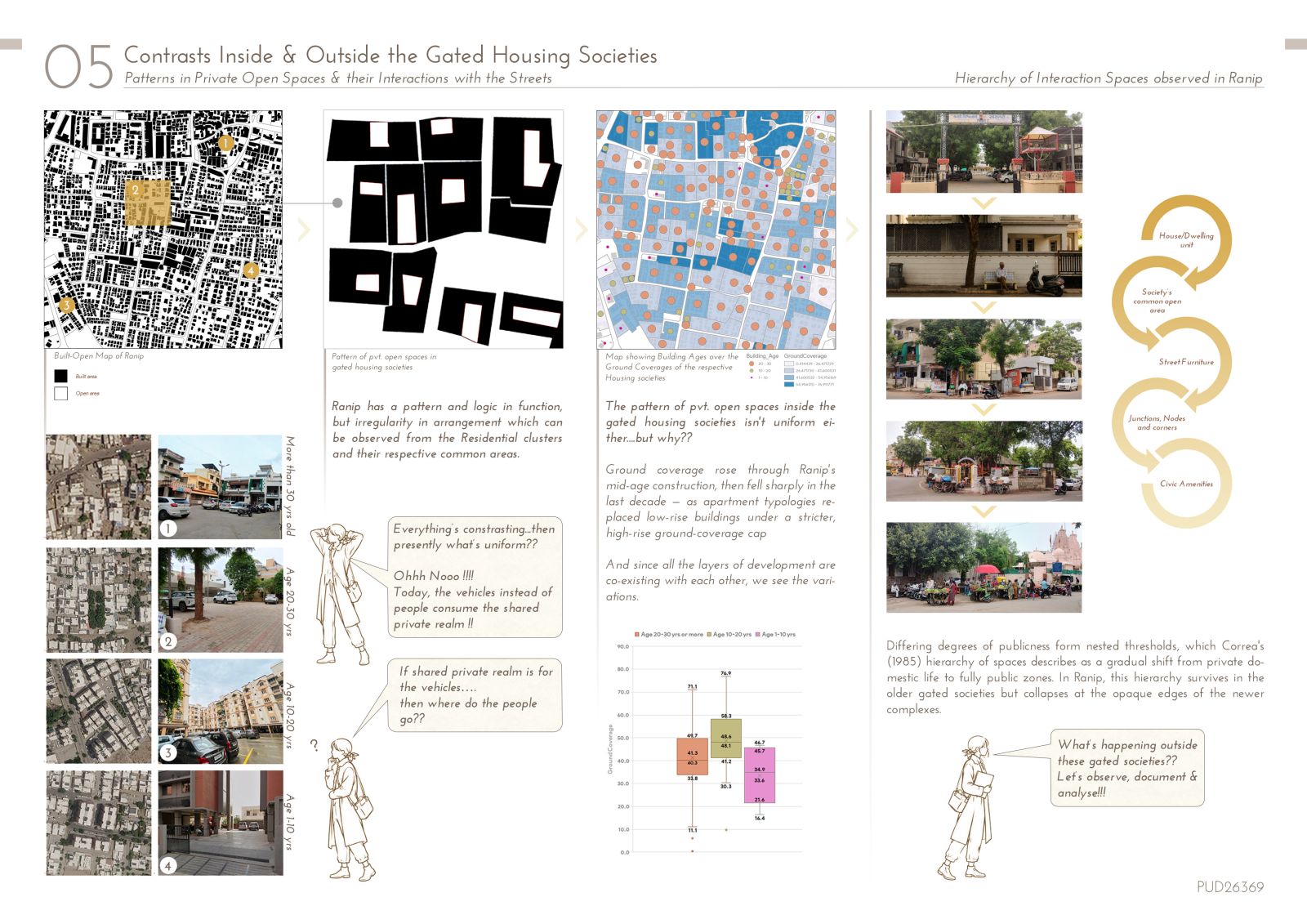
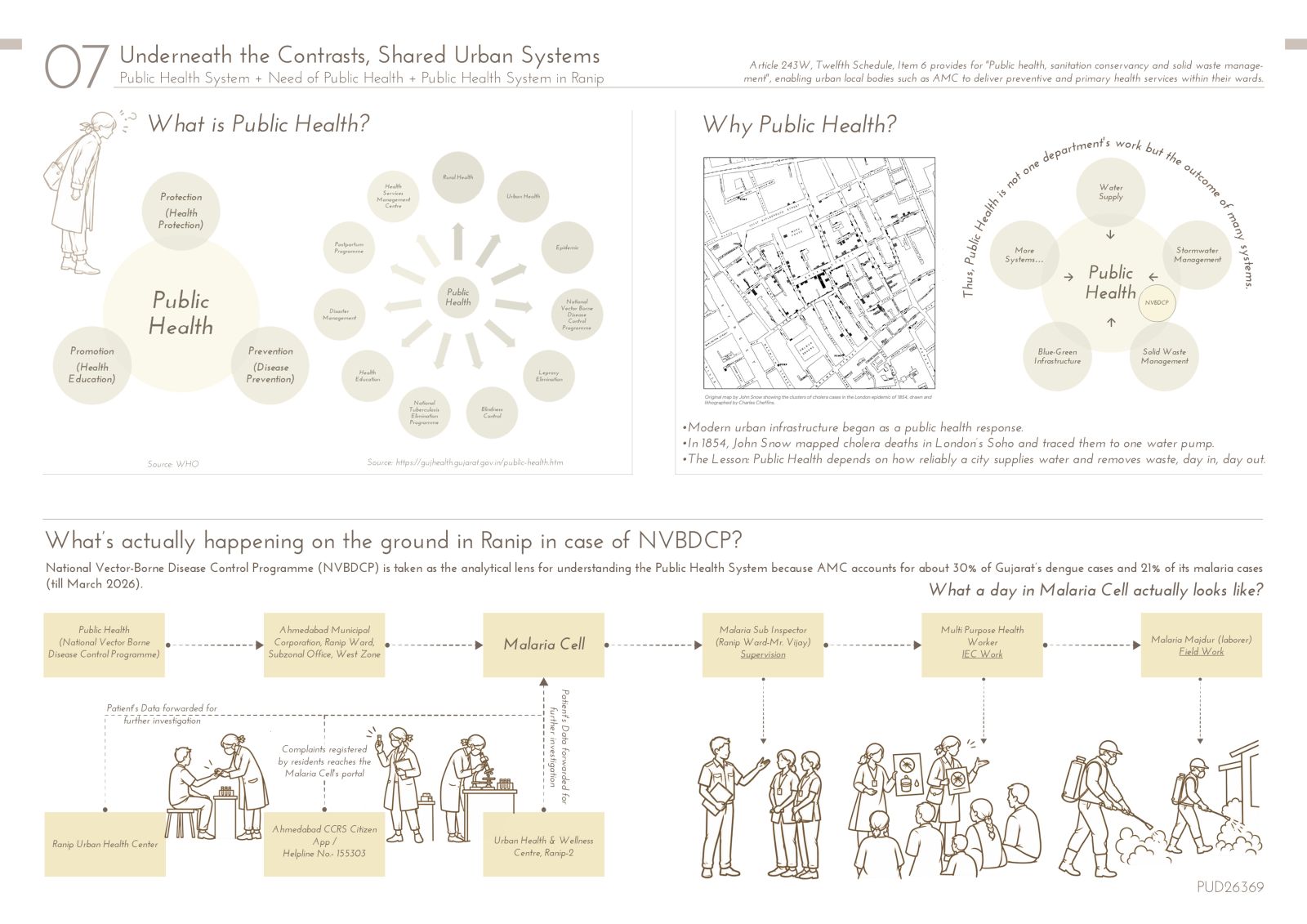
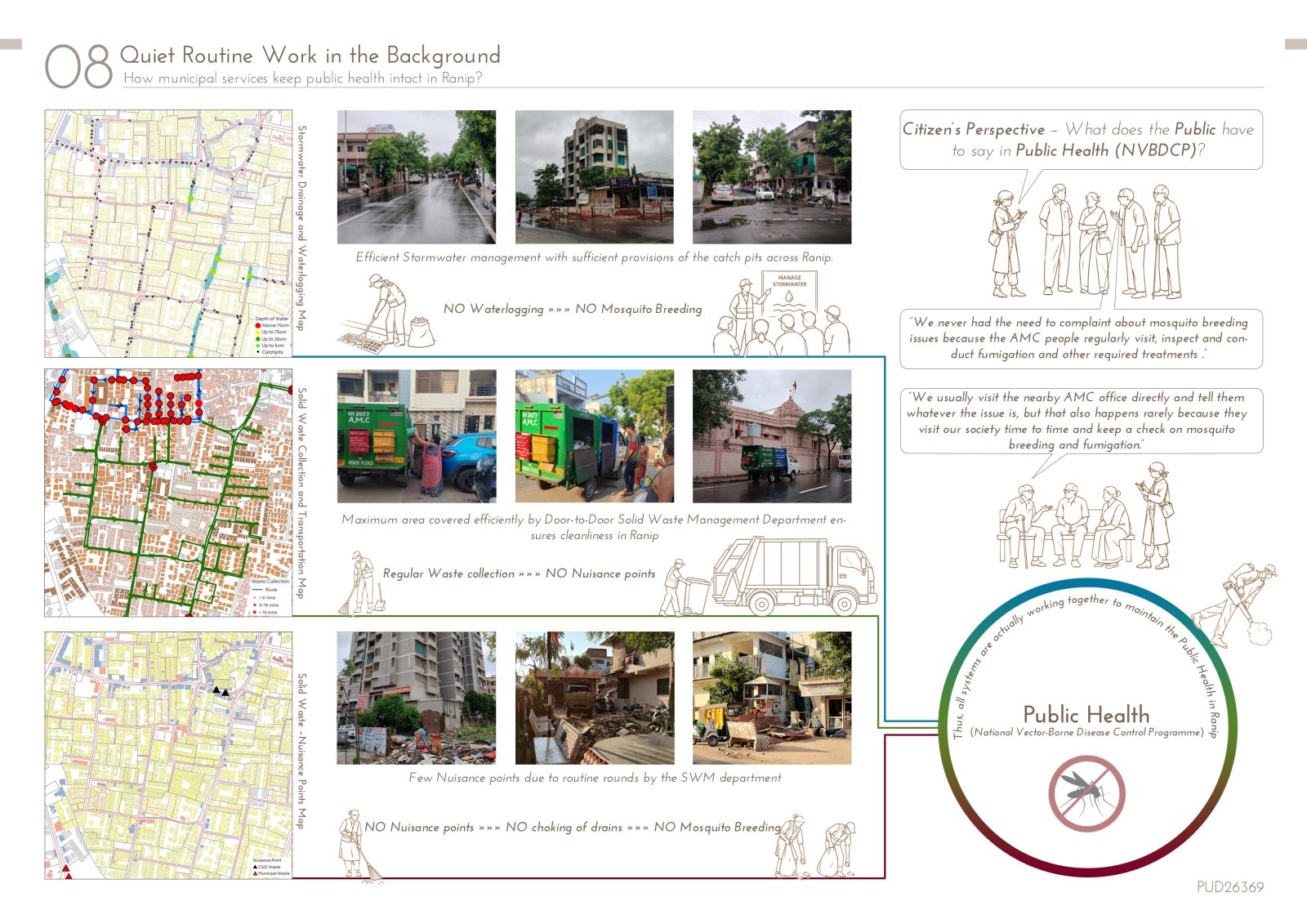
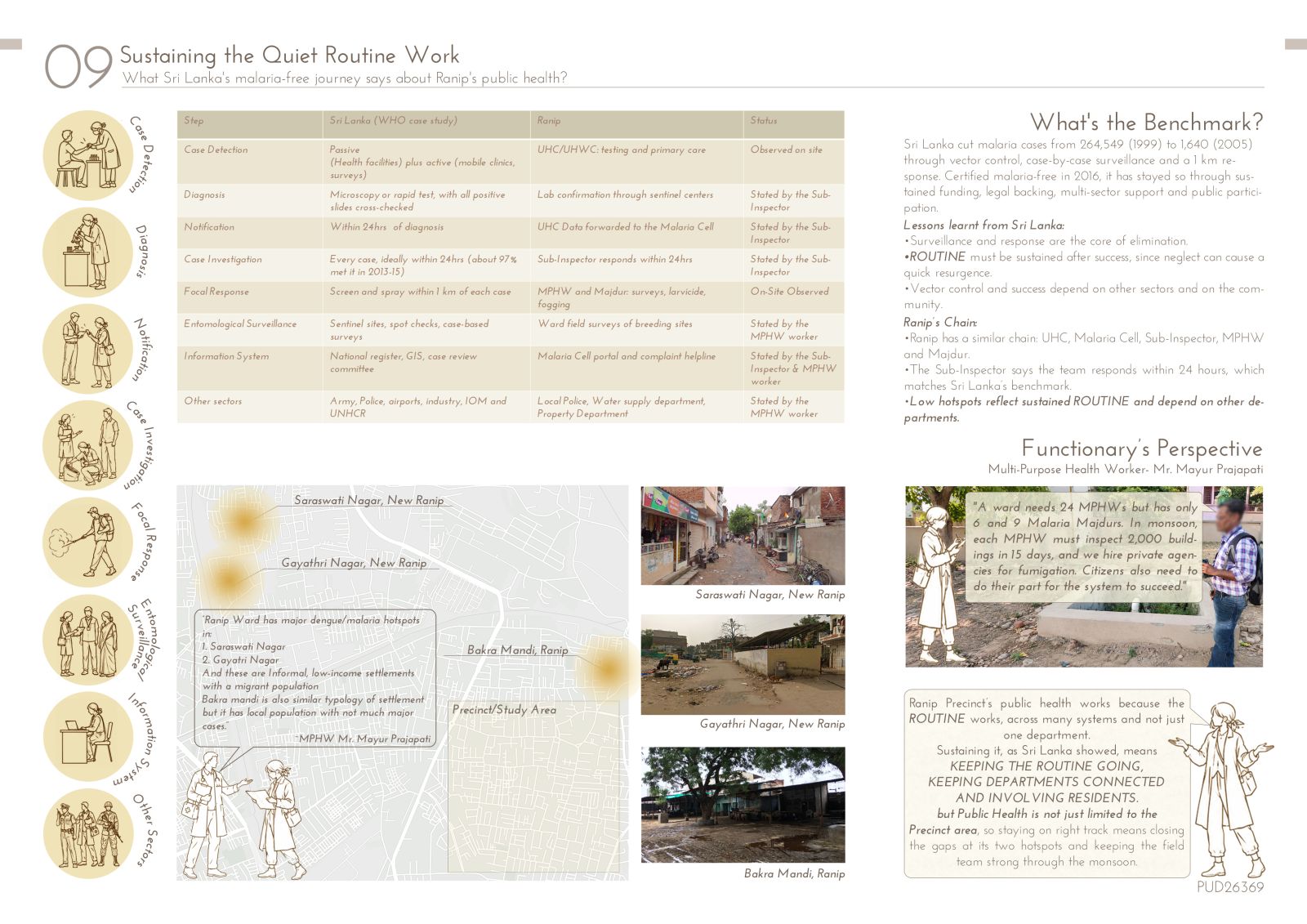
Ranip, a precinct in northern Ahmedabad, was studied through three lenses: people and places, built environment and public realm, and public systems and governance. It grew as a peripheral settlement that absorbed town-planning layouts, housing societies and, recently, apartments. These layers coexist, but publicness is declining: older societies have porous edges and socially regulated access, while newer apartments are opaque and securitized. Beneath these contrasts, shared systems of water, stormwater and waste collection, delivered through routine ward-level work, sustain public health by keeping mosquito breeding low. As Sri Lanka showed, sustaining this means keeping the routine going, departments connected and residents involved. Since public health extends beyond the precinct, staying on track means closing gaps at its two hotspots and keeping the field team strong through the monsoon.