Your browser is out-of-date!
For a richer surfing experience on our website, please update your browser. Update my browser now!
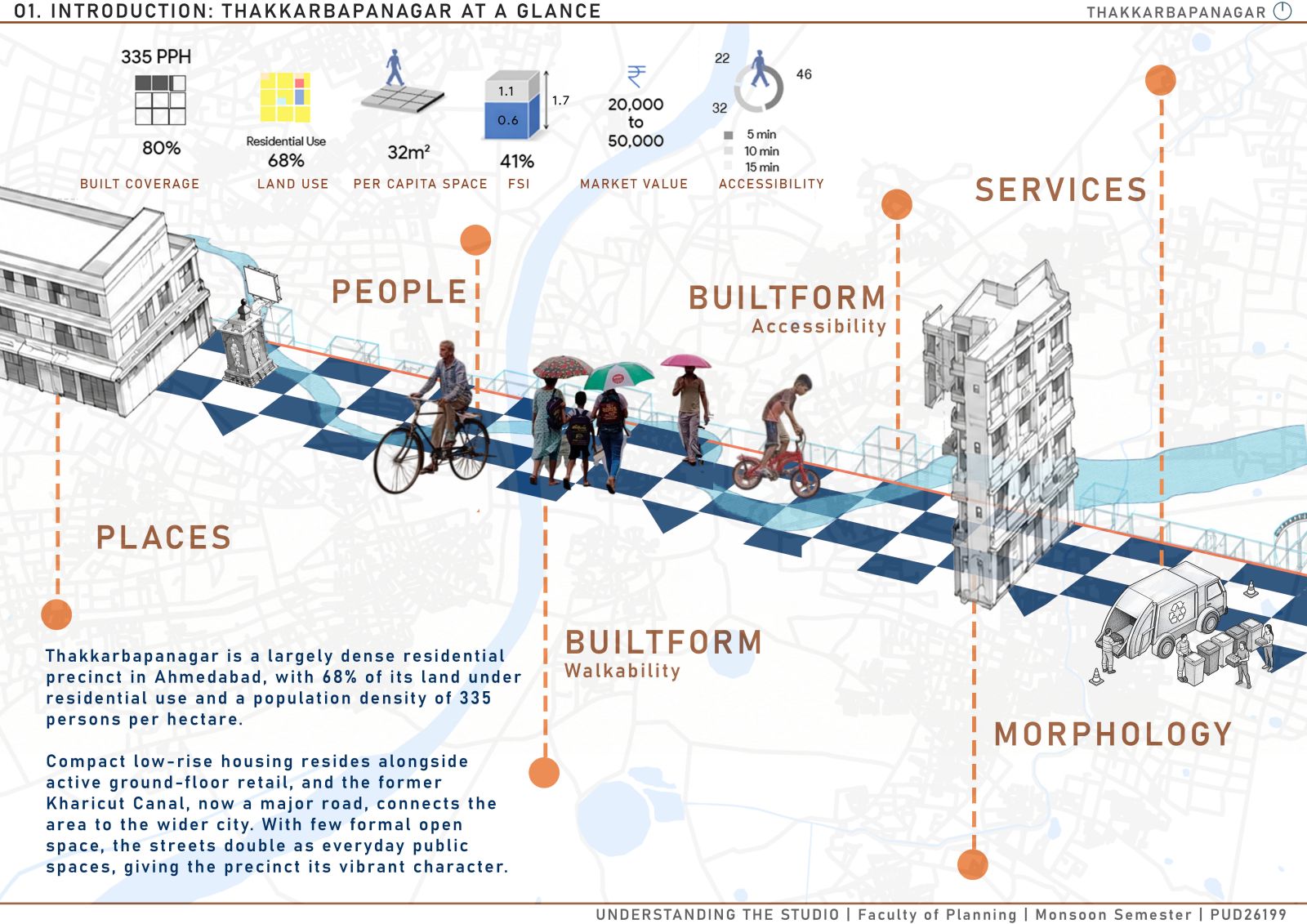
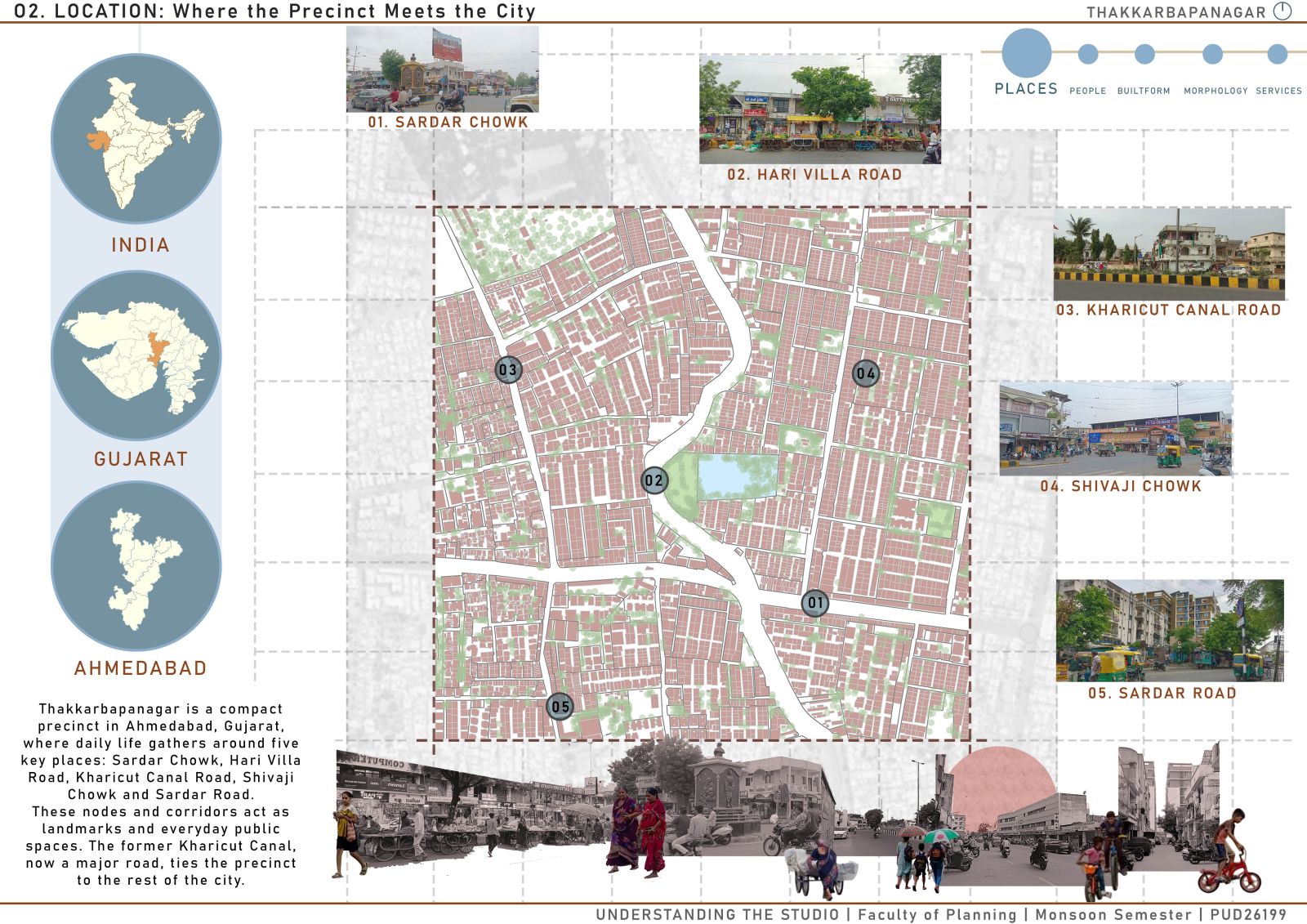
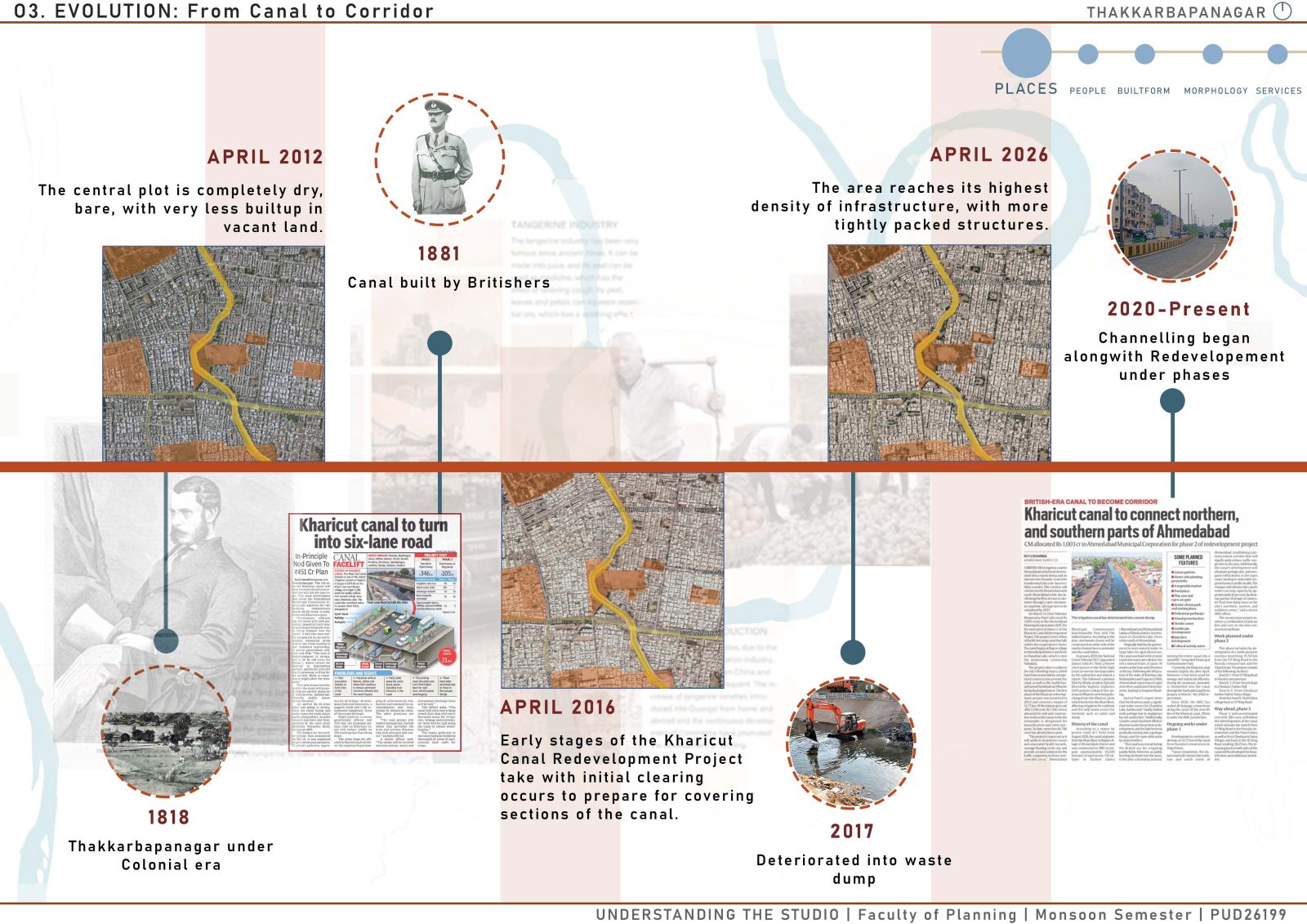
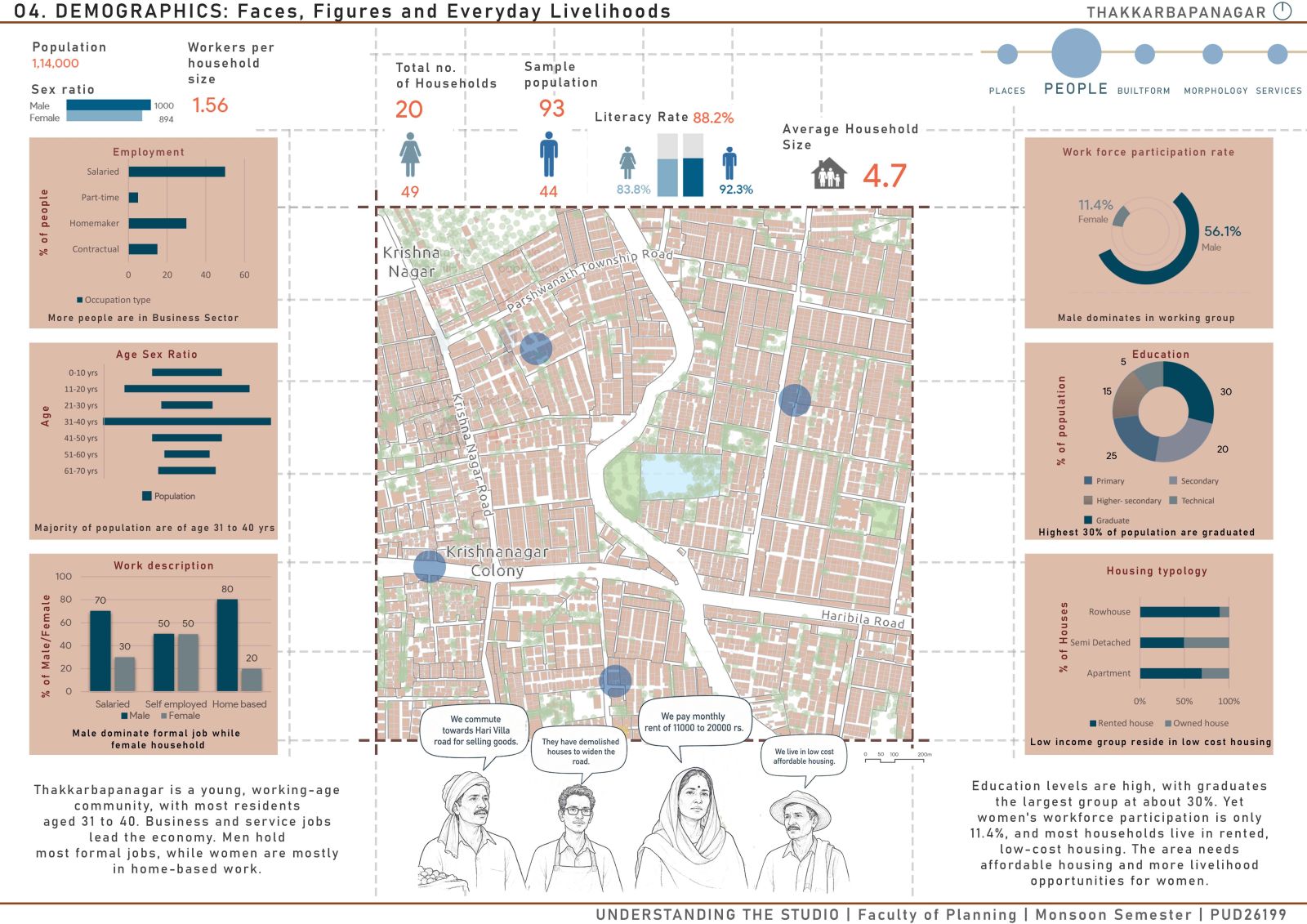
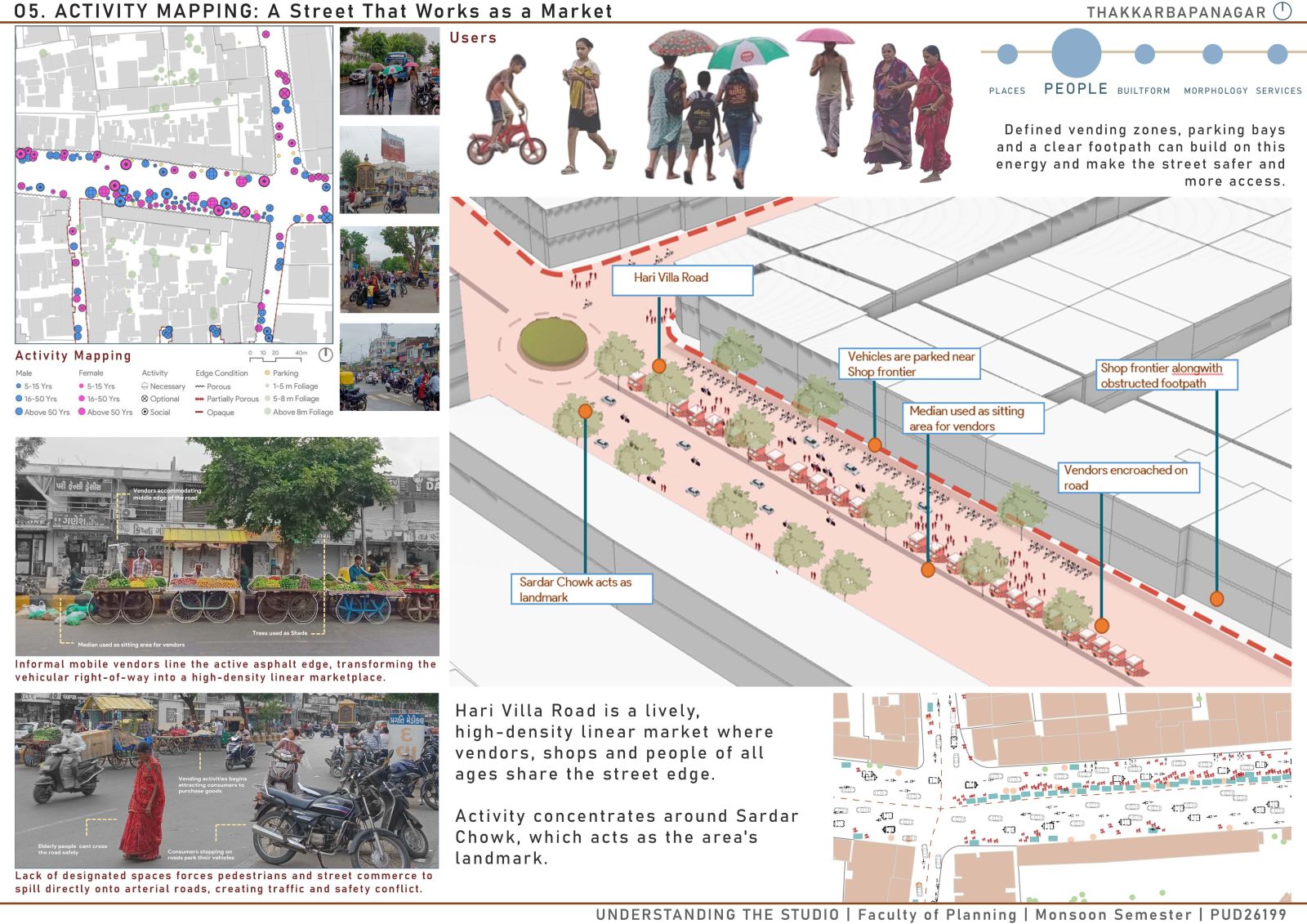
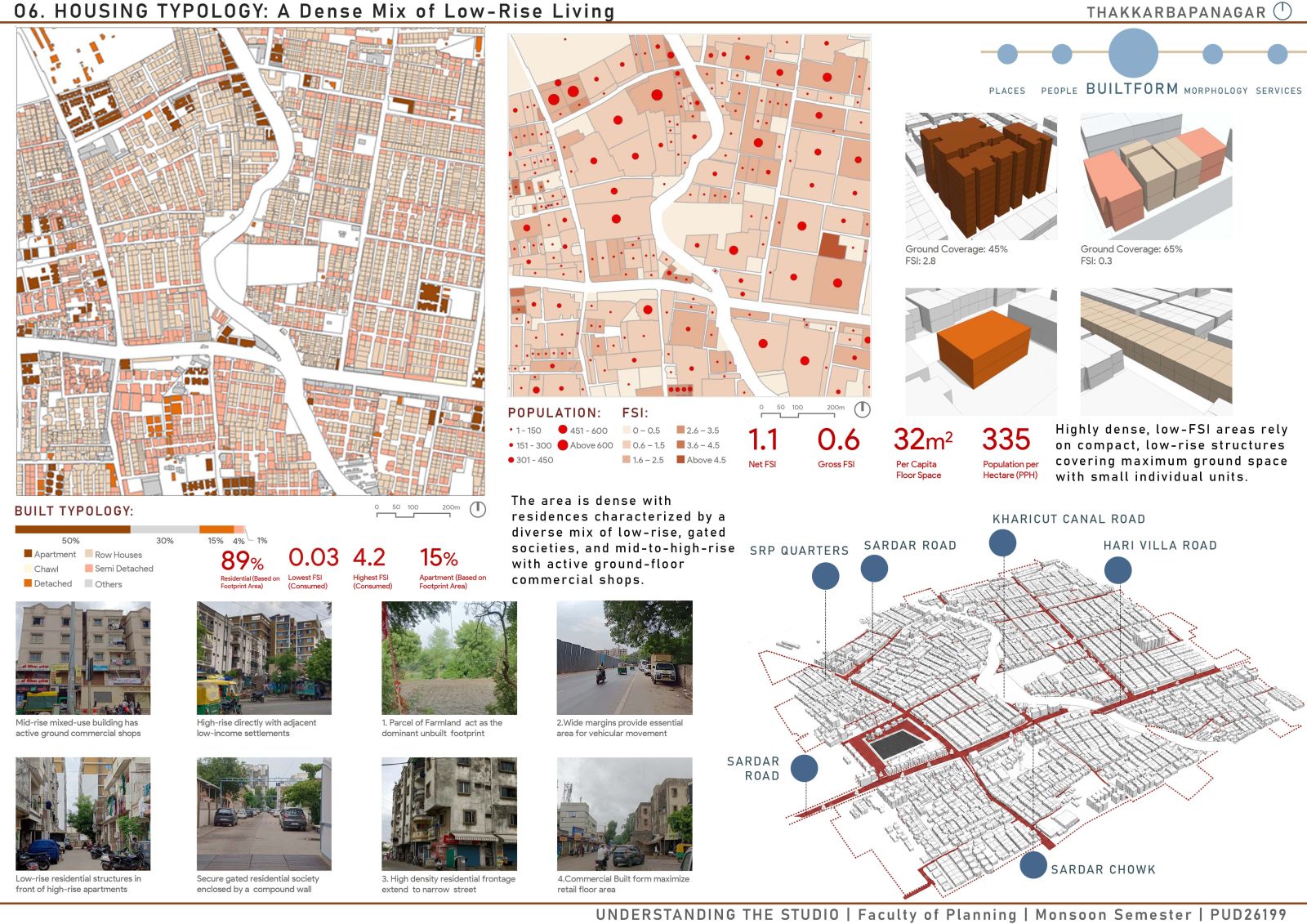
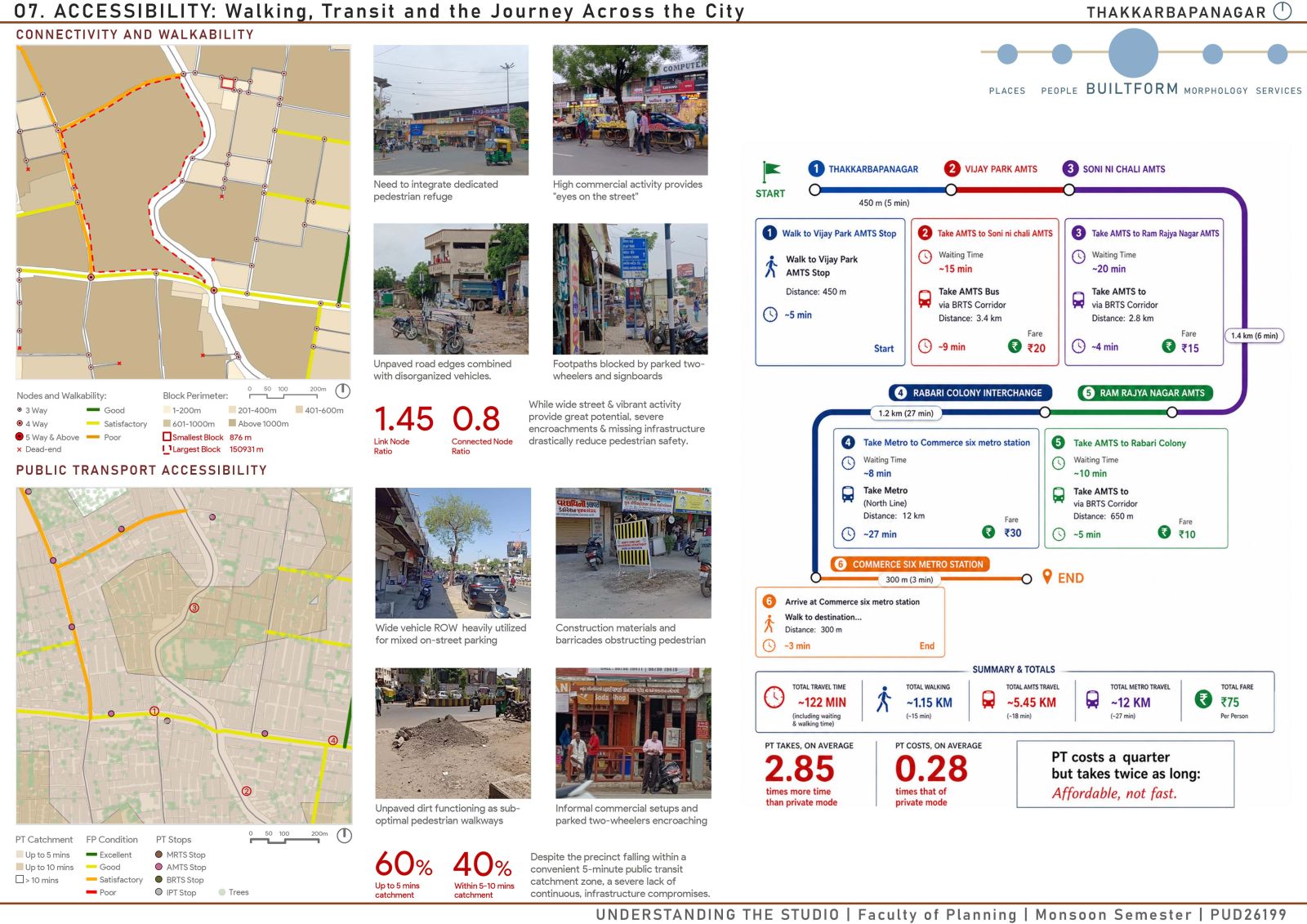
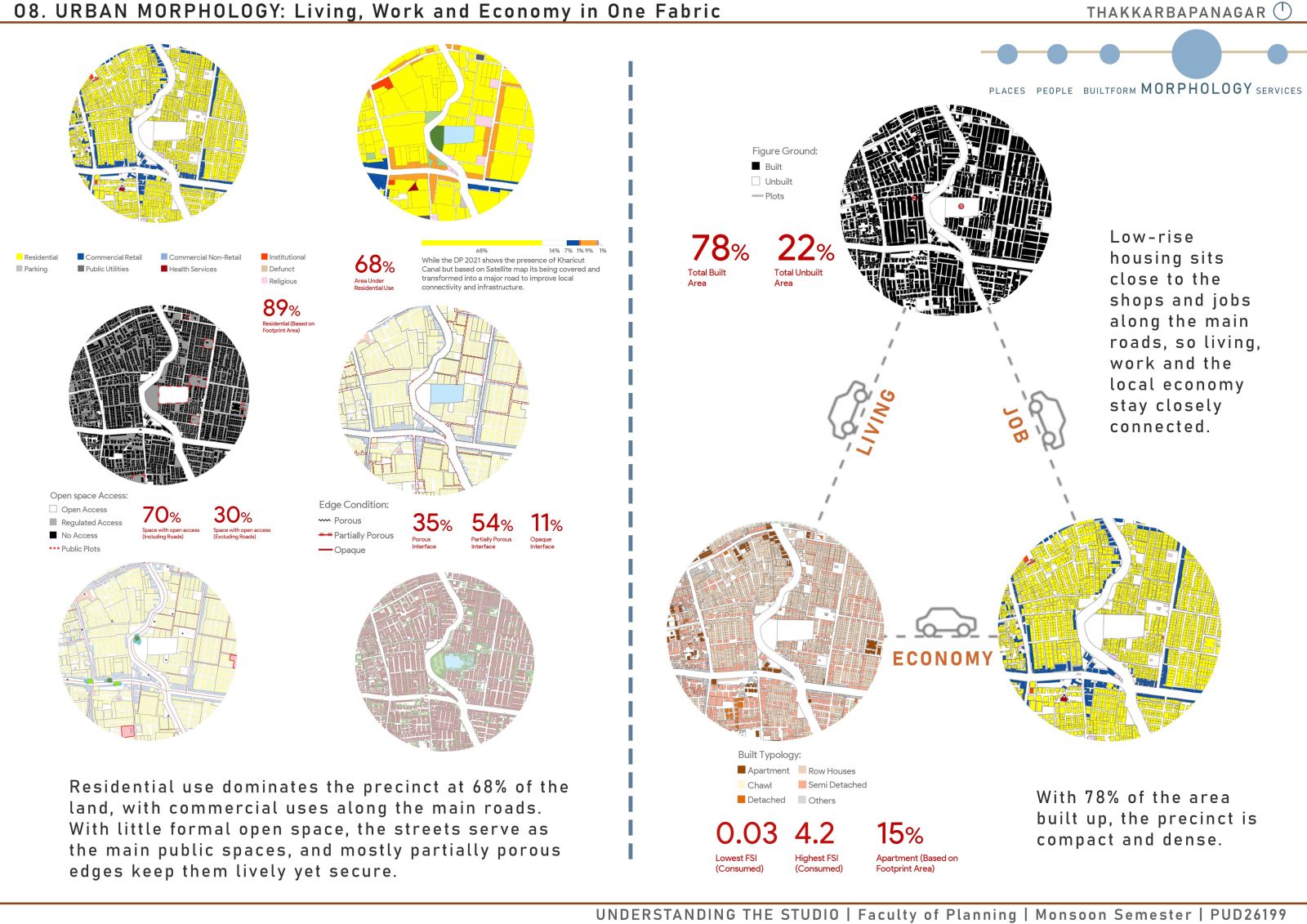
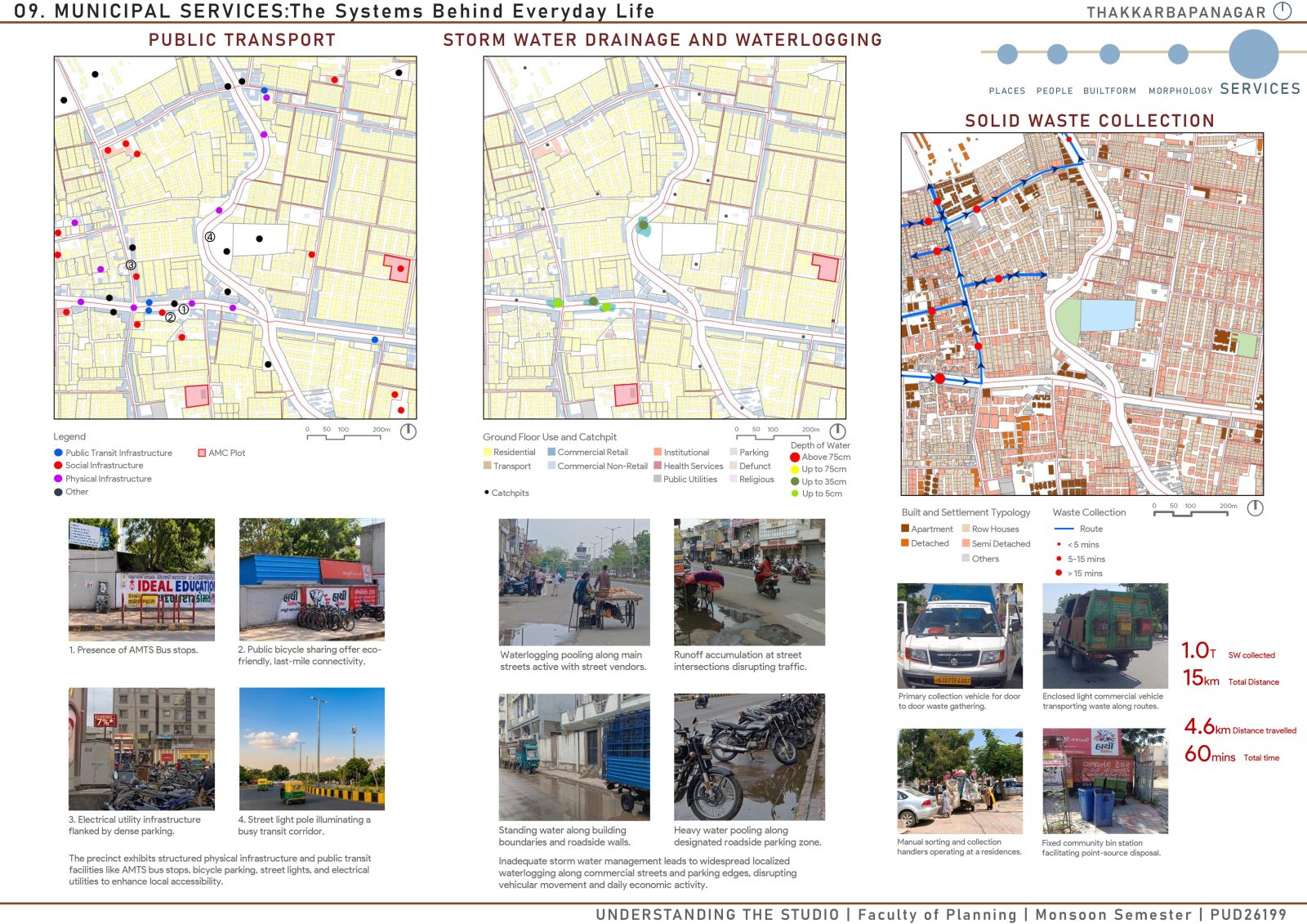
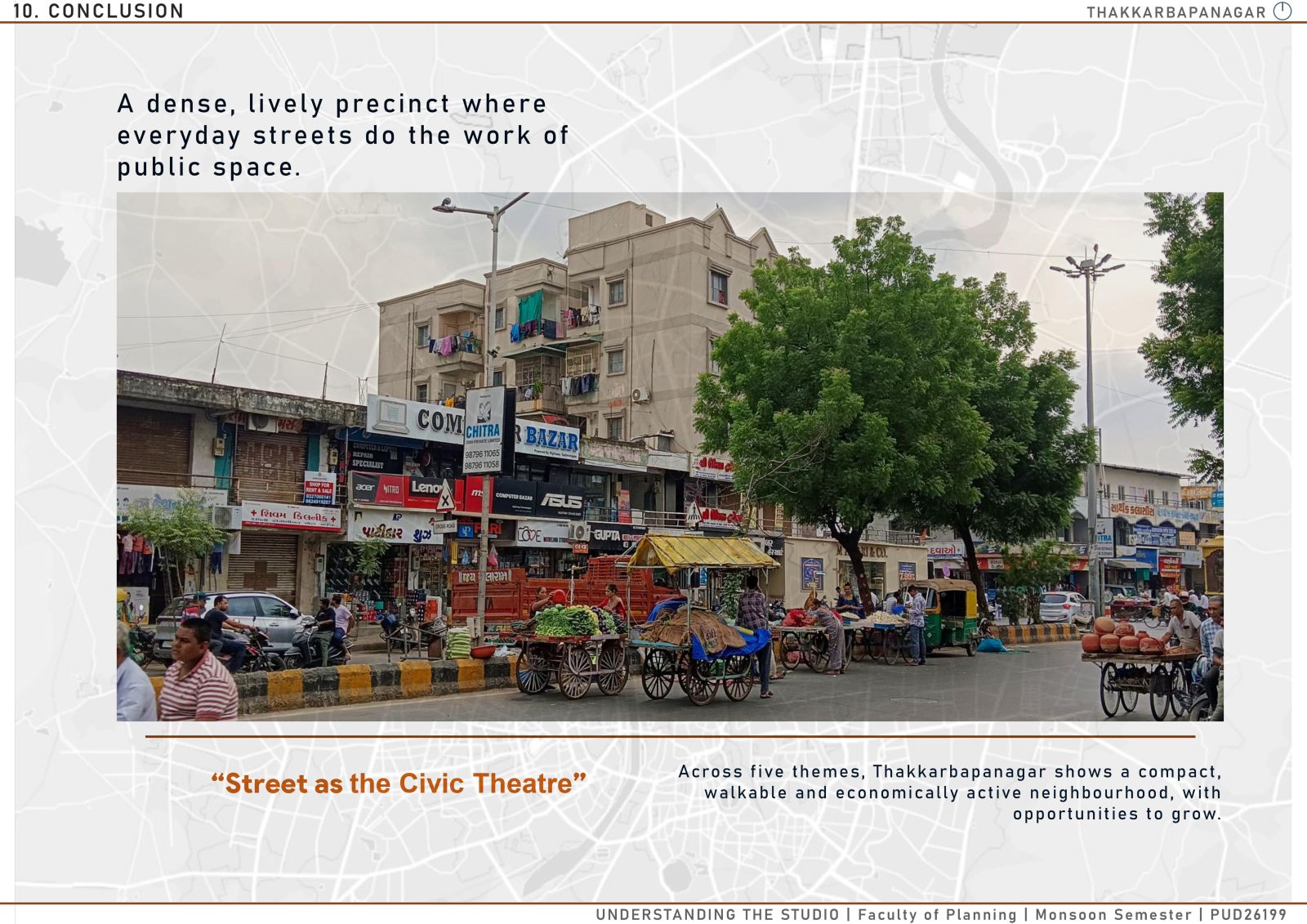
Thakkarbapanagar is a dense, largely residential precinct in Ahmedabad, Gujarat, with a population density of 335 persons per hectare and 68% of its land under residential use. The Kharicut Canal, built by the British in 1881, has been redeveloped since 2020 into a major road that connects the precinct to the wider city. This project, carried out for the Understanding the Studio course at the Faculty of Planning, aims to understand how the precinct works today and how its everyday streets can be strengthened as public space. The study reads the precinct through five themes: places, people, built form, morphology and services. It combines primary data collection, including a household survey, site visits and photo documentation, with plot-level mapping and secondary sources such as satellite imagery and the Development Plan. The findings show a compact, walkable and economically active neighbourhood, where 78% of the area is built up, housing is mostly low-rise with low FSI, and a young, educated community with an 88.2% literacy rate uses streets like Hari Villa Road as markets and meeting places. About 60% of the precinct lies within a five-minute public transport catchment, and transit, drainage and waste services all reach the area. The project concludes that the precinct has clear room to grow. Defined vending zones, parking bays and clear footpaths, gentle densification on low-FSI plots, more livelihood opportunities for women, and better walkways to transit and drainage at junctions can make it safer, more accessible and more inclusive.
View Additional Work