Your browser is out-of-date!
For a richer surfing experience on our website, please update your browser. Update my browser now!
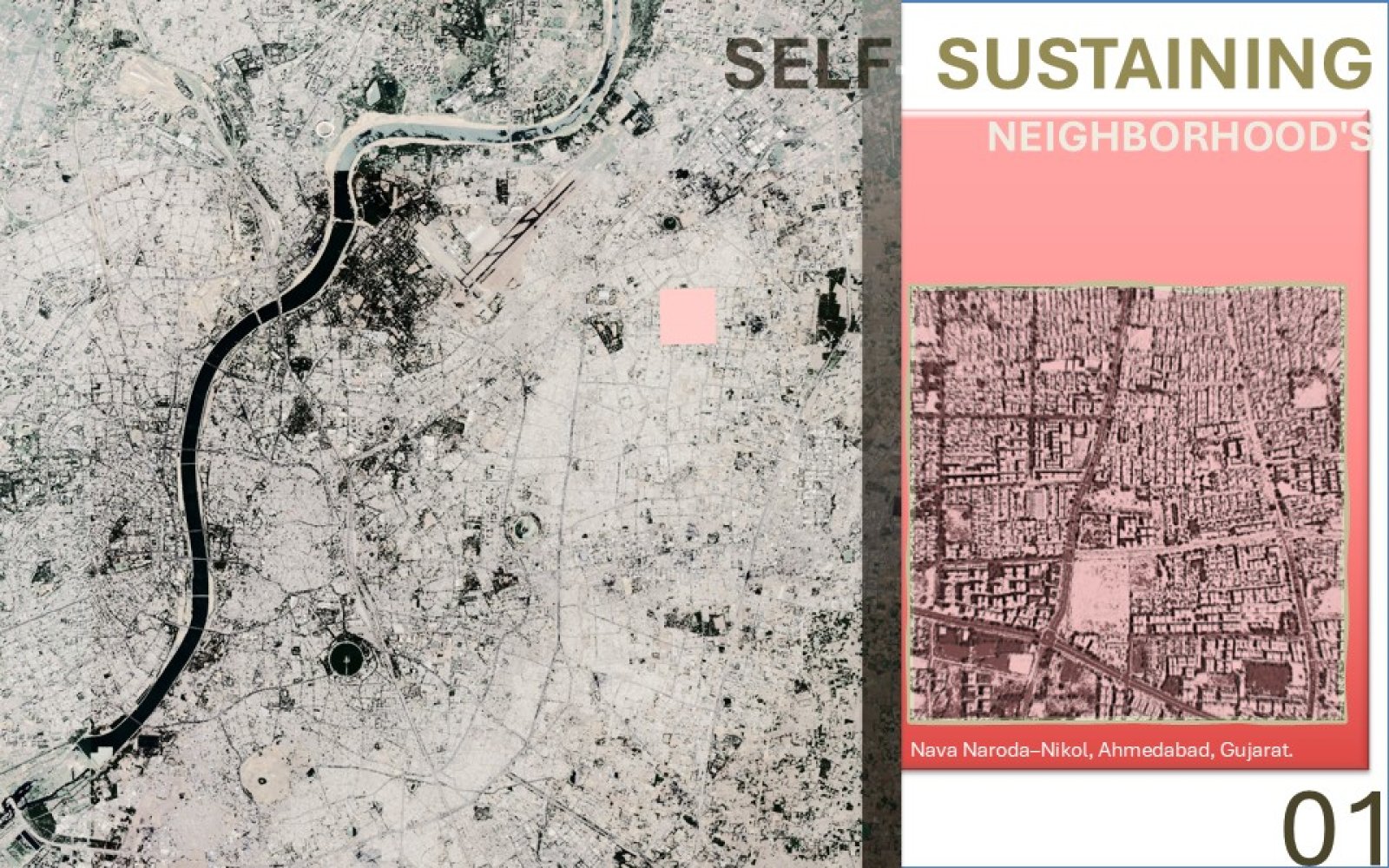
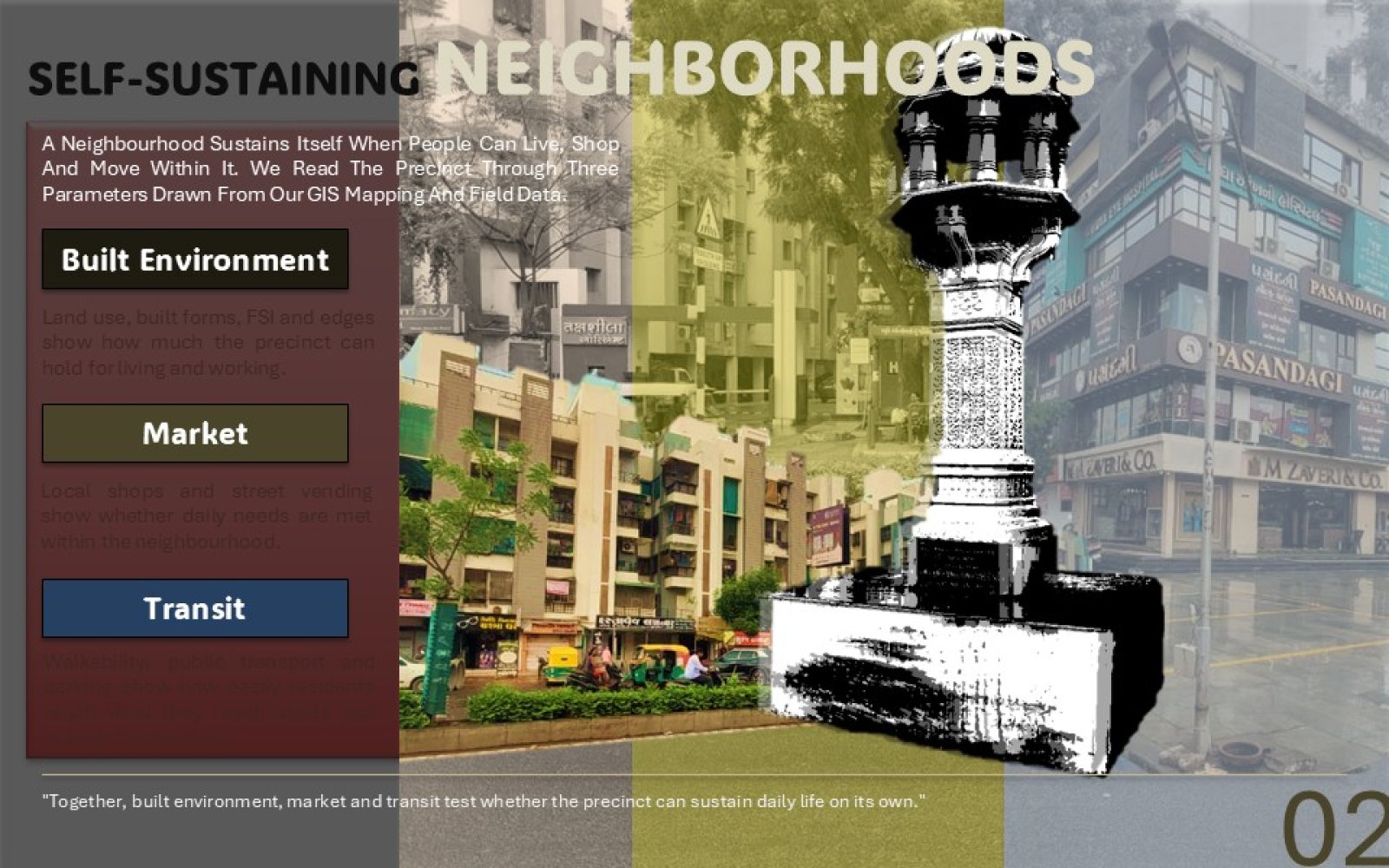
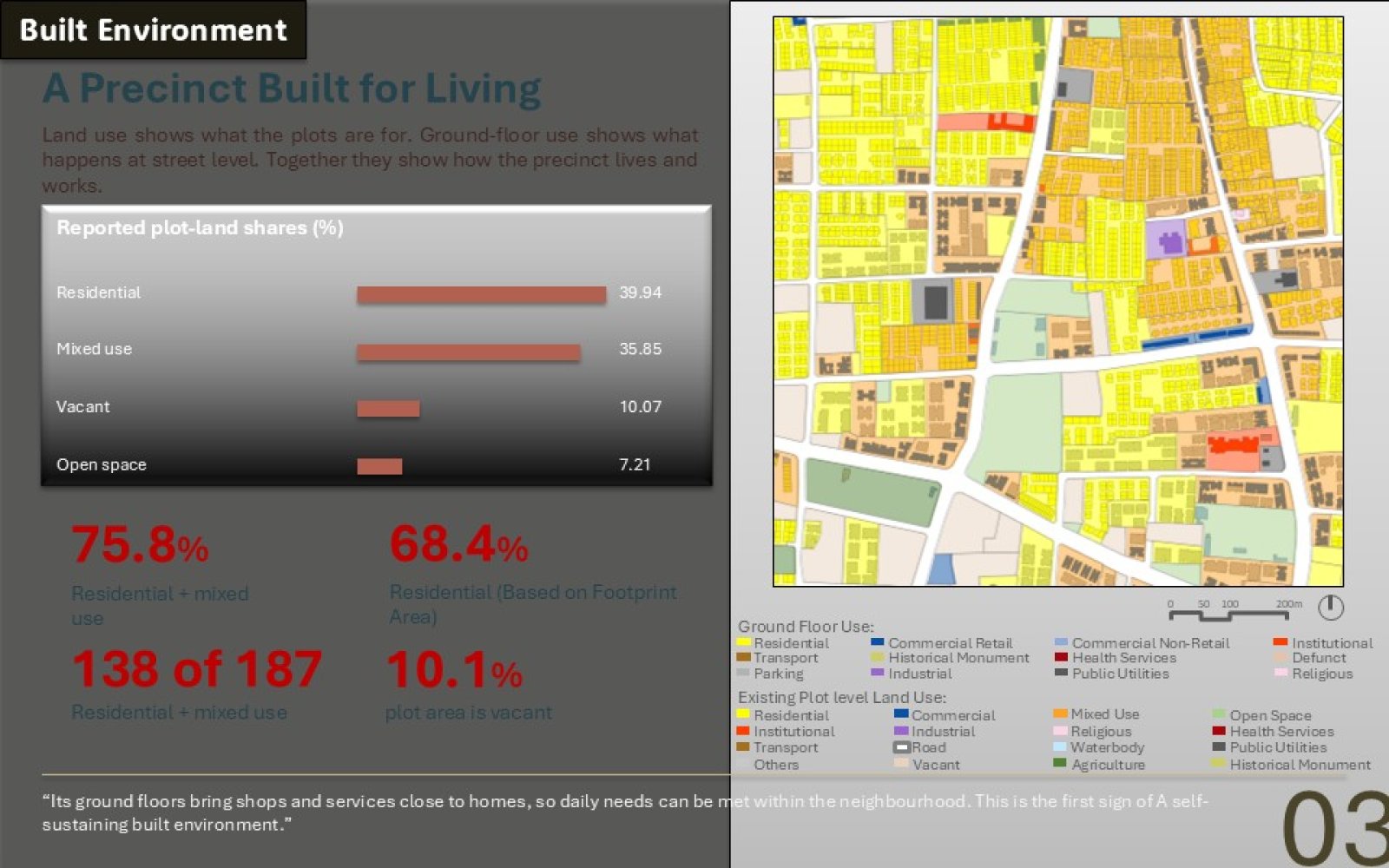
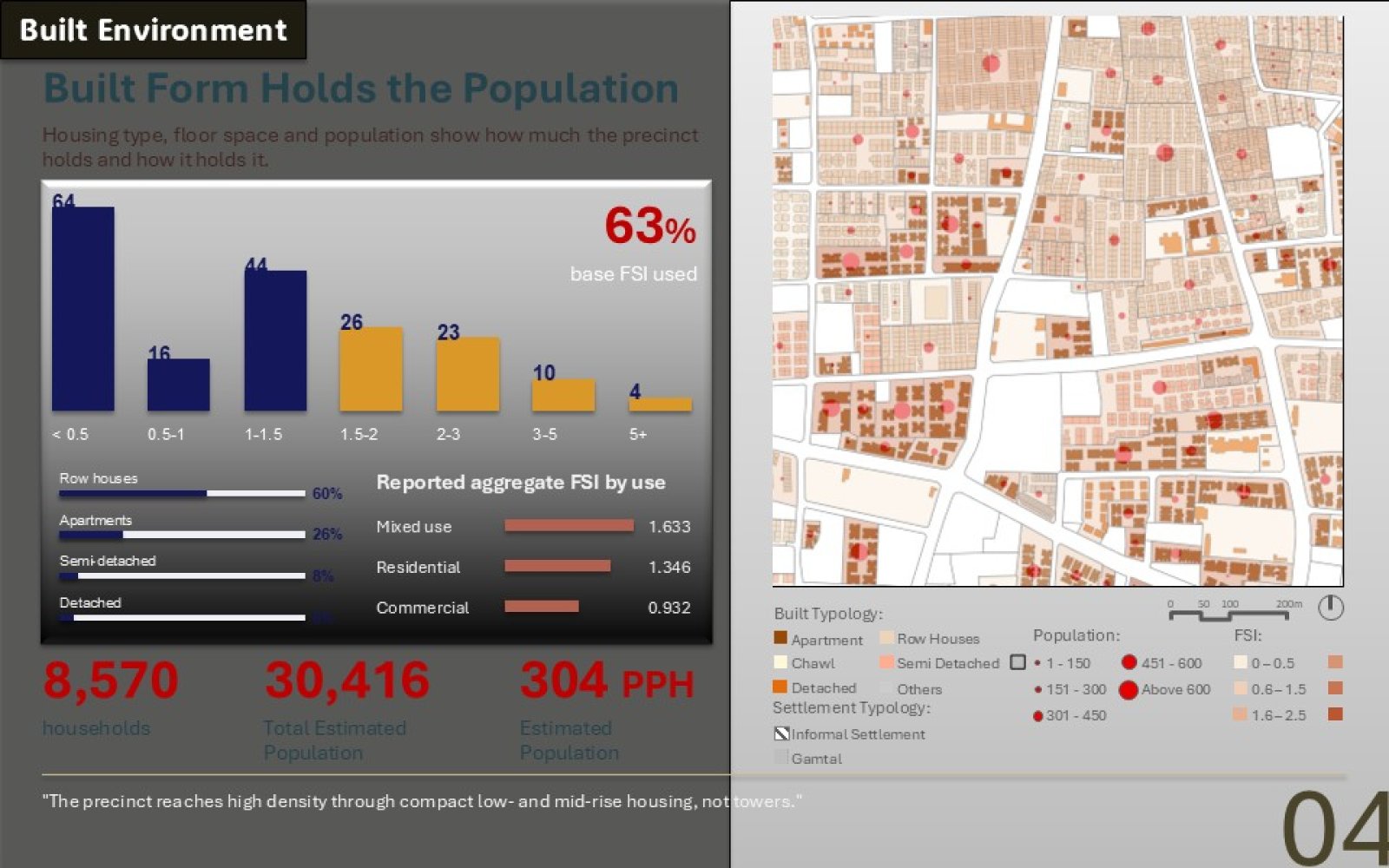
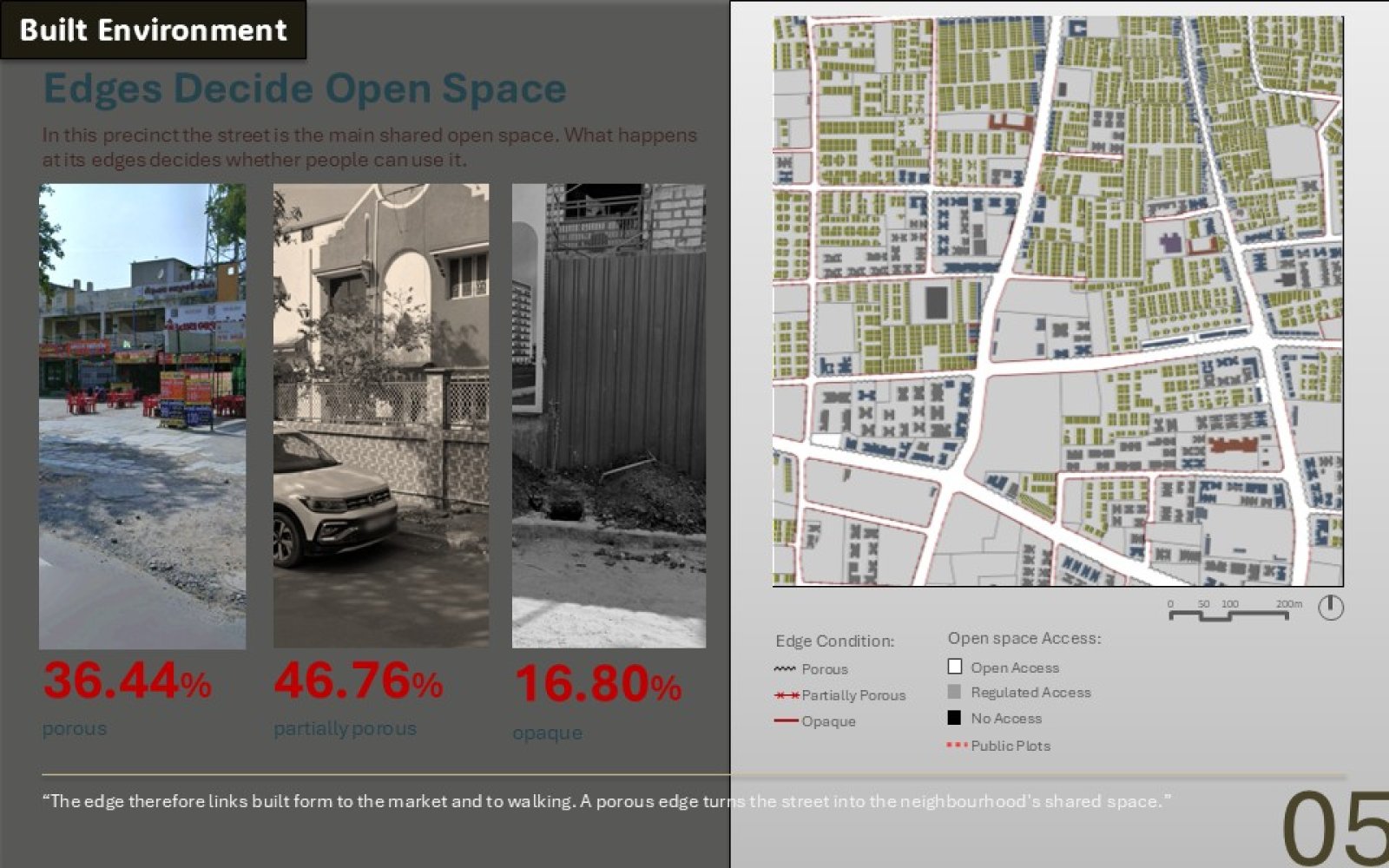
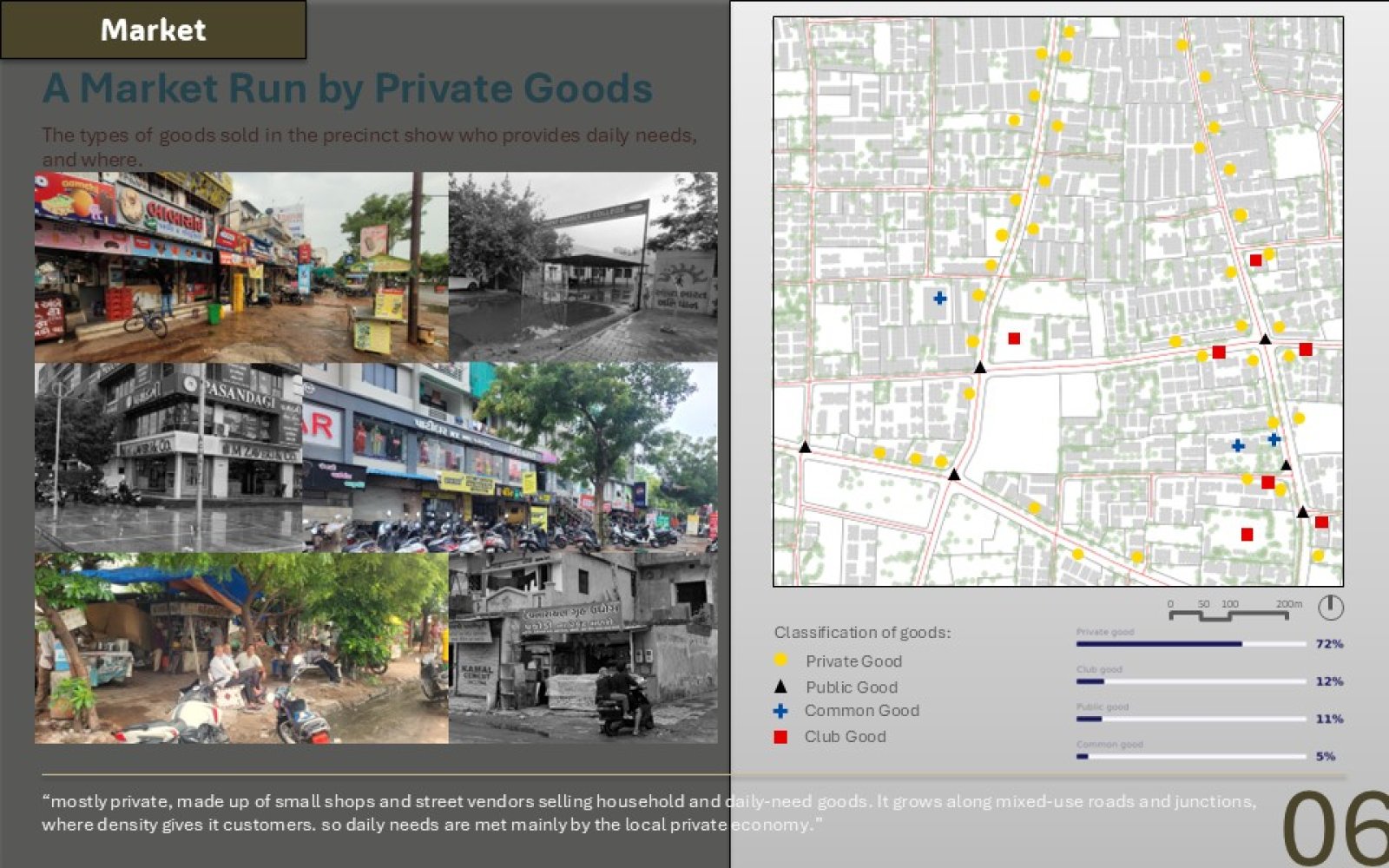
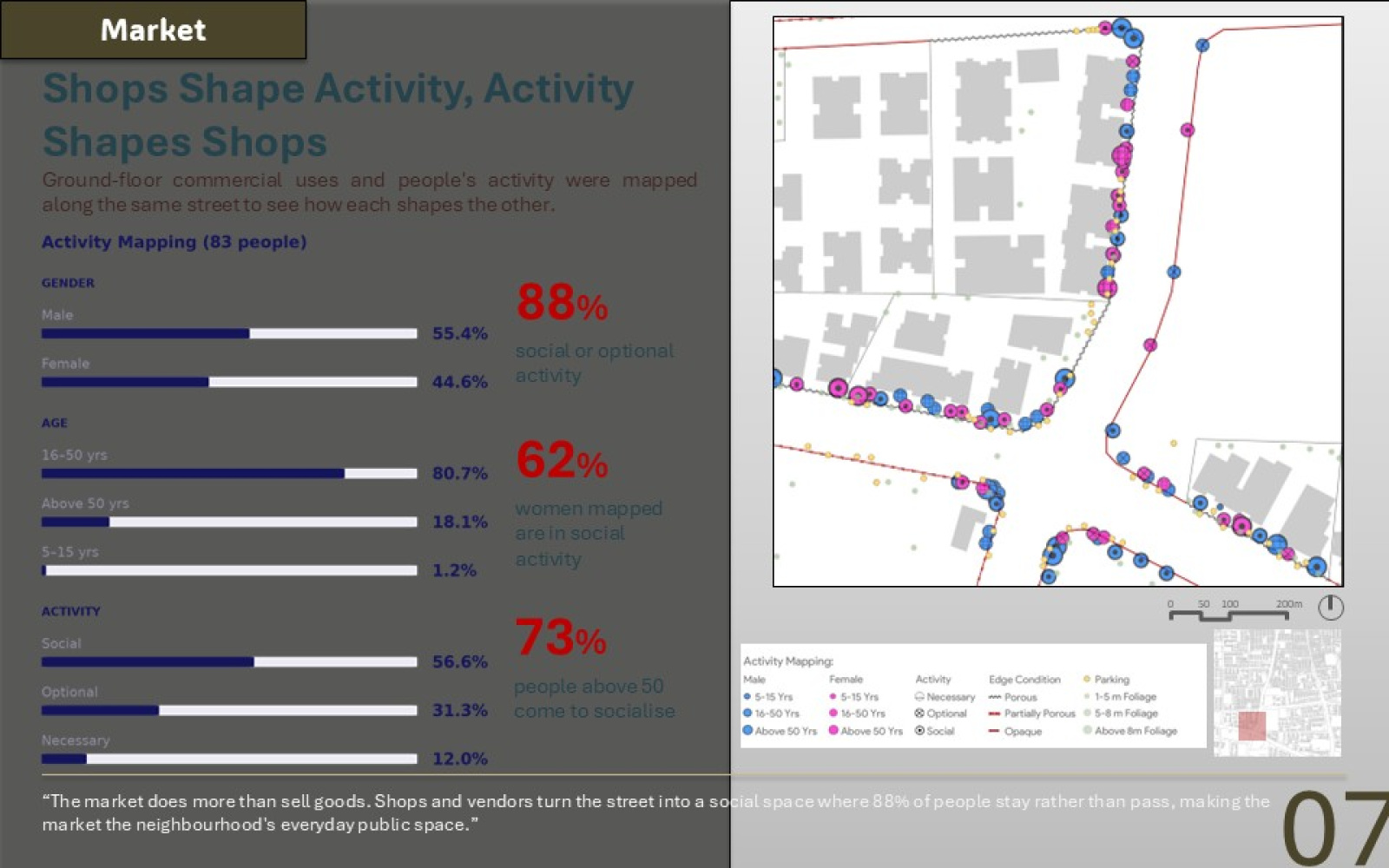
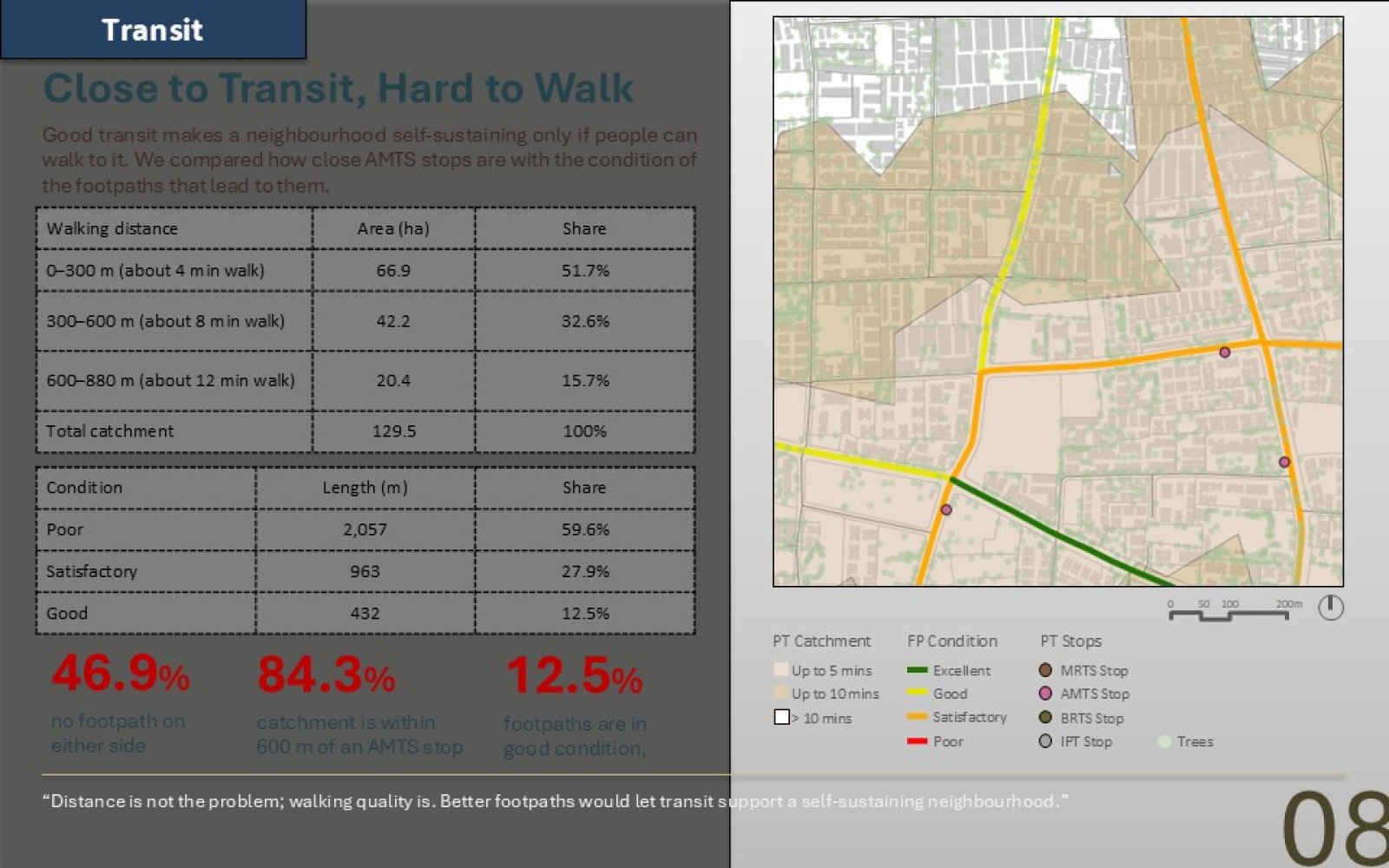
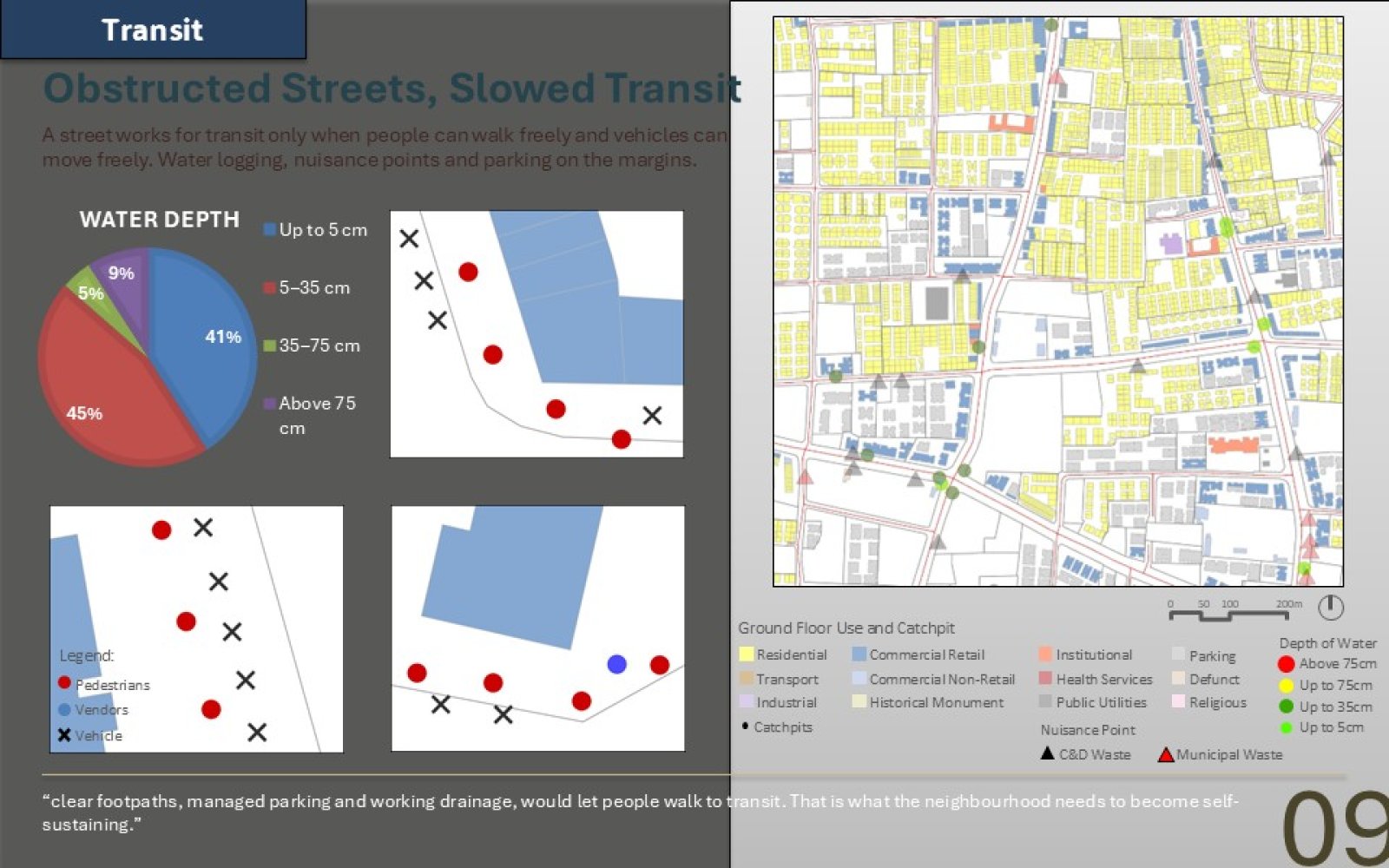
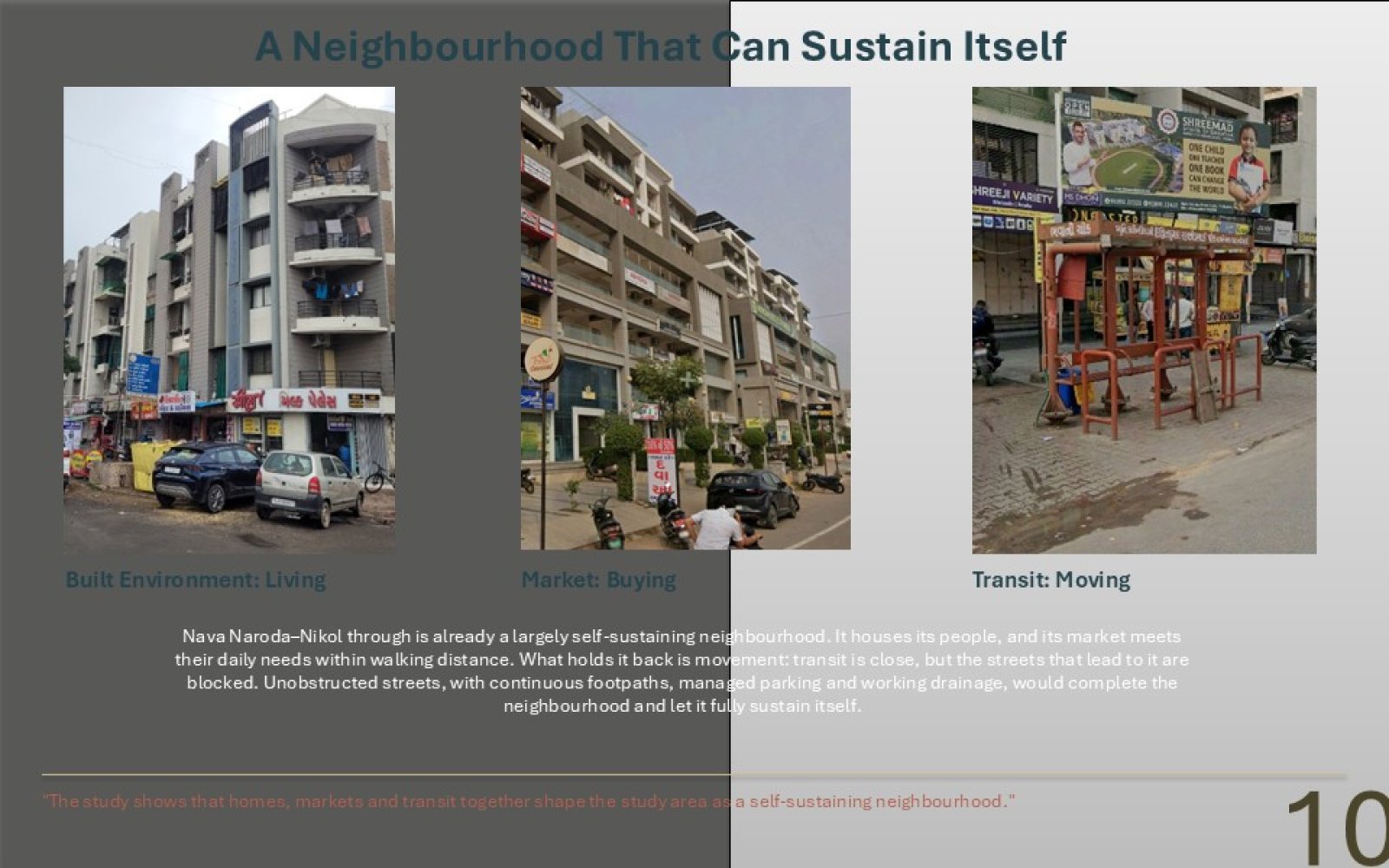
Self-Sustaining Neighbourhoods examines Nava Naroda- Nikol, a 1 km × 1 km precinct in east Ahmedabad, to test whether a residential neighbourhood can meet its own daily needs. Using GIS mapping, field documentation and survey data from Modules 1-3, the study reads the precinct through three parameters: built environment, market and transit. Land use, built form, FSI, typologies and edge conditions show the precinct's residential and mixed-use capacity. Market zones reveal how public and private commercial activity serves residents. Walkability, public transport connectivity and parking explain how people move. Together, the evidence shows how these three systems sustain the neighbourhood.