• Home
  • FP
  • UP4002-6
  • The Walk Nobody Keeps: Decoding Walkability in Thaltej

Ipshita Chatterjee

UP4002-6

The Walk Nobody Keeps: Decoding Walkability in Thaltej

This study examines walkability and street custodianship across a 1×1 km residential precinct in Thaltej, North-West Ahmedabad. By mapping zoning, open-space access, road connectivity, edge permeability, and municipal utilities, it uncovers a sharp divide between plan and reality: 84.7% opaque walls, 82% missing footpaths, and fragmented agency accountability reduce an 18% planned pedestrian share to just 1% usable space. The findings prove that Thaltej’s auto-dependency is engineered by its built form, not by cultural preference.
Report Content

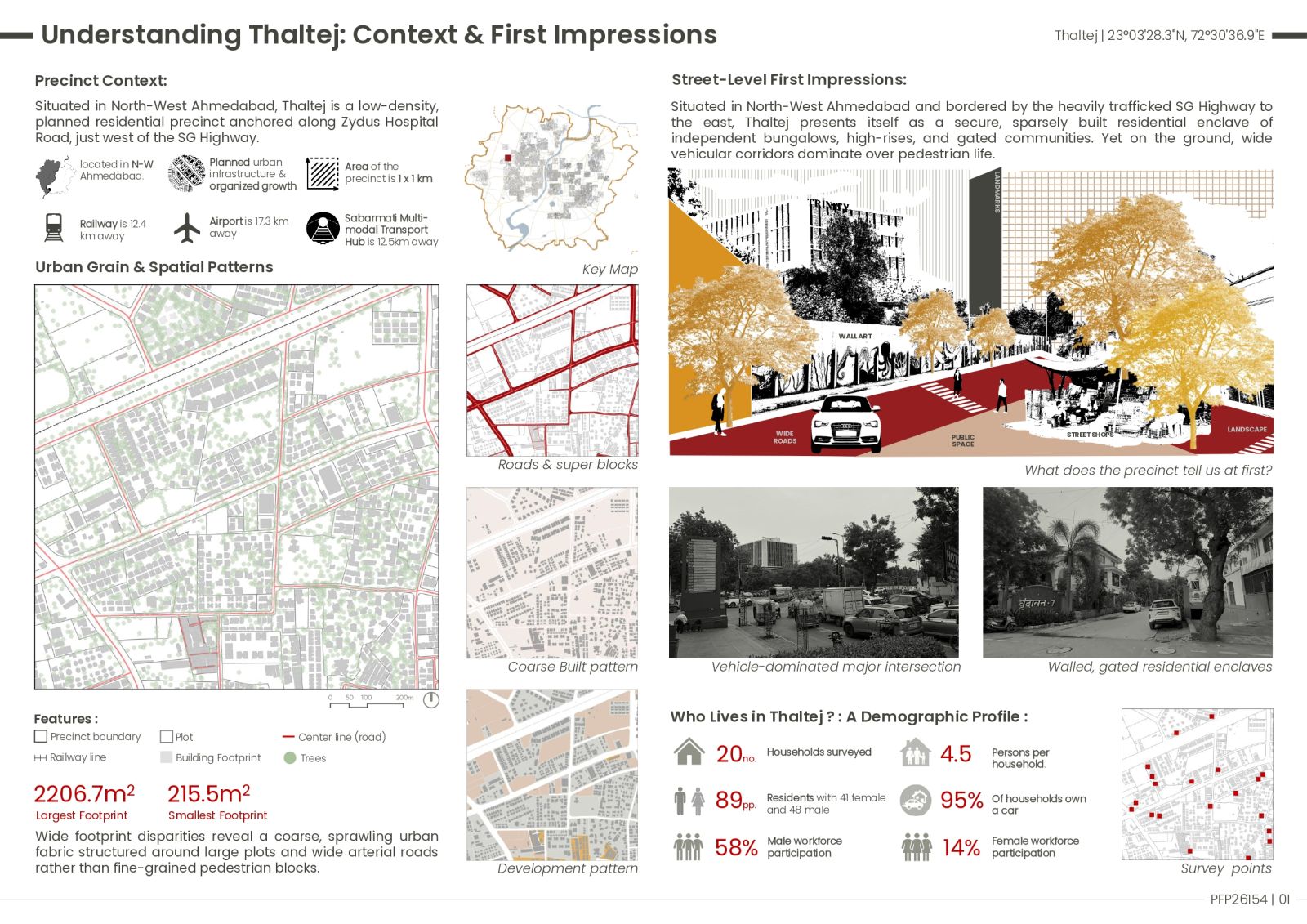
What Thaltej's grain, roads and street scenes tell us at first glance.

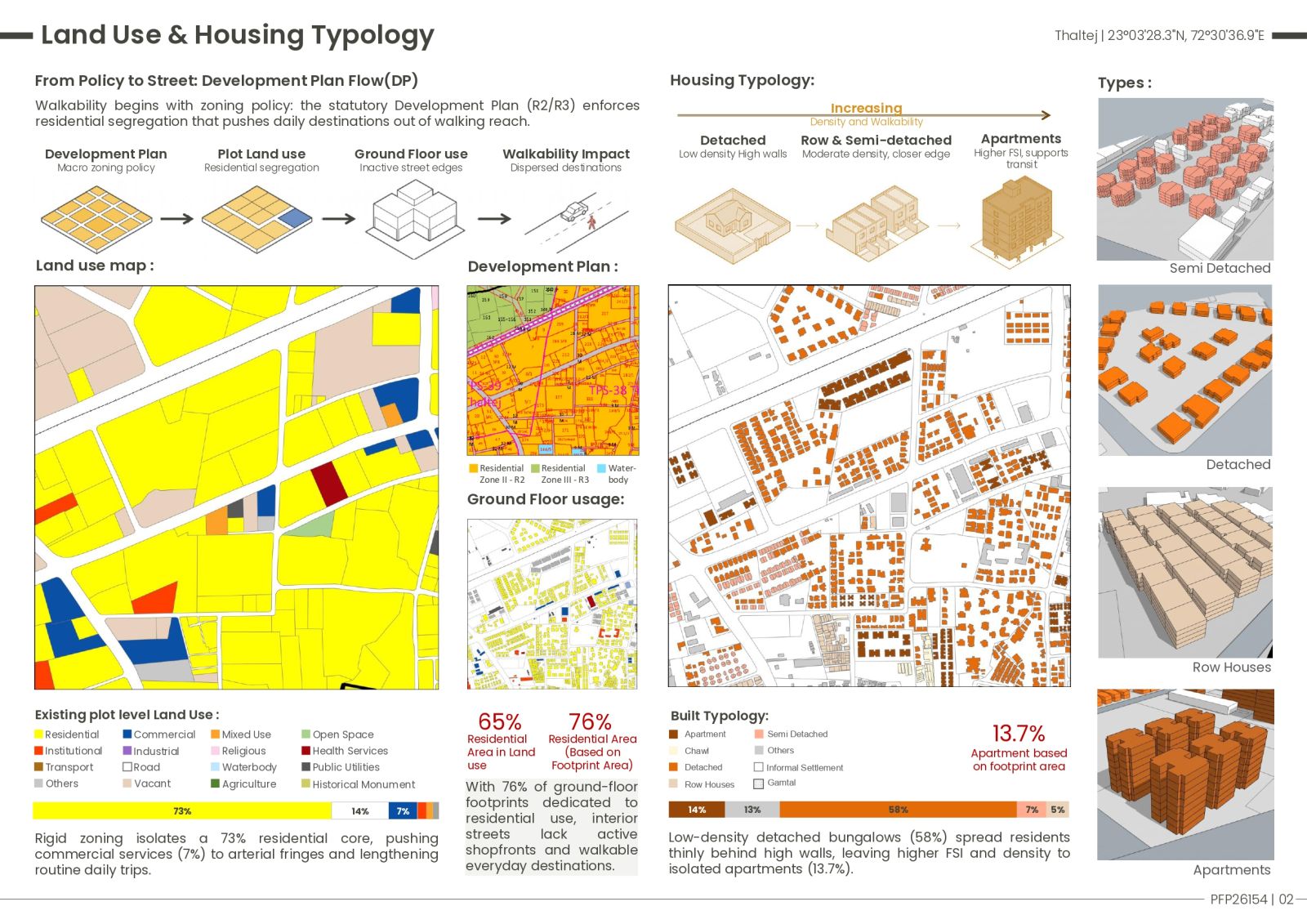
How the Development Plan and housing types decide where daily life can happen.

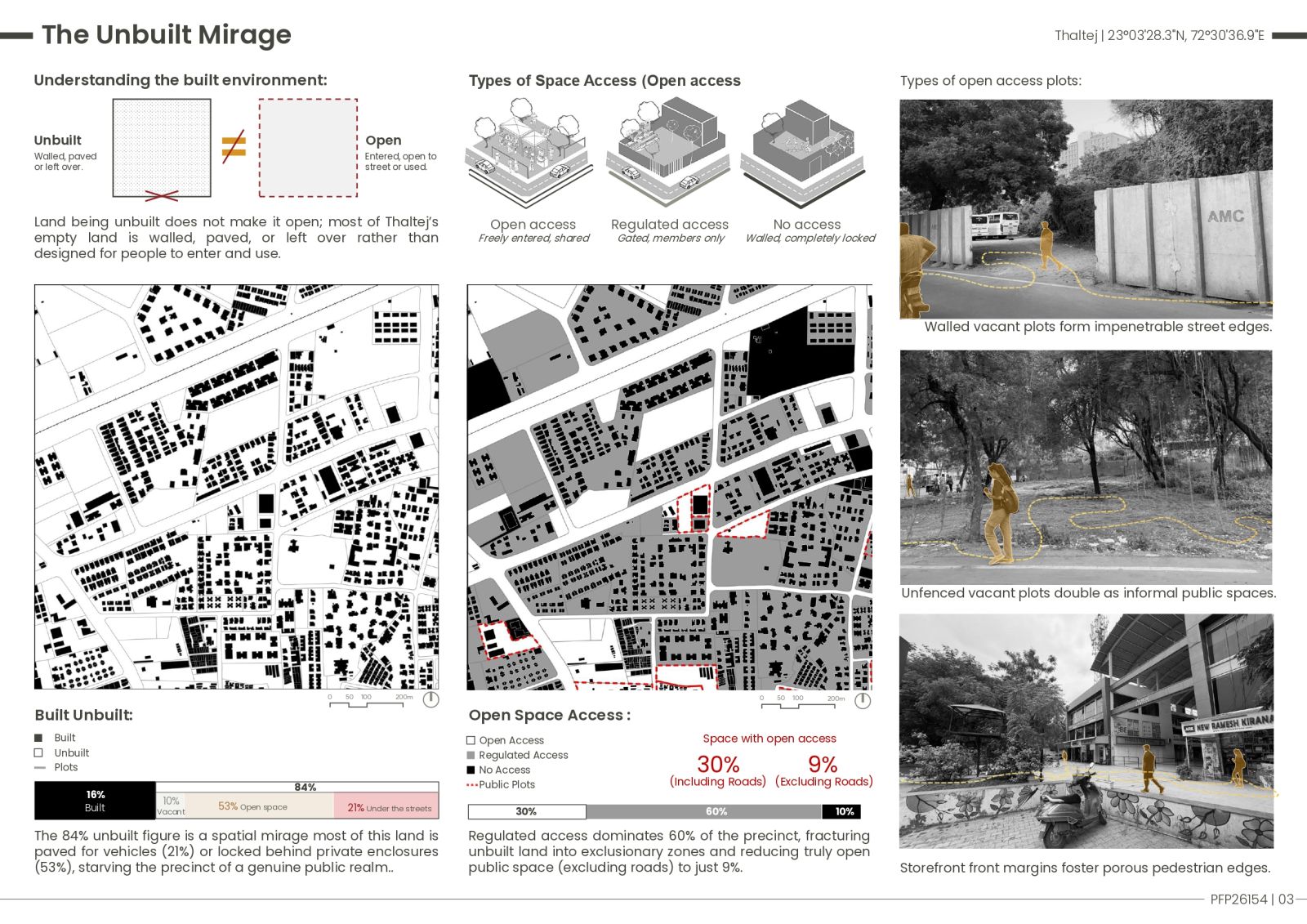
Why empty land in Thaltej is not the same as open land.

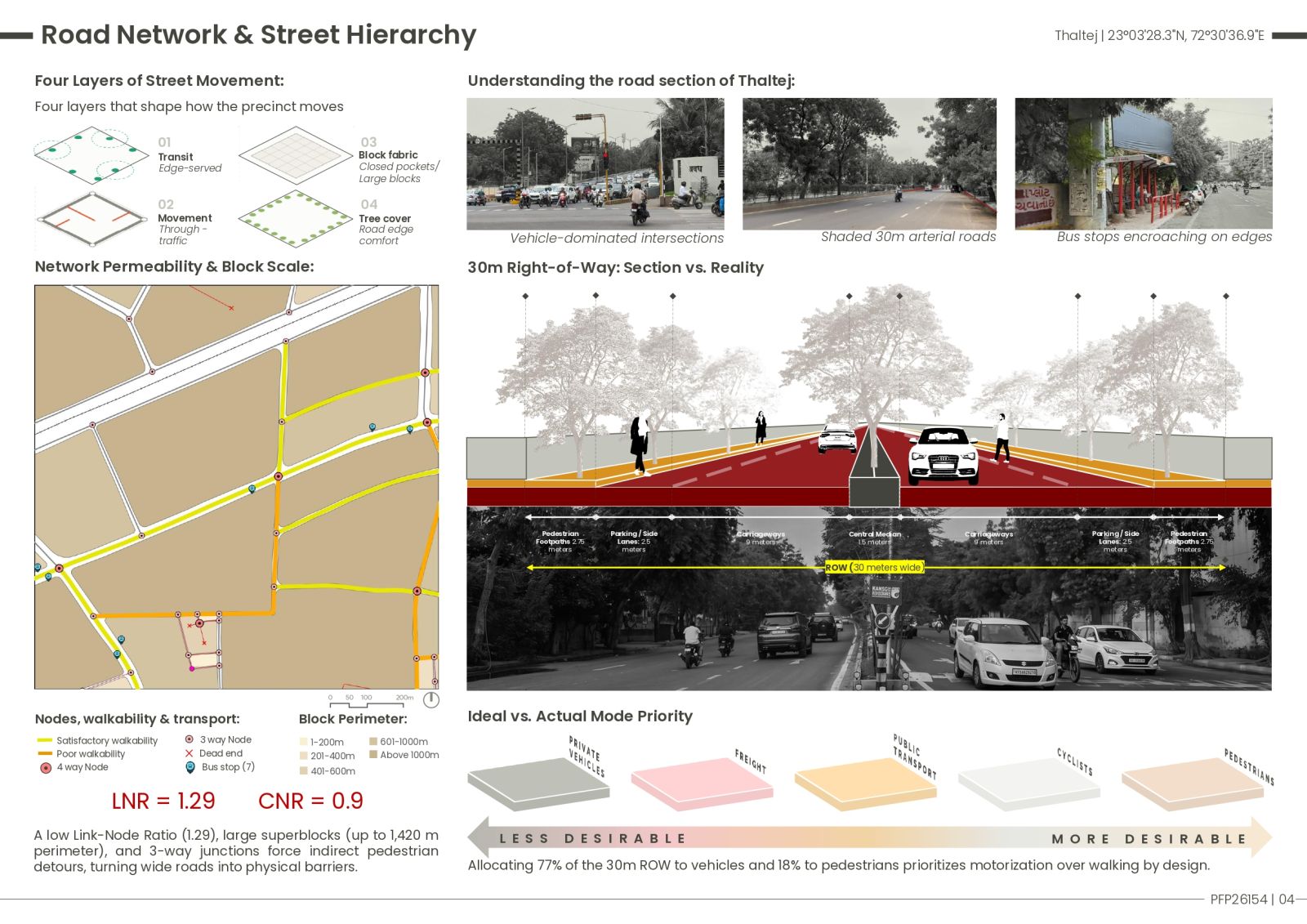
How block size, connectivity and the 30 m road section shape who the street serves.

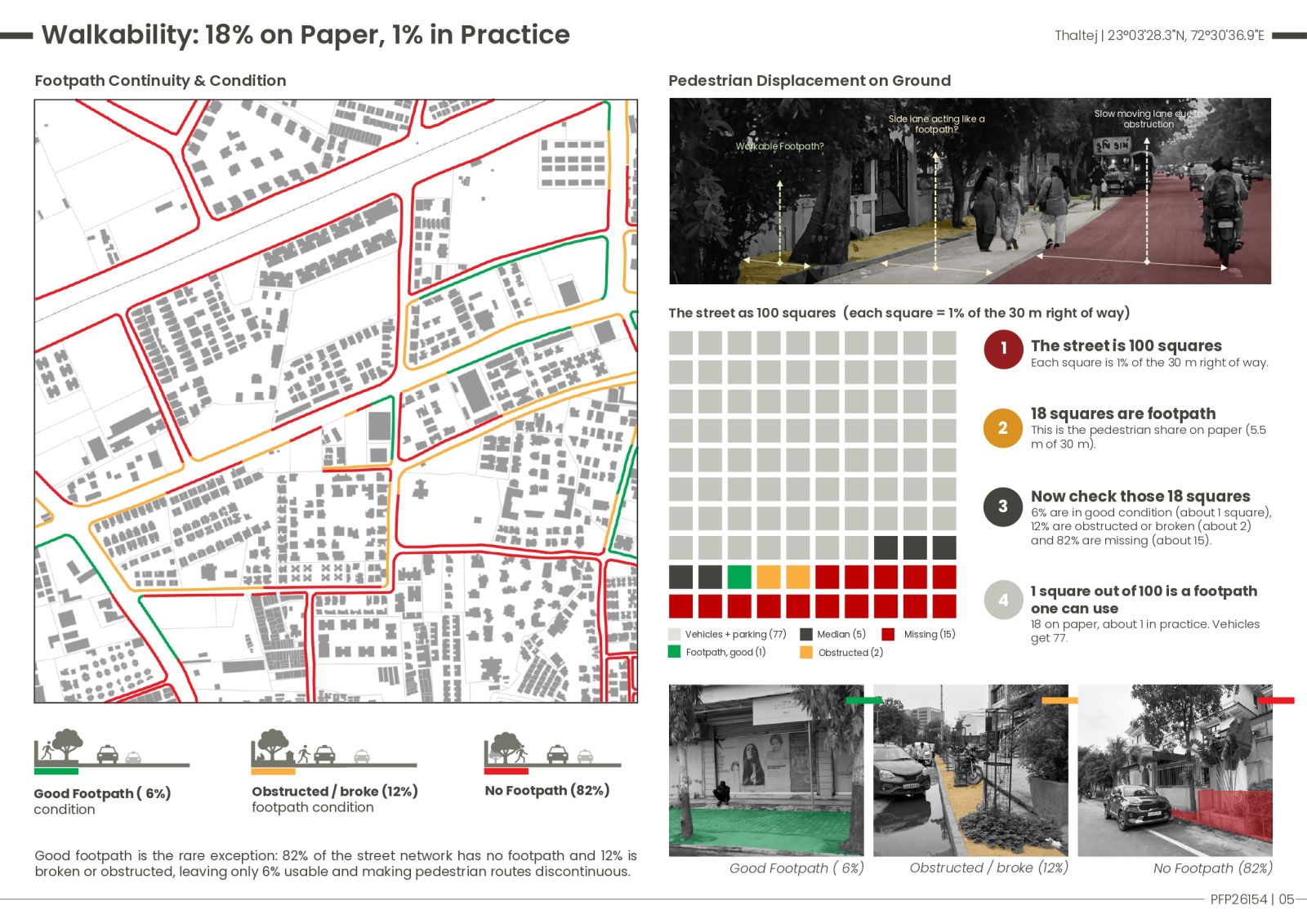
How the footpath share on the plan shrinks once you look at the ground.

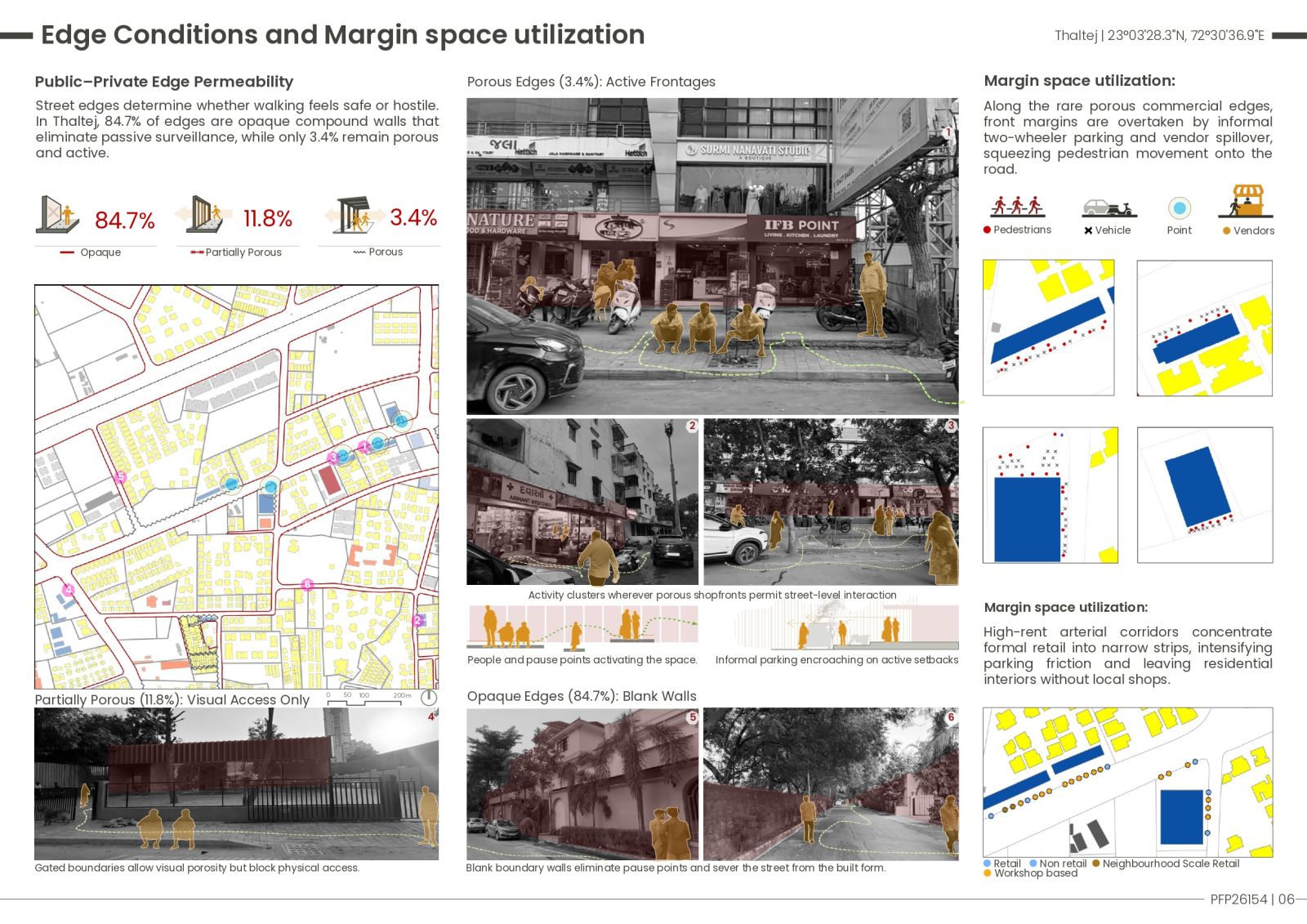
How walls, gates and shopfronts decide whether the street edge feels safe or hostile.

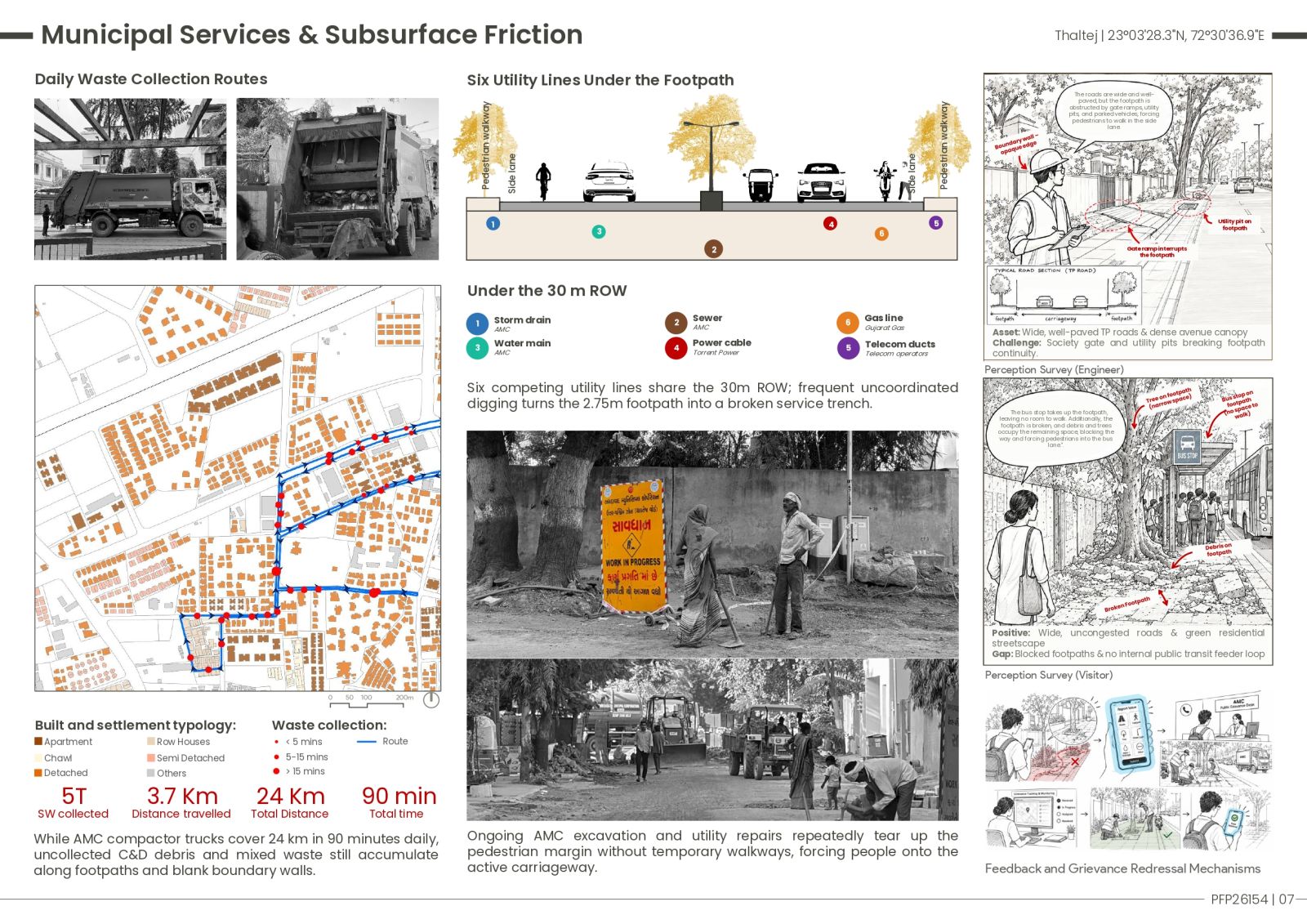
How utilities, waste collection and gate ramps take over the pedestrian space.

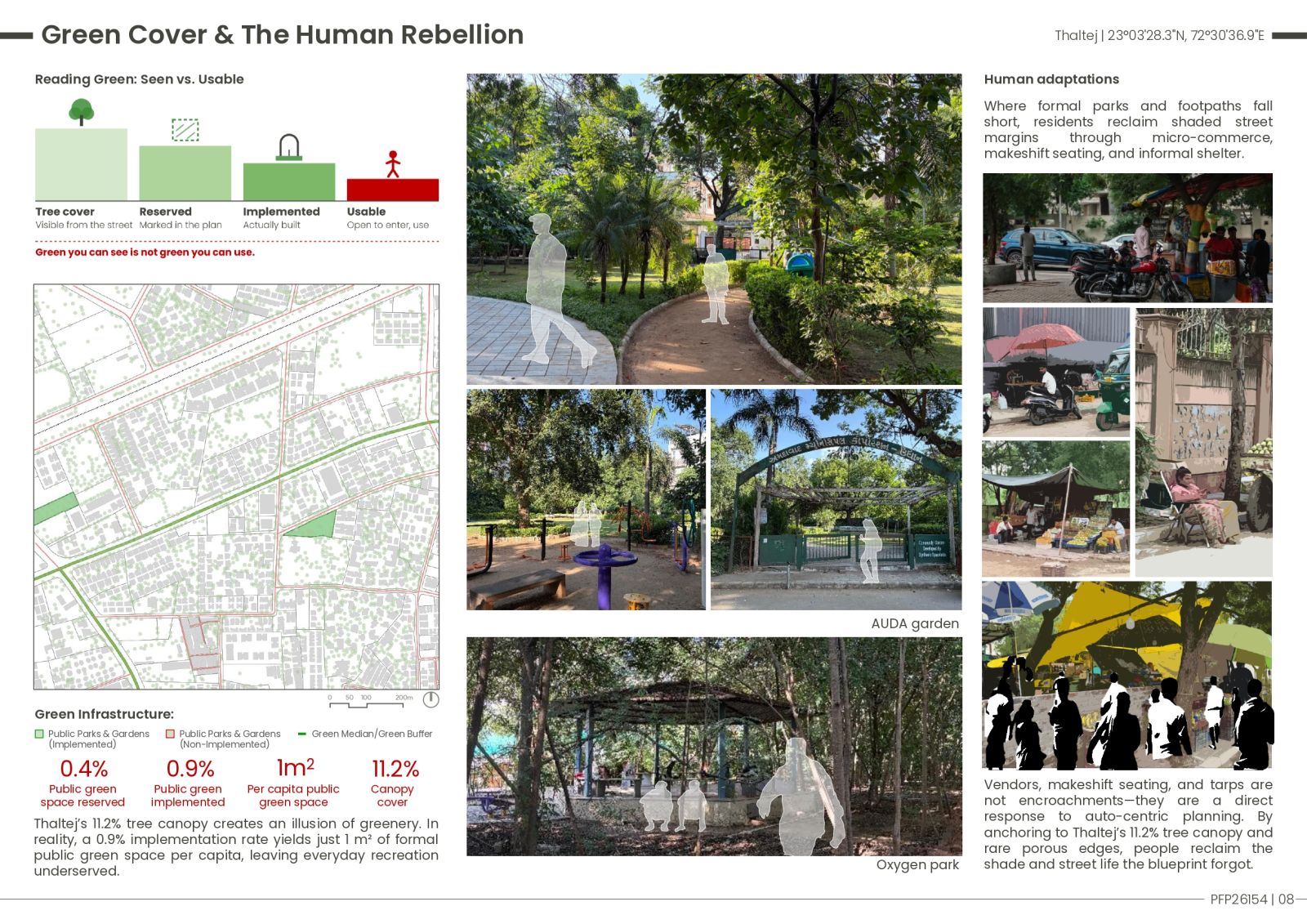
Where the plan's green falls short and how people make their own shade and street life.

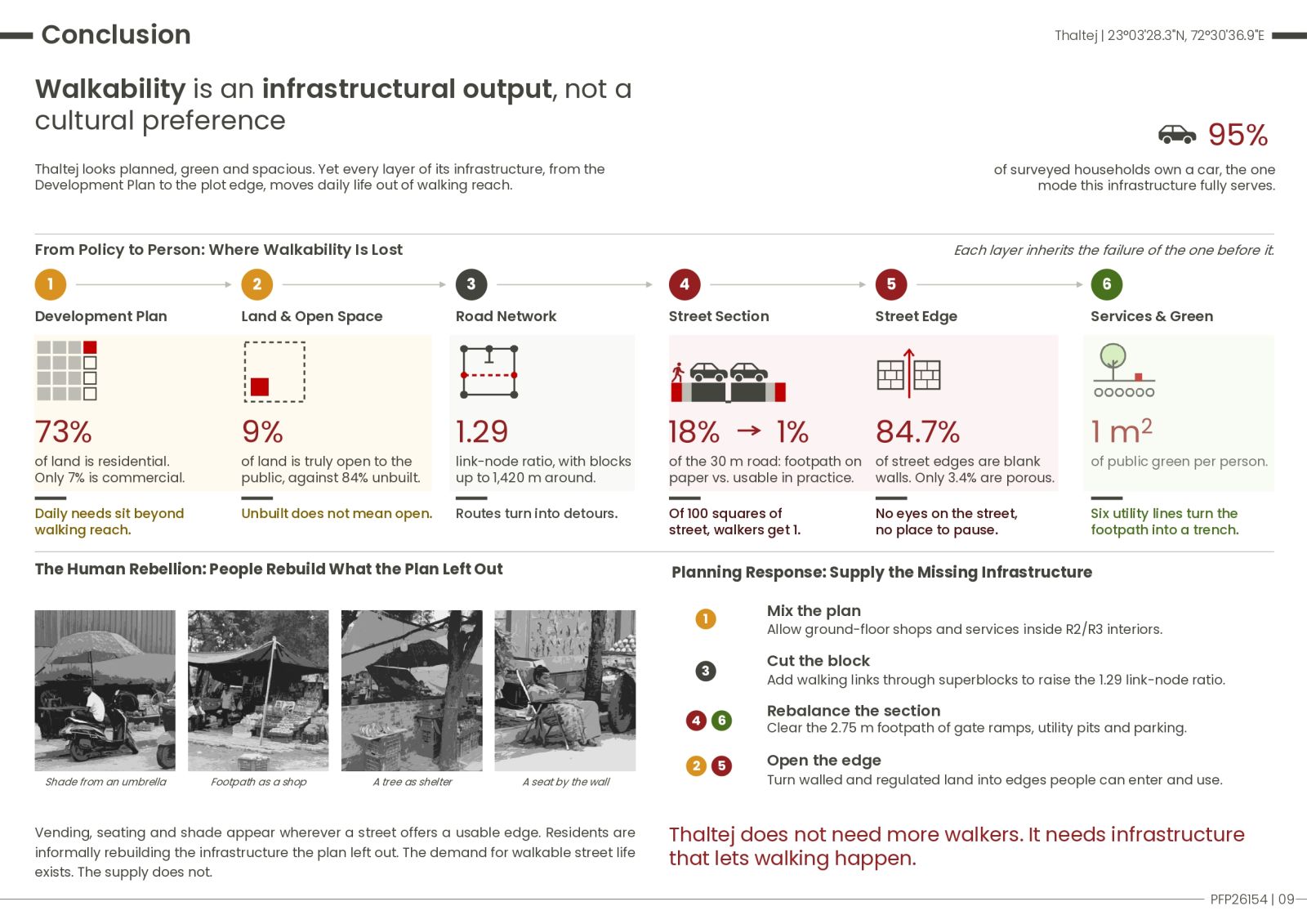
Walkability is built into infrastructure, not inherited from culture.