Vidya Harish Ruparelia

UP4002-6

Where The City Changes Pace - Nava Naroda

 Located on Ahmedabad’s north-eastern periphery, Nava Naroda reflects an evolving urban fabric shaped by industrialisation and rapid growth. The study examines how connectivity, built form, land use and street activities influence everyday urban life. Findings reveal active commercial corridors transitioning into quieter residential interiors, with strong vehicular connectivity but fragmented pedestrian networks. Informal vending and parking animate street edges while restricting walkability. Uneven infrastructure, construction waste and underutilised open spaces further affect livability. The study concludes that urban growth must extend beyond physical connectivity, prioritising pedestrian safety, accessible public spaces and inclusive neighbourhood development.
Report Content

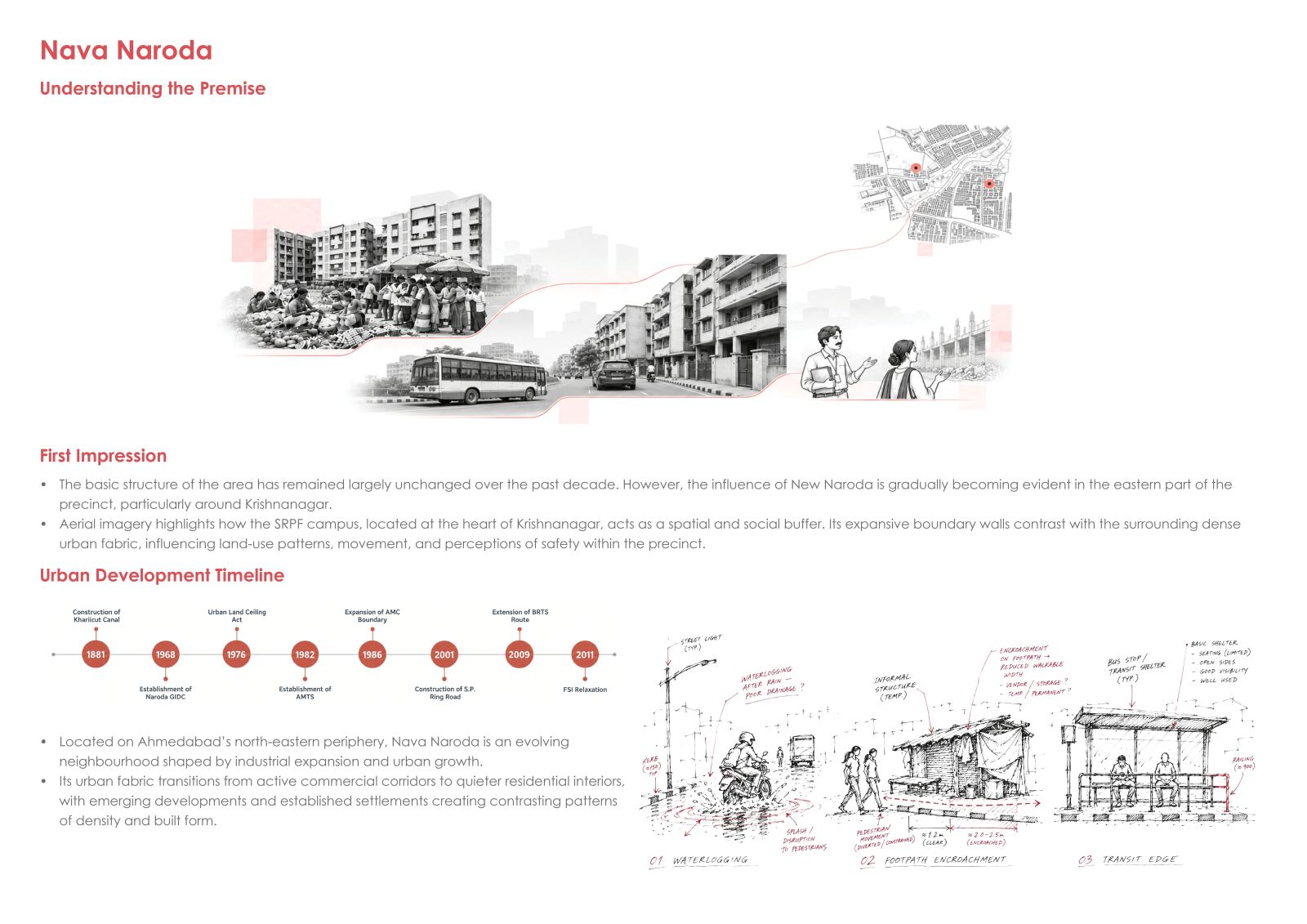
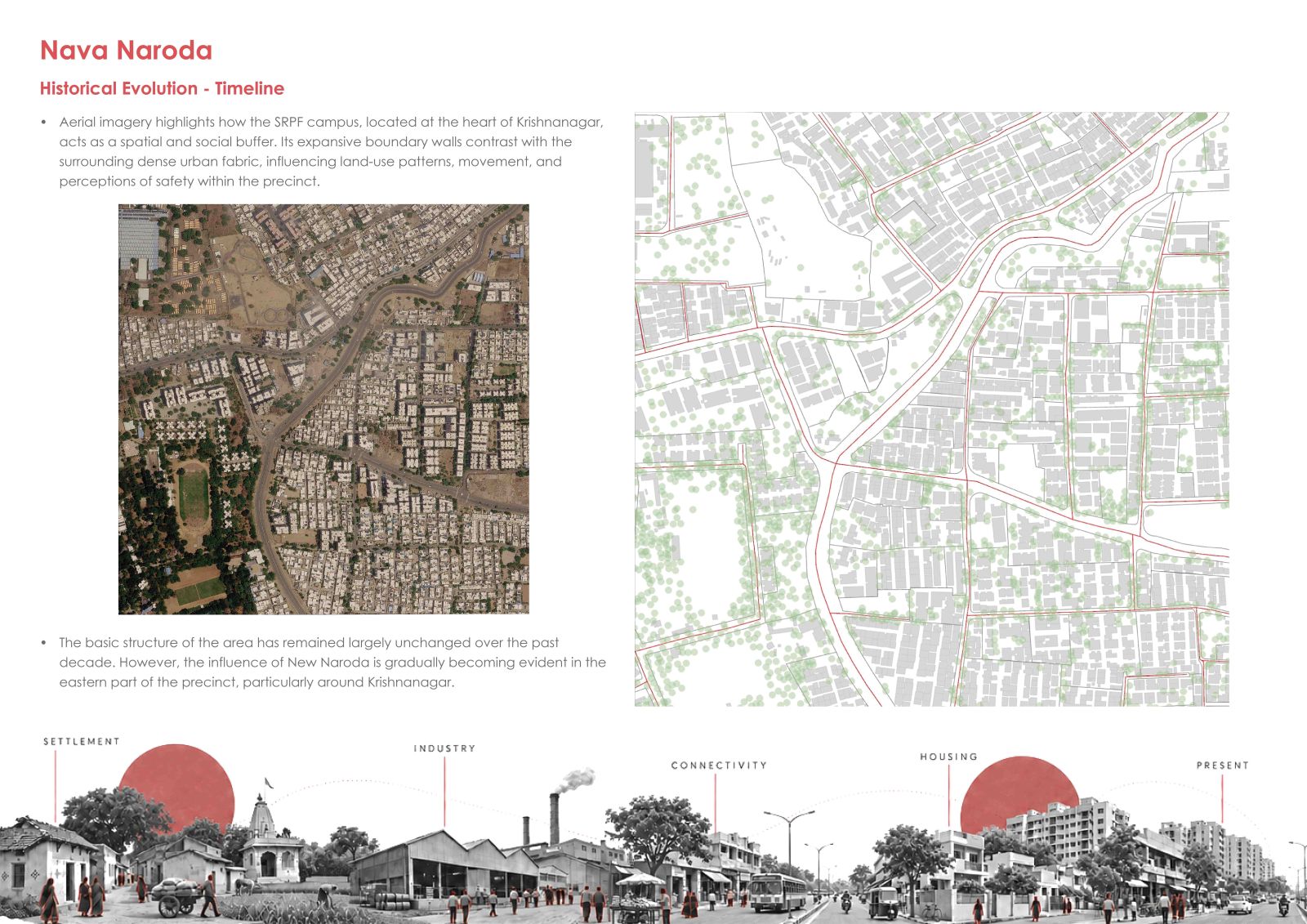
An evolving urban edge where established settlements coexist with emerging developments.

Layers of past settlements and new developments gradually reshape the identity of Nava Naroda.

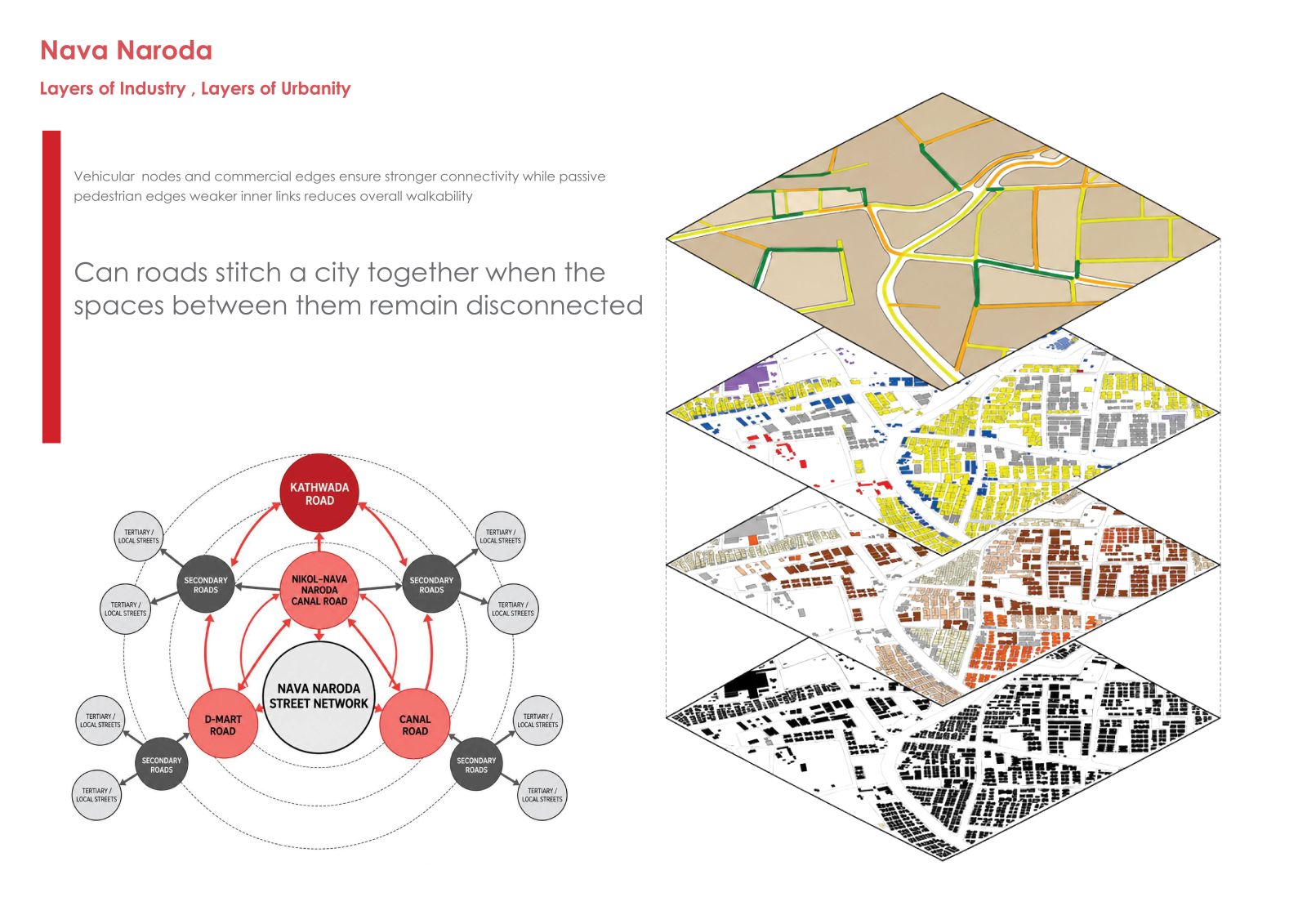
Strong road connections stitch the precinct together, while fragmented pedestrian networks weaken internal accessibility.

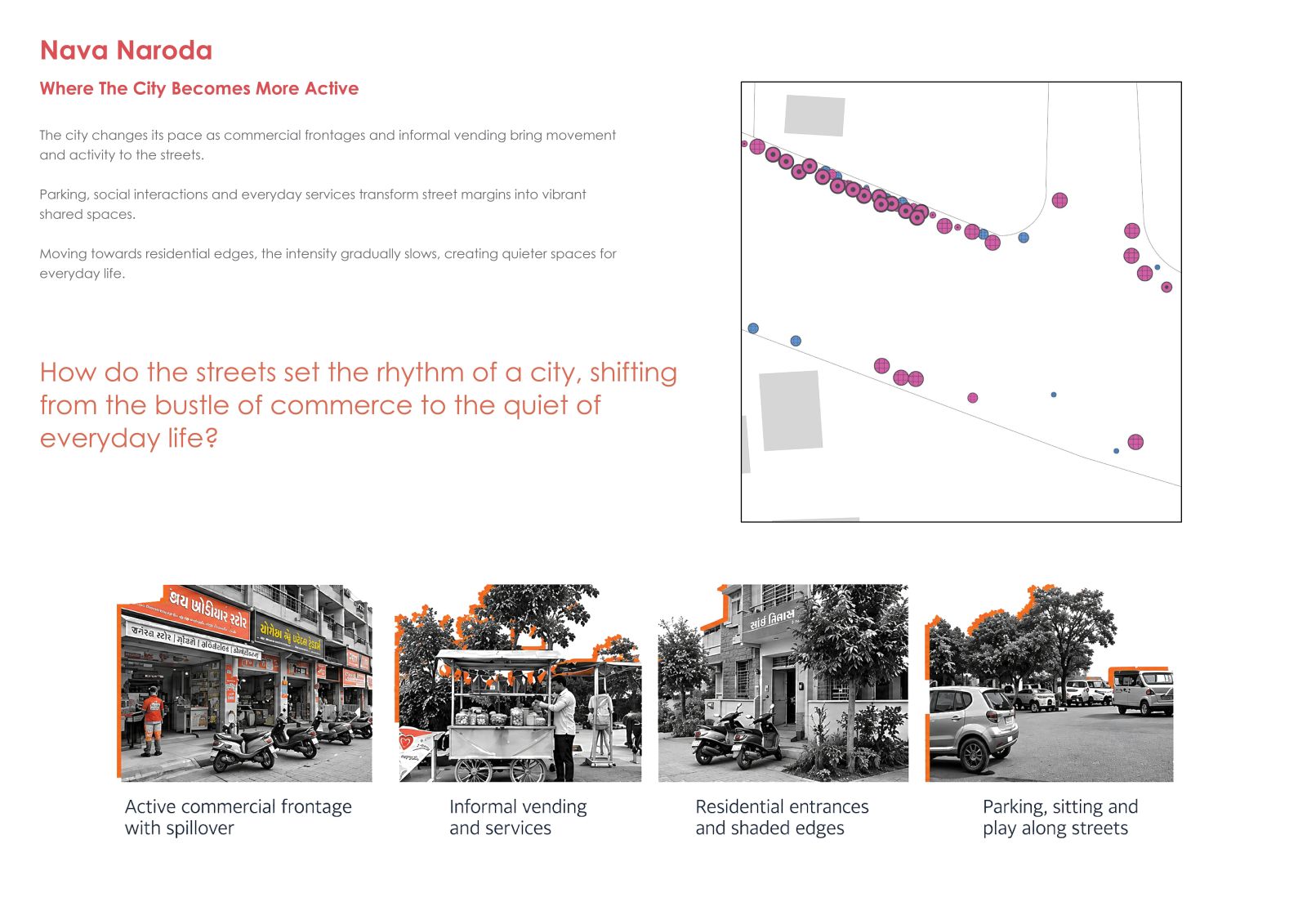
The city’s rhythm shifts from bustling commercial corridors to quieter residential interiors.

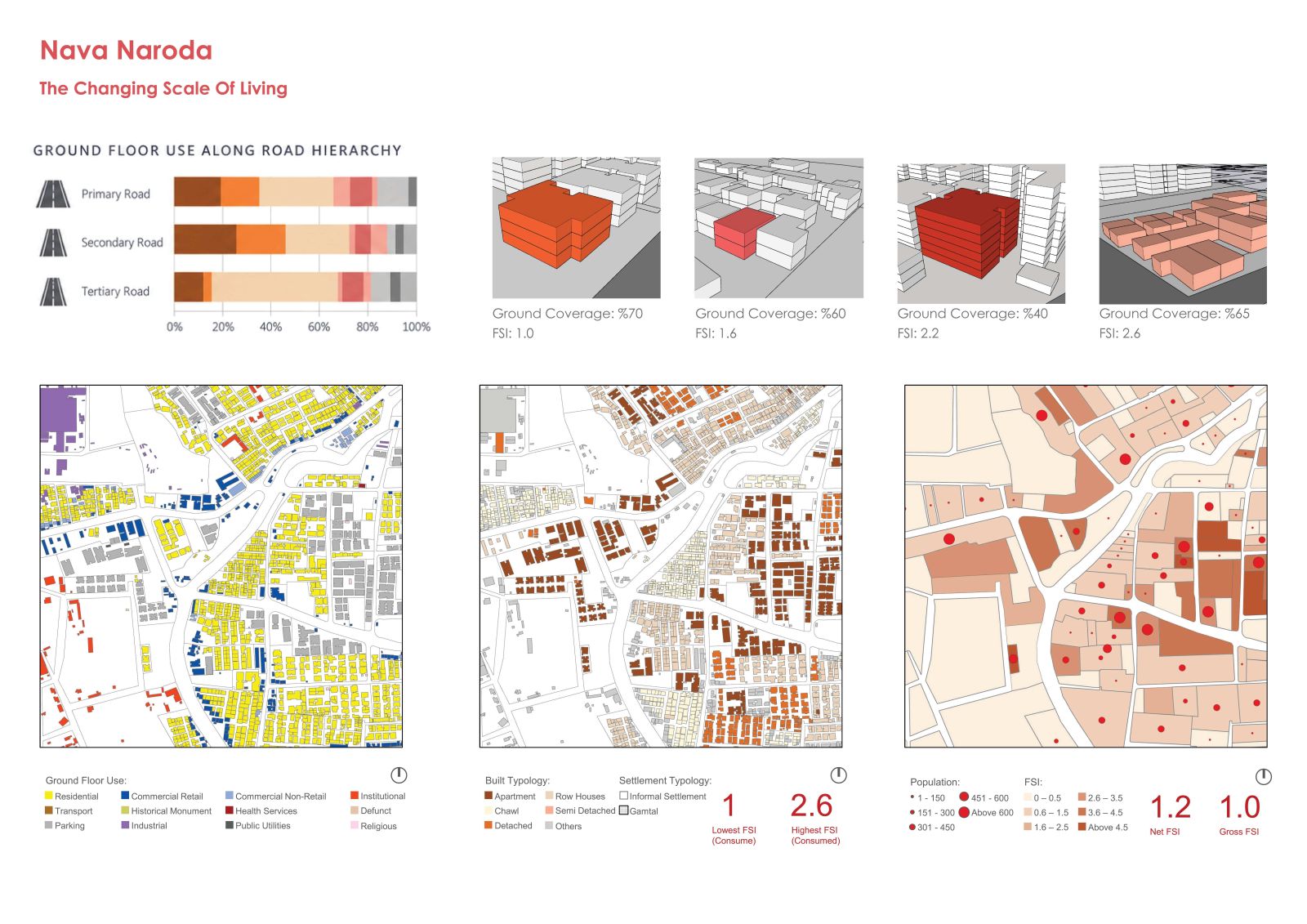
Diverse housing typologies and varying densities create contrasting patterns of urban living.

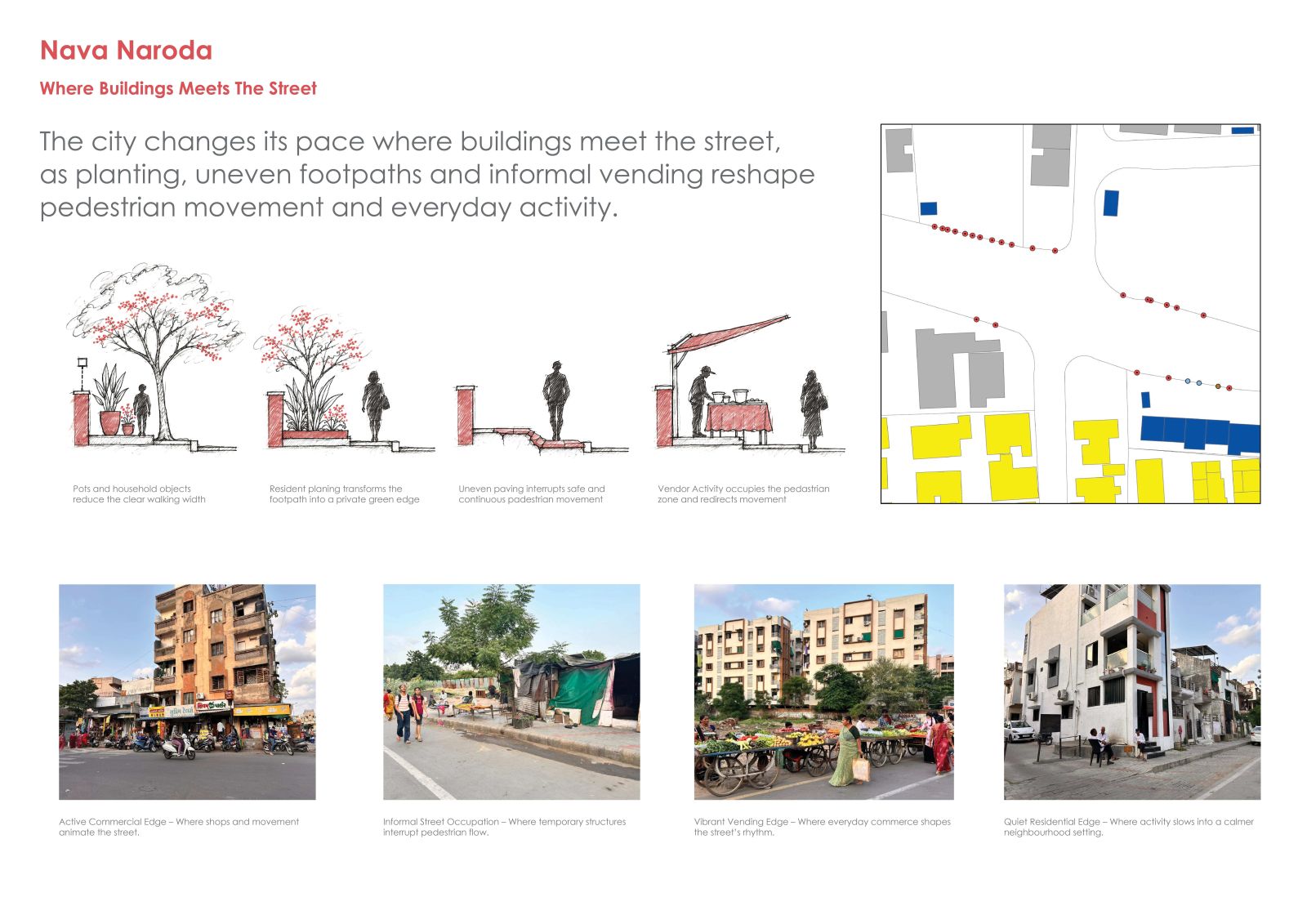
Everyday activities blur public-private boundaries, transforming street edges while interrupting pedestrian movement.

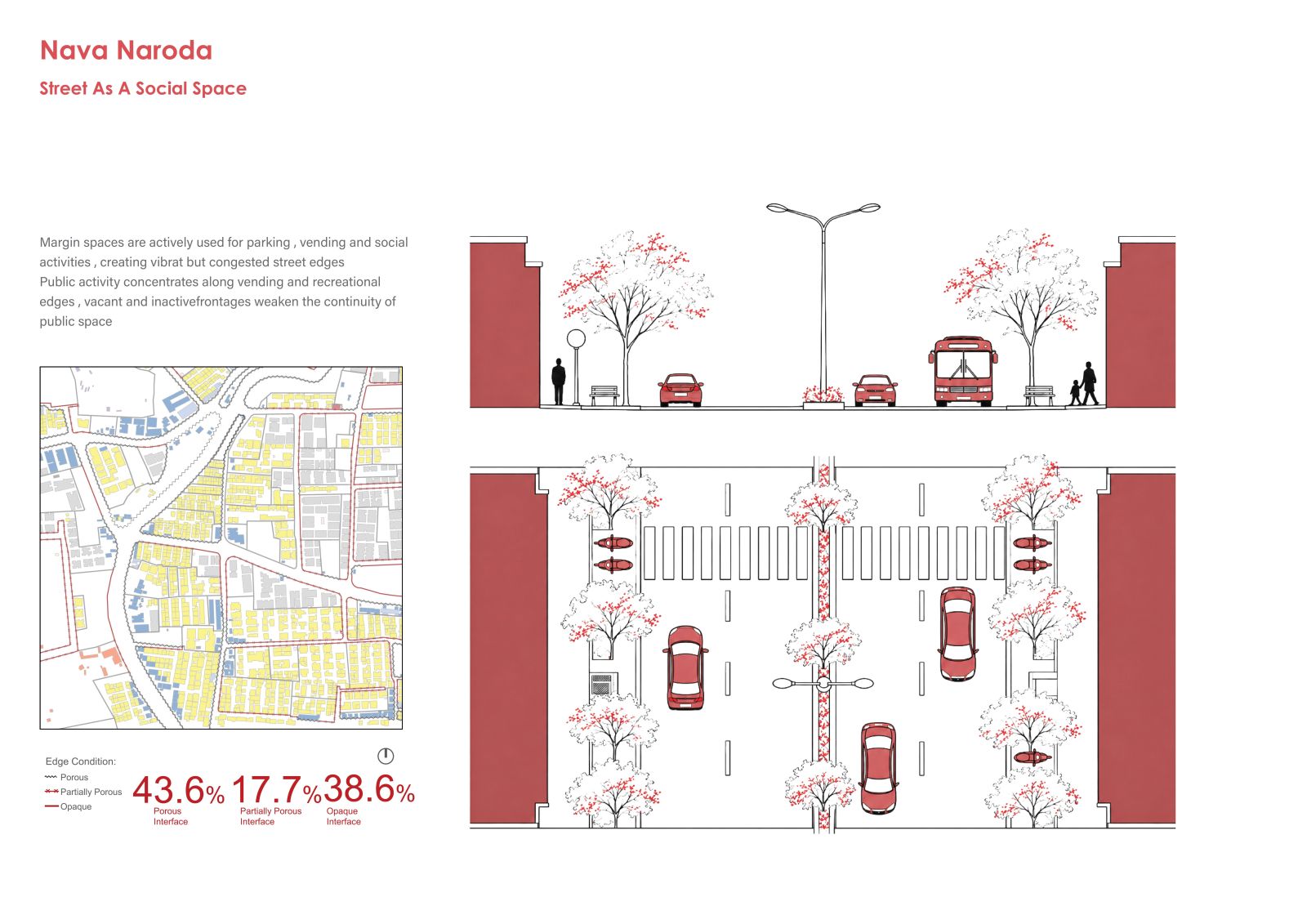
Streets become shared spaces for commerce and interaction, where vibrant edges coexist with inactive frontages.

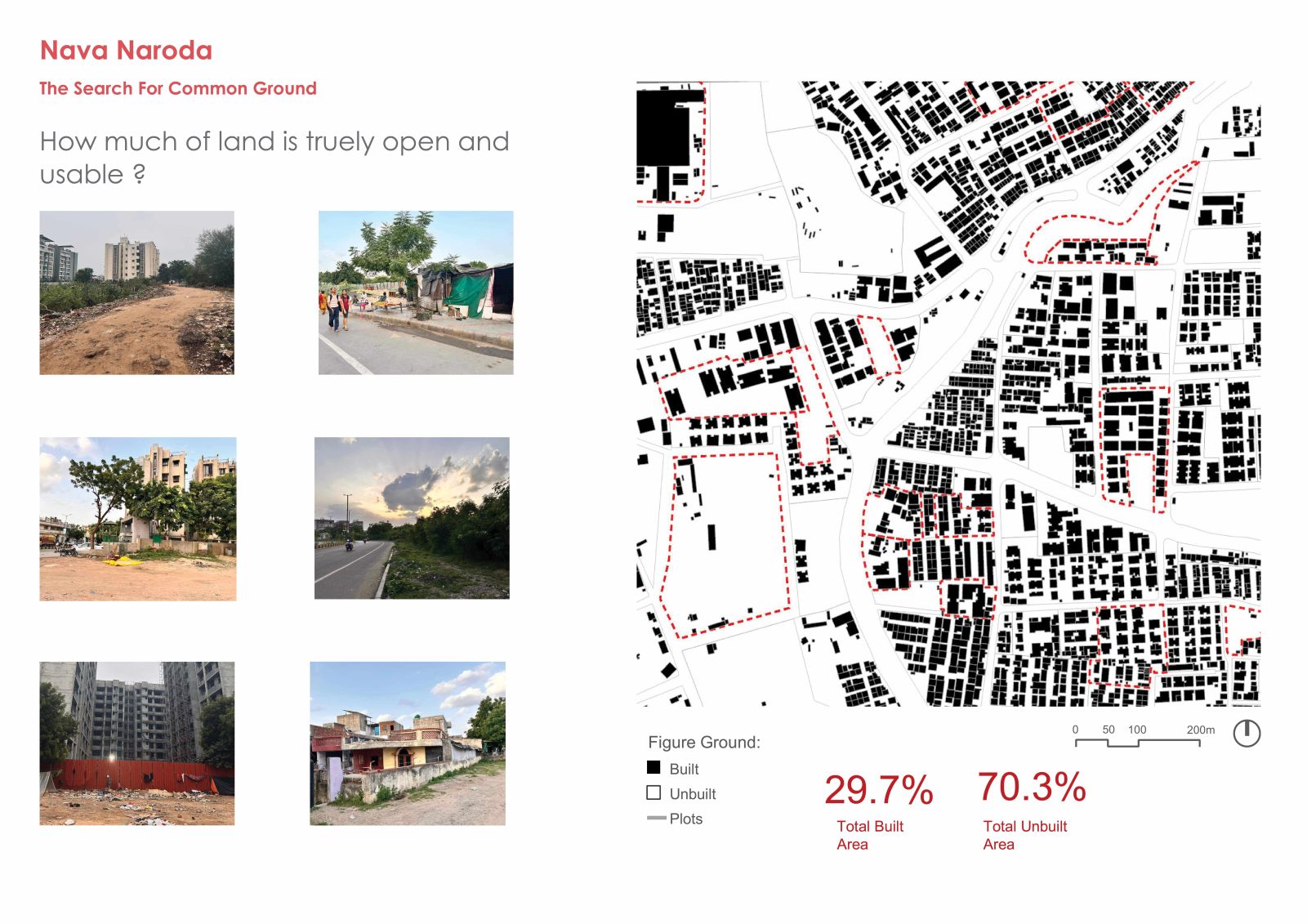
Despite substantial unbuilt land, accessible and usable public spaces remain limited.

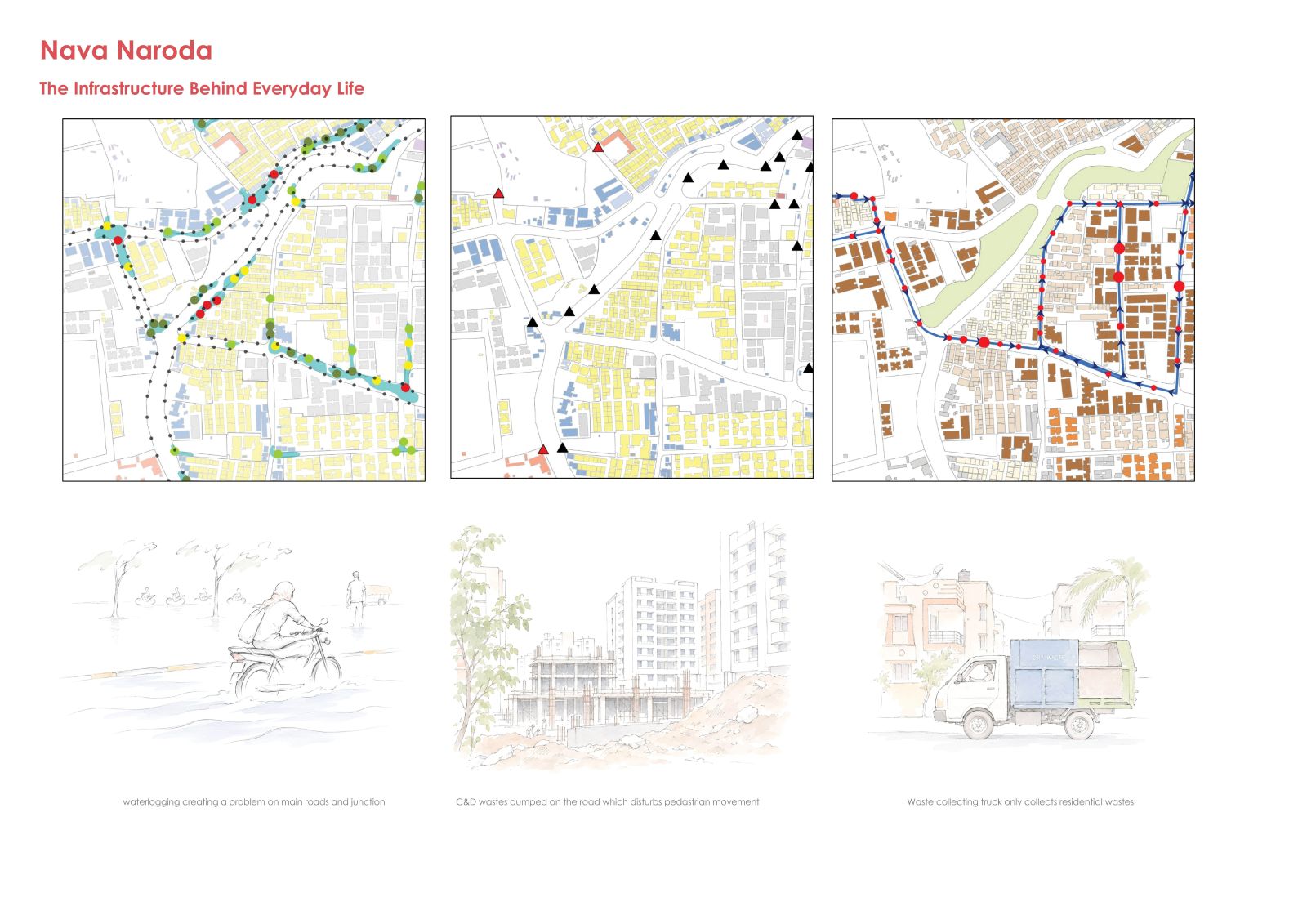
Waterlogging, construction waste and inadequate maintenance reveal the hidden challenges of rapid urban growth.

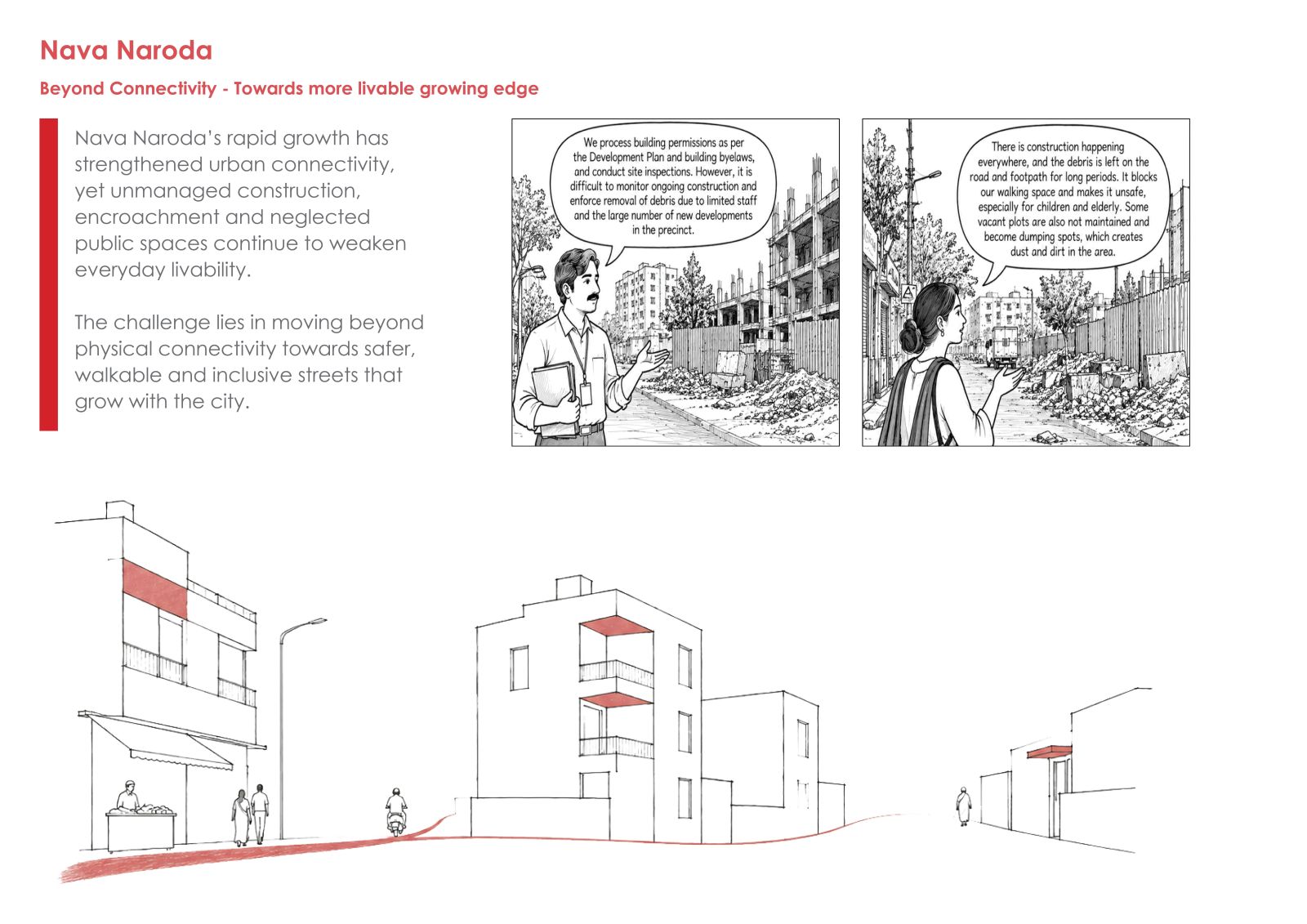
A truly livable city must grow beyond roads and buildings to prioritise people, accessibility and inclusive public spaces.