• Home
  • FP
  • UP4002-6
  • Who Prevails on the Streets? : A Day in Prahlad Nagar

Vyas Smit Bhadresh

UP4002-6

Who Prevails on the Streets? : A Day in Prahlad Nagar

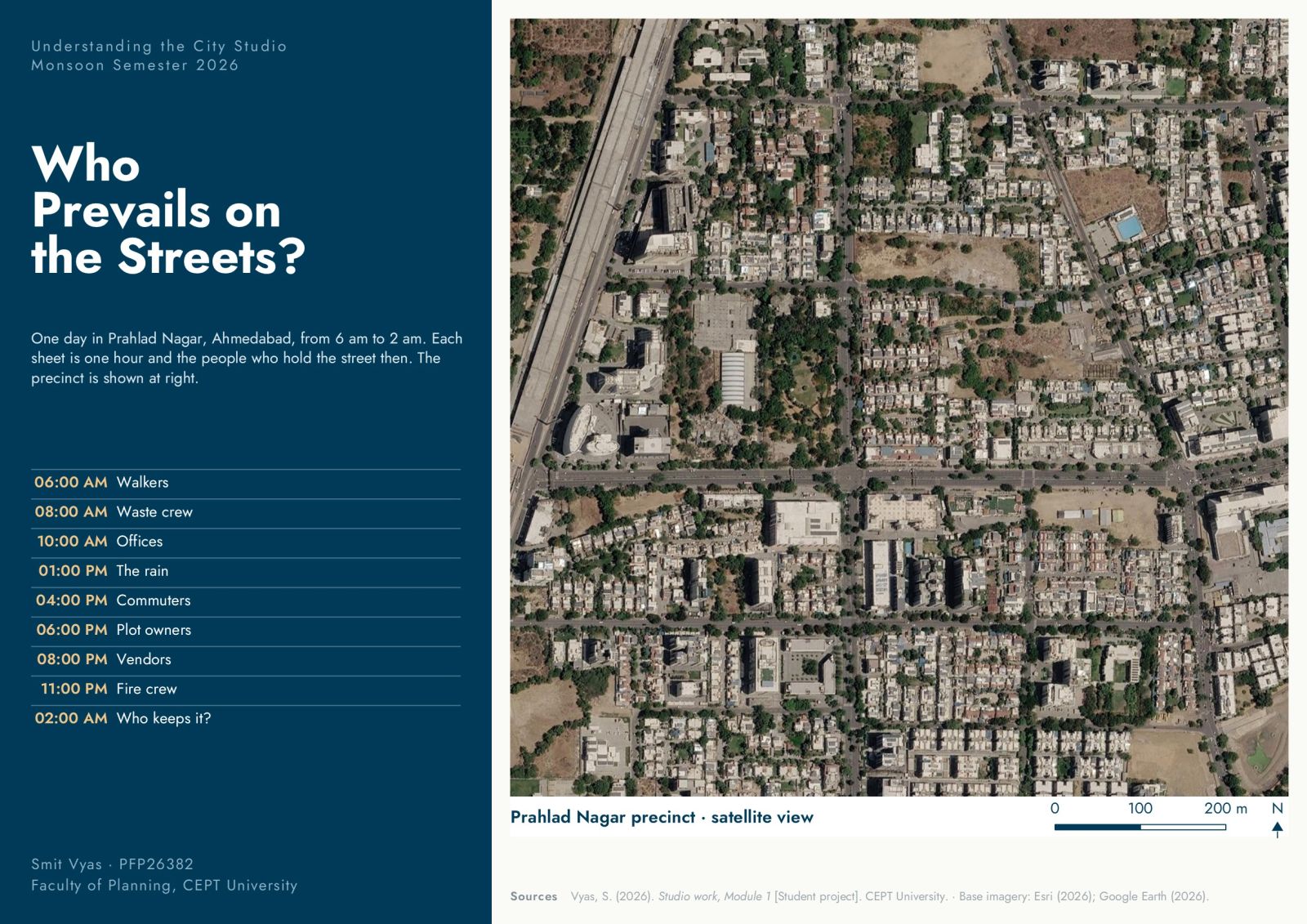
Who Prevails on the Streets? follows one ordinary day, from 6 am to 2 am, in Prahlad Nagar, a busy 1 km² neighbourhood in west Ahmedabad. At eight moments of the day, the project asks a simple question: who is using the street, and who decides how it works? It looks at morning walkers, the city's waste crew, office workers, people caught in the monsoon rain, bus commuters, home owners, street vendors and the fire crew. Each slide combines a map made in ArcGIS Pro, field photographs, site observations and city data to show one group and what shapes its use of the street. The study finds that everyone uses the street, but property owners and offices shape its edges one plot at a time, and only two city crews look after it. It ends with five proposals: shade and seats every 250 m, opening the empty city market to vendors, shared bin points, more drain inlets, and clear front margins for walking and fire engines, so that the street is planned and cared for as one shared space. 

View Additional Work
Report Content

One ordinary day, 6 am to 2 am, in a 1 km² neighbourhood of west Ahmedabad: who holds the street at each hour, and who decides how it works?

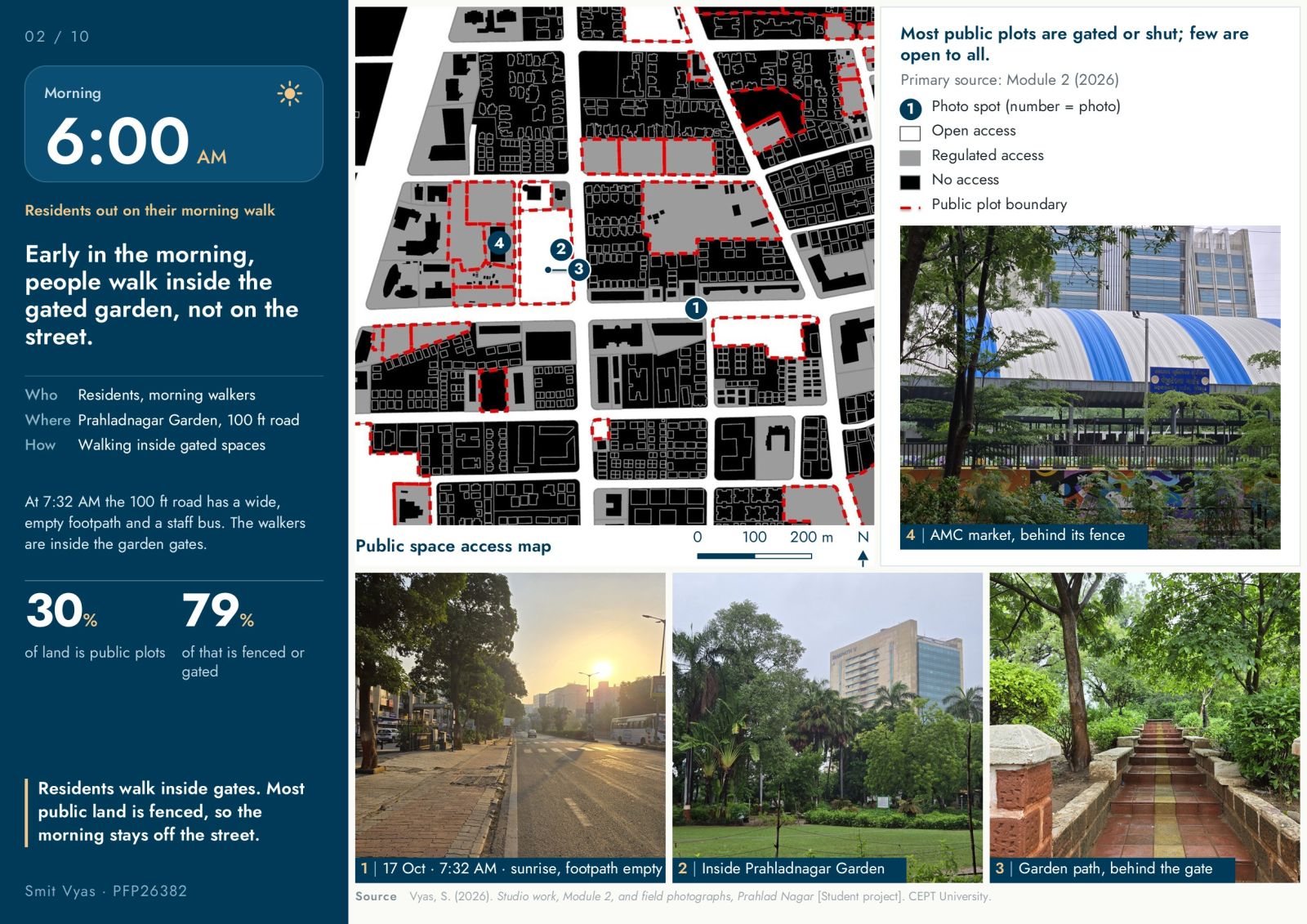
6:00 AM – Morning walkers stay inside the gated garden; 79% of public land here is fenced, so the morning stays off the street.

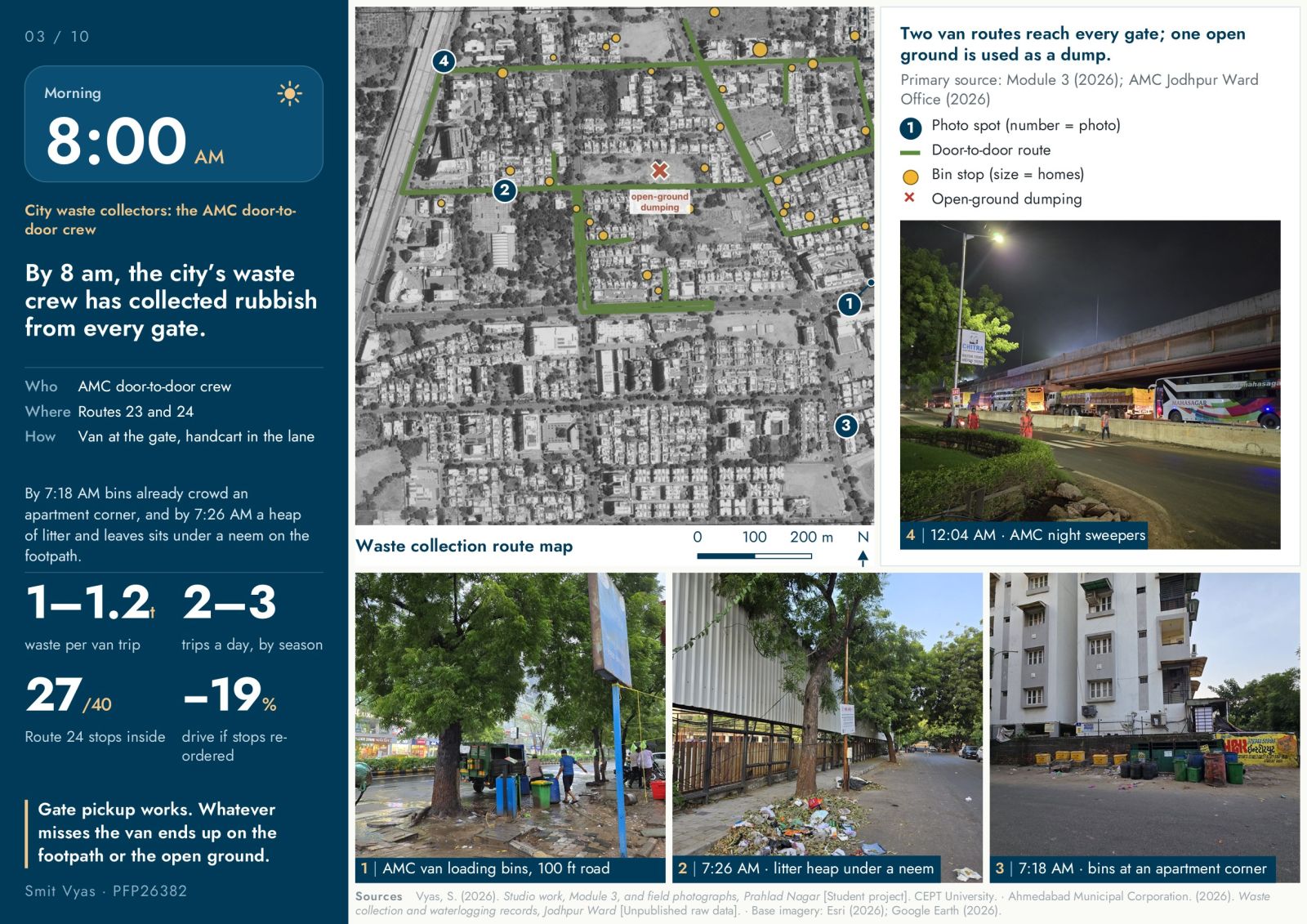
8:00 AM – The city's door-to-door waste van reaches every gate, but what it misses ends up on footpaths and an open plot.

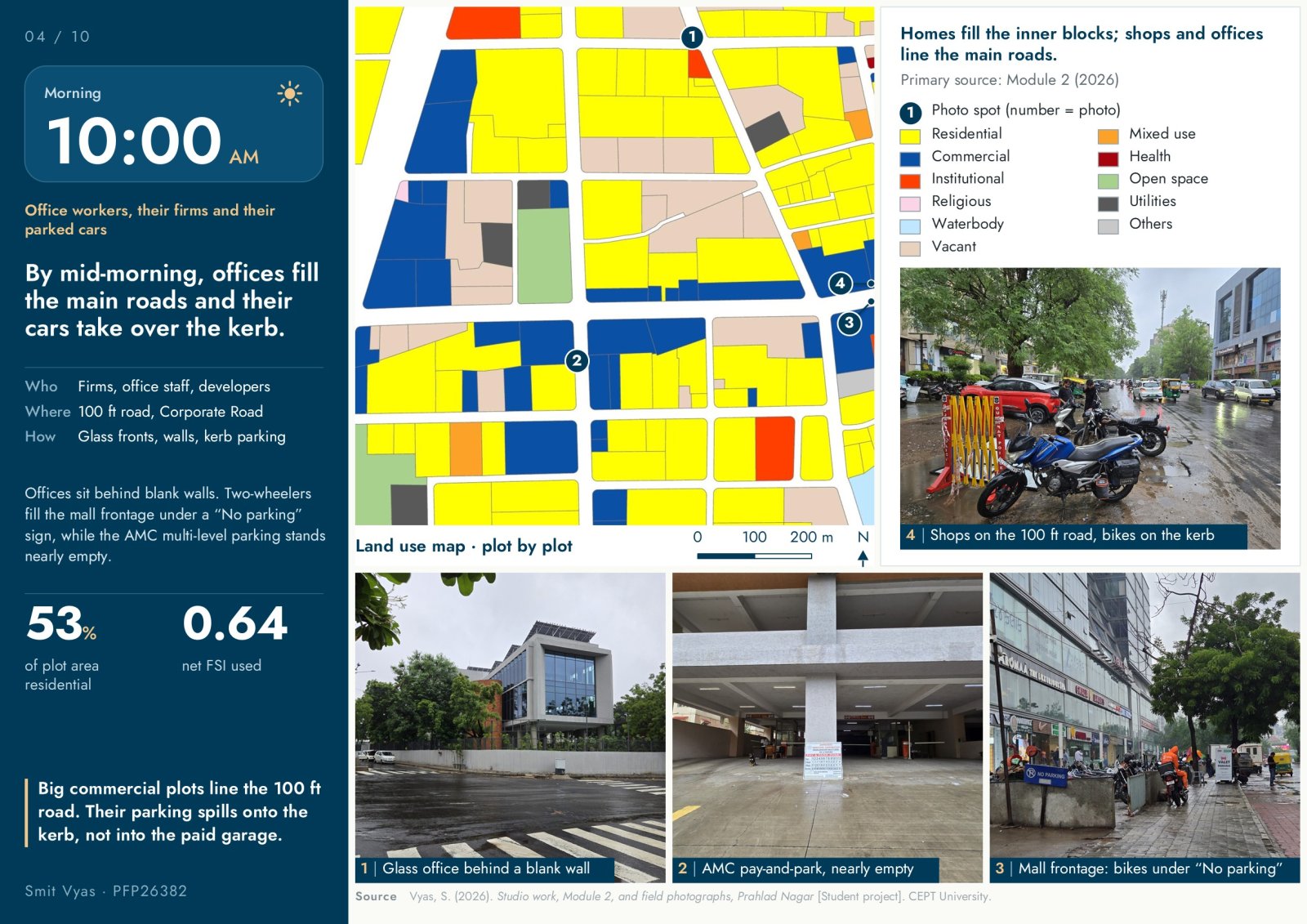
10:00 AM – Offices line the main roads behind blank walls; their vehicles take over the footpath while the city's parking building stands almost empty.

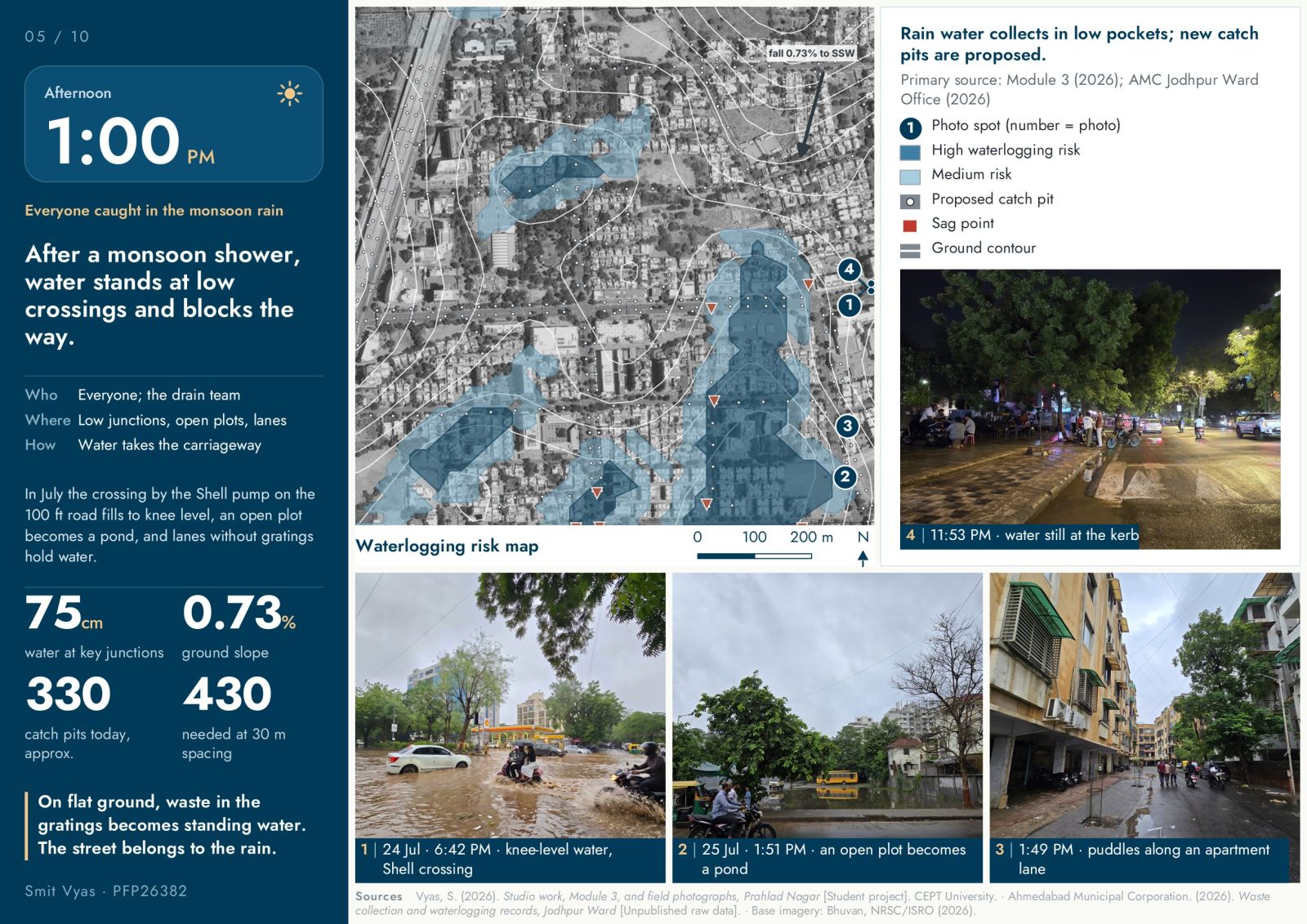
1:00 PM – On flat ground, monsoon rain floods low crossings knee-deep; about 100 more drain inlets would help junctions drain.

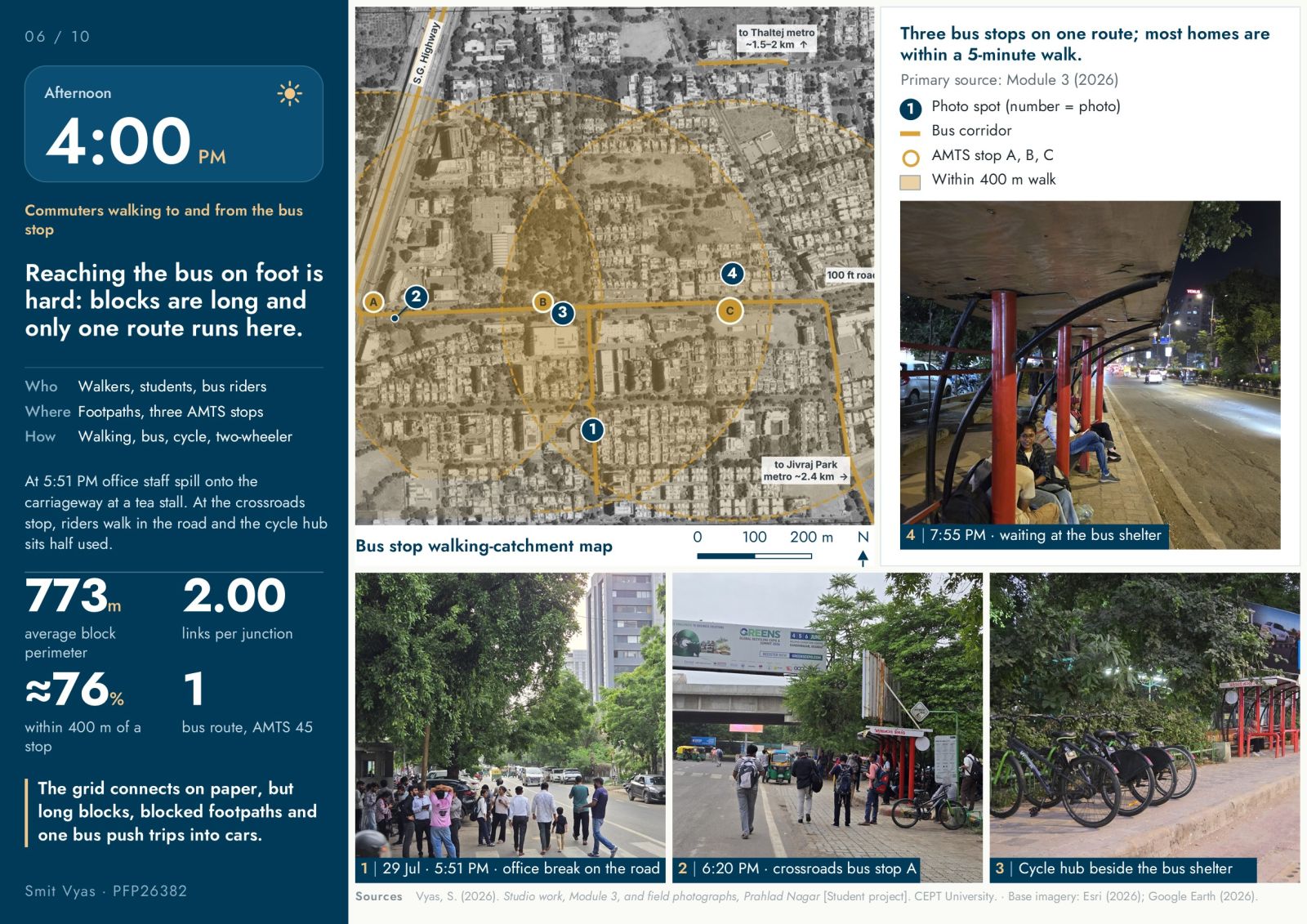
4:00 PM – Most homes are within a 5-minute walk of a bus stop, but long blocks, blocked footpaths and a single bus route push trips into cars.

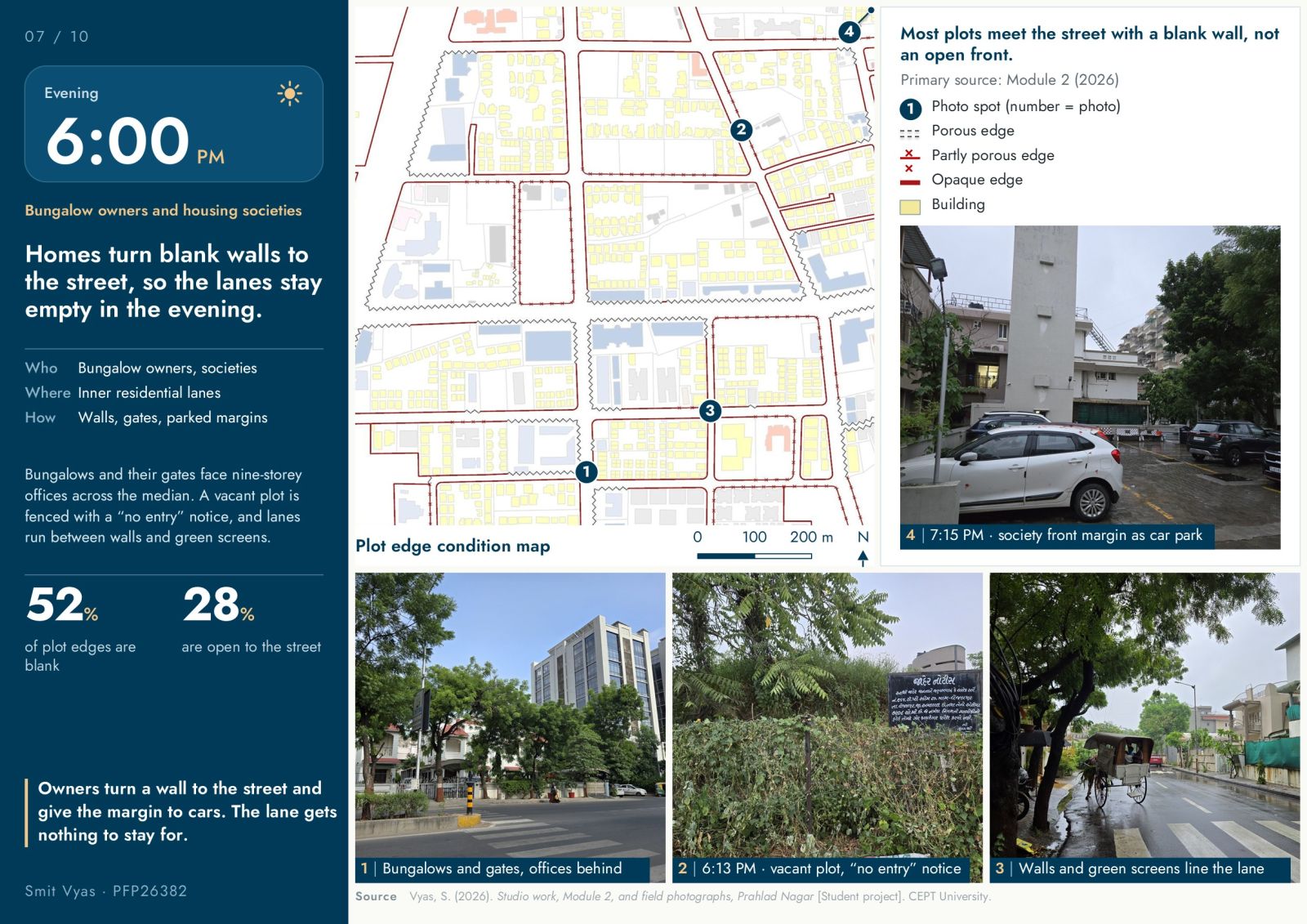
6:00 PM – 52% of plot edges are blank walls and front margins become car parks, so the inner lanes stay empty in the evening.

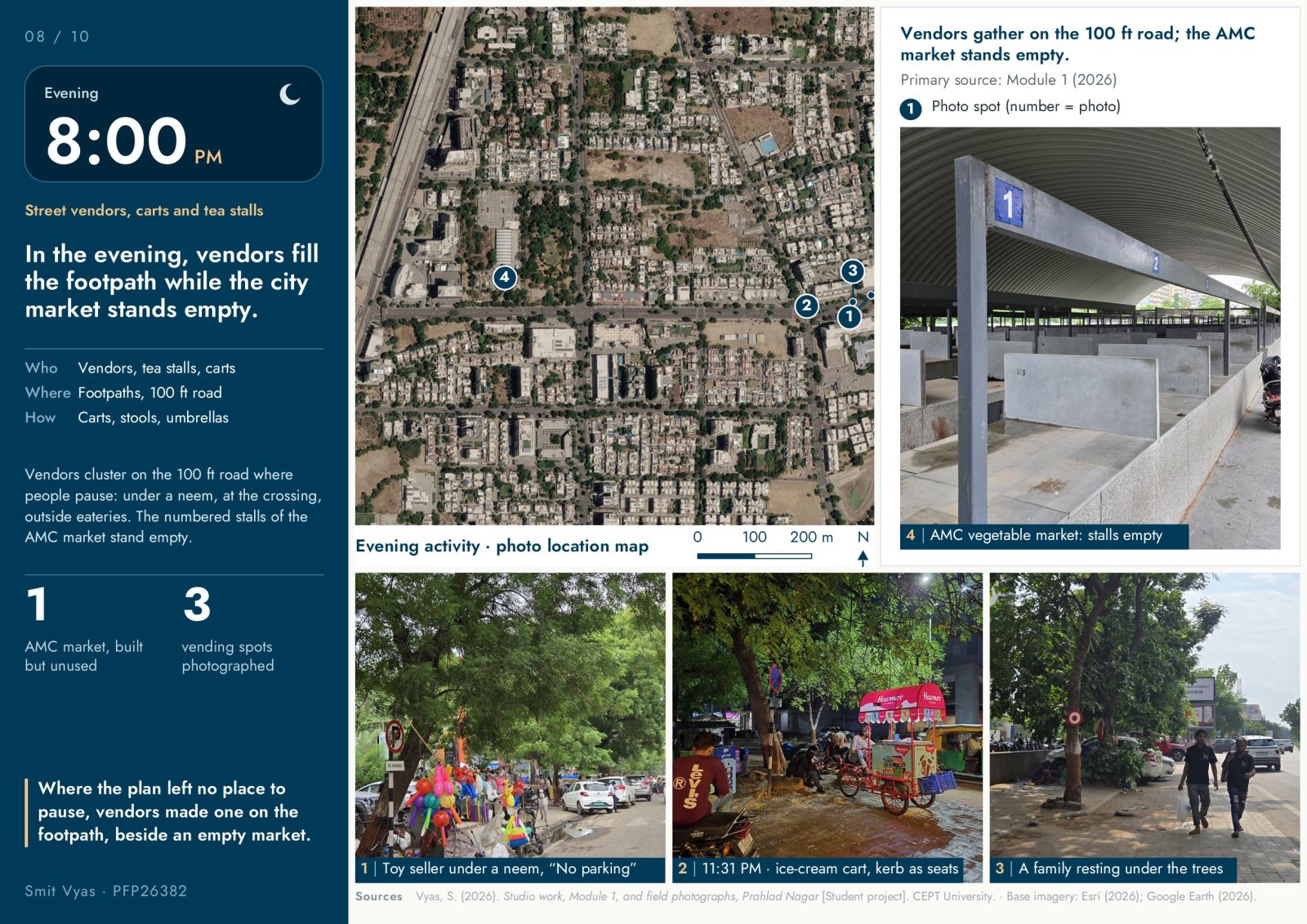
8:00 PM – Vendors make their own place on the footpath under the trees, while the city-built fruit & vegetable market nearby stands empty.

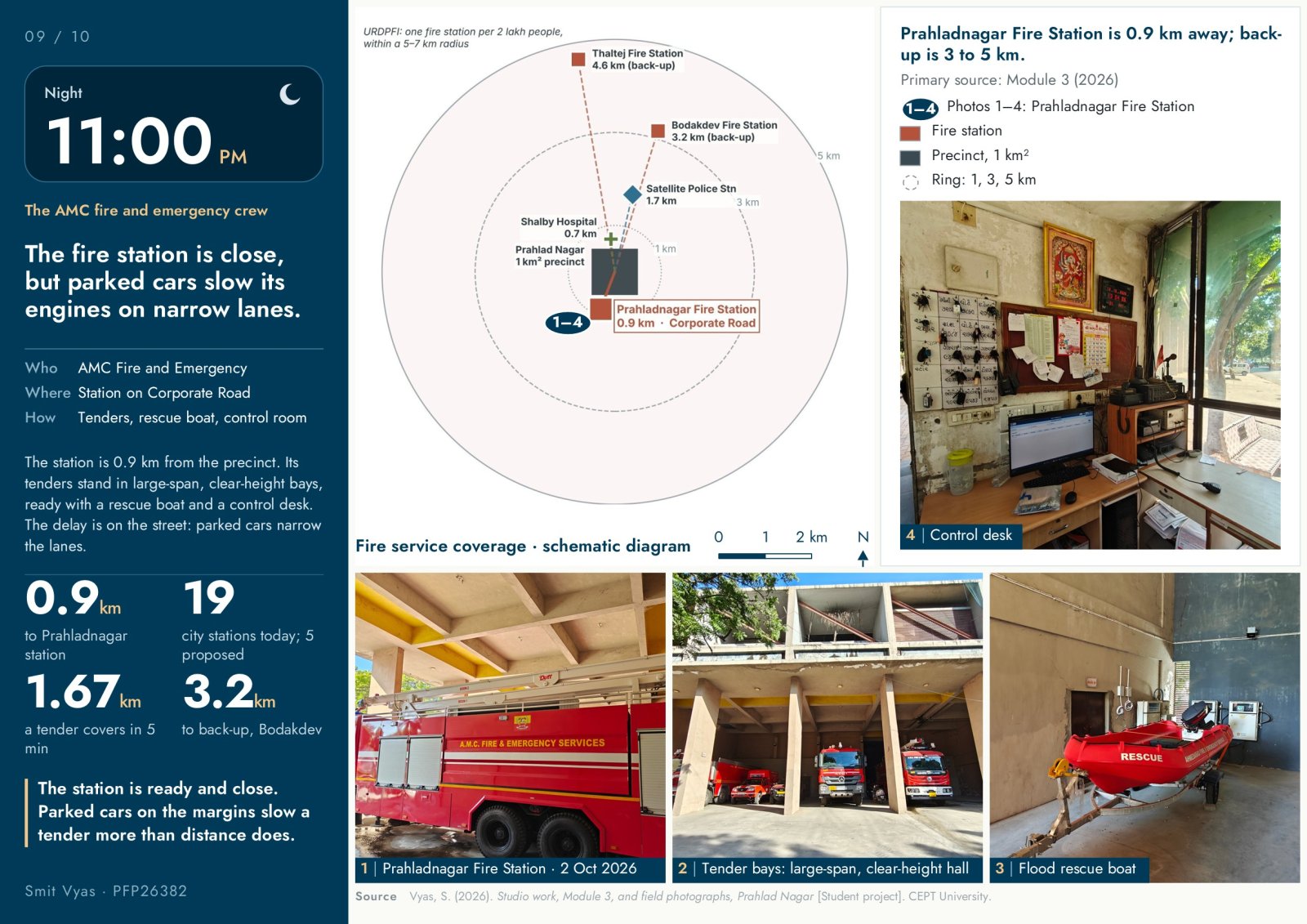
11:00 PM – The fire station is only 0.9 km away; cars parked on narrow lanes slow a fire engine more than distance does.

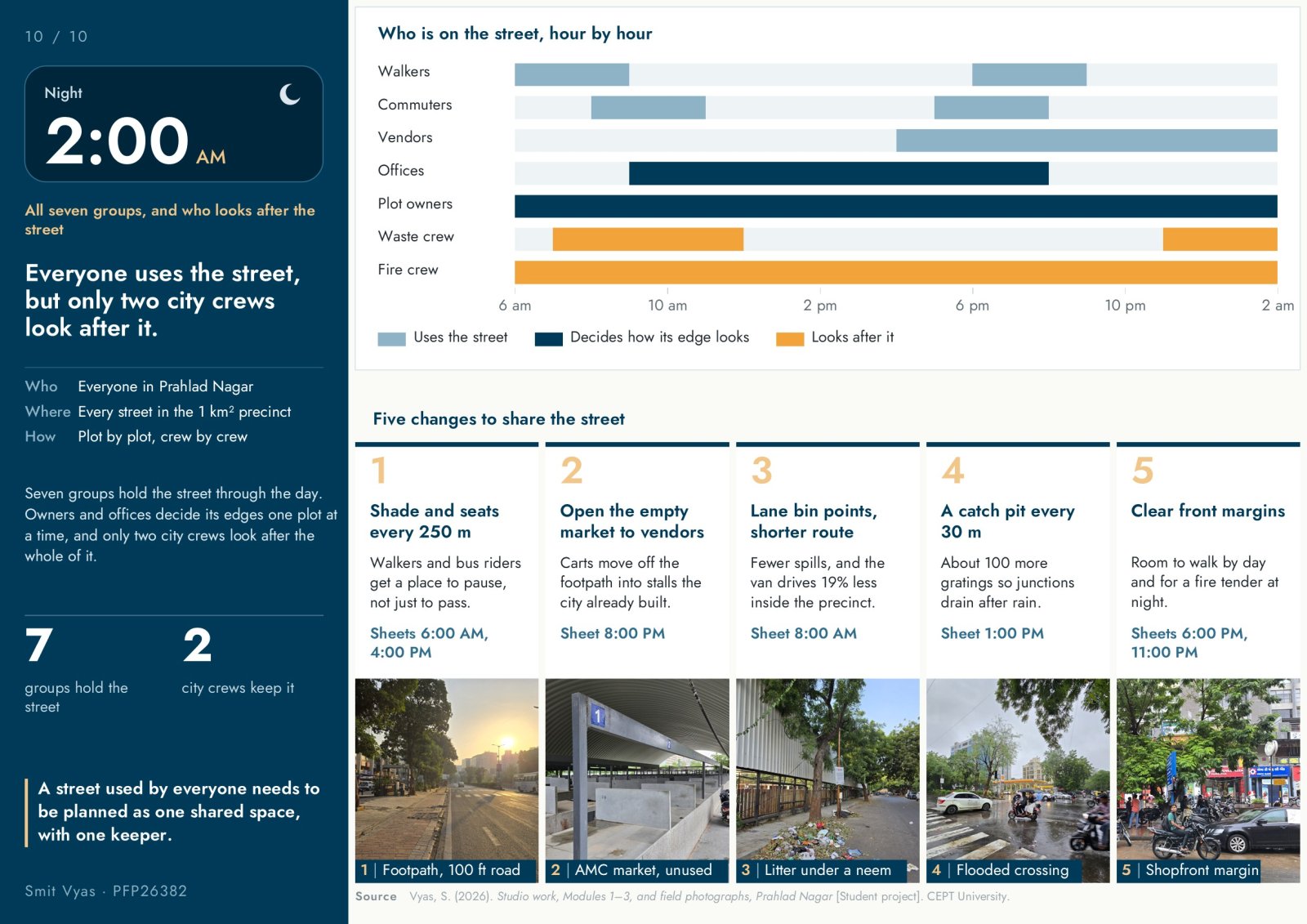
2:00 AM – Everyone uses the street, but only two city crews look after it; five proposals plan and care for it as one shared space.