Your browser is out-of-date!
For a richer surfing experience on our website, please update your browser. Update my browser now!
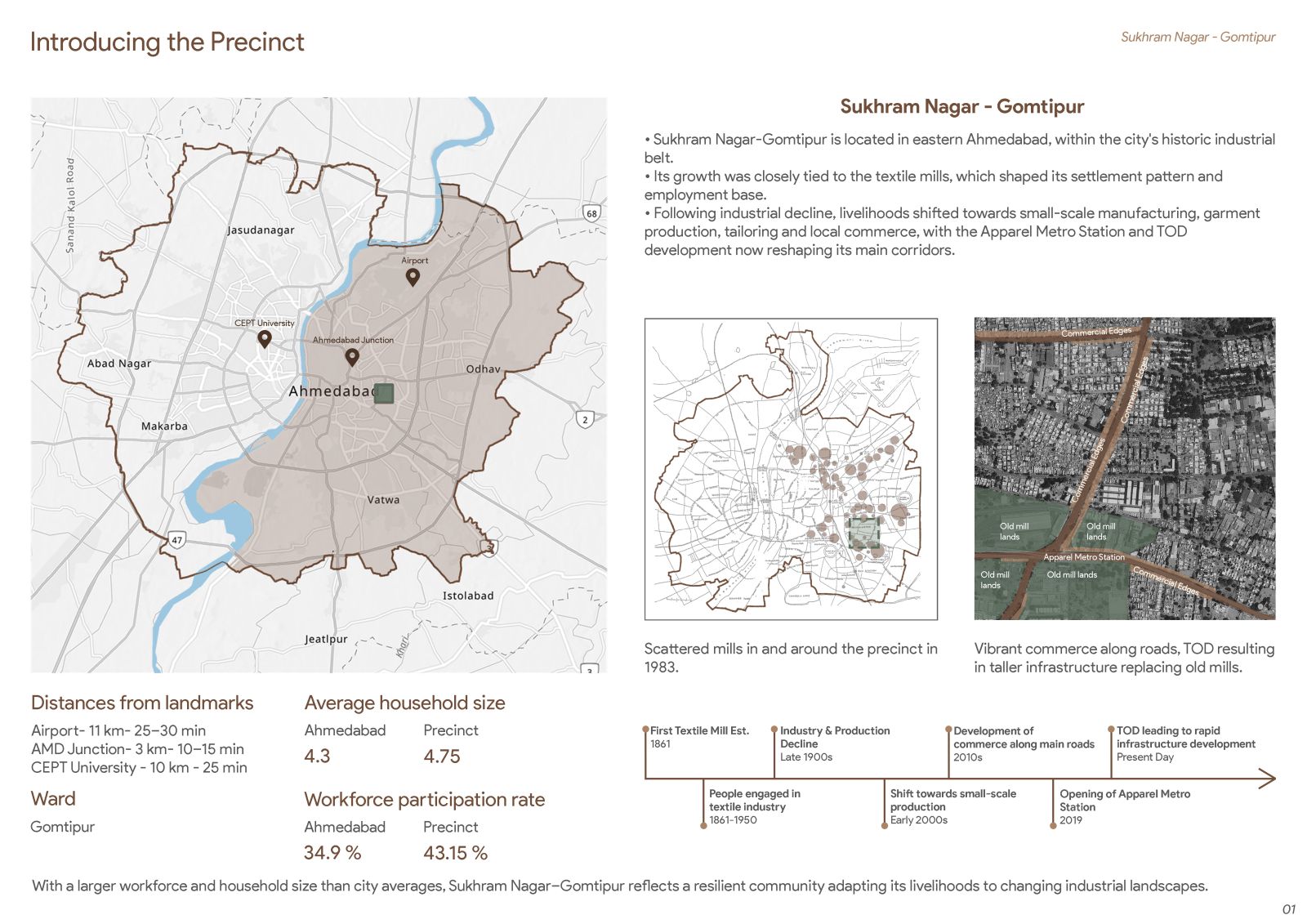
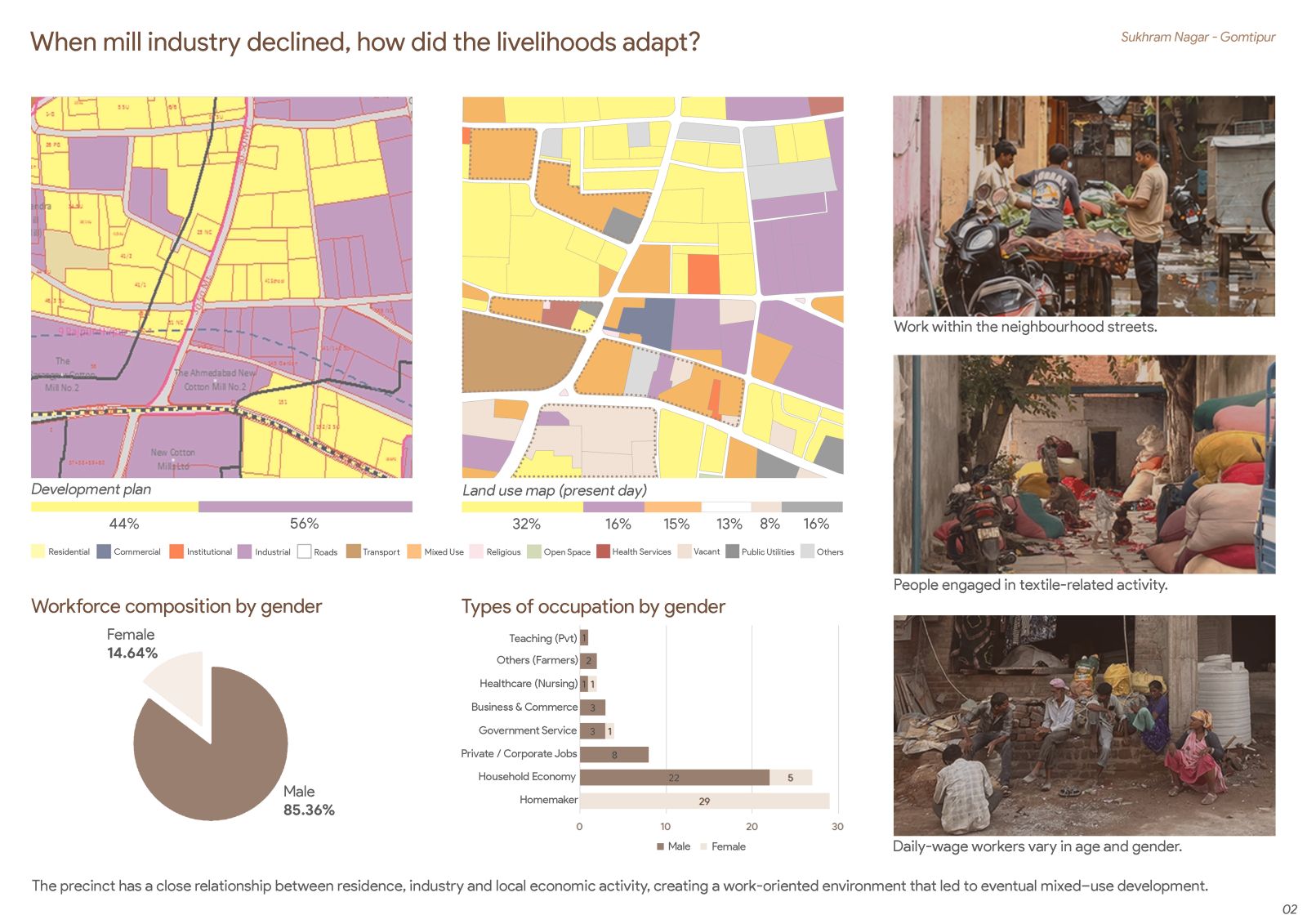
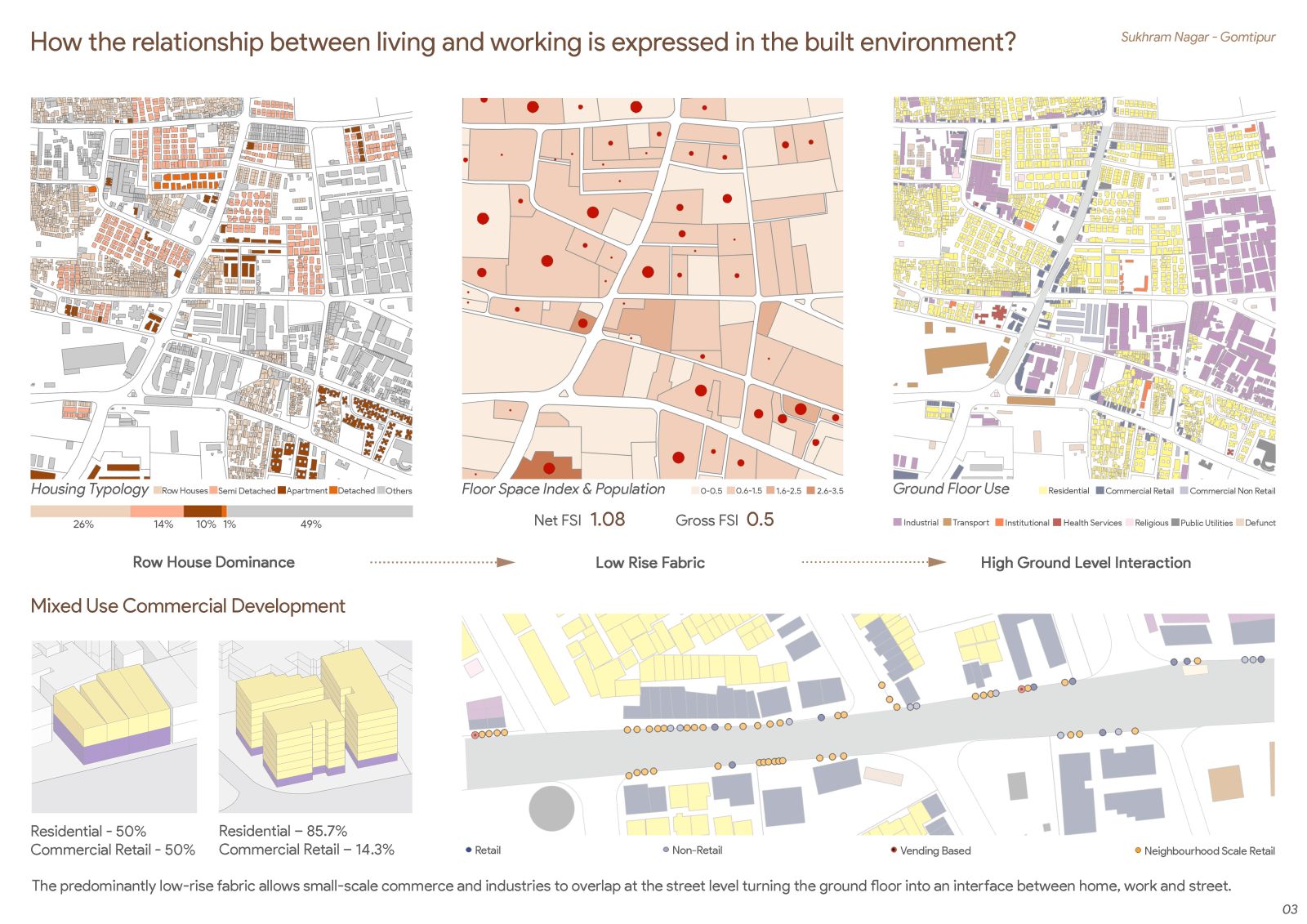
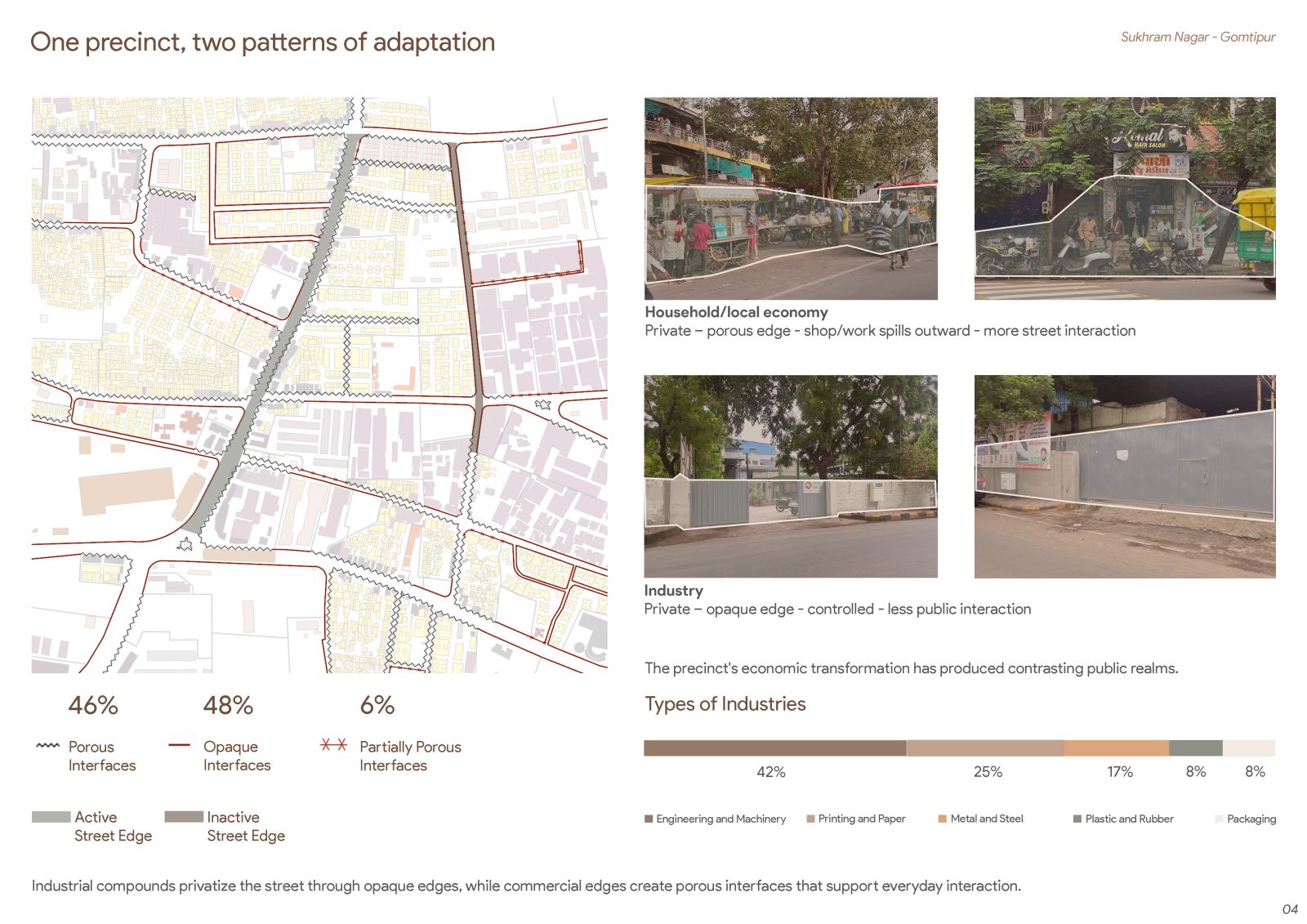
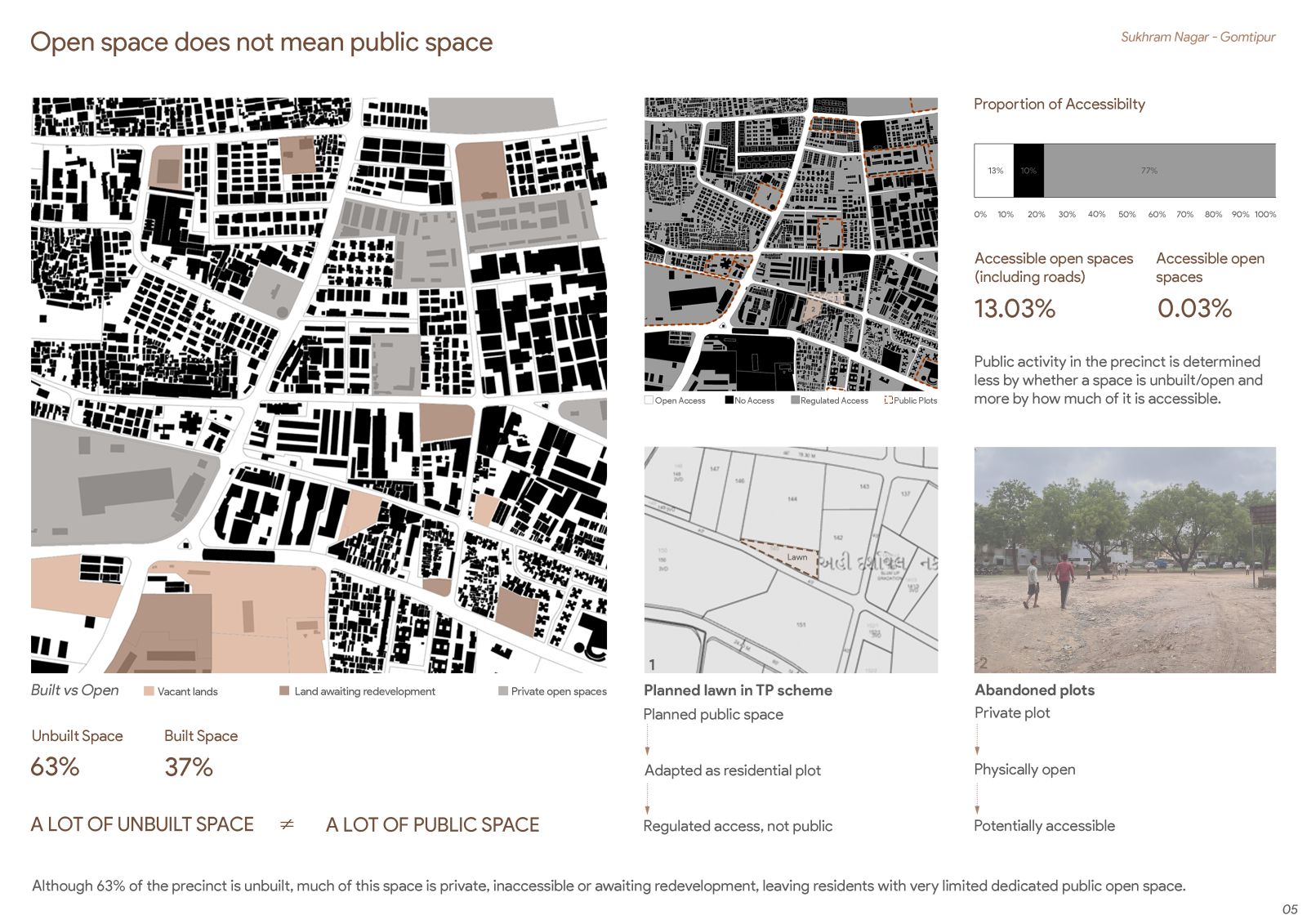
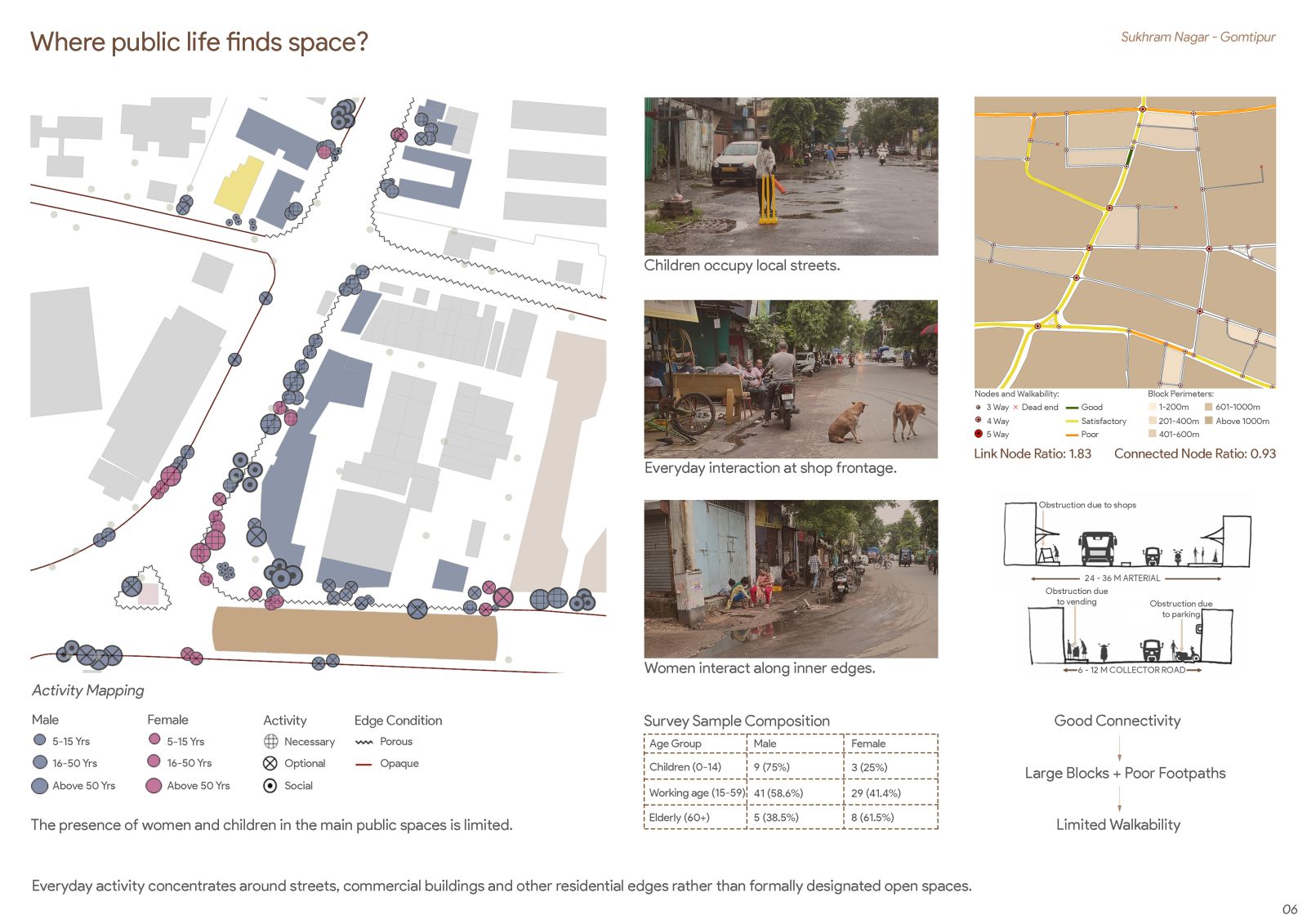
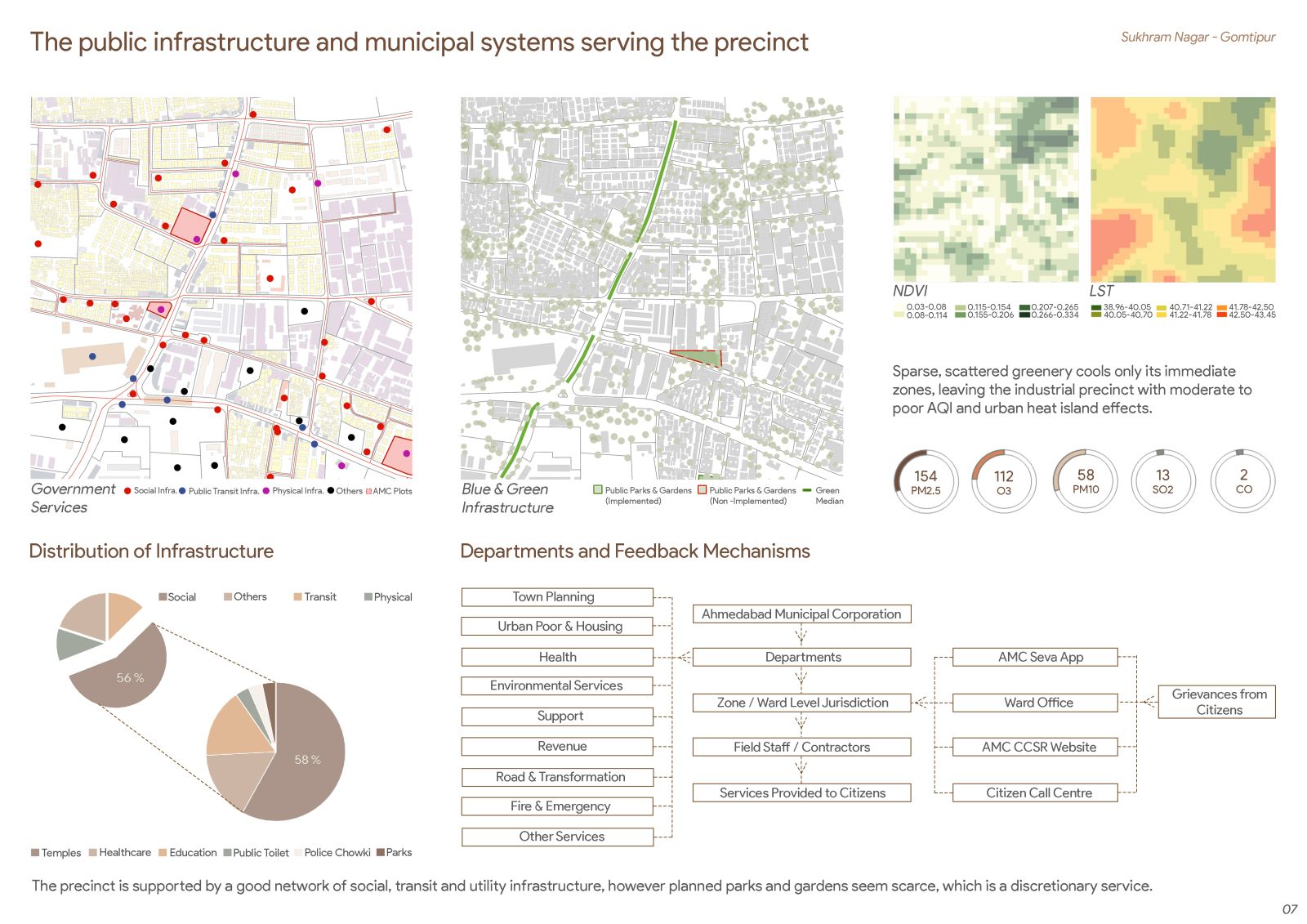
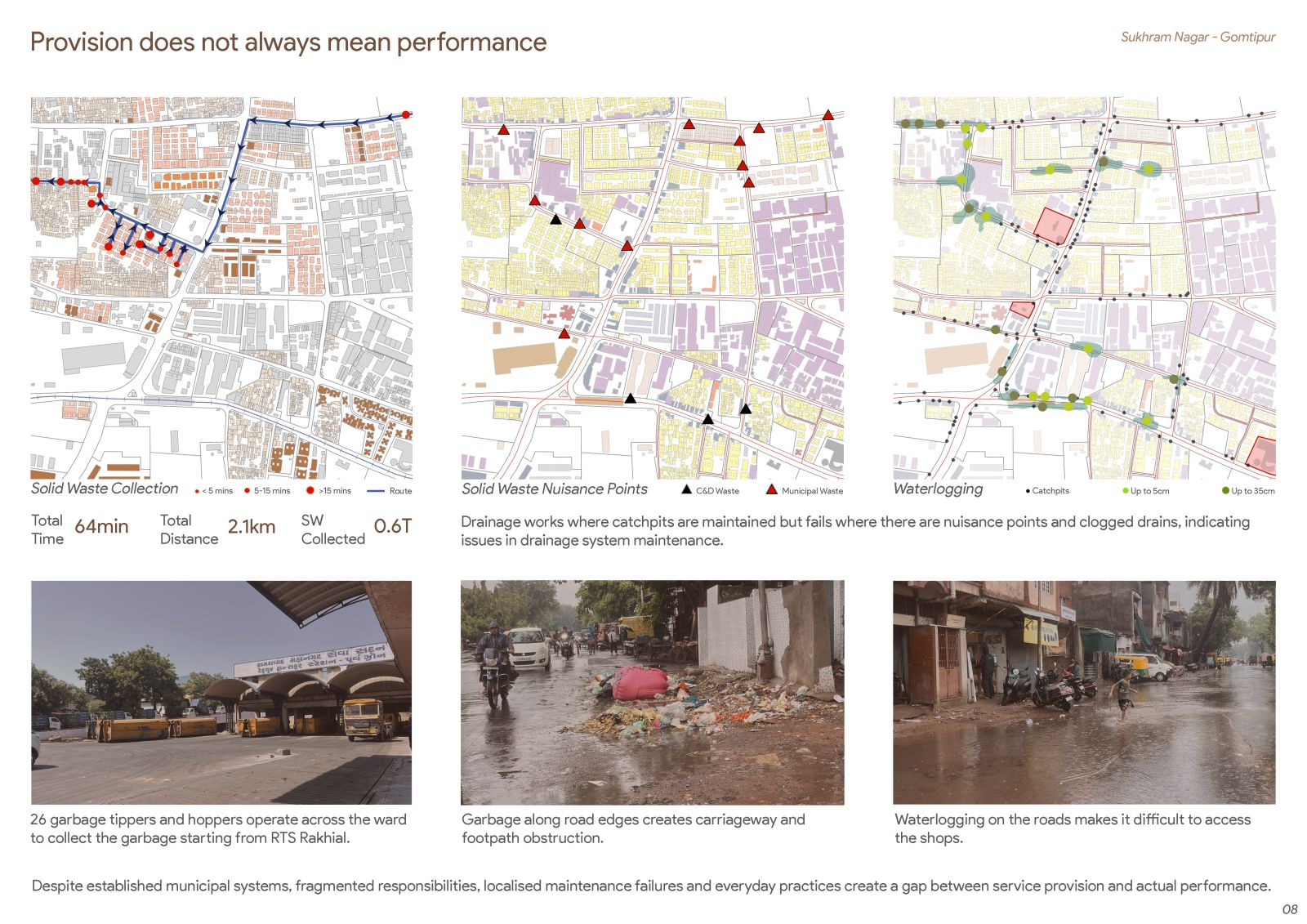
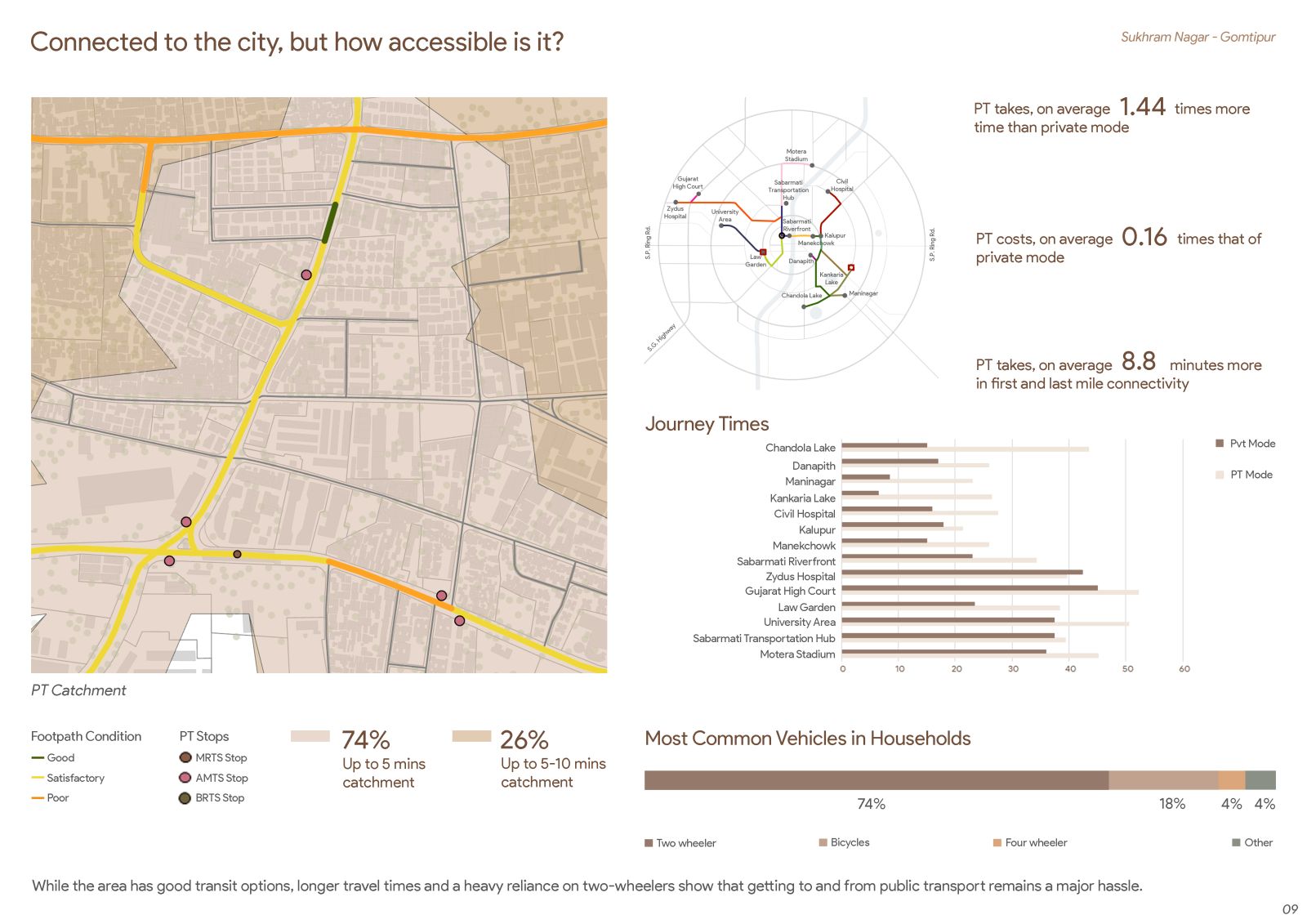
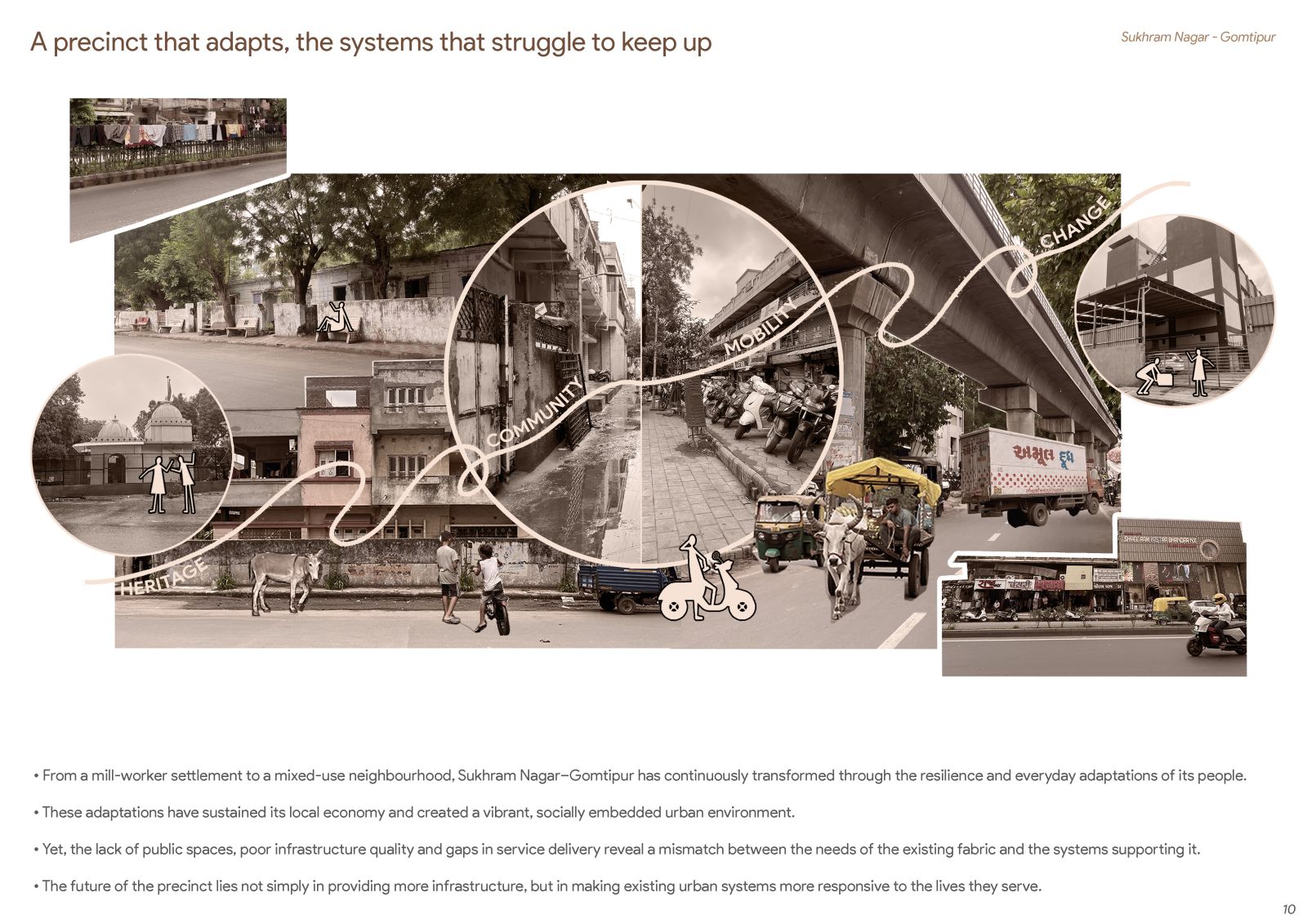
Sukhram Nagar - Gomtipur emerged as a settlement shaped by textile-based employment. Following industrial decline, its people adapted through small-scale manufacturing, tailoring, retail and local commerce. This transformation reshaped the built environment; homes became workplaces, commercial activities spilled onto streets with building edges and streets evolving into spaces of everyday interaction. However, urban systems have struggled to keep pace. Despite connectivity and municipal infrastructure, lack of open spaces, poor pedestrian conditions, uneven maintenance, waterlogging and waste accumulation continue to affect daily life. The precinct adapts but the systems struggle to keep up.