Your browser is out-of-date!
For a richer surfing experience on our website, please update your browser. Update my browser now!
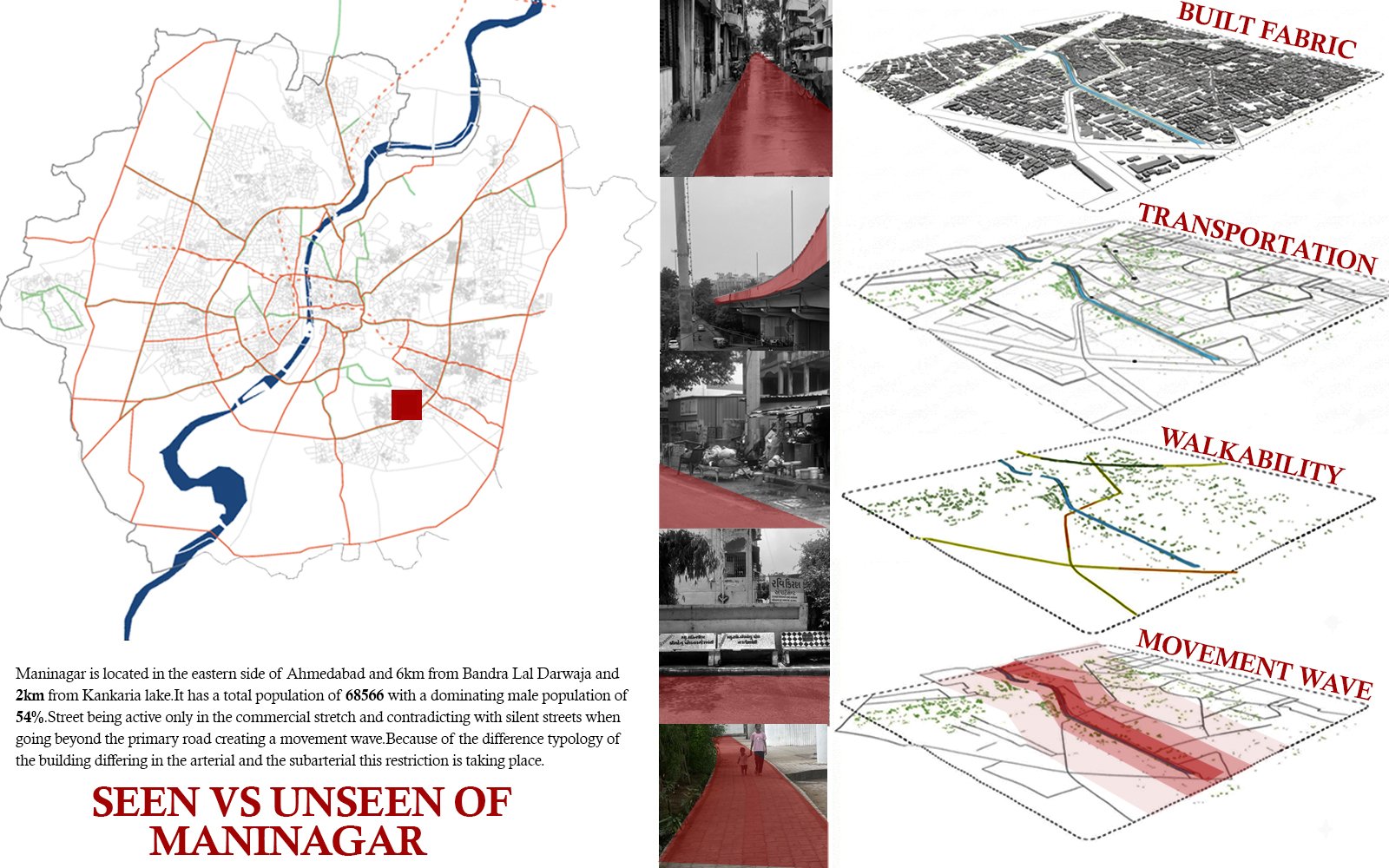
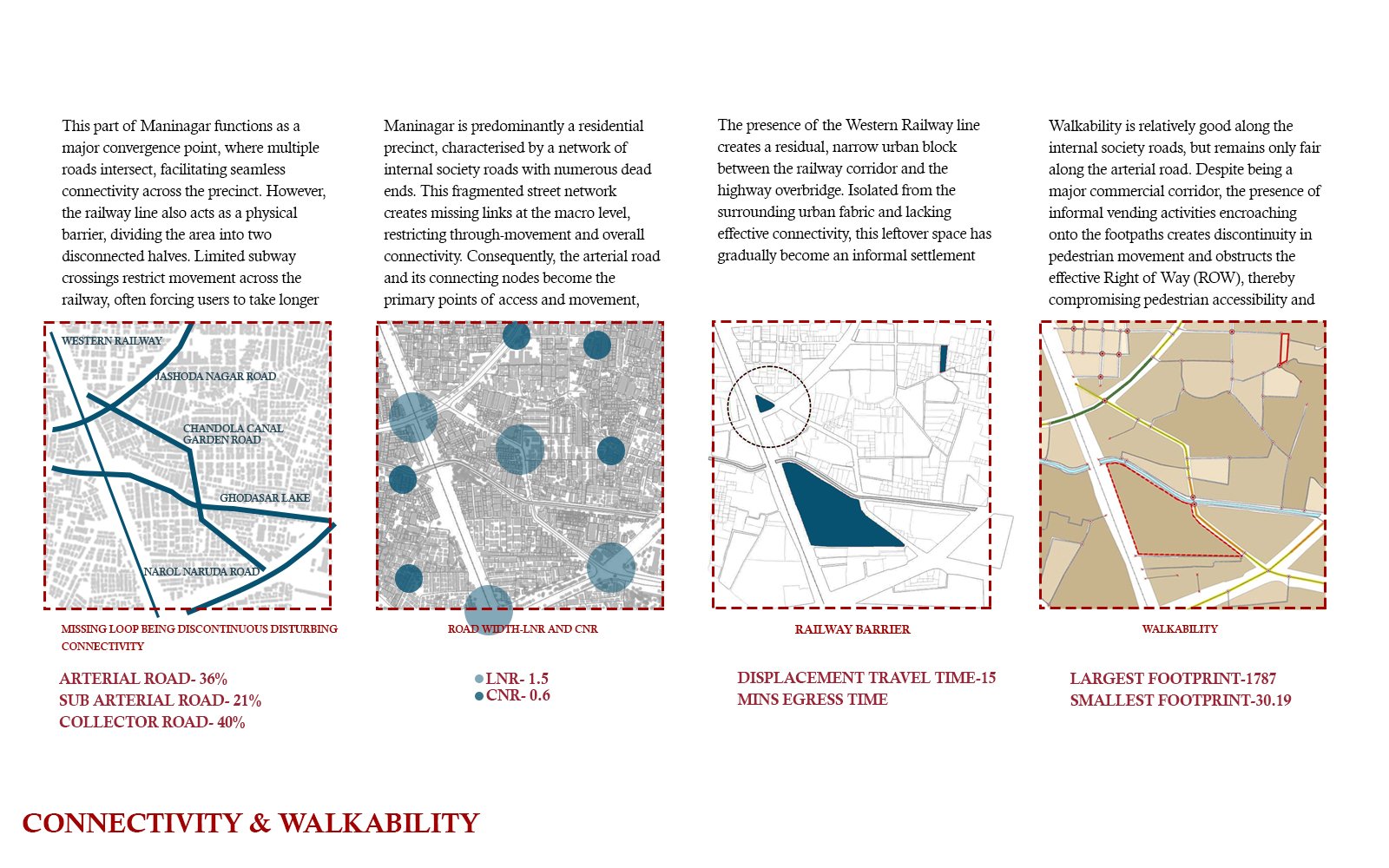
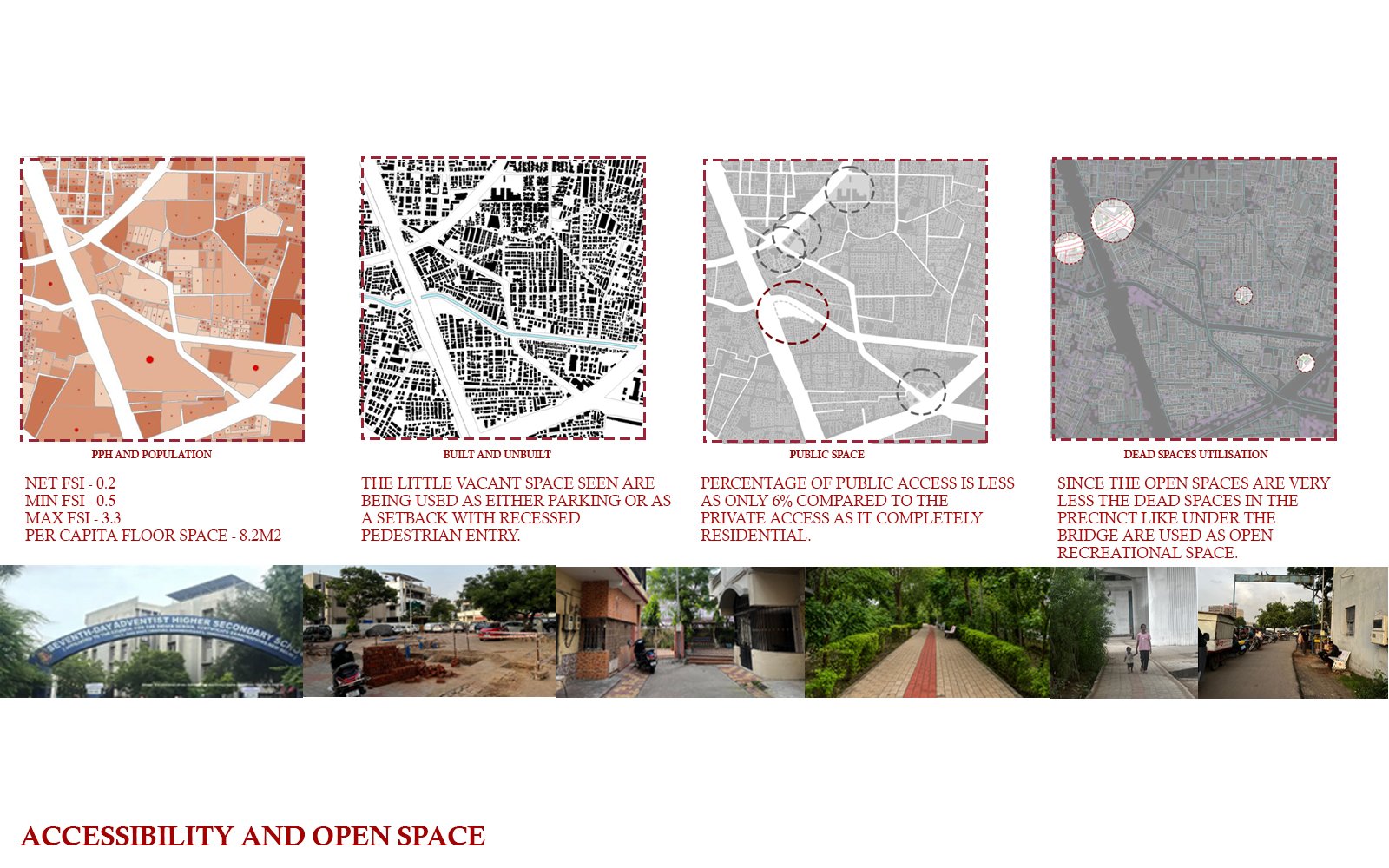
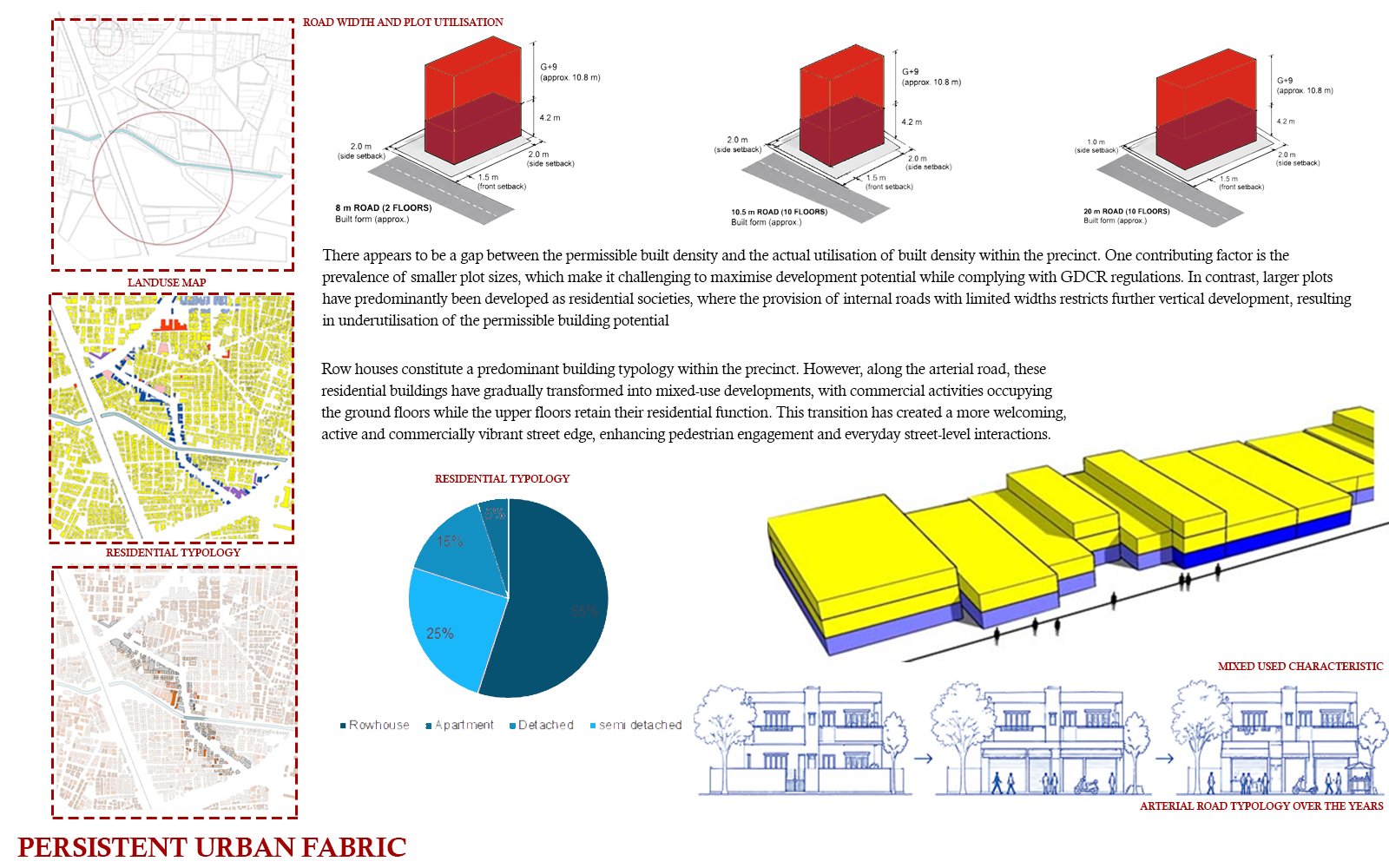
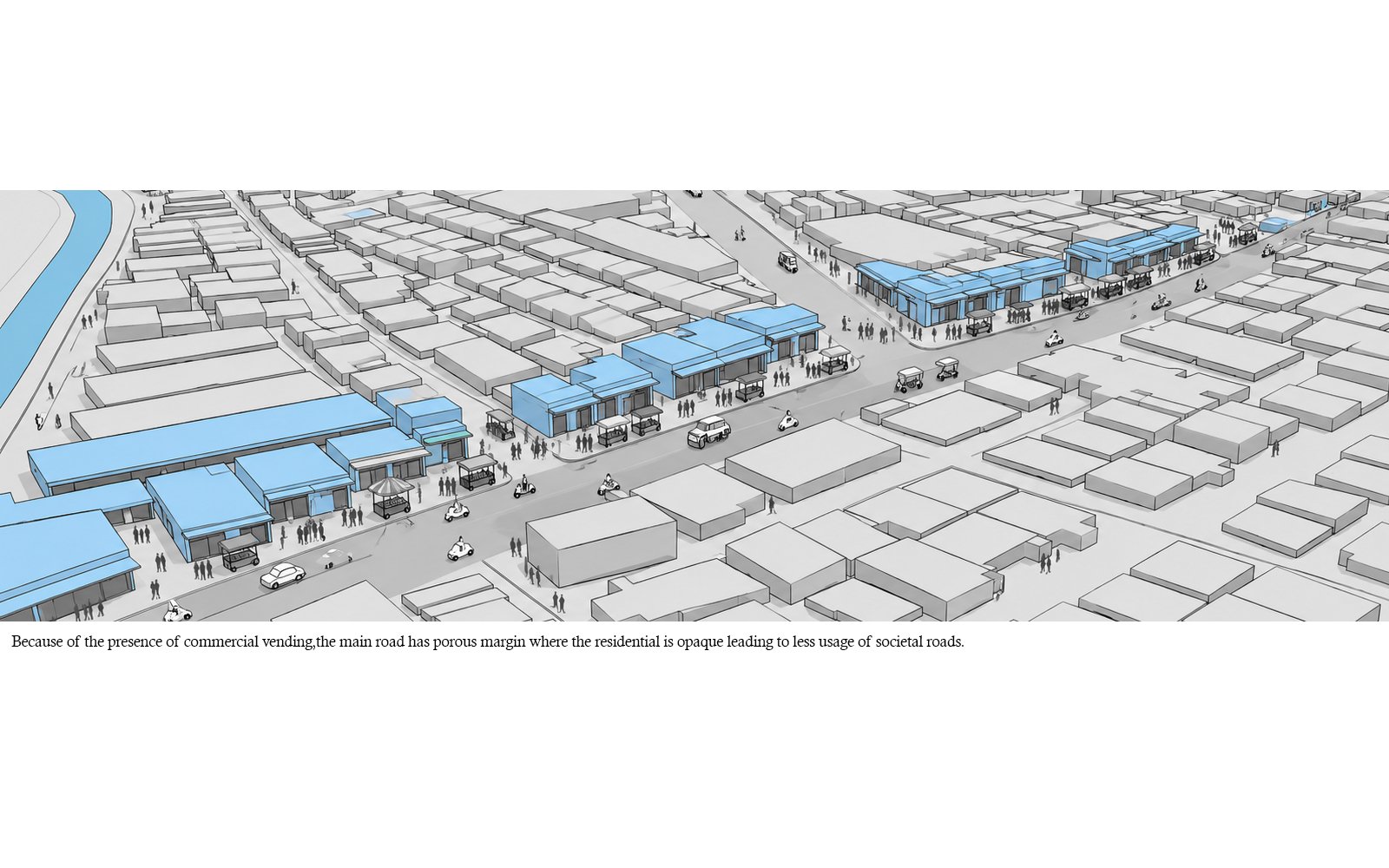
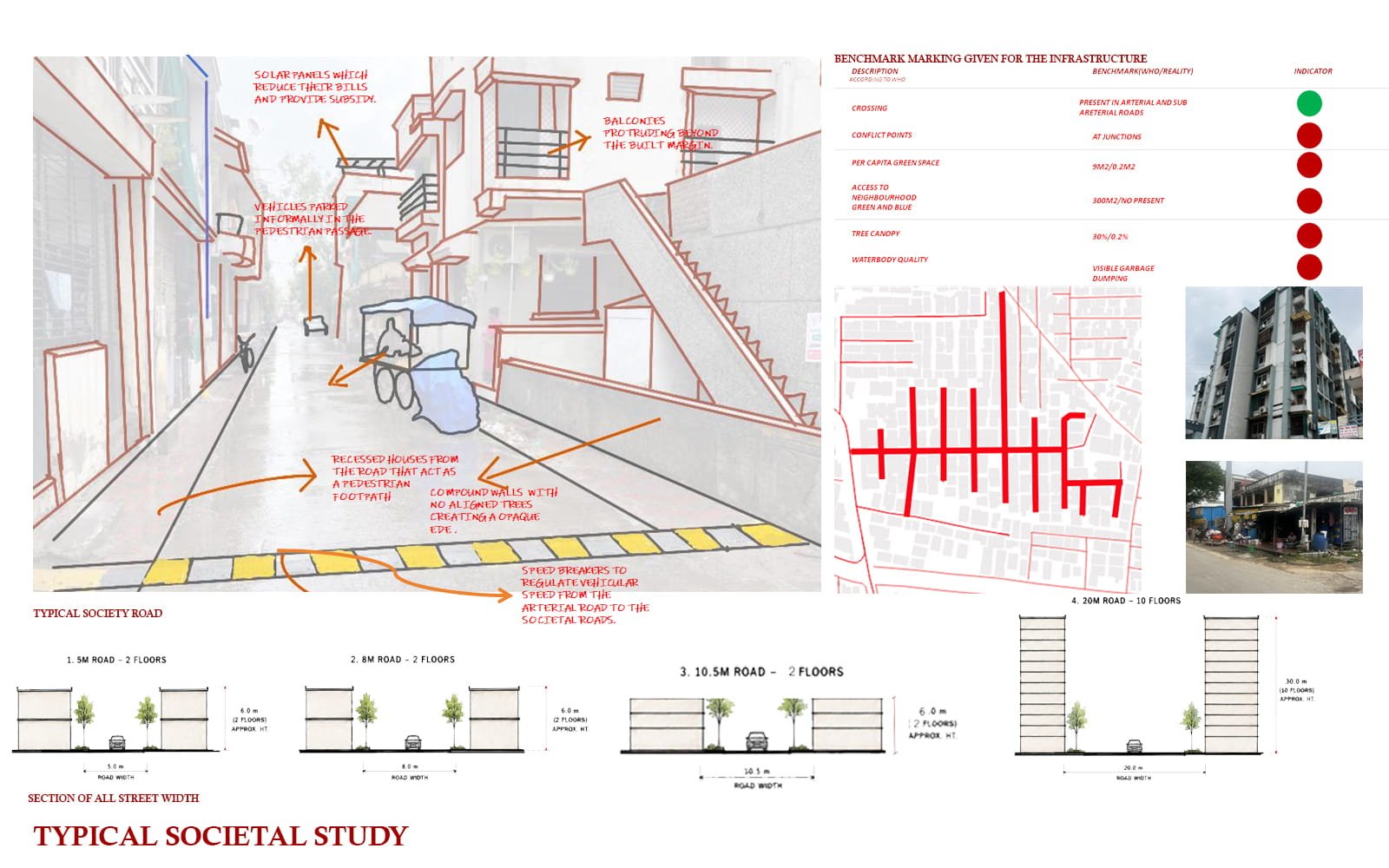
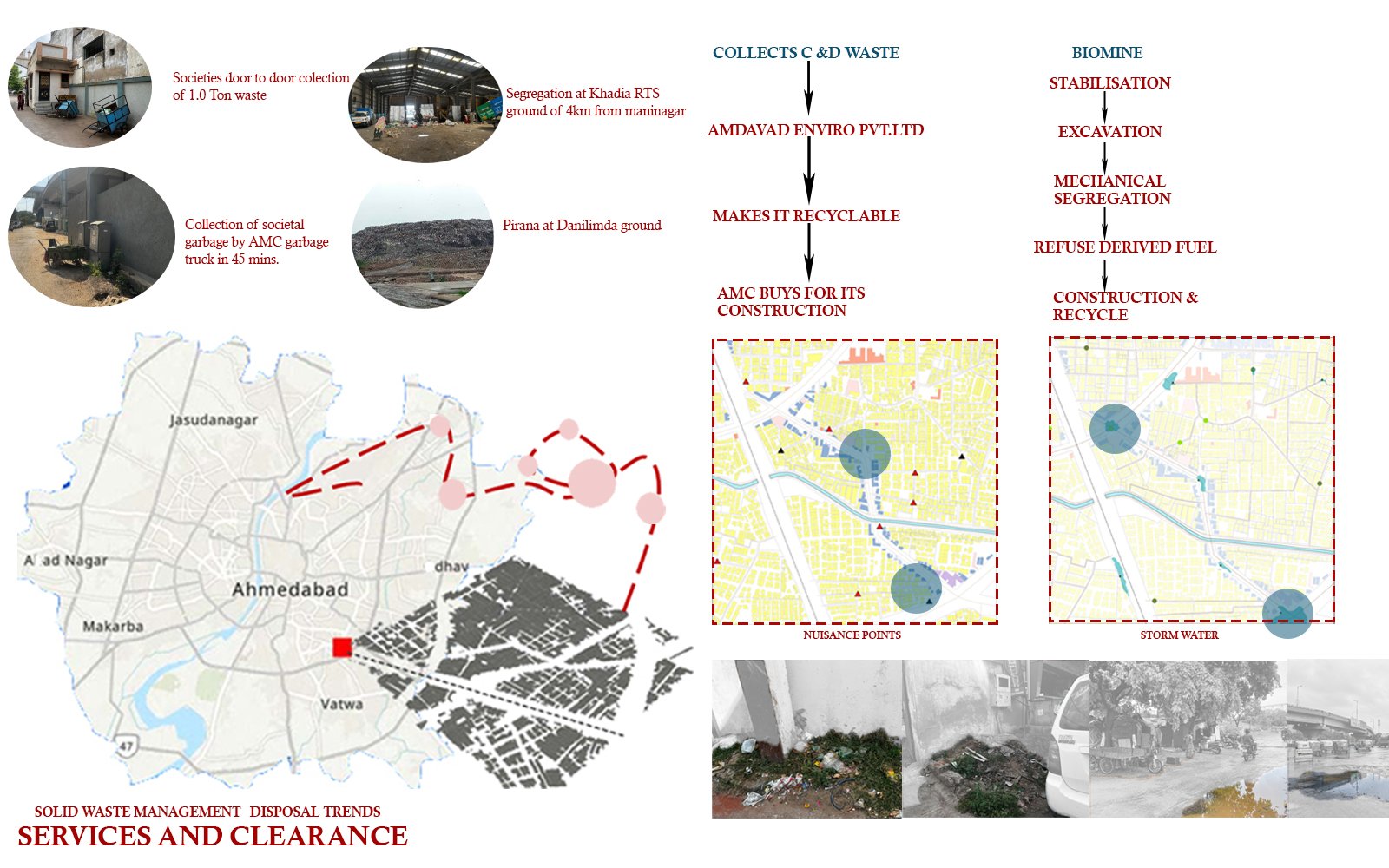
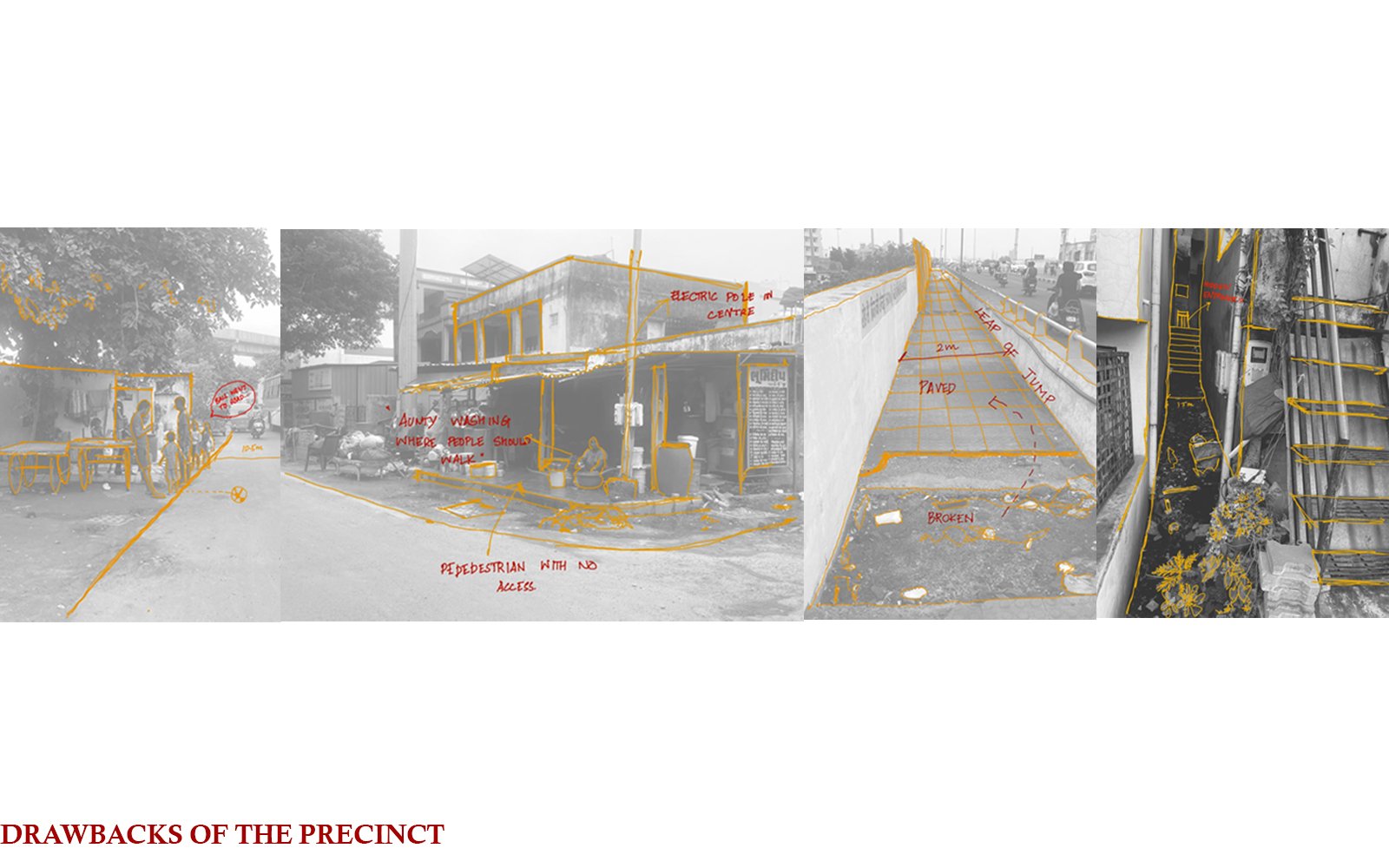
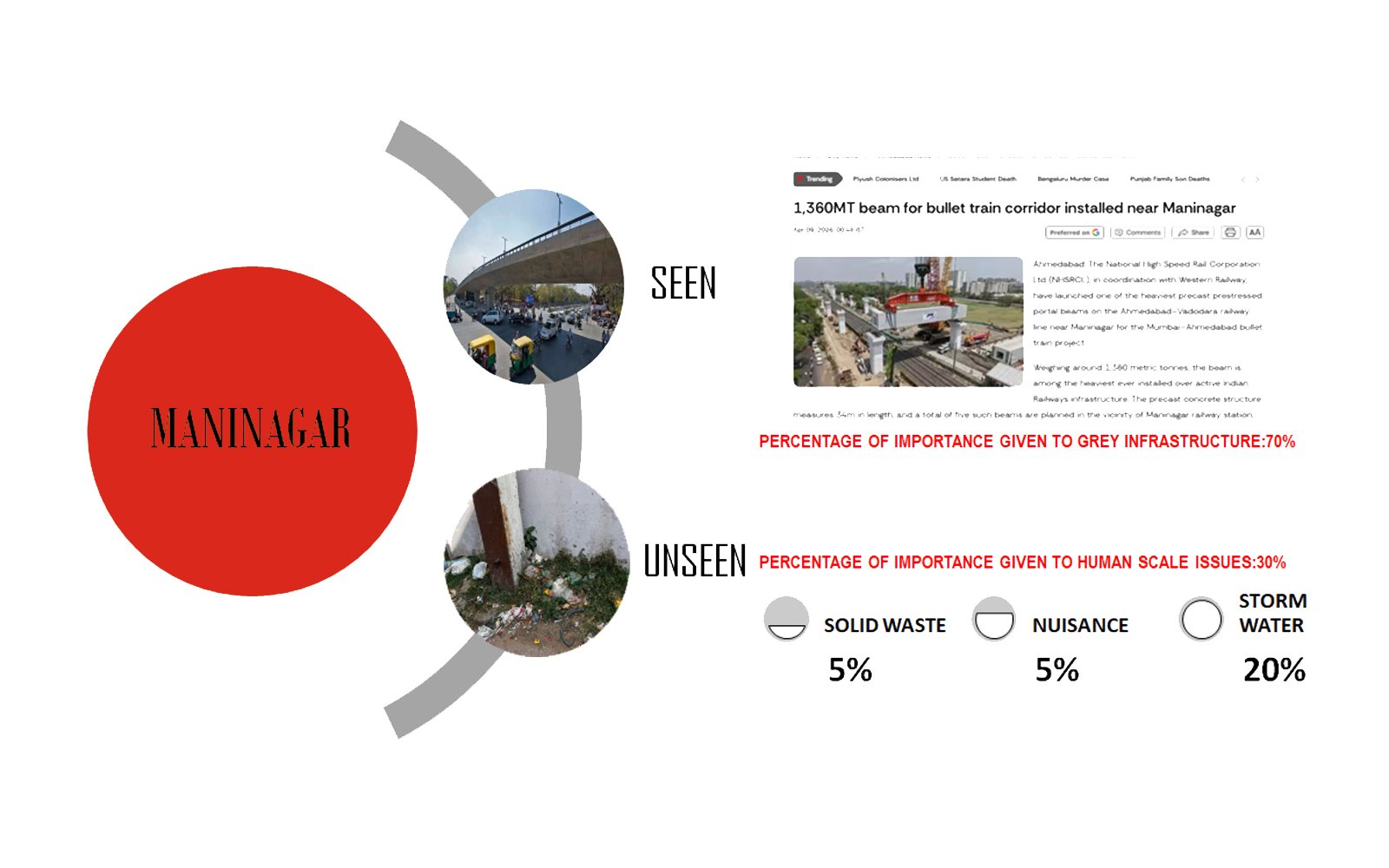
Maninagar is a precinct characterised by a persistent urban fabric that has continually adapted to accommodate the evolving demands of its residents. Despite its apparent success in sustaining this demand, it raises questions about the underlying factors that influence and potentially restrict its development. While visible infrastructure, such as green and blue networks, contributes to the precinct's functioning, less visible aspects, including waste management, infrastructural shortcomings, and other urban challenges, often remain overlooked. Do these overlooked deficiencies, along with the existing infrastructure, shape the precinct's capacity for further development? Furthermore, public activity and pedestrian loitering appear to be concentrated primarily along the arterial roads, with considerably less movement and interaction within the internal neighbourhood streets. This contrast raises questions about the distribution of public life, accessibility, and the relationship between the urban fabric and the everyday use of space in Maninagar