Hardik Goswami

UR3017

Pravah : Flow of Faith

Pravah is an urban design proposal for Haridwar that explores the relationship between a permanent city and its constantly changing religious, cultural, and seasonal landscapes. The project envisions a flexible urban framework that responds to the everyday life of the city while accommodating the immense influx of pilgrims during Kumbh Mela. Through a network of sacred precincts, riverfront ghats, public spaces, pedestrian corridors, infrastructure, and modular interventions, Pravah reimagines the city as a kinetic landscape. It integrates movement, rituals, ecology, and public life into a resilient urban system that adapts over time, transforming the experience of the city without losing its spiritual identity.
Report Content

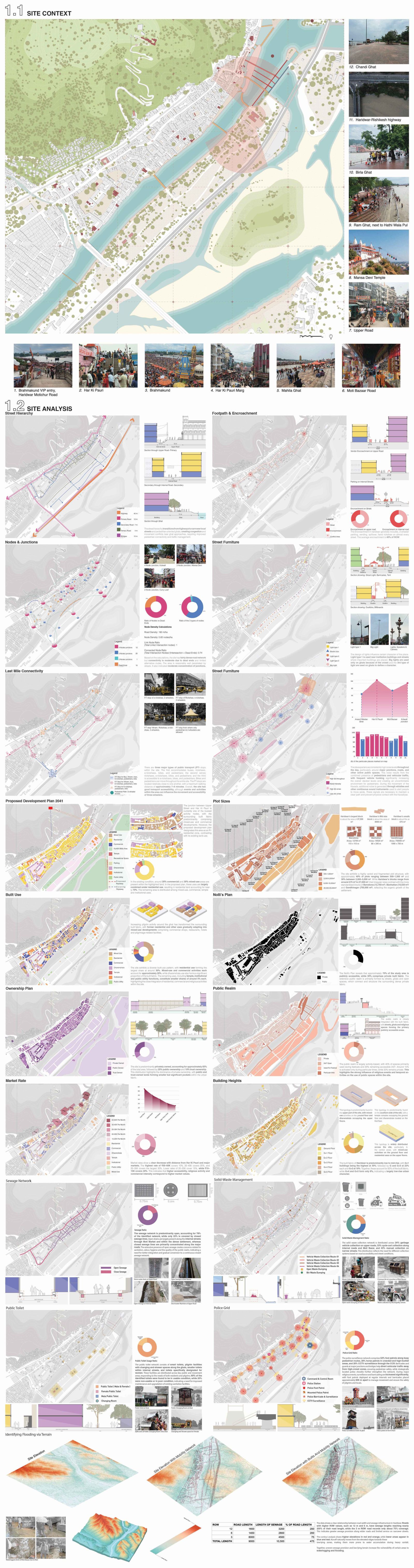
Site mapping examines urban structure, land use, infrastructure, streets, public realm, built form, ownership, ecology, and environmental conditions to identify opportunities.

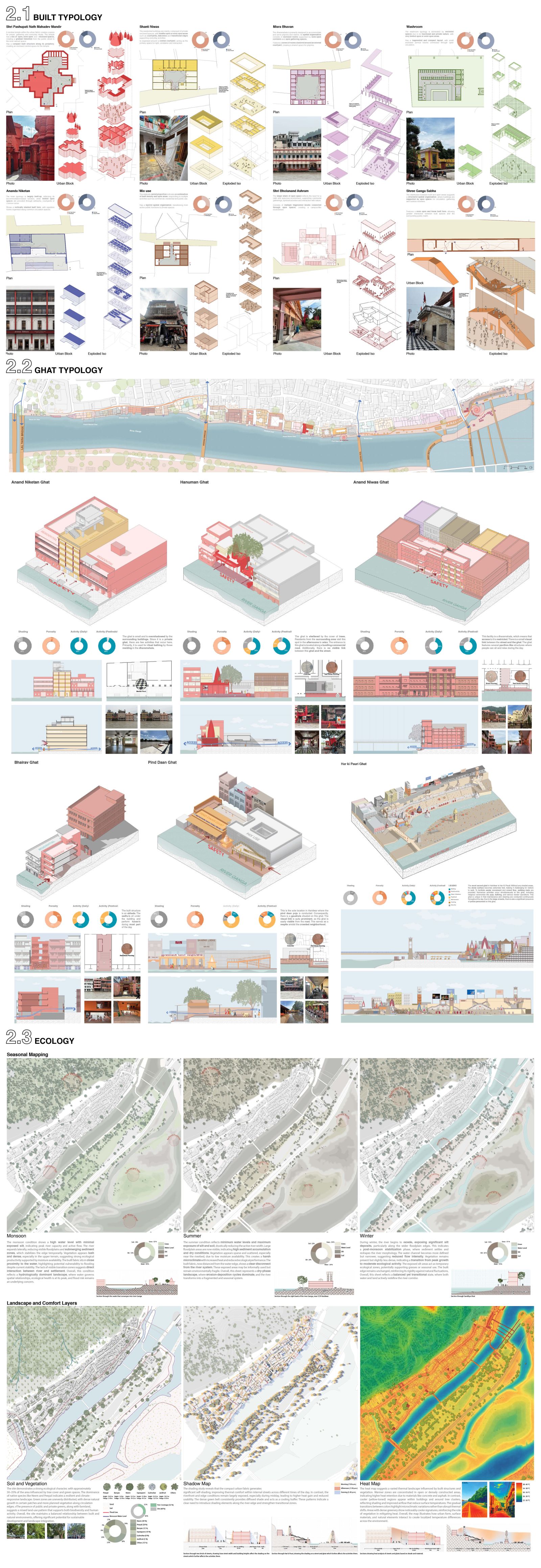
Built typologies, ghat conditions, and seasonal ecological patterns reveal relationships between architecture, riverfront activities, urban morphology, landscape, and environmental comfort.

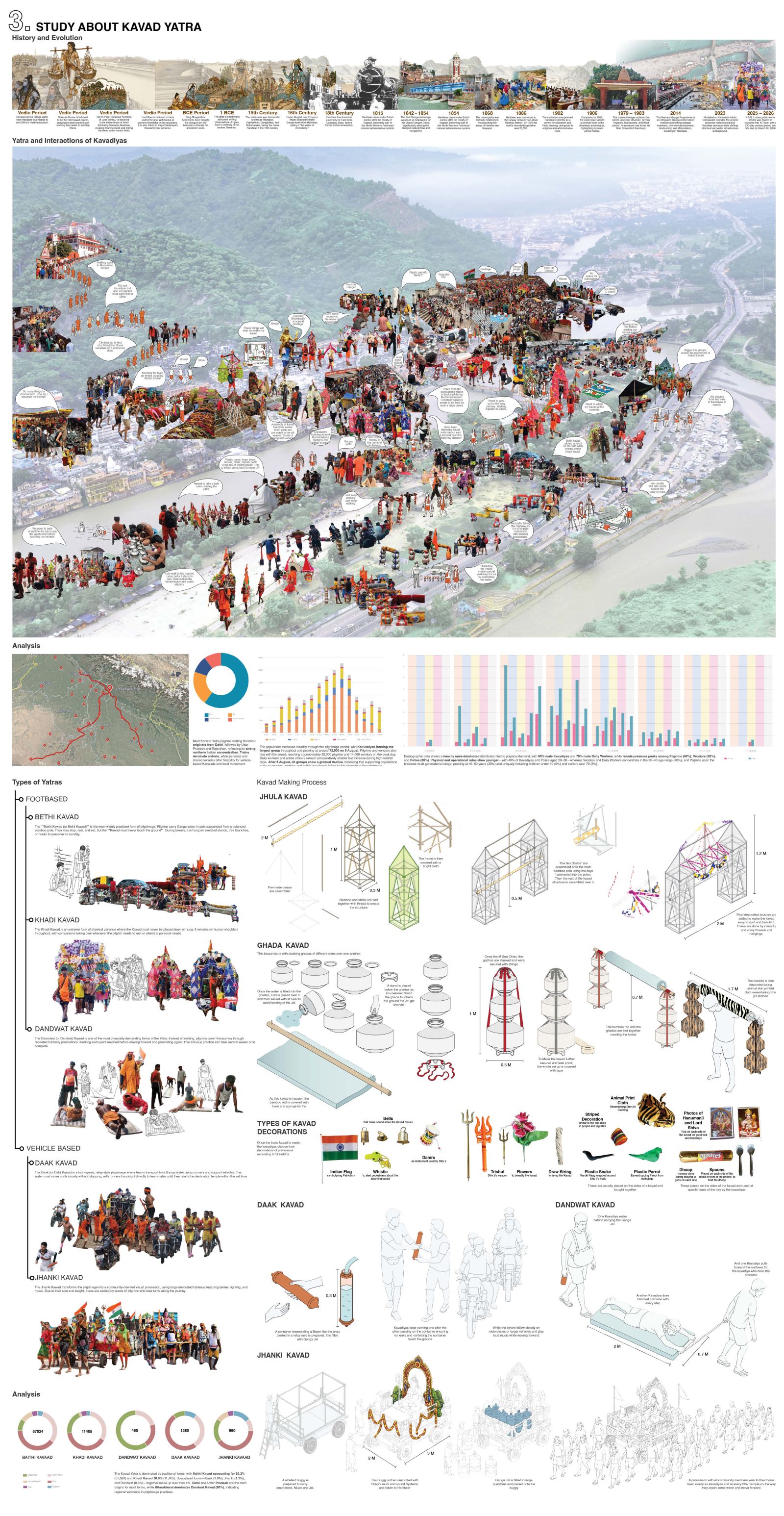
The Kavad Yatra study documents its history, rituals, movement, participants, material culture, and temporary structures, informing spatial requirements for pilgrimage.

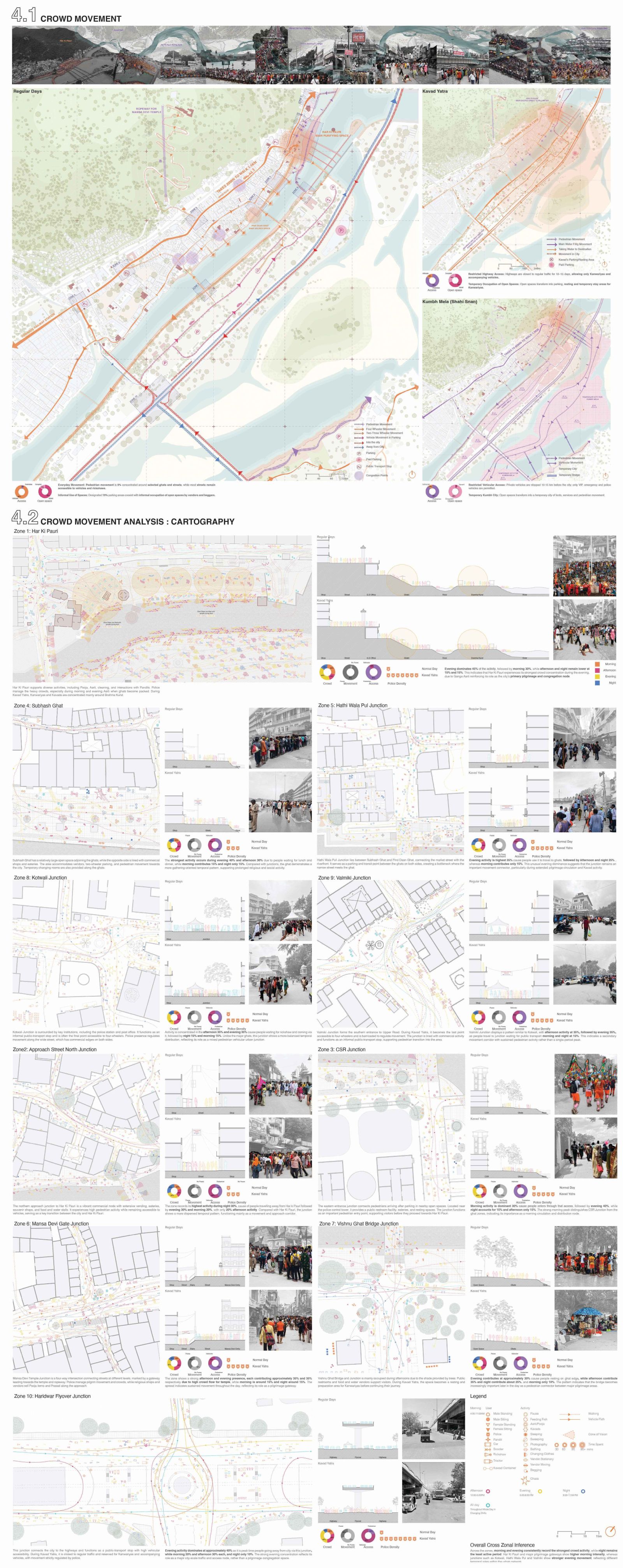
Crowd movement mapping compares everyday circulation, Kavad Yatra, and Kumbh conditions, identifying movement patterns, congestion points, junctions, and spatial pressures.

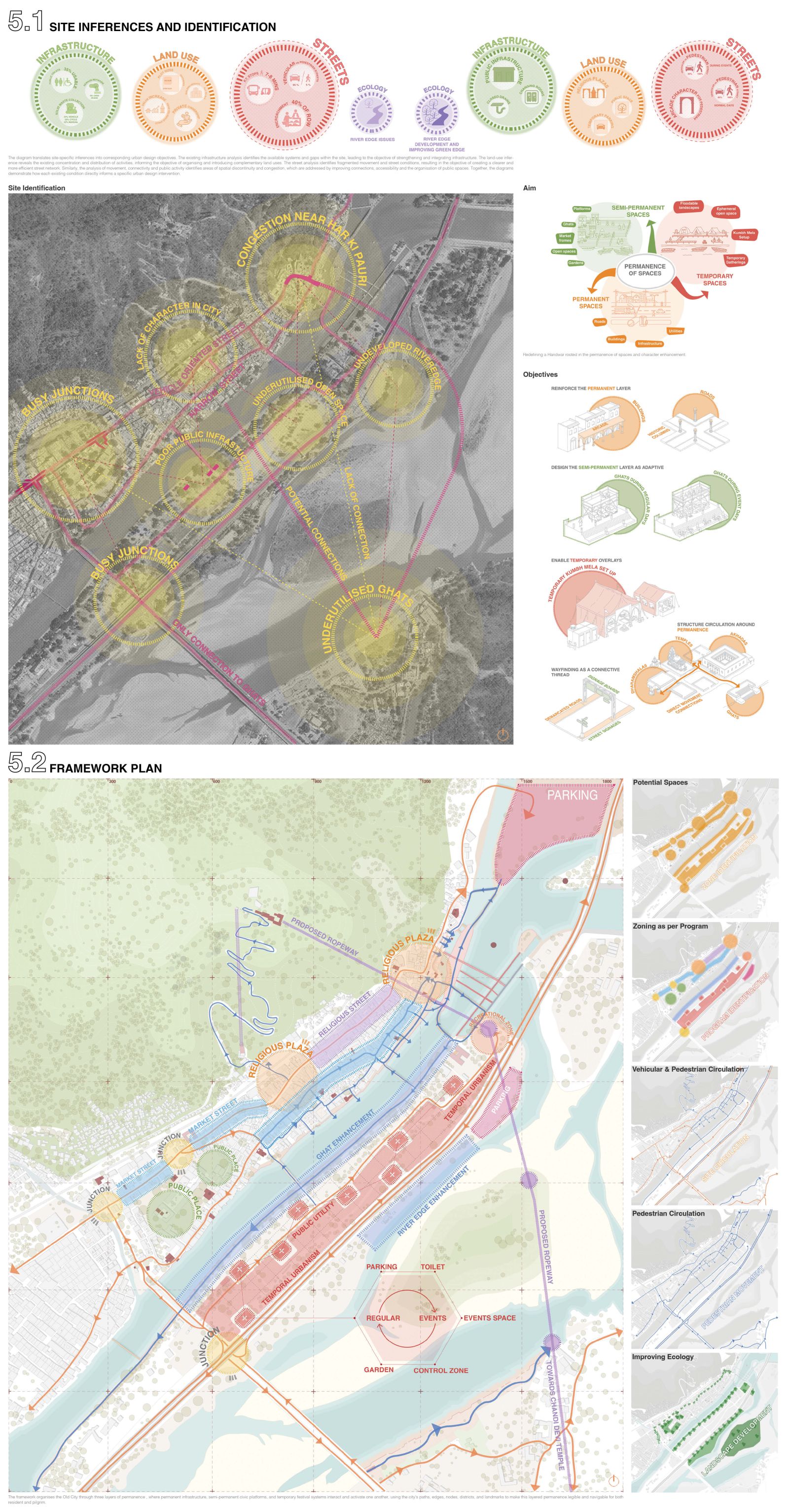
Site inferences identify infrastructural gaps, underutilised spaces, connectivity challenges, and ecological opportunities, translating observations into a comprehensive urban design framework.

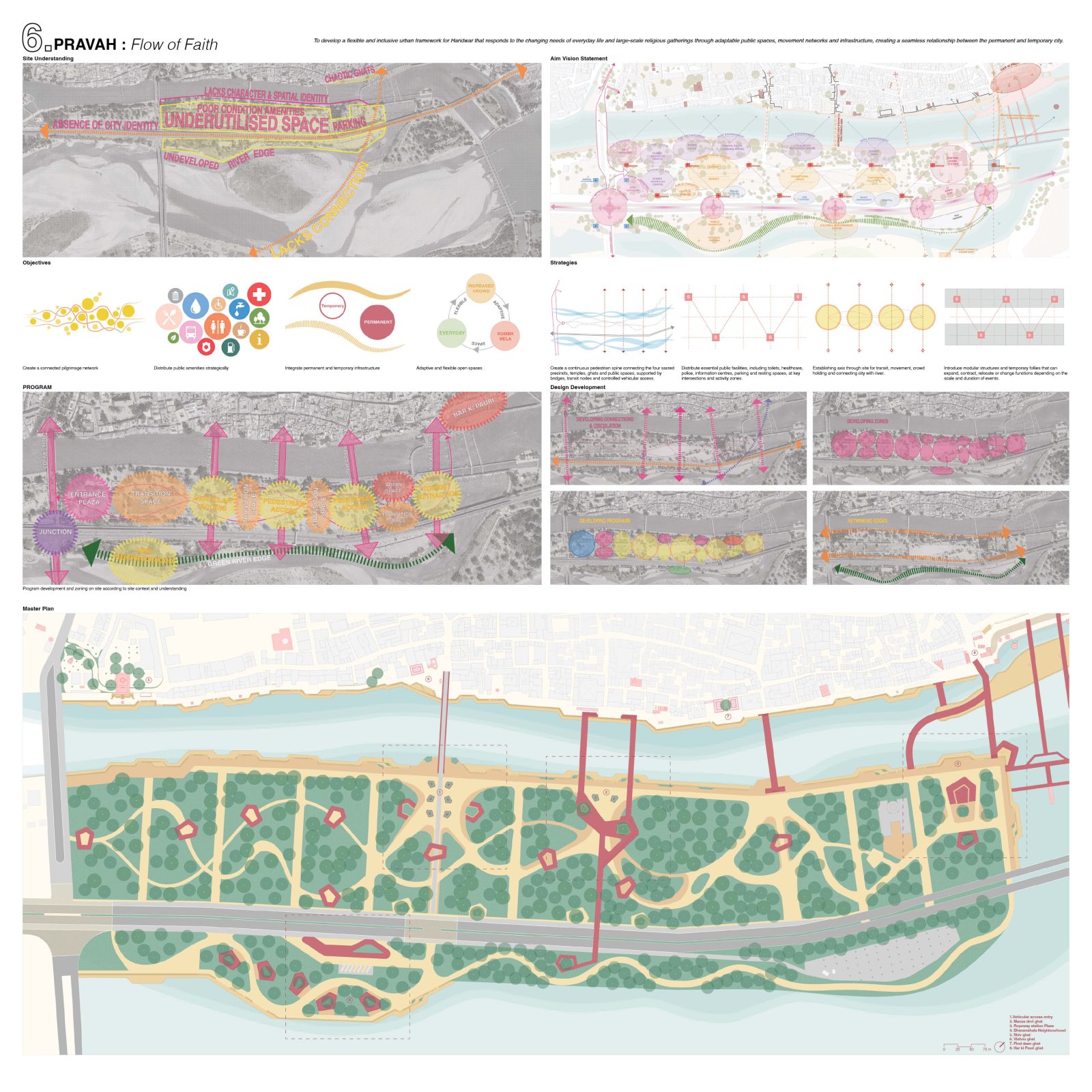
Pravah establishes a flexible urban framework integrating sacred precincts, movement networks, public amenities, landscape, and adaptable spaces for everyday life and pilgrimage.

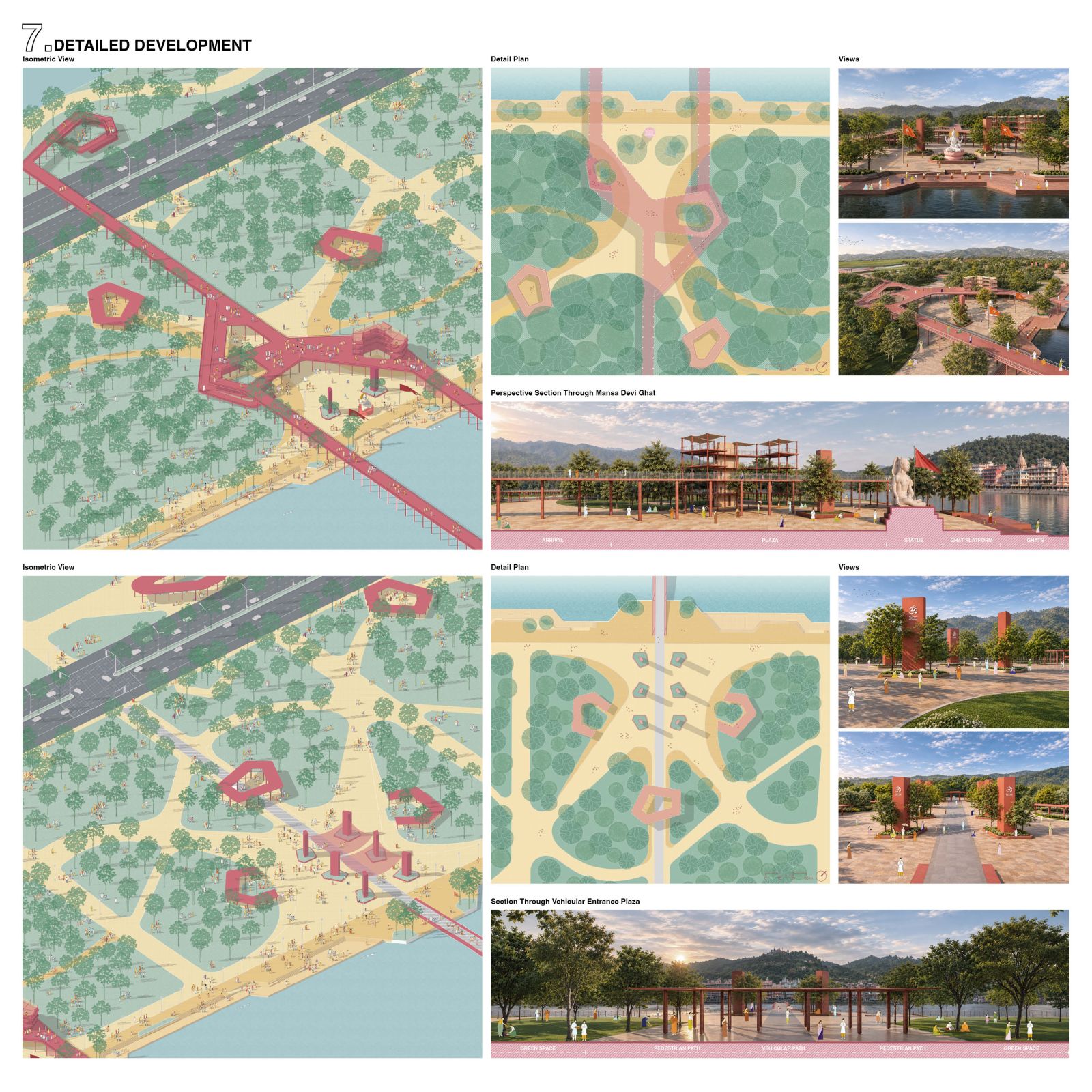
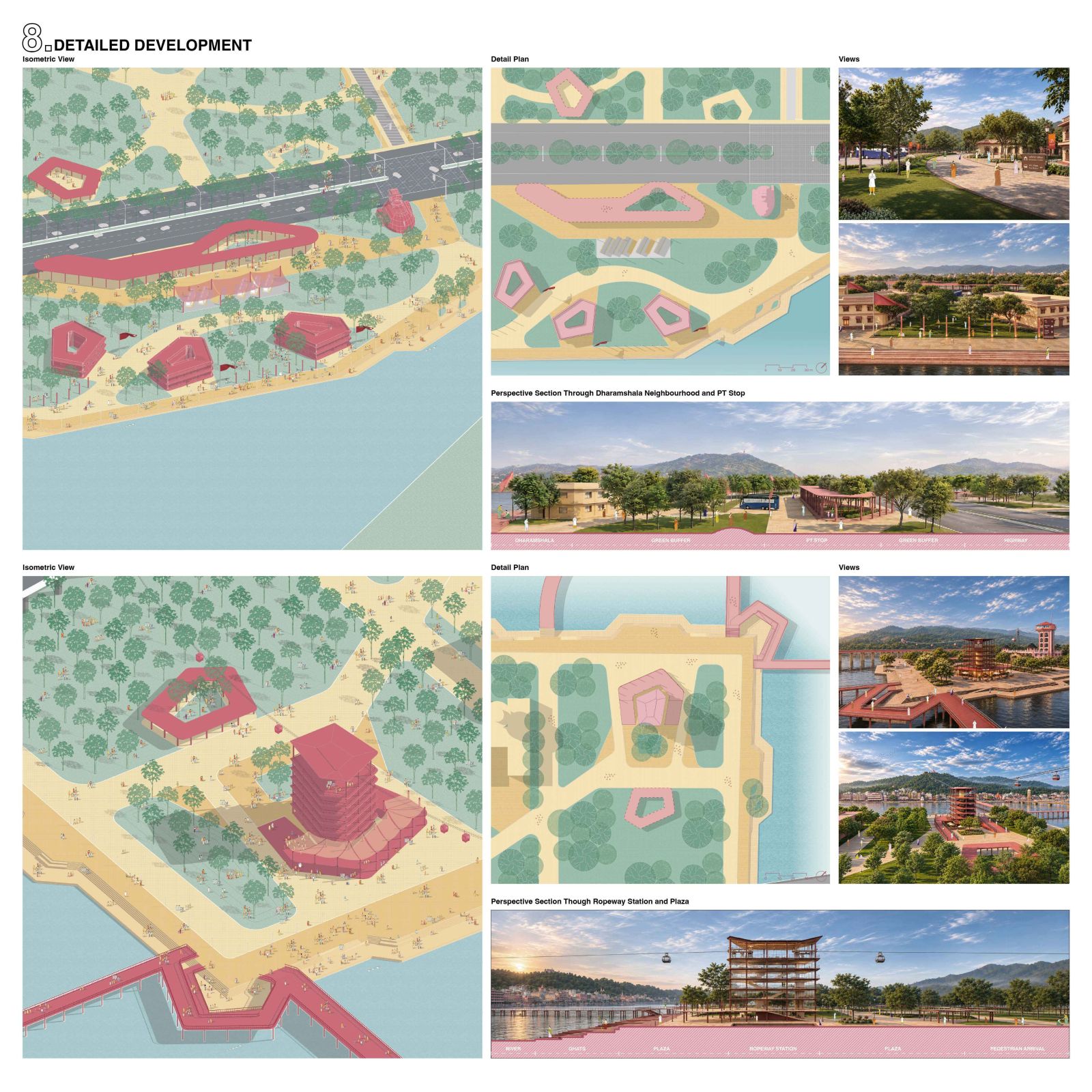
Detailed design develops junctions and public spaces through pedestrian networks, landscape, shaded structures, plazas, seating, and integrated riverfront connections.

Strategic nodes integrate public amenities, dharamshalas, transport facilities, ropeway infrastructure, viewing decks, landscape, and pedestrian connections within the riverfront framework.

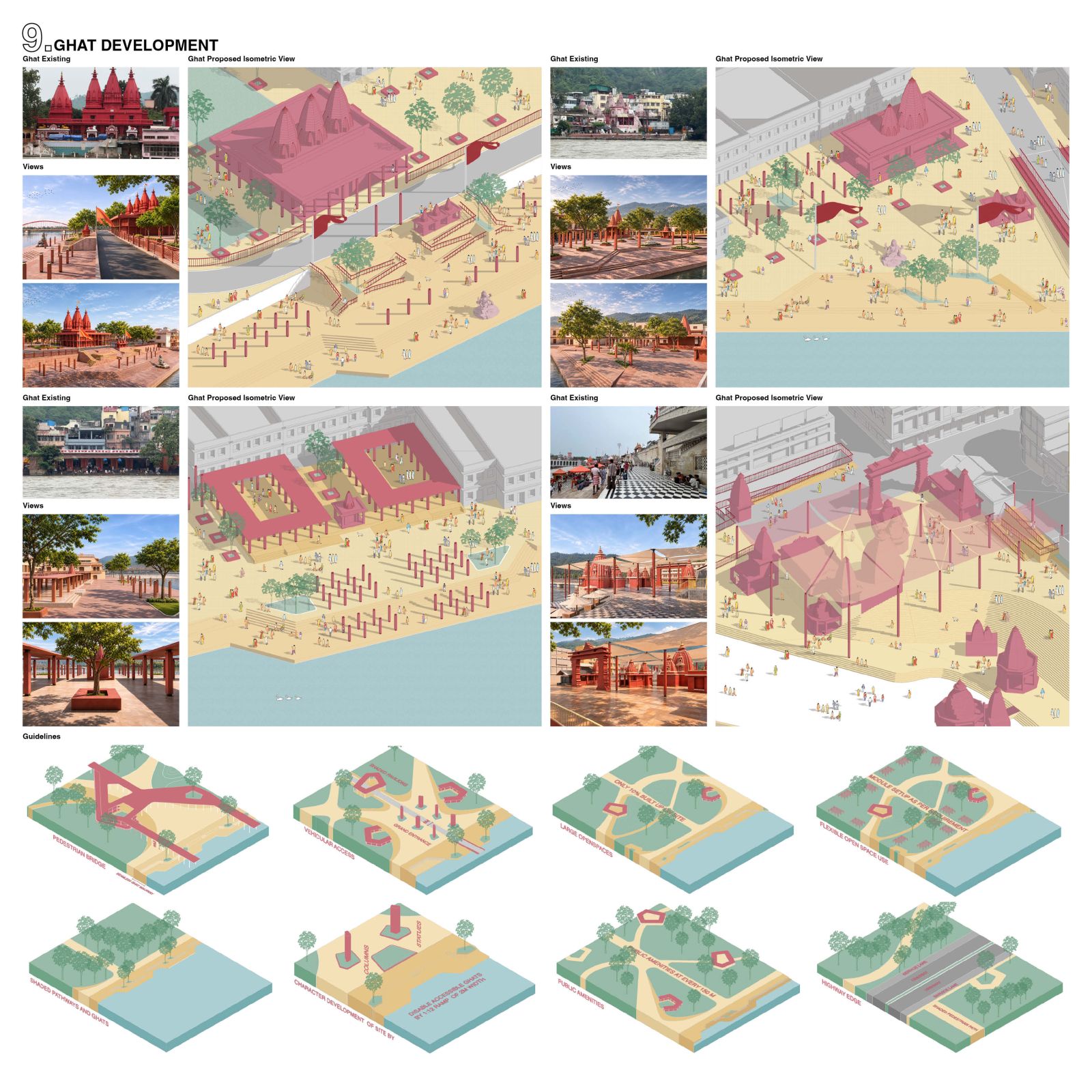
Ghat interventions reinterpret existing religious spaces through platforms, shaded pavilions, ritual infrastructure, flexible plazas, pedestrian connections, and context-sensitive architectural guidelines.

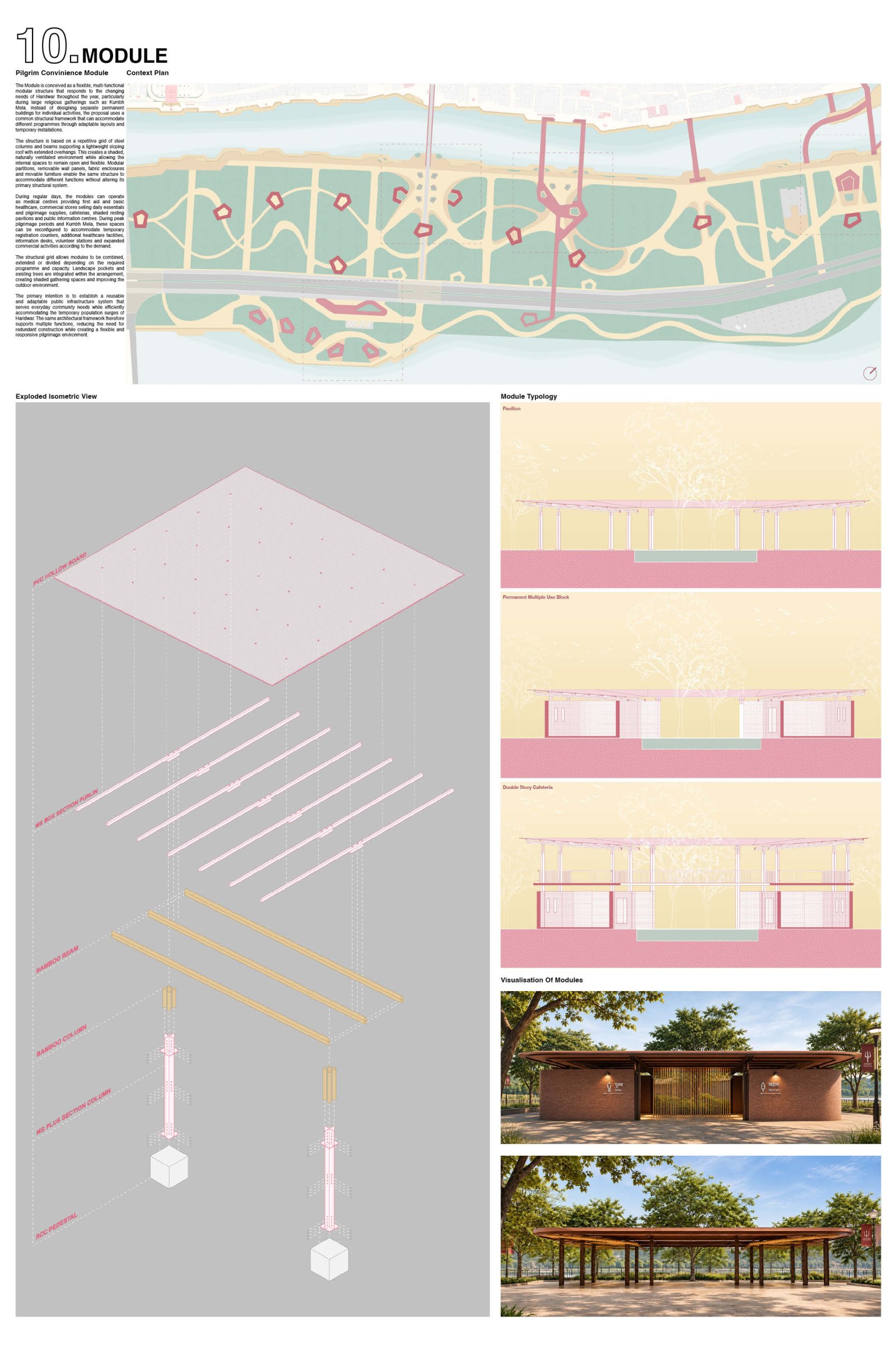
A modular infrastructure system combines adaptable structural components, pavilion typologies, service blocks, and flexible layouts to accommodate changing pilgrim needs across seasons.