• Home
  • FP
  • UD4005
  • ANSHU : post cards from culture | Urban Transformation

Dalvi Shubham Vishwanath

UD4005

ANSHU : post cards from culture | Urban Transformation

The Deccan precinct is on the threshold of significant urban transformation, with educational institutions playing a pivotal role as they expand their functional programming. This proposal focuses on how these institutes can act as active catalysts for broader urban regeneration, fostering a vibrant, integrated student precinct. Recognizing the Deccan area as a crucial cultural anchor, the approach explores the urban design mechanisms necessary to successfully transition it into a comprehensive cultural and educational precinct, benefiting students, local stakeholders, and the wider community.
Report Content

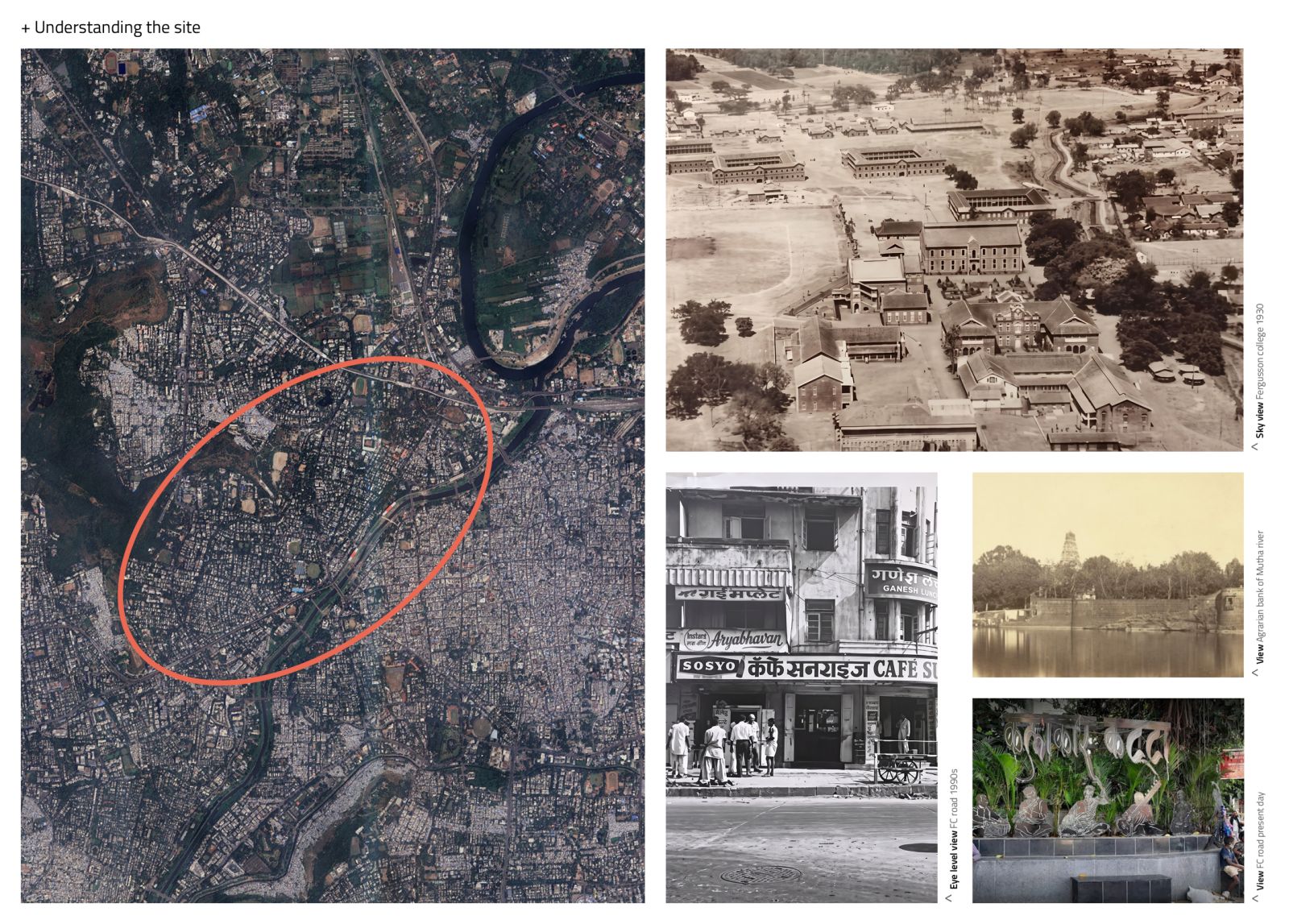
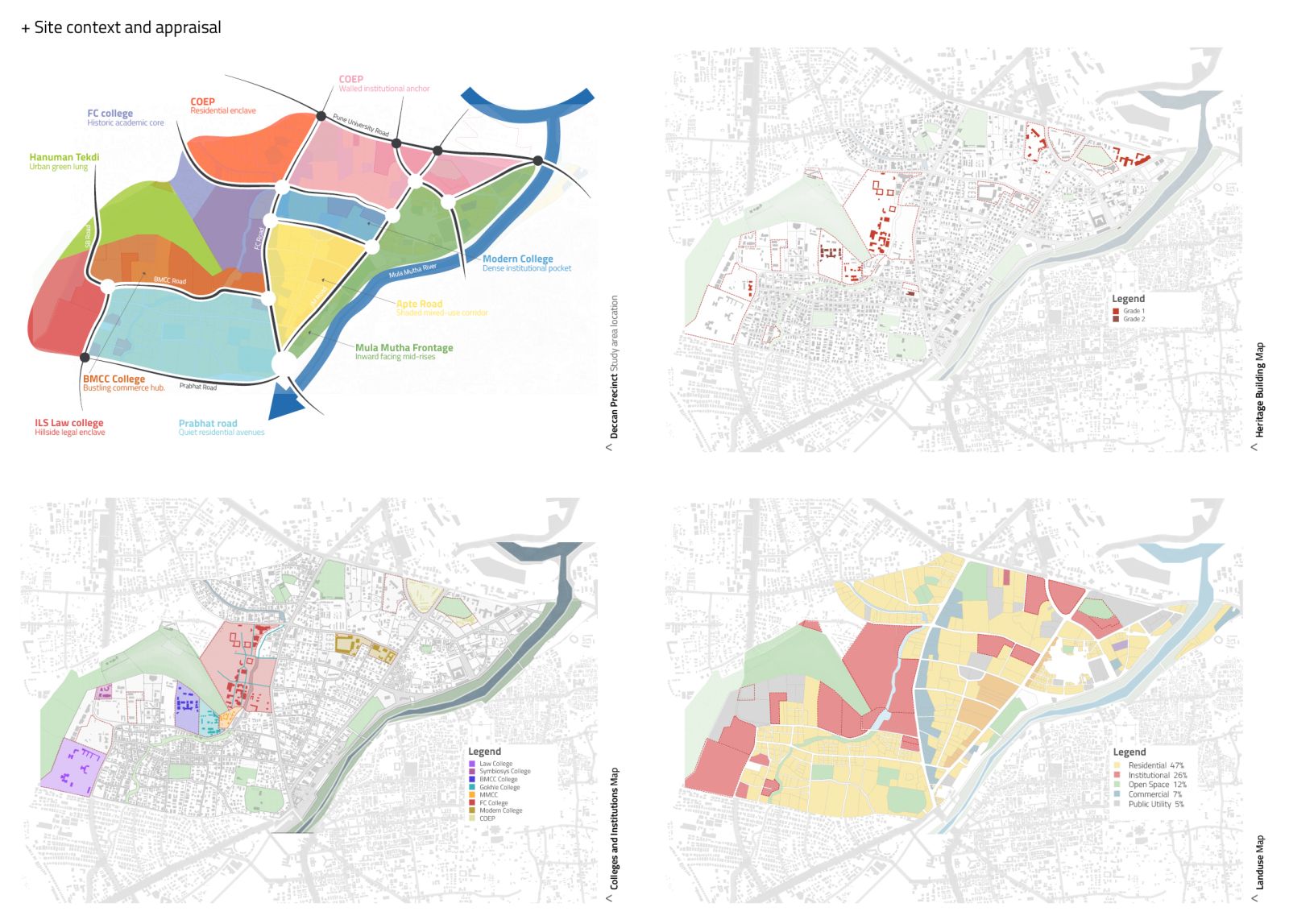
Located within Pune's historic core, the study area focuses primarily on the Fergusson College (FC) Road axis while broadly encompassing the Mutha River, Shivajinagar, and western institutional campuses. This flexible boundary deliberately includes the wider Deccan precinct to capture its vital role as a connective transition space for surrounding educational, commercial, and residential hubs.

Although situated at a critical urban interface anchored by historic campuses, the FC Road spine currently suffers from a fragmented identity masked by traffic and heavy commercialization. However, its natural evolution into a vibrant youth destination offers immense potential to transform the area into a cohesive cultural and educational precinct that seamlessly blends institutional heritage with an active public realm.

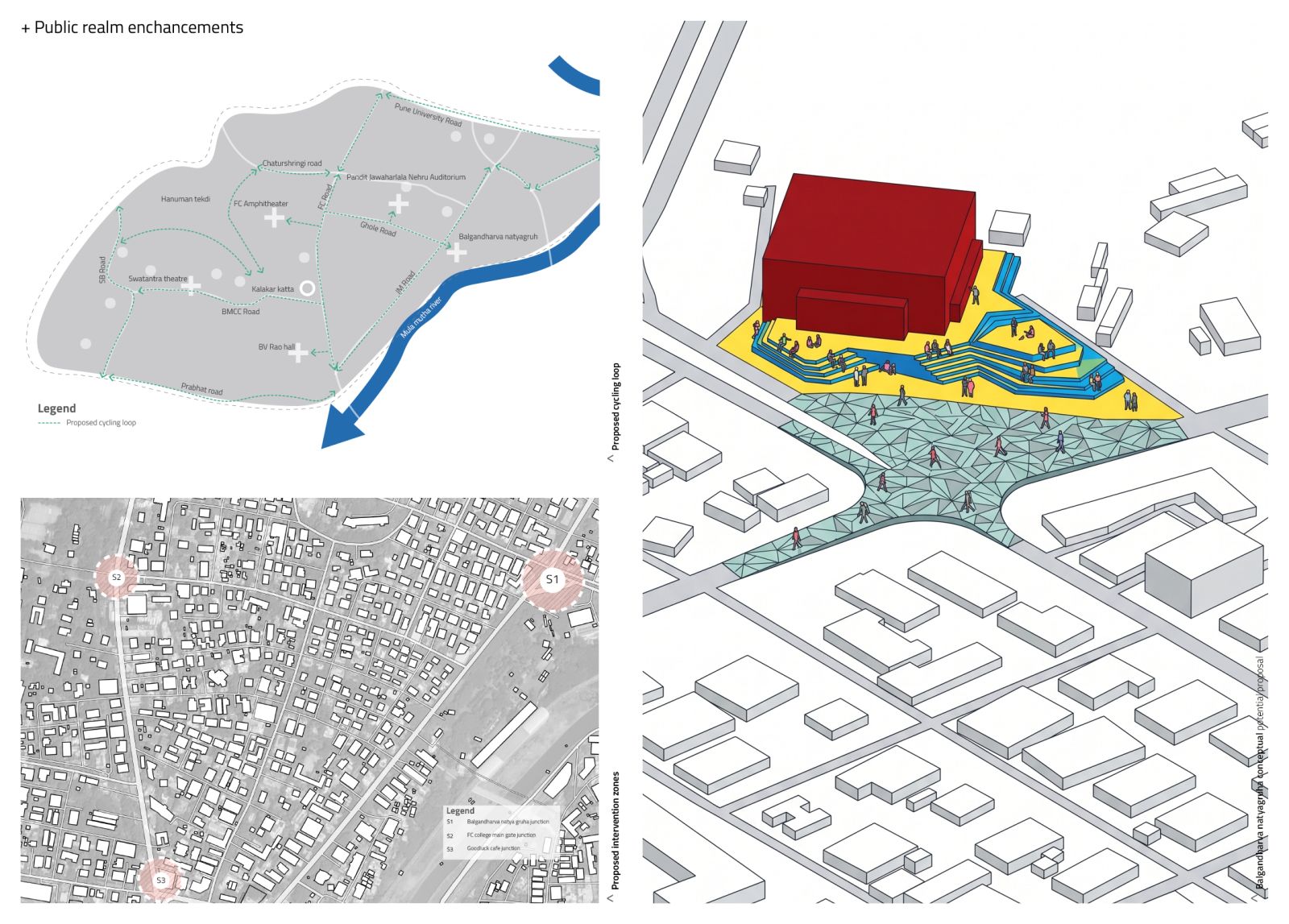
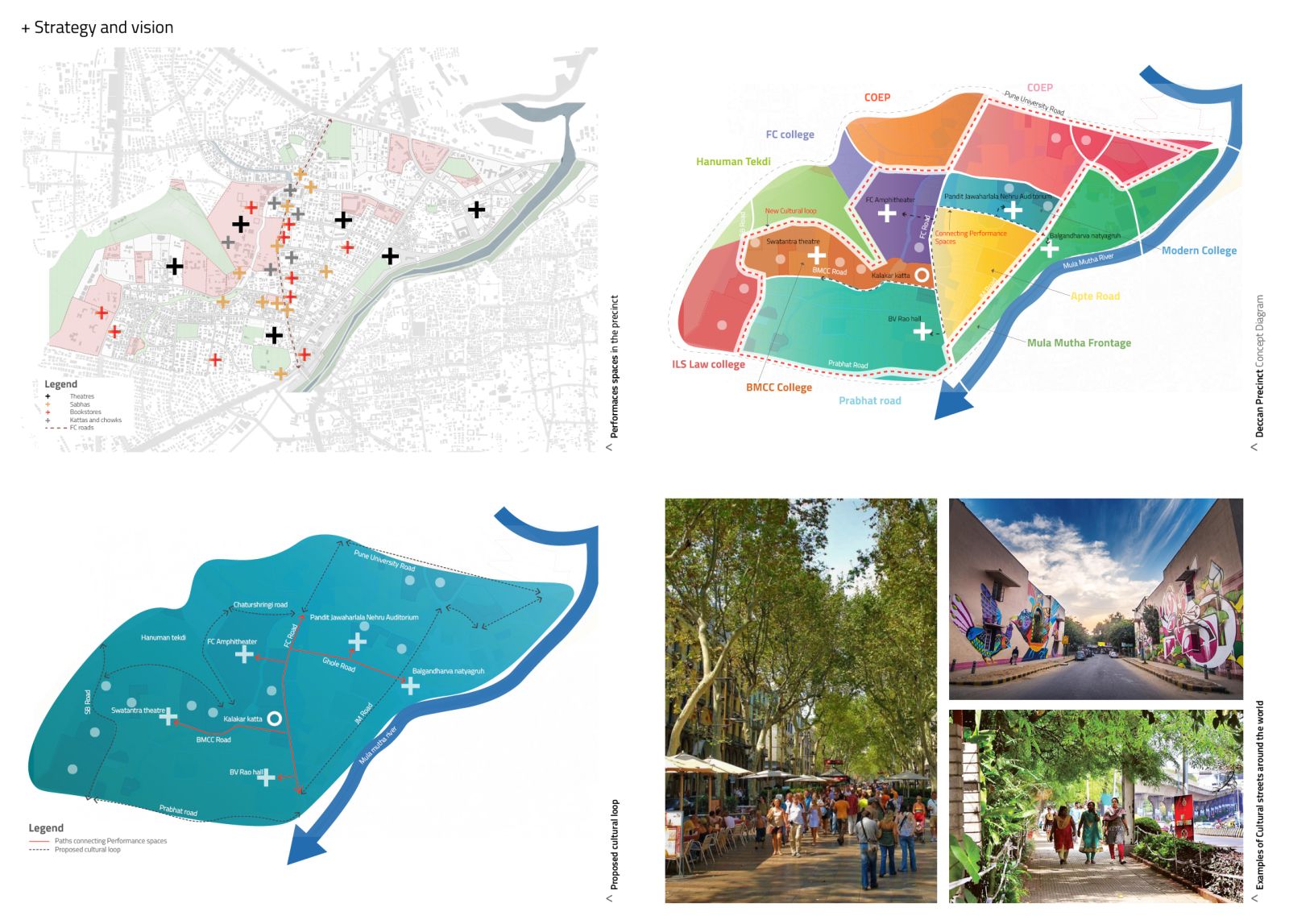
This intervention unlocks the Deccan Precinct's existing role as Pune's cultural heart by providing it with a much-needed circulatory system. By dissolving the hard boundaries between institutions and the street, the project transforms a series of isolated campuses into a singular, cohesive Public Cultural District.

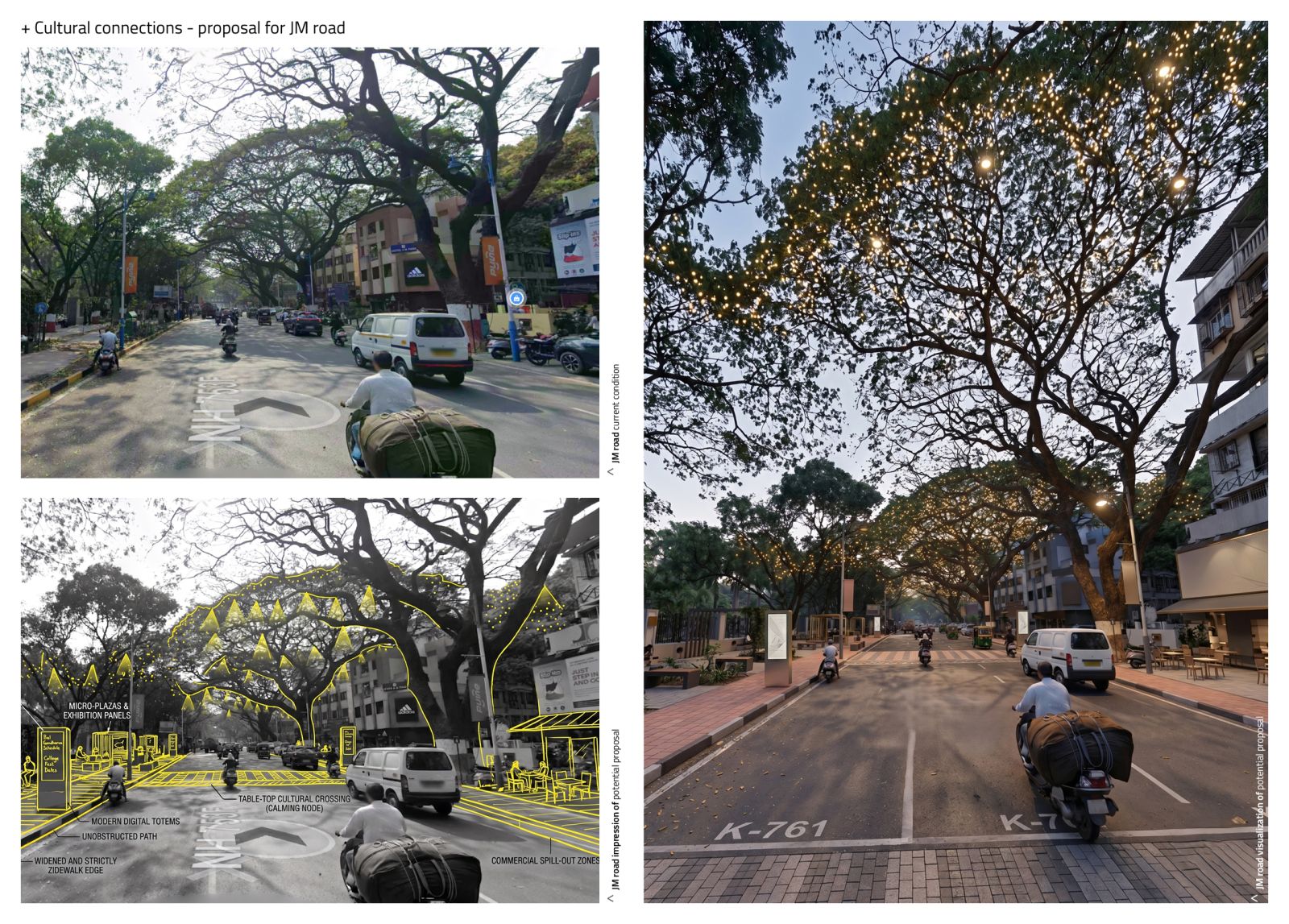
The streetscape along the loop has to transform from a mere transit conduit into a dynamic, shared platform for artistic expression and social interaction. This shift ensures the precinct’s vibrant cultural legacy is no longer hidden behind walls, but actively celebrated within the daily public life of the city.

The proposal outlines implementation of the interventions by utilizing shared space principles, textures paving and pedestrian scale lighting to create a cohesive, stage ready streetscape.

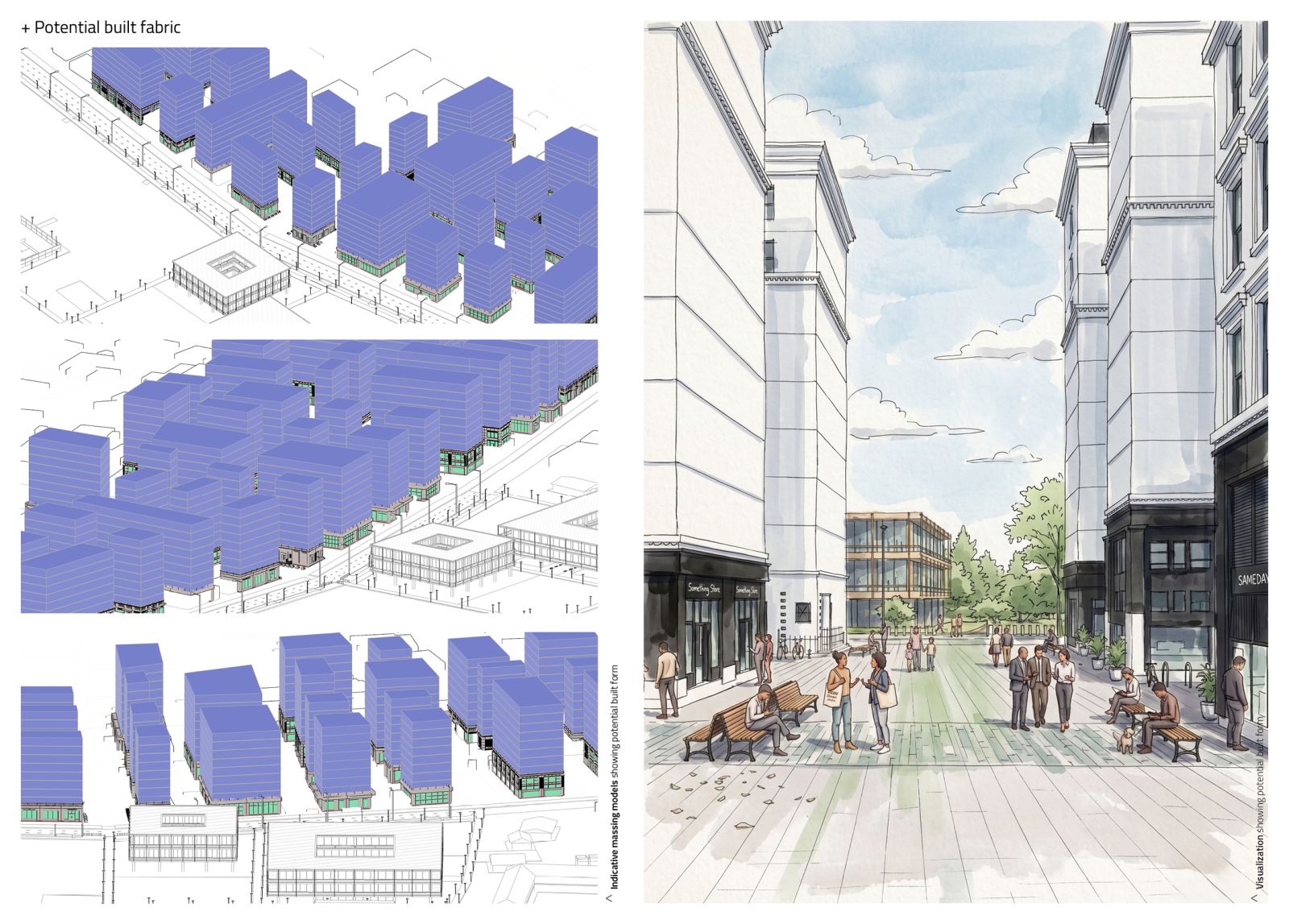
Targeted redevelopment within the precinct offers significant benefits to the proposed Cultural Loop and the wider urban core. Achieving this requires a comprehensive strategy that includes the adaptive reuse of heritage structures, upward expansion along commercial arteries, the architectural activation of institutional boundaries, and strategic infill development.

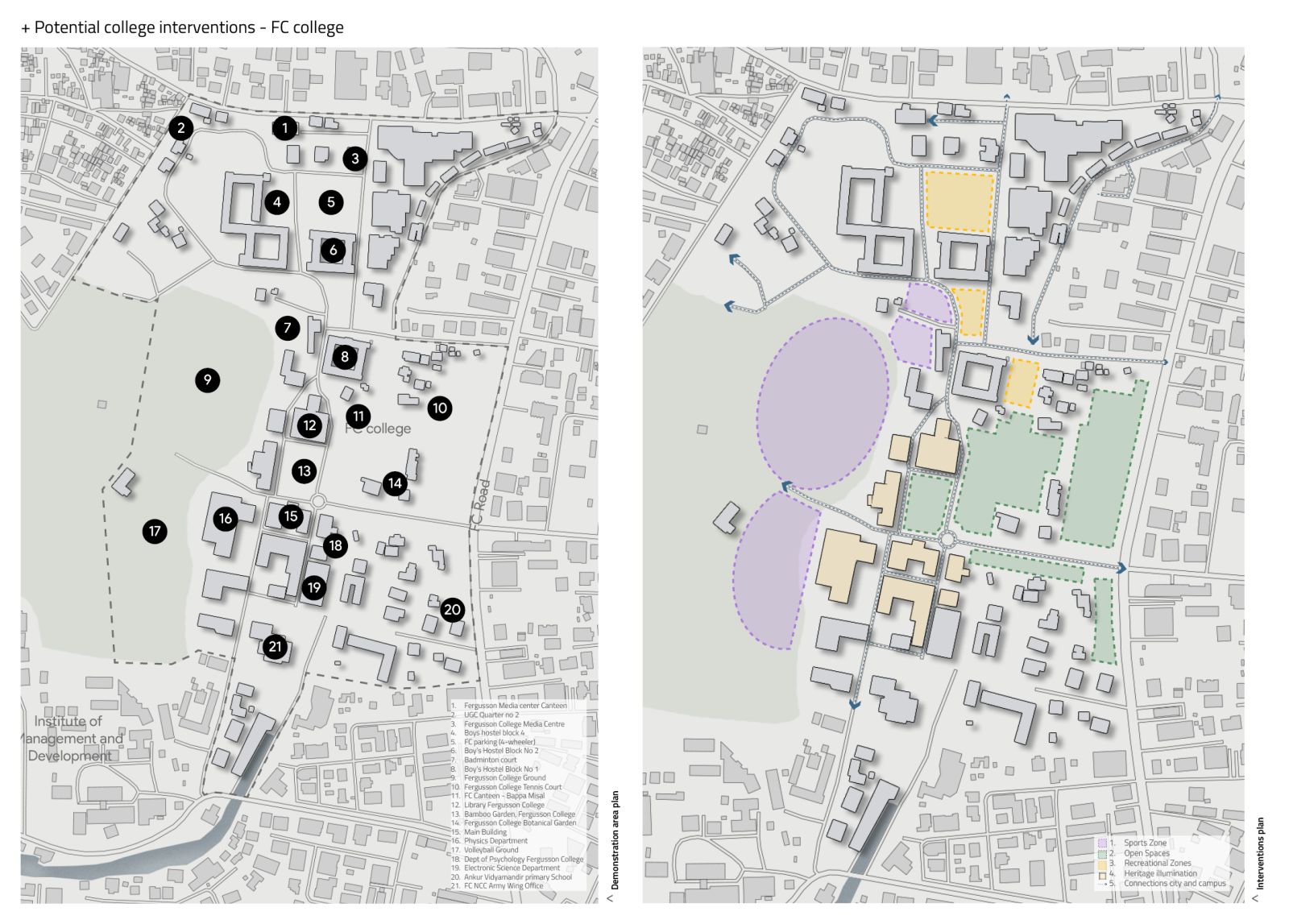
This demonstration area serves as a functional prototype, illustrating how existing campuses can physically and programmatically adapt to the precinct's unified cultural identity.

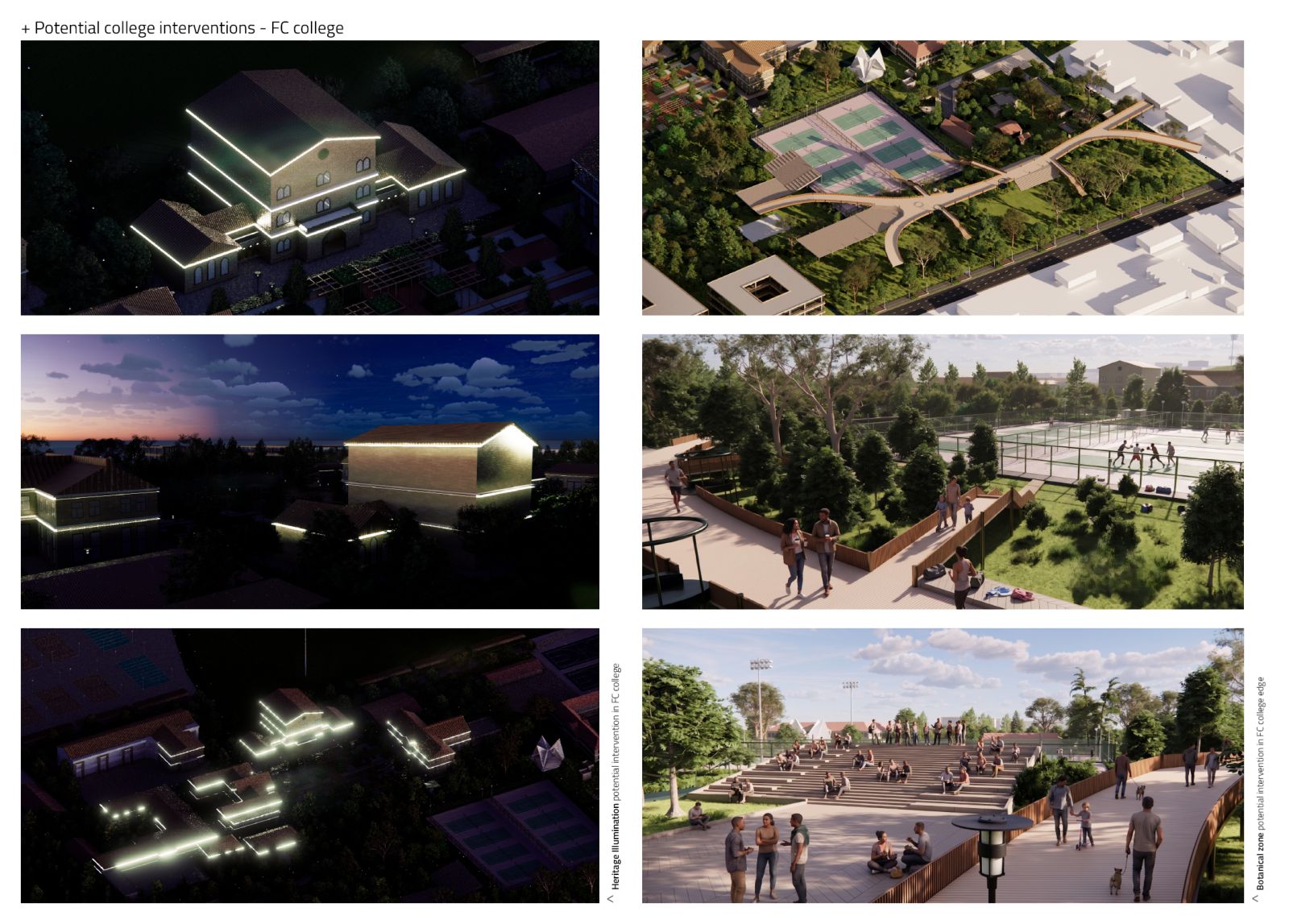
This visualization of the demonstration area illustrates the strategic illumination of heritage structures and the dematerialization of campus boundaries to create a permeable, inviting public realm.

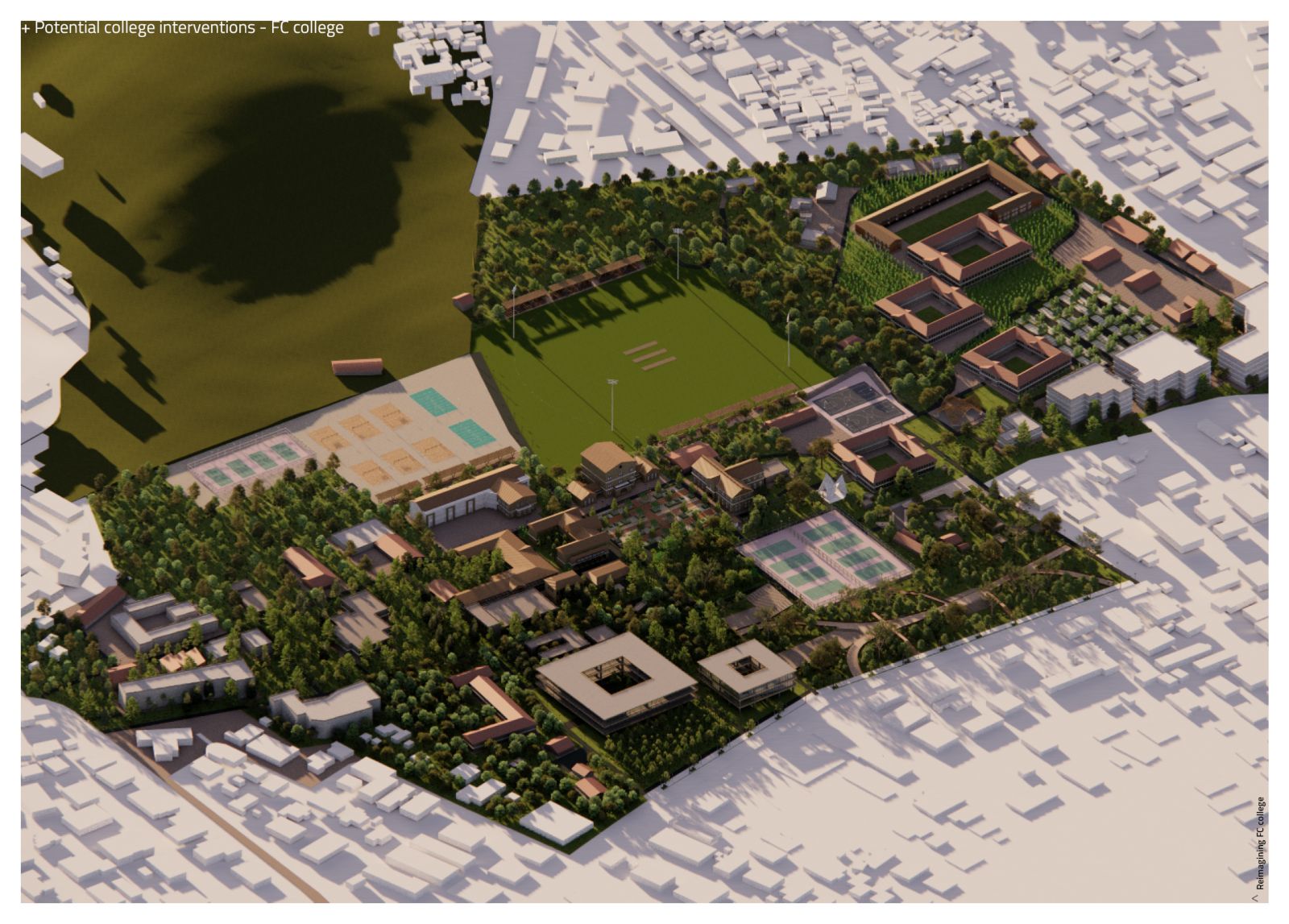
This reimagining of the Fergusson College campus introduces strategic spatial interventions and a porous boundary wall to soften rigid institutional edges.

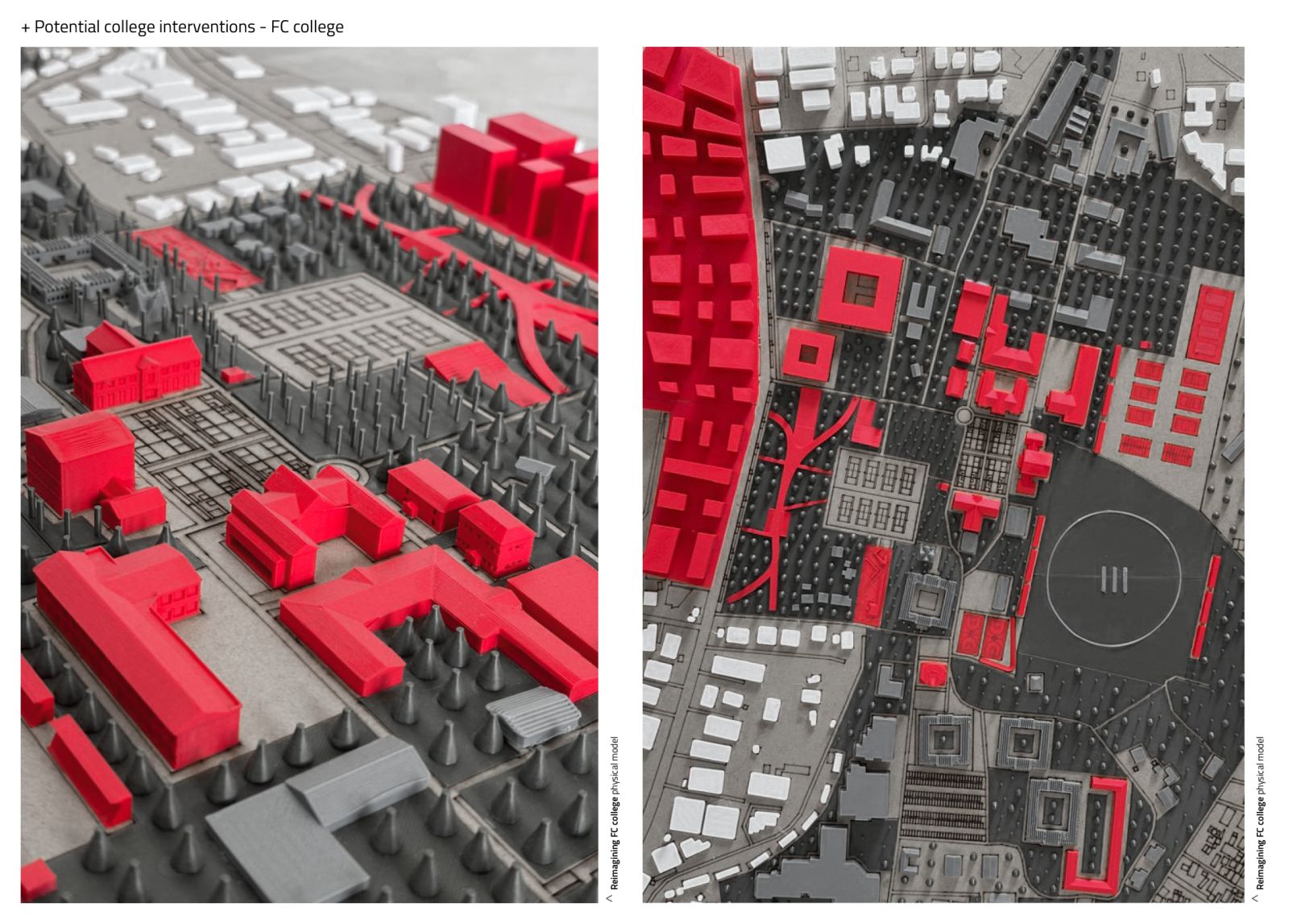
This physical model of the demonstration area showcases the integration of contemporary programmatic functions within a newly envisioned urban fabric.