• Home
  • FP
  • UD4005
  • Reimagining the Deccan Education Precinct for Youth

Bagwe Tanvi Unmesh Shivani

UD4005

Reimagining the Deccan Education Precinct for Youth

“From Campus to City” reimagines Pune’s Deccan Education Precinct as an integrated, youth-centric urban district where campuses become active parts of the city rather than isolated institutional enclaves. The project addresses spatial fragmentation, inadequate student housing, disconnected public spaces, and underutilized institutional land within one of Pune’s largest education clusters. By strengthening pedestrian connectivity, introducing mixed-use student housing, activating public spaces, and integrating innovation and ecological networks, the proposal creates a more inclusive and vibrant urban environment. Through adaptive reuse, transit-oriented development, and shared infrastructure, the framework envisions a connected ecosystem where learning, living, culture, and public life coexist.
Report Content

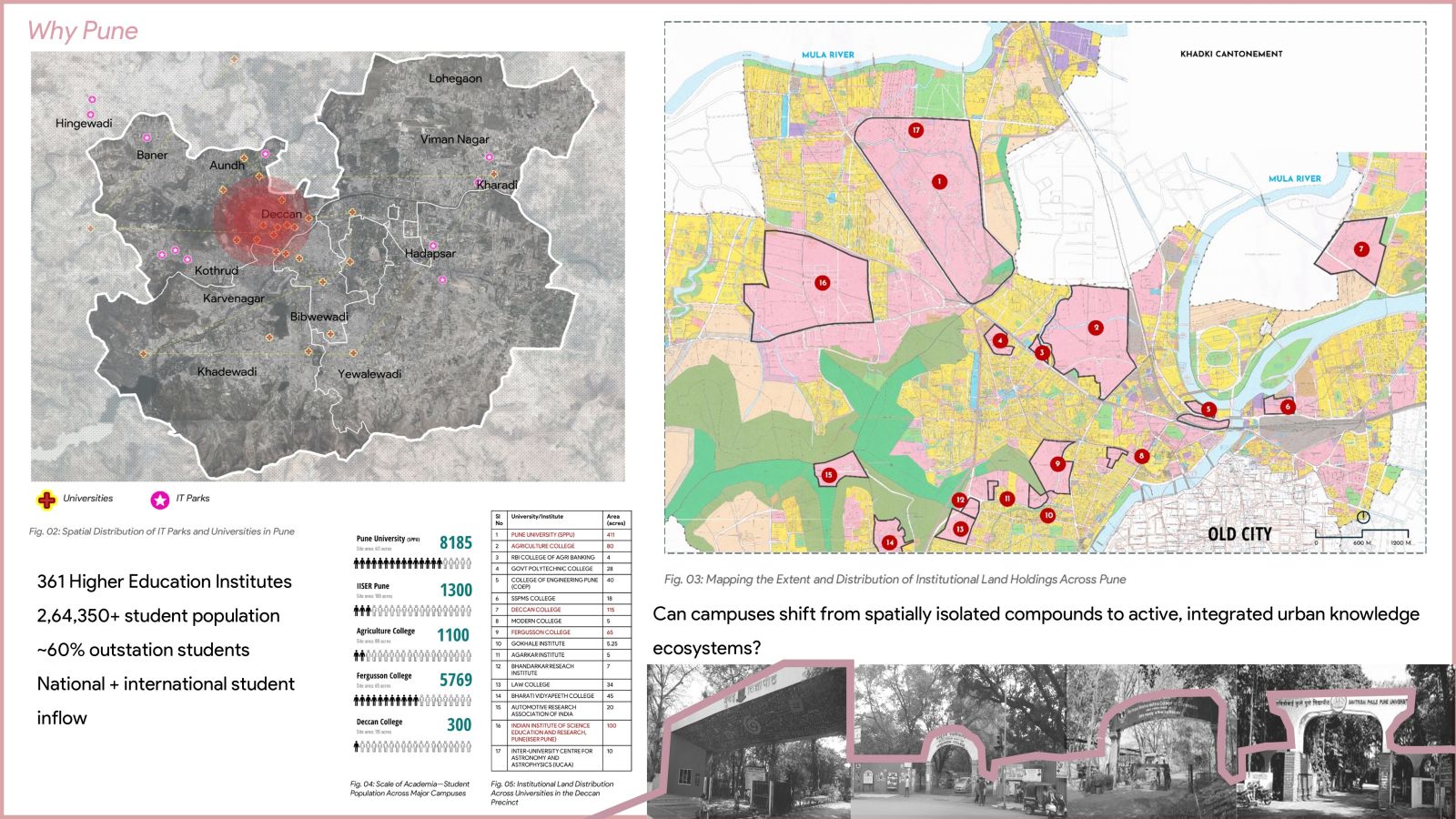
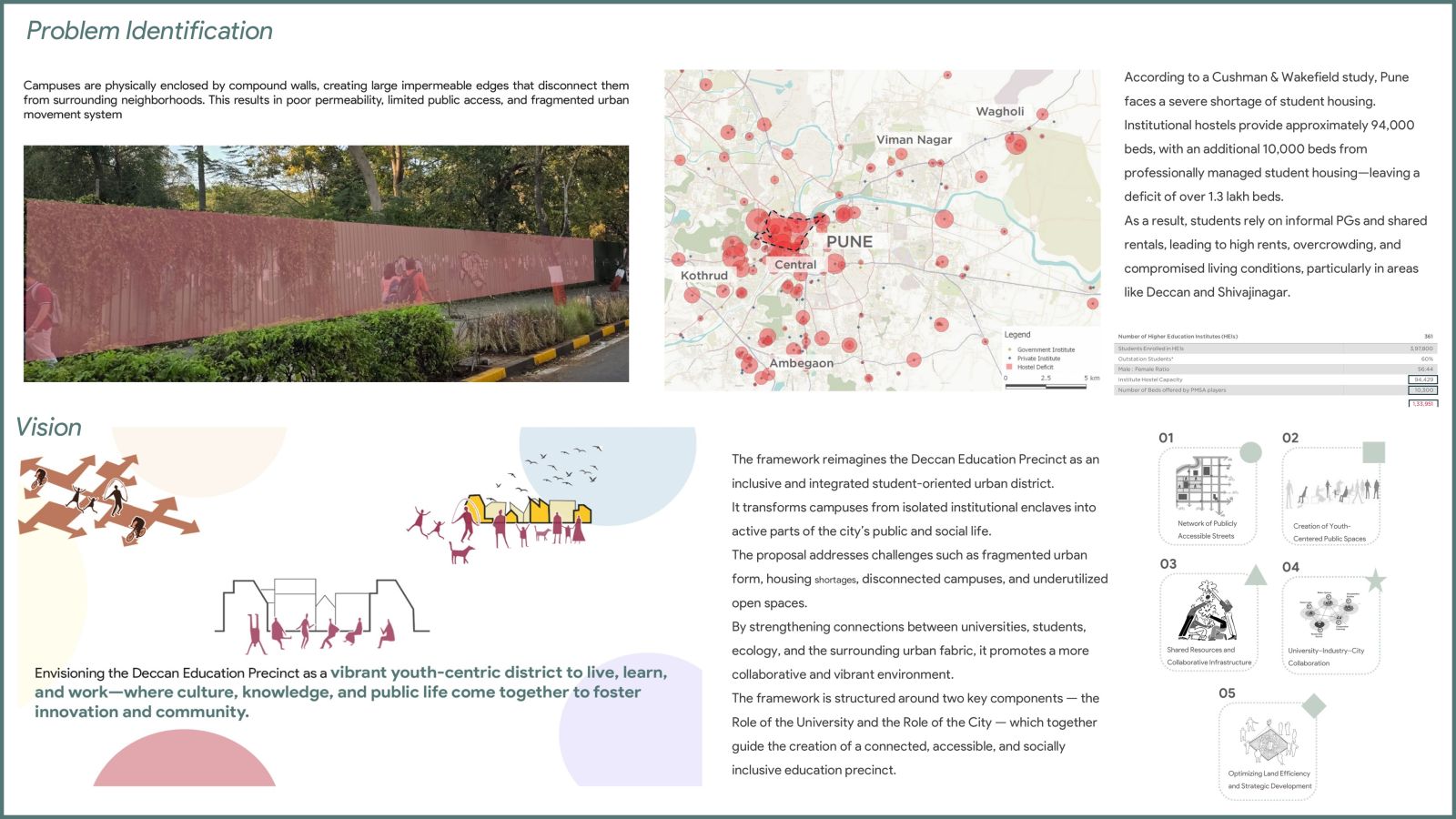
Pune’s dense network of universities and knowledge economies positions Deccan as one of India’s most active youth-centered urban precincts.

Fragmented campuses, inadequate student housing, and disconnected public spaces call for a more integrated and youth-oriented urban framework.

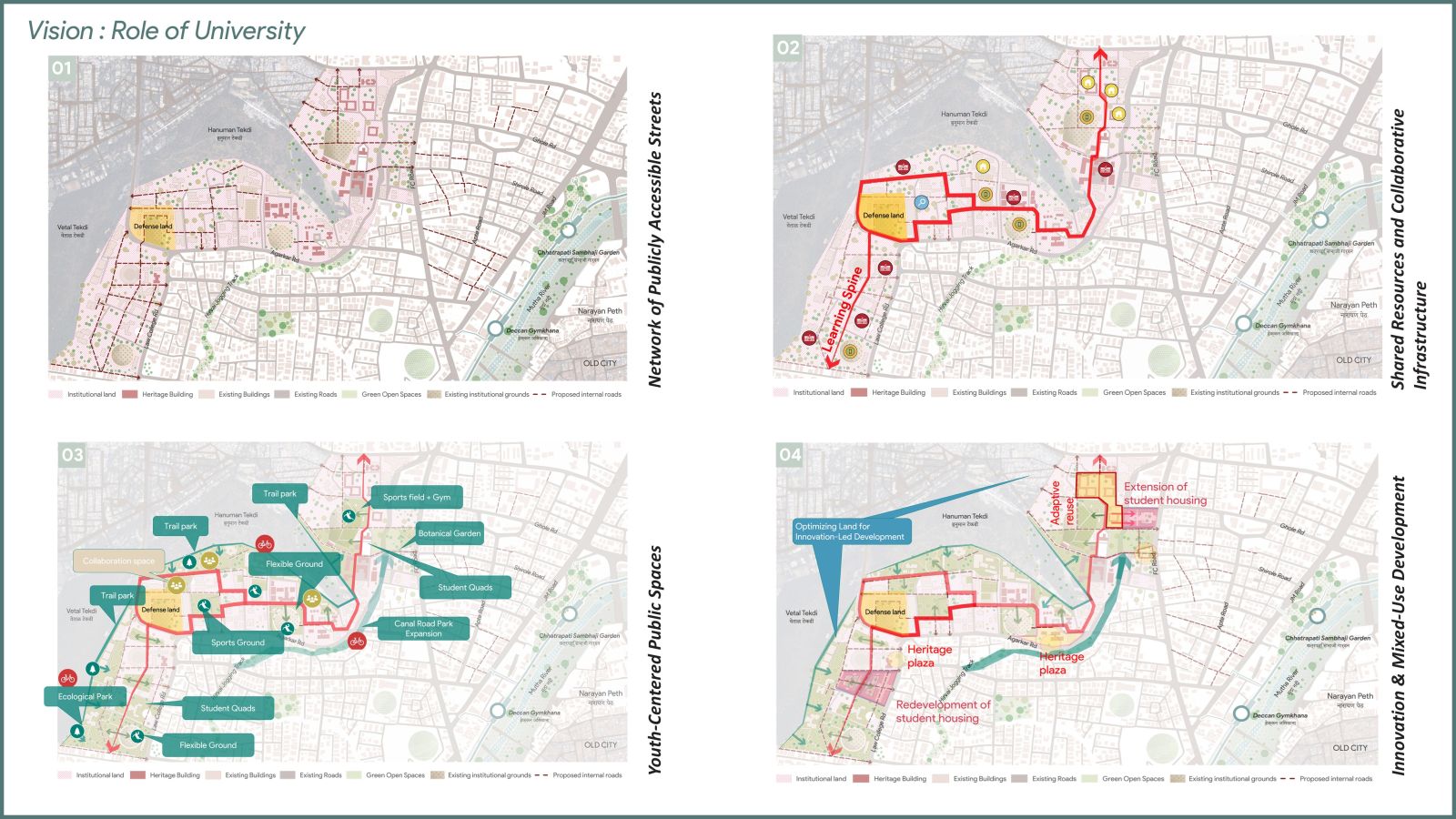
Universities become active urban catalysts through accessible streets, shared infrastructure, public spaces, housing, and innovation ecosystems.

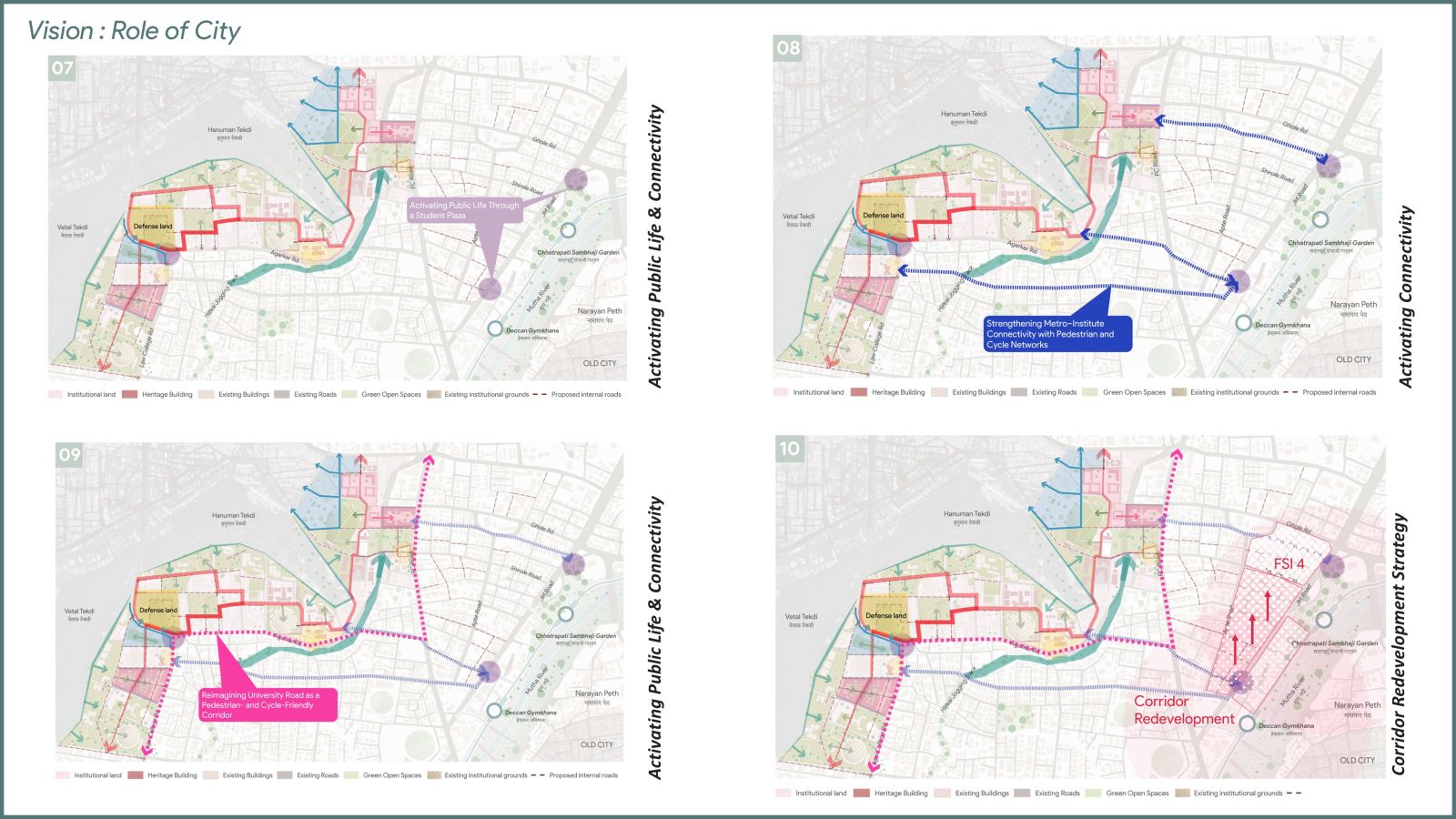
The city strengthens campus–city integration through public life activation, mobility networks, and corridor redevelopment strategies.

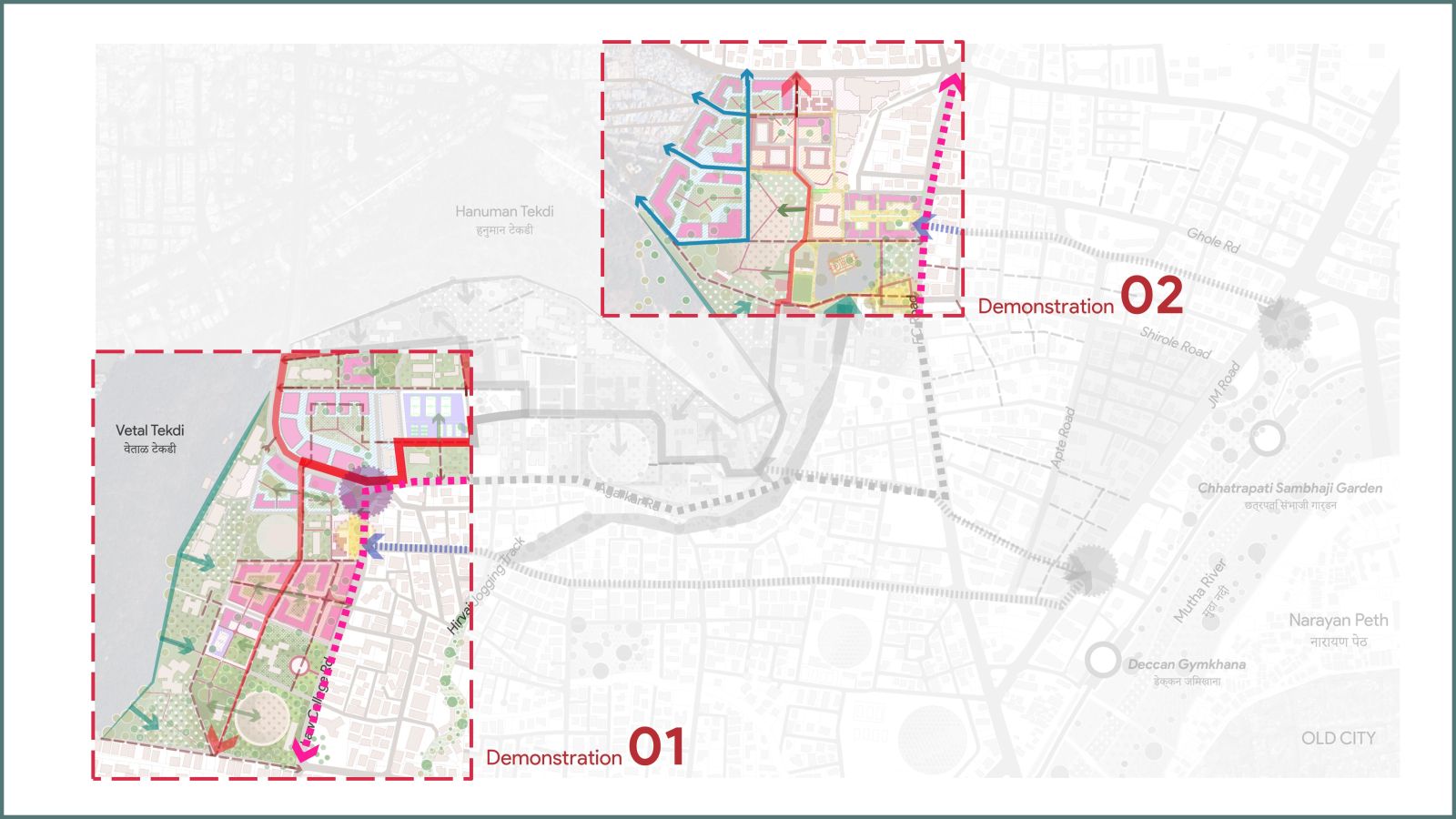
Two demonstration areas test how connectivity, housing, public space, and adaptive reuse can transform the larger precinct.

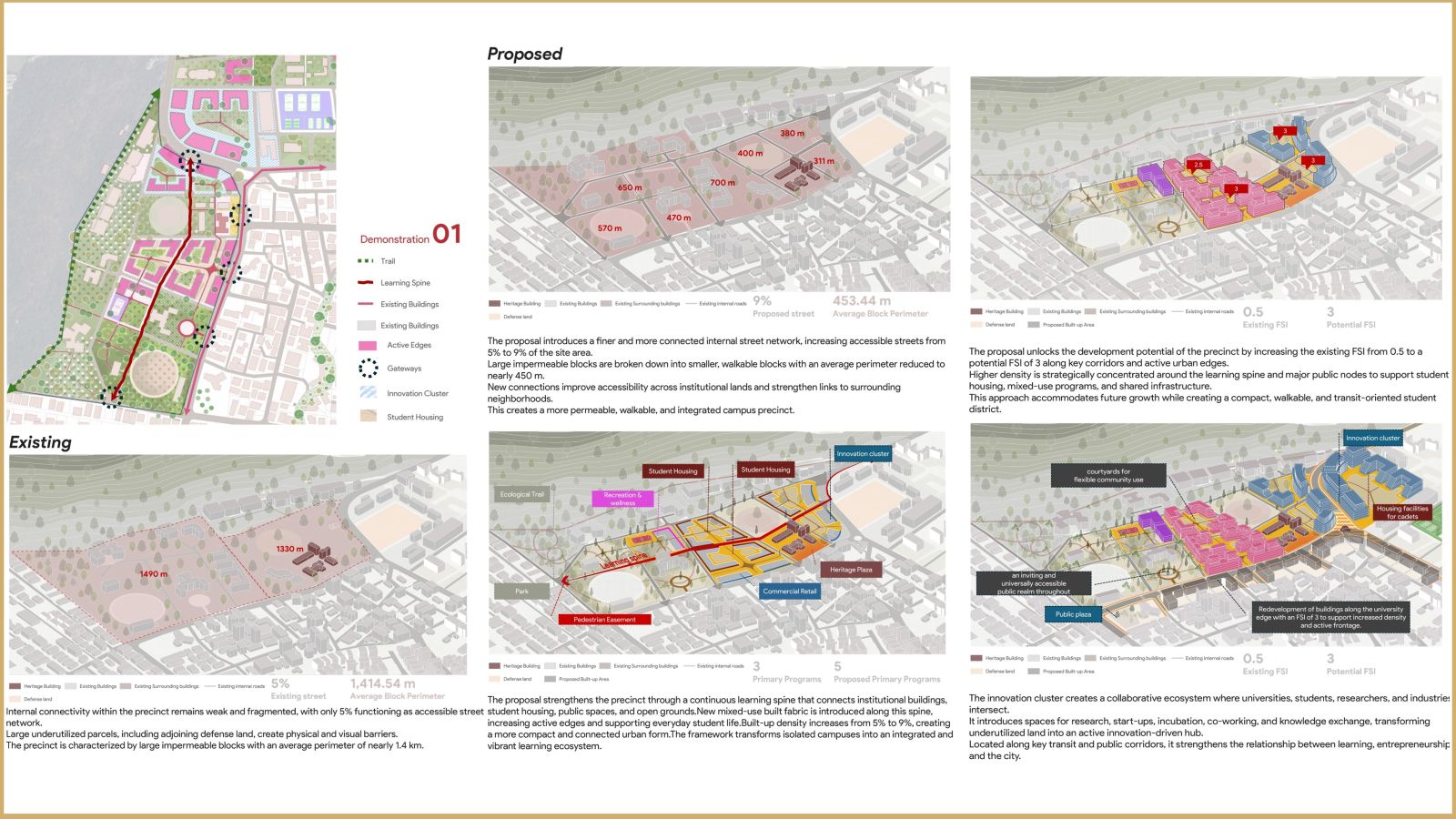
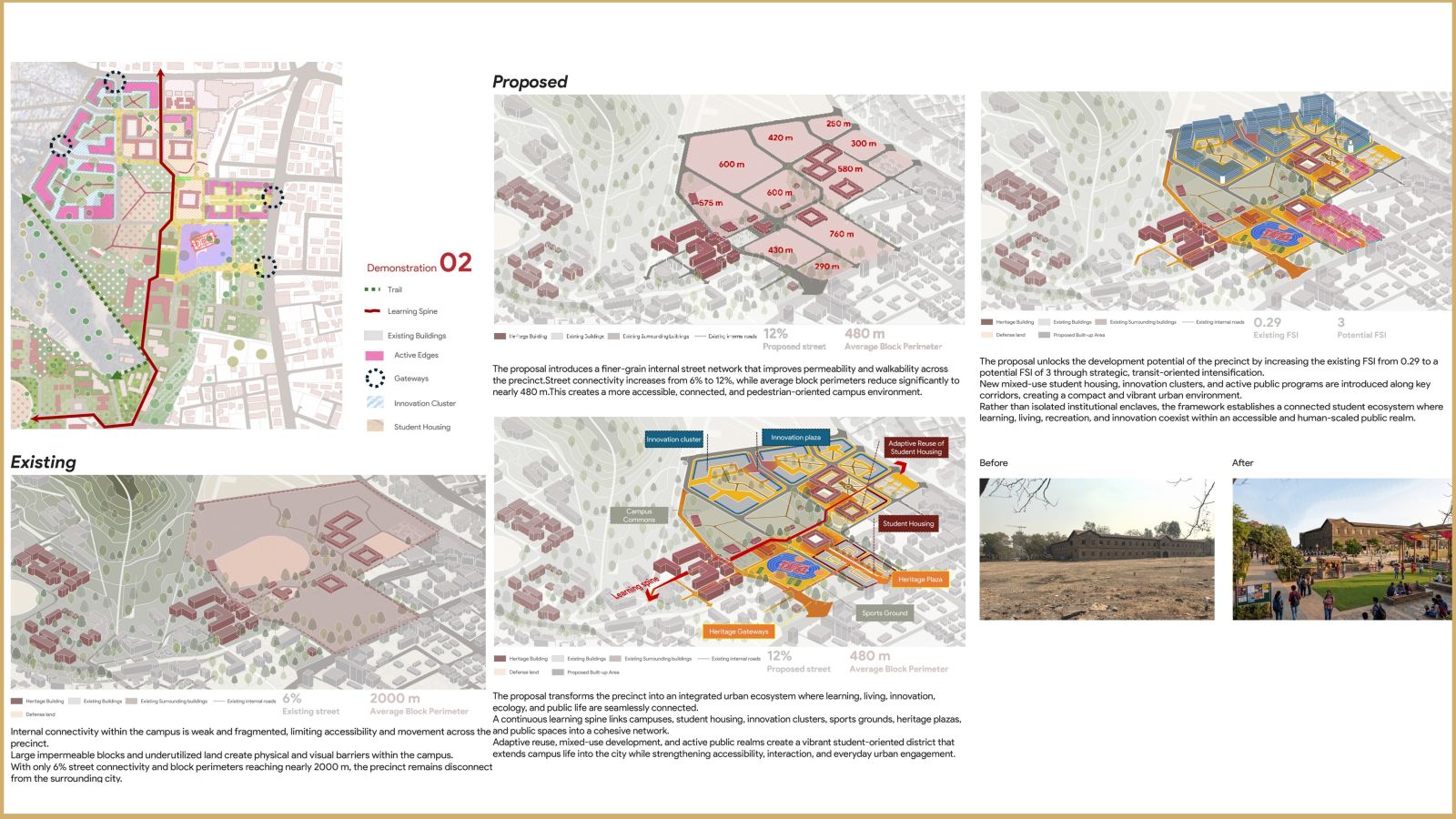
A fragmented institutional enclave is transformed into a connected student district with mixed-use housing, innovation spaces, and active public realms.

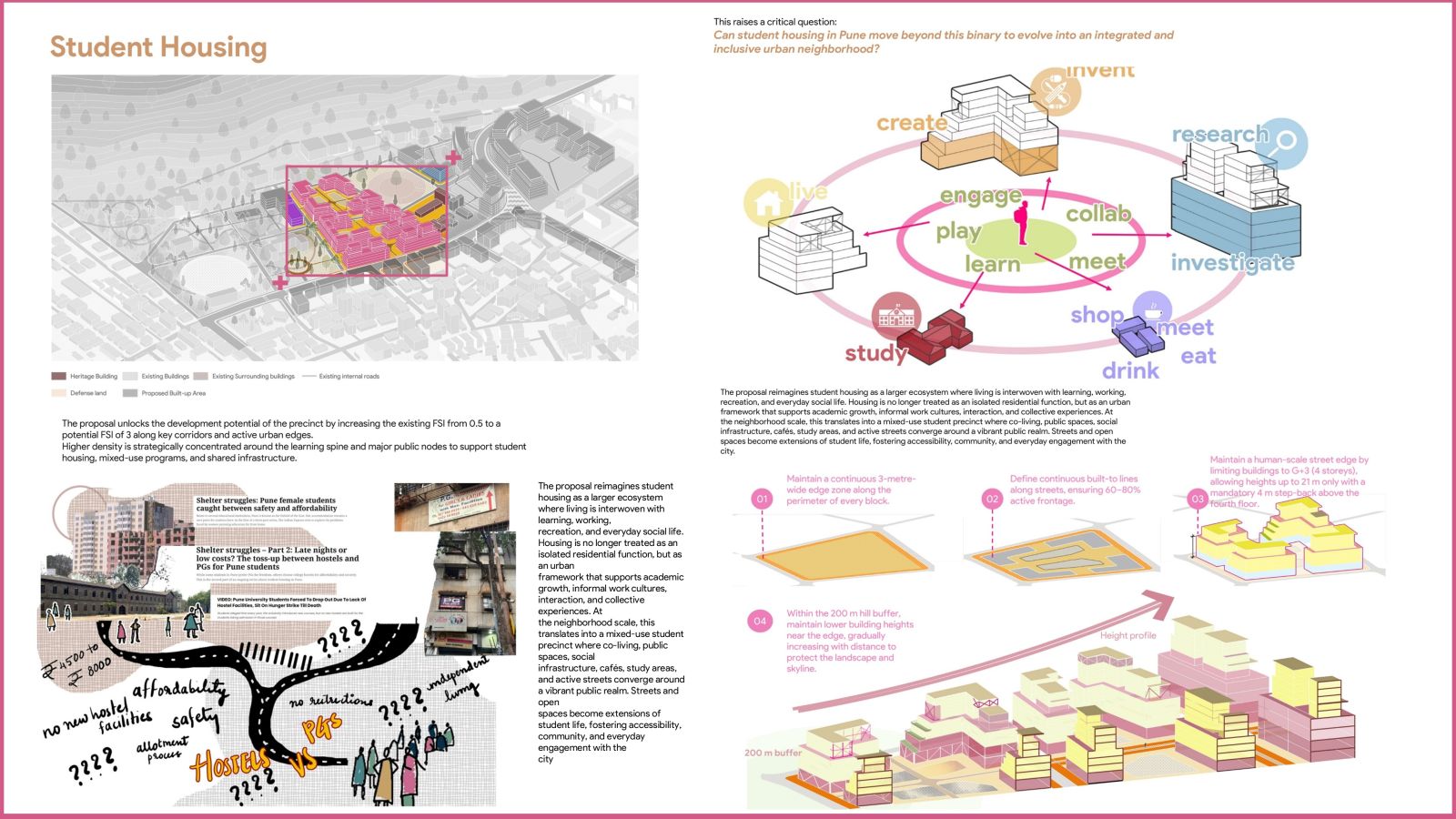
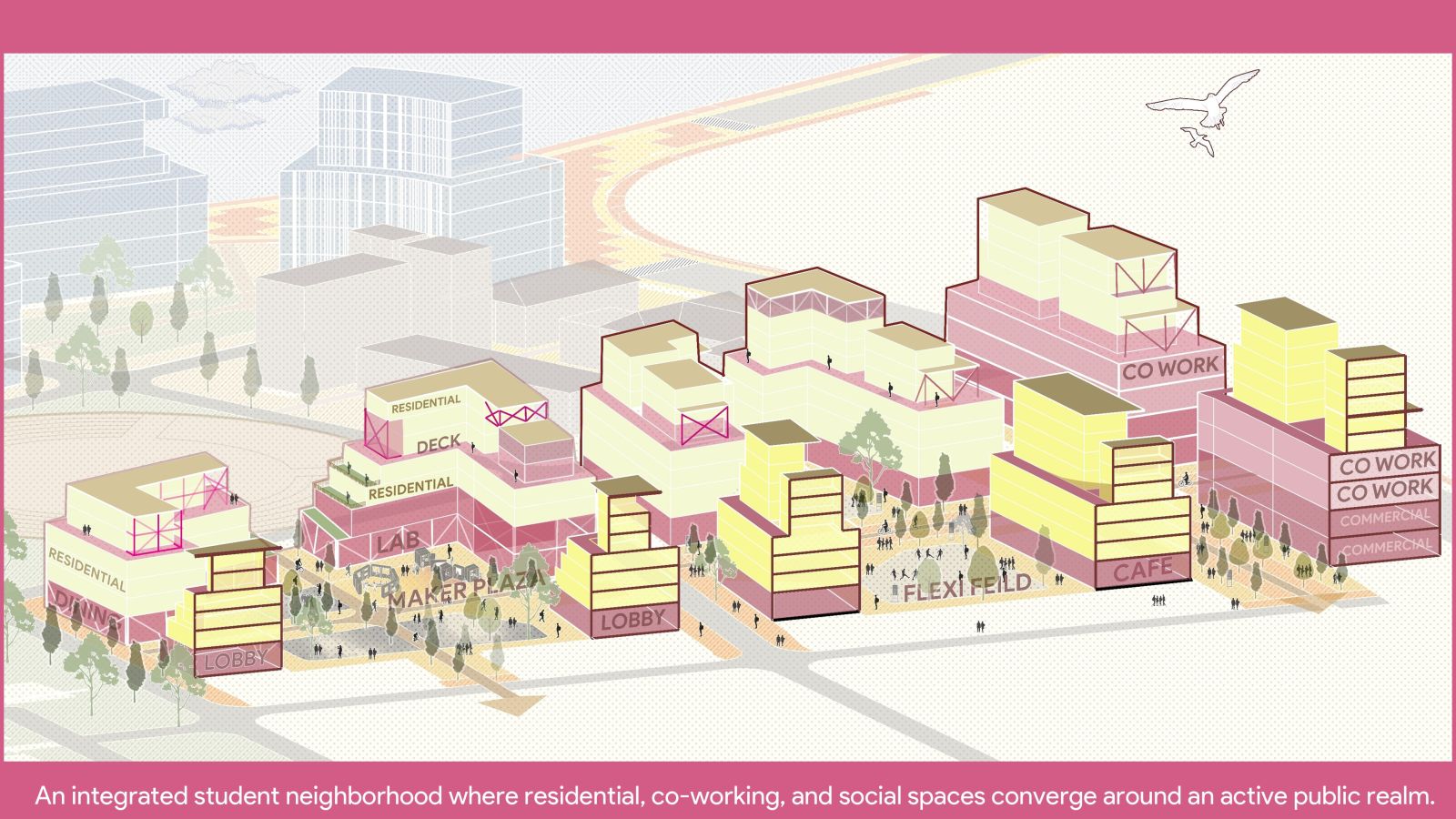
Student housing is reimagined as an integrated urban ecosystem where living, learning, recreation, and social life coexist.

An active mixed-use student neighborhood

The heritage campus evolves into an accessible and connected urban ecosystem through adaptive reuse, public plazas, and student-oriented development.

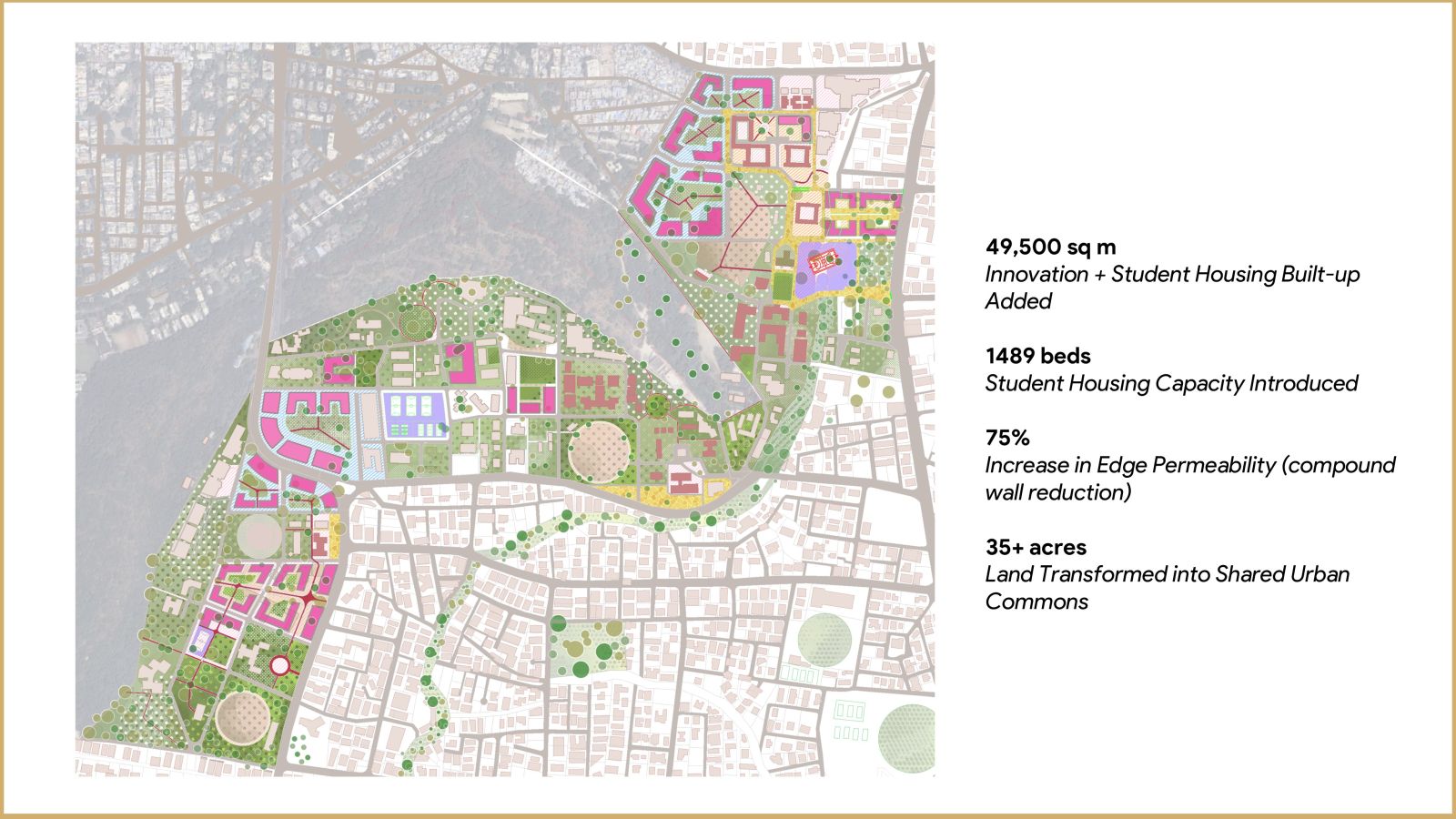
The framework transforms isolated campuses into a connected urban commons with increased permeability, student housing, and shared public infrastructure.