Varshini J

UD4006

Gamtal - City Interdependencies

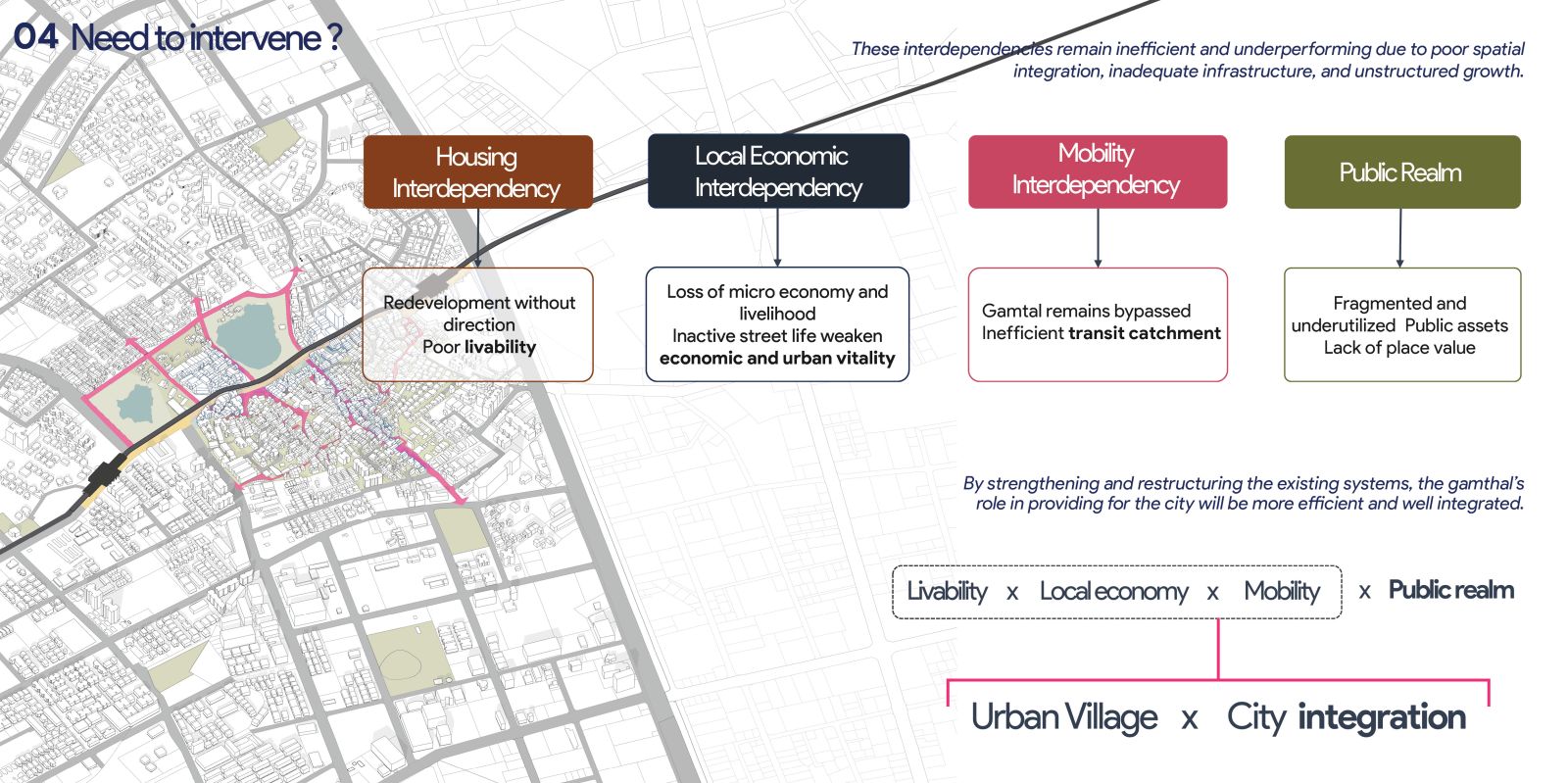
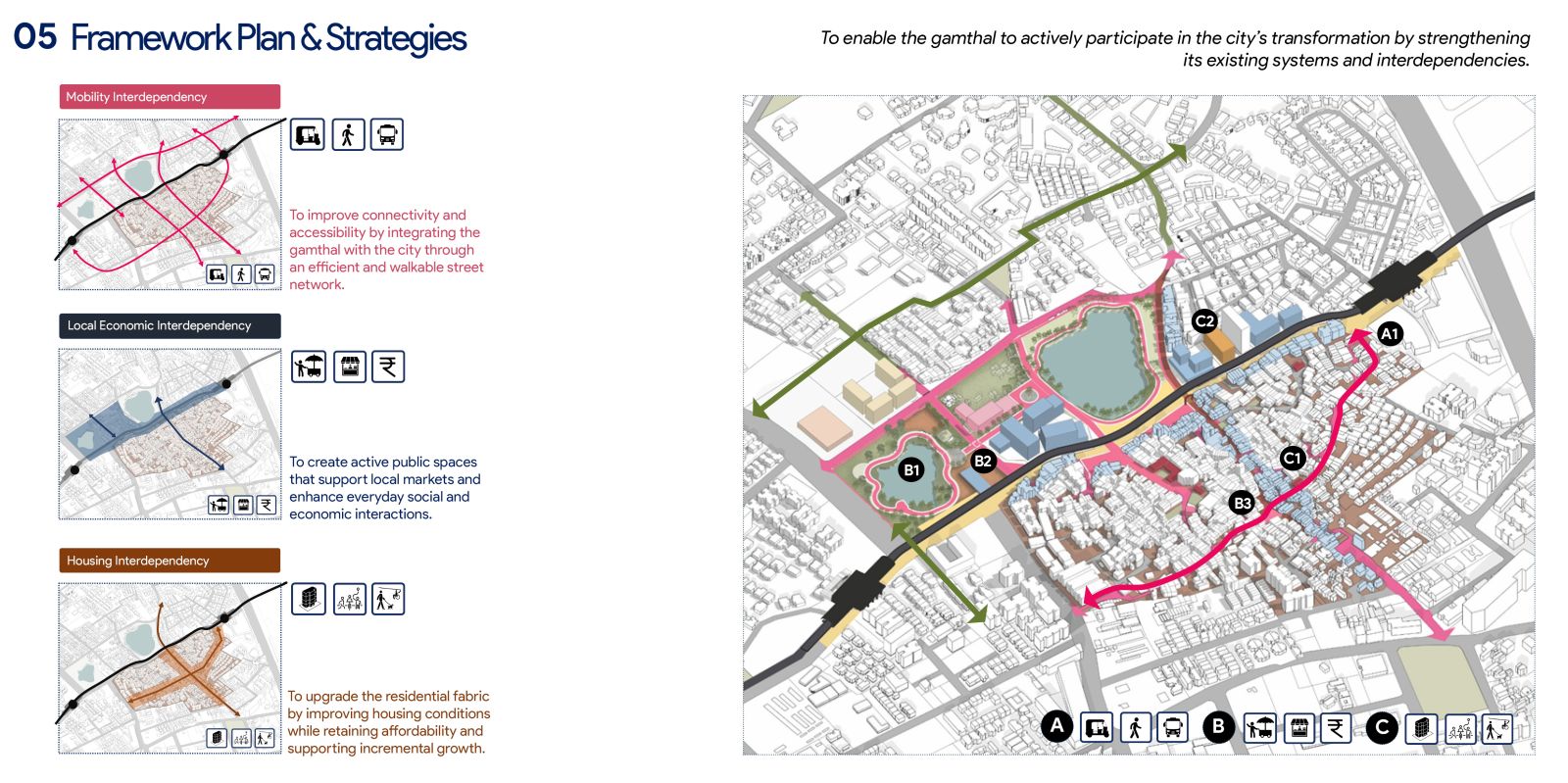
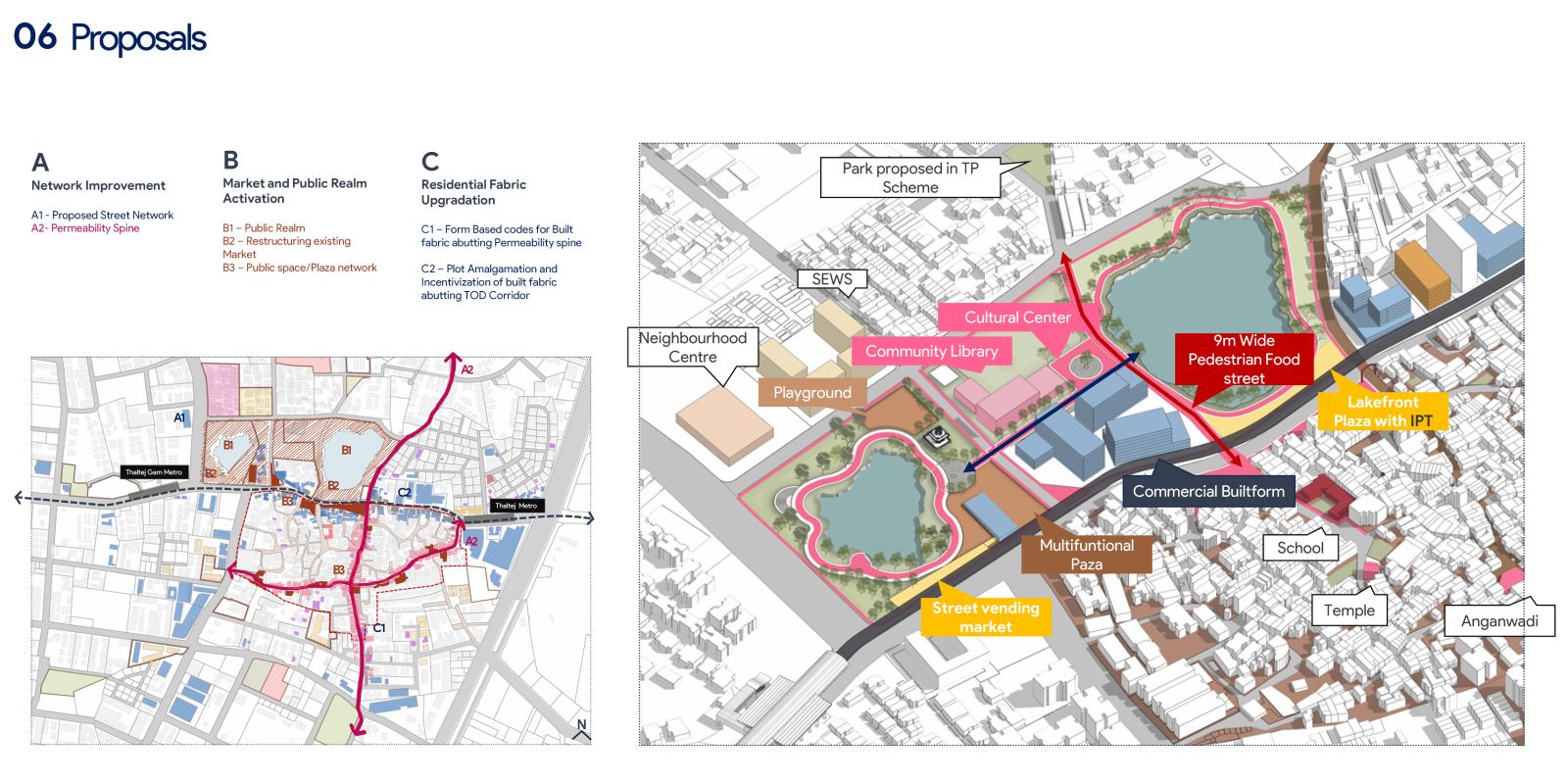
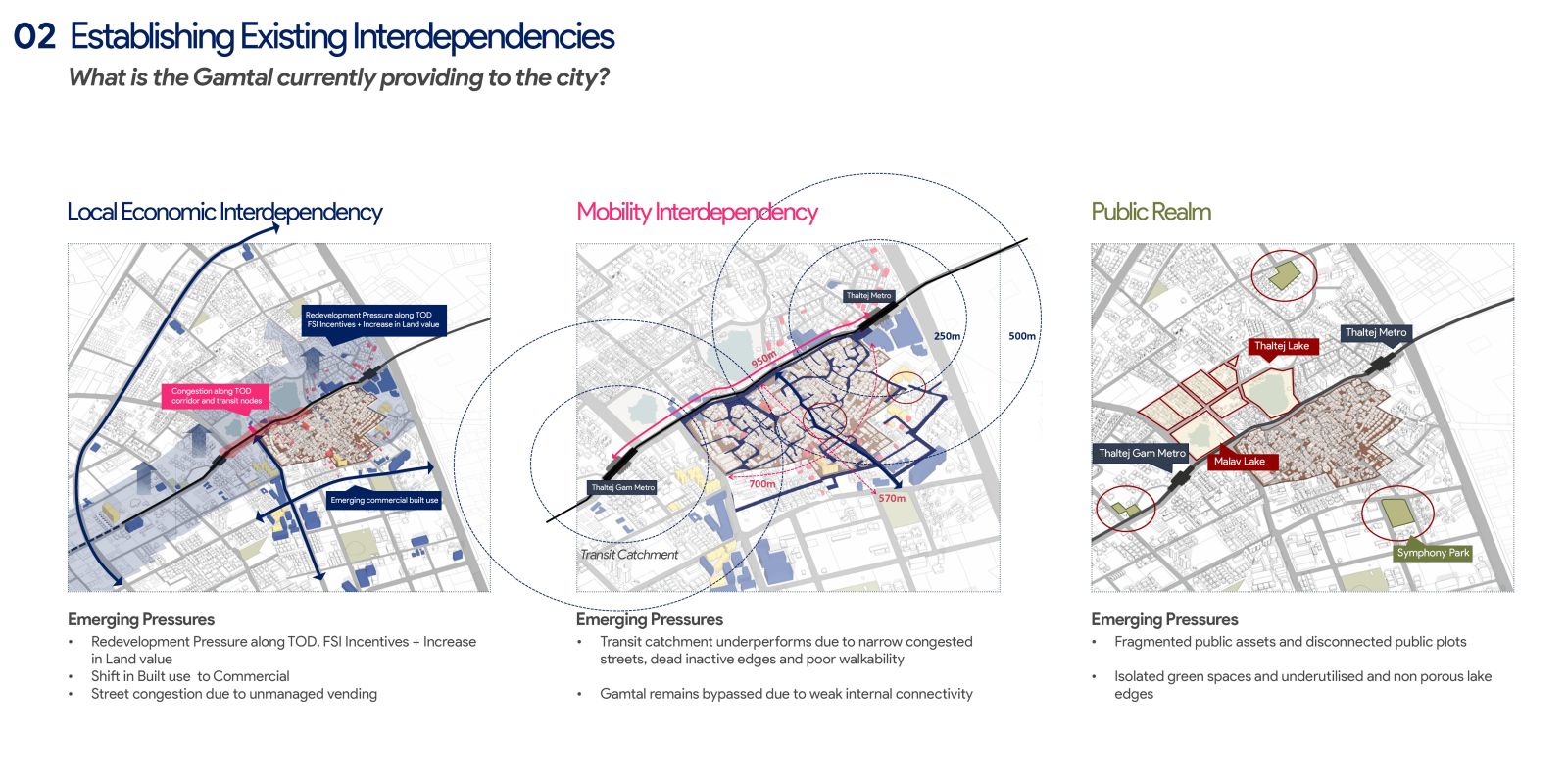
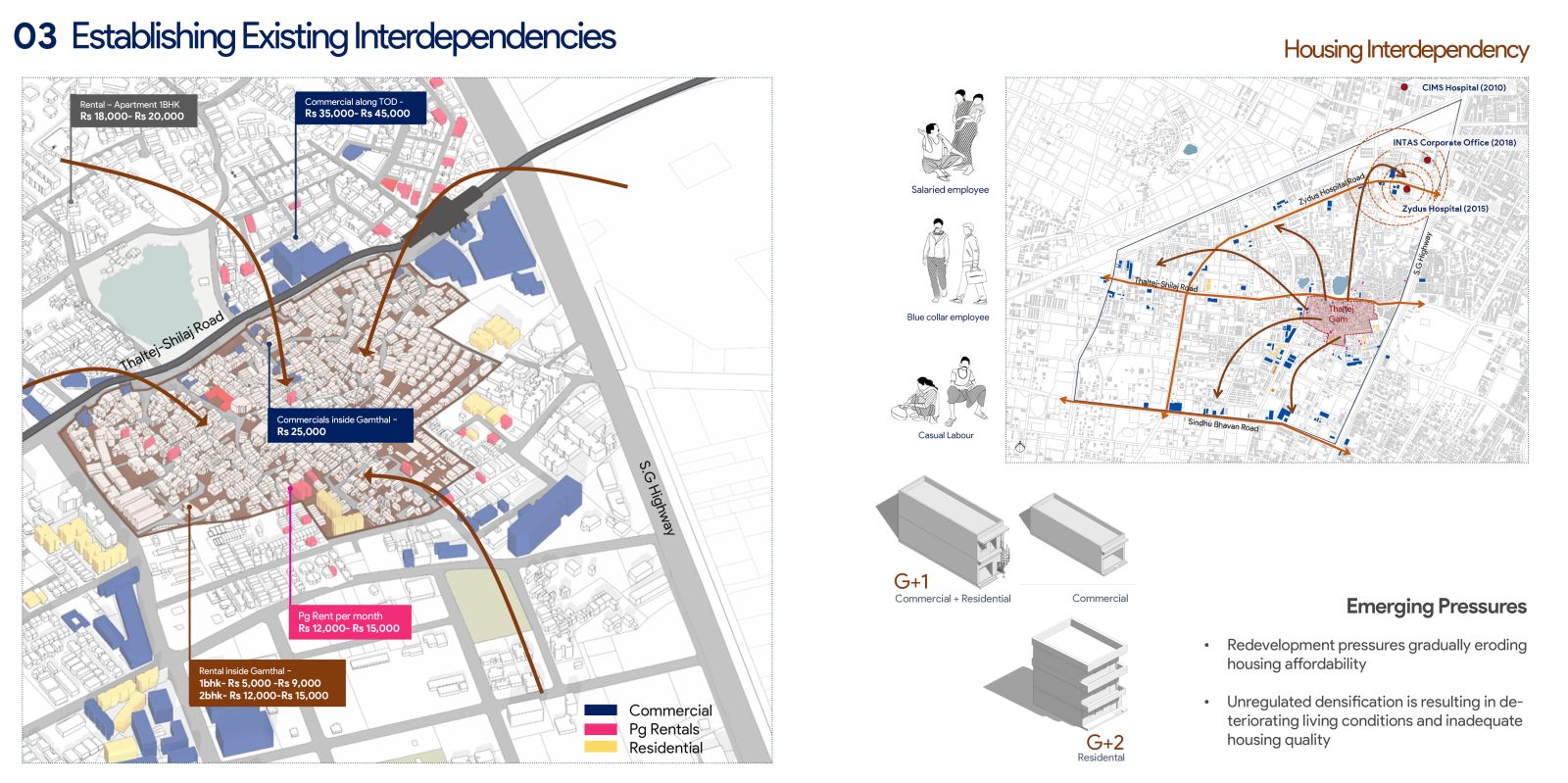
Thaltej Gamtal supplies affordable housing, informal labour, and pedestrian access to the metro, yet remains spatially excluded from the city's planning. Interdependencies across housing, mobility, local economy, and public realm are underperforming due to poor spatial integration, inadequate infrastructure, and unstructured growth. The proposal responds through three key interventions: A pedestrian-priority Permeability Spine connecting the gamtal to the metro, market and lakefront activation supporting the informal economy and form-based codes with plot amalgamation incentives that improve housing conditions without displacing affordability.
Report Content

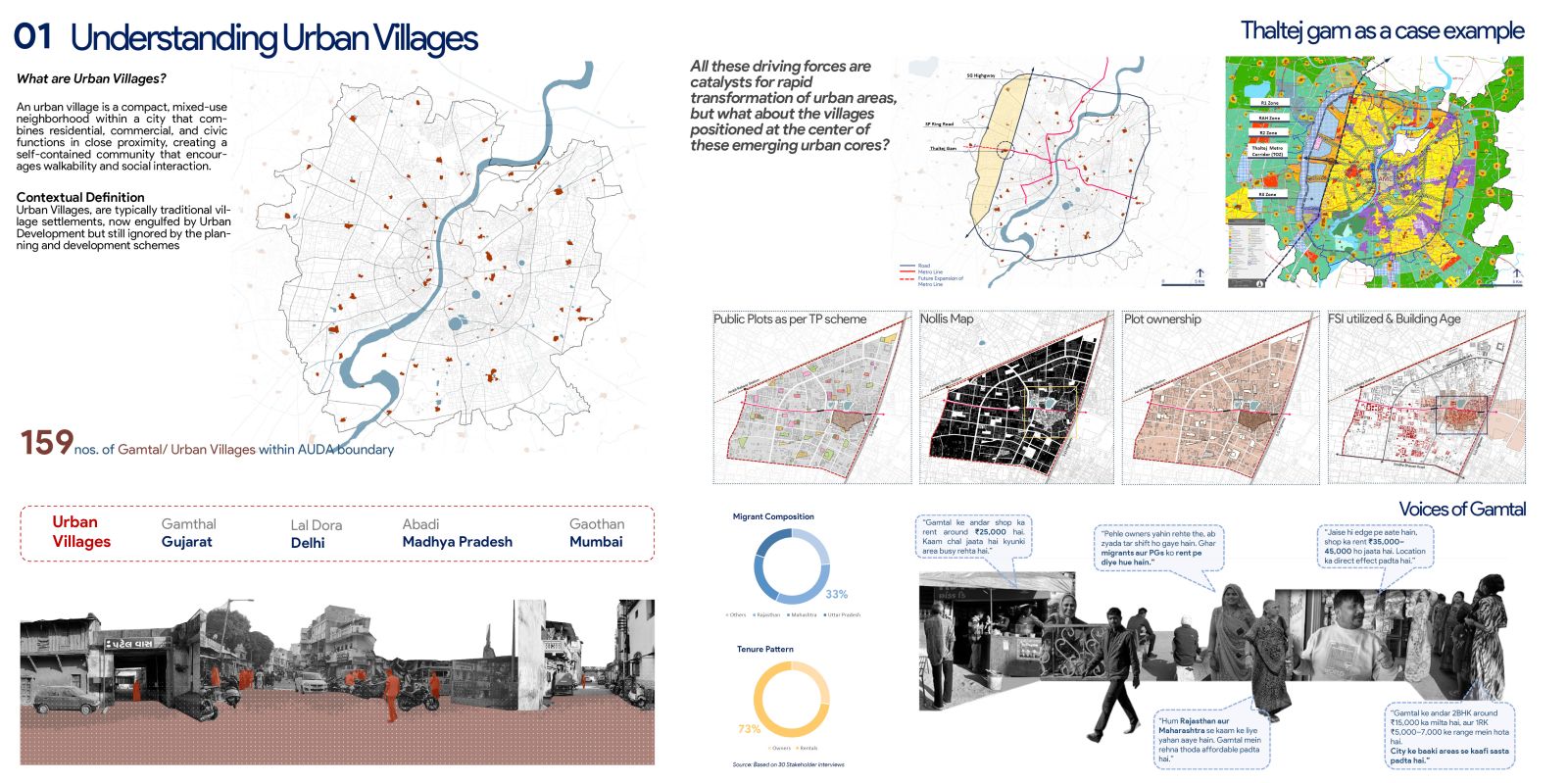
Understanding Urban Villages

The gamtal functions as an invisible network supporting the city’s economy, mobility, and public life.

Affordable living and everyday livelihoods remain deeply anchored within the dense fabric of the gamtal.

Strategic intervention can transform existing pressures into opportunities for inclusive urban growth.

The framework reconnects the gamtal to the city through mobility, public realm, economy, and housing.

Targeted urban interventions transform fragmented edges into active civic and community destinations.

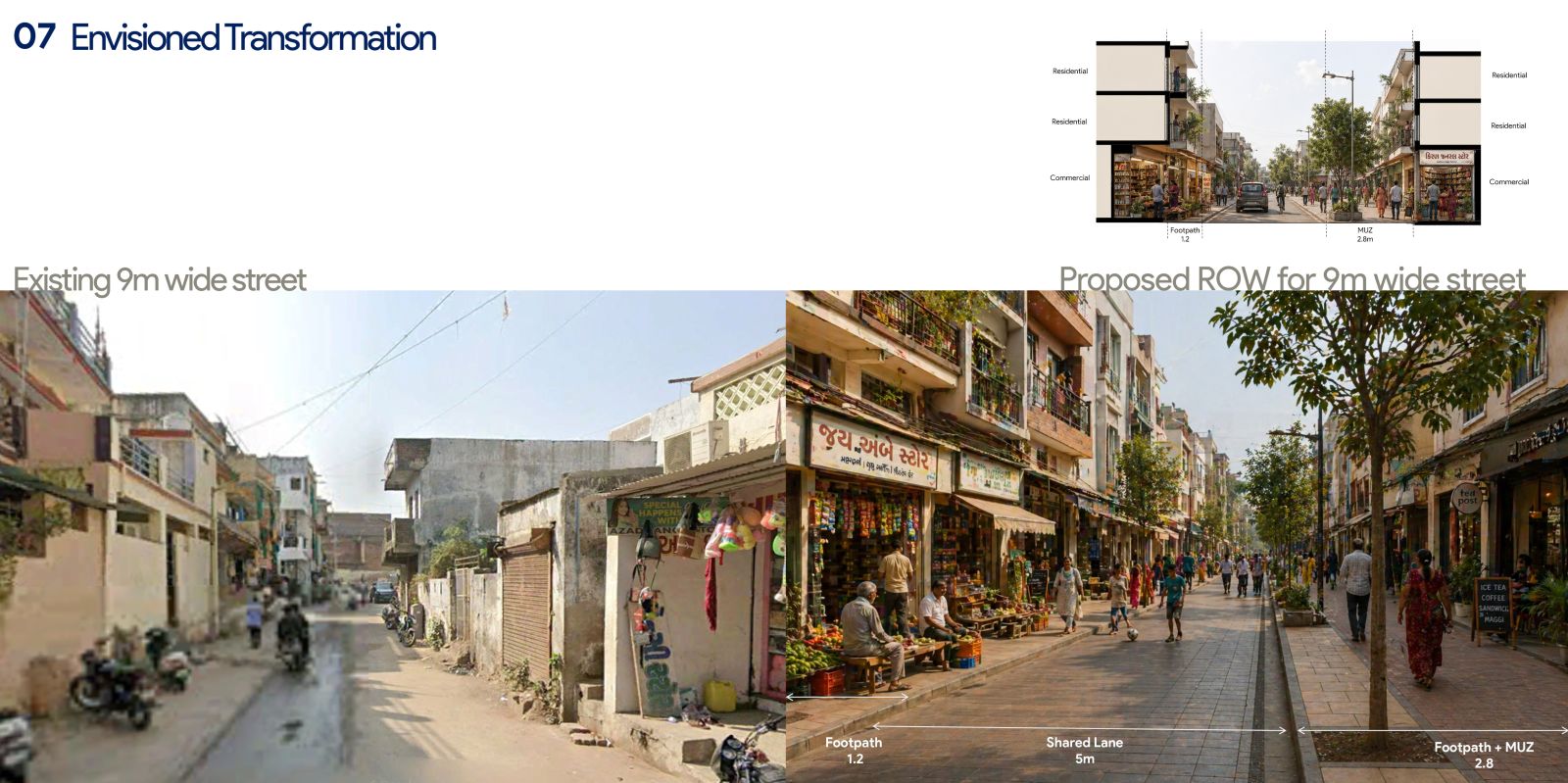
Reclaiming the street as a shared public realm can turn everyday movement into vibrant urban life.

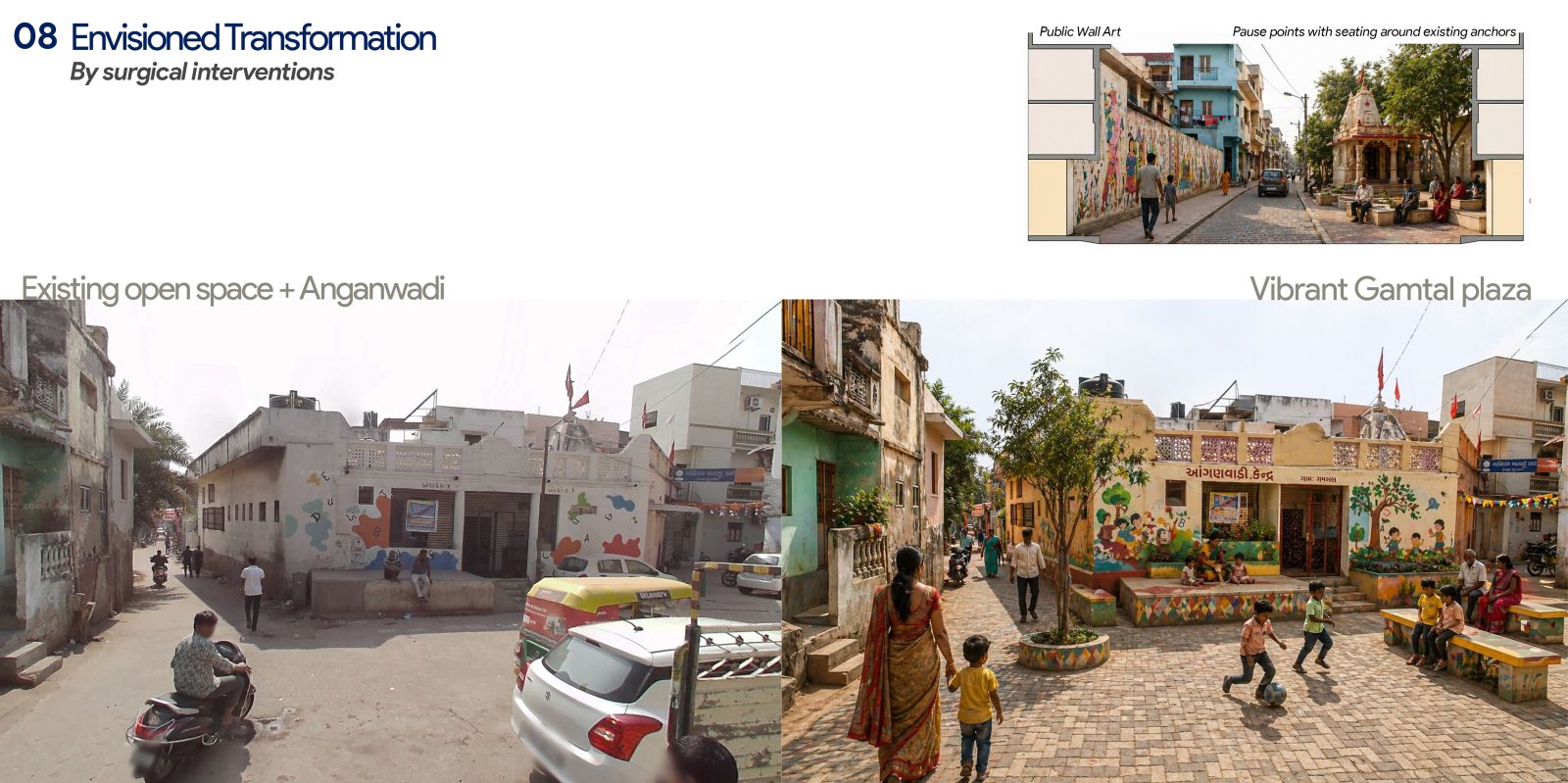
Small-scale public interventions can revive forgotten spaces into meaningful community anchors.

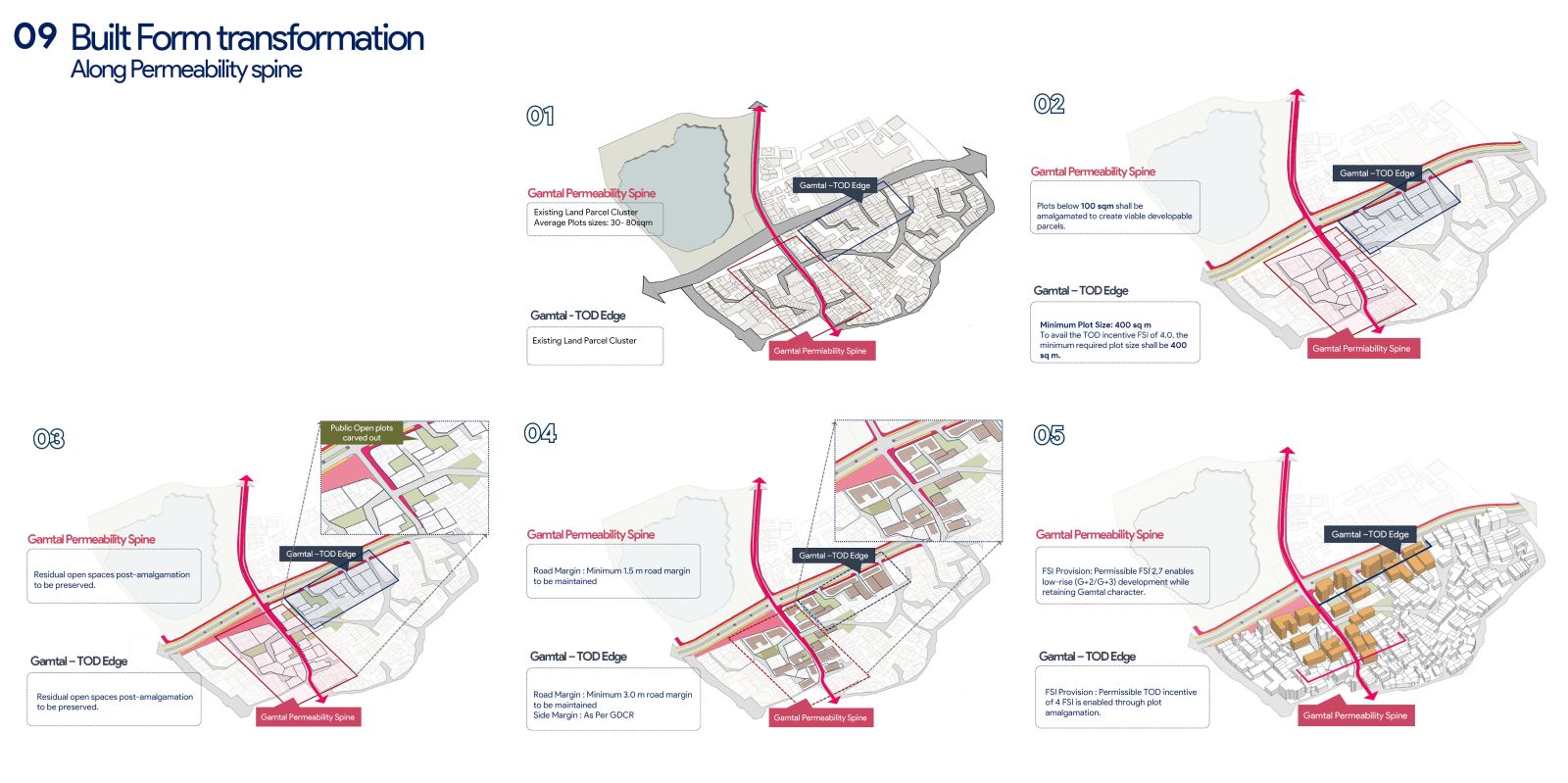
Incremental redevelopment enables higher density while retaining the fine-grain character of the gamtal.

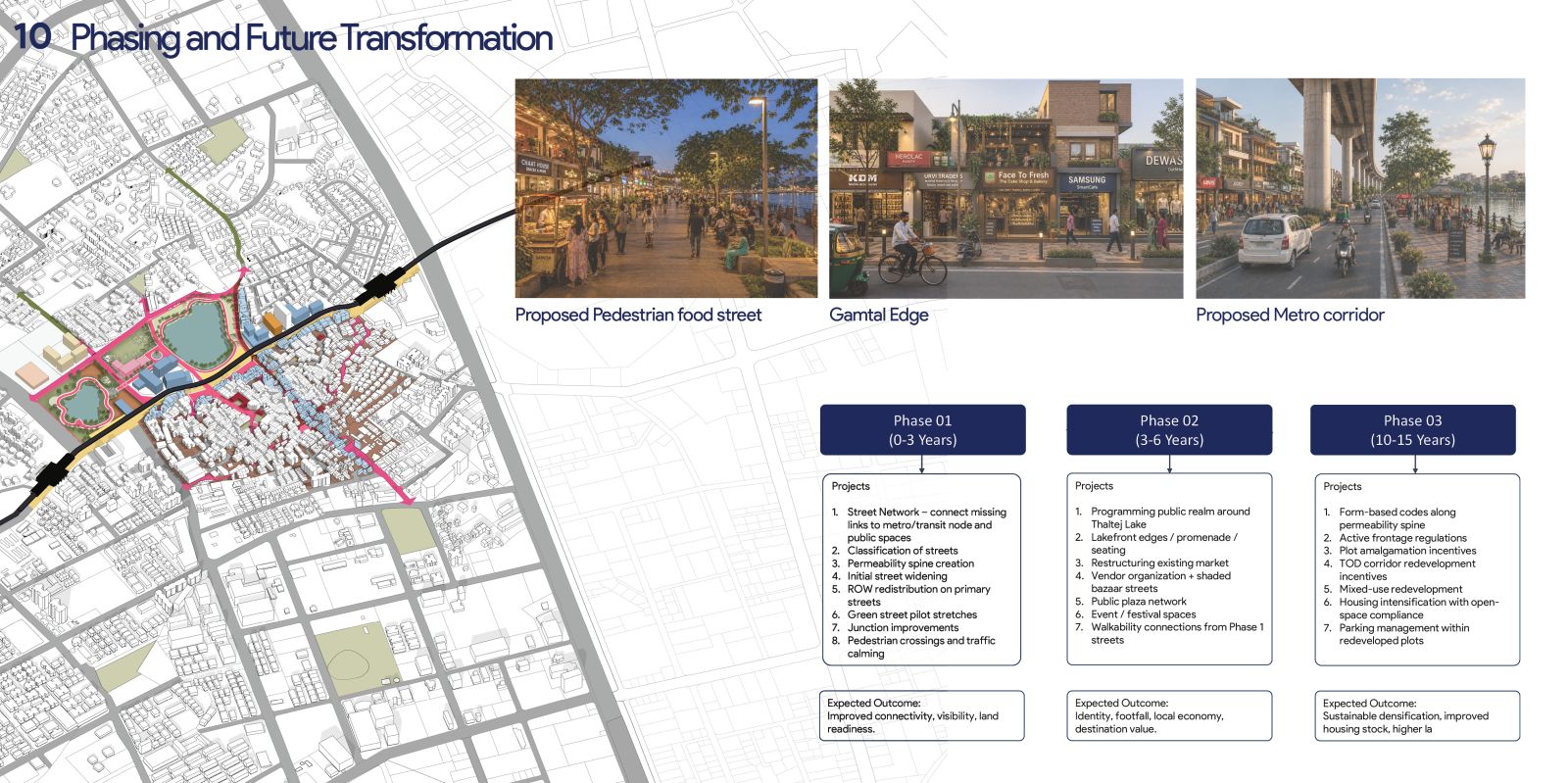
A phased transformation strategy ensures the gamtal evolves with the city while preserving its identity.