• Home
  • FP
  • UD4006
  • Reframing the Gamtal Edge as an Influence Zone

Aakansha Pradeep Pal

UD4006

Reframing the Gamtal Edge as an Influence Zone

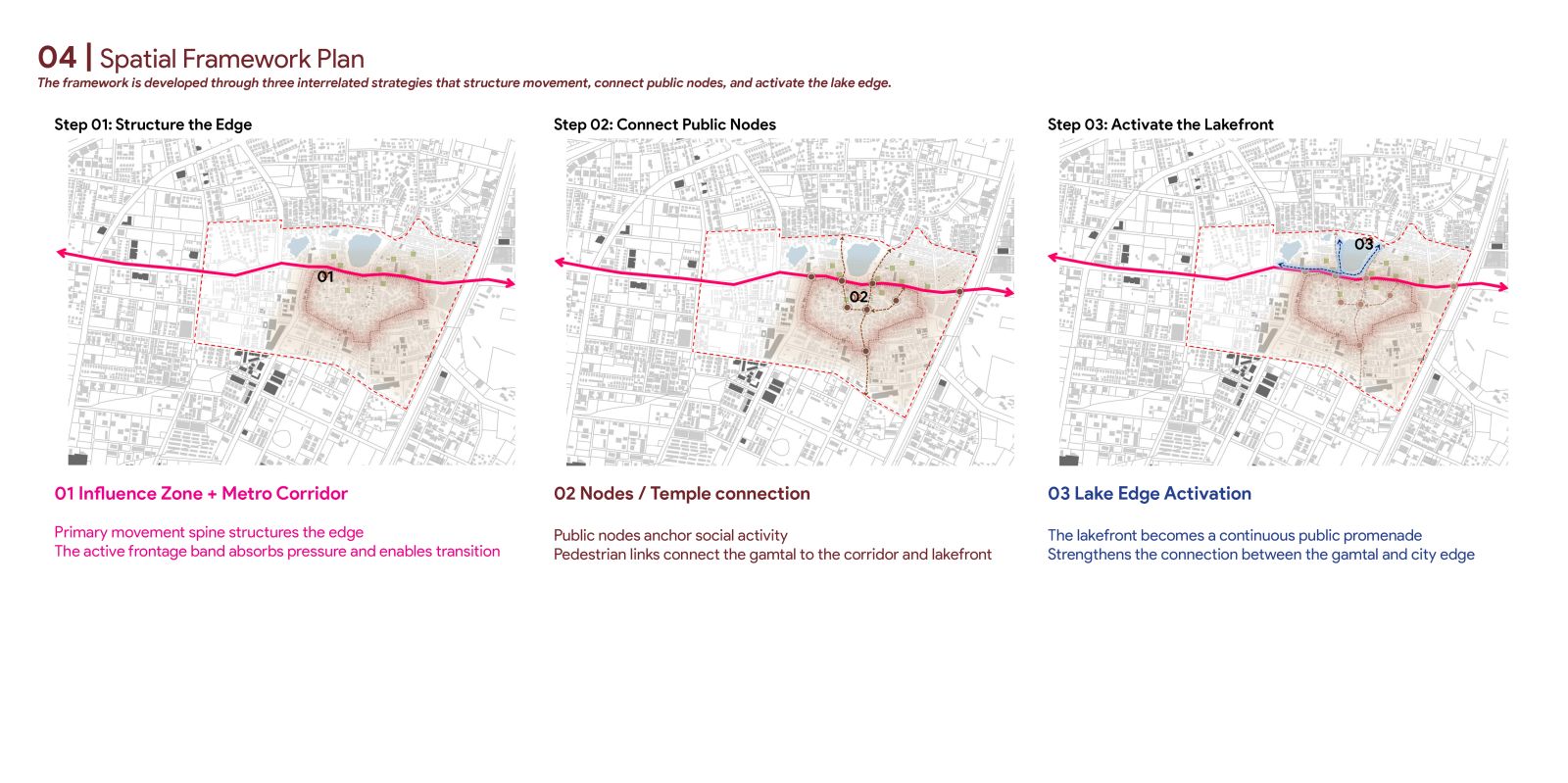
This urban design project reimagines the Thaltej gamtal edge as an “influence zone” that mediates between the gamtal core and the rapidly urbanizing city. Responding to metro-led development pressure, the proposal integrates plot reconstitution, active mixed-use frontages, connected public nodes, and lakefront activation. The strategy preserves the cultural identity of the gamtal while enabling incremental redevelopment, transforming fragmented edges into a cohesive, walkable, and transit-oriented urban framework that reconnects the gamtal, city edge, and lakefront.
Report Content

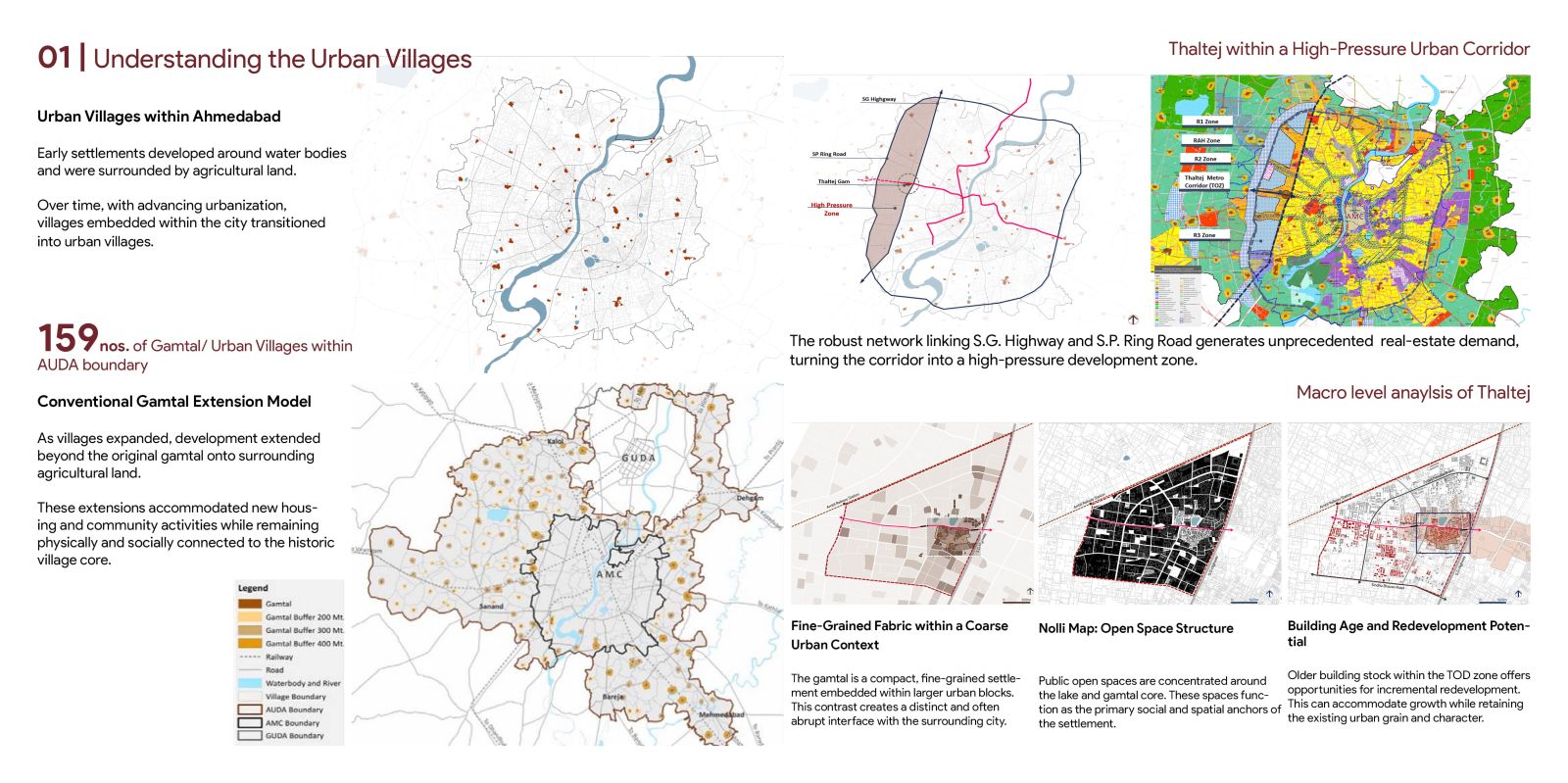
Understanding the Urban Village

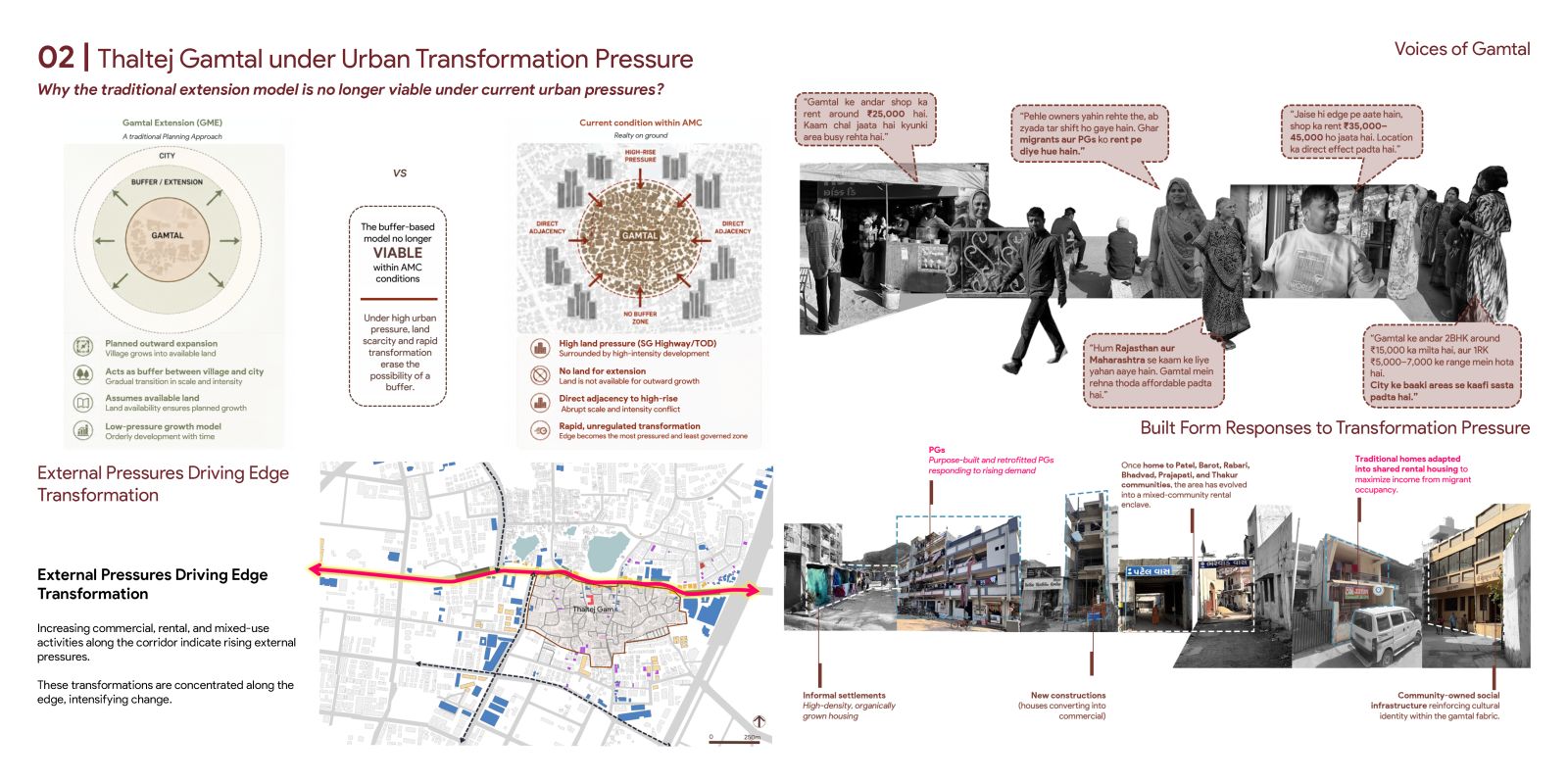
Stakeholder perspectives and evolving built-form responses reveal how development pressure is reshaping the social, economic, and physical character of the gamtal.

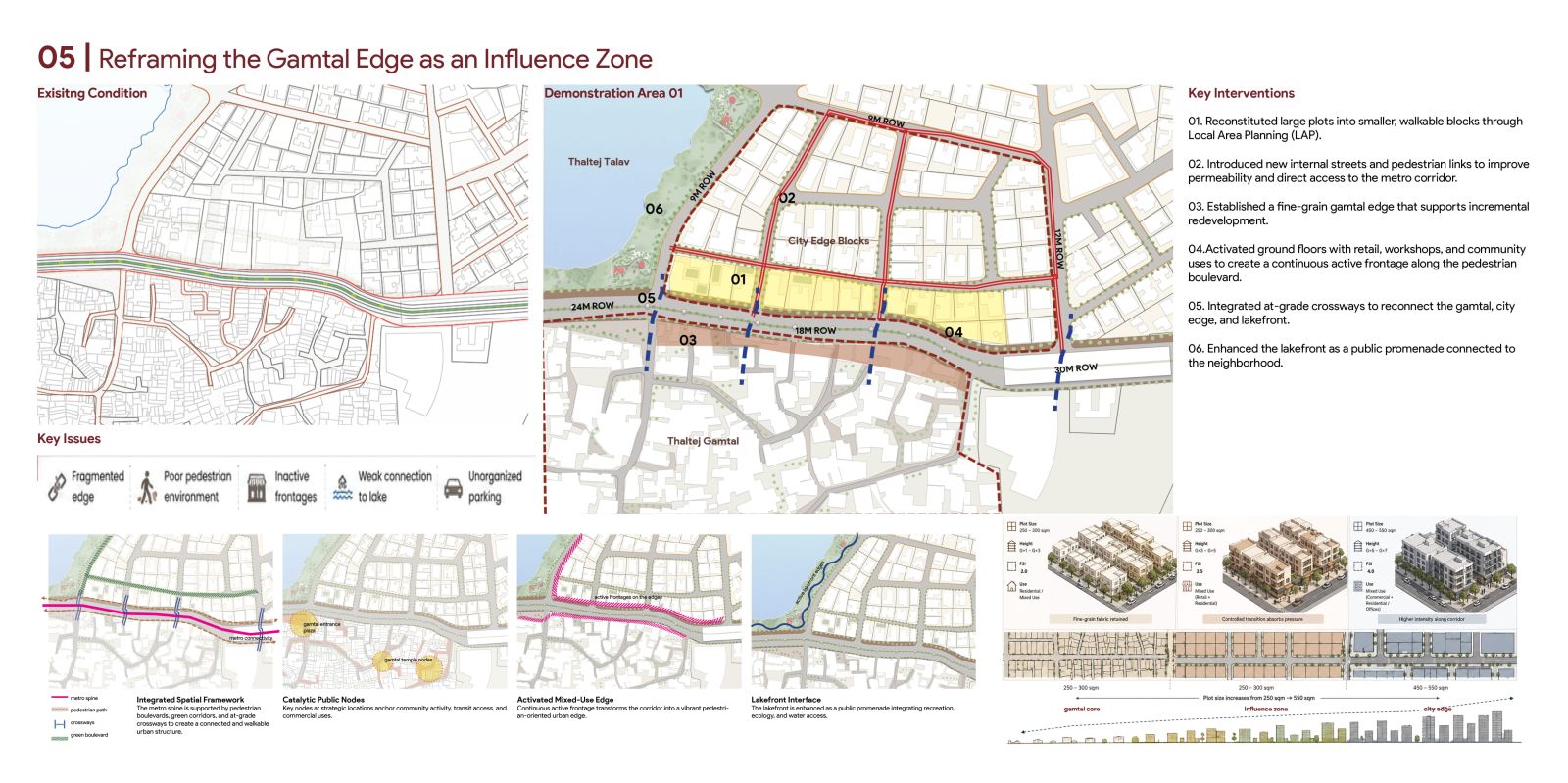
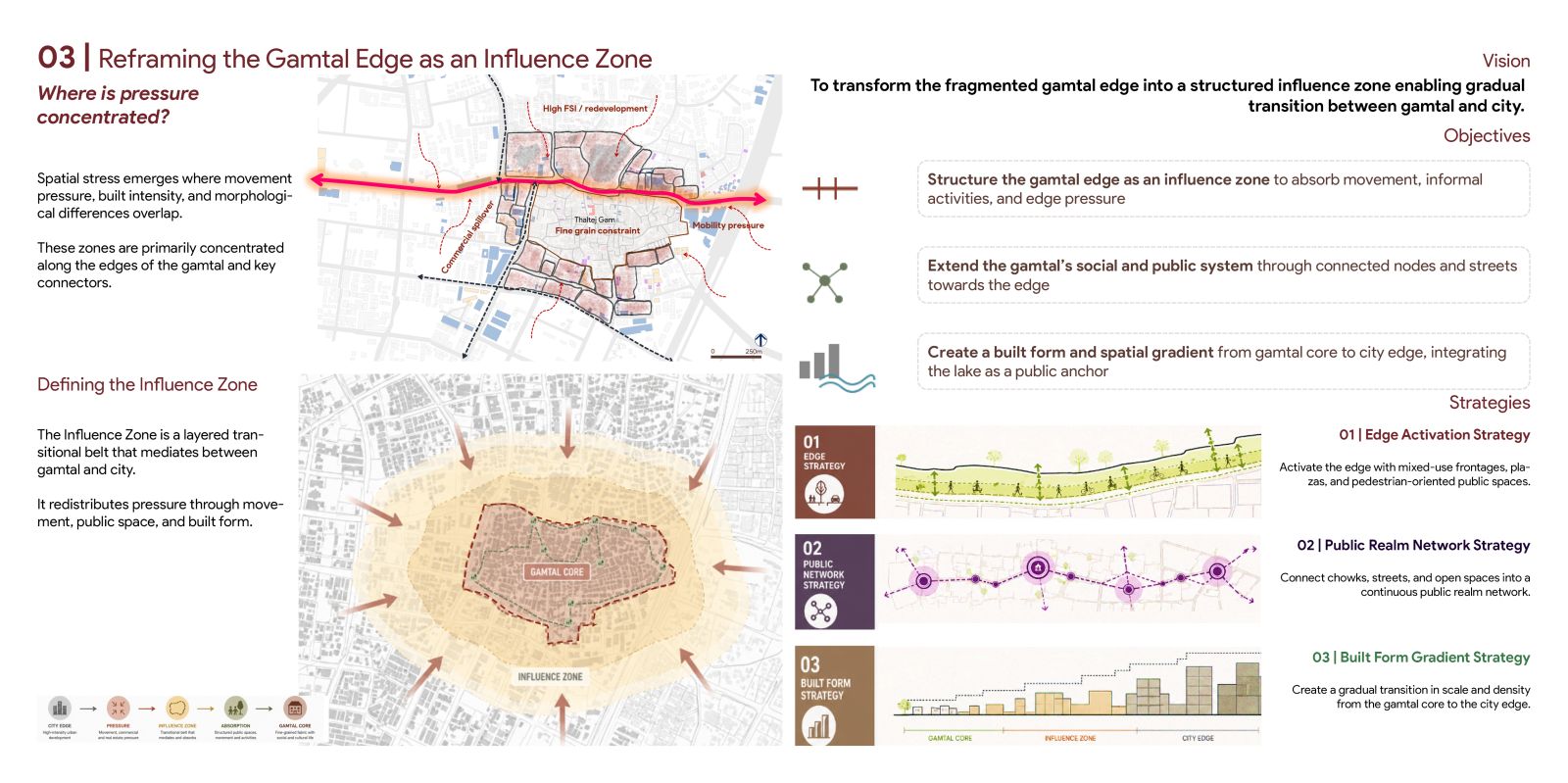
The gamtal edge is reconceived as a transitional influence zone that absorbs pressure and structures change.

A coordinated framework of edge activation, public nodes, and lakefront connections guides the transformation.

The demonstration area translates the strategy into site-specific interventions including LAP, active frontages, and cross-connections.

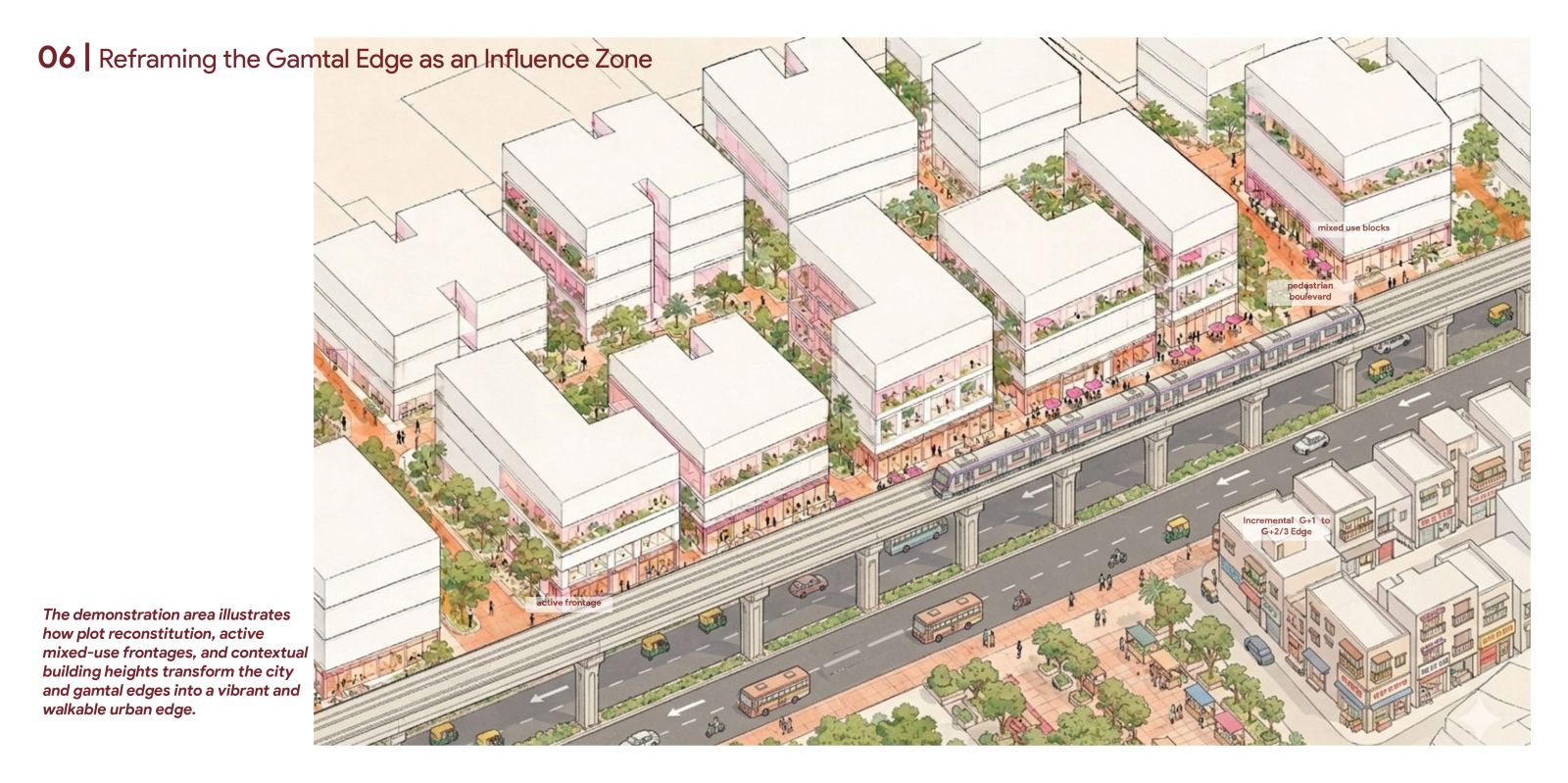
Plot reconstitution and mixed-use development create a vibrant and walkable urban edge along the metro corridor.

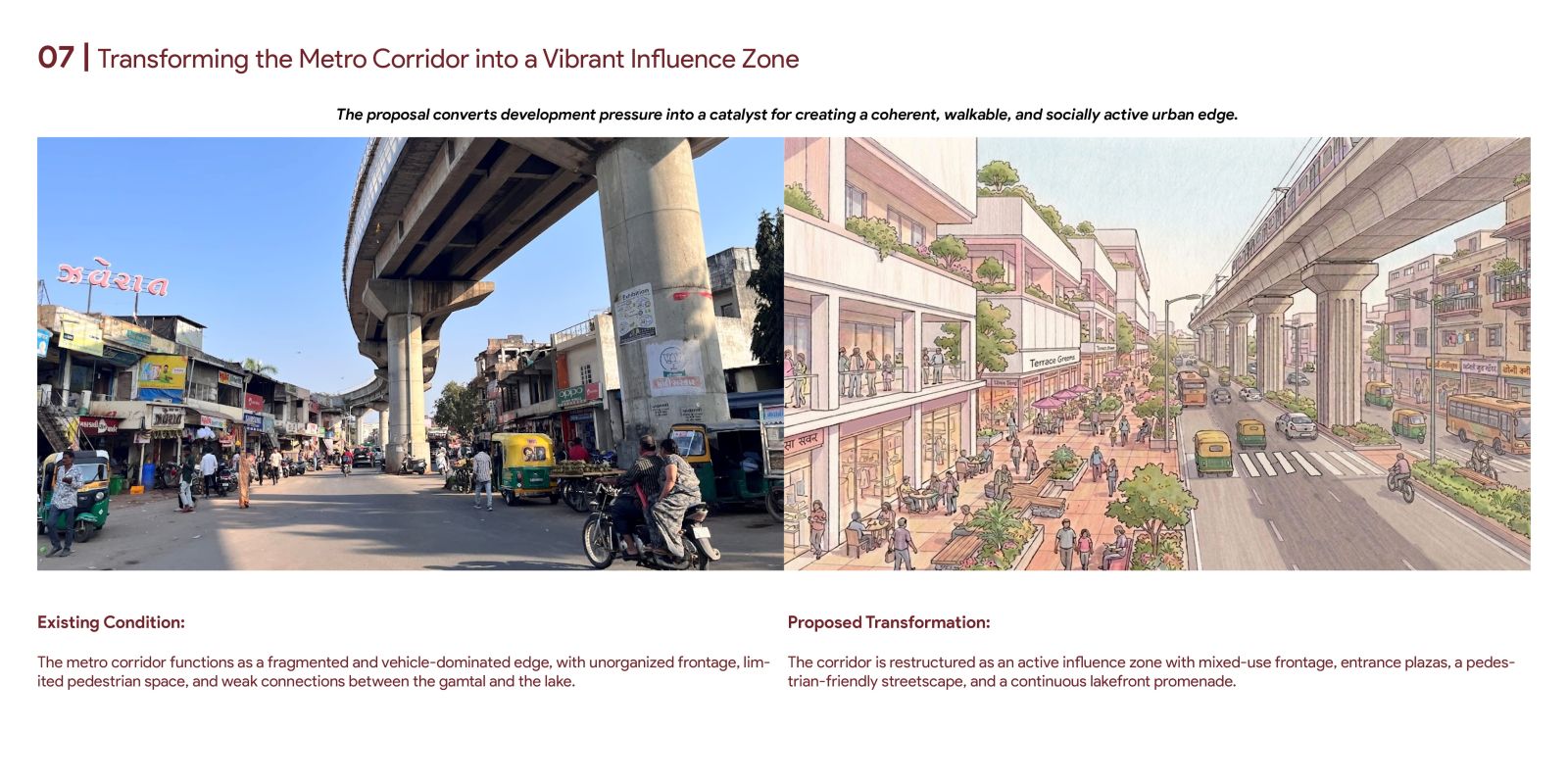
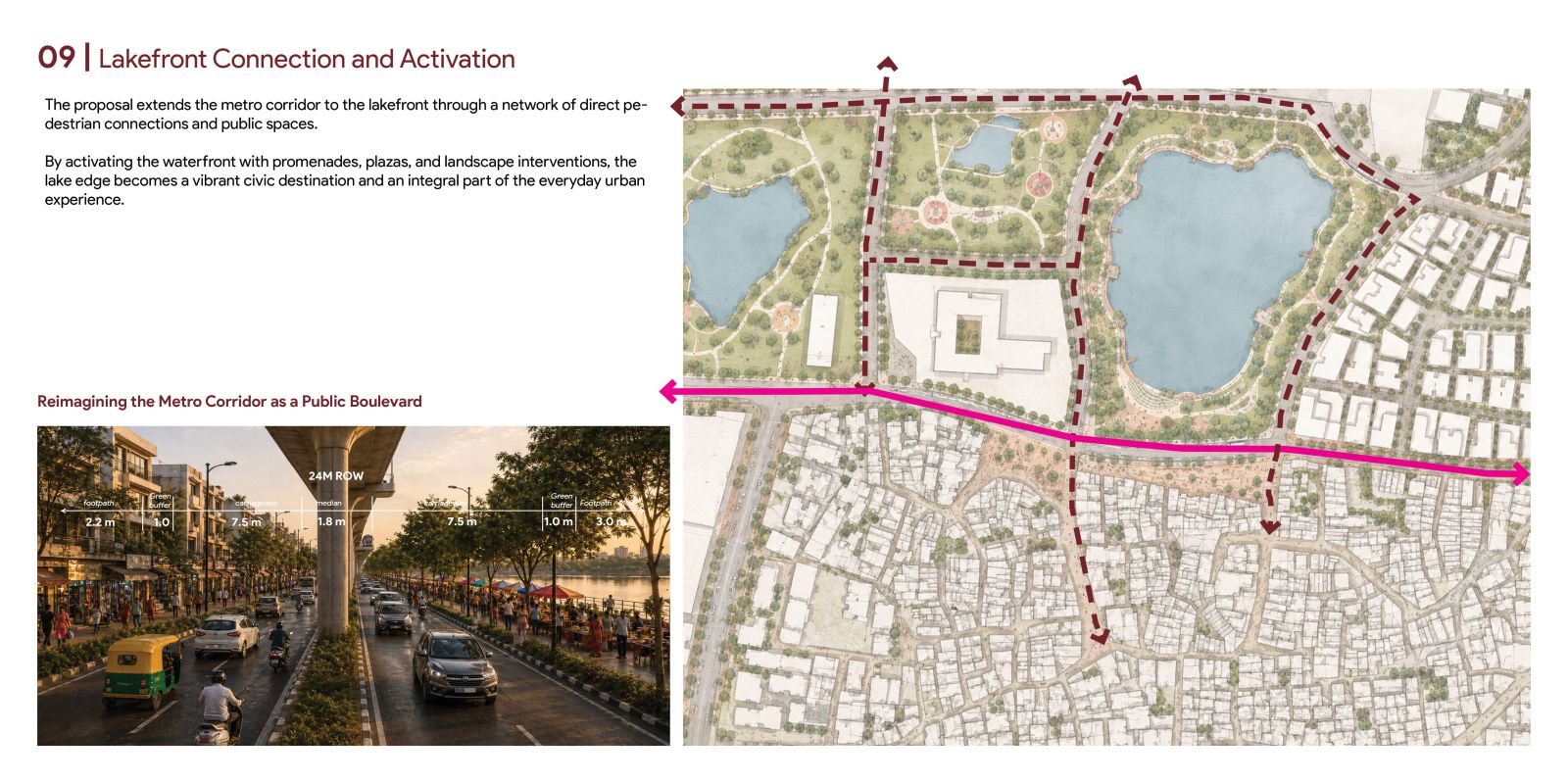
The metro corridor evolves from a fragmented edge into an active public boulevard with transit-oriented development.

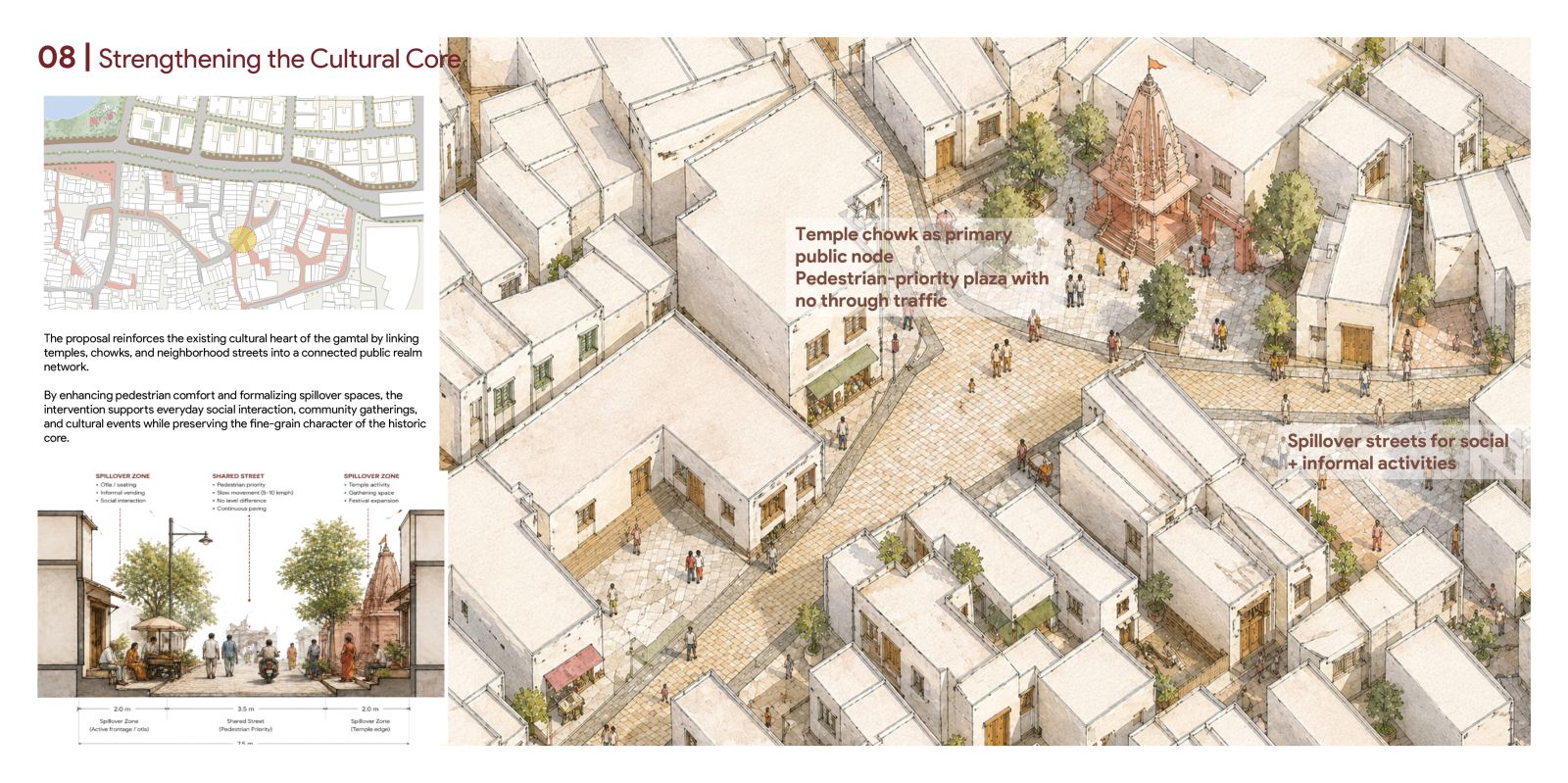
Temples, chowks, and spillover streets are enhanced as a connected public realm supporting everyday community life.

The lakefront is activated as a continuous public destination linked to the gamtal through direct pedestrian connections.

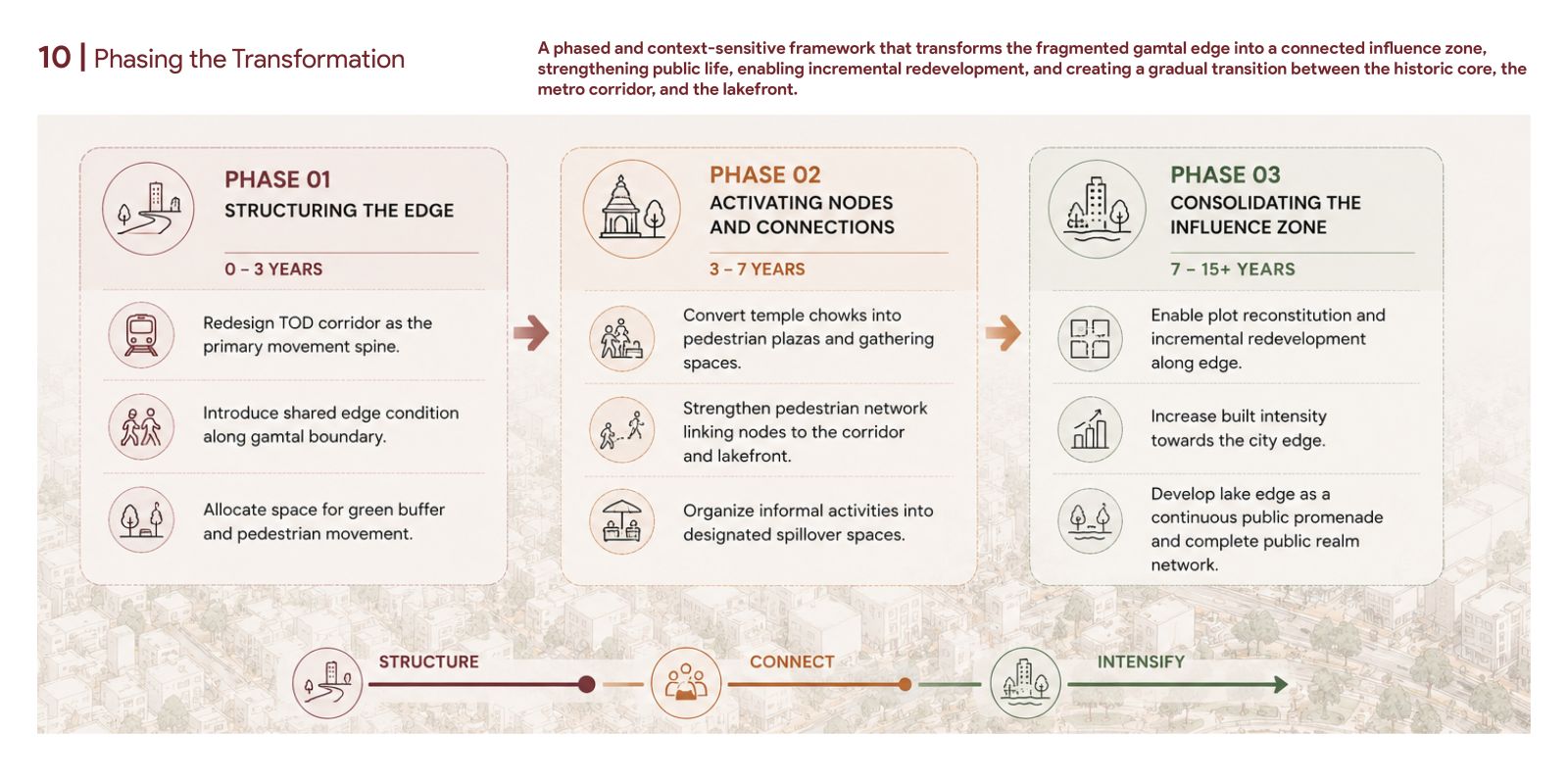
A phased and context-sensitive approach enables the influence zone to evolve incrementally over time.