Palak Pradeep Burad

CT2030

CLIMAVENT- Reimagining Shelter

Climavent is a lightweight, portable, and climate-responsive shelter designed to explore passive cooling and heat avoidance strategies. The project focuses on creating a comfortable semi-outdoor space for 3–4 people using natural ventilation, controlled daylight, shading, and insulation techniques. Through form exploration, heliodon studies, outdoor testing, and material experiments, the final design was developed by combining the best spatial and environmental qualities from selected models. Lightweight PVC pipes, kantan fabric, and thermocol insulation were used to improve portability, thermal comfort, and ease of construction while reducing direct heat gain and enhancing airflow.

View Additional Work
Report Content

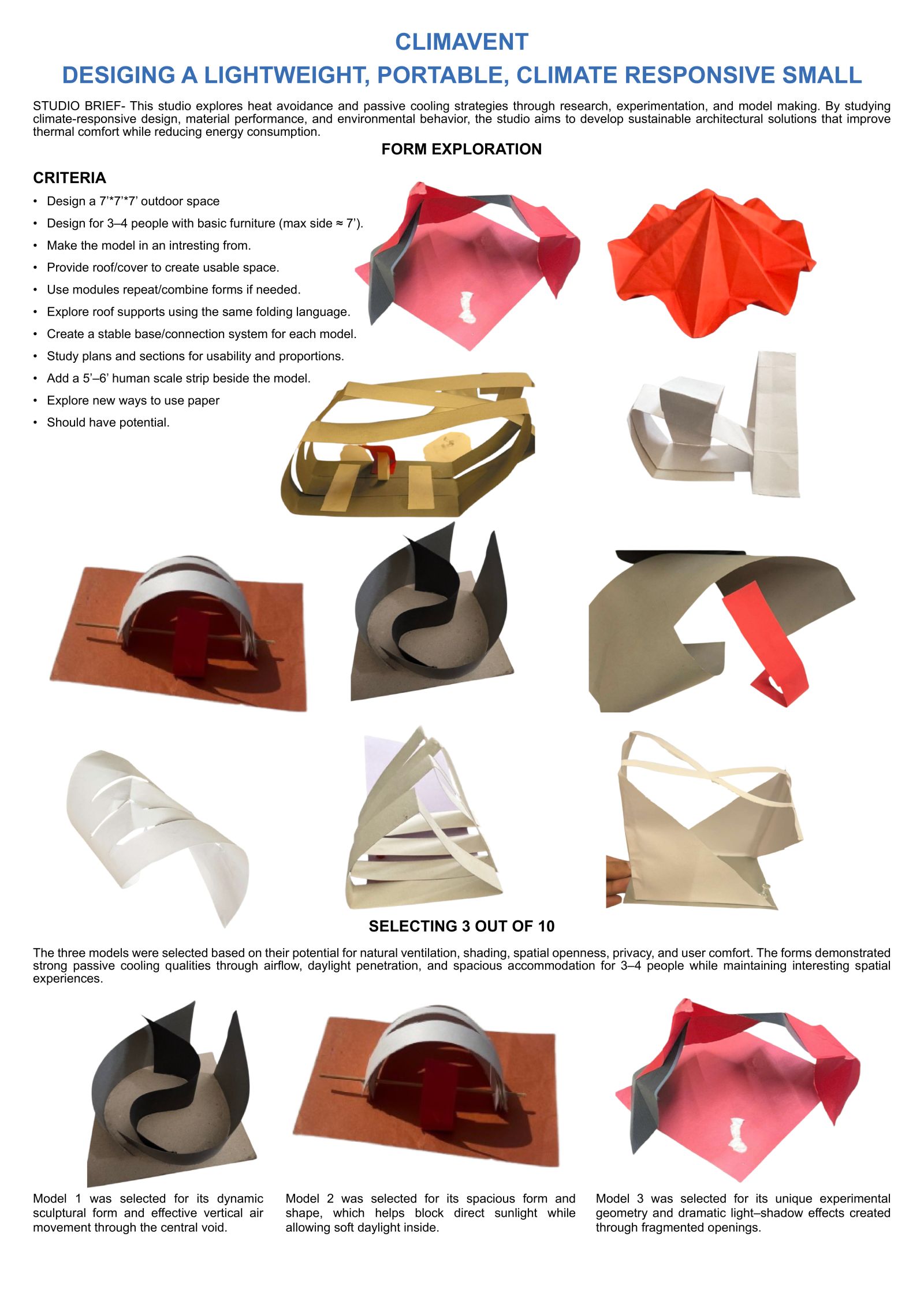
Form exploration and selection of climate-responsive shelter by making 10 paper models

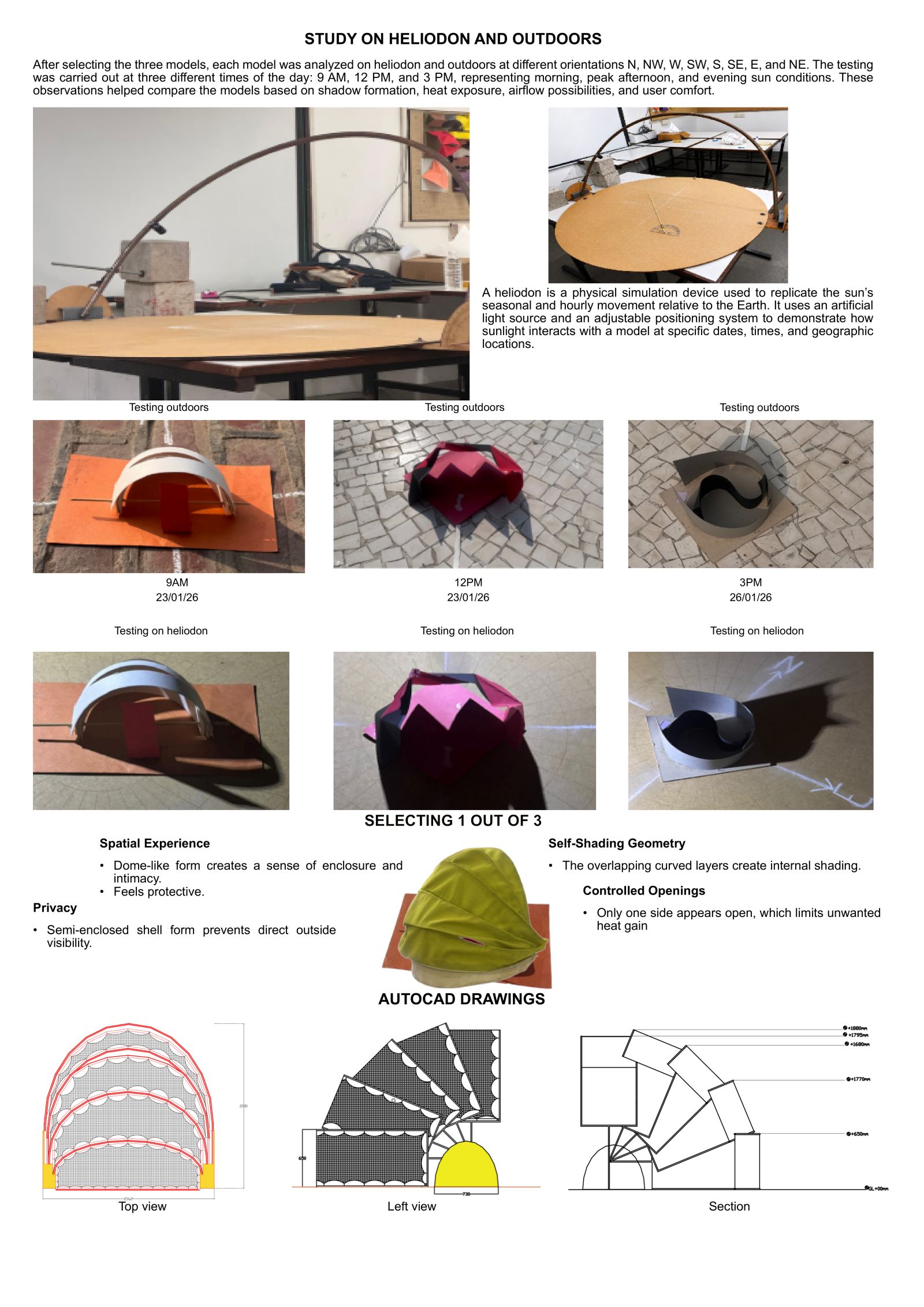
Heliodon and outdoor analysis of selected models to study sunlight and shading across different orientations and timings.

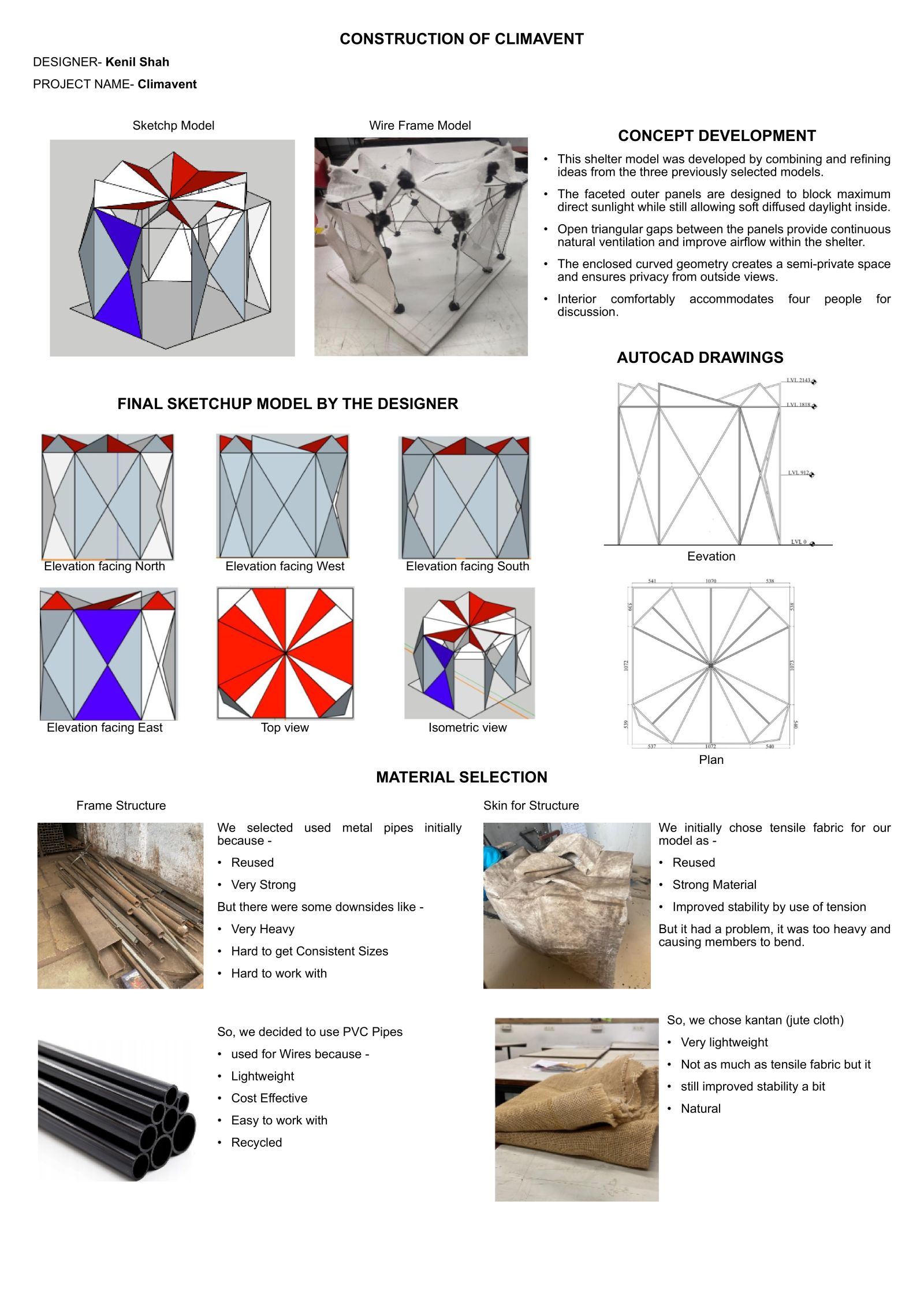
Concept development, construction process, and material selection for Climavent, showing the evolution from digital model to final climate-responsive shelter prototype.

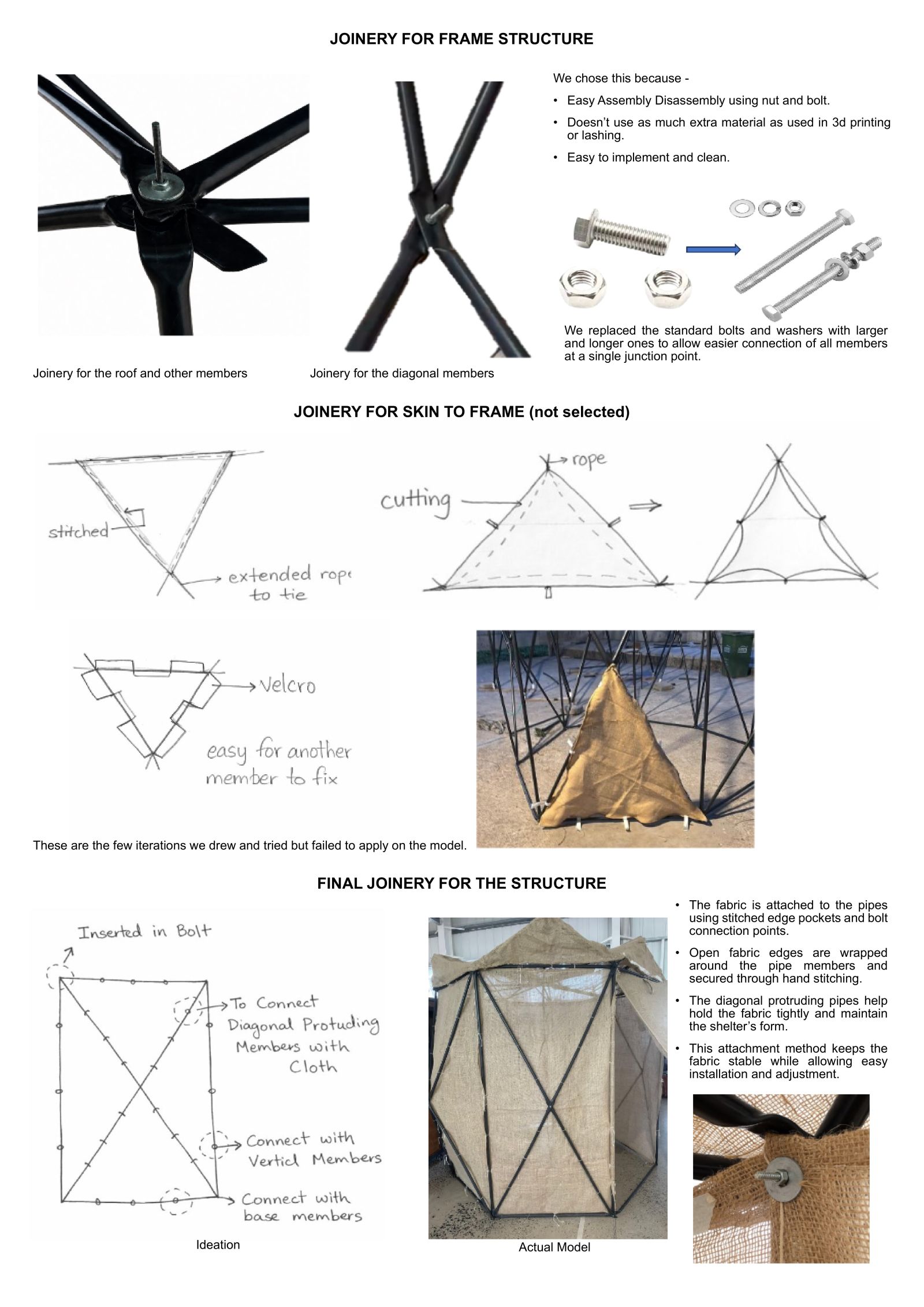
Exploration and development of joinery systems for the frame and fabric attachment, leading to the final lightweight and easy-to-assemble structural connection.

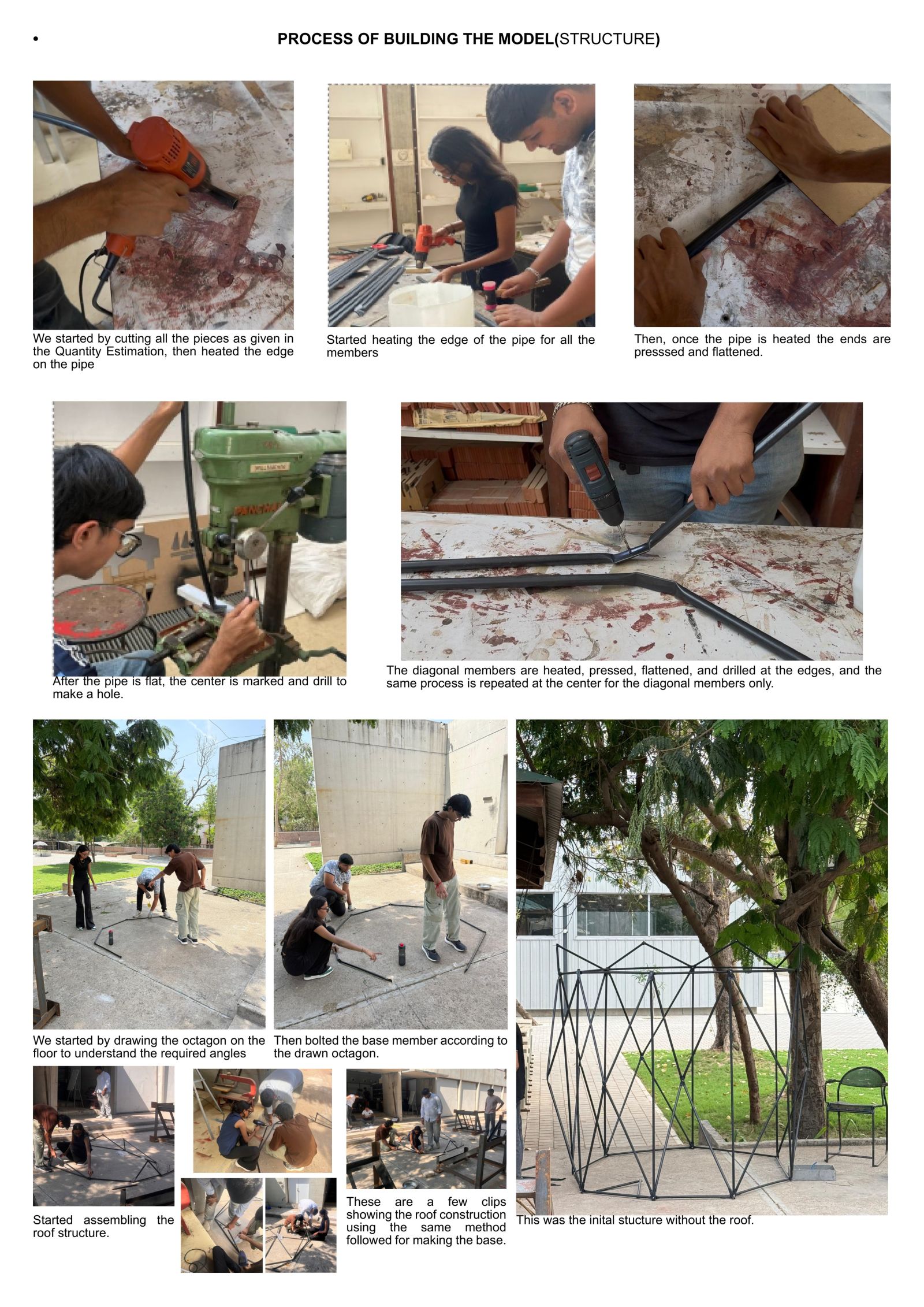
Step-by-step assembly process of the Climavent structure, from pipe preparation and joinery to base layout and roof construction.

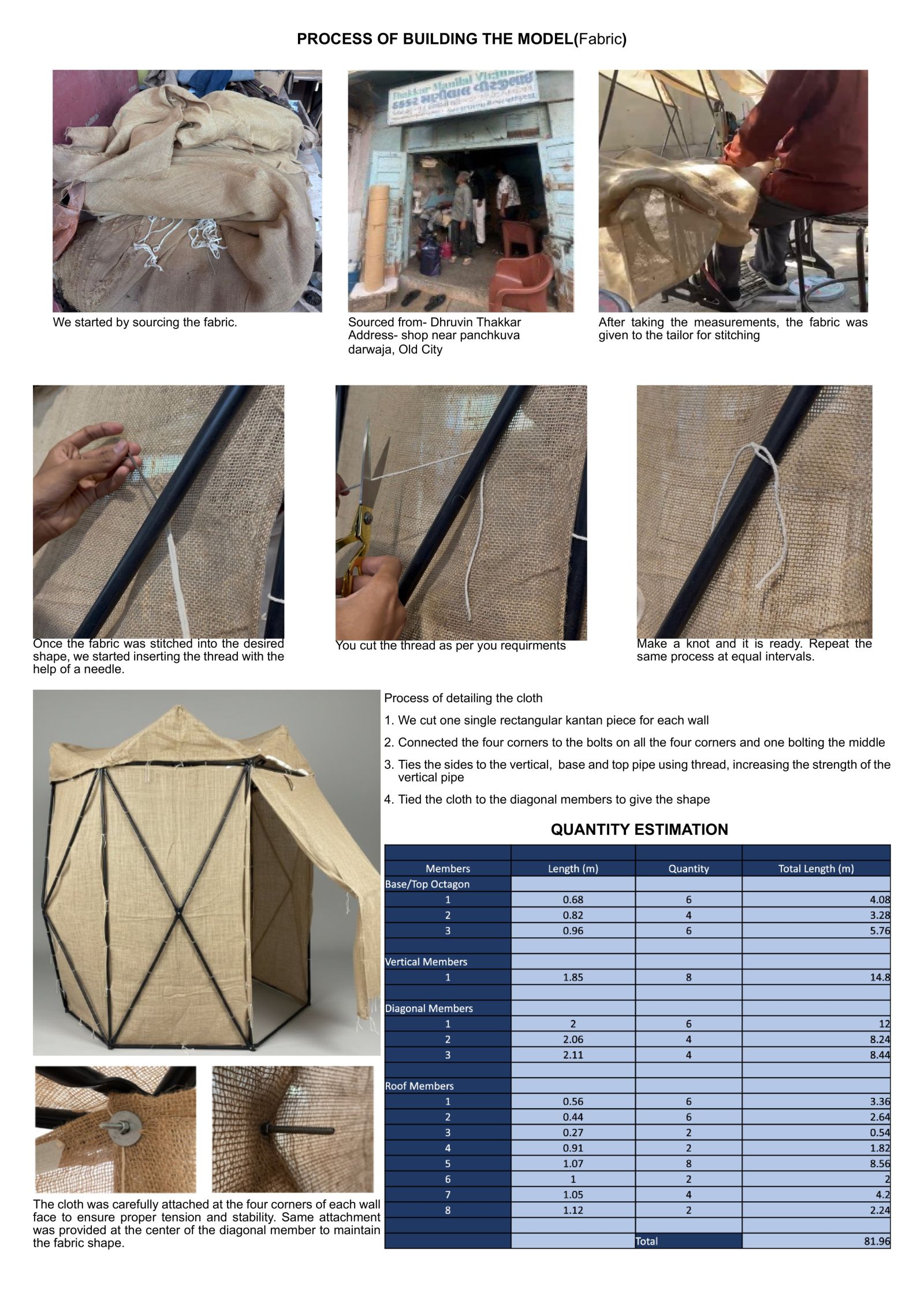
Fabric sourcing, stitching, detailing, and attachment process for the Climavent skin system, along with final assembly and quantity estimation.

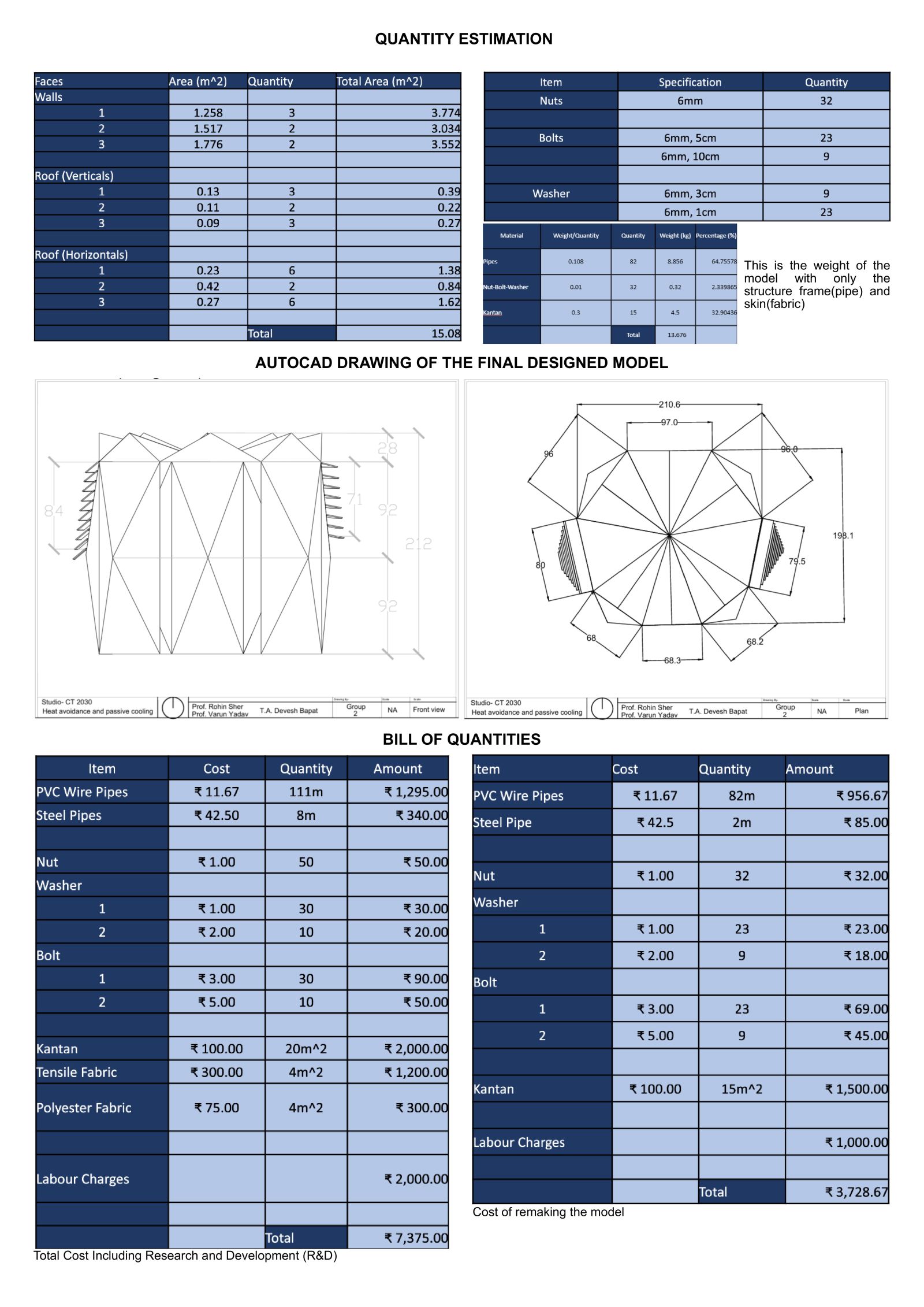
Detailed quantity estimation, material specifications, structural weight analysis, AutoCAD drawings, and bill of quantities prepared for the final Climavent shelter design and fabrication process.

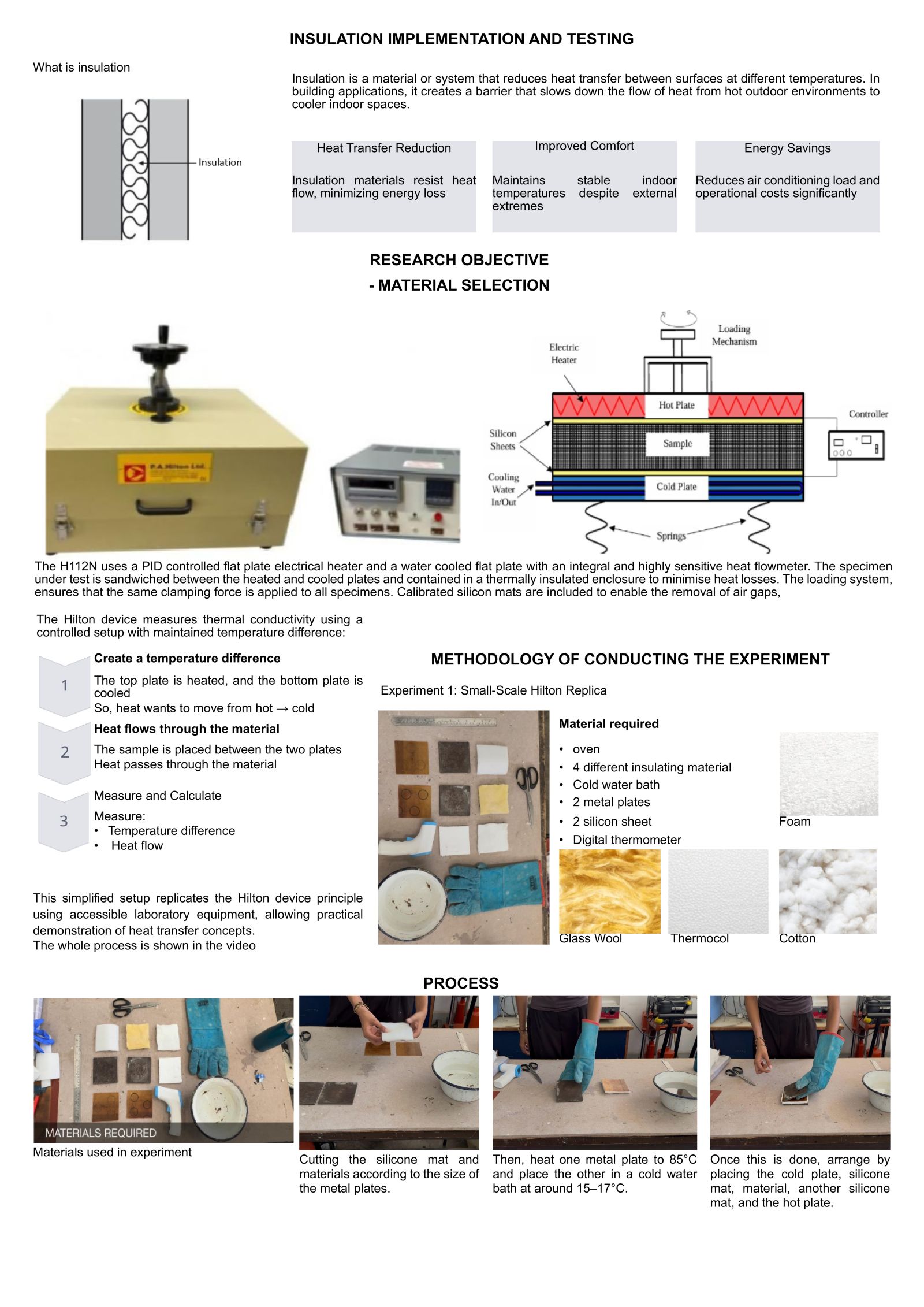
Research, methodology, and experimental setup for insulation material testing to evaluate heat transfer reduction and thermal performance for the Climavent shelter.

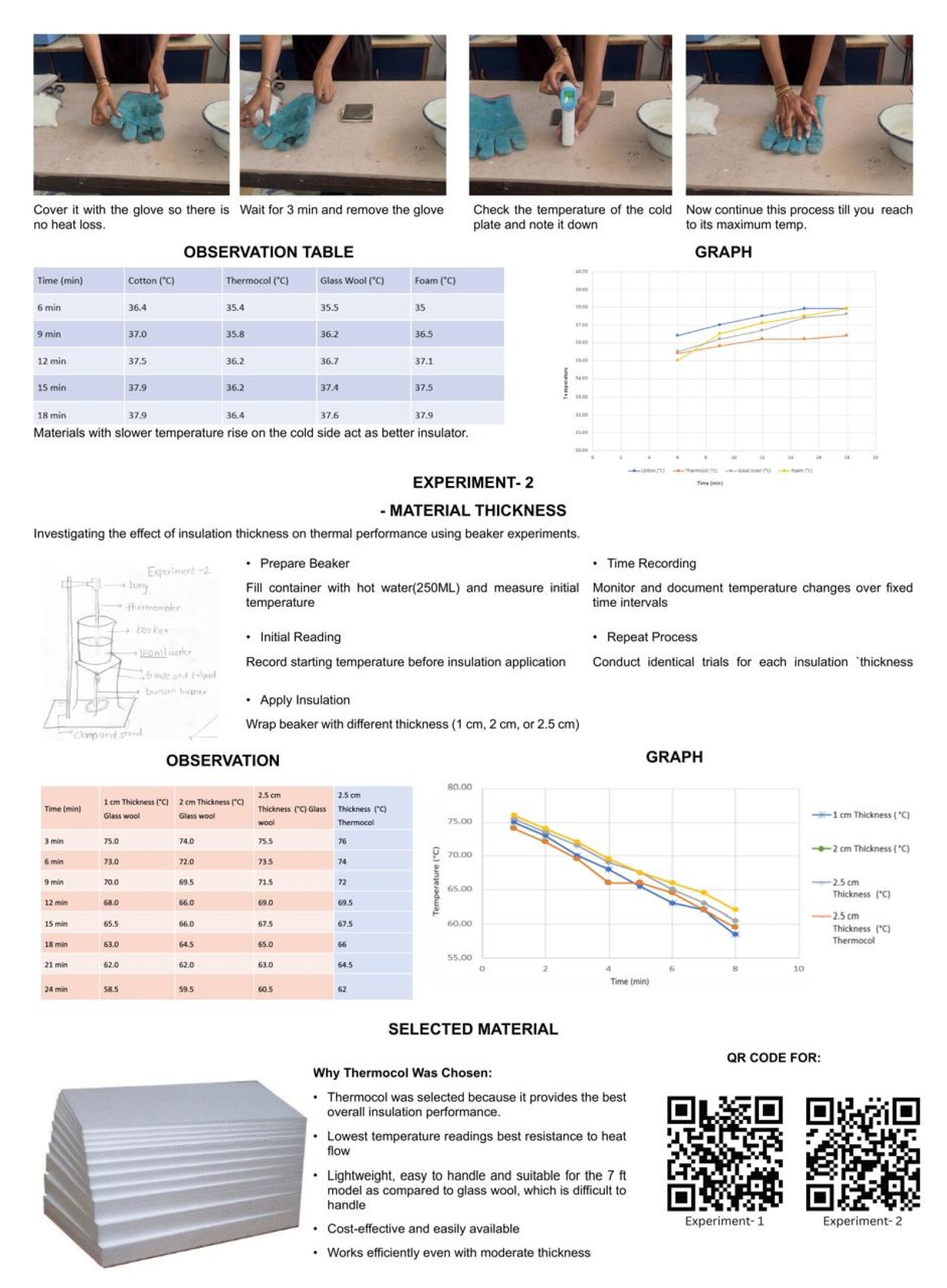
This panel presents the observations, graphs, and comparative analysis from insulation experiments conducted to study material performance and the effect of thickness on thermal resistance, leading to the selection of thermocol as the most suitable insulating material.

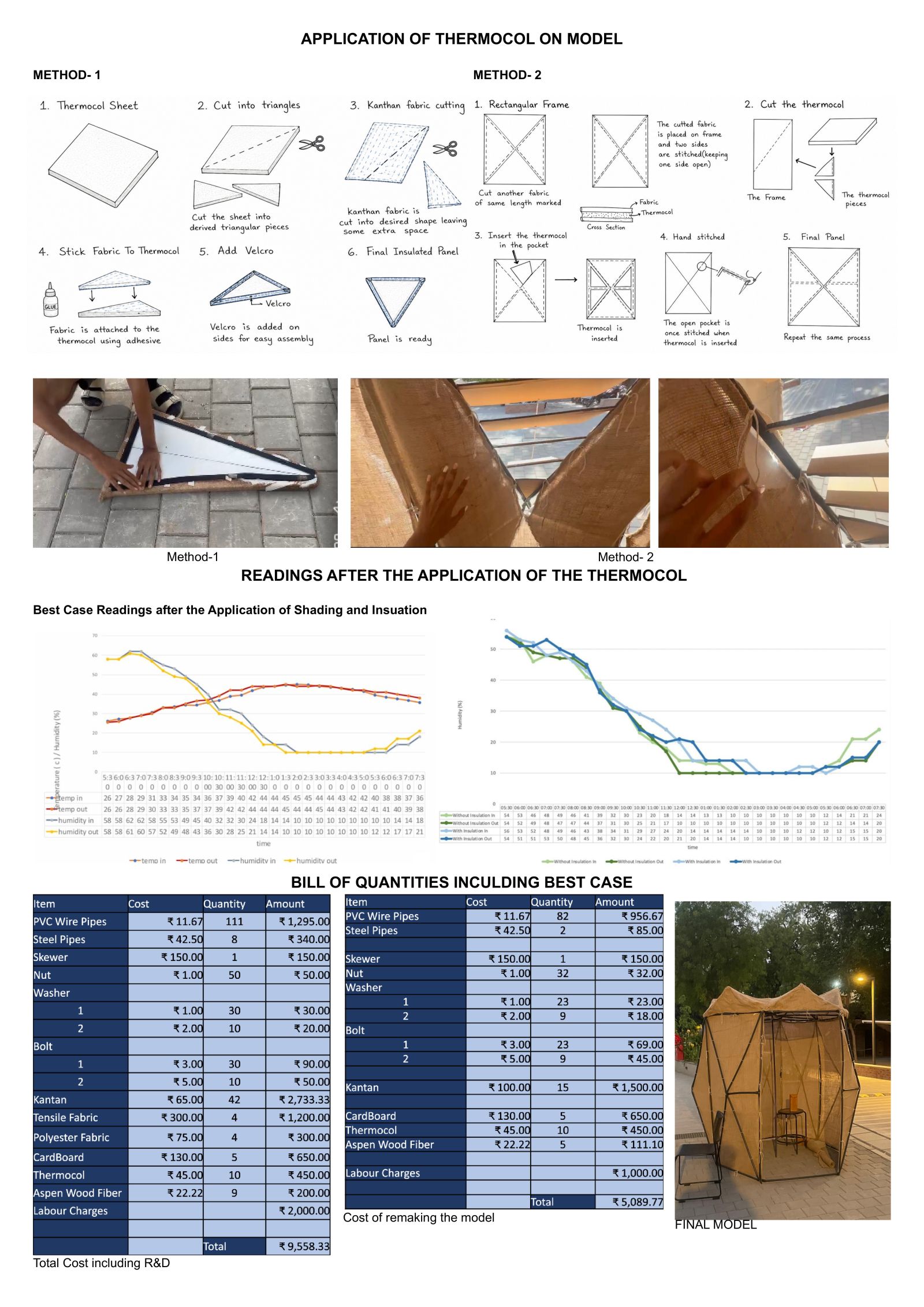
This panel shows the implementation methods of thermocol insulation on the Climavent model, along with performance readings, comparative analysis, cost estimation, and the final insulated shelter.

Project Video