Your browser is out-of-date!
For a richer surfing experience on our website, please update your browser. Update my browser now!
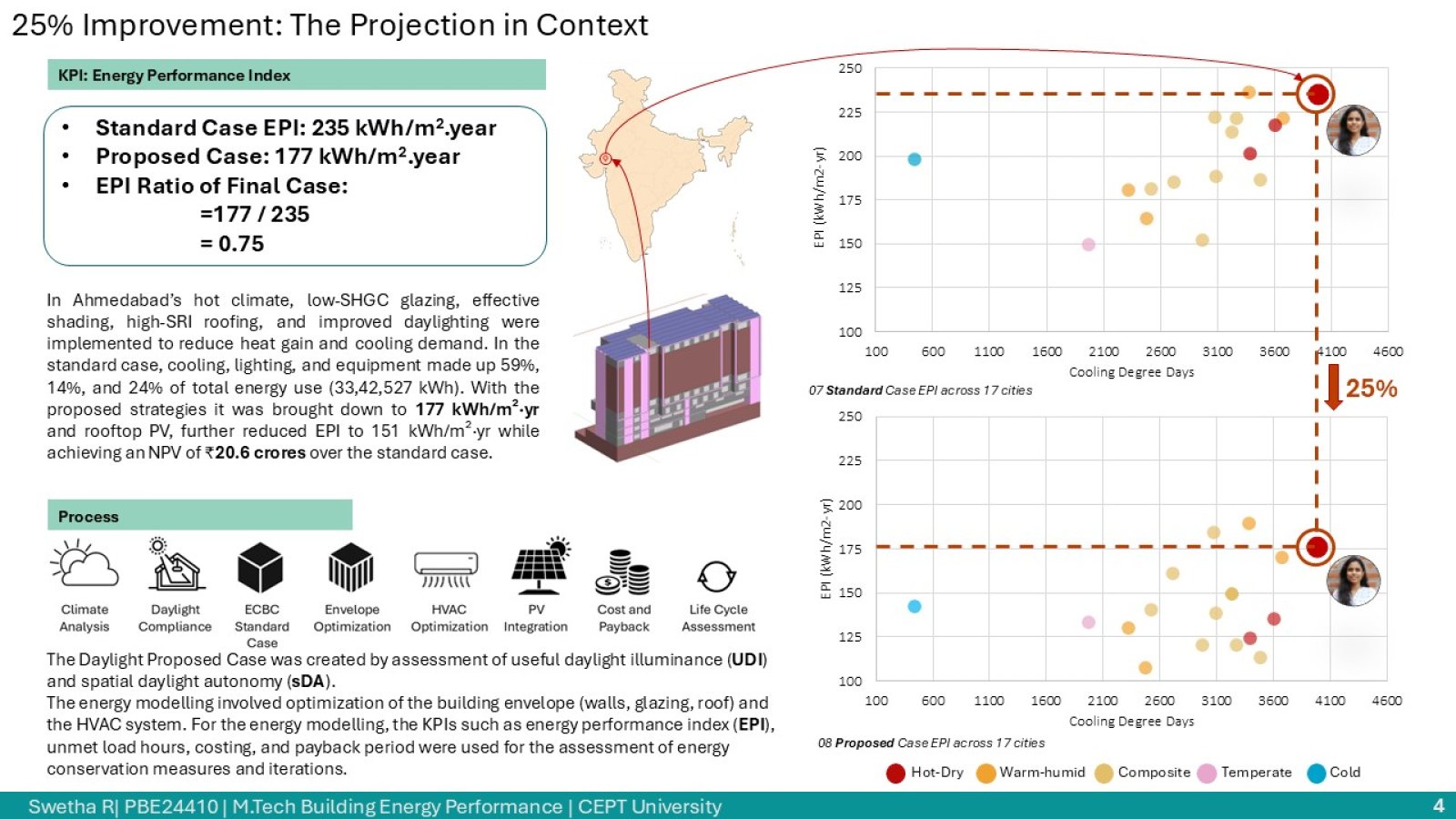
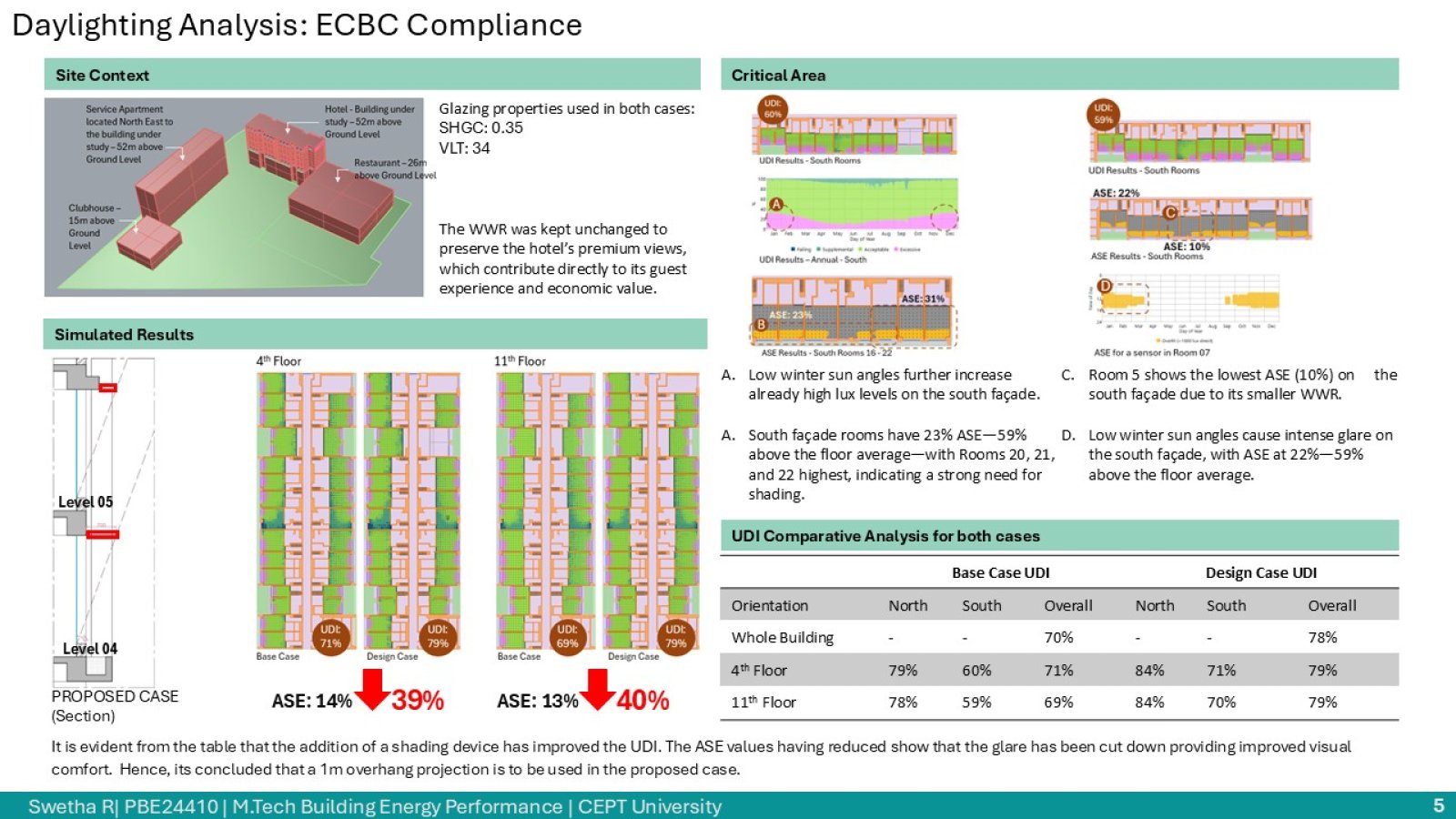
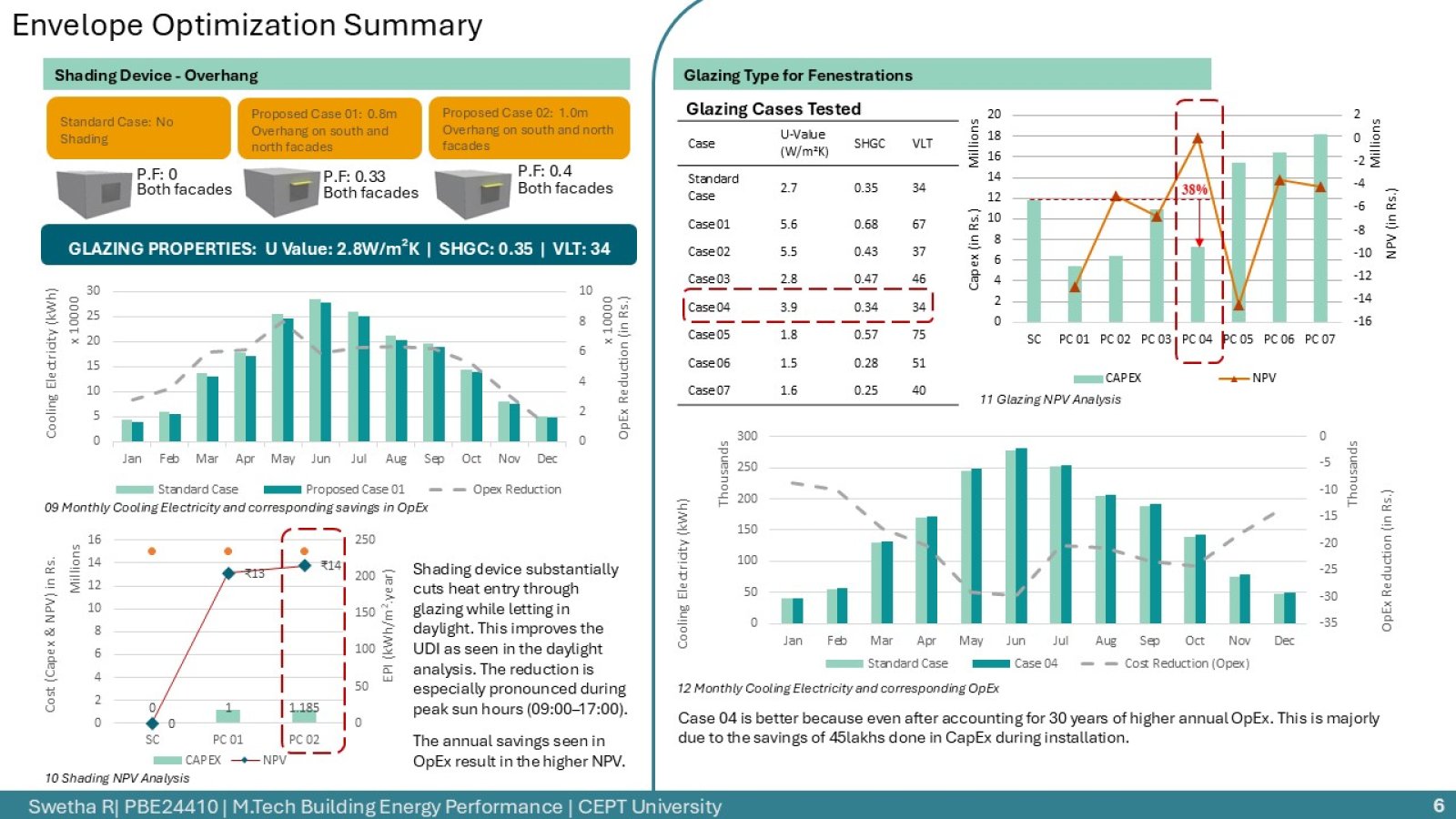
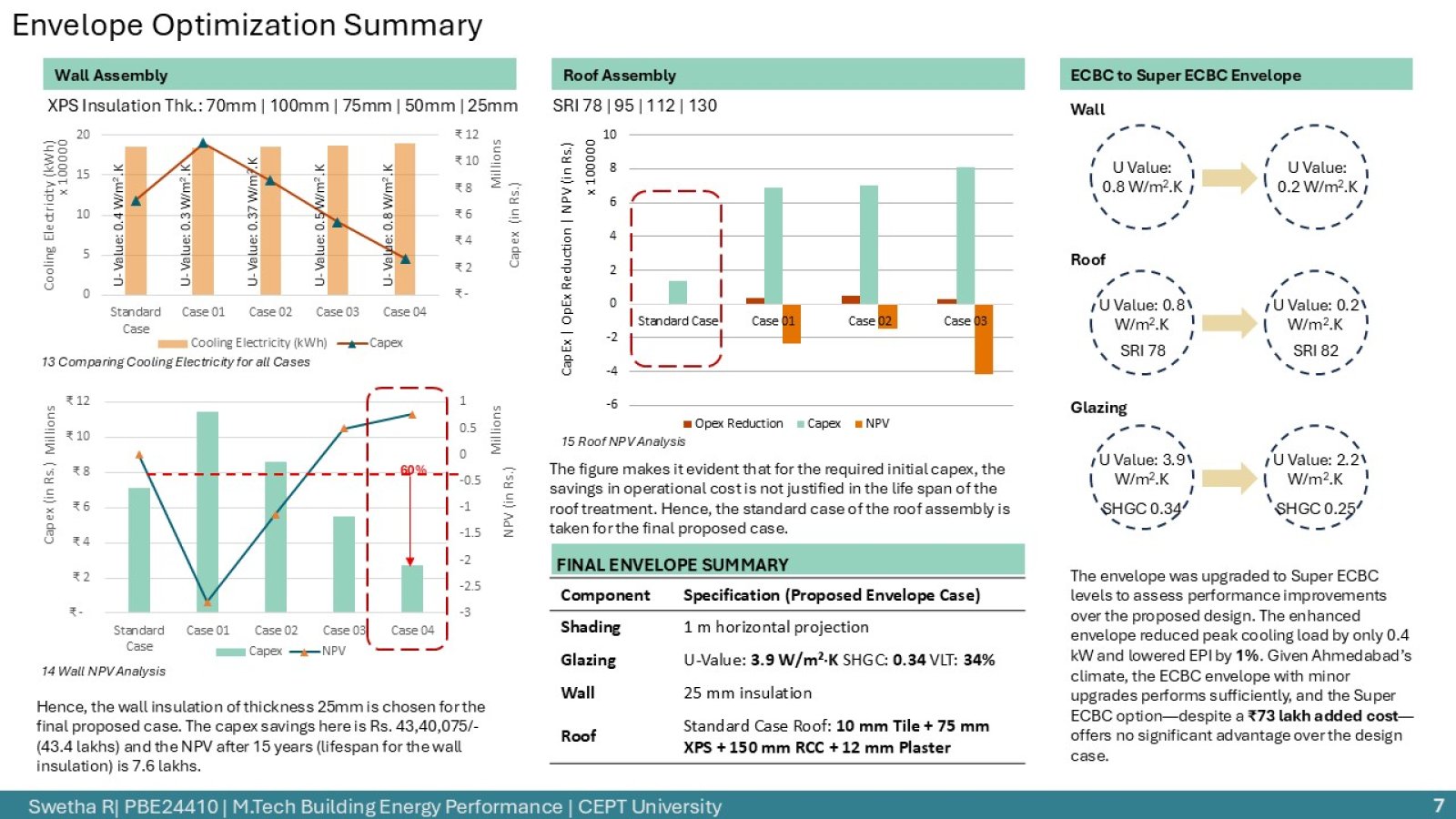
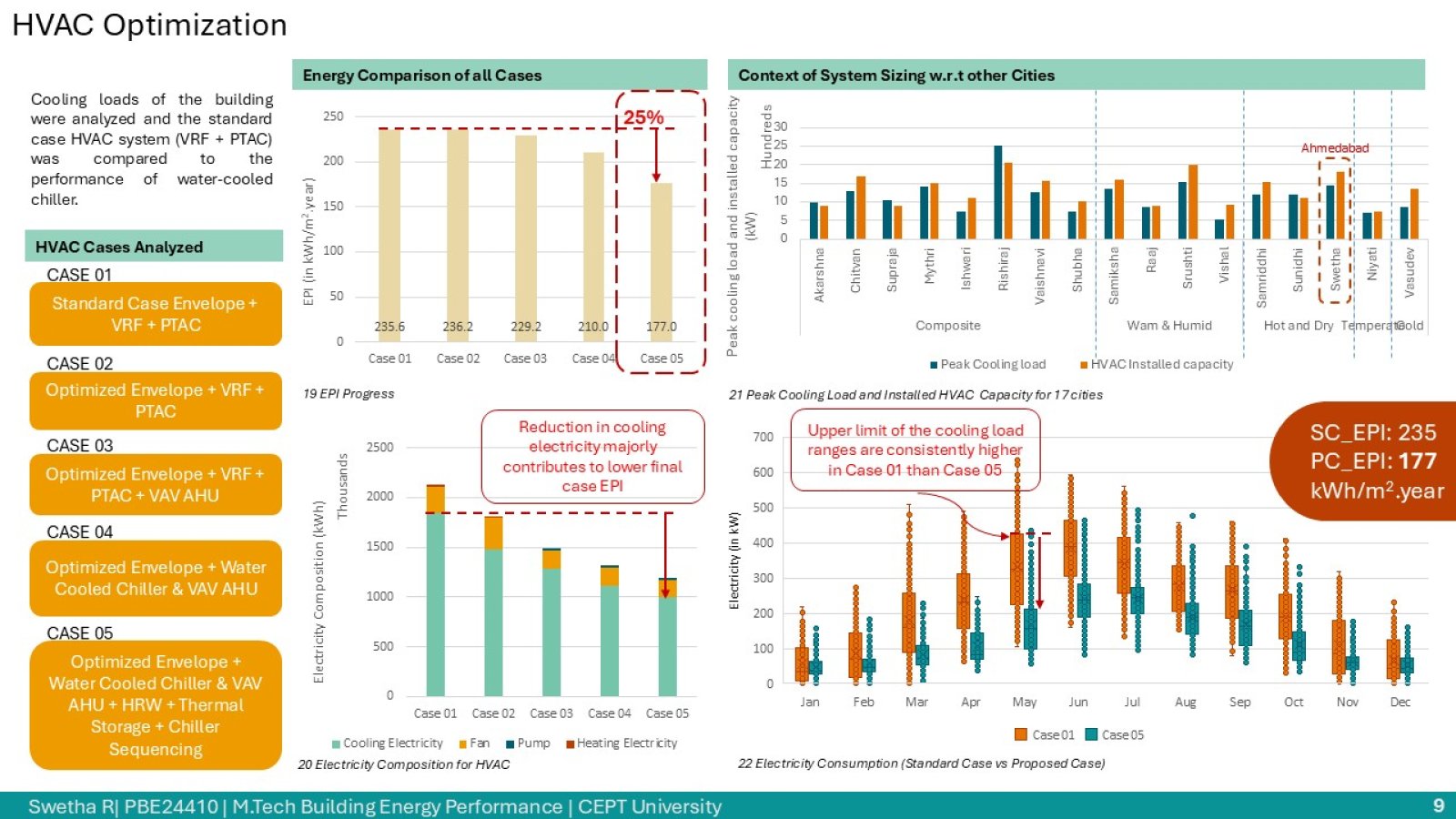
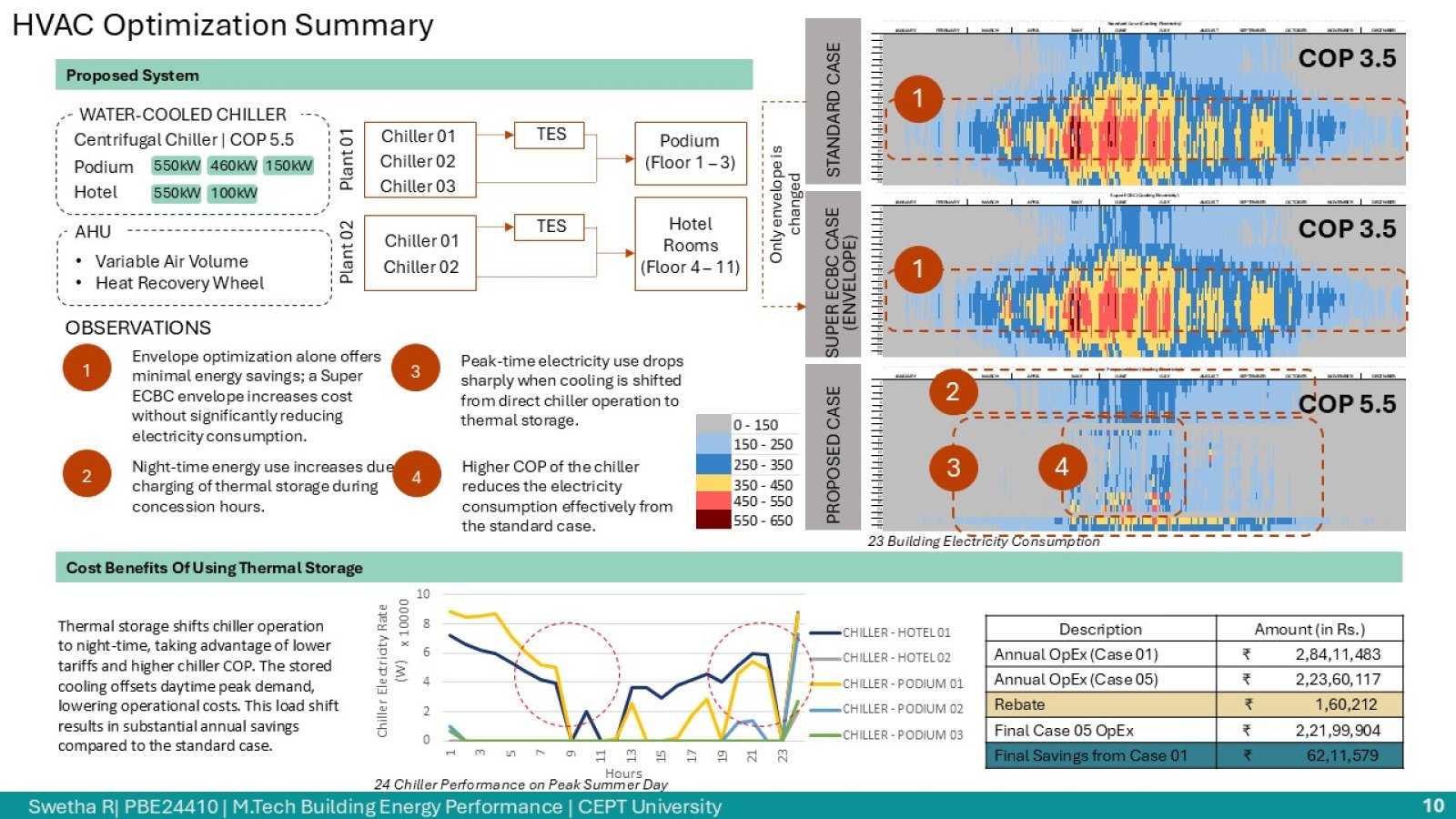
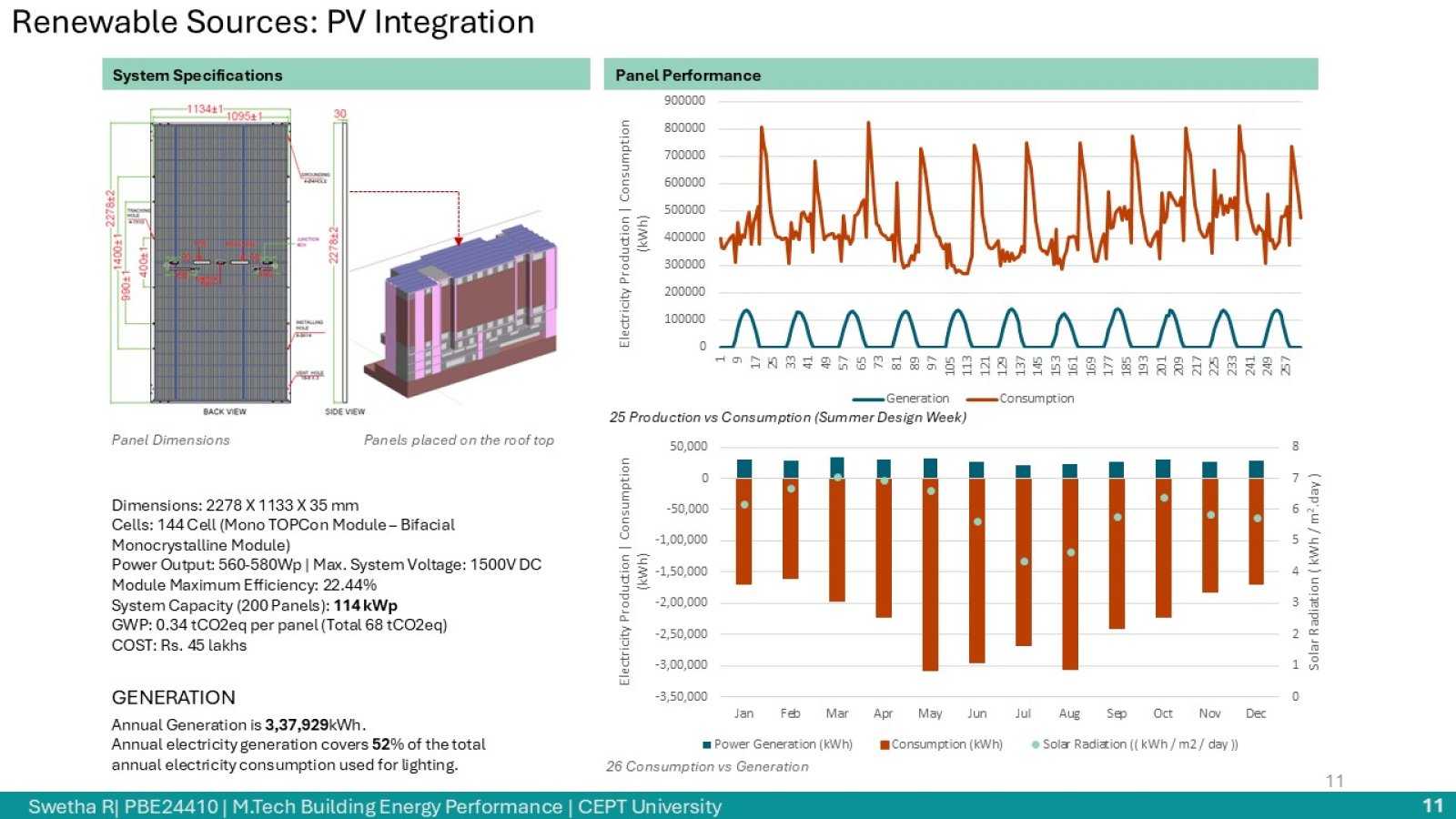
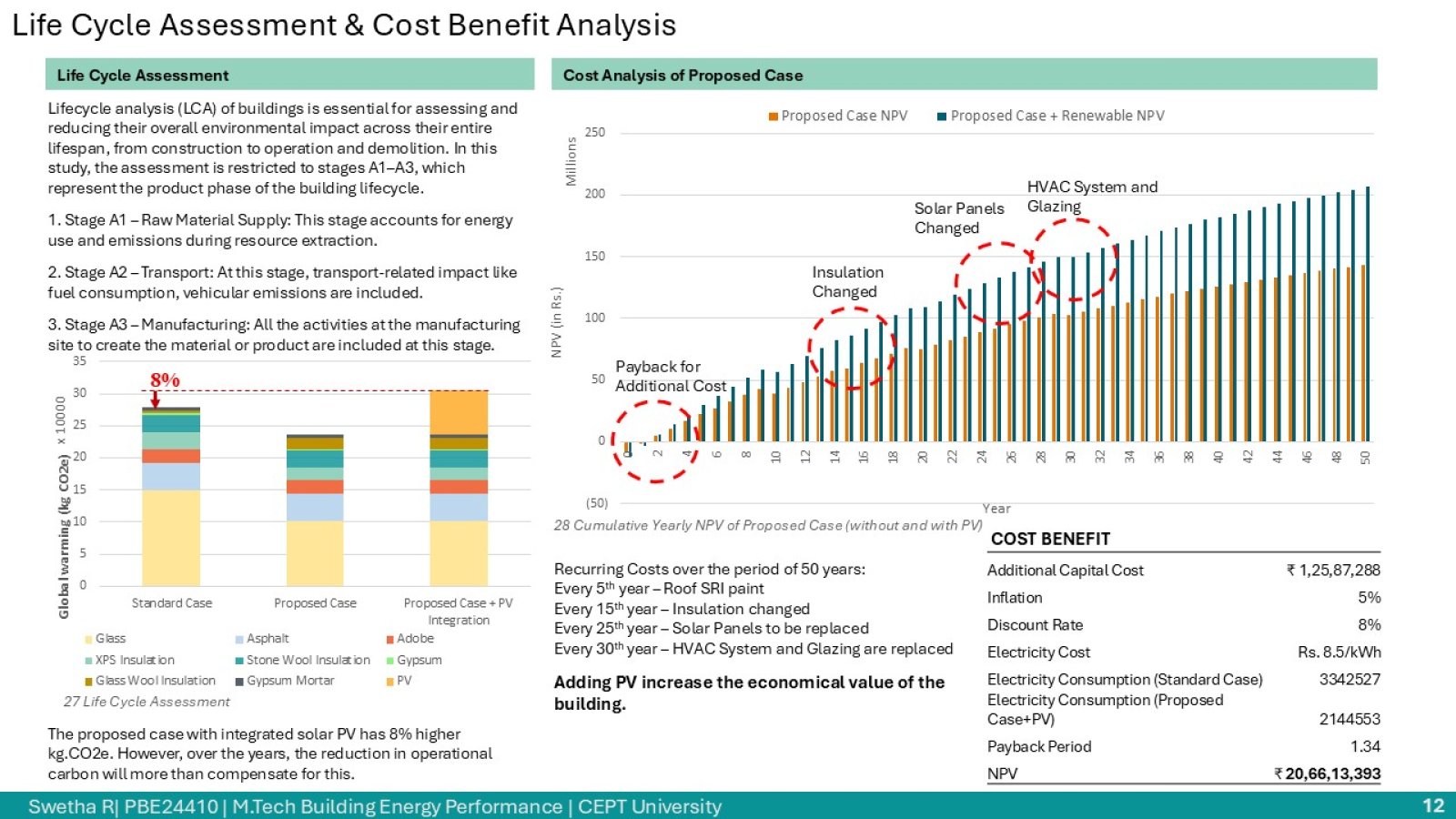
This semester’s portfolio demonstrates a systematic reduction of the building’s Energy Performance Index (EPI) from 235 to 177 kWh/m²·yr, further lowered to 151 kWh/m²·yr with rooftop PV integration. Key strategies included climate-responsive envelope optimization—low-SHGC glazing, 1 m shading, selective insulation, and daylight enhancement—followed by major HVAC upgrades. Transitioning from VRF + PTAC to a water-cooled chiller with VAV AHUs, HRW, thermal storage, and optimized chiller sequencing significantly cut cooling electricity, improved COP performance, and shifted loads to off-peak hours. Together, these measures reduced energy use, improved comfort, and delivered strong long-term cost and carbon benefits.