Your browser is out-of-date!
For a richer surfing experience on our website, please update your browser. Update my browser now!
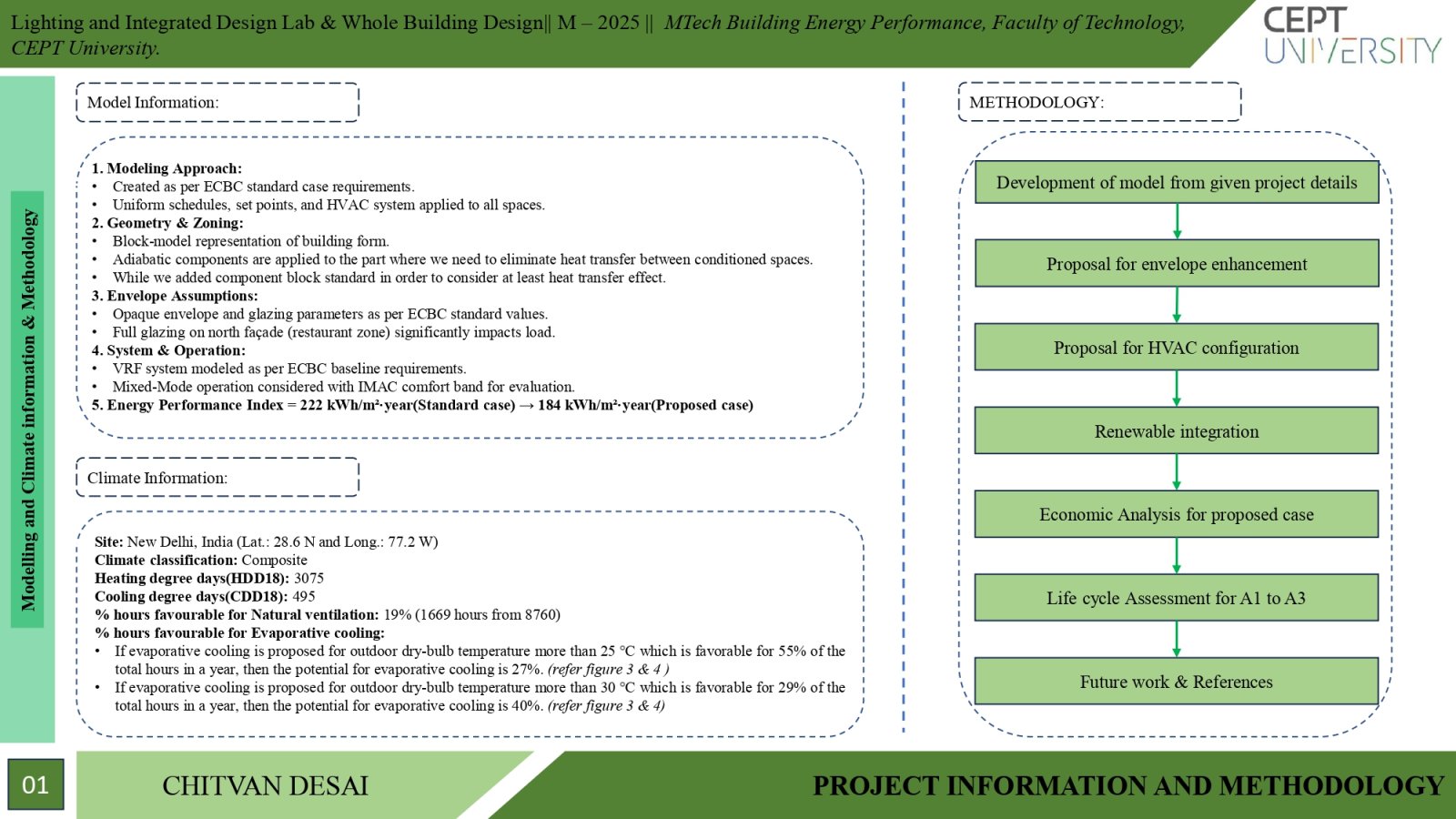
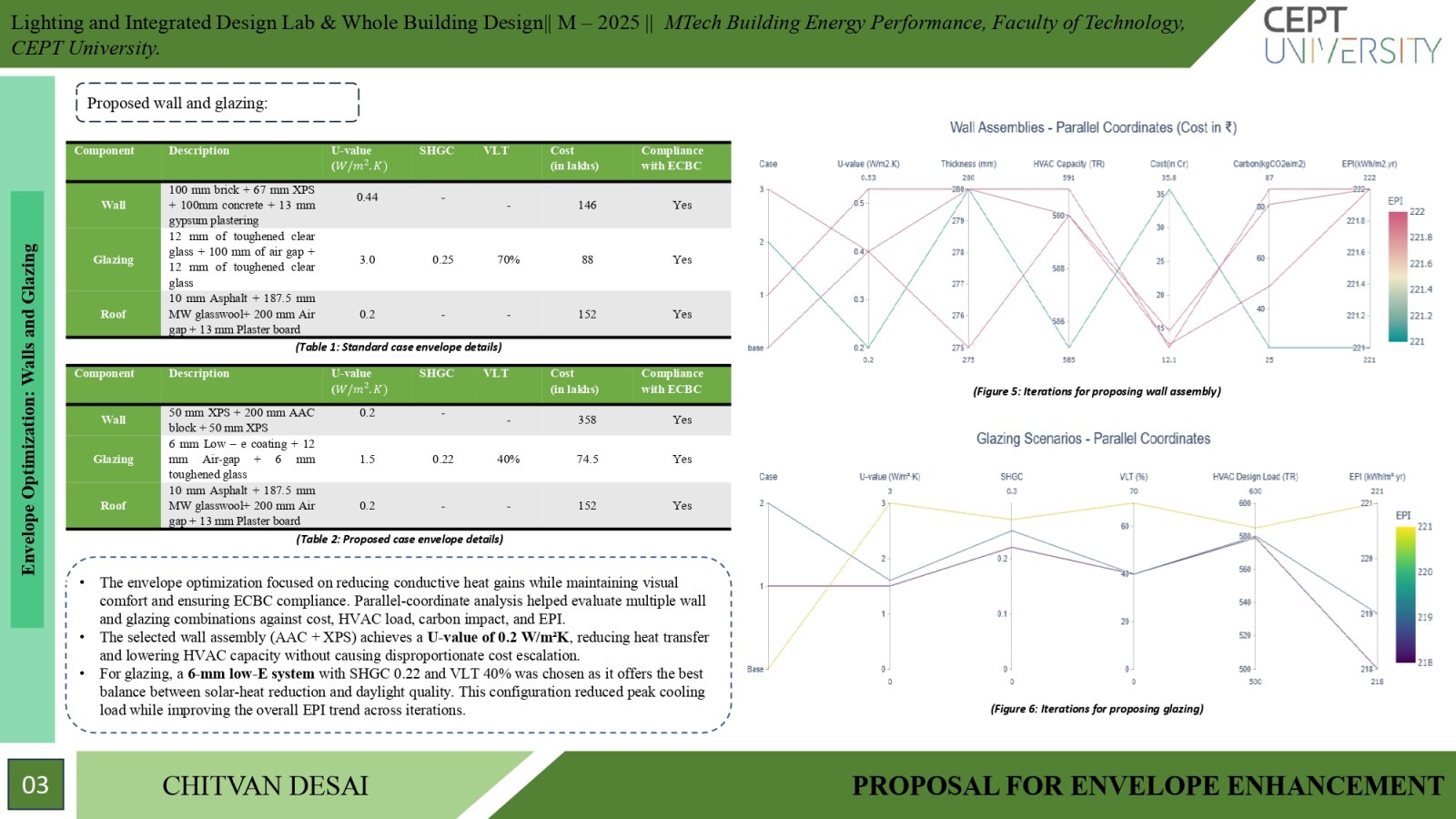
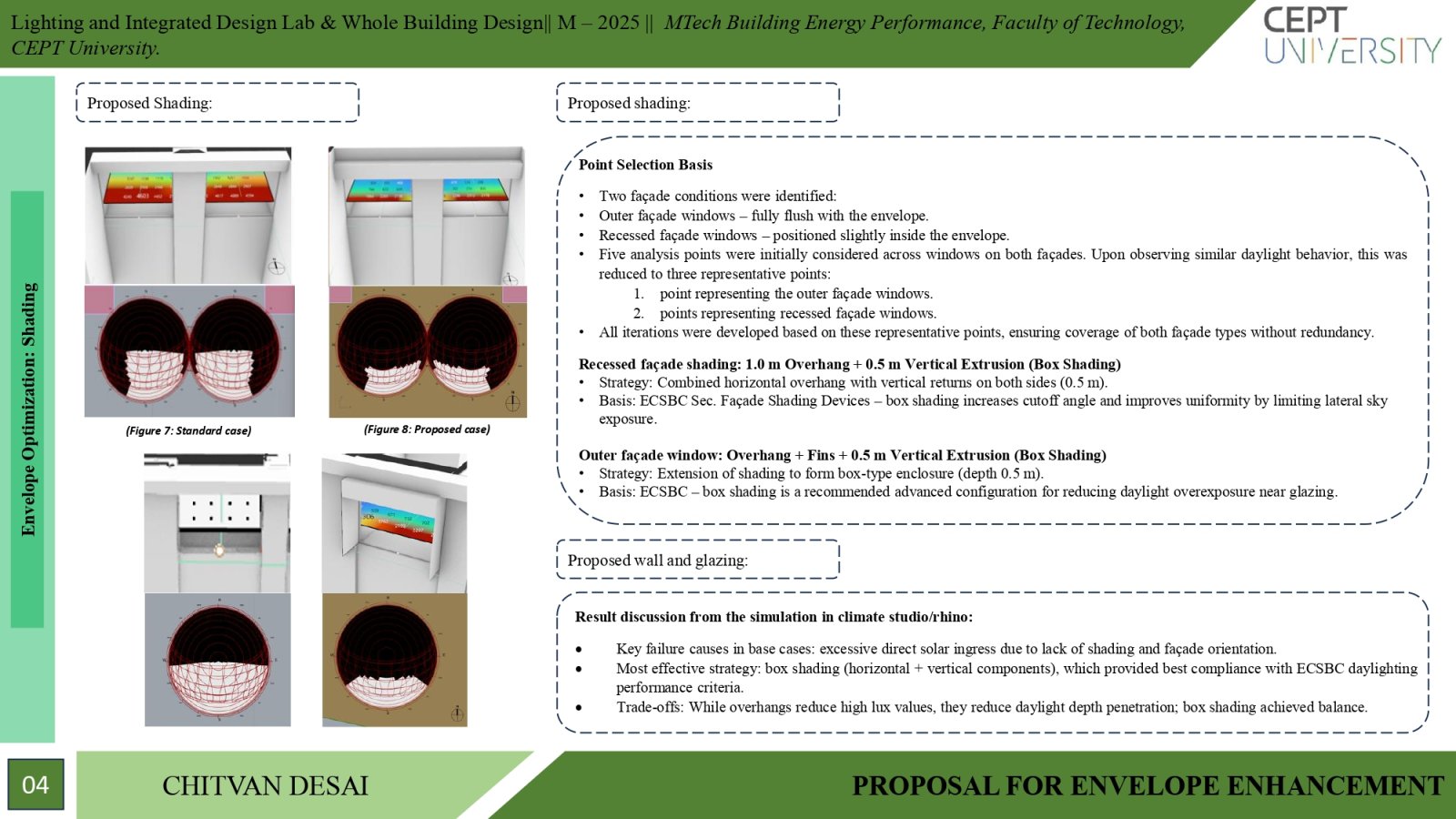
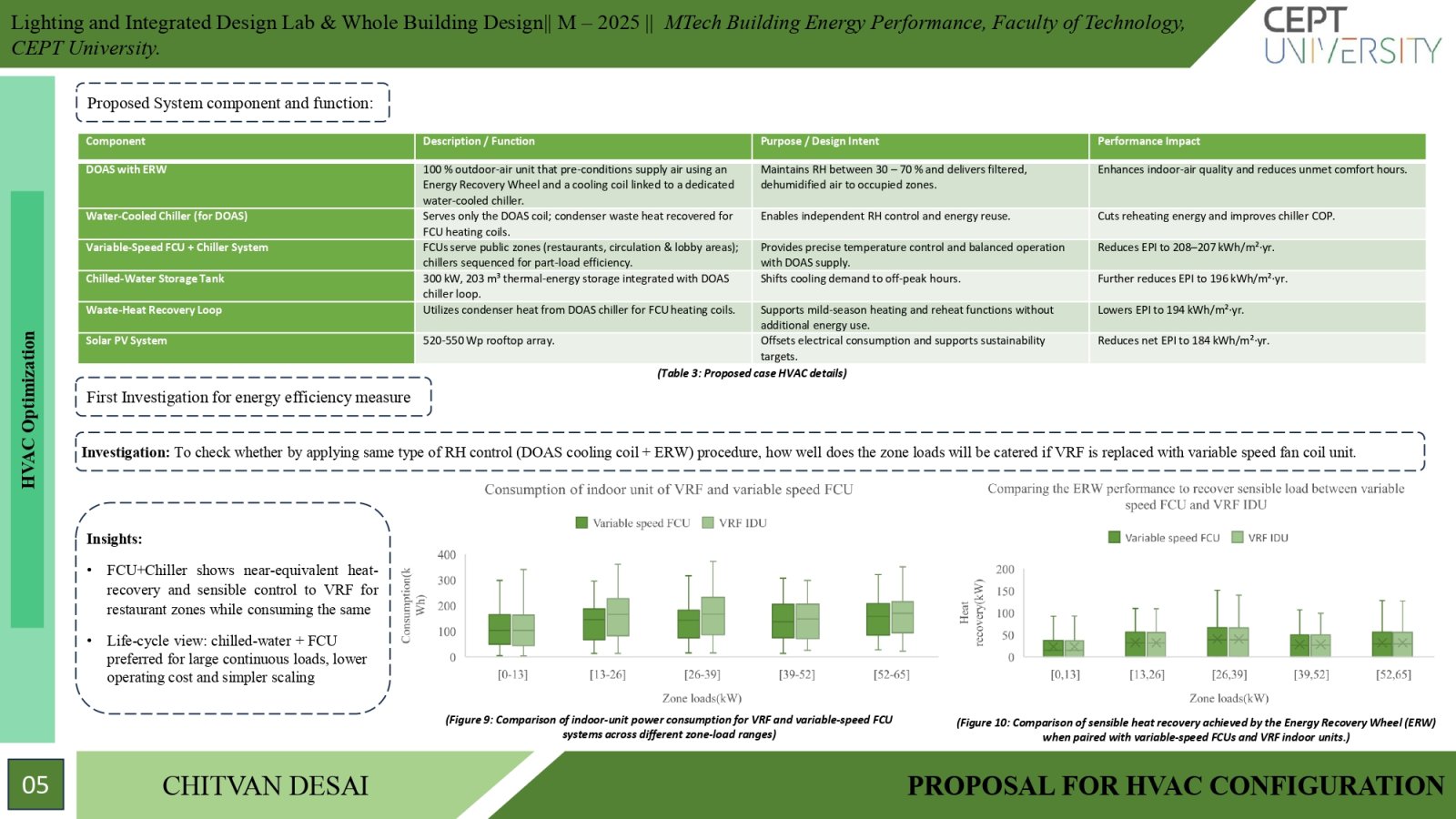
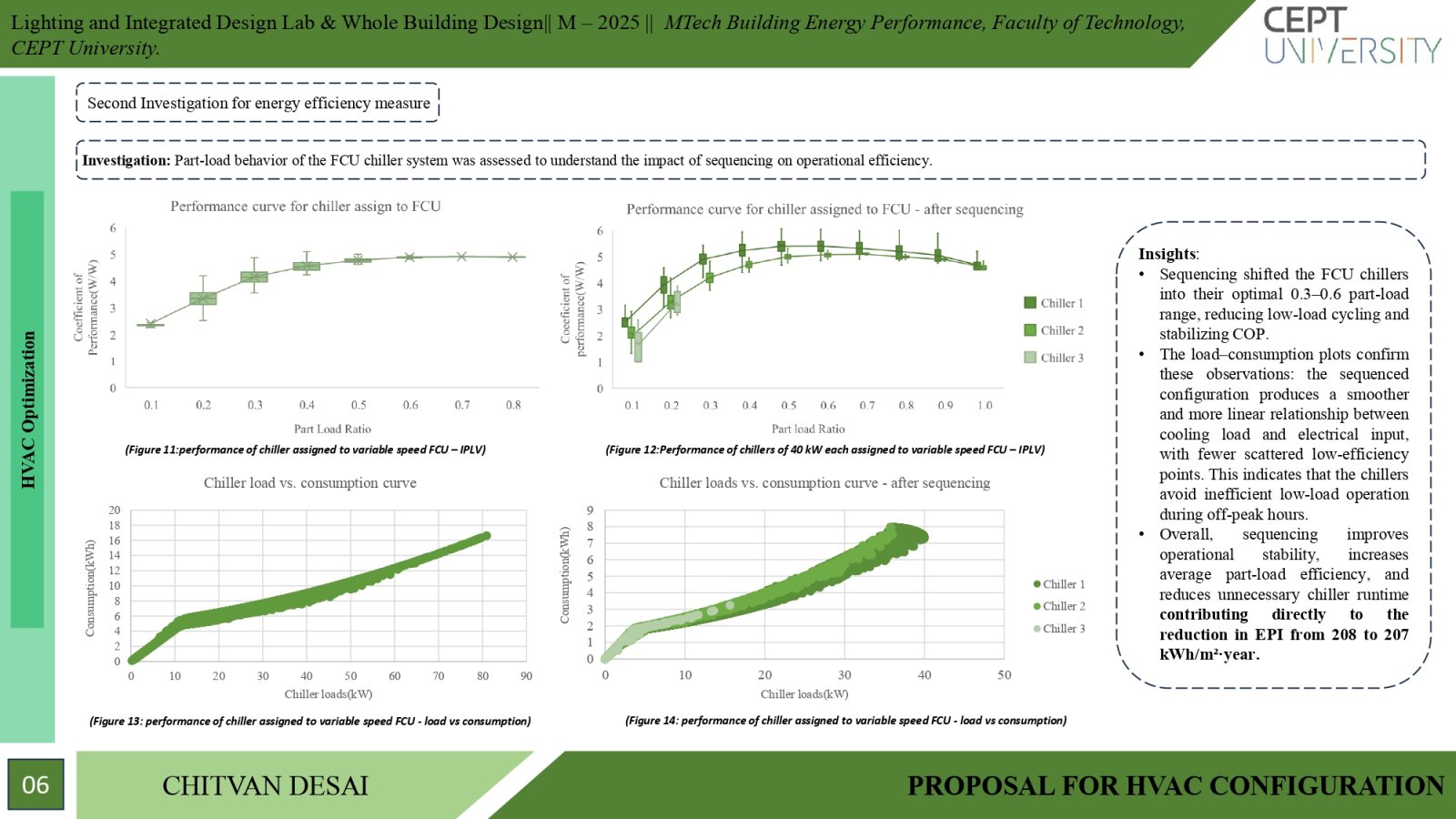
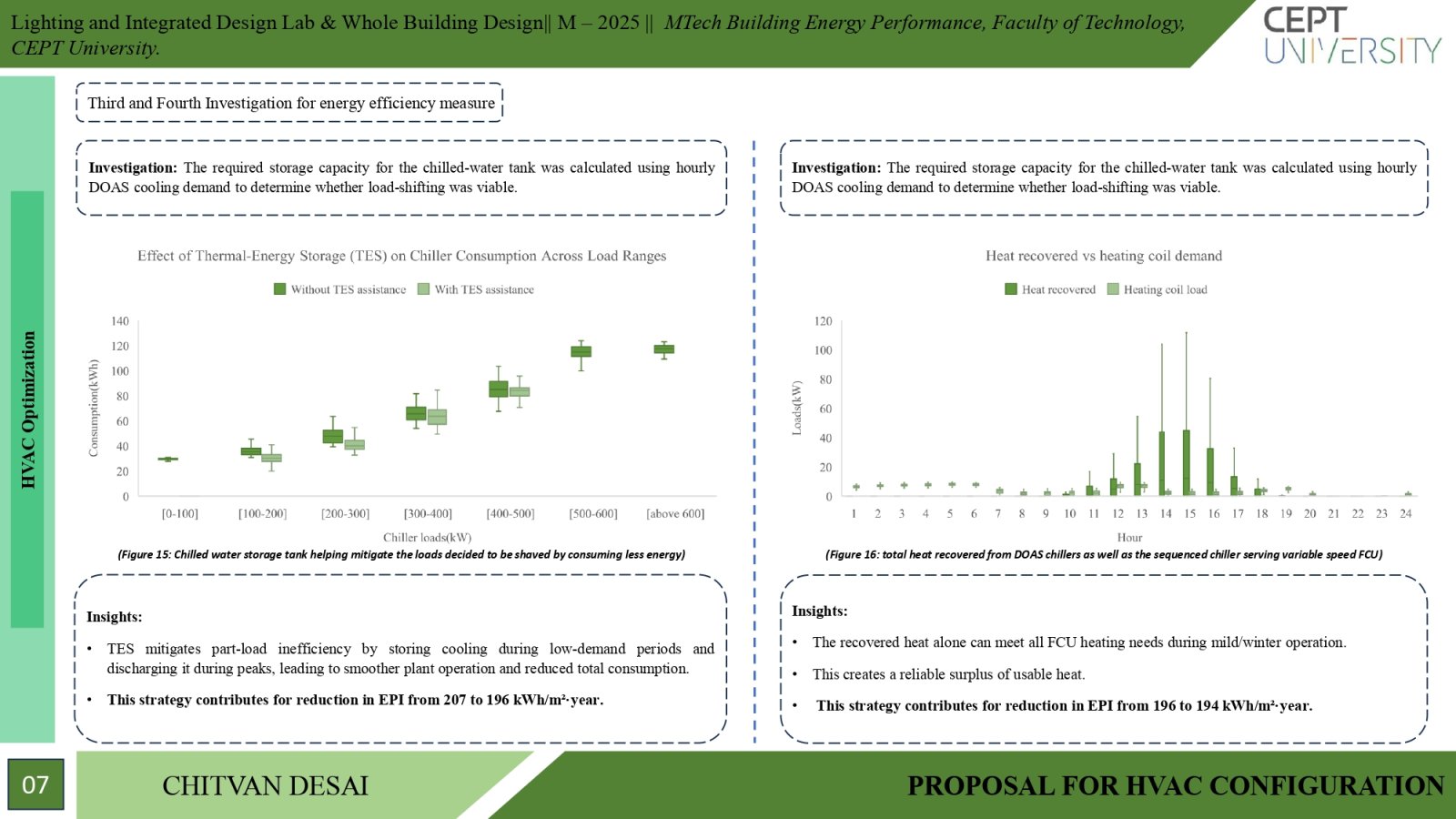
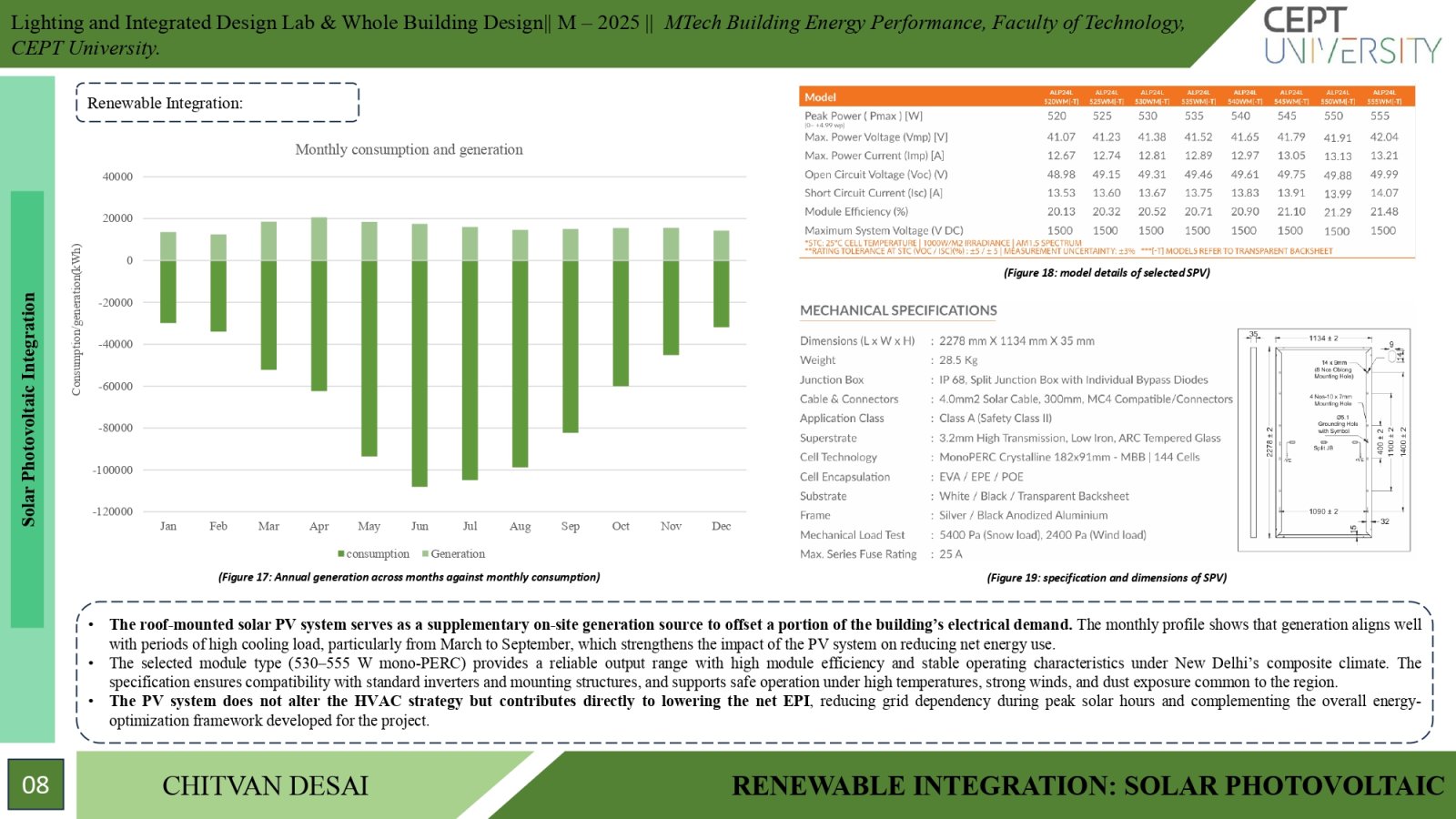
This project investigates the energy performance optimization of a mixed-use hotel building located in New Delhi, which lies in the composite climatic zone as defined by ECBC 2017. The study begins with a fully compliant baseline model and evolves through a sequence of envelope and system-level refinements aimed at improving comfort, reducing unmet hours (< 300 hours), and lowering annual energy consumption. The baseline building recorded an Energy Performance Index (EPI) of 222 kWh/m²·year. Progressive envelope enhancements, including optimized glazing, insulation, and orientation-based shading, reduced the EPI to 216 kWh/m²·year. Subsequent improvements focused on system integration and operational efficiency. In the standard configuration, Variable Refrigerant Flow (VRF) units served all public and service areas, while Packaged Terminal Heat Pumps (PTHPs) conditioned guest rooms. Replacing the PTHPs with VRF systems and re-zoning the HVAC layout further reduced the EPI to 214 kWh/m²·year. High unmet comfort hours persisted, particularly in zones with significant latent loads such as restaurants and lobbies. To address this, a Dedicated Outdoor Air System (DOAS) coupled with a water-cooled chiller and energy recovery wheel was introduced to manage humidity and recover sensible energy, improving comfort and reducing the EPI to 210 kWh/m²·year. To enhance central control and operational stability, VRF systems in restaurants and circulation areas were replaced with variable-speed Fan Coil Units (FCUs) connected to a separate chiller, lowering the EPI to 208 kWh/m²·year. Sequencing the FCU chiller for optimized part-load operation further reduced the EPI to 207 kWh/m²·year. Integrating chilled water storage for the DOAS system and utilizing recovered waste heat from the chillers staged for FCU as well as from chiller coupled to serve DOAS for heating coils provided thermal load shifting and energy cascading benefits, achieving an EPI of 194 kWh/m²·year. Finally, the inclusion of on-site solar photovoltaic generation reduced the net EPI to 184 kWh/m²·year, representing an overall reduction of approximately 17 % from the baseline. This progression demonstrates an evidence-based, iterative design process that integrates passive, active, and renewable strategies to balance thermal comfort and energy efficiency. The final system configuration delivers a significant reduction in annual energy use, improved comfort conditions, and operational reliability, forming a replicable framework for climate-responsive hotel design in India.