Makwana Mohammad Shafin Sohilbhai

CT2016

Free Flowing Network - Seesaw Mechanism

This project is about creating a working four loop water flow system that uses a seesaw mechanism to supply water. The water first fills two small tanks and then moves through the connected UPVC pipe network. I designed and built the entire setup, including the seesaw stand, tanks and pipe layout. Each part was made, tested and adjusted to make sure the flow moves smoothly through all loops. The project helped me understand how water behaves in a network and how flow can be shared, controlled and observed in a small but real system.

View Additional Work
Report Content

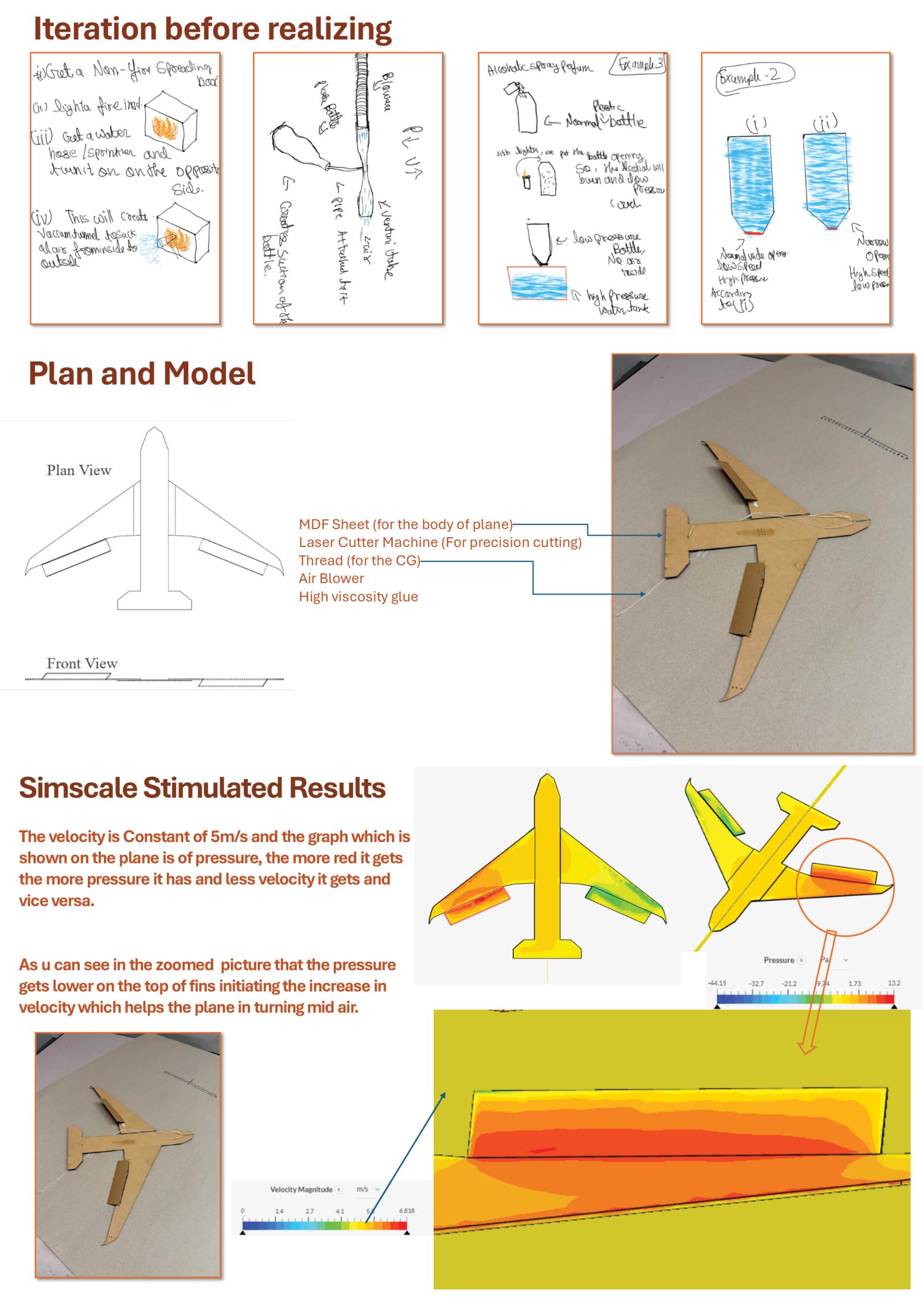
Bernoulli's Principle : This slide documents the design evolution from early sketches to the final aircraft model, including material choices and fabrication methods. It also presents SimScale simulation results, demonstrating airflow, pressure variation, and how fin-induced velocity changes improve mid-air stability and turning performance.

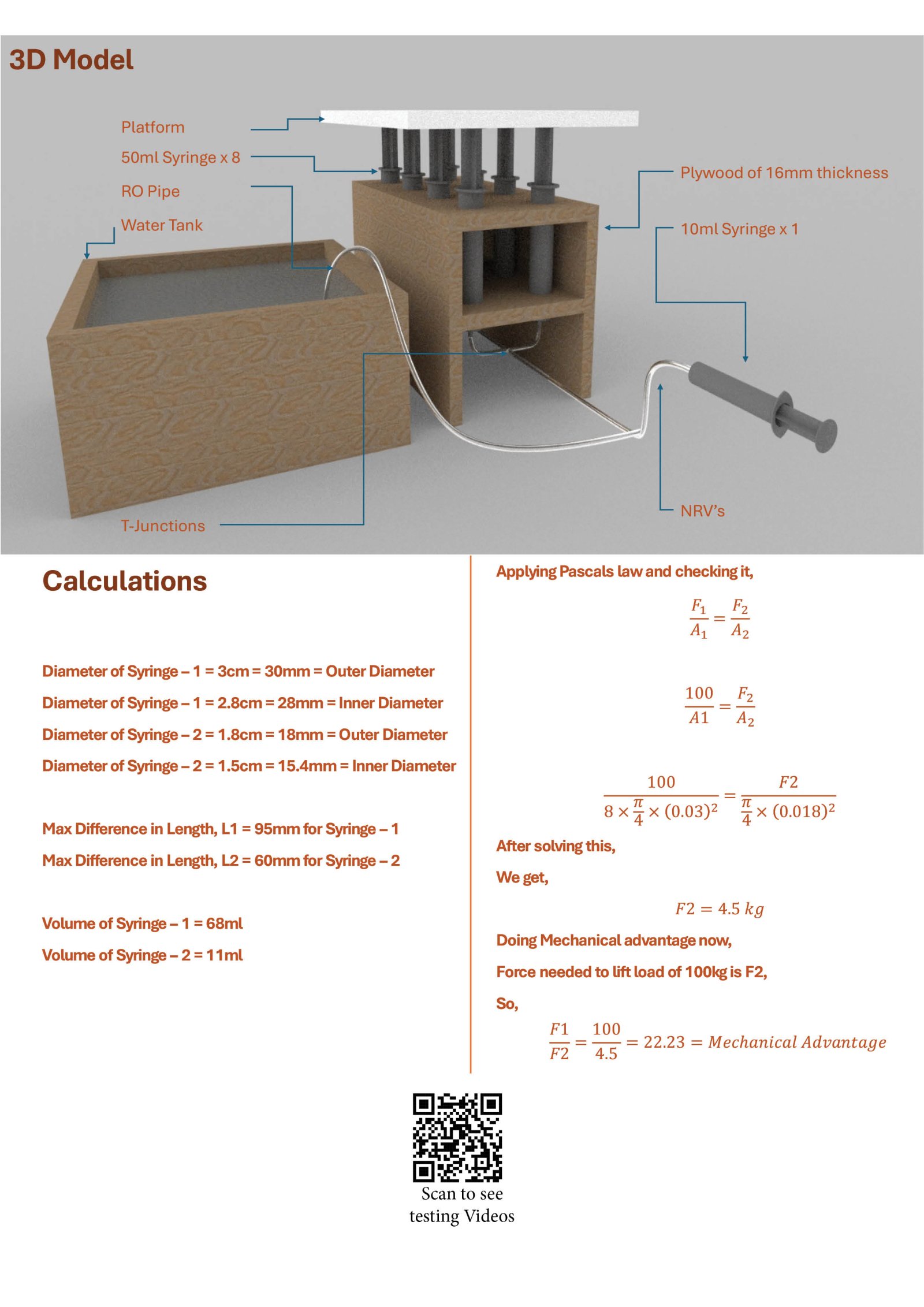
Pascal's Law : This slide showcases the 3D model of a syringe-based hydraulic system alongside detailed calculations based on Pascal’s Law. It explains diameter measurements, mechanical advantage achieved when lifting load of 100 kg through interconnected syringes and NRV-assisted flow control.

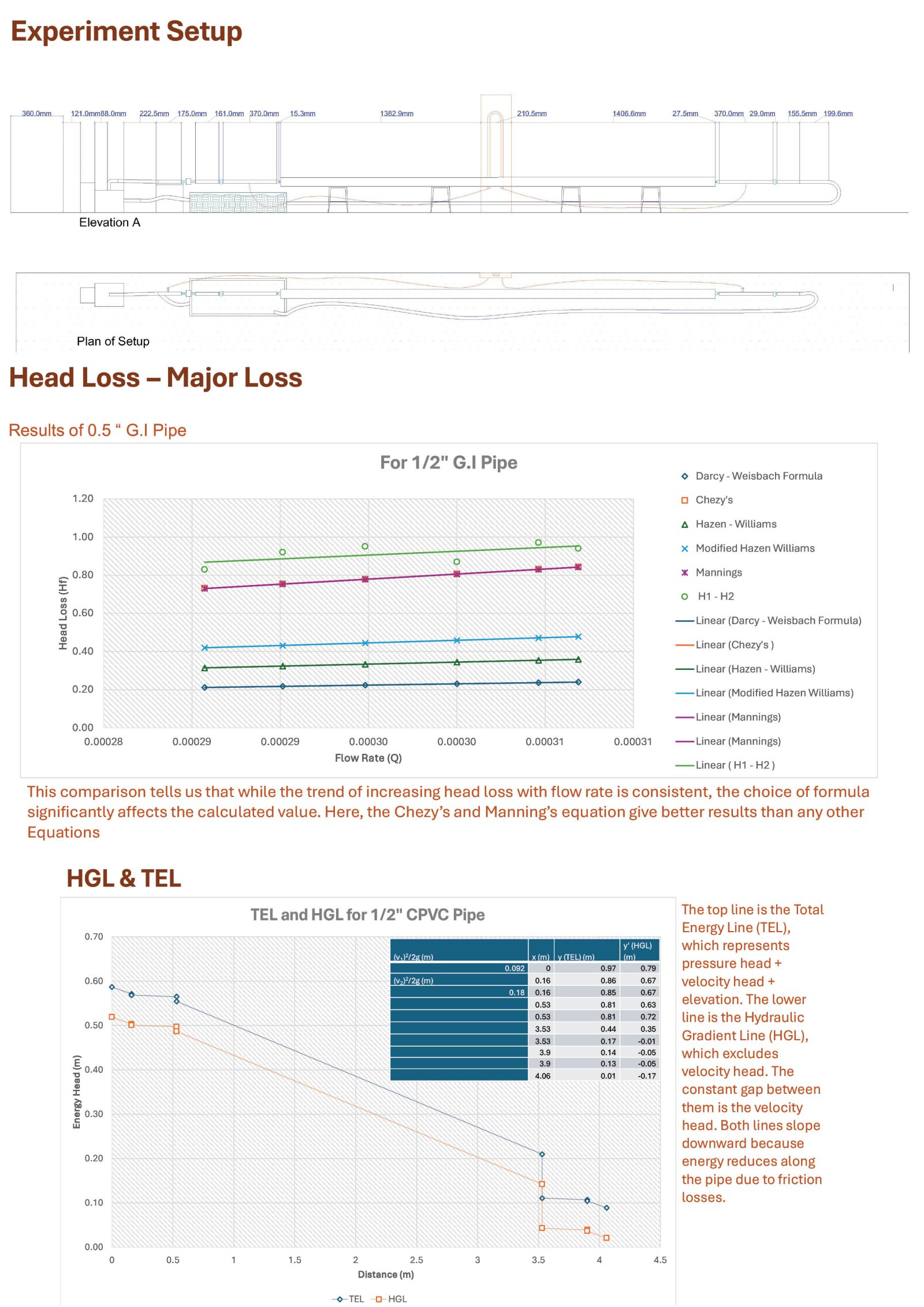
Head Loss : This slide presents the experimental setup for analysing head loss in a G.I. and CPVC pipe, comparing multiple formulas and illustrating TEL and HGL behaviour to show how pressure, velocity, and elevation contribute to energy reduction along the pipeline.

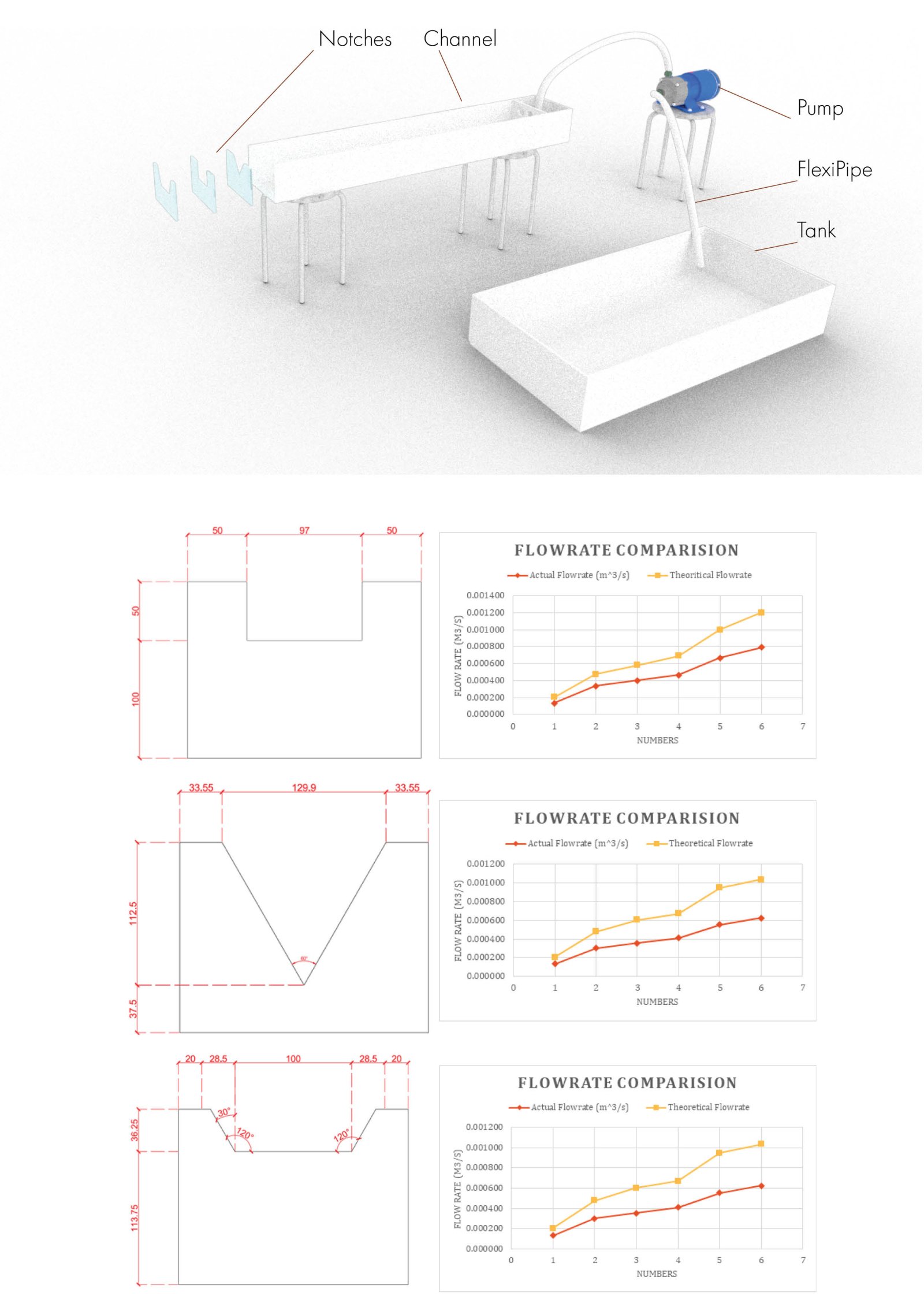
Notches and Wiers : This slide shows the experimental setup used to study discharge through rectangular, V-notch and trapezoidal notches. It includes measured dimensions and flow-rate comparisons, highlighting the variation between theoretical and actual discharge for each notch profile across multiple readings

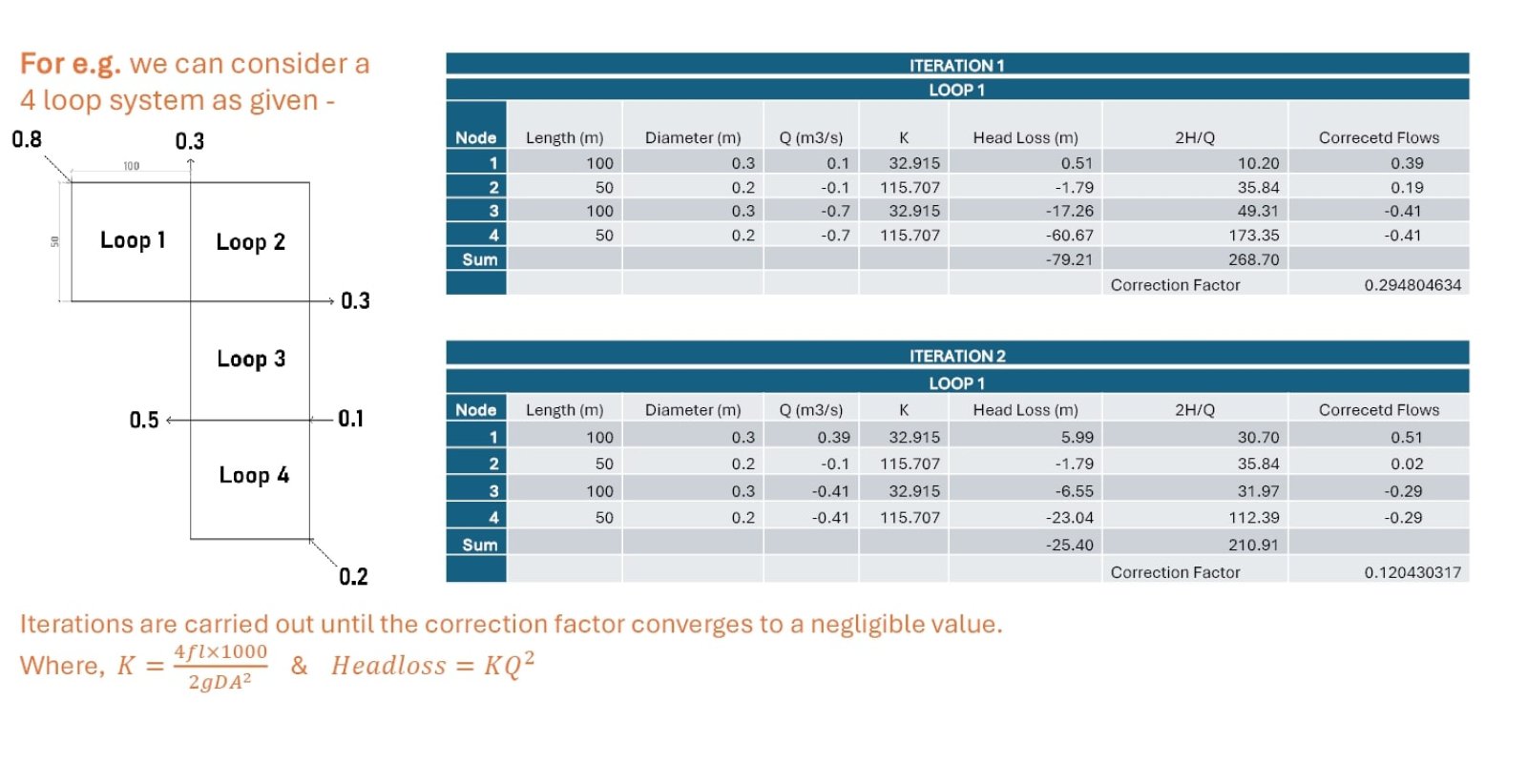
Hardy Cross : This slide explains a four-loop pipe network and demonstrates the iterative process of balancing flows using head-loss coefficients. Successive iterations refine discharge values until correction factors converge, ensuring energy consistency and accurate flow distribution across the entire system.

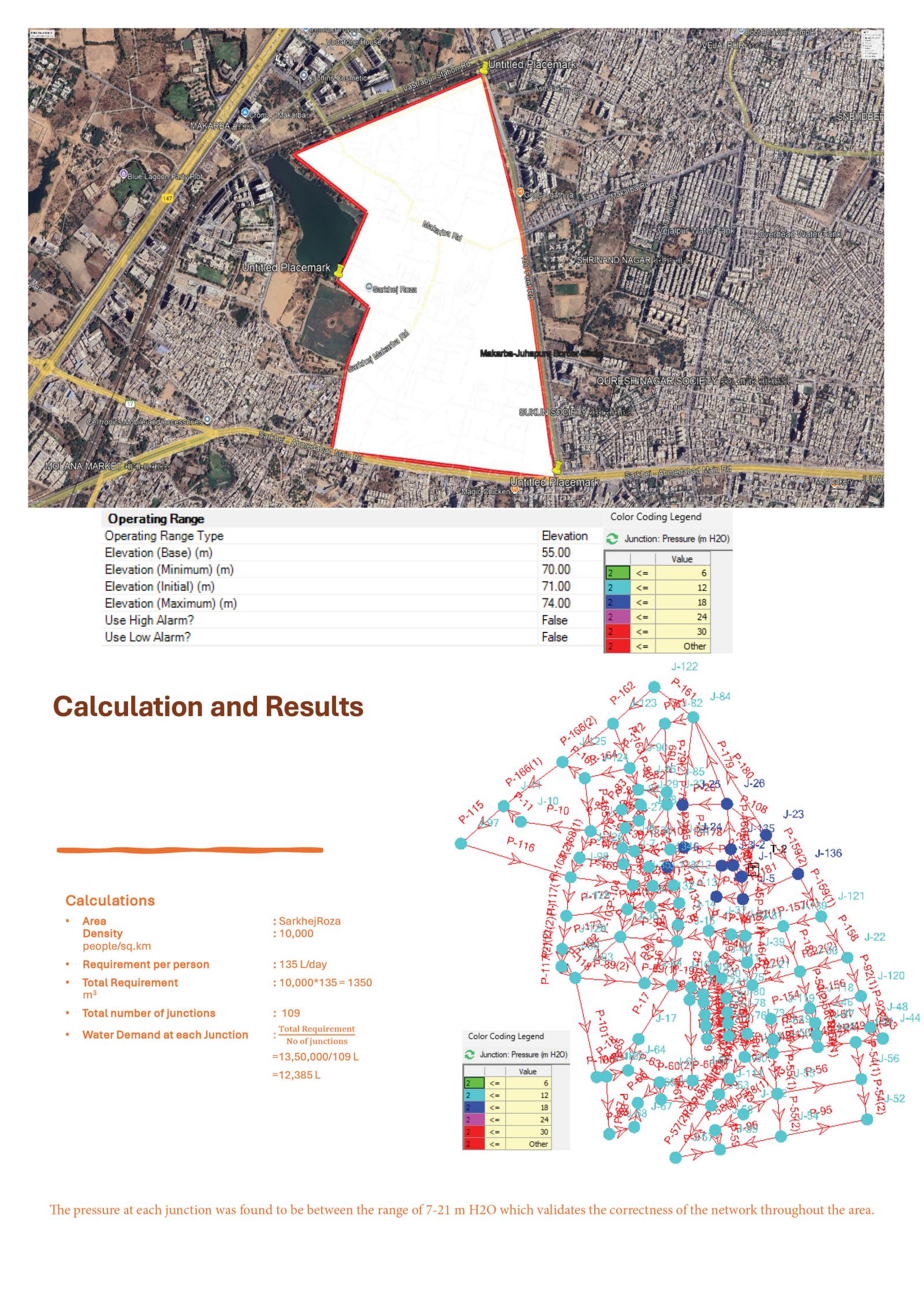
Water Gems : This slide presents the study area of Sarkhej Roza which was 1 sqkm area, elevation range and the resulting water-distribution network with pressure mapping. Calculations determine population demand and per-junction requirements, with final pressures between 7–21 m H?O validating the reliability and performance of the designed network

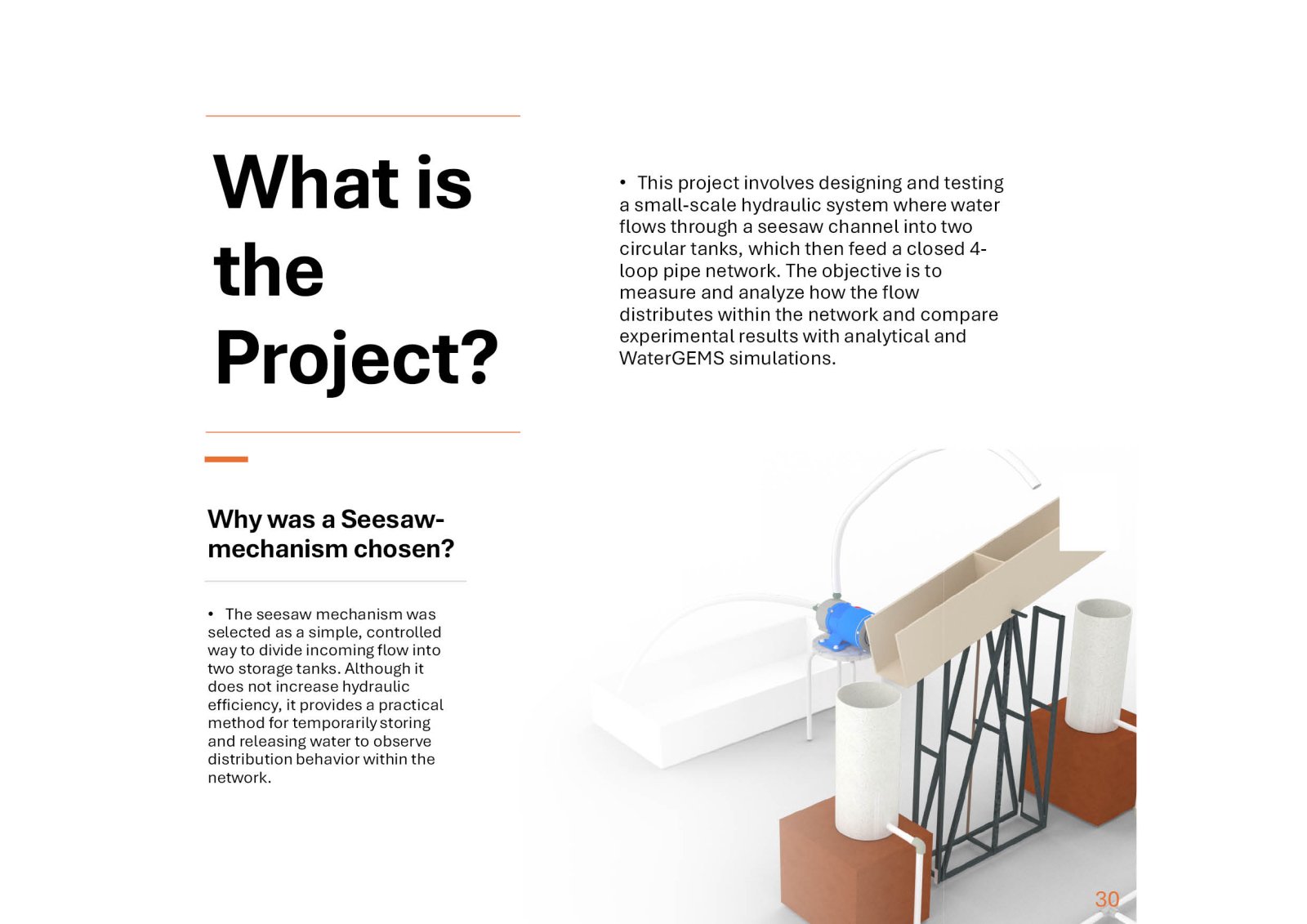
Final Project : This slide explains the design of a small-scale hydraulic system where a seesaw channel divides inflow into two tanks before feeding a 4-loop network. The seesaw was chosen as a simple, controlled method to intermittently store and release water for studying flow distribution.

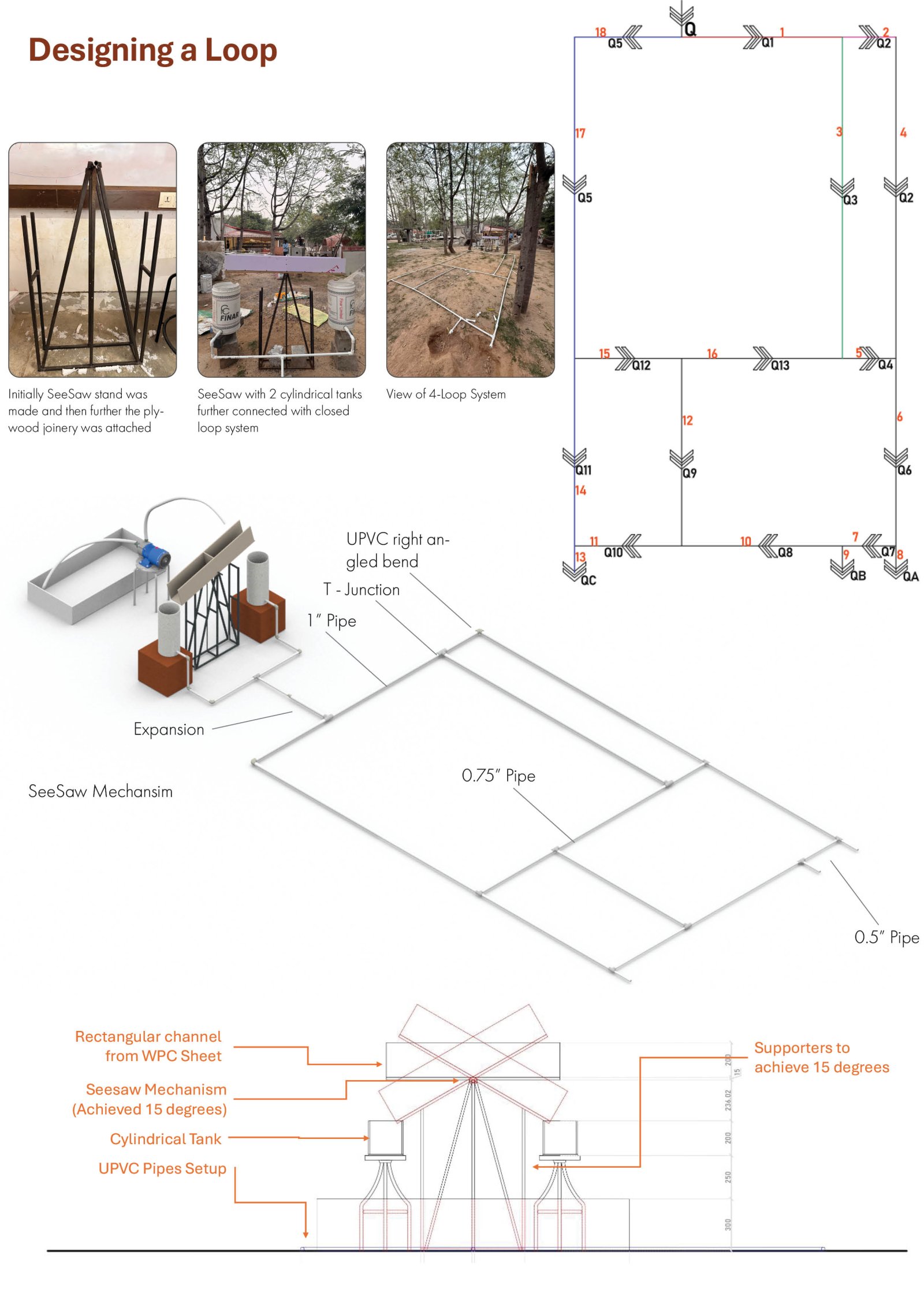
This slide shows the development of the seesaw stand, integration of cylindrical tanks and assembly of the 4-loop UPVC network. It includes material selection, on-site fabrication, pipe routing and final layout, highlighting how different pipe diameters and fittings form the complete loop system.

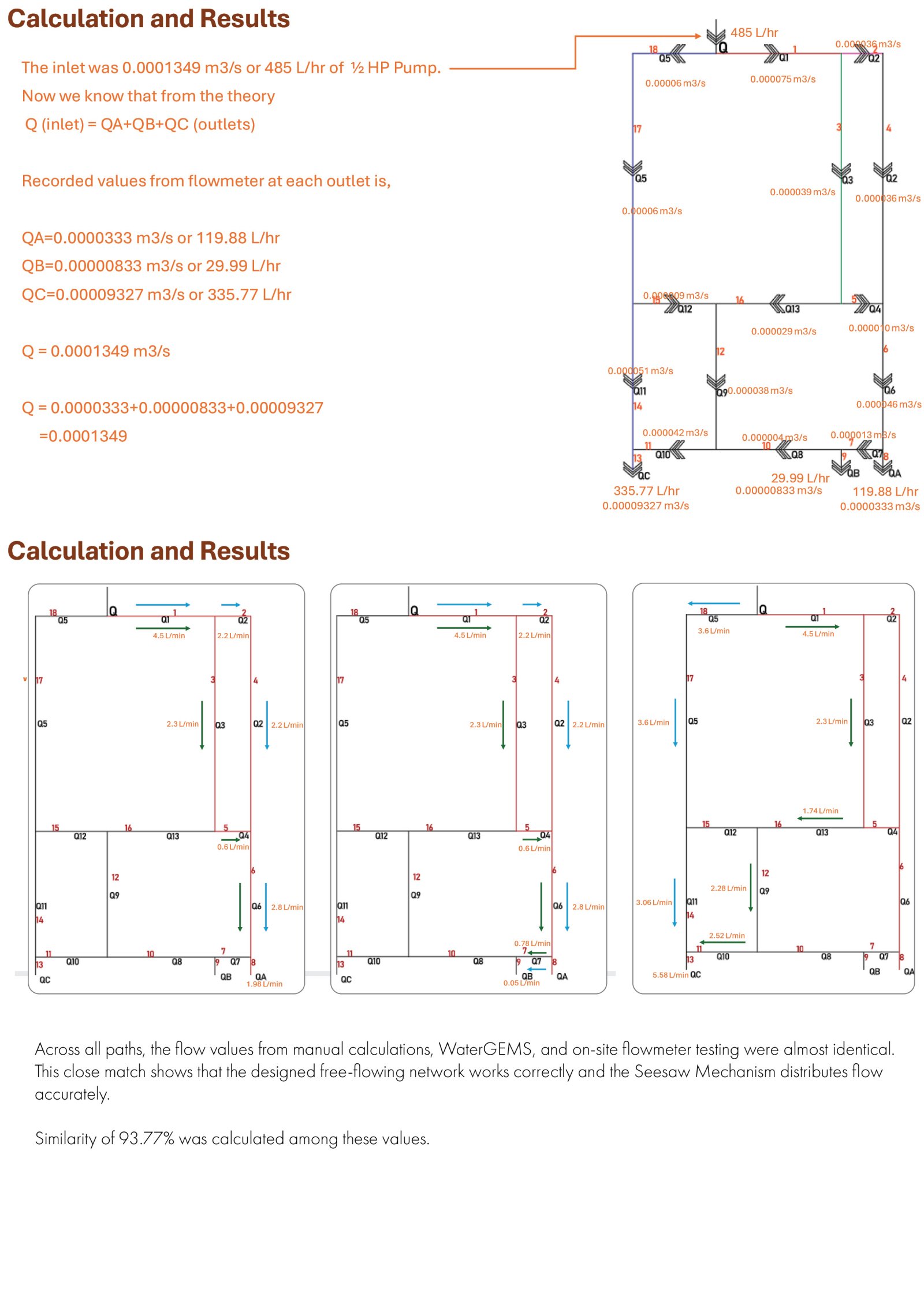
This slide presents a comparison of inlet and outlet flow rates using manual calculations, WaterGEMS results, and on-site testing. The strong similarity across methods demonstrates accurate network performance and effective flow distribution through the designed free-flow system.

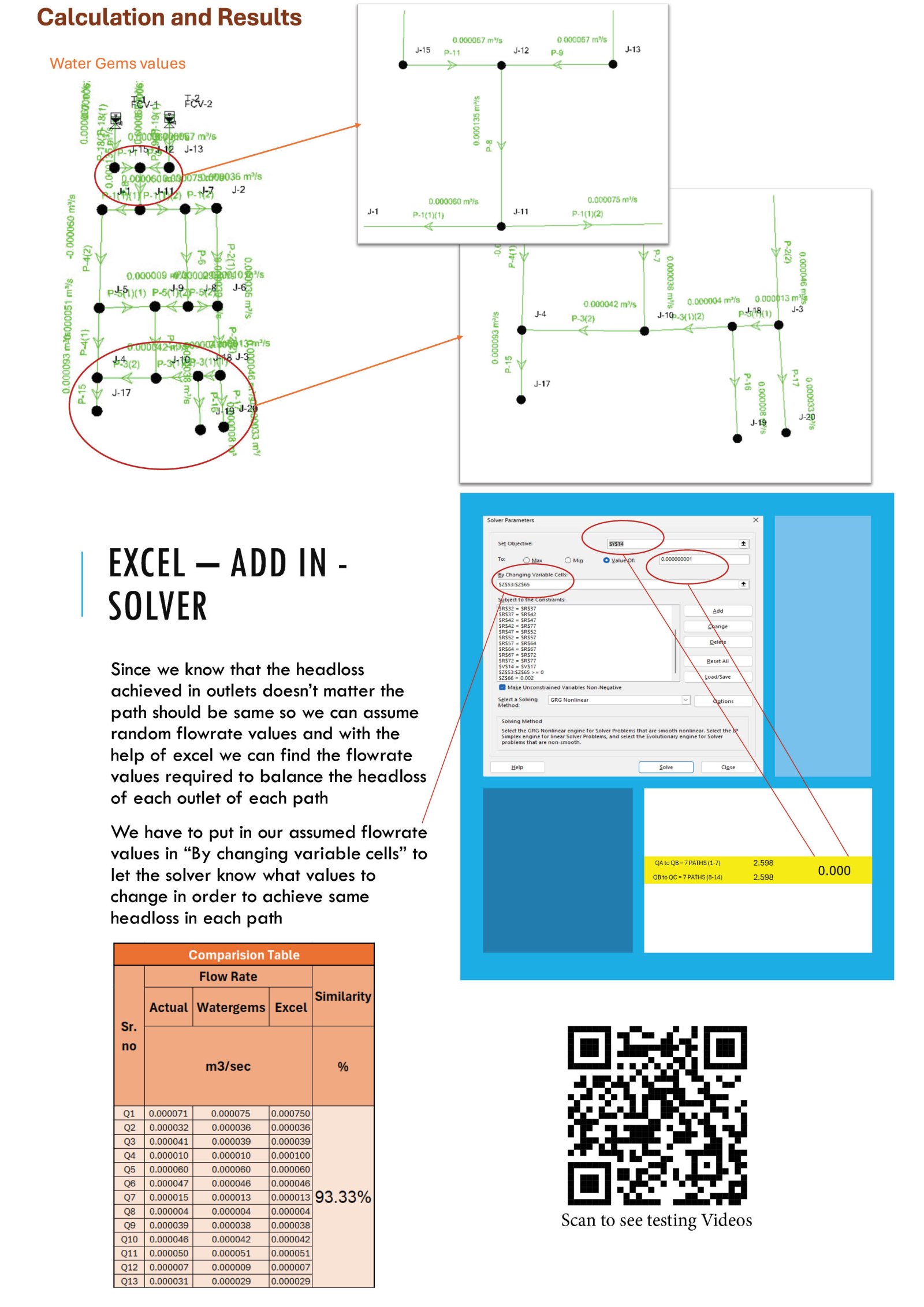
This slide highlights WaterGEMS simulation outputs and Excel Solver optimization used to balance headloss across paths. The comparison table confirms high accuracy between actual, simulated, and optimized flow rates, validating the reliability of the hydraulic modeling approach