• Home
  • FT
  • BE4004
  • MONSOON SEMESTER 2026 | PASSIVE COMFORT LAB

Deepti Goel

BE4004

MONSOON SEMESTER 2026 | PASSIVE COMFORT LAB

During the Passive Design and Thermal Comfort Lab at CEPT University, I explored how climate informs building design and energy performance. I compared Hisar and Lahore and used psychrometric charts and shading masks to study air conditions and solar exposure. In Ahmedabad, I helped build and test a two-compartment prototype to examine how insulation and shading affect heat transfer. I then analysed hourly weather data to identify when evaporative cooling and mixed-mode operation could be suitable in Hisar. Using DesignBuilder, I tested how wall U-values, earth berming and temperature control affect indoor temperatures and the building’s sensible cooling energy demand.
Report Content

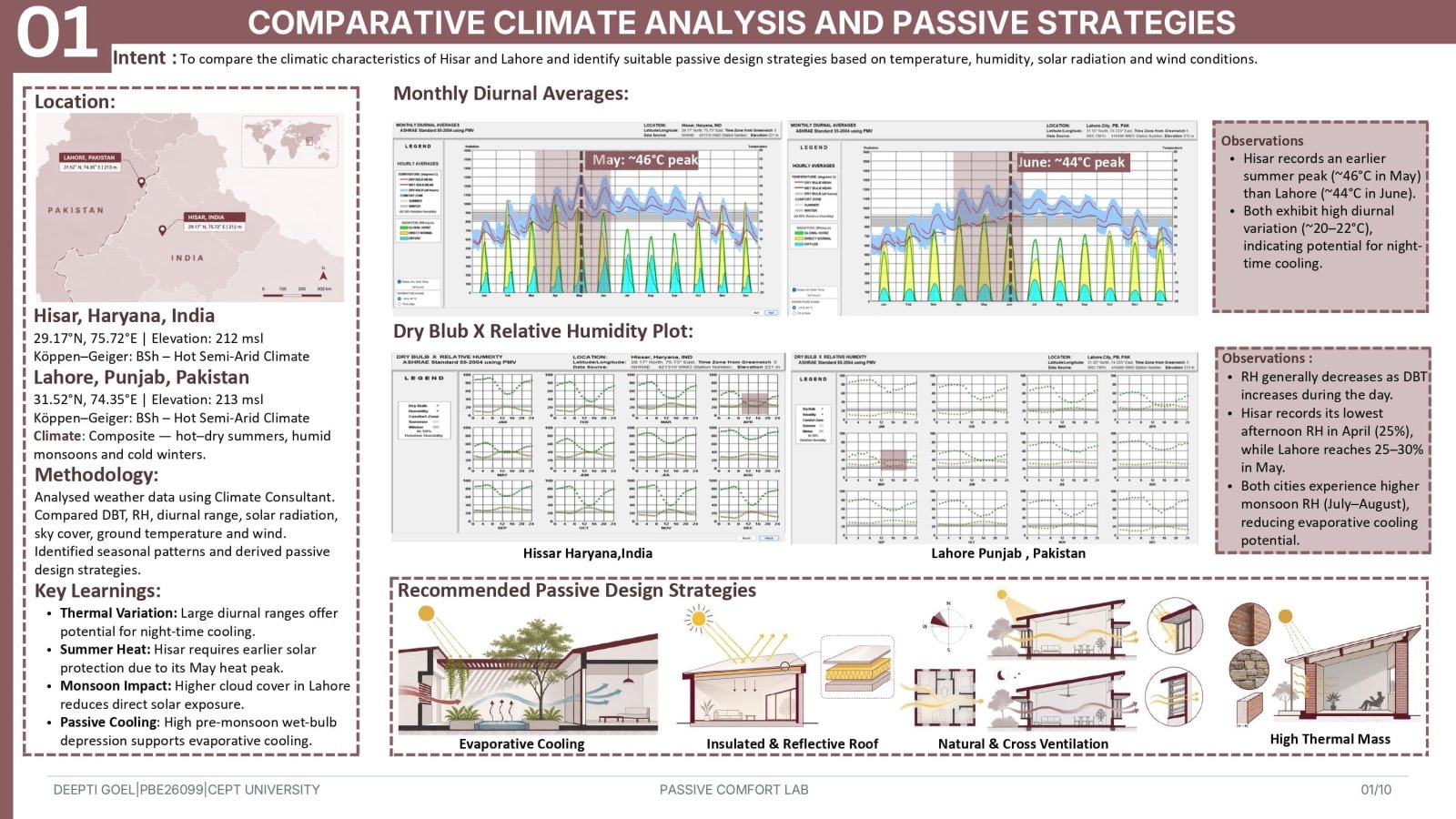
A comparison of Hisar and Lahore examines how dry-bulb temperature and relative humidity vary across the year. Hisar’s hotter, drier pre-monsoon conditions offer greater potential for evaporative cooling.

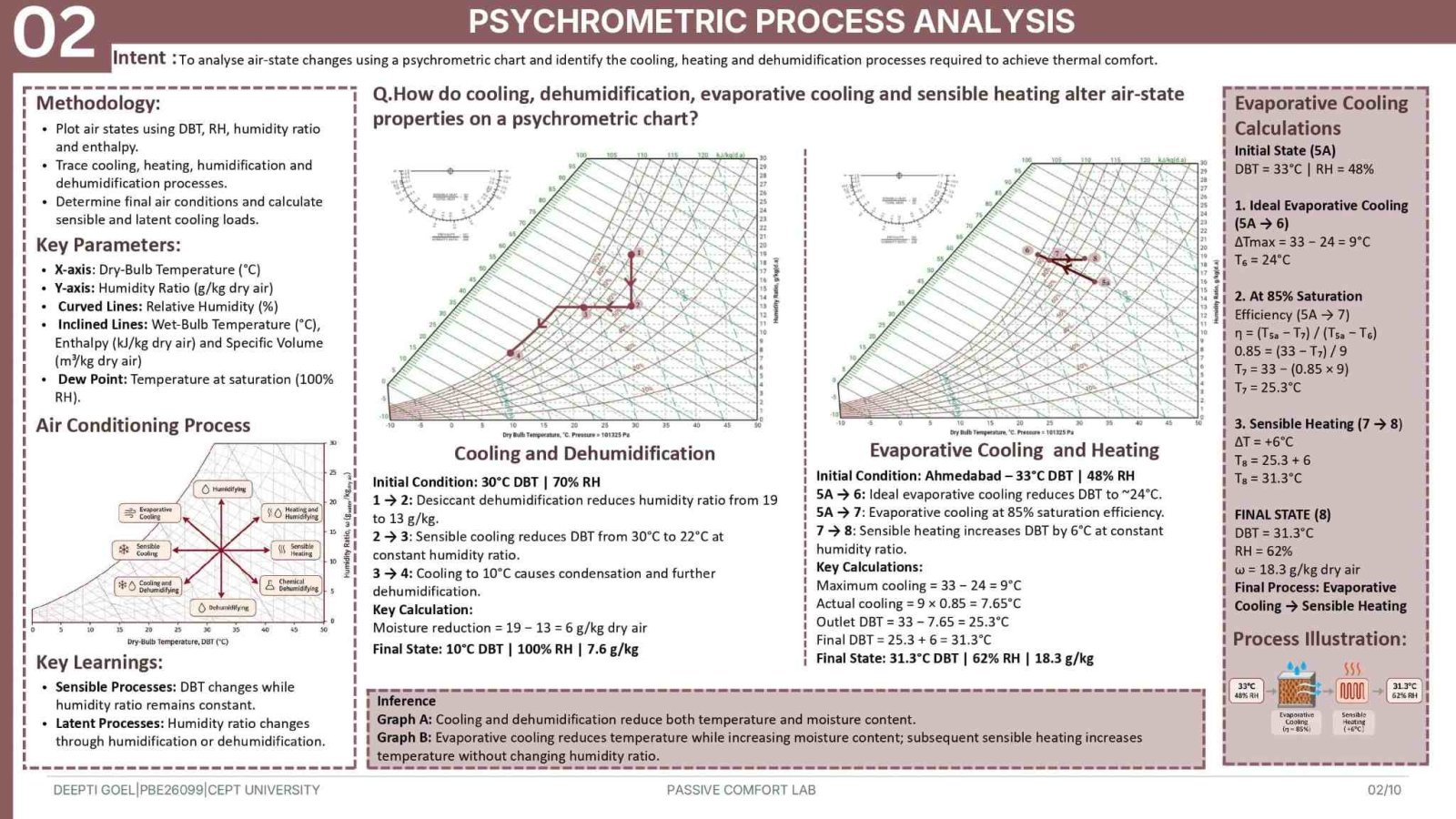
Psychrometric charts trace how cooling, dehumidification, evaporative cooling and sensible heating change the air state. Cooling below the dew point removes moisture, while evaporative cooling lowers the dry-bulb temperature and raises the humidity ratio.

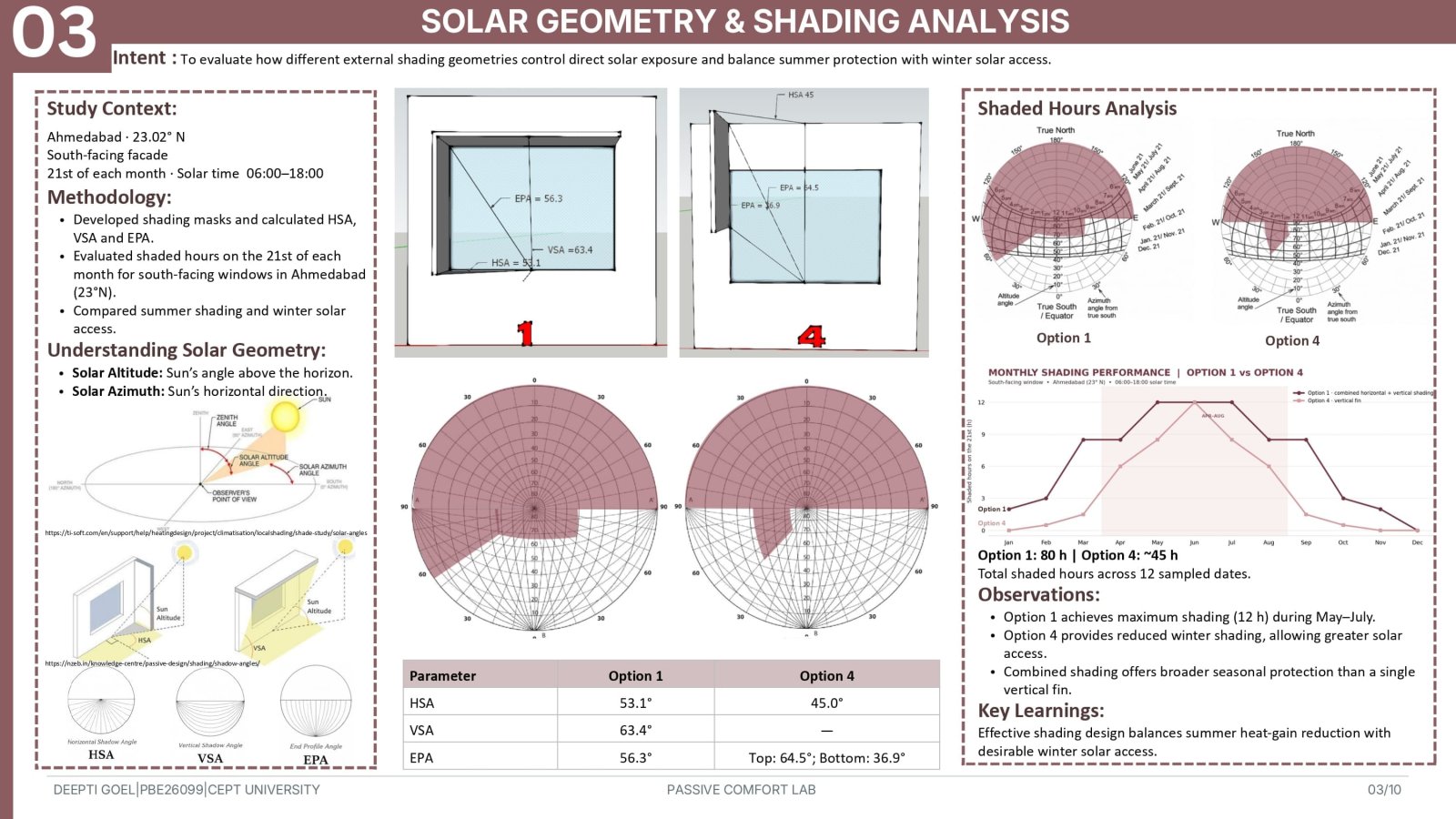
Shading masks for a south-facing window in Ahmedabad compare two shading options on the 21st of each month. The combined device provided about 80 hours of shade across the sampled dates, compared with about 45 hours for the vertical fin, which allowed more winter sun.

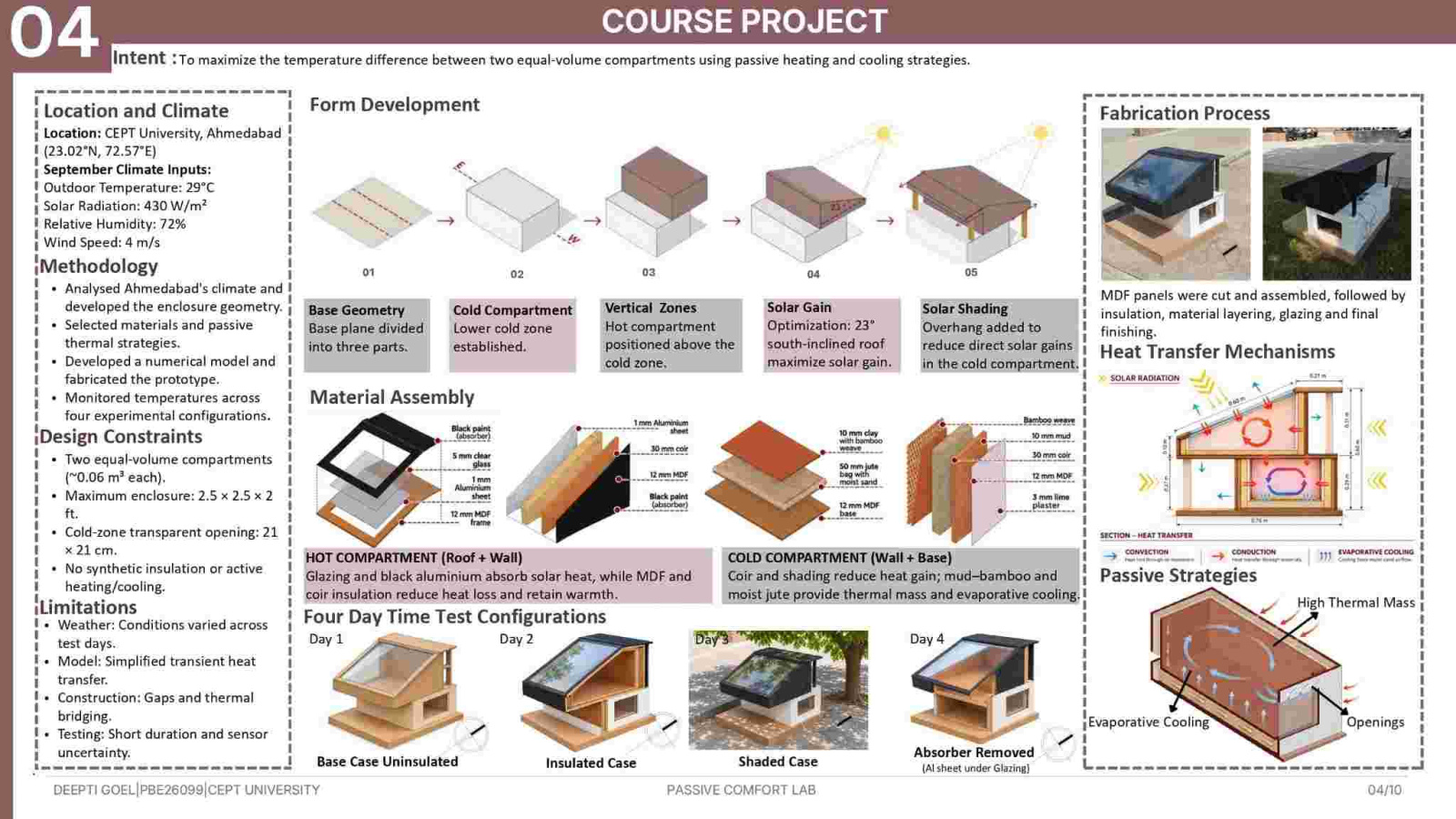
Two equal-volume chambers were designed to create a temperature difference through passive means. The upper chamber used a glazed solar absorber, while the lower chamber combined shading, thermal mass and evaporative cooling.

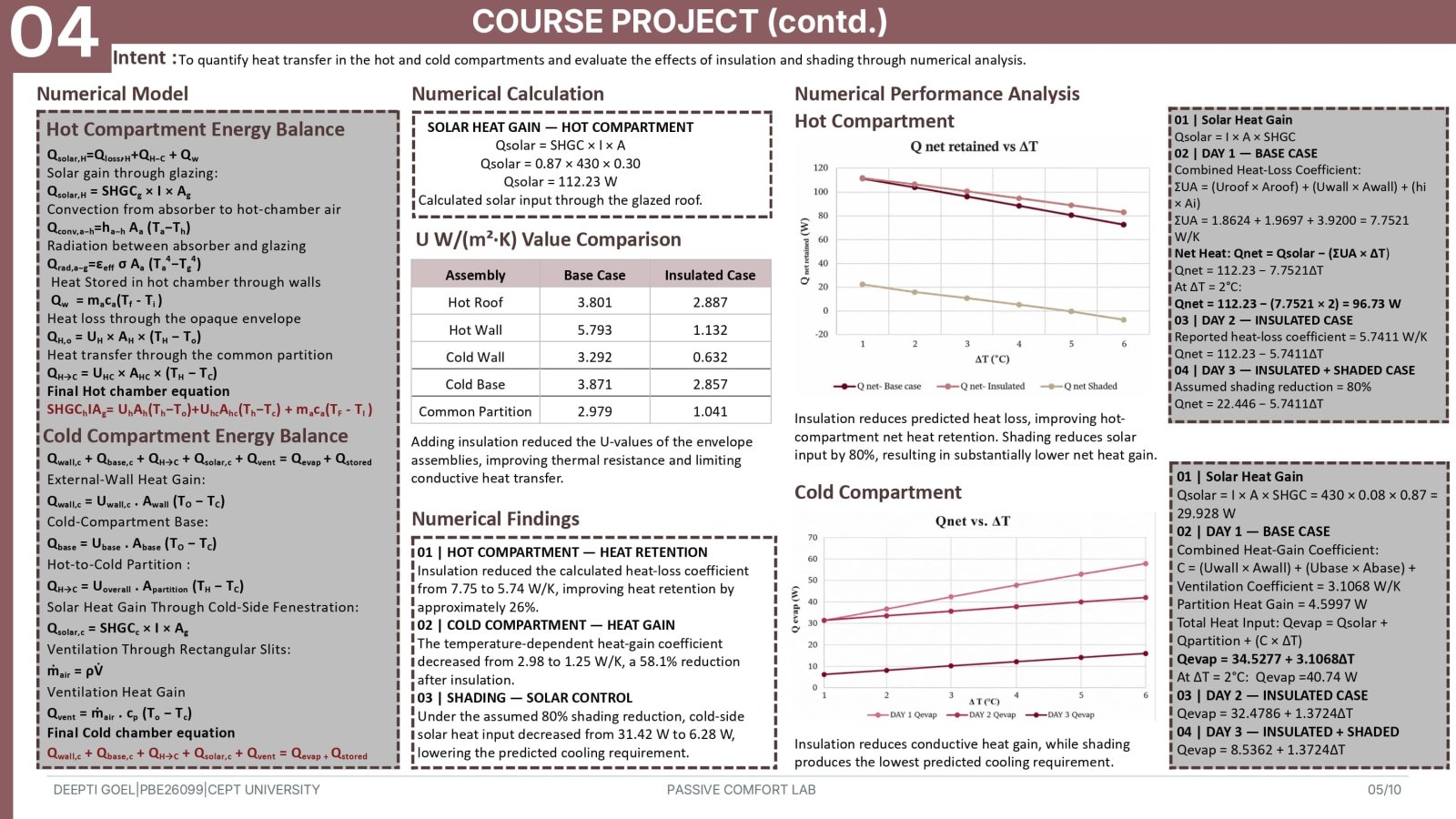
The heat-balance model estimated that insulation reduced the cold chamber’s heat-transfer coefficient from 2.98 to 1.25 W/K. In the shaded case, estimated solar gain fell from 31.42 to 6.28 W.

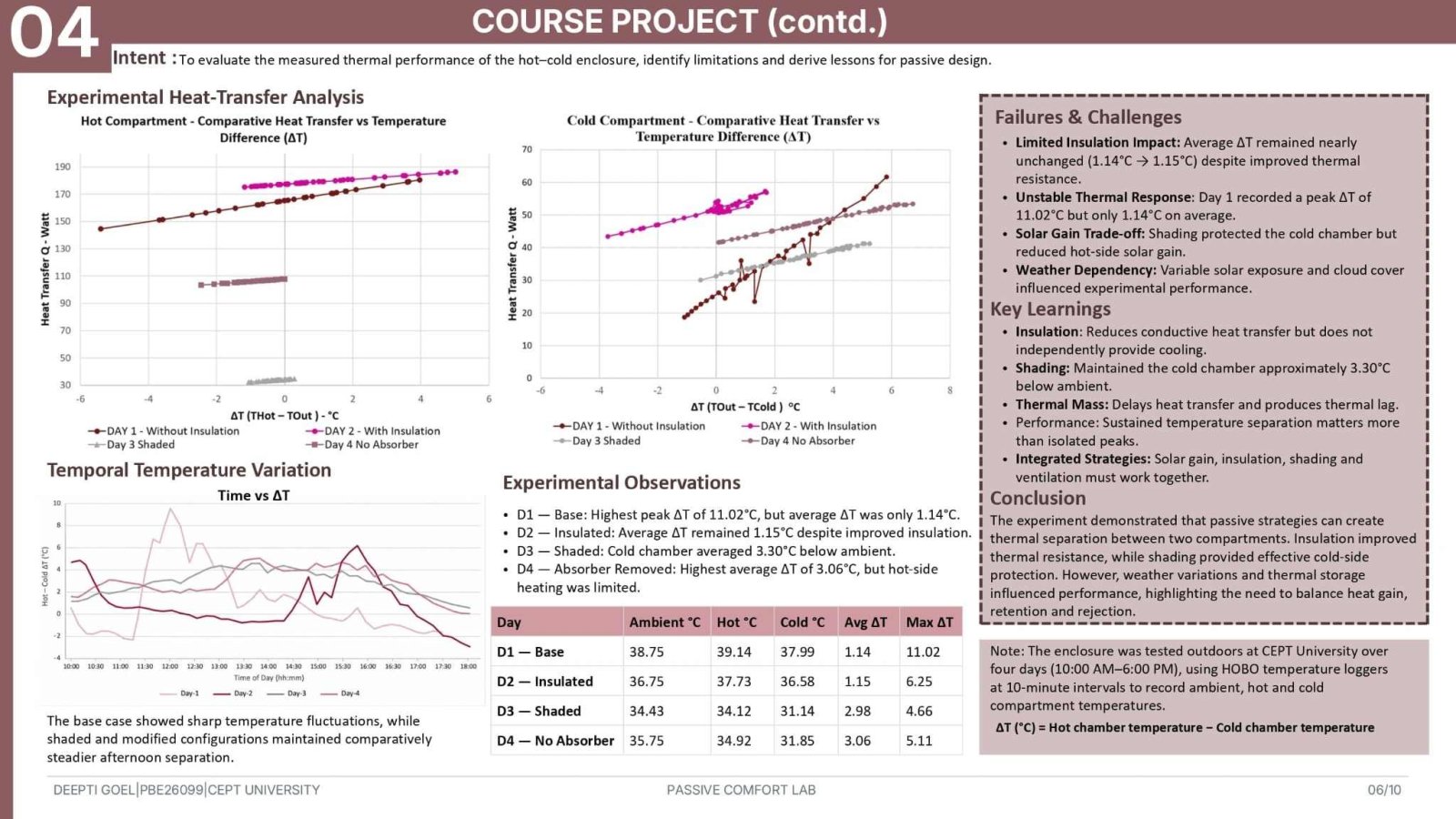
The base case reached a peak hot–cold temperature difference of 11.02°C. Insulation changed the average difference only slightly, from 1.14°C to 1.15°C, while the shaded cold chamber averaged 3.30°C below outdoor air temperature.

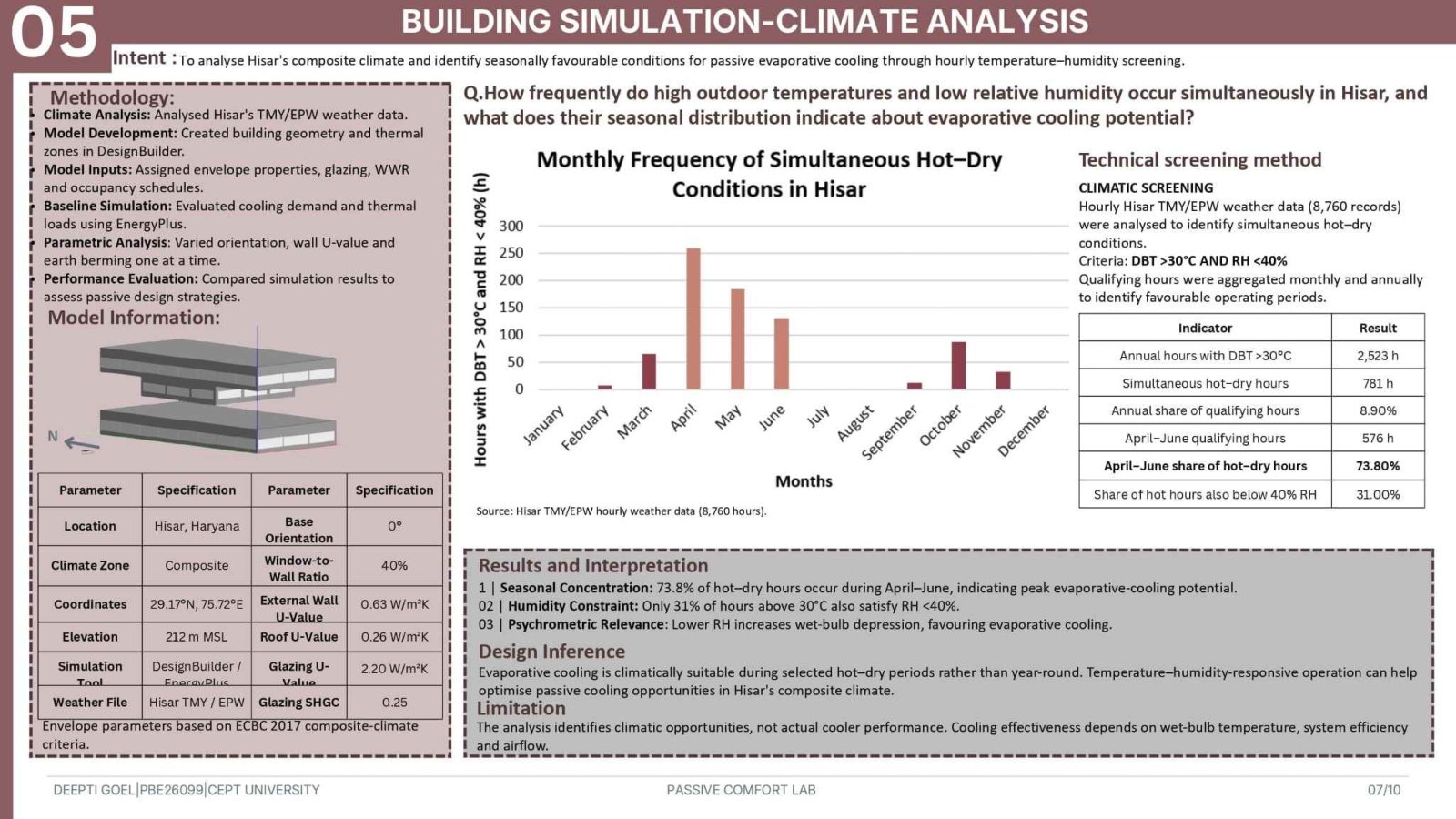
Screening 8,760 hours of Hisar weather data identified 781 hours above 30°C and below 40% relative humidity. About 74% occurred from April to June, the most favourable period for direct evaporative cooling under the criteria used.

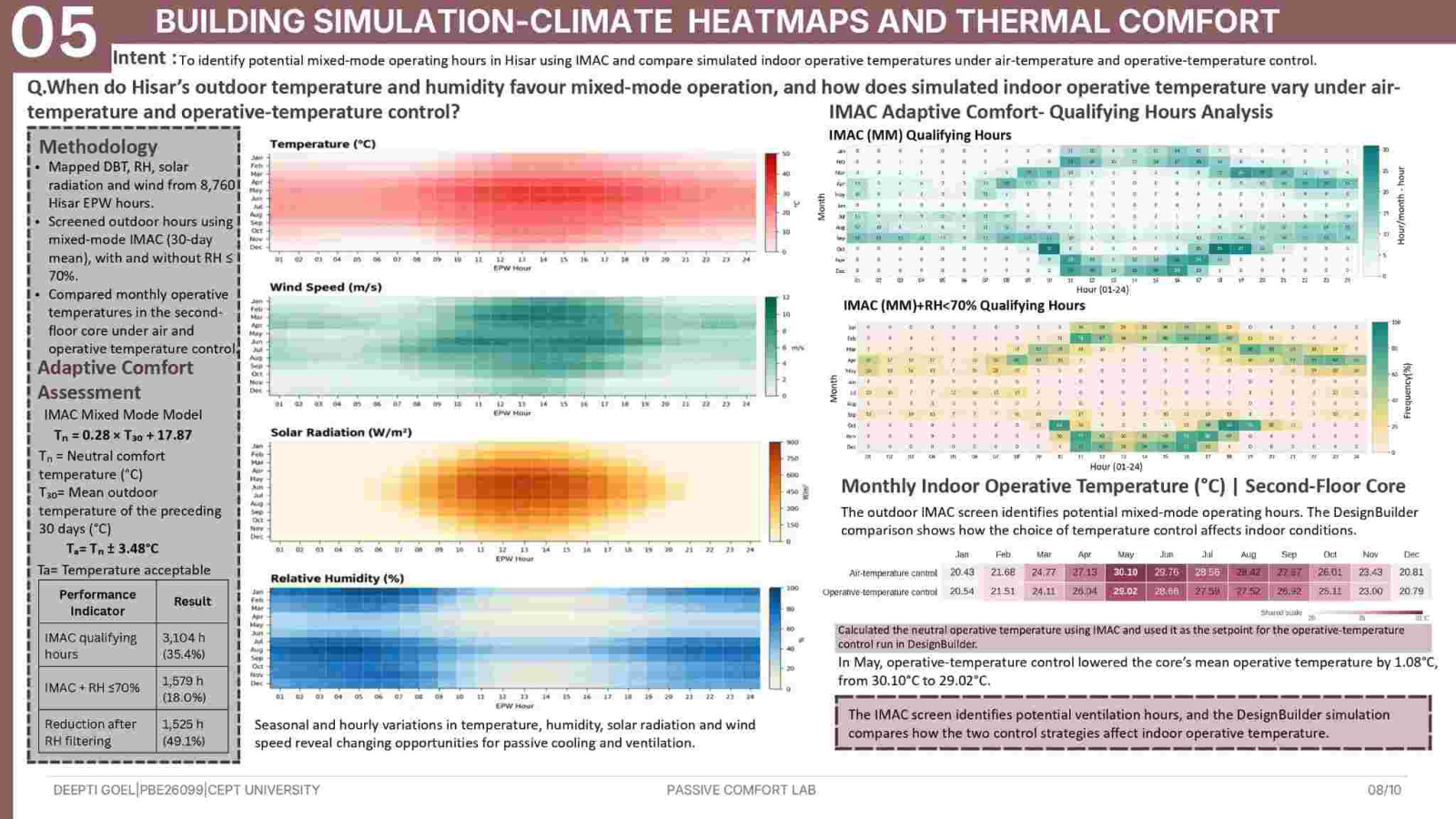
The IMAC mixed-mode screening identified 3,104 potential operating hours, falling to 1,579 when relative humidity was capped at 70%. In the simulation, operative-temperature control reduced the second-floor core’s May mean from 30.10°C to 29.02°C.

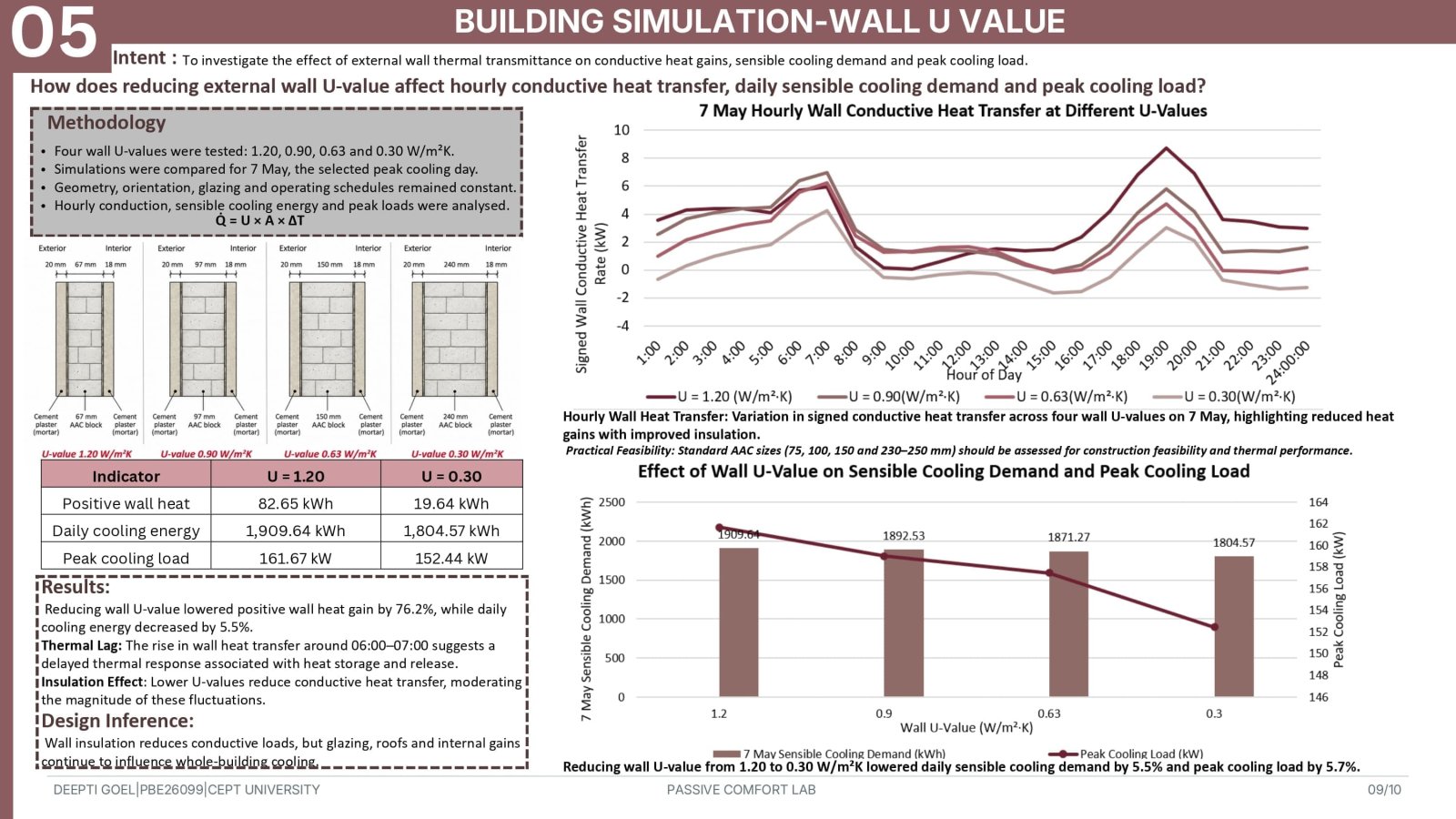
Reducing the wall U-value from 1.20 to 0.30 W/(m²·K) cut simulated inward wall heat gain on 7 May from 82.65 to 19.64 kWh. Daily cooling demand fell by 5.5%, showing how the wall-level improvement translated to the building’s cooling load.

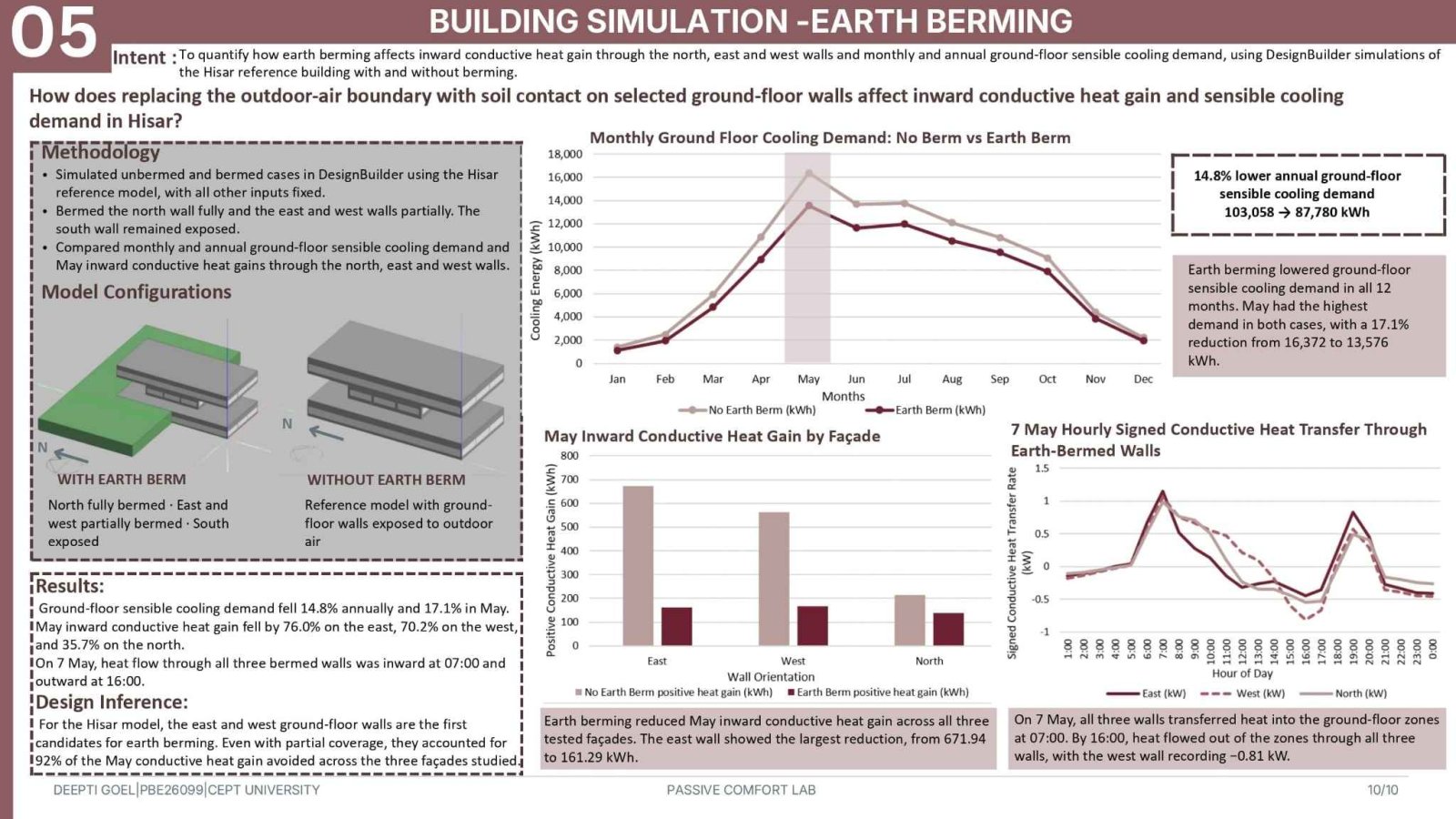
Earth berming reduced simulated annual ground-floor sensible cooling demand by 14.8%, from 103,058 to 87,780 kWh. In May, the east wall showed the largest reduction in inward conductive heat gain.