• Home
  • FT
  • BE4004
  • PASSIVE DESIGN & THERMAL COMFORT LAB | MONSOON 2026

Parekh Khushbu Manishbhai

BE4004

PASSIVE DESIGN & THERMAL COMFORT LAB | MONSOON 2026

The Passive Design and Thermal Comfort Lab examines how a building envelope can deliver thermal comfort through passive design strategies. The first module builds the foundation: heat transfer principles, how the envelope buffers occupants from outdoor conditions, and the metrics and principles used to assess thermal comfort. It also covers how construction materials and technologies perform thermally. The second module is hands-on, using field measurements to show how heat moves through buildings. The third module develops digital modelling and simulation skills, so that building performance can be tested across different climate scenarios.


Report Content

Building Physics

Comparative Climate Analysis. Kota and Tucson compared, with passive strategies for each.

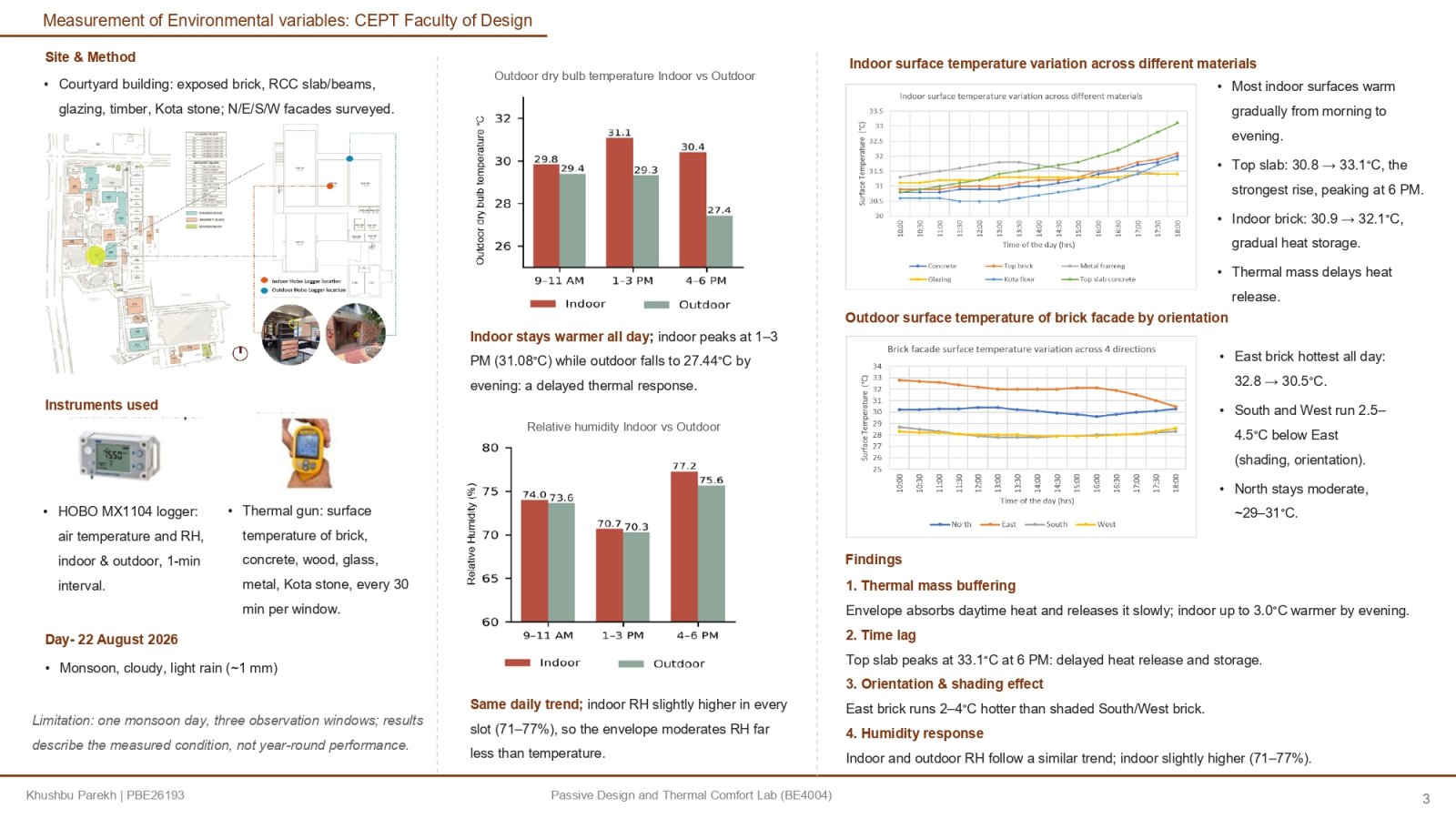
Field Measurements, CEPT. Indoor vs outdoor temperature and humidity.

Hot–Cold Enclosure Design. A passive two-compartment enclosure built and tested without mechanical cooling.

Enclosure Results: Temperature. Four test days comparing base case, insulation, shading and absorber removal.

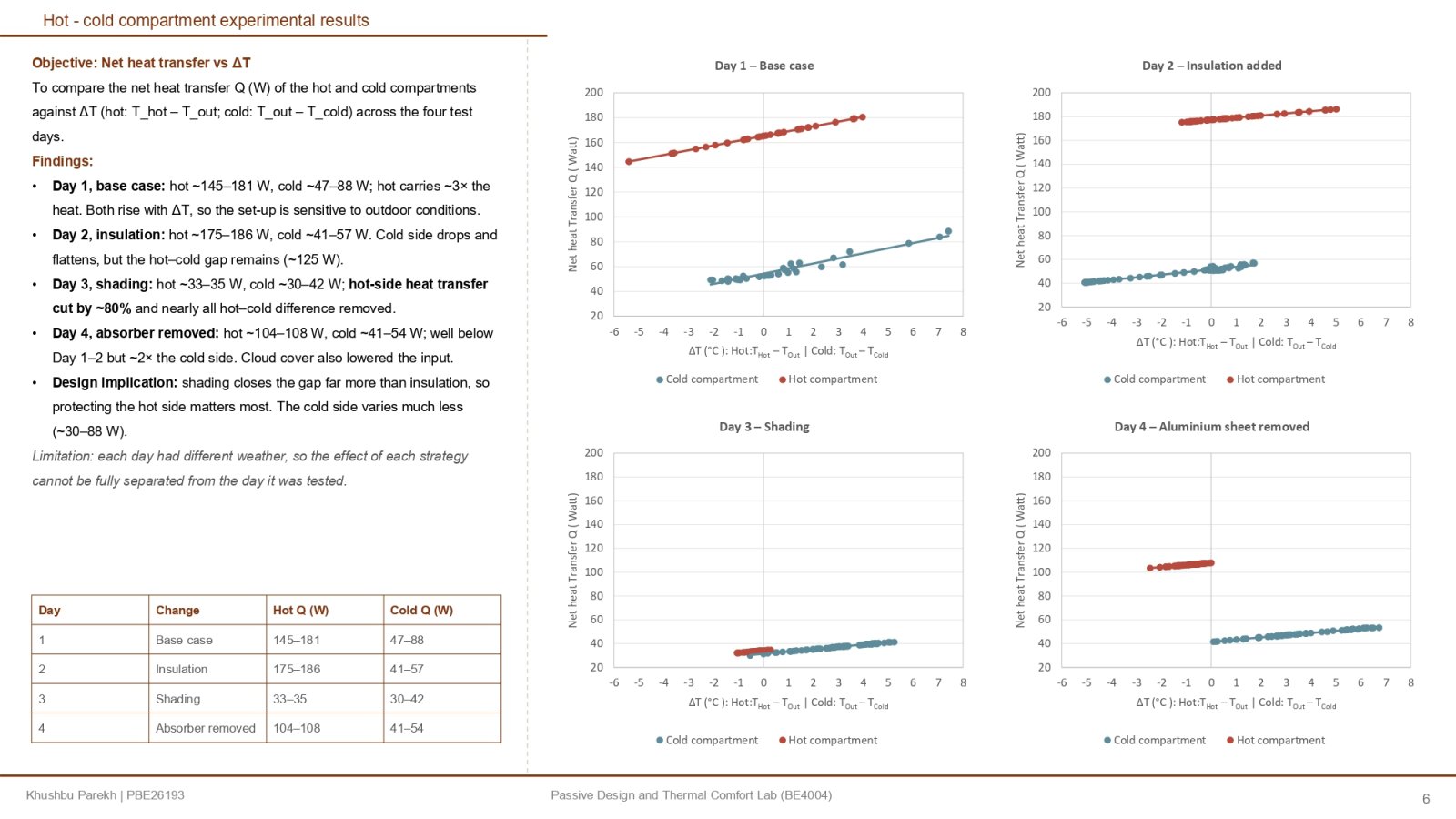
Enclosure Results: Heat Transfer. Net heat transfer vs ?T

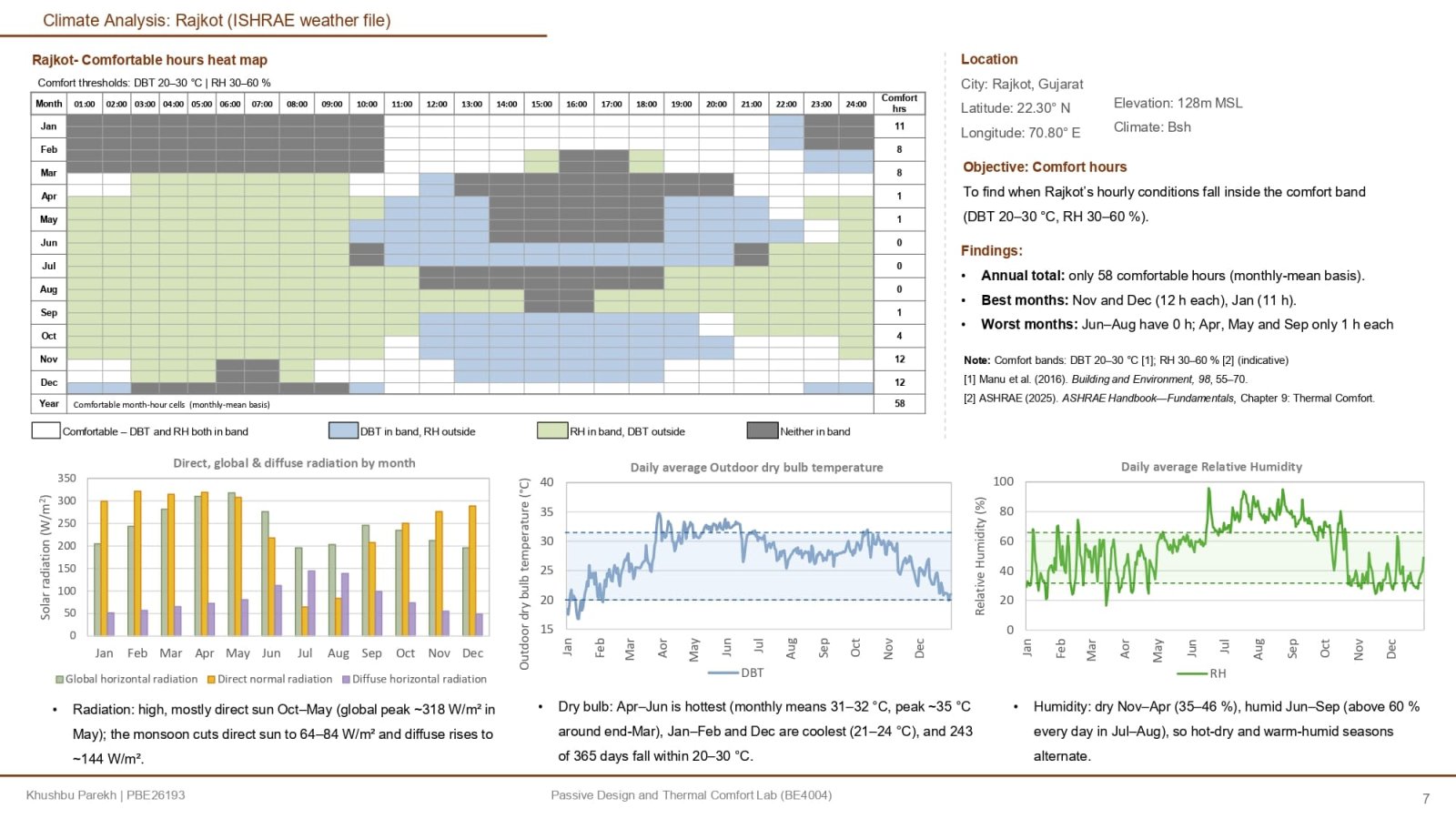
Climate Analysis: Rajkot

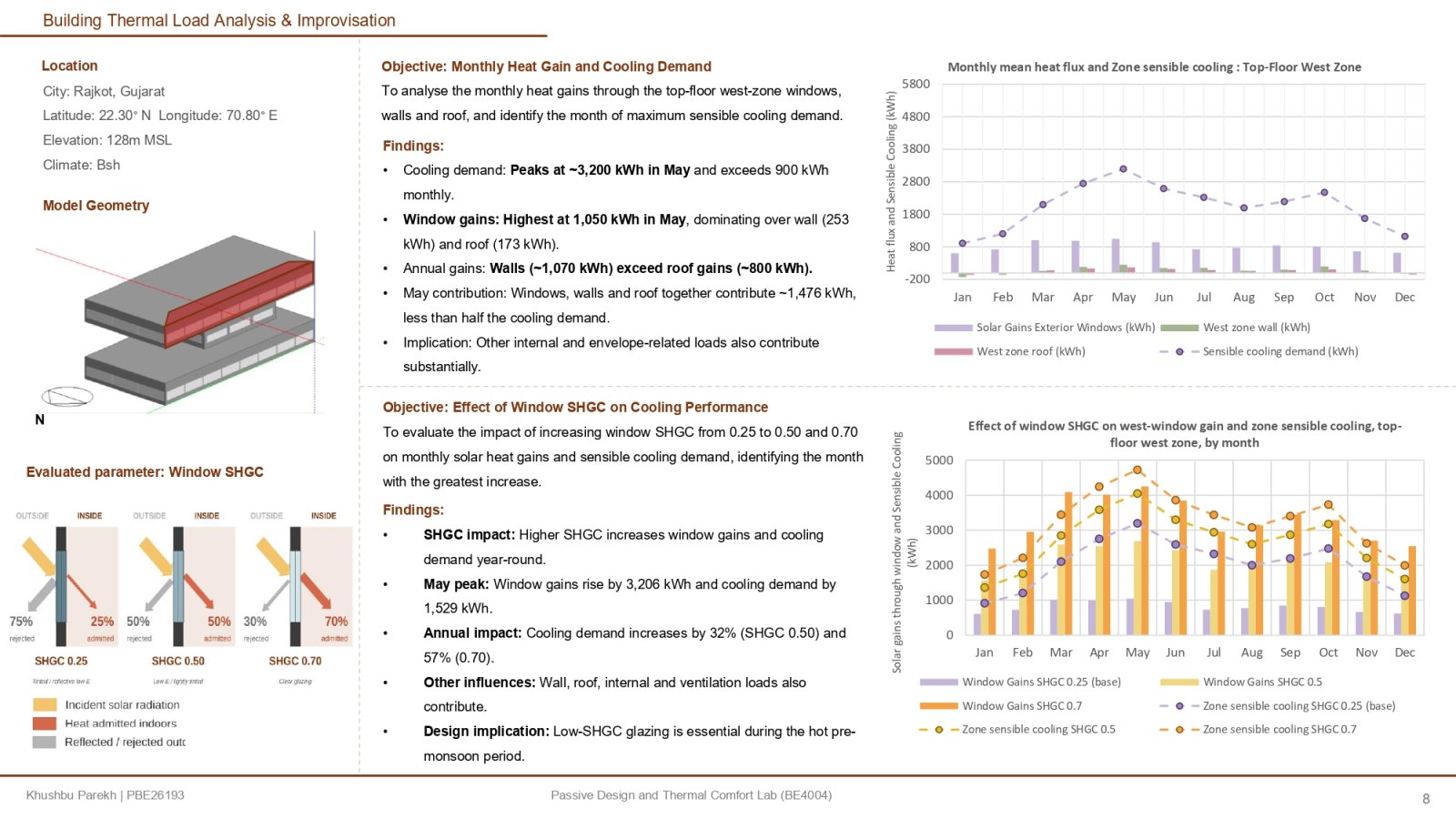
Thermal Load: Cooling Demand and SHGC. Monthly heat gain and the effect of window SHGC on cooling.

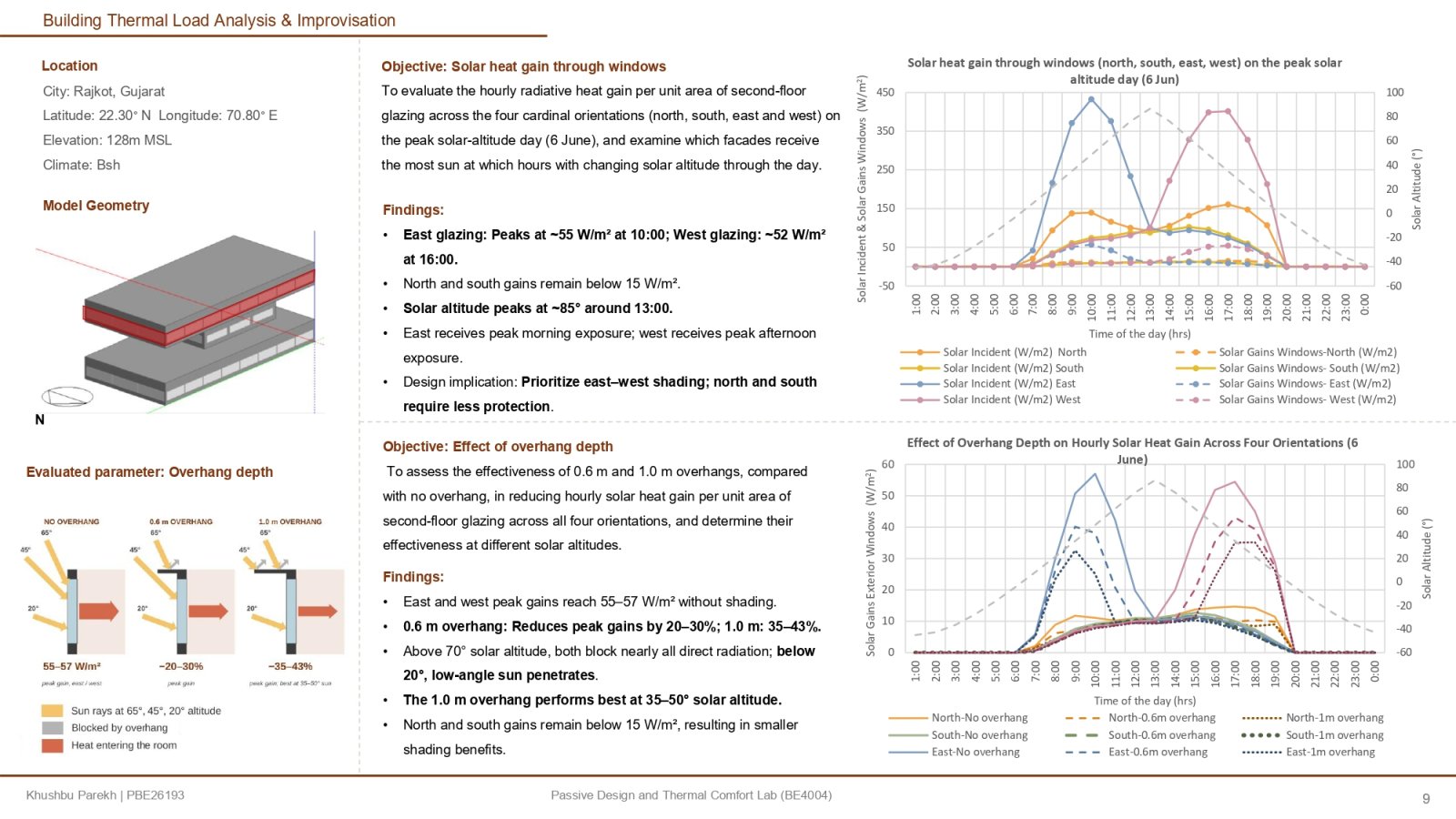
Thermal Load: Window Gain and Overhangs. Solar gain by orientation, and how 0.6 m and 1.0 m overhangs reduce it.

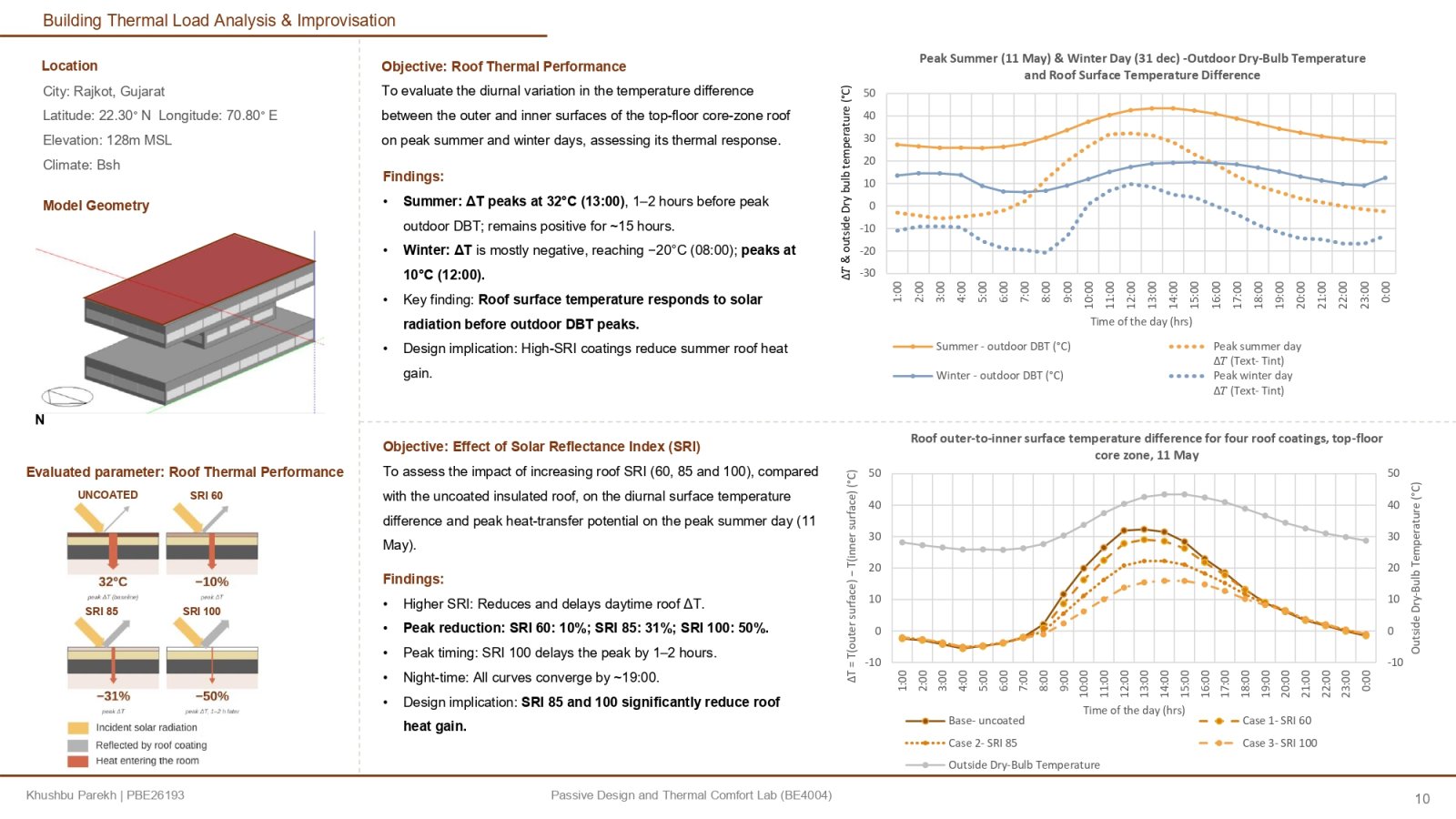
Thermal Load: Roof and SRI. Roof surface temperature difference and the effect of higher-SRI coatings.