Your browser is out-of-date!
For a richer surfing experience on our website, please update your browser. Update my browser now!
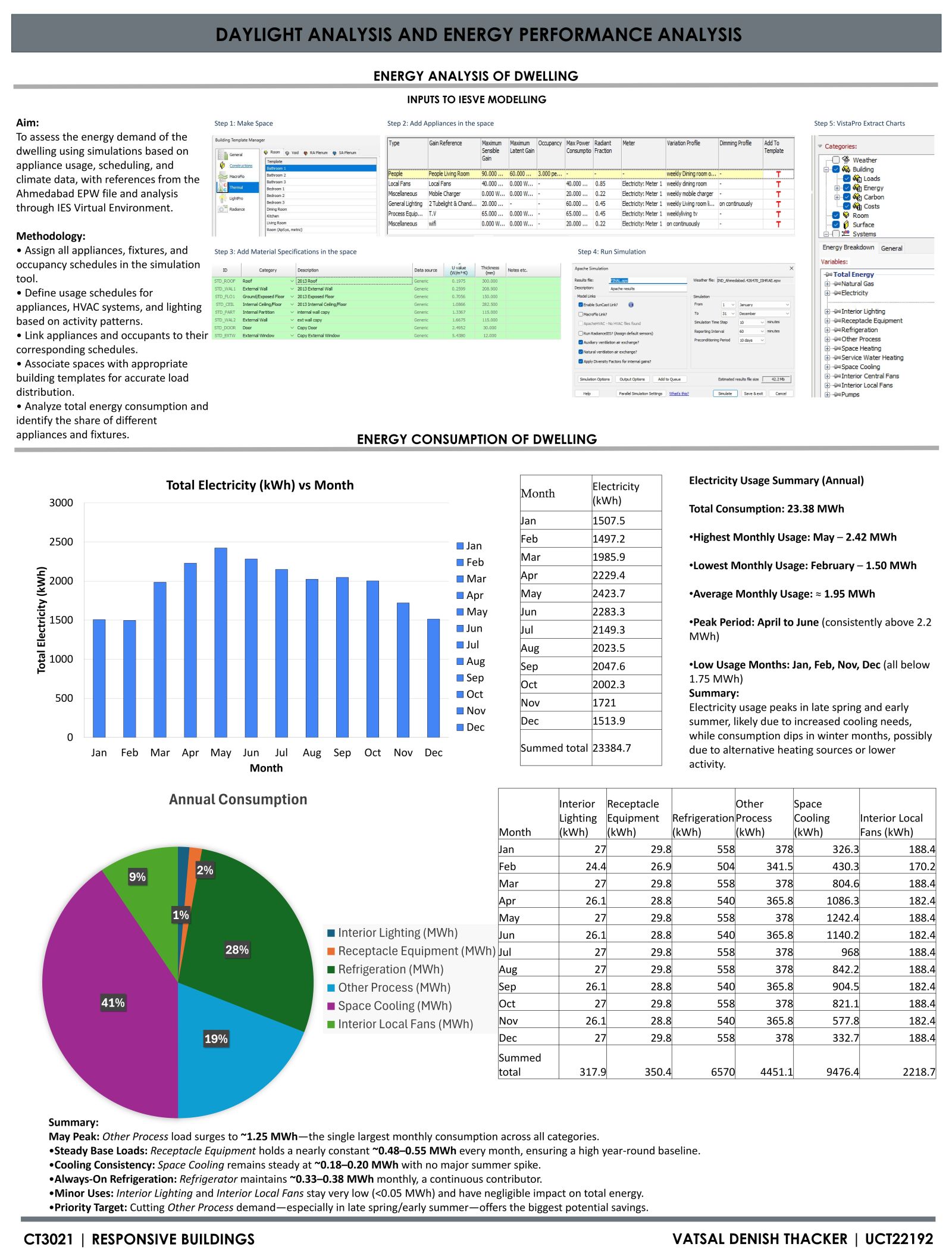
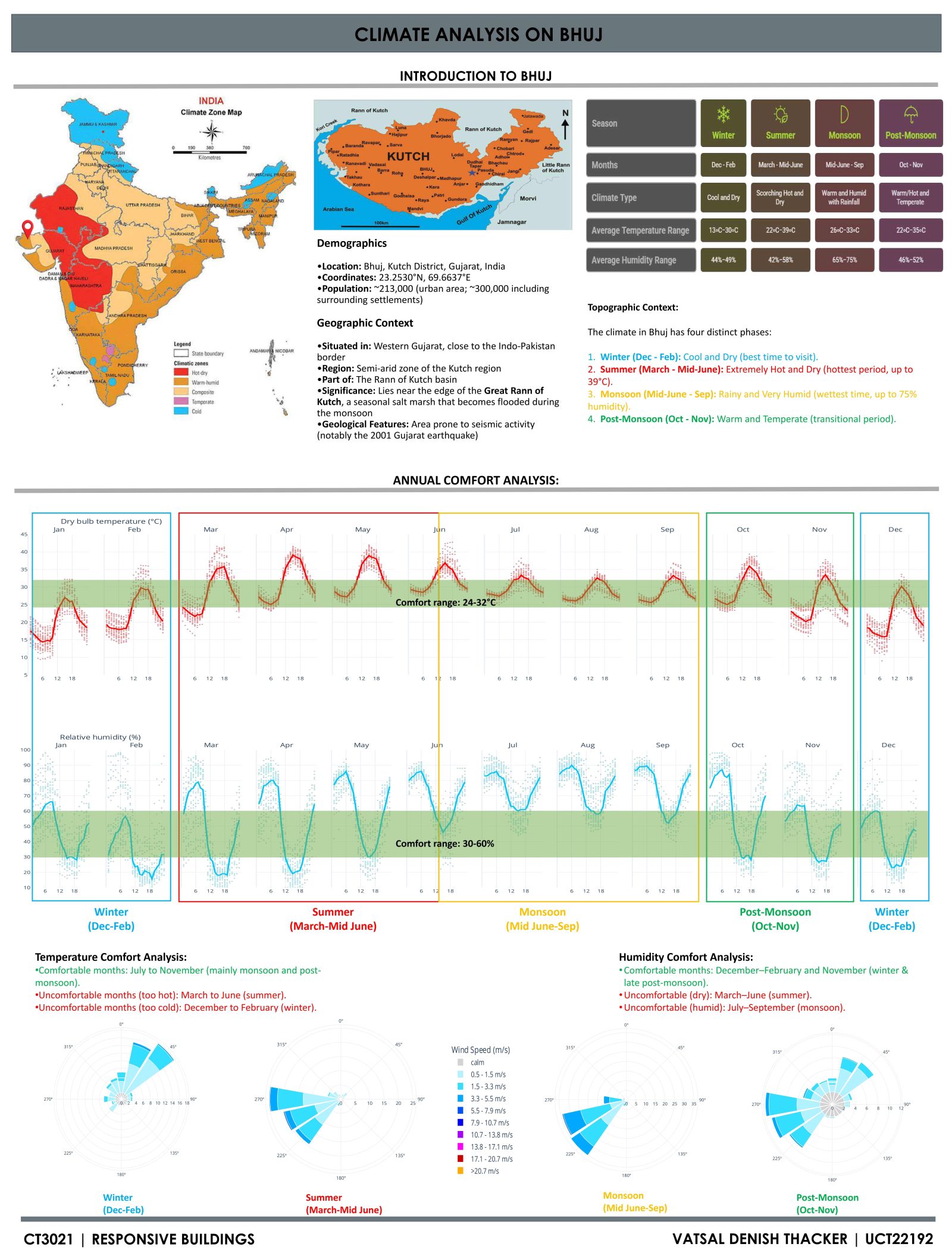
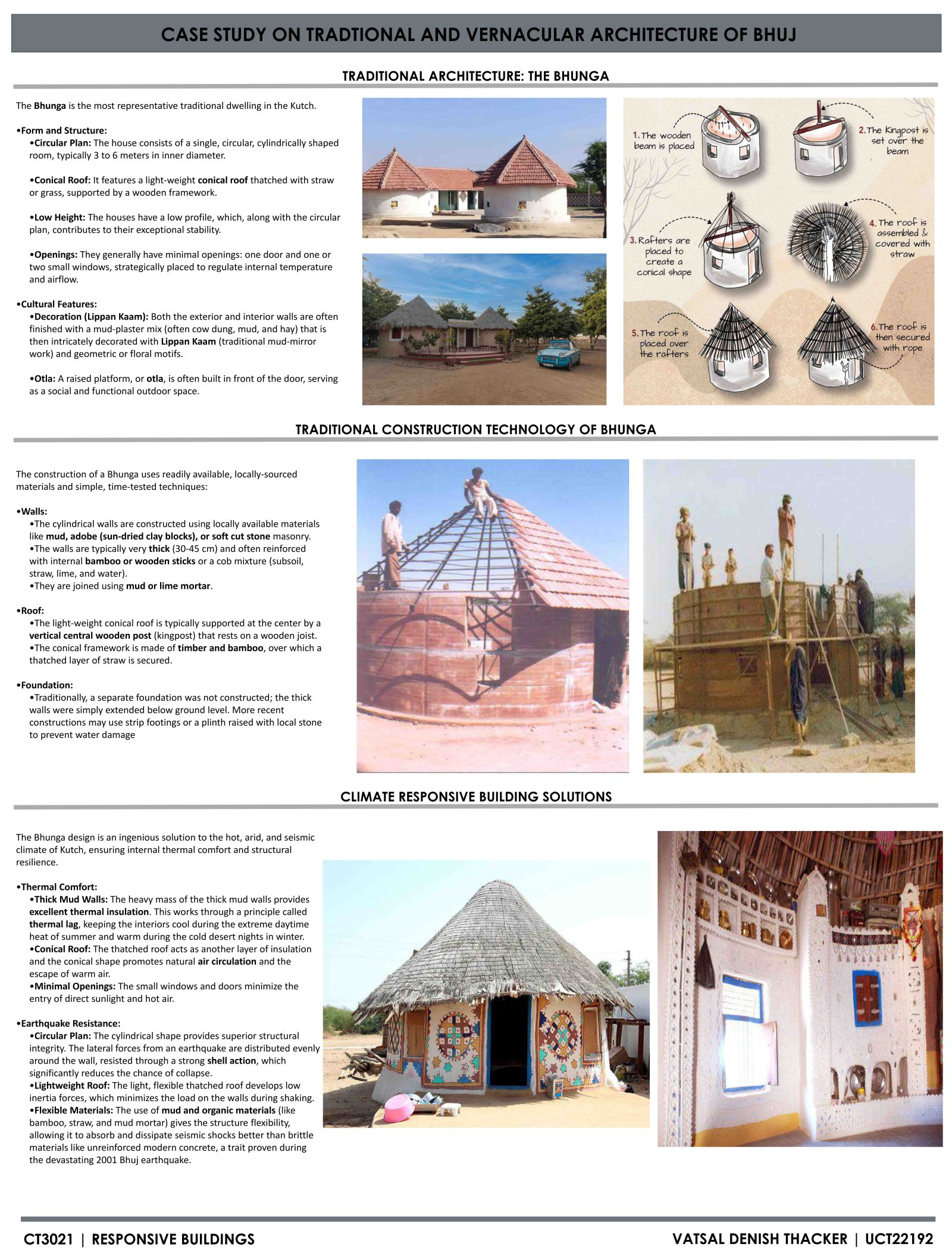
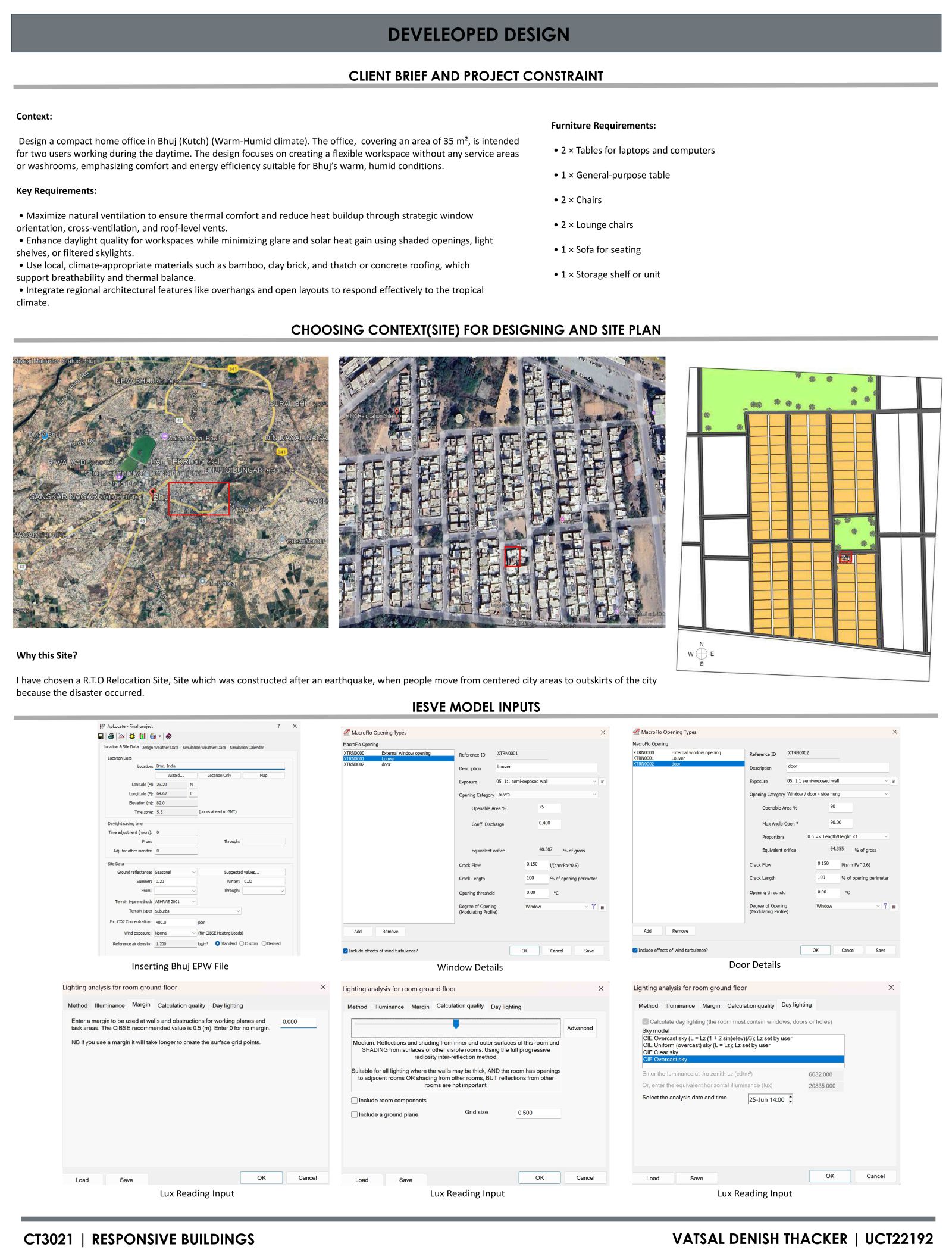
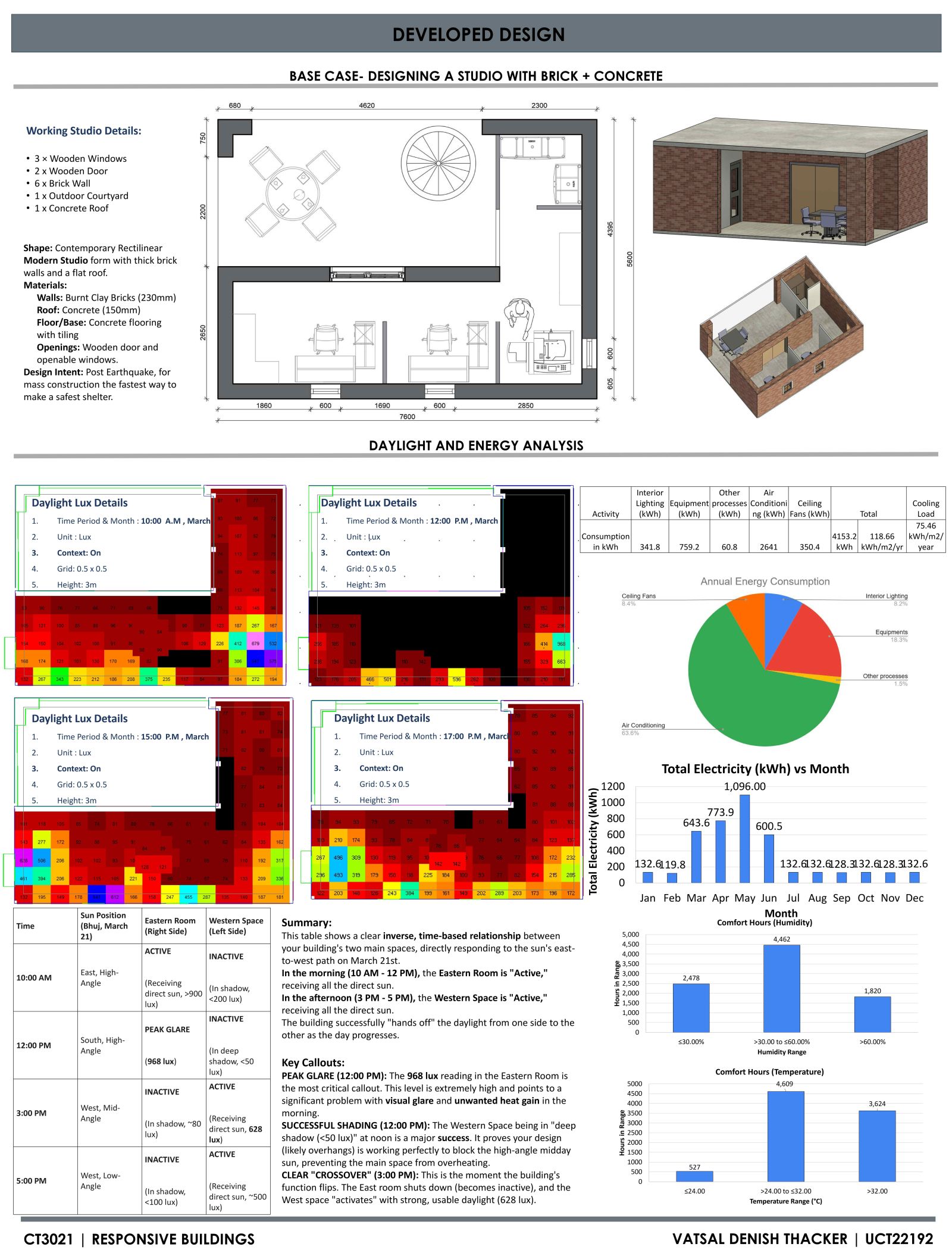
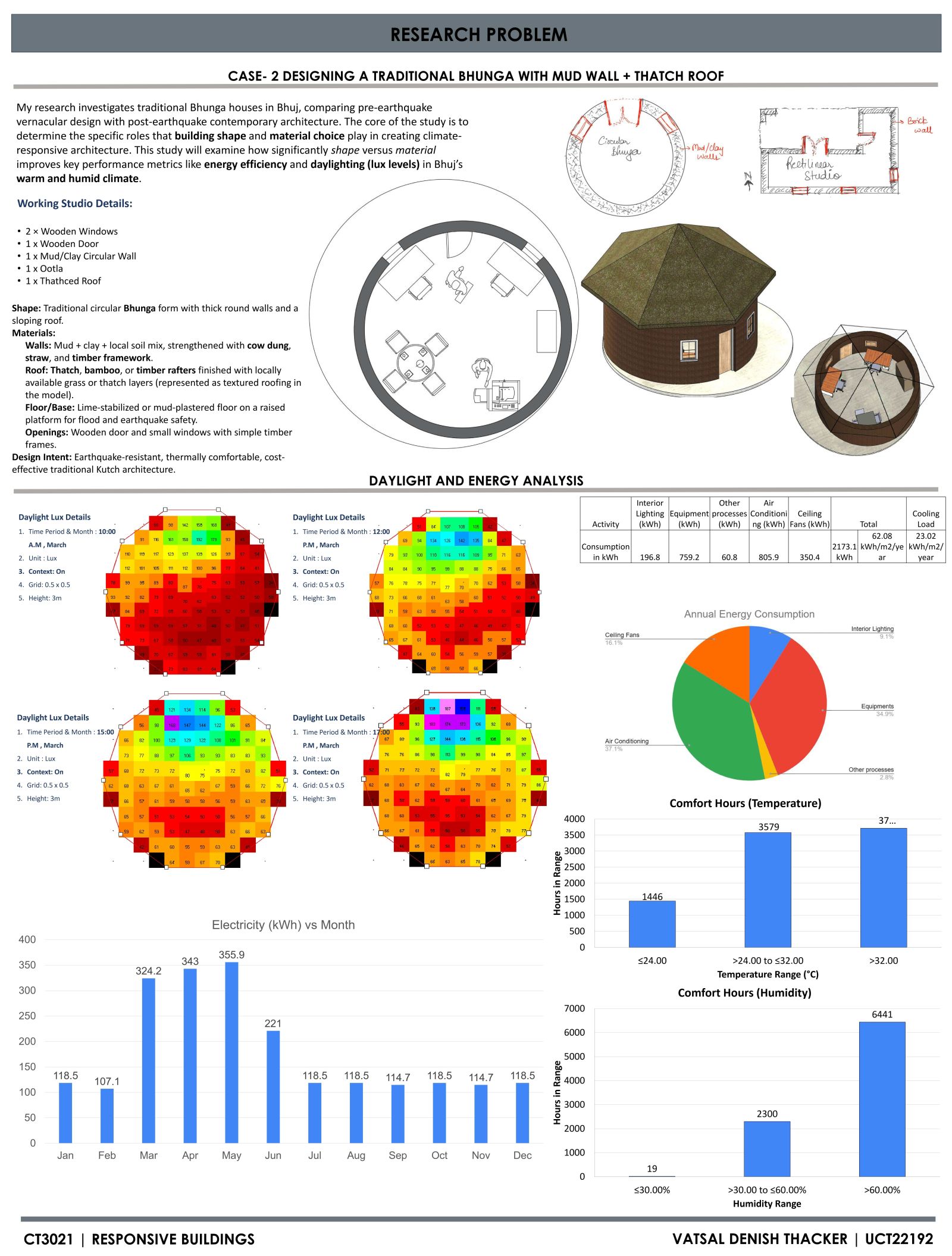
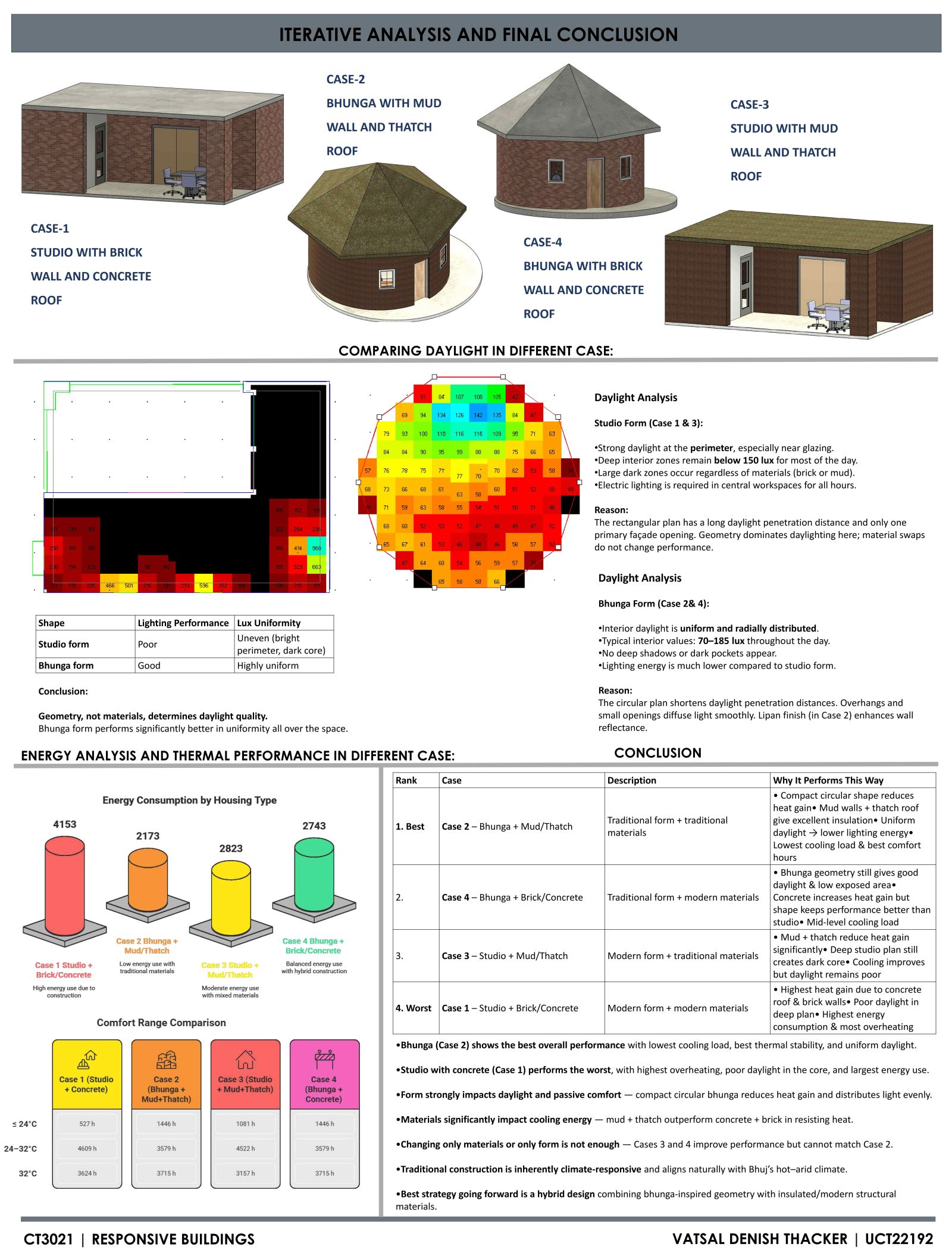
This project compares traditional Bhunga architecture with modern post-earthquake brick–concrete housing in Bhuj to understand how form and materials affect thermal comfort and energy performance. The Bhunga, with its circular shape, thick mud walls, and thatched roof, naturally remains cool by minimizing heat gain and maximizing thermal lag, resulting in very low cooling loads and stable indoor temperatures. In contrast, modern RCC studios with flat concrete roofs and brick walls absorb and store large amounts of heat, causing overheating and significantly higher cooling energy demand. Simulations clearly show that the Bhunga performs best—with the lowest annual energy use and uniform daylight—while the studio form performs worst, with the highest temperature fluctuations and energy consumption. This brief establishes the need to adopt vernacular principles—compact forms, earth materials, and breathable roofs—to create a climate-responsive, low-energy workspace for Bhuj.
View Additional Work