Your browser is out-of-date!
For a richer surfing experience on our website, please update your browser. Update my browser now!
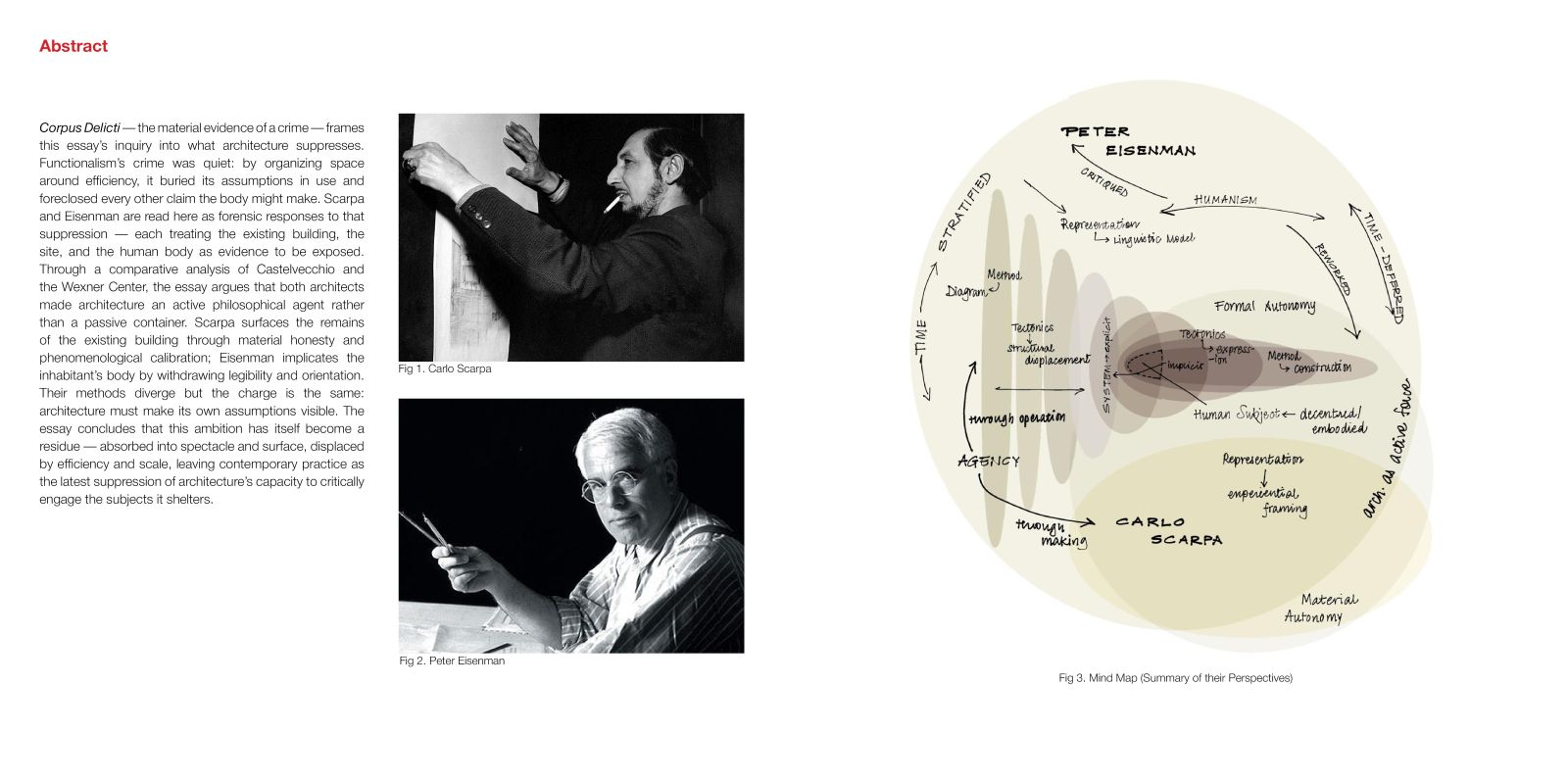
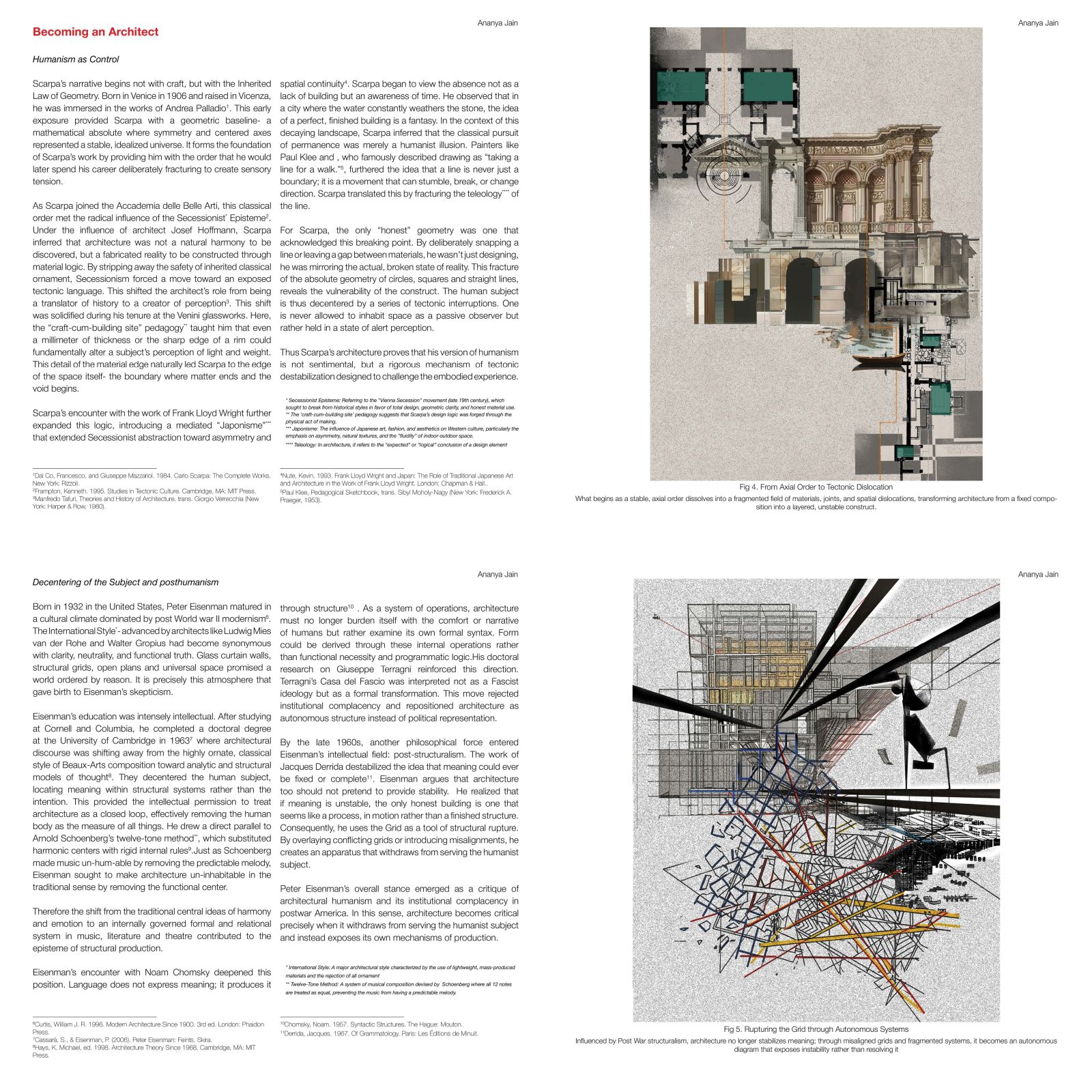
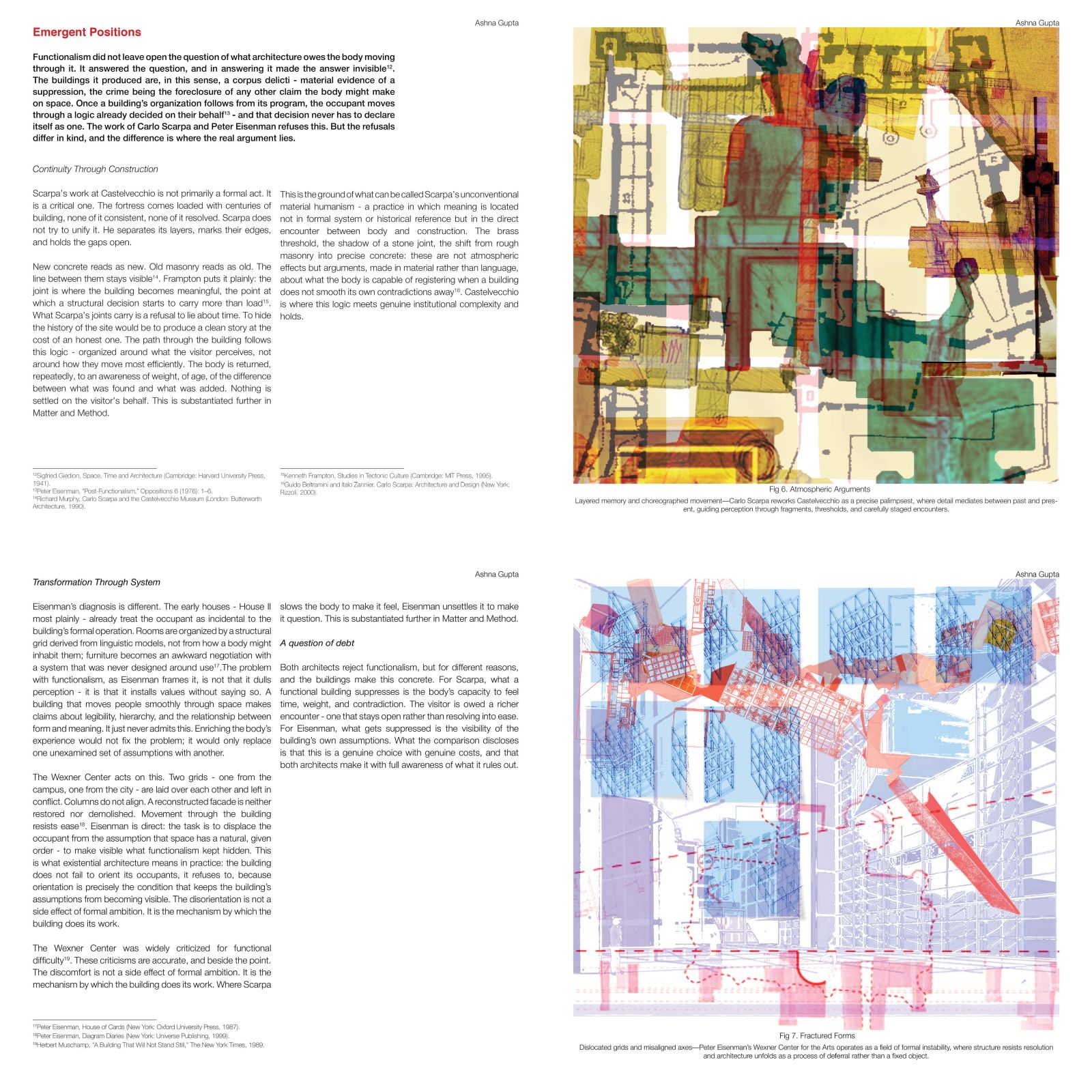
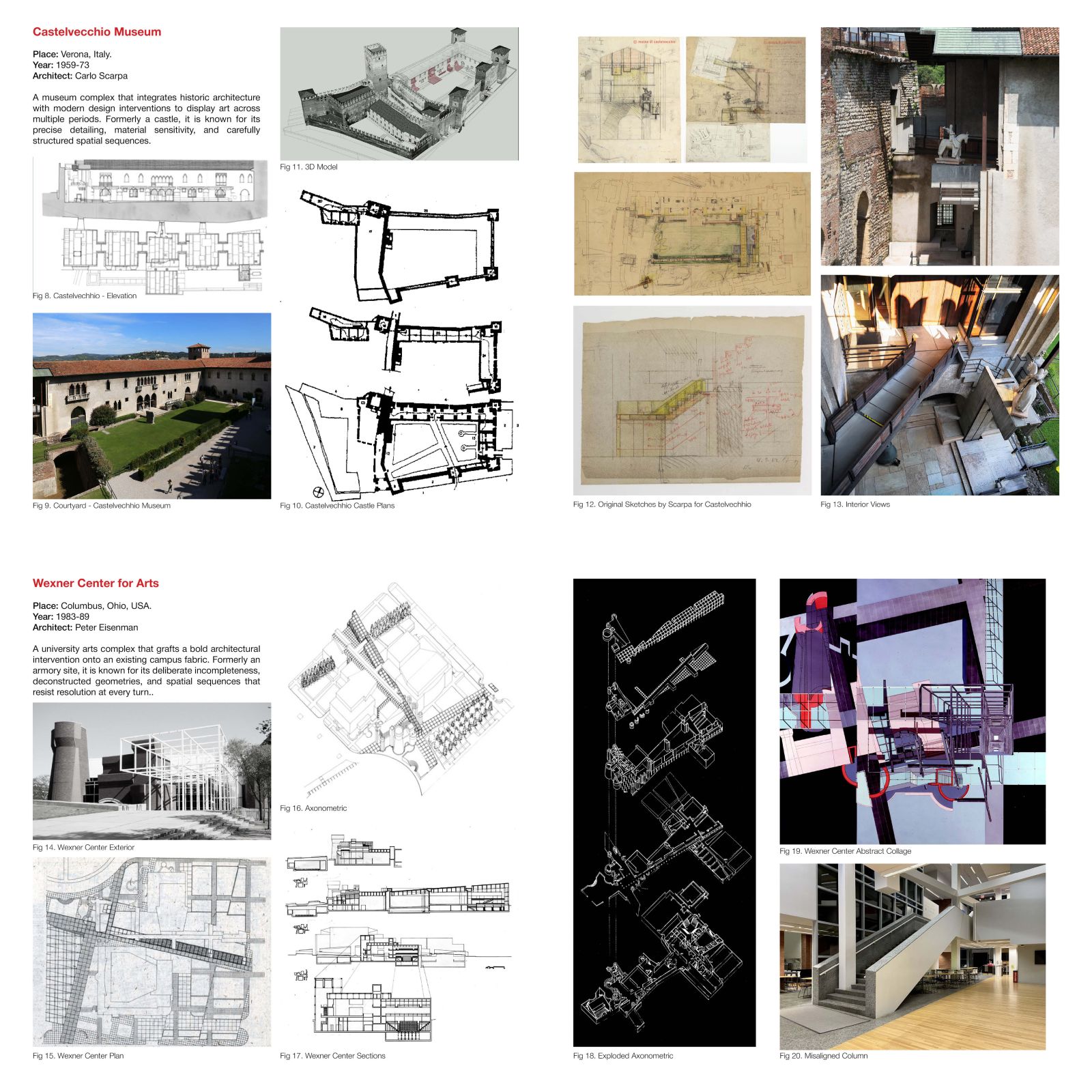
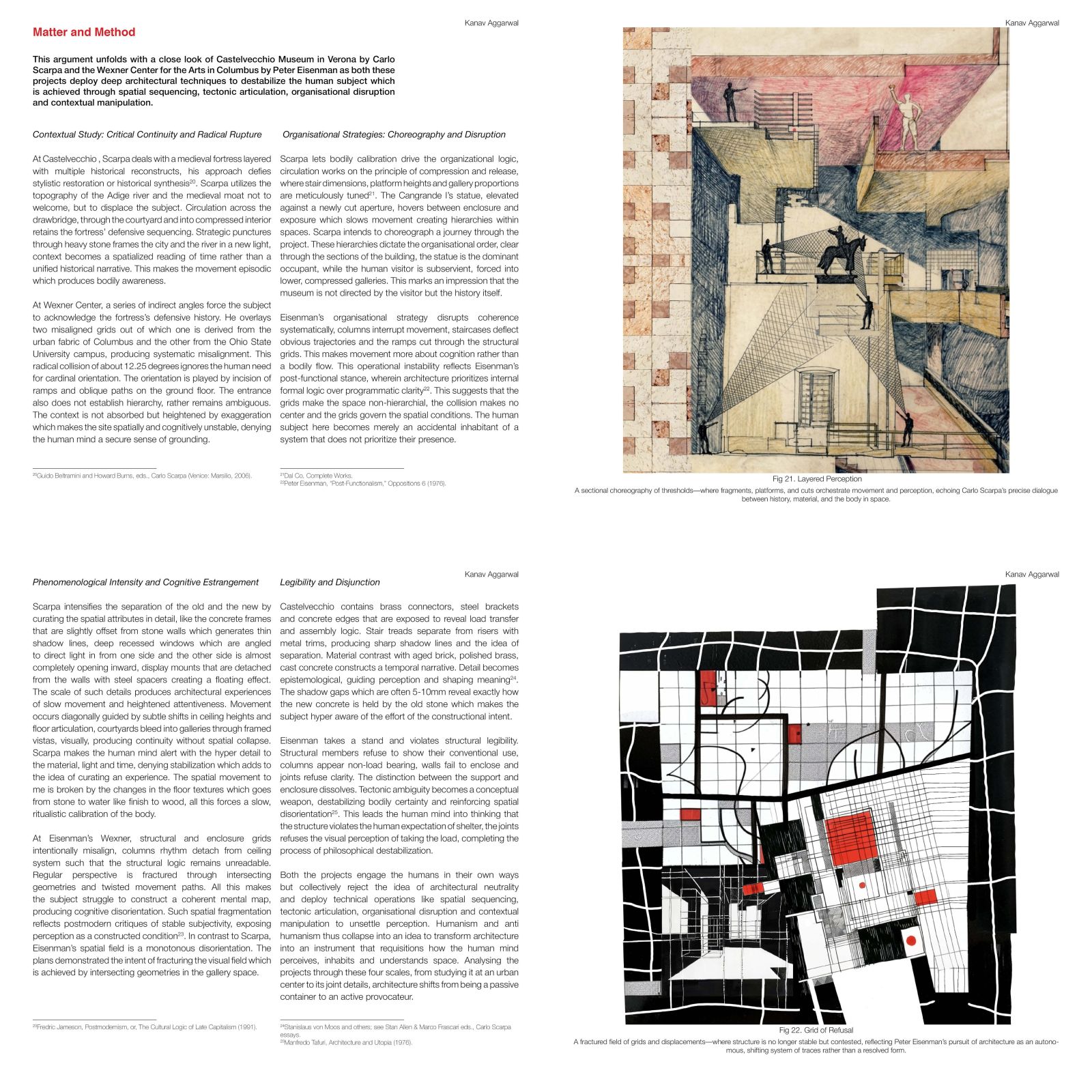
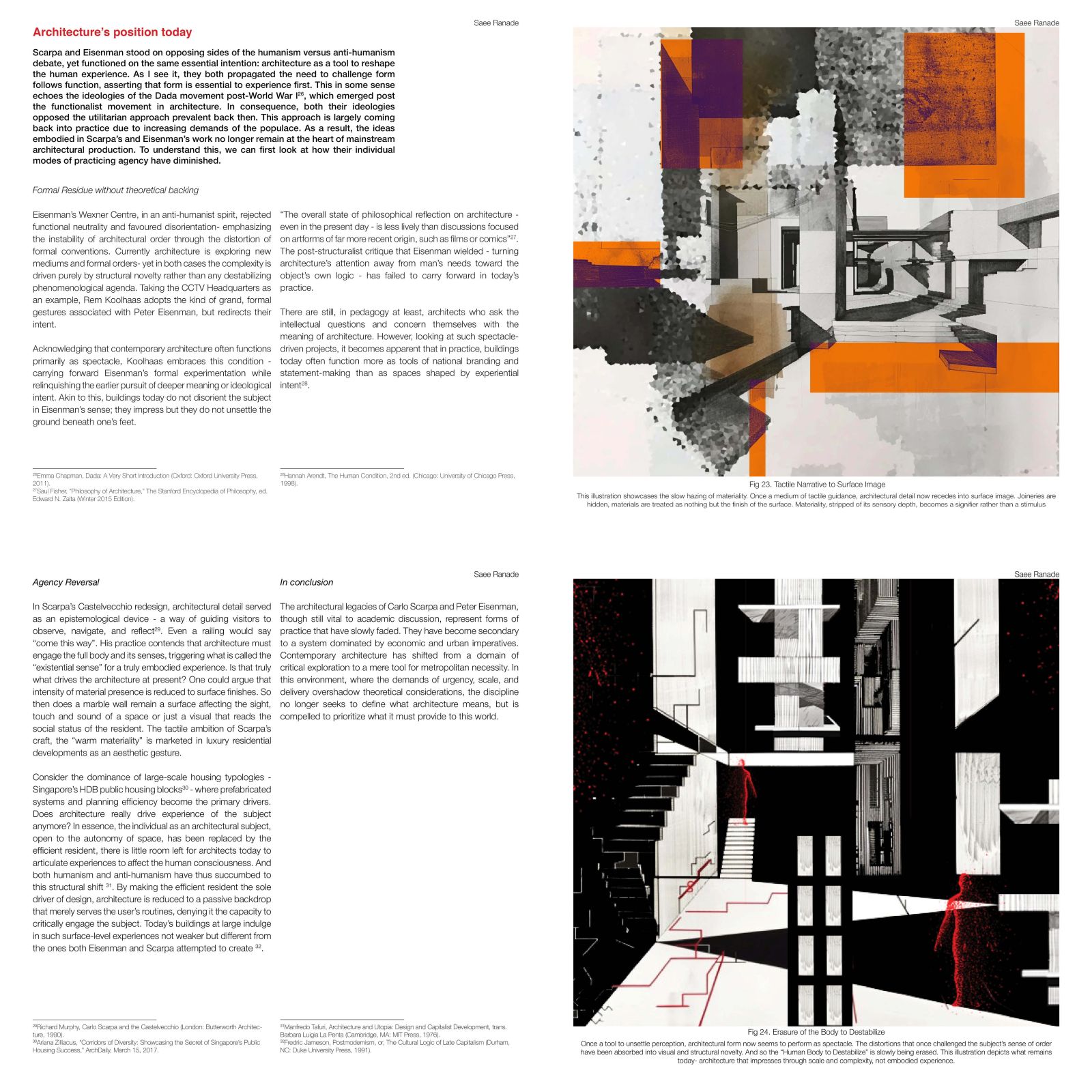
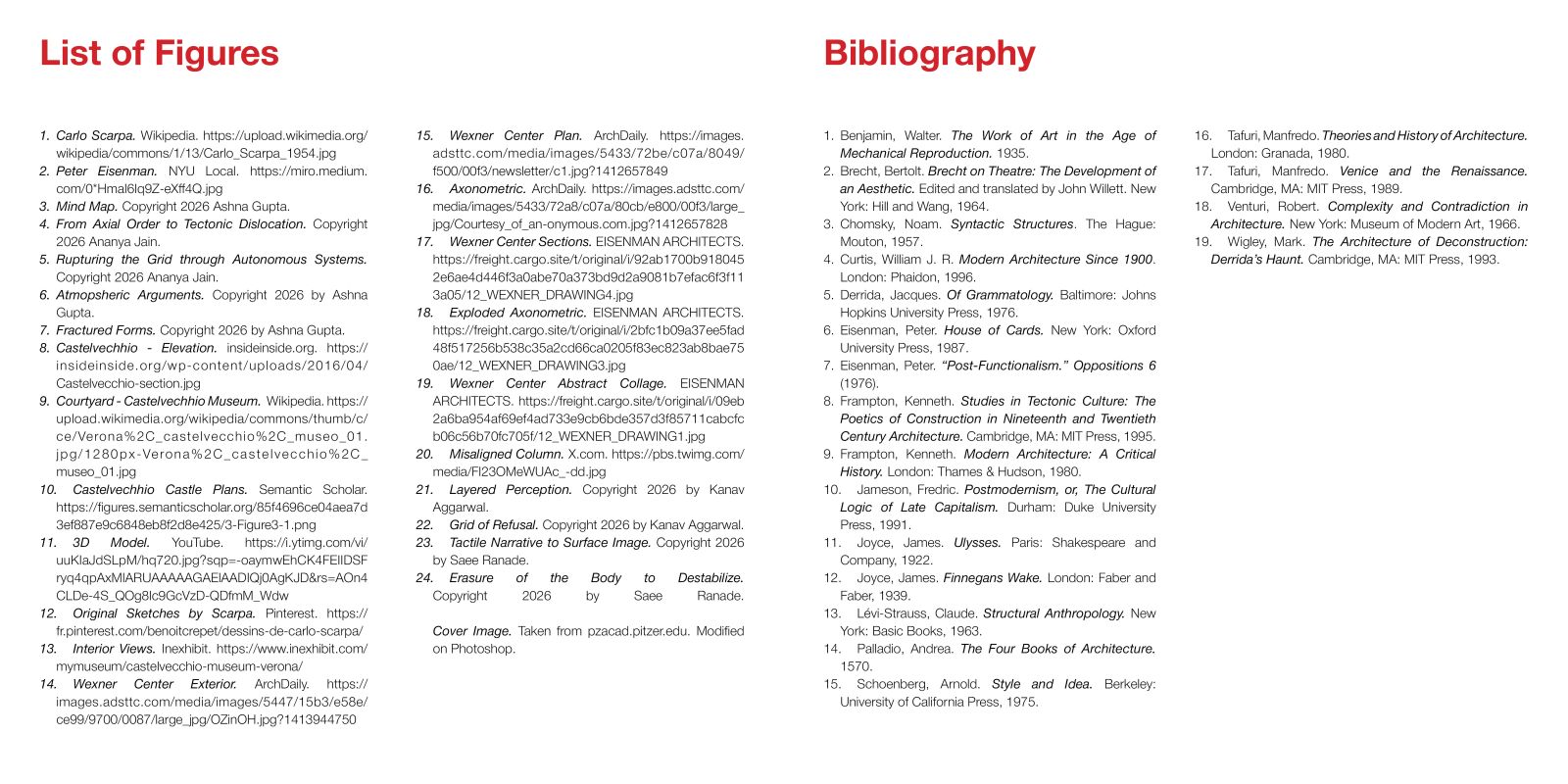
Corpus Delicti - the material evidence of a crime - frames this essay’s inquiry into what architecture suppresses. Functionalism’s crime was quiet: by organizing space around efficiency, it buried its assumptions in use and foreclosed every other claim the body might make. Scarpa and Eisenman are read here as forensic responses to that suppression - each treating the existing building, the site, and the human body as evidence to be exposed. Through a comparative analysis of Castelvecchio and the Wexner Center, the essay argues that both architects made architecture an active philosophical agent rather than a passive container. Scarpa surfaces the remains of the existing building through material honesty and phenomenological calibration; Eisenman implicates the inhabitant’s body by withdrawing legibility and orientation. Their methods diverge but the charge is the same: architecture must make its own assumptions visible. The essay concludes that this ambition has itself become a residue - absorbed into spectacle and surface, displaced by efficiency and scale, leaving contemporary practice as the latest suppression of architecture’s capacity to critically engage the subjects it shelters.