Harshita Vishwa

Strategy

Healing in the Himalayas: Wellness in Dehradun

This strategy proposes transforming Dehradun into a globally recognised Medical Value Tourism (MVT) destination by leveraging its natural Himalayan setting, strong Ayurveda ecosystem, and expanding healthcare infrastructure. The study begins with an assessment of the city's strengths, trends, and challenges through SWOT, PESTLE, and problem analysis, identifying fragmented governance and weak branding as key barriers. Drawing on Kerala's wellness model, it presents the vision of "Healing in the Himalayas," supported by strategic levers such as governance reforms, infrastructure, branding, investment, and patient facilitation. The strategy concludes with an implementation roadmap, funding mechanisms, impact assessment, and projected economic and social outcomes for sustainable urban growth.
Report Content

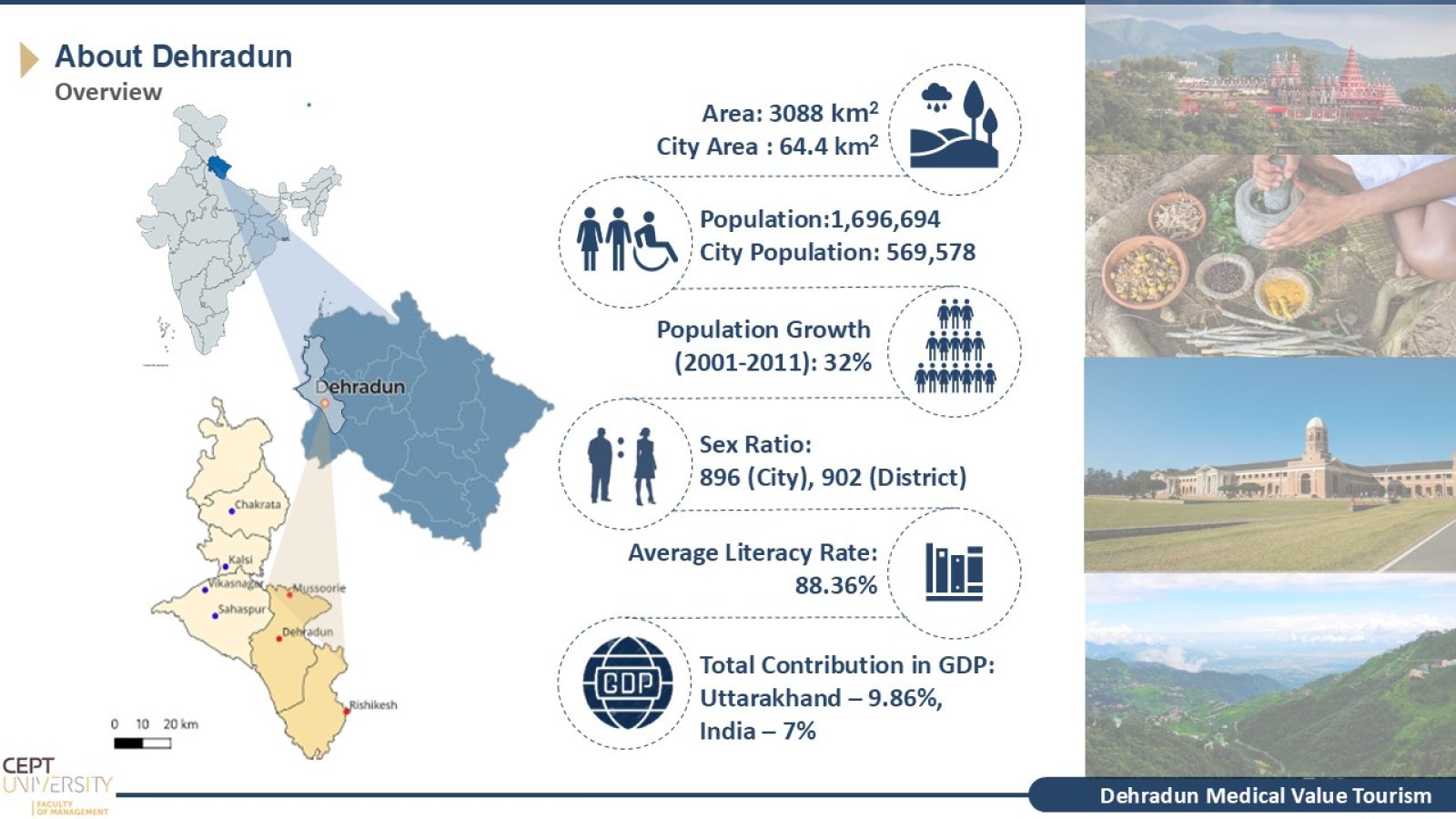
We begin by understanding Dehradun's demographic, economic, and geographical profile, highlighting why it has strong potential as a wellness destination.

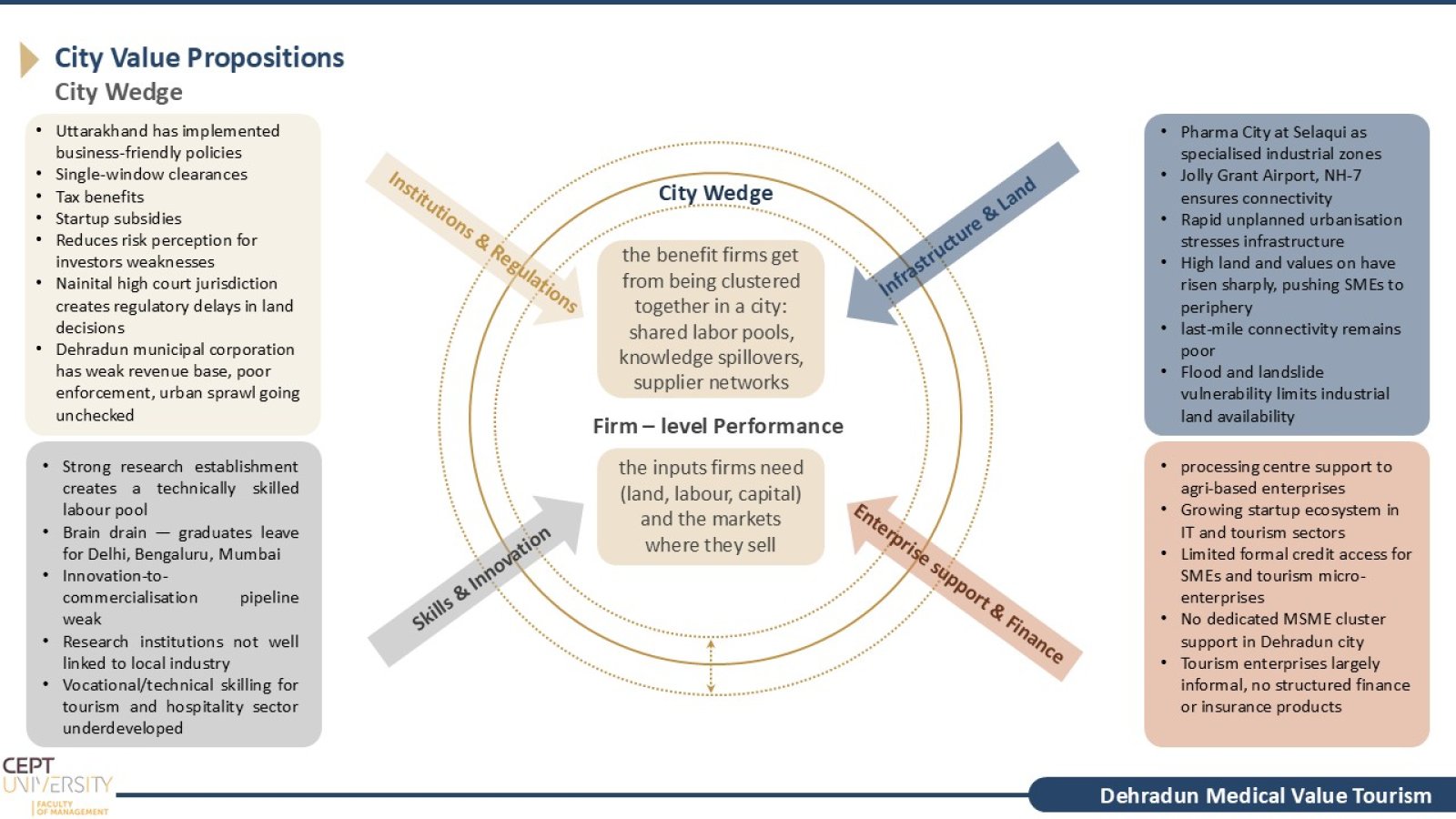
This slide evaluates Dehradun's competitive advantages and gaps across infrastructure, institutions, skills, finance, and enterprise support.

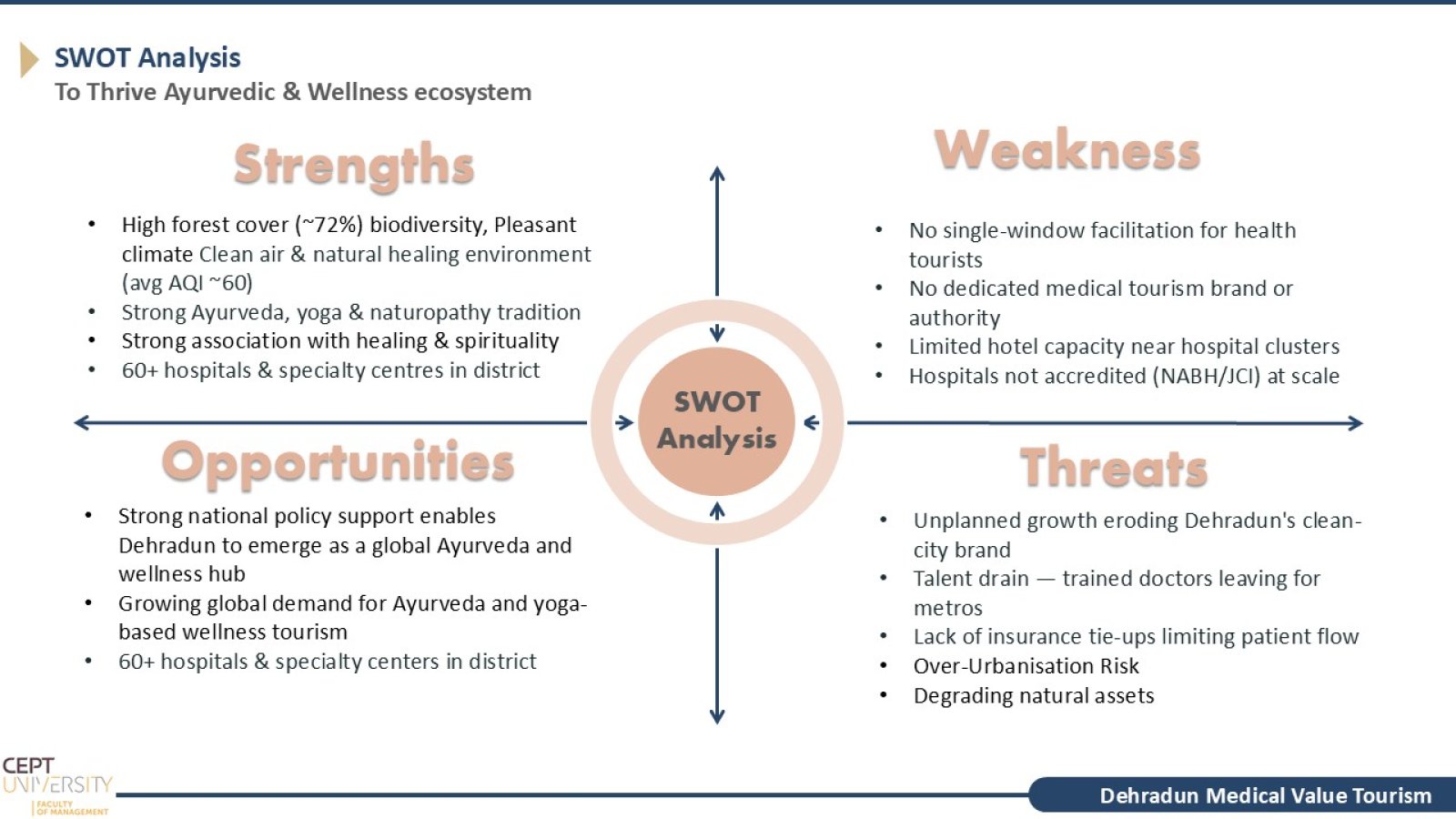
The SWOT analysis identifies the city's strengths, weaknesses, opportunities, and threats in developing a thriving Ayurveda and wellness ecosystem.

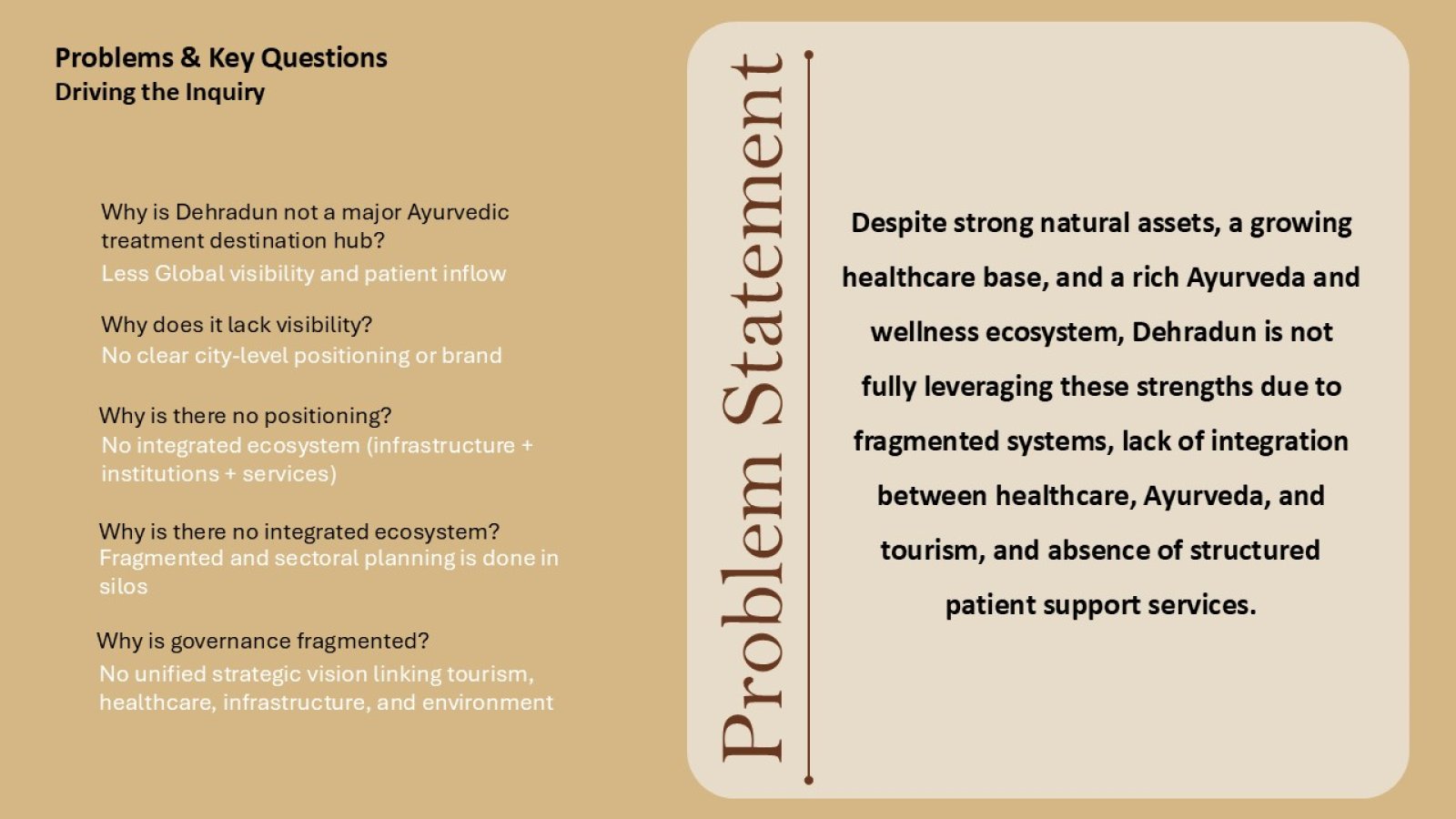
Despite its strong natural and healthcare assets, fragmented governance and lack of integration prevent Dehradun from emerging as a leading medical tourism hub.

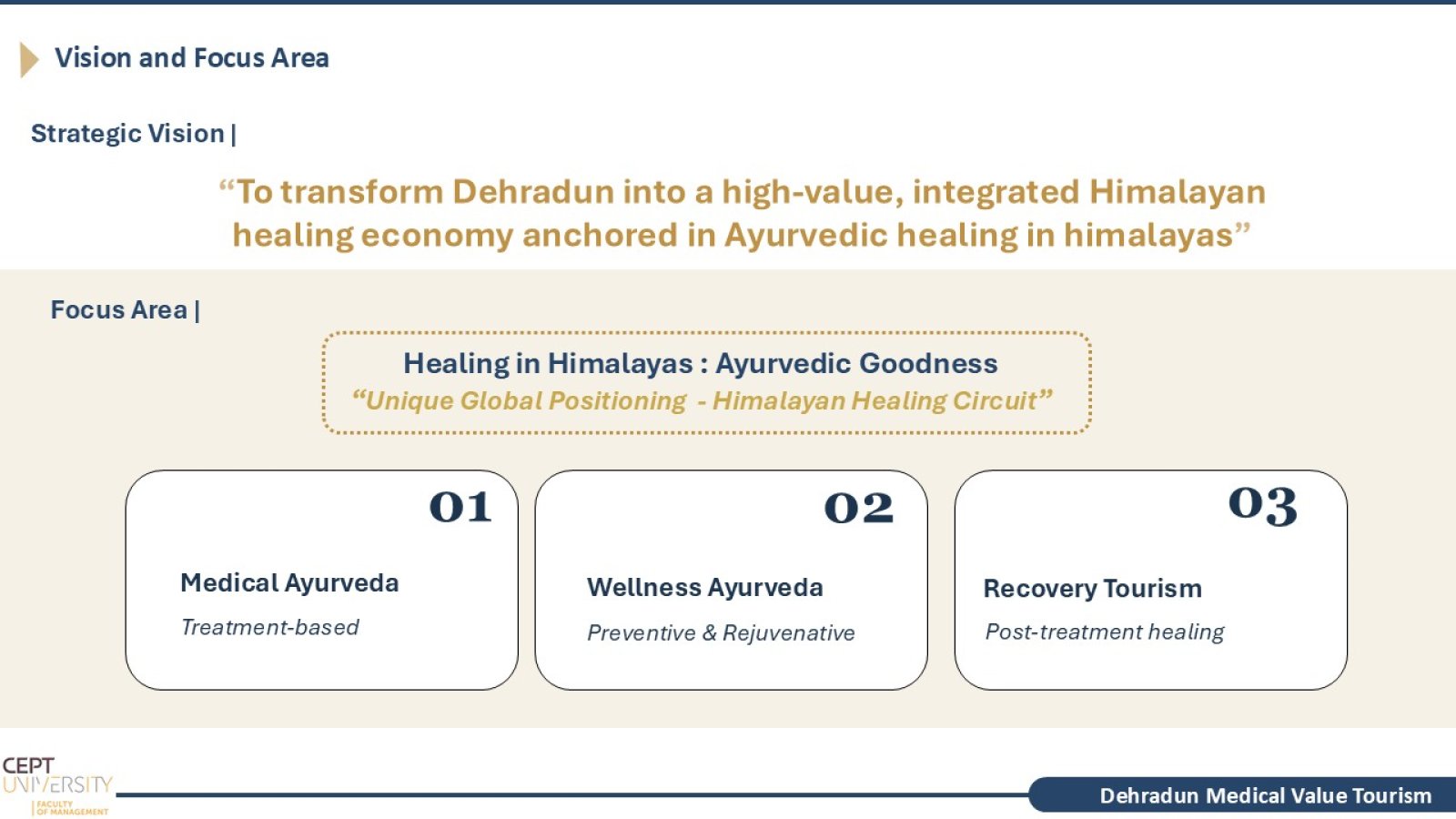
Our vision is to position Dehradun as a global "Healing in the Himalayas" destination through medical Ayurveda, wellness, and recovery tourism.

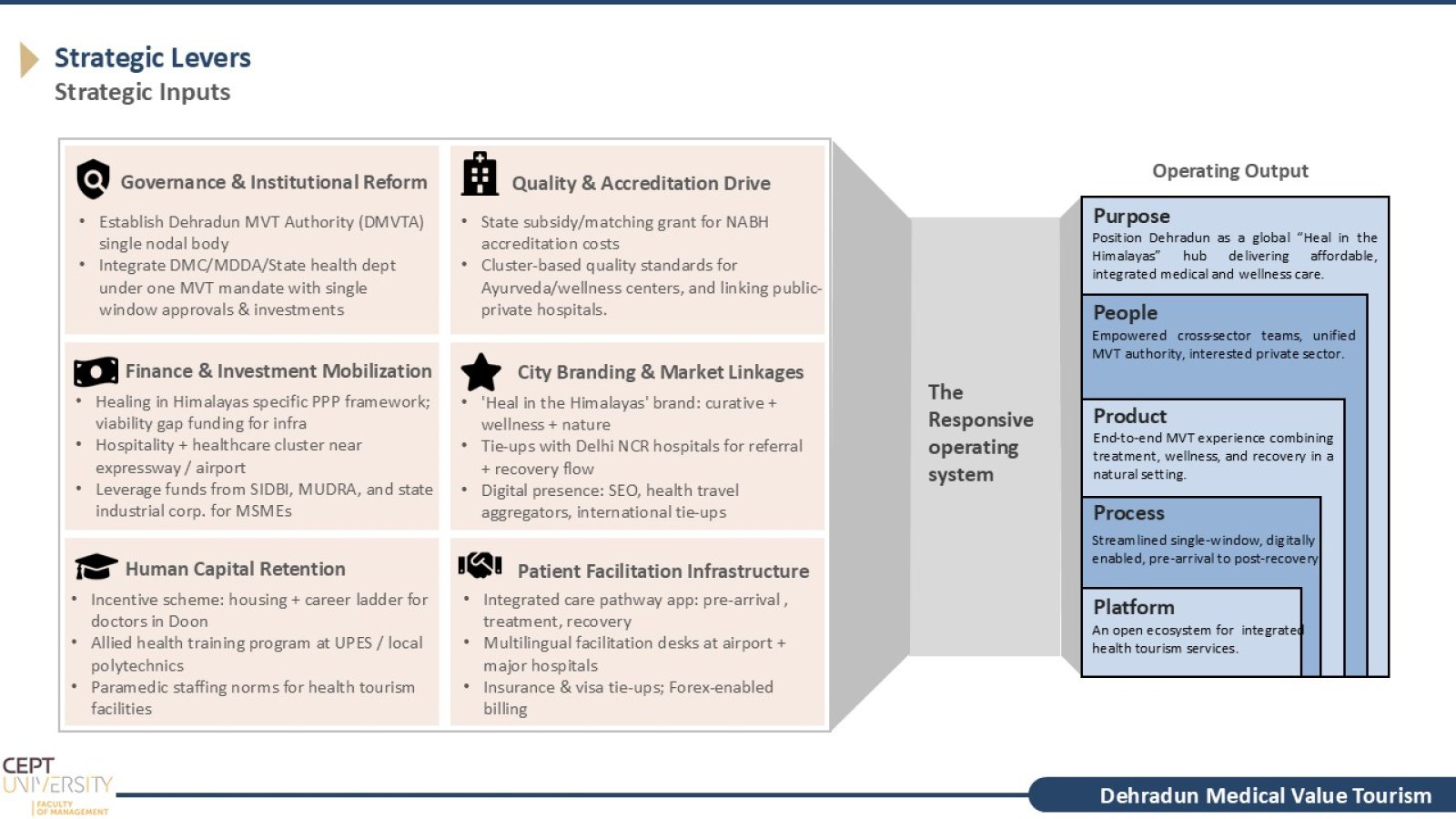
We propose six strategic interventions to strengthen governance, quality, investment, branding, talent, and patient-centric infrastructure.

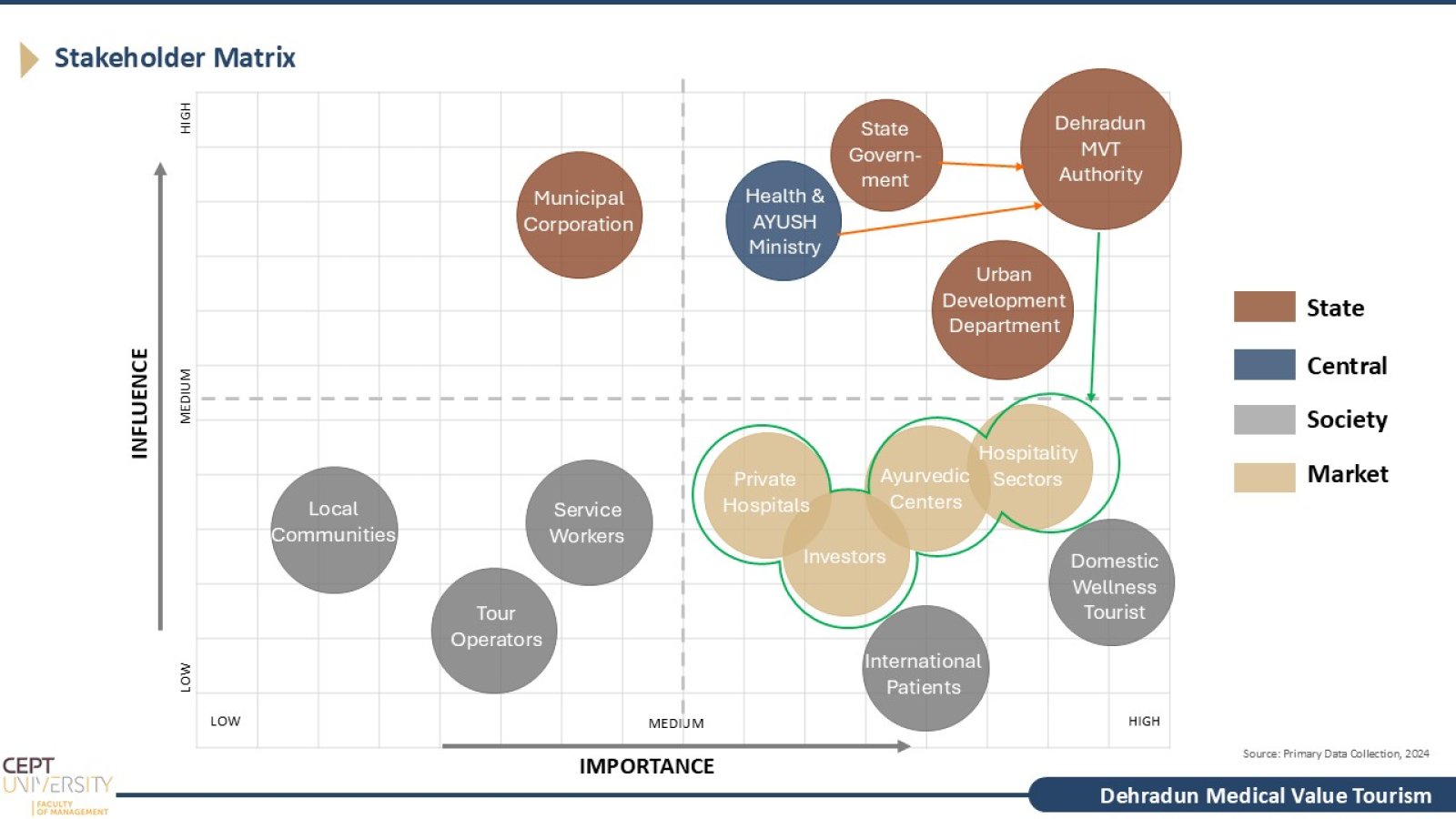
This matrix maps the influence and importance of key stakeholders to ensure coordinated implementation and shared accountability.

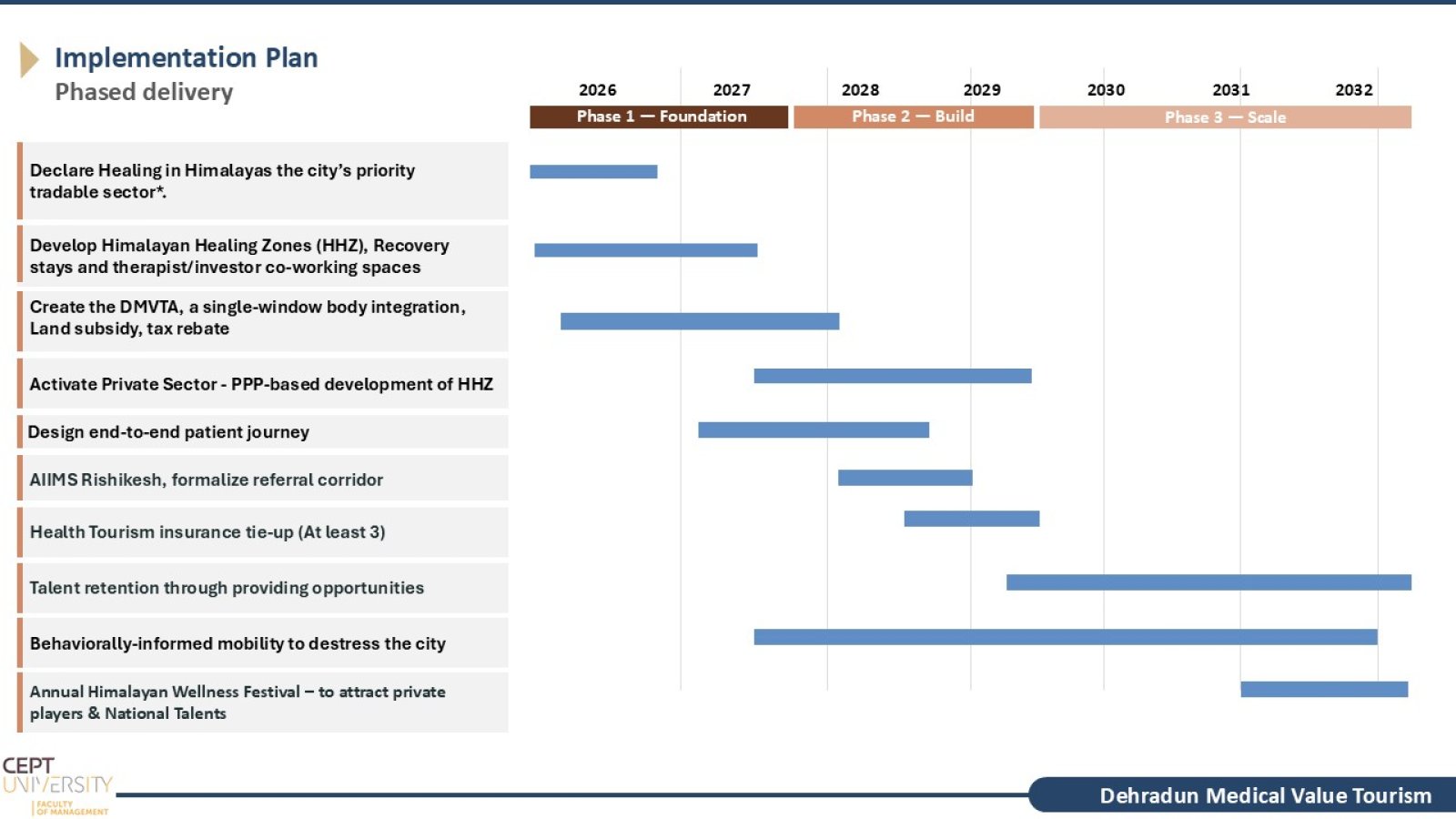
A phased roadmap outlines how the strategy will be executed from foundation to scale between 2026 and 2032.

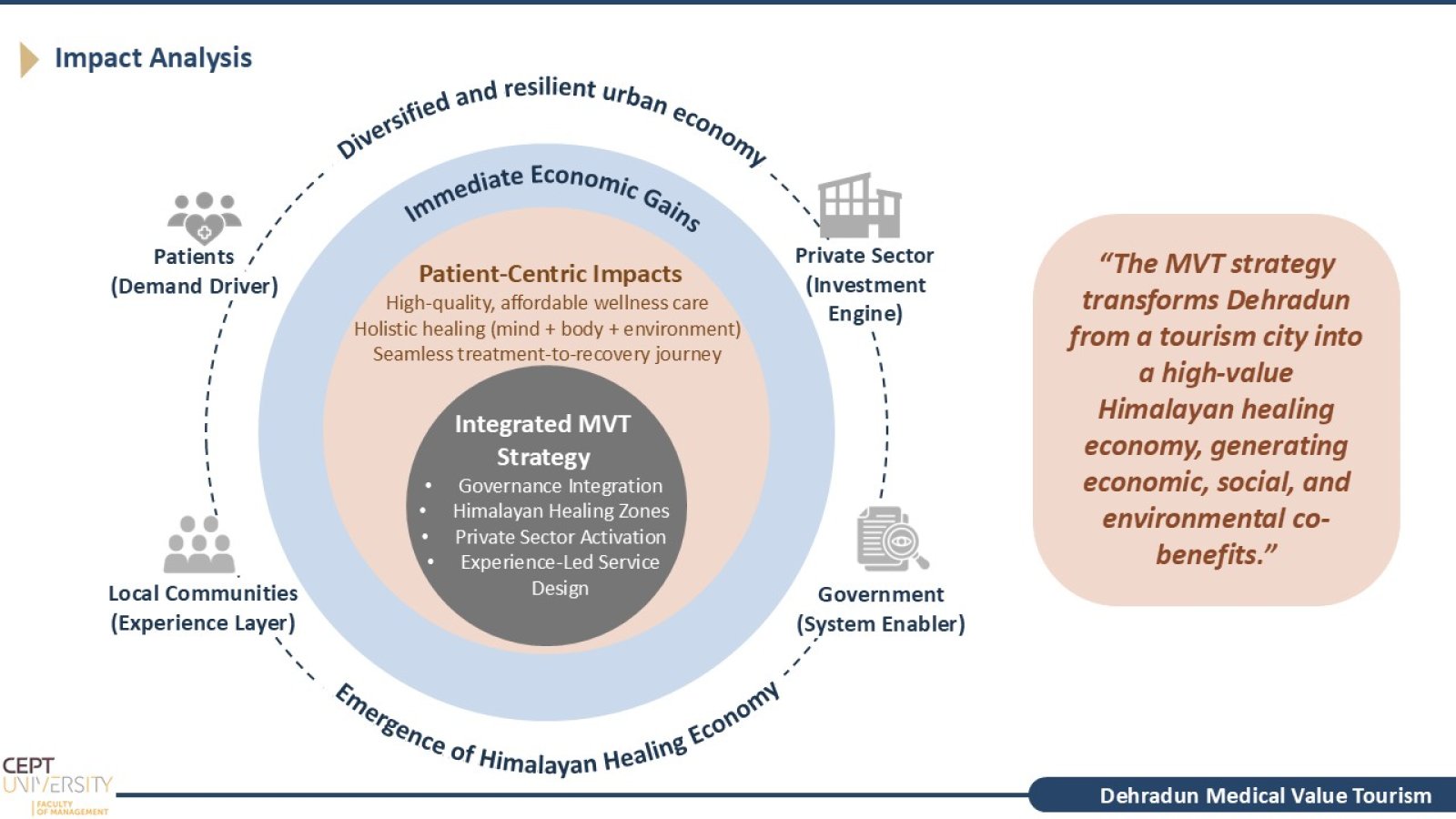
The proposed strategy generates economic growth while creating better patient experiences, stronger governance, and long-term community benefits.

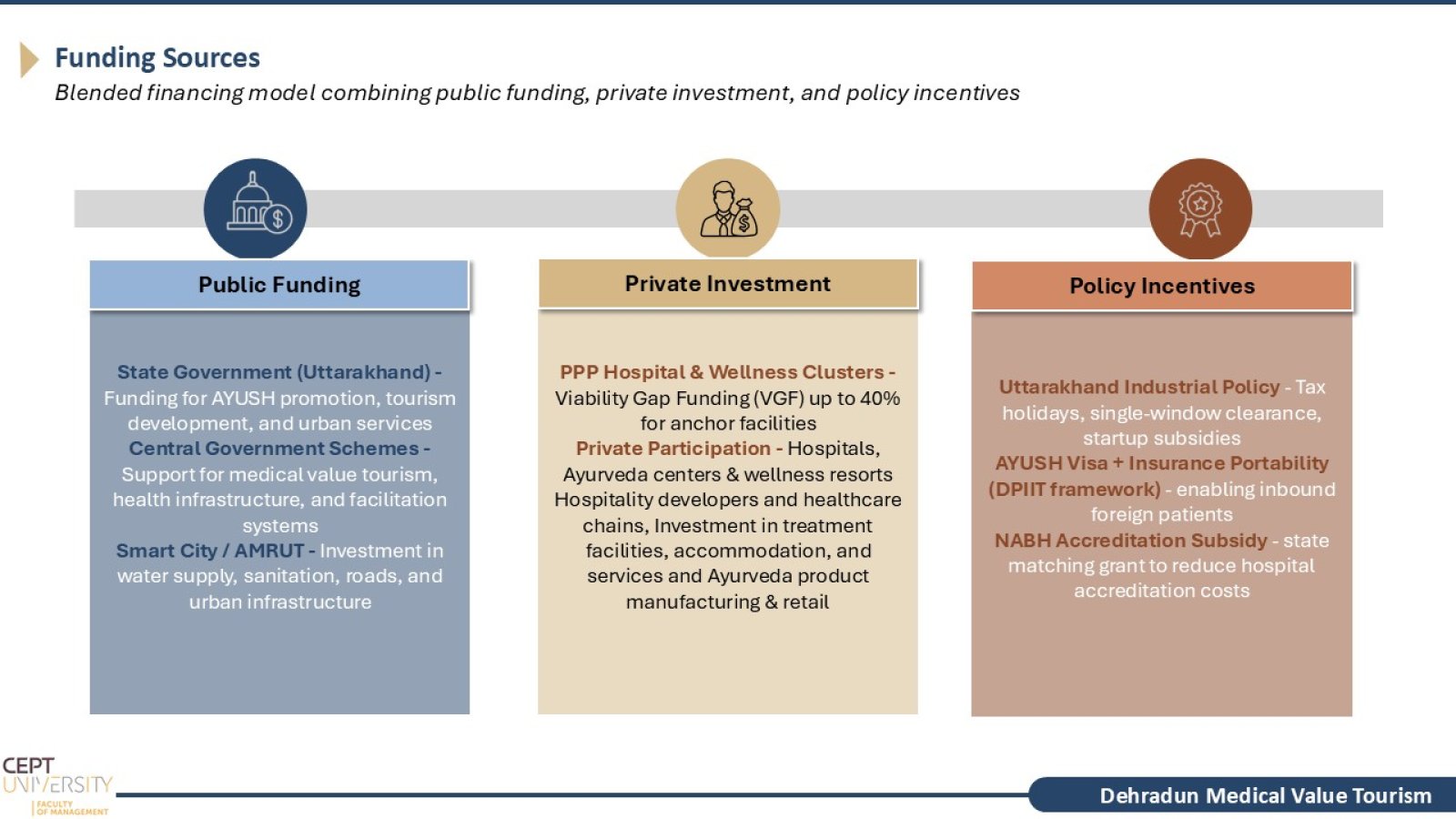
A blended financing model combines public funding, private investment, and policy incentives to support sustainable implementation.