Your browser is out-of-date!
For a richer surfing experience on our website, please update your browser. Update my browser now!
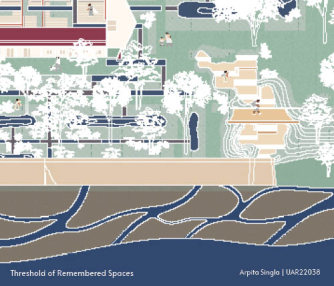
As climate hazards grow, the design and resilience of urban waterfronts are more critical than ever. Through the example of the historically significant Tapi riverfront in Surat, the studio explores the unique challenges faced by urban waterfront properties, devises innovative architectural solutions that prioritizes environmental resilience, safeguards human habitation, and considers an aesthetic of material and structure.
Surat—a coastal and river front city—has a complex history of maritime trade and ecological vulnerability. Having faced floods several times, it has evolved and adapted over time. Its historic riverfront once housed a castle, many custom houses, wharfs, gardens, and ovaras. Sandwiched between flood risks and urban pressures, the historic waterfront offers a unique opportunity to integrate urban development with historical preservation and climate resilience.
The studio positions itself in the ecology scholarship on new-materialism (2 weeks), establishes the changing ecology of the riverfront by studying maritime maps of Surat city (2 weeks), evaluates site vulnerabilities (2 weeks), articulates architectural projects aligning with the climate resilience agenda of the city municipal corporation (2 weeks), and proposes innovation architectural solutions for an inclusive climate resilient urban promenade to include areas for public engagement, waterfront recreation, and enhancing city’s livability (8 weeks).