Your browser is out-of-date!
For a richer surfing experience on our website, please update your browser. Update my browser now!
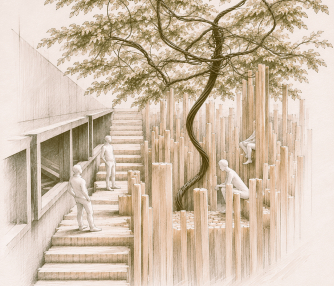
Interior design has a common default: material is chosen after the form is decided. Colour swatches and finish schedules arrive at the end of a process that has already committed to a spatial idea without them. This studio inverts that sequence. What if material is the first decision, not the last?
Students work across three phases. In Reframing, they visit and document four spaces — ATMA Museum, Sarkhej Roza, the Indology Library, and a personal space of their own choosing — building a vocabulary for how material produces emotional and atmospheric experience. In Tinkering, they select a site of their own (between 40 and 80 square metres) and develop a material strategy through making, testing, and building a site model. In Resolving, they bring drawings, models, material boards, and FF&E decisions to a level of spatial conviction, arriving at a final proposal documented through a written reflection of approximately 1000 words.
The studio draws on readings by Pallasmaa, Bachelard, Zumthor, Rasmussen, and Tanizaki. Three external reviews bring practitioners into direct dialogue with the work.