Your browser is out-of-date!
For a richer surfing experience on our website, please update your browser. Update my browser now!
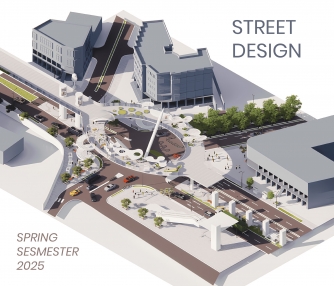
Streets have predominantly been considered as mobility and accessibility systems. However, they are versatile open spaces which play a vital role in inducing public life to our cities. The streets provide opportunities for diverse user groups to engage in social, cultural and economic activities. This quality of multiplicity, diversity and negotiations of space make the street design experience challenging. The learnings from policy frameworks, design standards, guidelines and best practices would be integrated to support design thinking process. National Urban Transport Policy advocates equitable distribution of street spaces using ‘Complete Streets philosophy’, creating safe, accessible and inclusive streets for all. In alignment to this, the course intends to develop a comprehensive understanding of user group diversities, street networks, pattern and heirarchy, character, edge conditions and activity patterns including role of design elements. It integrates data analysis which enables contextual street design responses. The studio exercises would connect macro to micro scales to derive a ‘whole to part’ understanding. The design deliberations would integrate streetscapes, services, infrastructure and street furniture. The pedagogy will emphasize on demonstrating implementation level of design detailing, use of materials, street design elements to connect the theory with practice.