Your browser is out-of-date!
For a richer surfing experience on our website, please update your browser. Update my browser now!
Cities are often planned around efficiency, infrastructure, and adult needs, which leads to children’s everyday experiences being overlooked. Rapid urbanization, increasing density, traffic congestion, limited open spaces, and unequal access to infrastructure affect all children, especially from marginalized communities.
Children experience the city differently. They are more sensitive to scale, safety, comfort, and sensory environments. Their ability to move independently, play freely, and access everyday spaces reflects how inclusive and equitable a city truly is. However, many urban environments are dominated by traffic, rigid planning, and fragmented development, limiting children’s safe access to streets and open spaces.
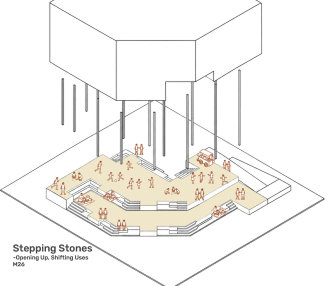
This studio adopts the view, as emphasized by UNICEF, that “a child-friendly city is a good city for everyone,” and places children at the centre of design thinking. It rethinks public-spaces through safety, accessibility, inclusion, and play, extending play beyond designated areas to everyday environments such as school-edges, streets, under-flyover spaces, and neighbourhood conditions.
A key component of the studio is learning through observation and engagement. The studio aims to move beyond conventional solutions and develop innovative, context-responsive urban design interventions. Ultimately, this studio is a shift in perspective to understand the city at a child’s scale and imagine more inclusive public spaces for all.