Your browser is out-of-date!
For a richer surfing experience on our website, please update your browser. Update my browser now!
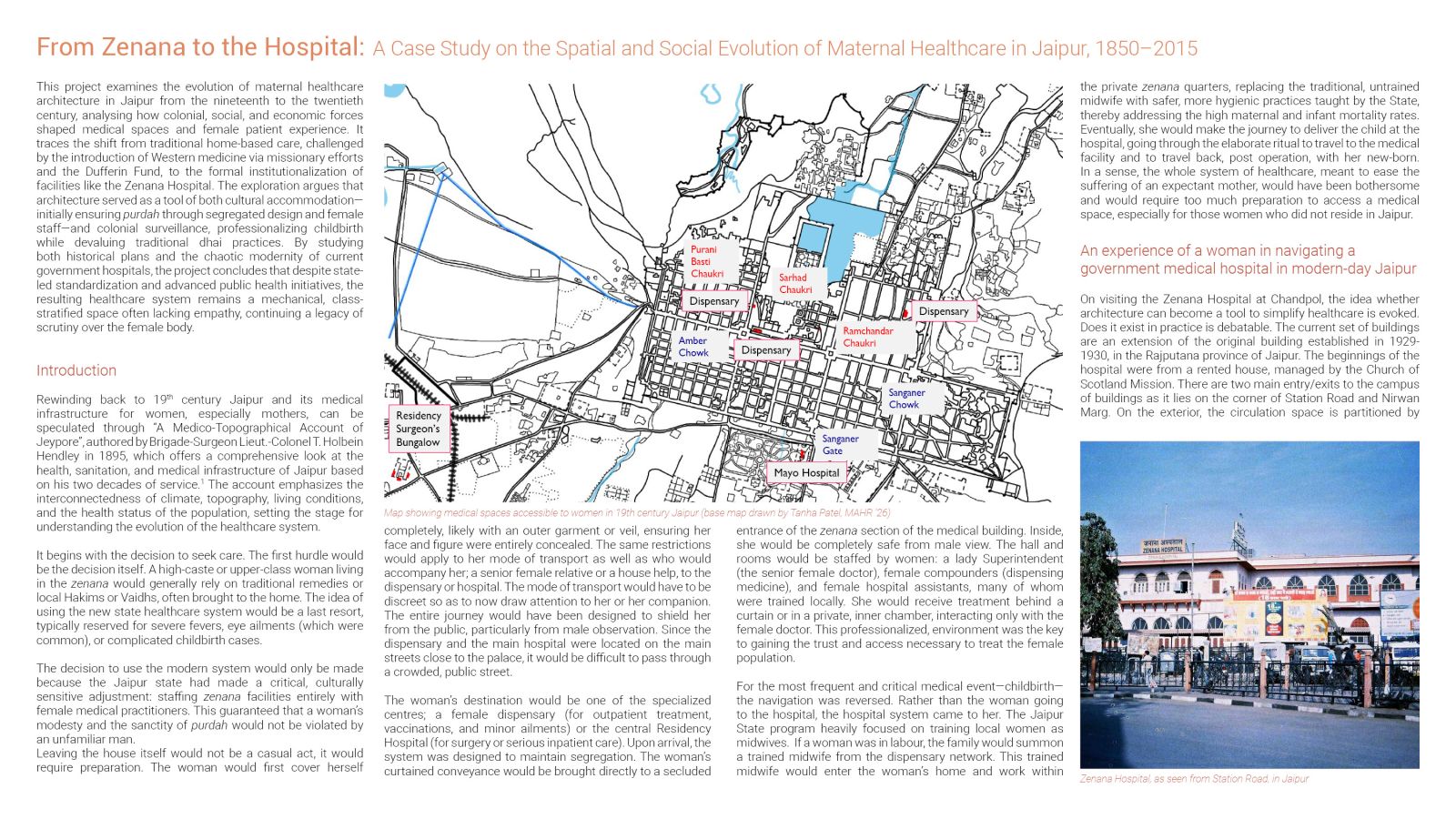
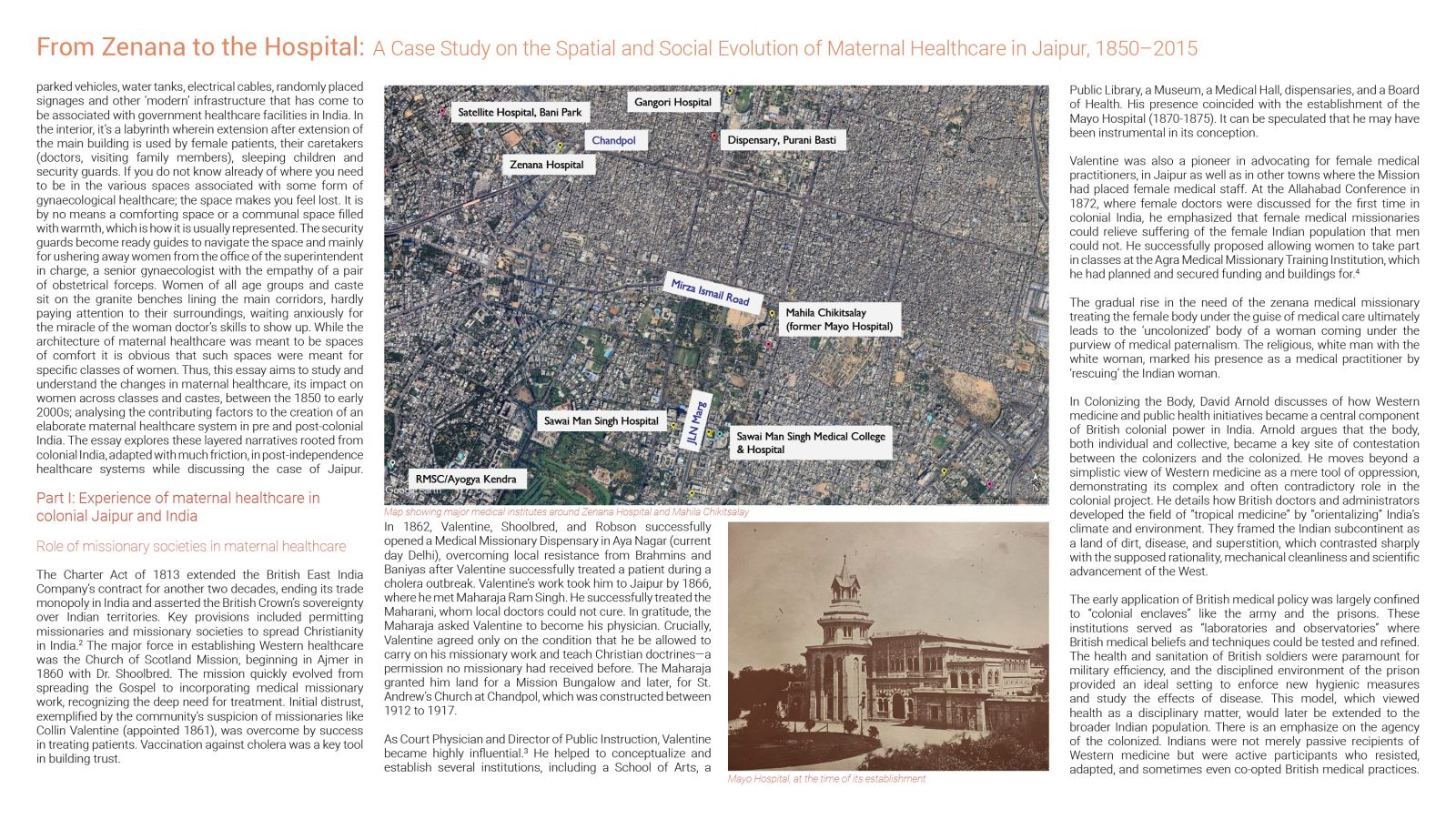
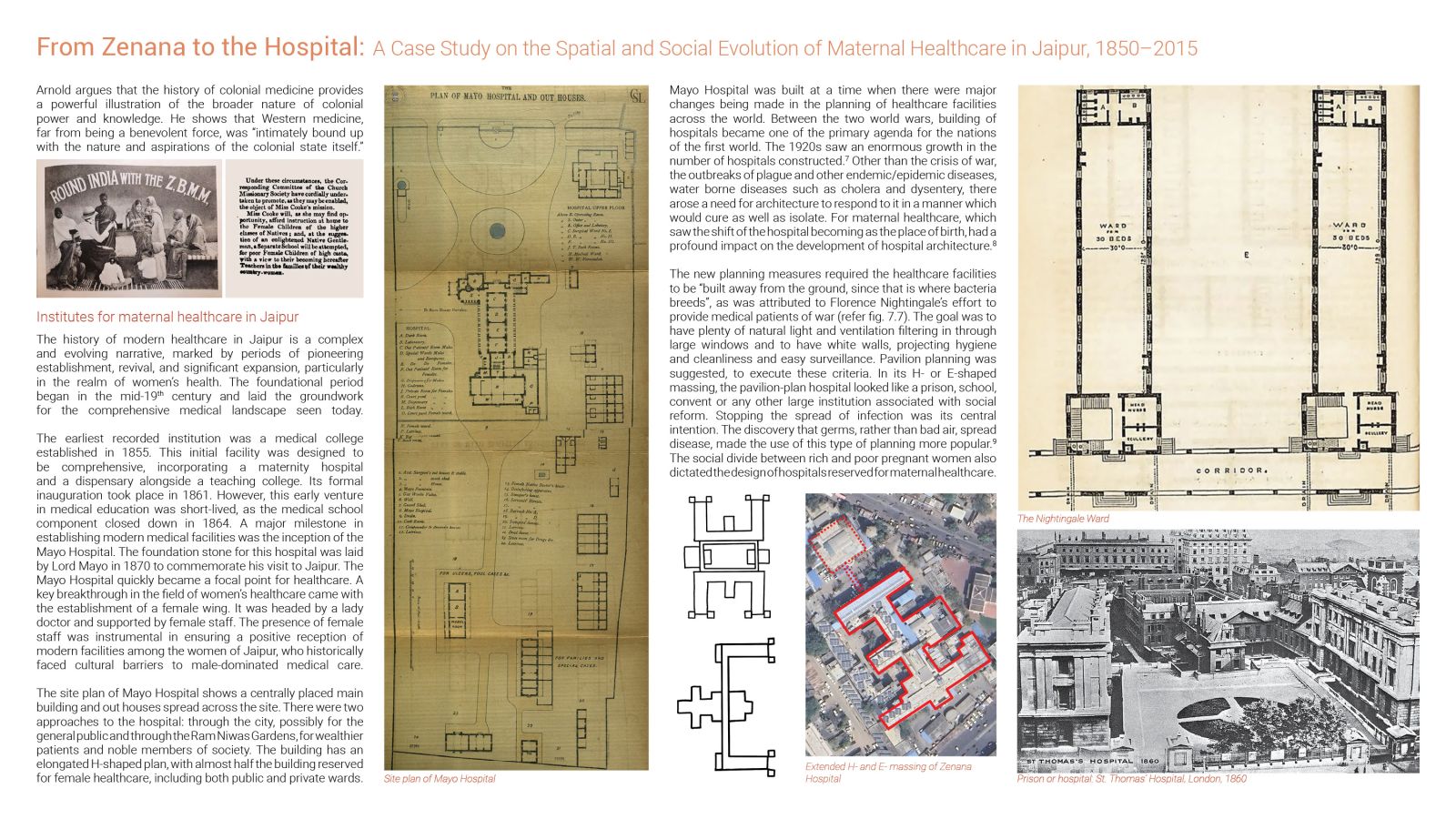
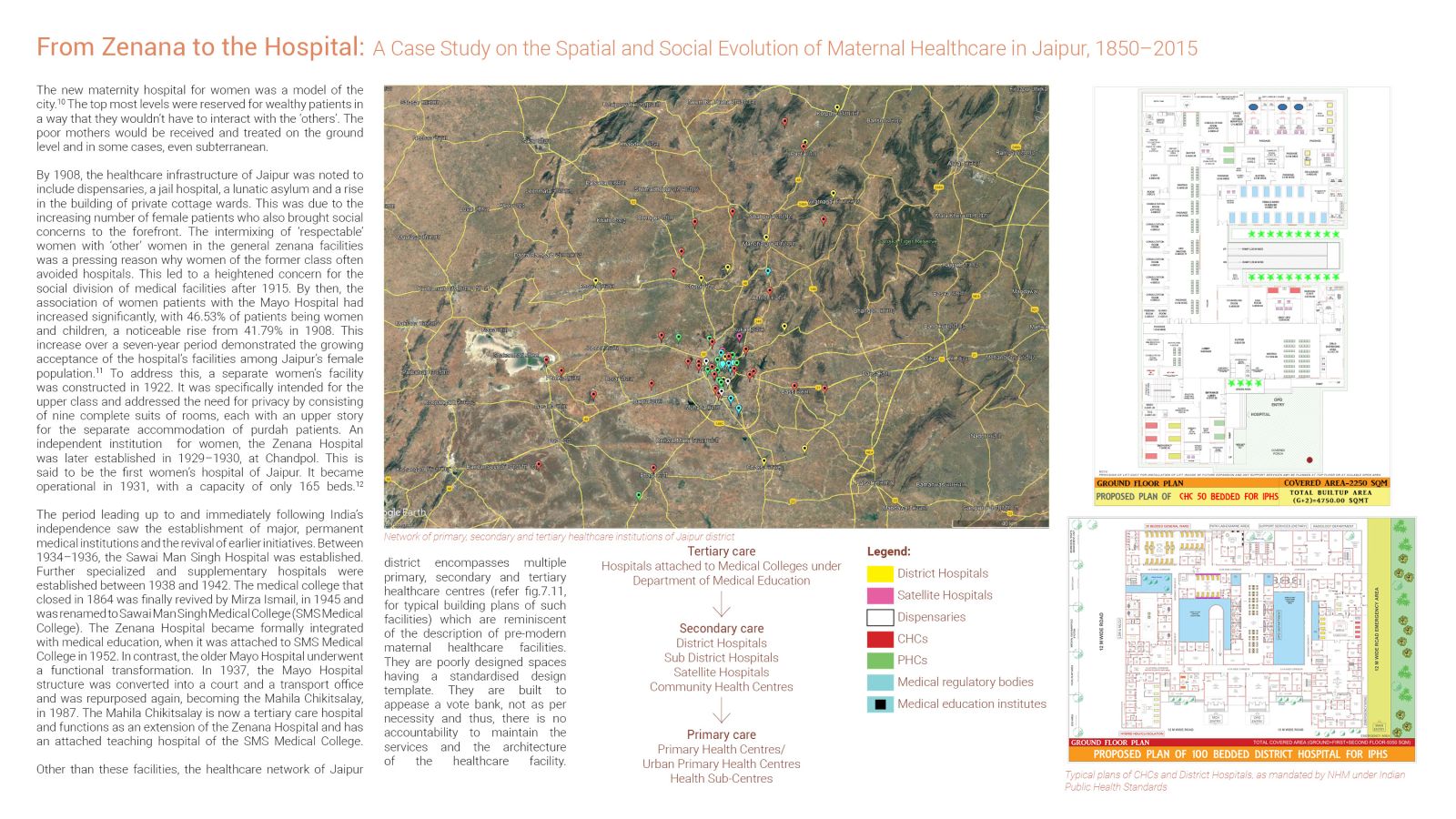
Presented as a case study of the spatial and social evolution of maternal healthcare in Jaipur between 1850–2015, this project examines the evolution of maternal healthcare architecture in Jaipur from the nineteenth to the twentieth century, analysing how colonial, social, and economic forces shaped medical spaces and female patient experience. It traces the shift from traditional home-based care, challenged by the introduction of Western medicine via missionary efforts and the Dufferin Fund, to the formal institutionalization of facilities like the Zenana Hospital. The exploration argues that architecture served as a tool of both cultural accommodation—initially ensuring purdah through segregated design and female staff—and colonial surveillance, professionalizing childbirth while devaluing traditional dhai practices. By studying both historical plans and the chaotic modernity of current government hospitals, the project concludes that despite state-led standardization and advanced public health initiatives, the resulting healthcare system remains a mechanical, class-stratified space often lacking empathy, continuing a legacy of scrutiny over the female body.