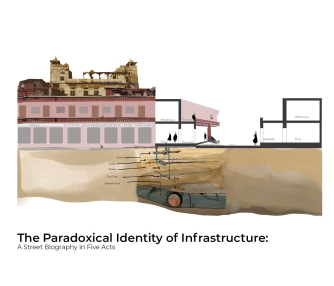
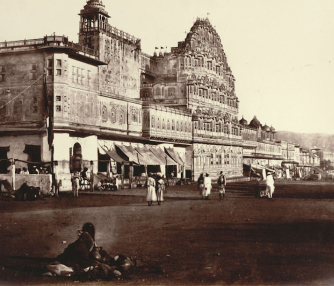
This studio investigates the evolving relationship between land and institutional architecture in post-independence India, foregrounding Jaipur and Rajasthan as critical sites of inquiry. The studio interrogates how institutionalization transformed land into a legible, ownable, and governable resource, fracturing its continuous, sustaining role. Through historical research, policy analysis, and spatial investigation, students will unpack how modern India reimagined land as plot, property, and policy instrument. The studio operates across four scales: the geographic, regional, urban, and plot, to understand how national ideologies and infrastructural ambitions reshaped ownership, allocation, and use. Students will critically read texts, study archives, and visually map transformations to uncover patterns of appropriation, displacement, and planning. The final outcome is a curated publication that communicates these shifts through innovative representations.
Studio Unit
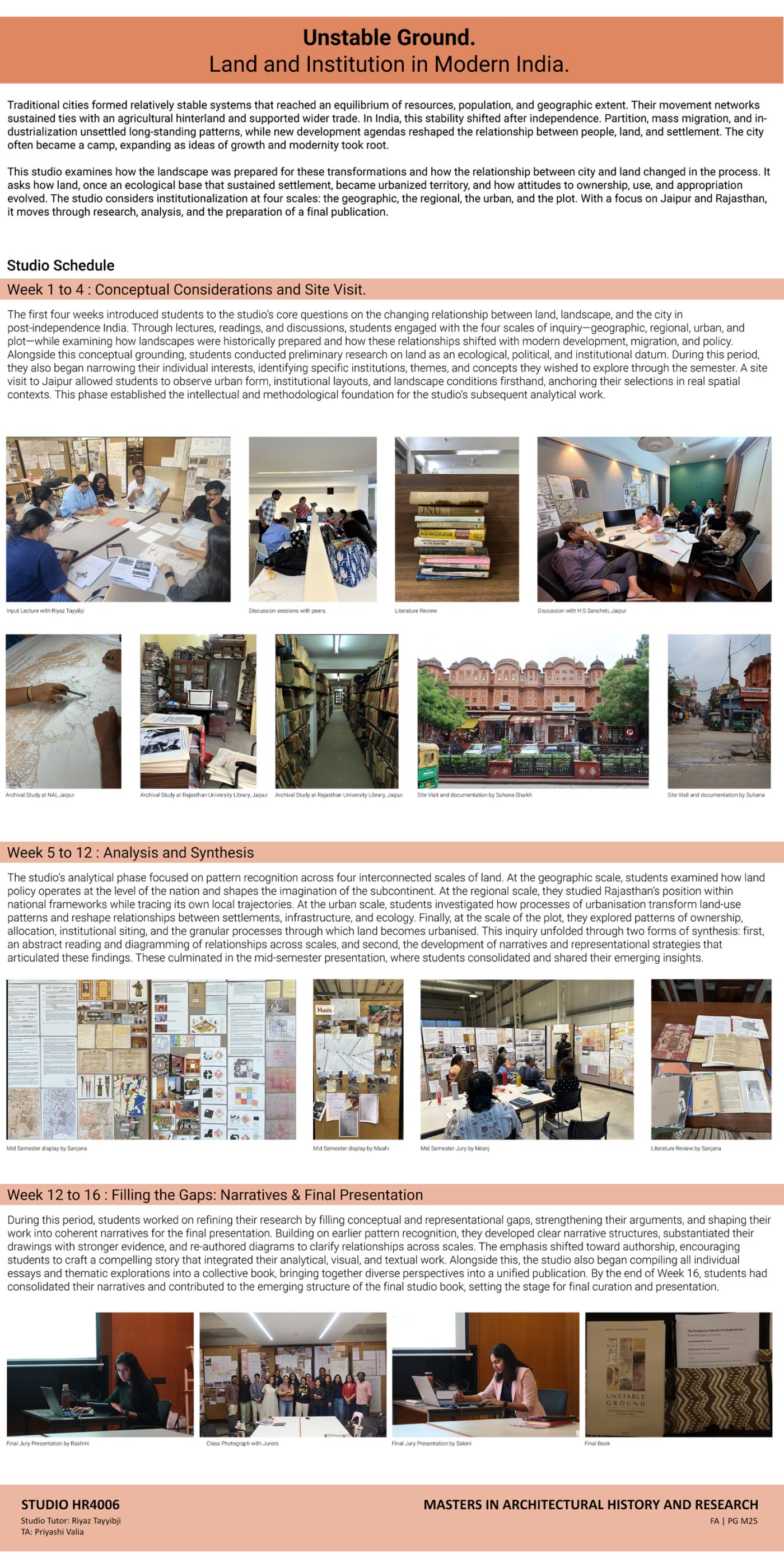
The panel outlines the studio’s week-wise progression, beginning with conceptual groundwork and site visits, moving into analytical and representational development, and concluding with narrative refinement and final presentations.
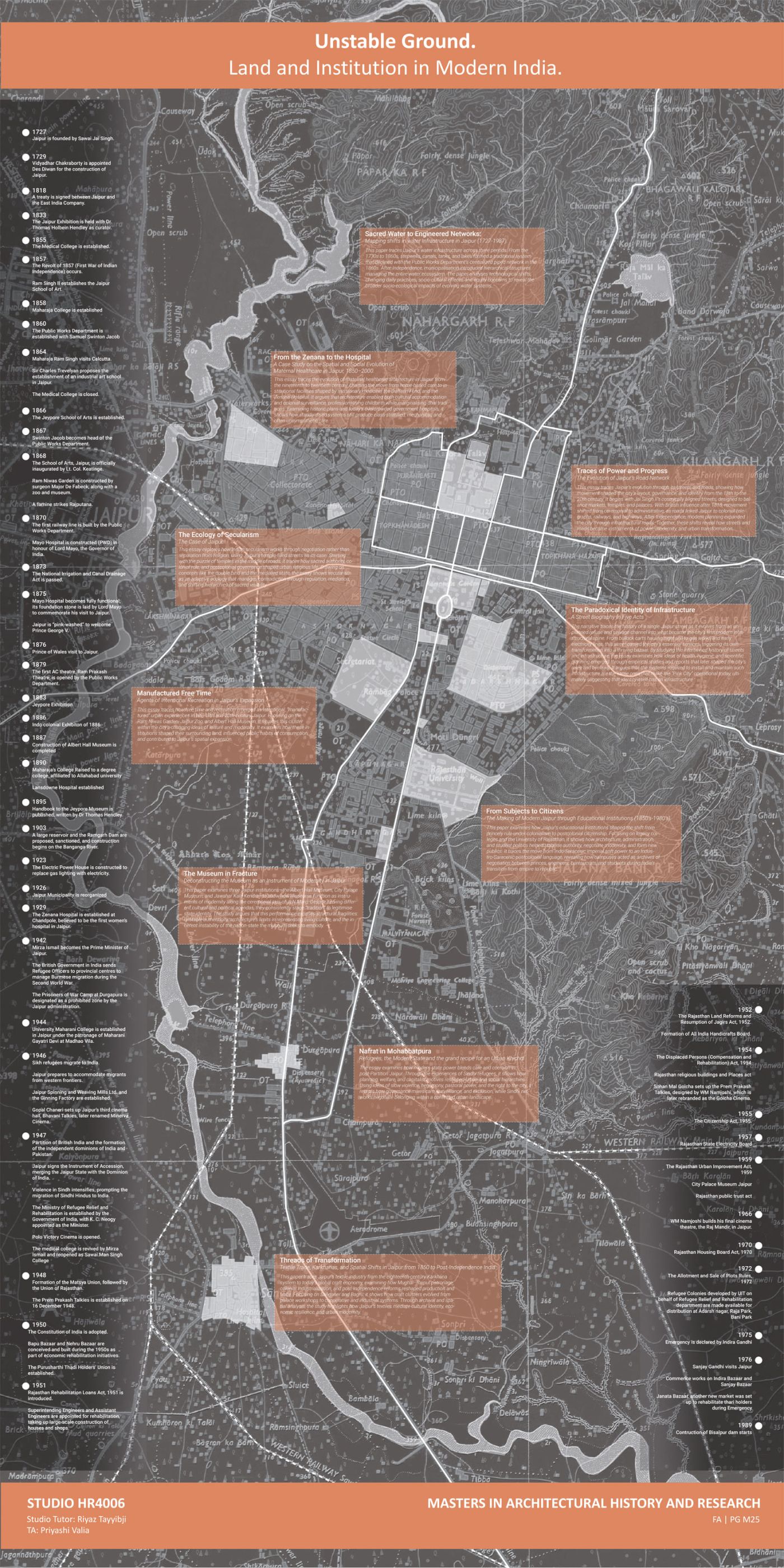
Historical and spatial analysis of Jaipur that traces major events, institutional developments, and territorial transformations. The panel situates thematic research narratives on a mapped timeline to illustrate how land and infrastructure evolved over time.