Devta Maahi Siddharth

HR4006

The Ecology of Secularism

This essay examines how Indian secularism operates not through separation from religion but through continuous negotiation, using Jaipur’s temple landscape as the central case. Beginning from the everyday puzzle of why so many temples stand in the middle of Jaipur’s roads, the study traces how sacred authority, colonial governance, and postcolonial administration have shaped the city’s religious life. Drawing on Gregory Bateson’s concept of the "double bind" and Ward Berenschot’s idea of the "mediated state", the essay argues that Indian secularism functions as an adaptive ecology—sustained through feedback loops between citizens, councillors, bureaucrats, and religious institutions. Through historical and theoretical readings, urban analysis, and close observation of temples and the deities ranging from Govind Dev Ji to small roadside shrines, the essay shows how neutrality, regulation, and political mediation together produce a hierarchy of sacred visibility. Secularism in India emerges not as a stable principle but as a system that functions as an ecology by navigating its own contradictions. Essay HERE. 

View Additional Work
Report Content

This study began with a simple question: Why are there so many small temples in the middle of the road in Jaipur? How are they allowed? They block traffic, sit on narrow pavements, and yet they have survived for decades. It soon became clear that these shrines were not administrative mistakes. They were symptoms of a deeper system connecting history, religion, politics, and governance. Following those clues eventually unlocked questions of temple management, Indian secularism and its ground reality. To understand why these temples occupy such unusual and sometimes contested spaces this study proceeds historically and theoretically from Jaipur’s sacred kingship, through colonial governance to contemporary municipal politics to present how the ideal of neutrality evolves into a lived ecology of mediation and contradictions.

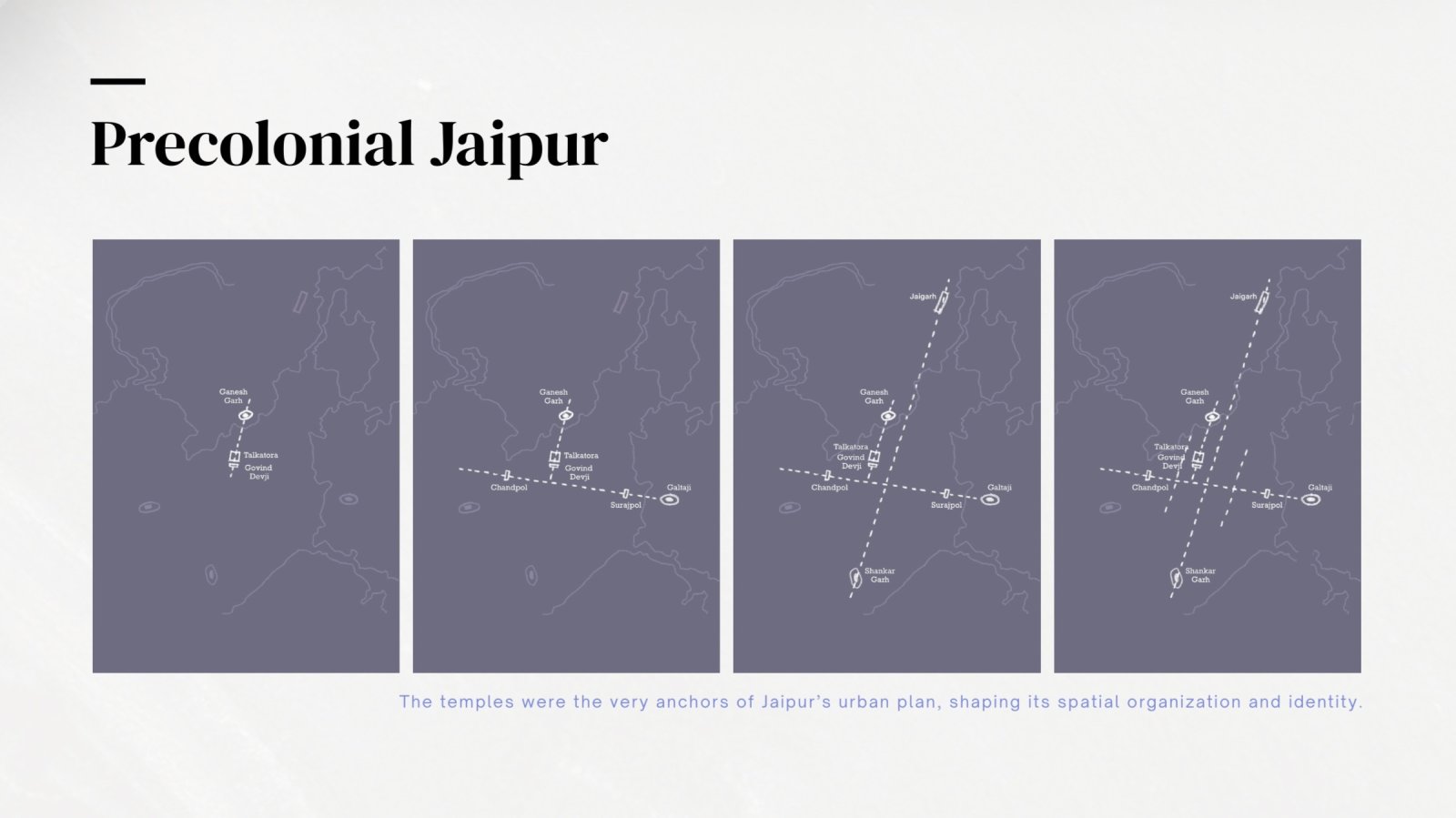
The Kachhwaha rulers traced their lineage to the Suryavanshi line — the solar dynasty of Lord Rama — which gave them divine legitimacy. When Jai Singh II relocated Govind Devji from Vrindavan at the centre of his newly established capital, he embedded this relationship into the very fabric of the city. The Govind Dev Ji Temple was placed at the centre, facing the City Palace. The alignment was not symbolic — it was spatial manifestation of the sacred sovereignty. Temples in the precolonial period owned and managed agricultural lands, received donations, employed artisans and farmers and redistributed resources – functioning as self-sufficient economic institutions. Religion was thus an intrinsic part of the physical and ideological infrastructure of power – it was embedded within all aspects of governance, planning and society.

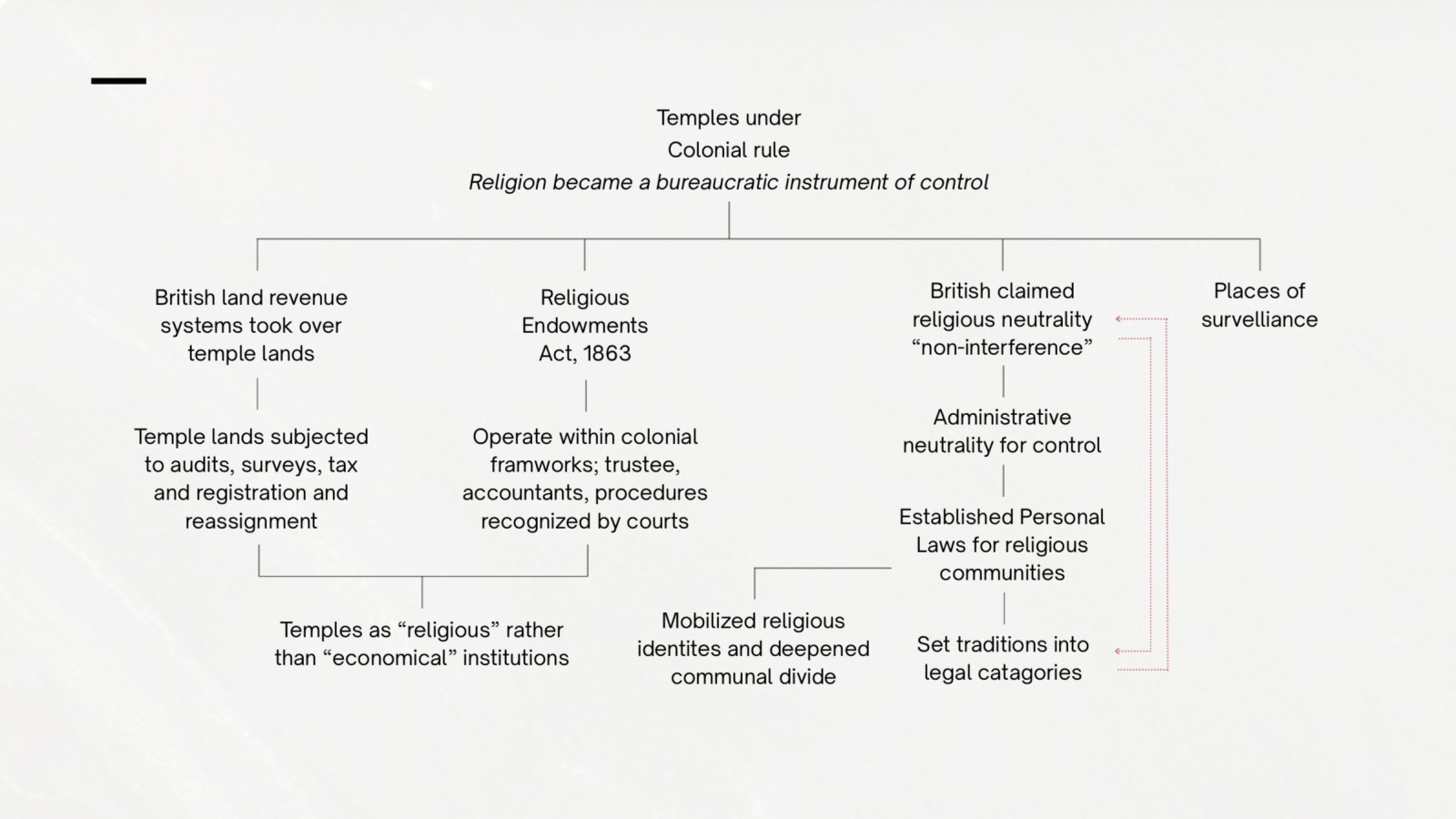
This sacred order began to shift under colonial rule. The British introduced a new typology of governance based on administrative rationality and “non-interference in religion.” But that non-interference was never neutral. By claiming neutrality, the British sought stability, however their neutrality was paradoxical. They kept religion symbolically untouched as they focused on taxations, administrations and control. By restructuring temple lands, introducing land revenue laws, and turning endowments into taxable property, the British redefined religion as something to be managed. Under the doctrine of paramountcy, Jaipur remained a princely state, but its religious authority was reframed as trusteeship. The ruler was no longer a divine servant but a guardian of “native custom” under British supervision. Religion was documented, catalogued, and frozen into heritage. In codifying religion as an area of governance, the British effectively institutionalized contradiction.

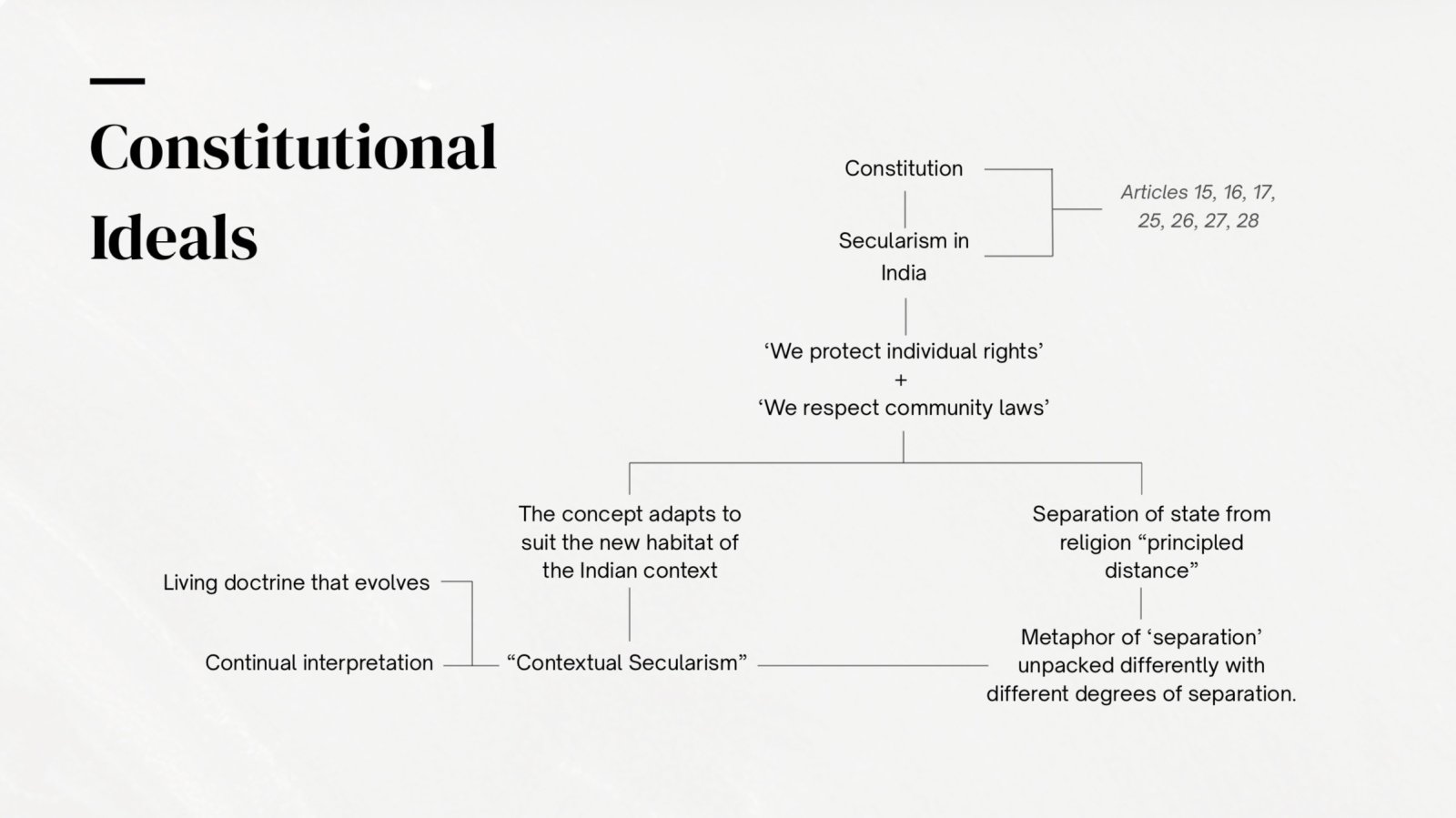
The newly established republic continued to function within the frameworks of religious administration and communal differentiation left by the British, even as it attempted to define itself via the ideas of democracy, socialism, and equality. The challenge was not just to keep politics and religion separate, but also to design a framework that would reimagine coexistence under a democratic constitution. In this endeavour, India created a unique kind of secularism that blended Western liberal concepts with India’s many religious traditions, which Rajeev Bhargava later termed “contextual secularism”. The freedom of religion is guaranteed by Articles 25 to 28 of the Indian Constitution. However, the provision allowing the state to control or limit “secular activities associated with religious practice” immediately qualifies these guarantees. The very idea of secularism was negotiated in the Constitution by this disclaimer.

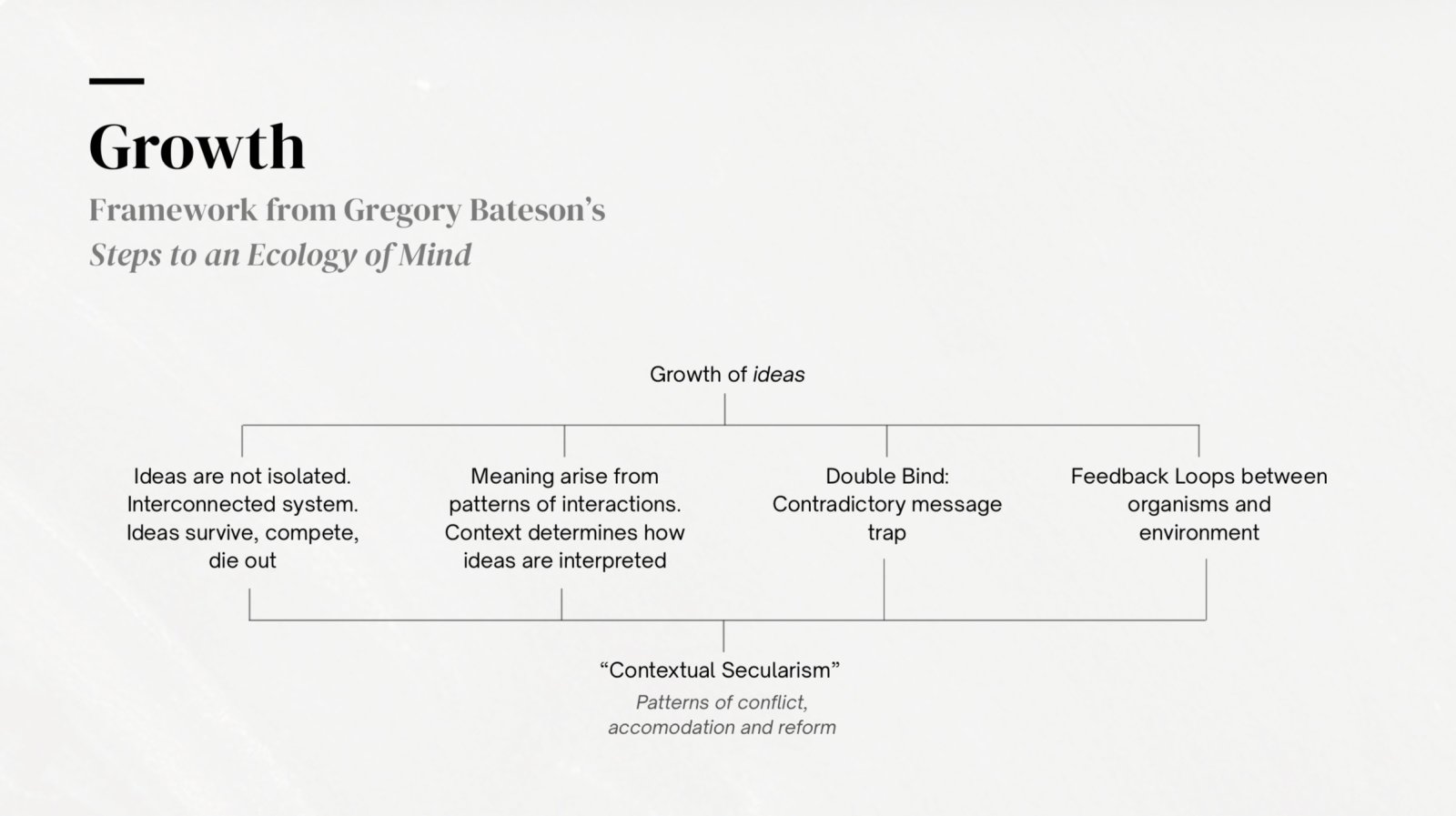
To understand this contradiction – of a state that both claims freedom of religion and regulates religion – I borrow the framework from Gregory Bateson, an anthropologist, social scientist and systems theorist. In his book Steps to an Ecology of Mind (1972), Bateson describes something he calls the double bind. A double bind is a situation where an individual is presented with two contradictory messages from one authority which does not allow them to discriminate accurately what sort of message is being communicated. Bateson developed this concept to describe pathological communication in human relationships, but its logic can be applied to political systems.

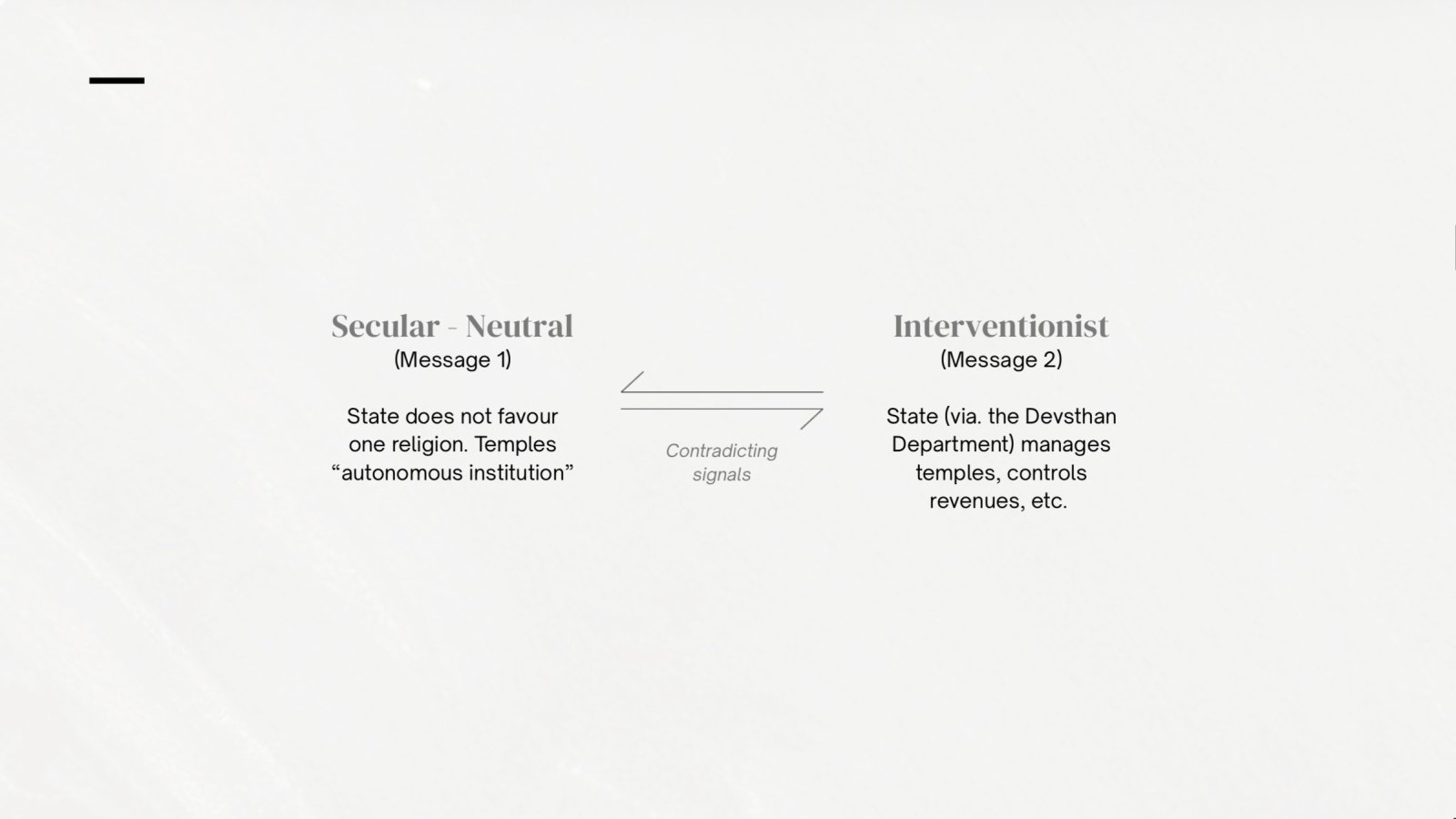
Now, if you think about it, that’s exactly how Indian secularism operates. The state says: We are secular. And then it says: We must manage religion to ensure equality and order. Both statements are true. Both must be followed. And yet, they contradict each other. In Bateson’s logic, such systems don’t collapse — they adapt. They develop new strategies of communication, new forms of mediation to survive the contradiction.

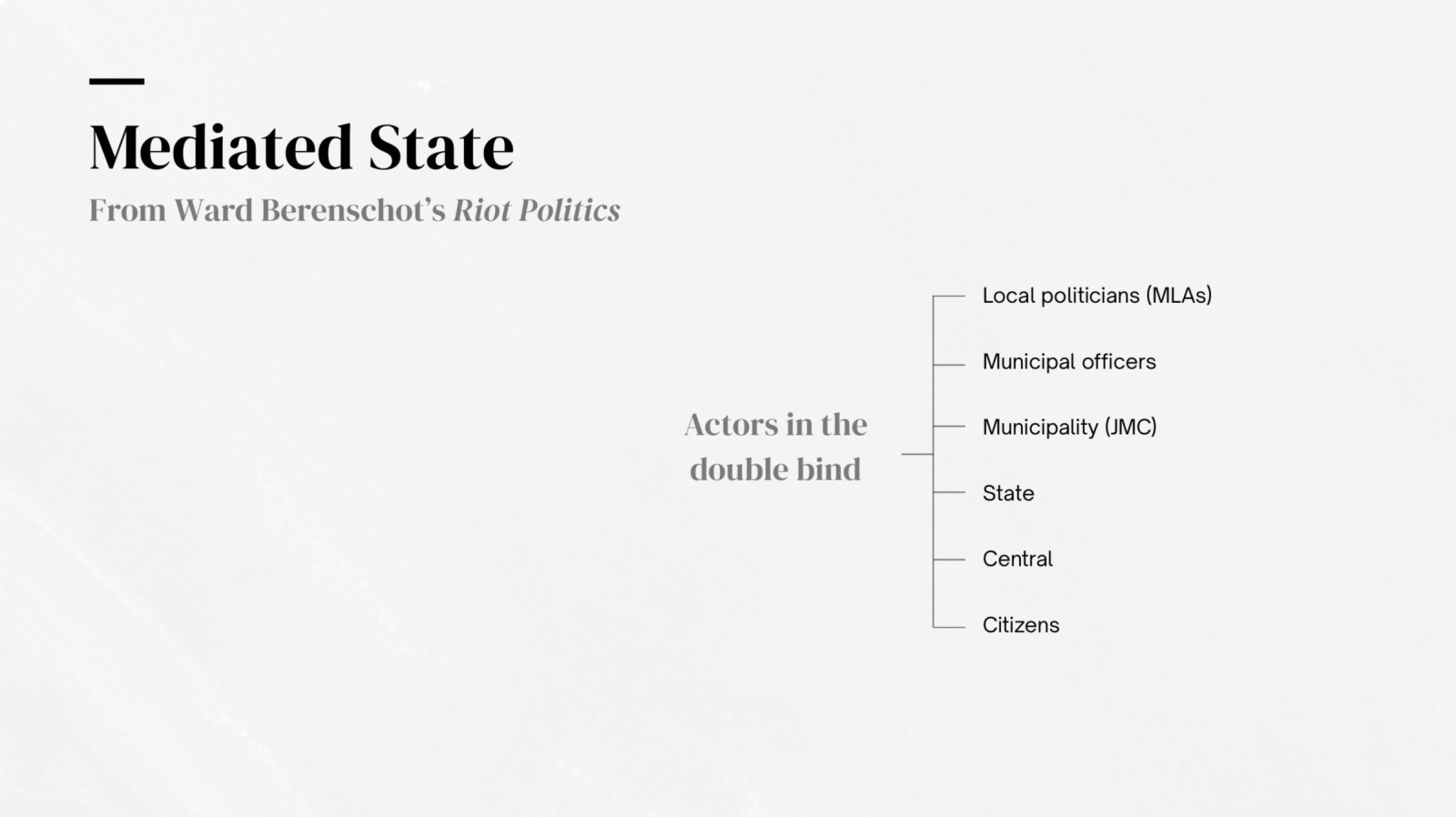
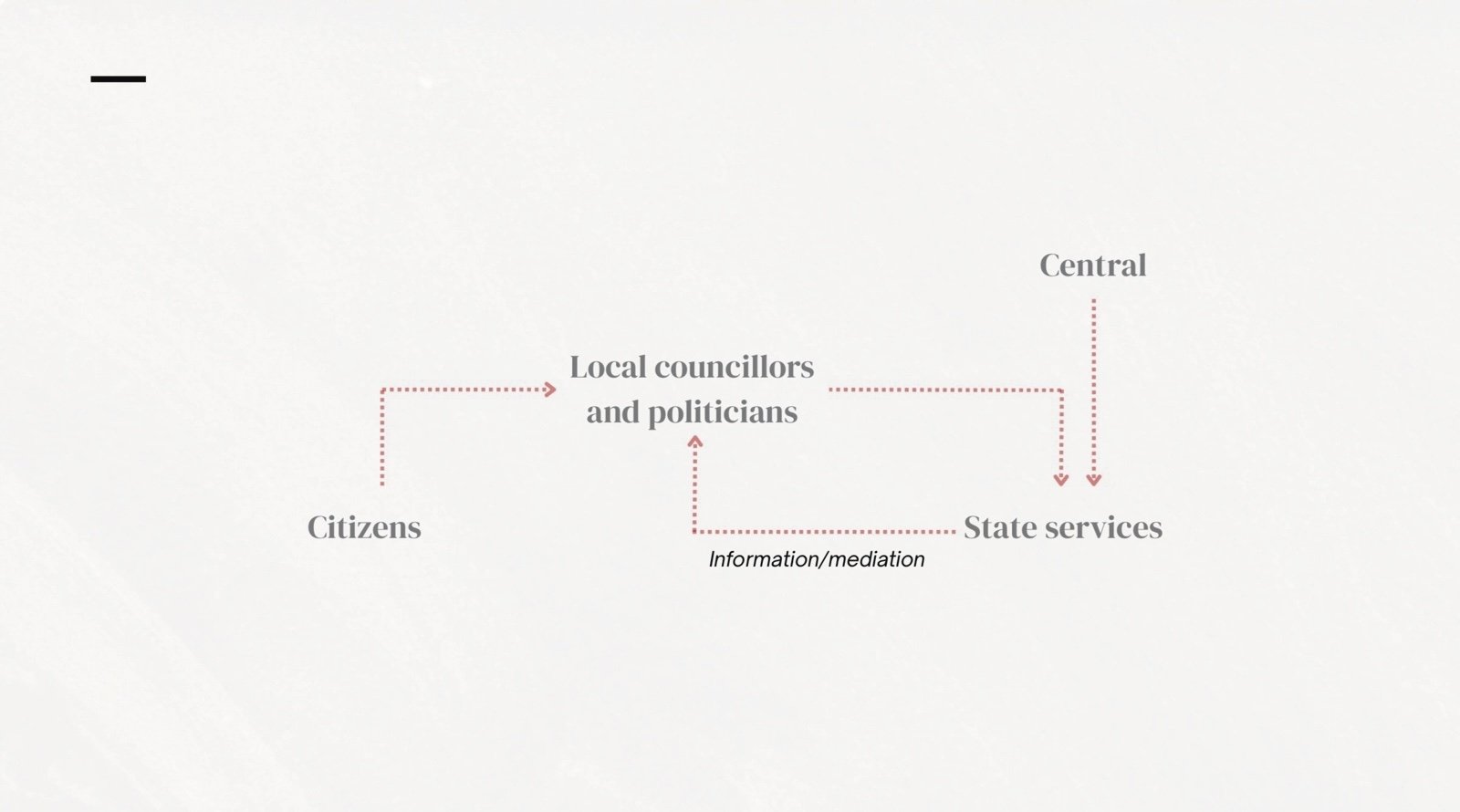
To understand how this double bind plays on the ground, I drew on the work of Ward Berenschot, whose book Riot Politics (2011) describes the Indian state as a mediated state. Berenschot argues that governance in India rarely works through impersonal bureaucracy. It works through networks — of councillors, brokers, traders, and local politicians who translate the citizen’s needs into administrative action. In other words, access to the state depends on relationships. This is where the study ties back to the temples observed on the streets – where the contradictions of Indian secularism are most tangible. In Jaipur, you can see this system of mediation unfold around its roadside temples — those little shrines you see in the middle of the road or at busy intersections.

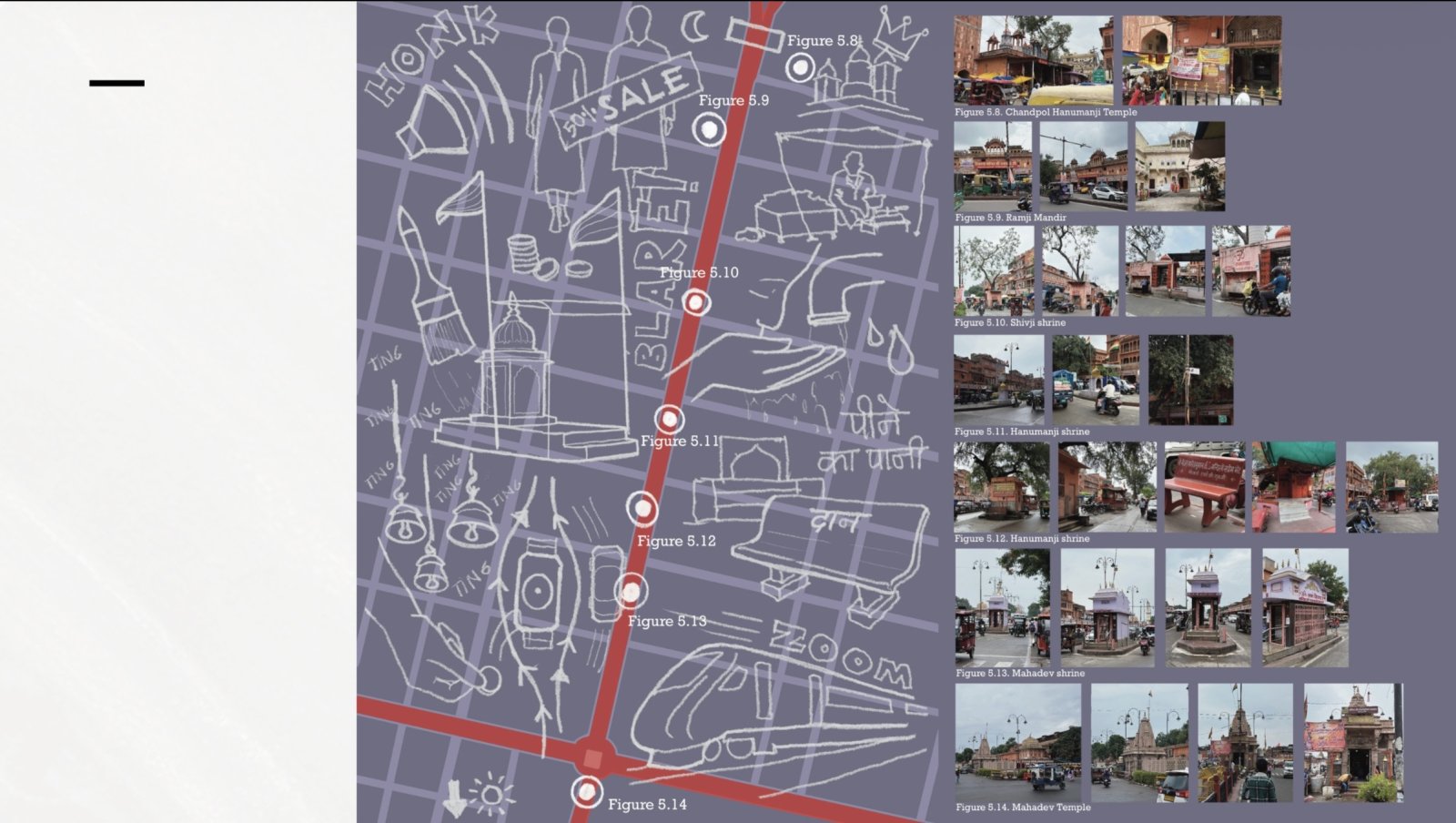
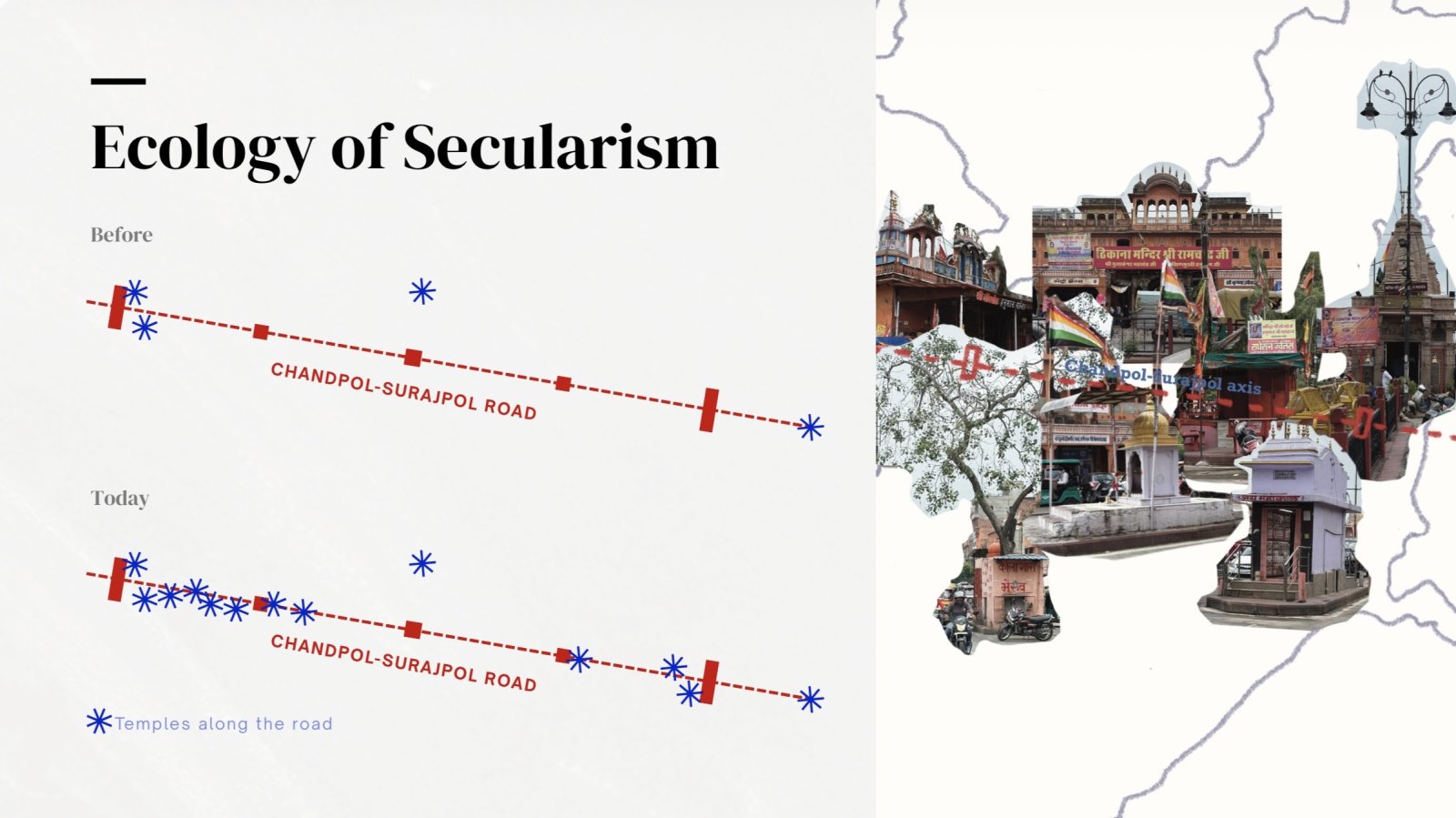
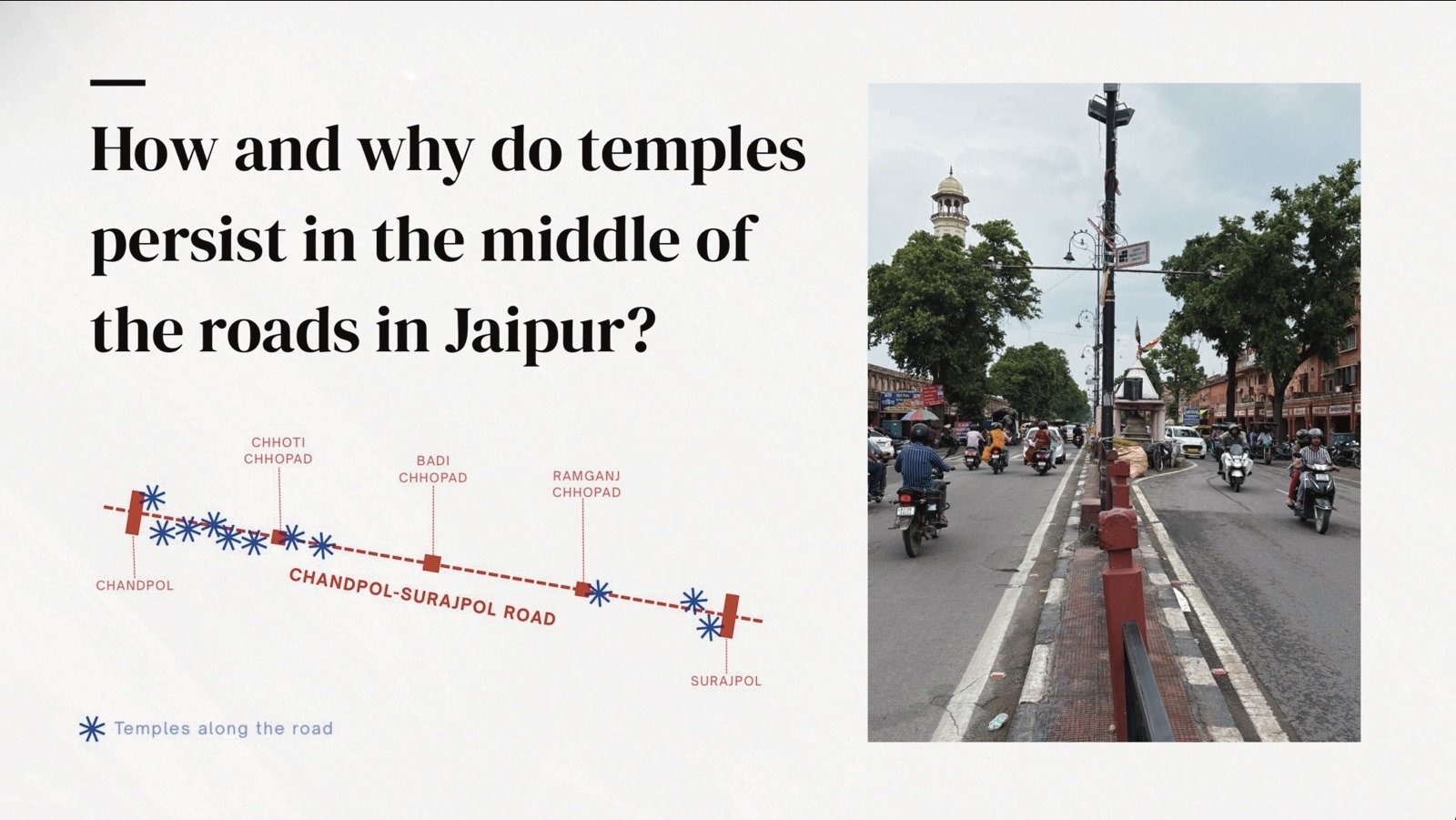
There are multiple temples situated along and in the middle of the public road along the axis of Chandpol and Surajpol which is the main axis of the walled city and passes through Badi Chhopad and Chhoti Chhopad (refer to figure 5.7). These include the Chandpol Hanumanji Temple (refer to figure 5.8), Ramji Mandir (refer to figure 5.9), four shrines dedicated to either Hanumanji or Mahadev (refer to figures 5.10, 5.11, 5.12, 5.13) in the middle of the road and the Mahadev Temple near the Chhoti Chhopad metro station with is also located in the middle of the road (refer to figure 5.14). Technically, many of them are illegal. They violate zoning laws and block traffic. Yet, they persist. The facilities and road limit markings observed around these shrines indicate a compliant Jaipur Municipal Corporation.

they are sustained through intermediary relationships. Temple committees rely on local councillors and politicians for permissions, water, and protection from demolition. Councillors rely on the members of these committees and traders’ associations — the Vyapar Mandals — for votes. The municipal corporation, in turn, relies on the state government and the Devasthan Department, which manages temples directly. So what you have is not a linear chain of authority, but a web of mutual dependencies. Religion becomes a form of currency — exchanged for access, legitimacy, and loyalty. Each actor — the priest, the trader, the politician, the bureaucrat — gains something from this network. And the state’s neutrality, though written into the law, is constantly negotiated in practice. Every actor, including citizens, councillors, local politicians, bureaucrats, and deities, occupy a role in a feedback loop that turns contradiction into continuity.

In Jaipur, this dynamic is easy to see: temple committees need local politicians and councillors for basic services like water and electricity, permissions to hold festivals, and protection from demolition. The local politicians and councillors are dependent on the votes and public support of local traders and devotees. Bureaucrats rely on political leaders for favourable postings, and the Devasthan Department holds significant authority by registering temples and regulating their finances. These relationships make religion a mode of negotiating access, influence, and legitimacy. When these historical and contemporary layers are viewed together through Bateson’s ecological lens secularism in India appears not as a stable doctrine but as an ecological system. It adapts rather than resolves its internal tensions. It stays functional by adjusting to the feedback loops between different actors and institutions.