Your browser is out-of-date!
For a richer surfing experience on our website, please update your browser. Update my browser now!
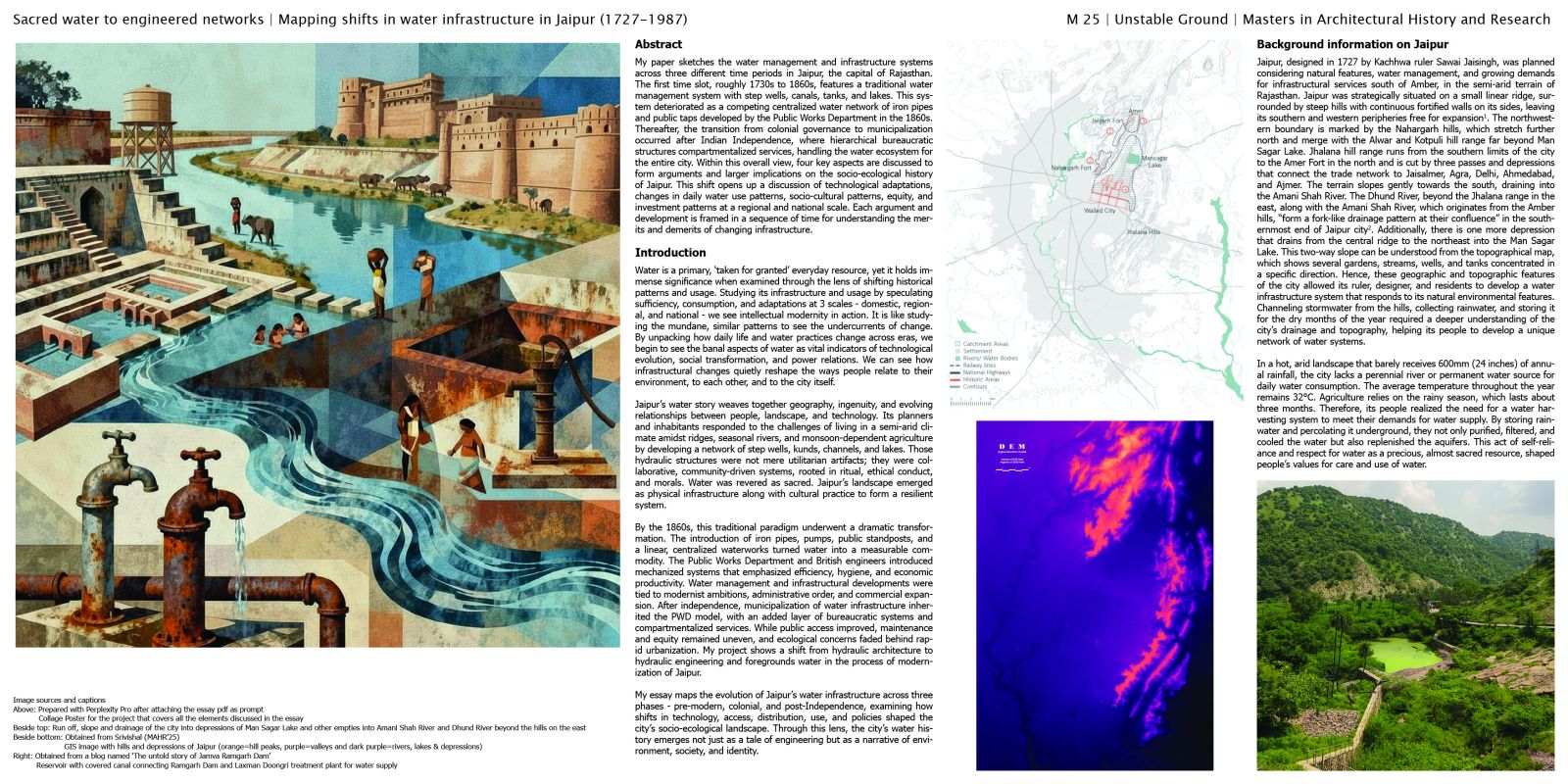
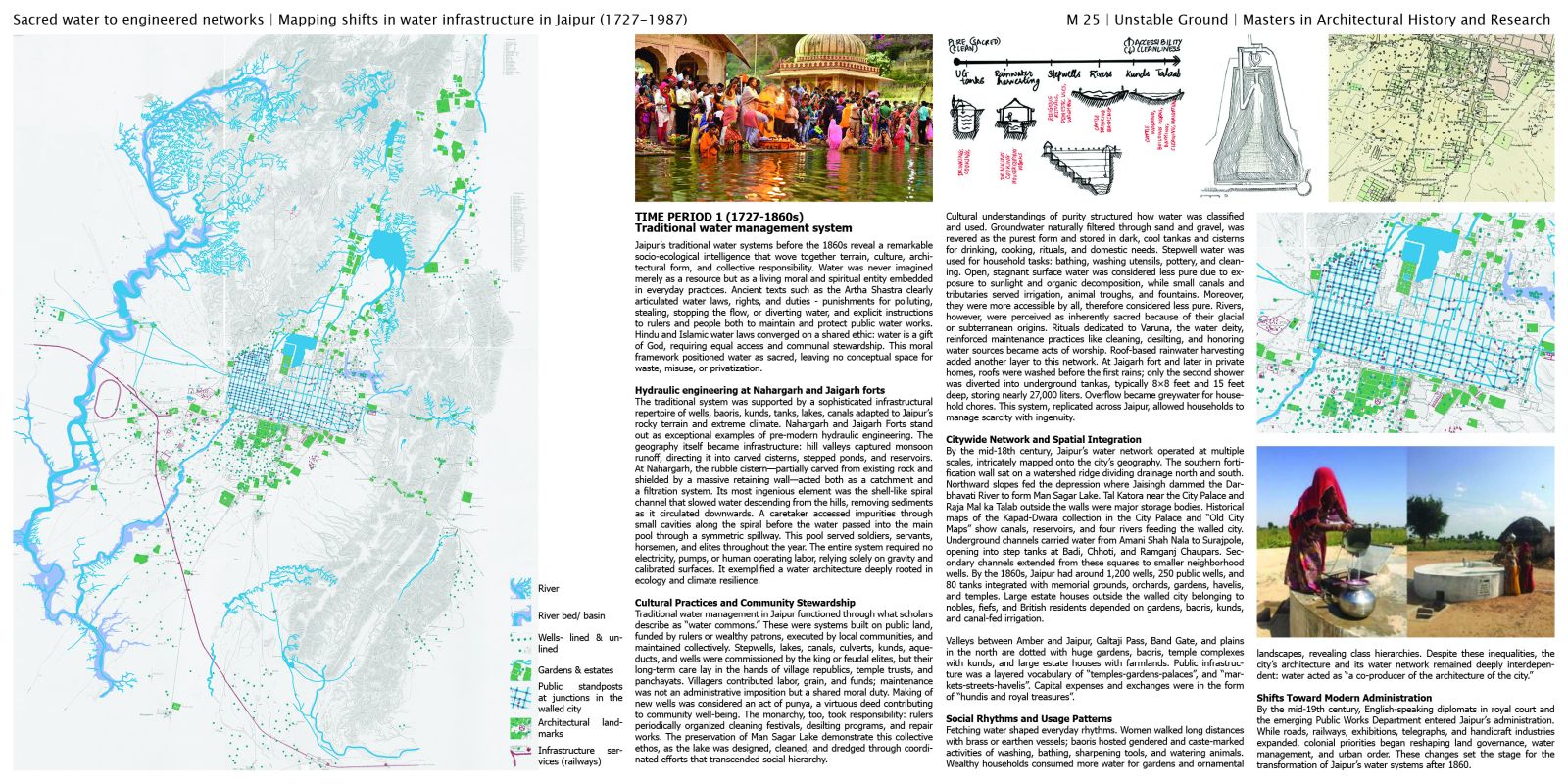
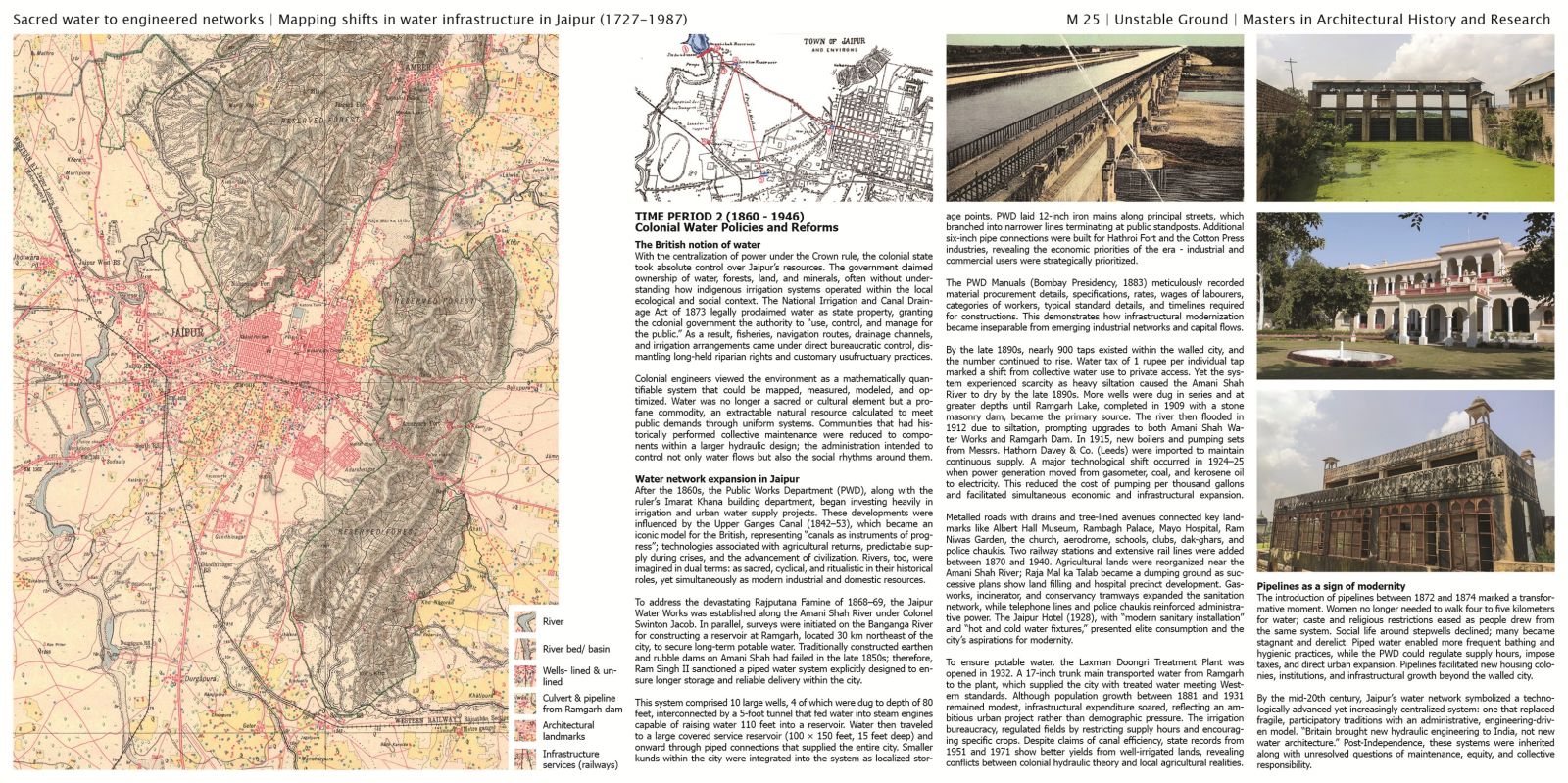
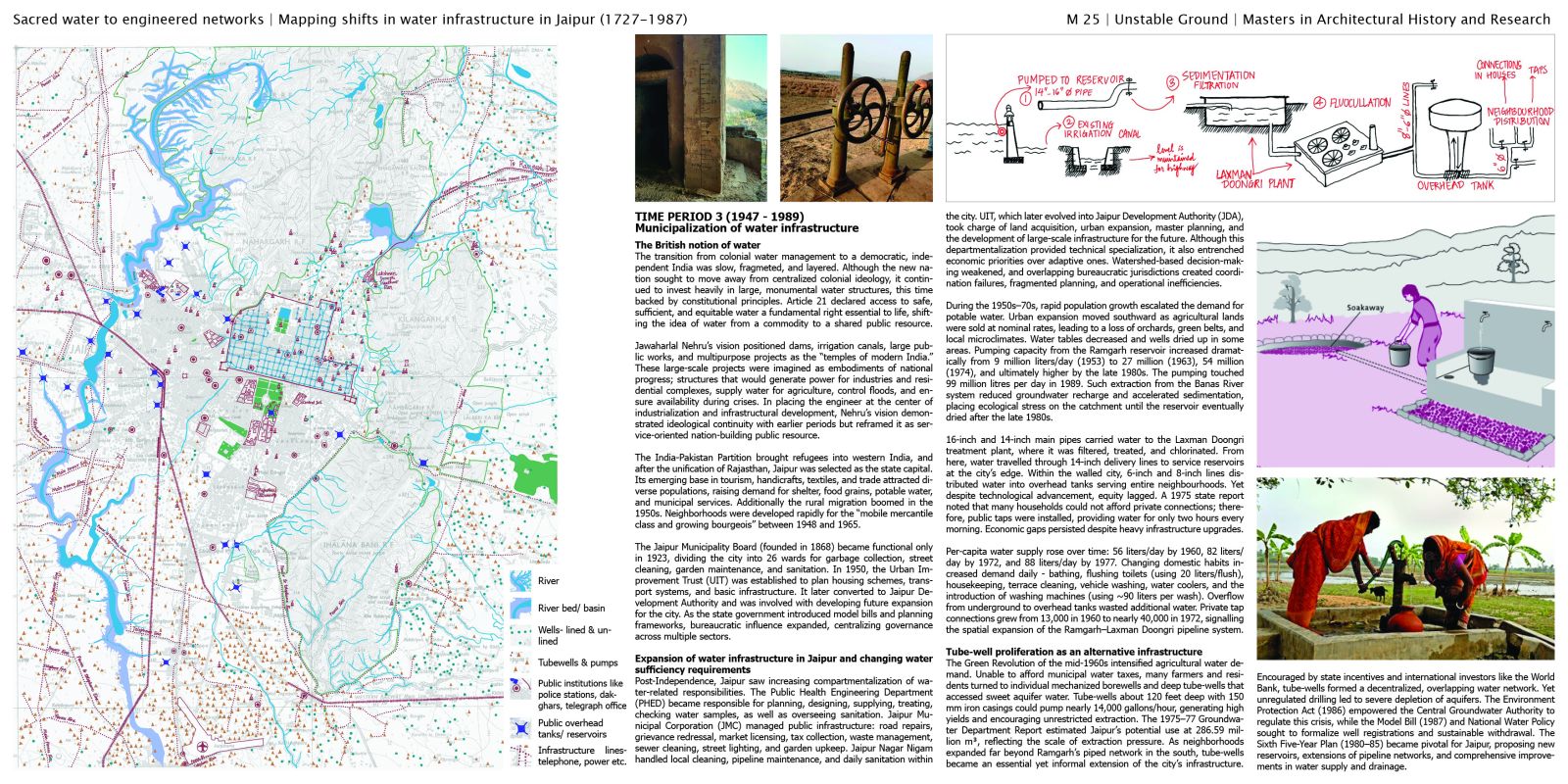
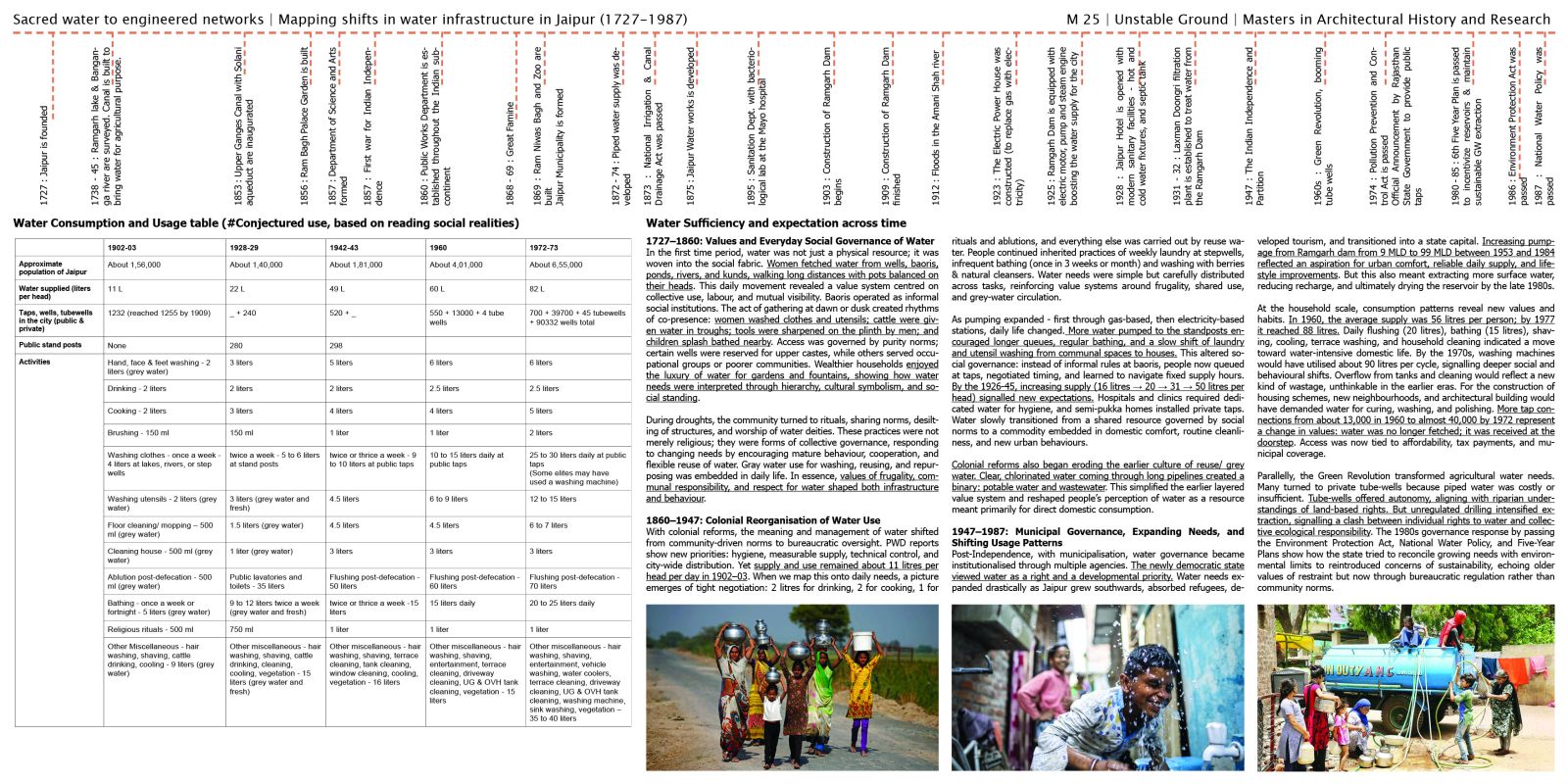
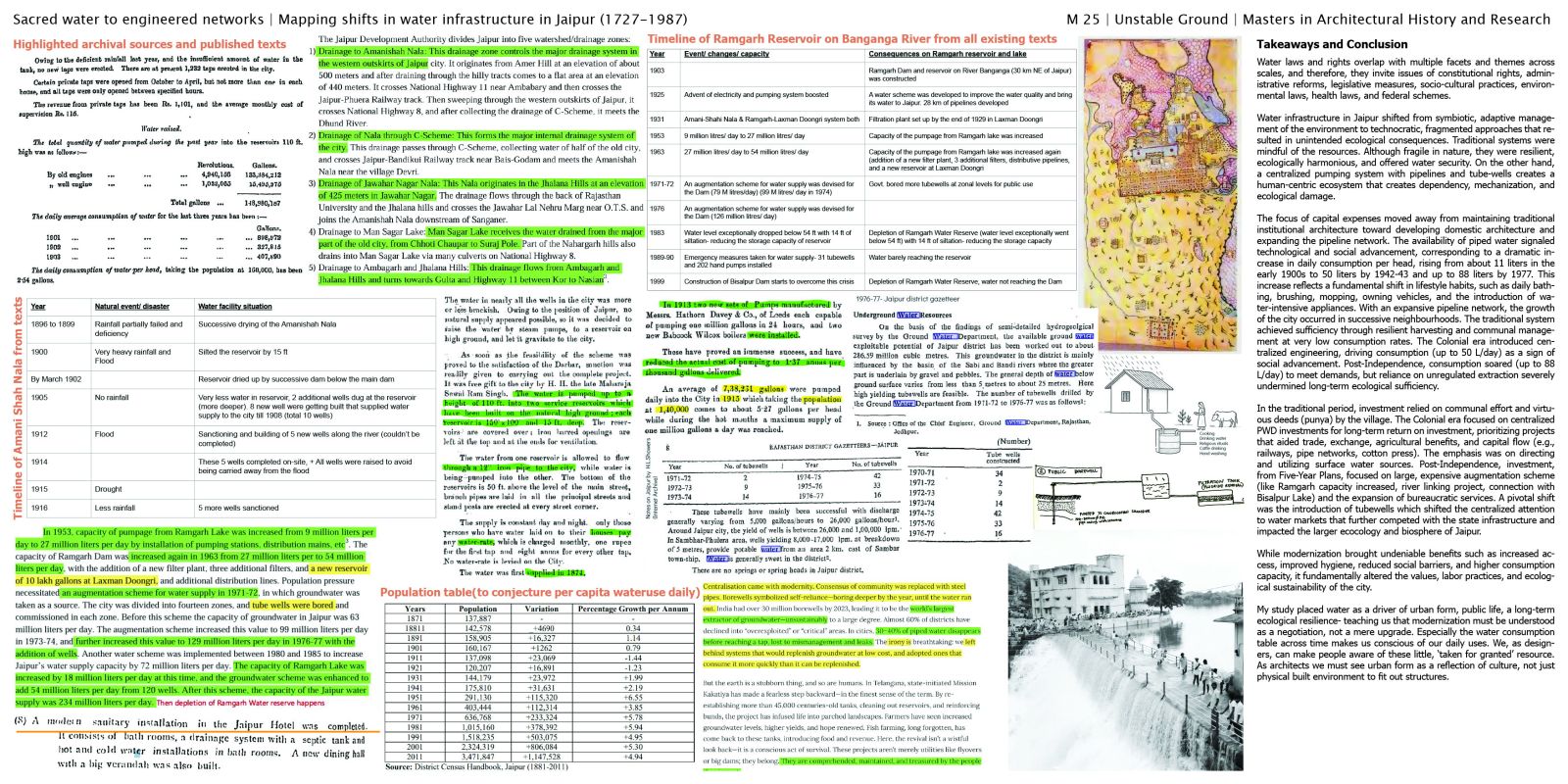
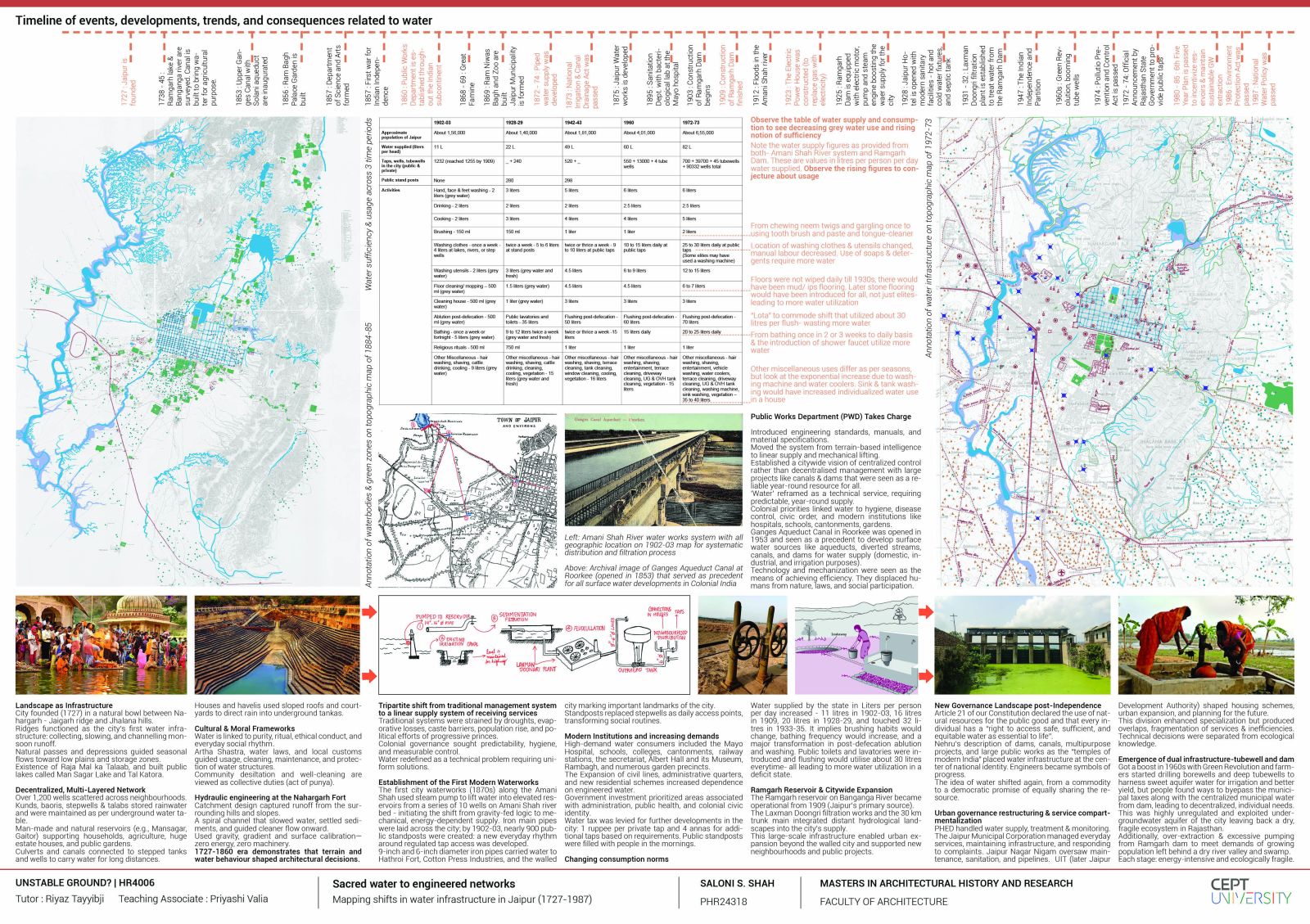
My paper sketches the water management and infrastructure systems across three different time periods in Jaipur, the capital of Rajasthan. The first time slot, roughly 1730s to 1860s, features a traditional water management system with step wells, canals, tanks, and lakes. This system deteriorated as a competing centralized water network of iron pipes and public taps ?developed by the Public Works Department in the 1860s. Thereafter, the transition from colonial governance to municipalization occurred after Indian Independence, where hierarchical bureaucratic structures compartmentalized services, handling the water ecosystem for the entire city. Within this overall view, four key aspects are discussed to form arguments and larger implications on the socio-ecological history of Jaipur. This shift opens up a discussion of technological adaptations, changes in daily water use patterns, socio-cultural patterns, equity, and investment patterns at a regional and national scale. Each argument and development is framed in a sequence of time for understanding the merits and demerits of changing infrastructure.
View Additional Work