Your browser is out-of-date!
For a richer surfing experience on our website, please update your browser. Update my browser now!
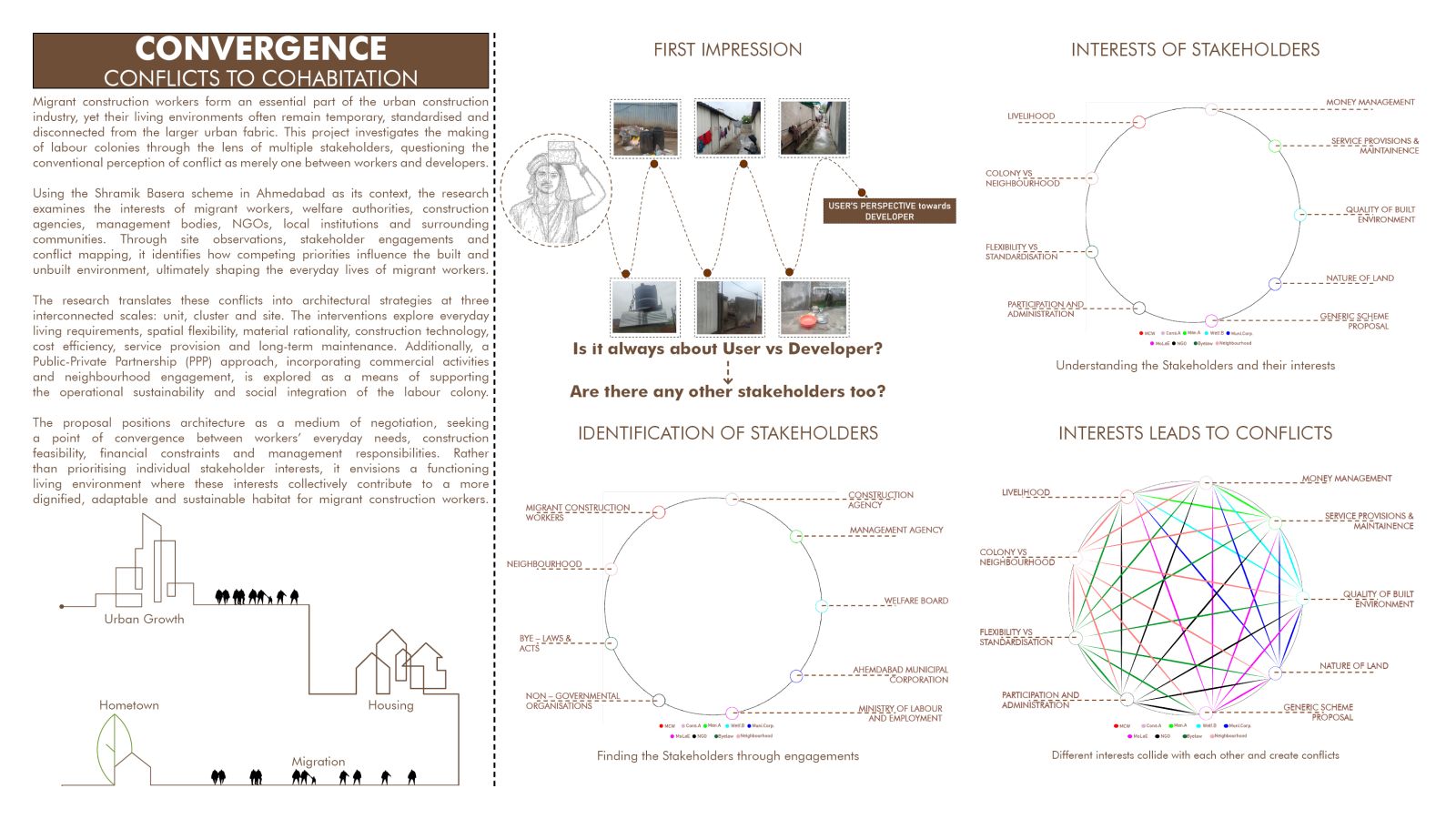
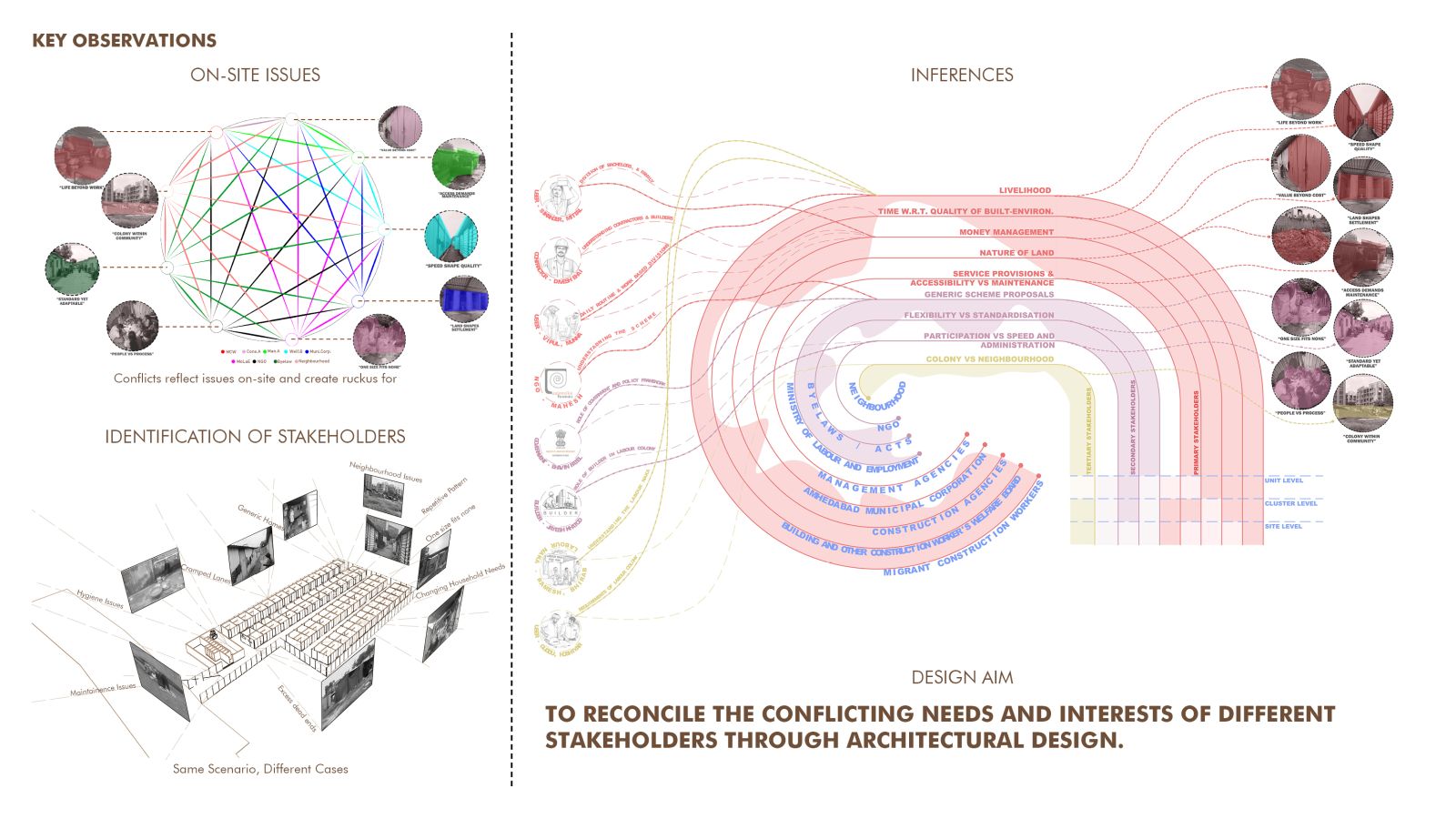
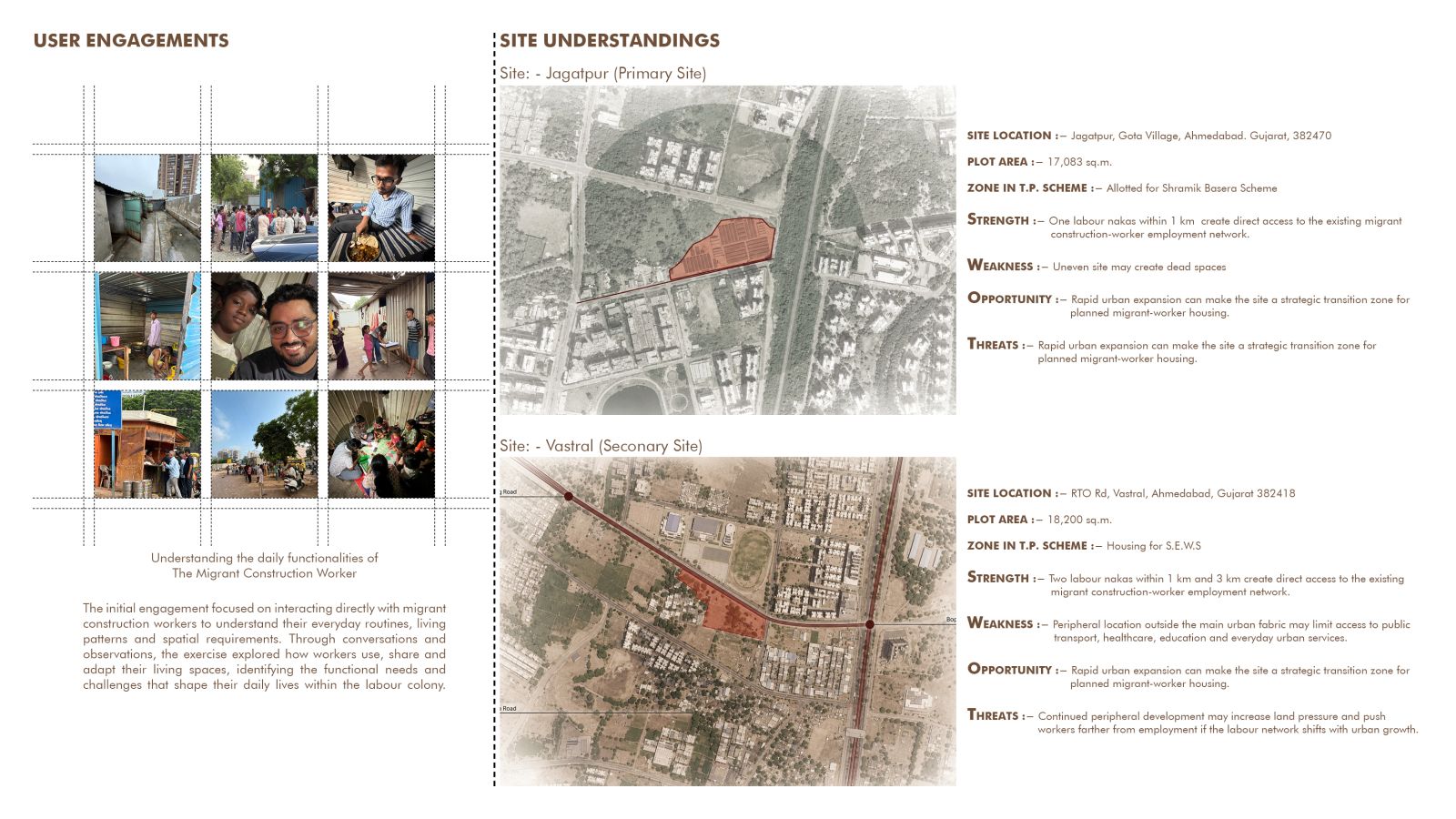
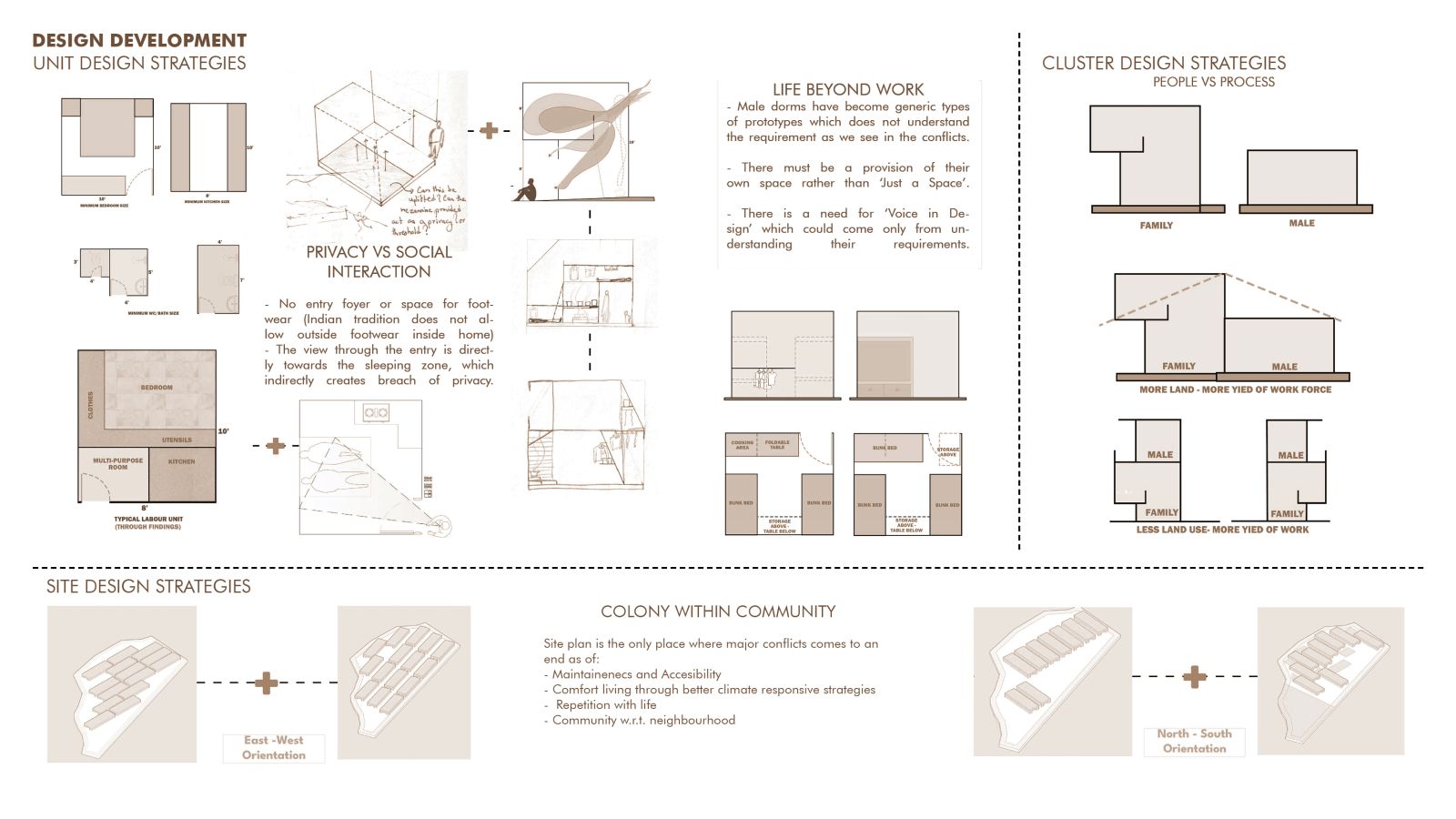
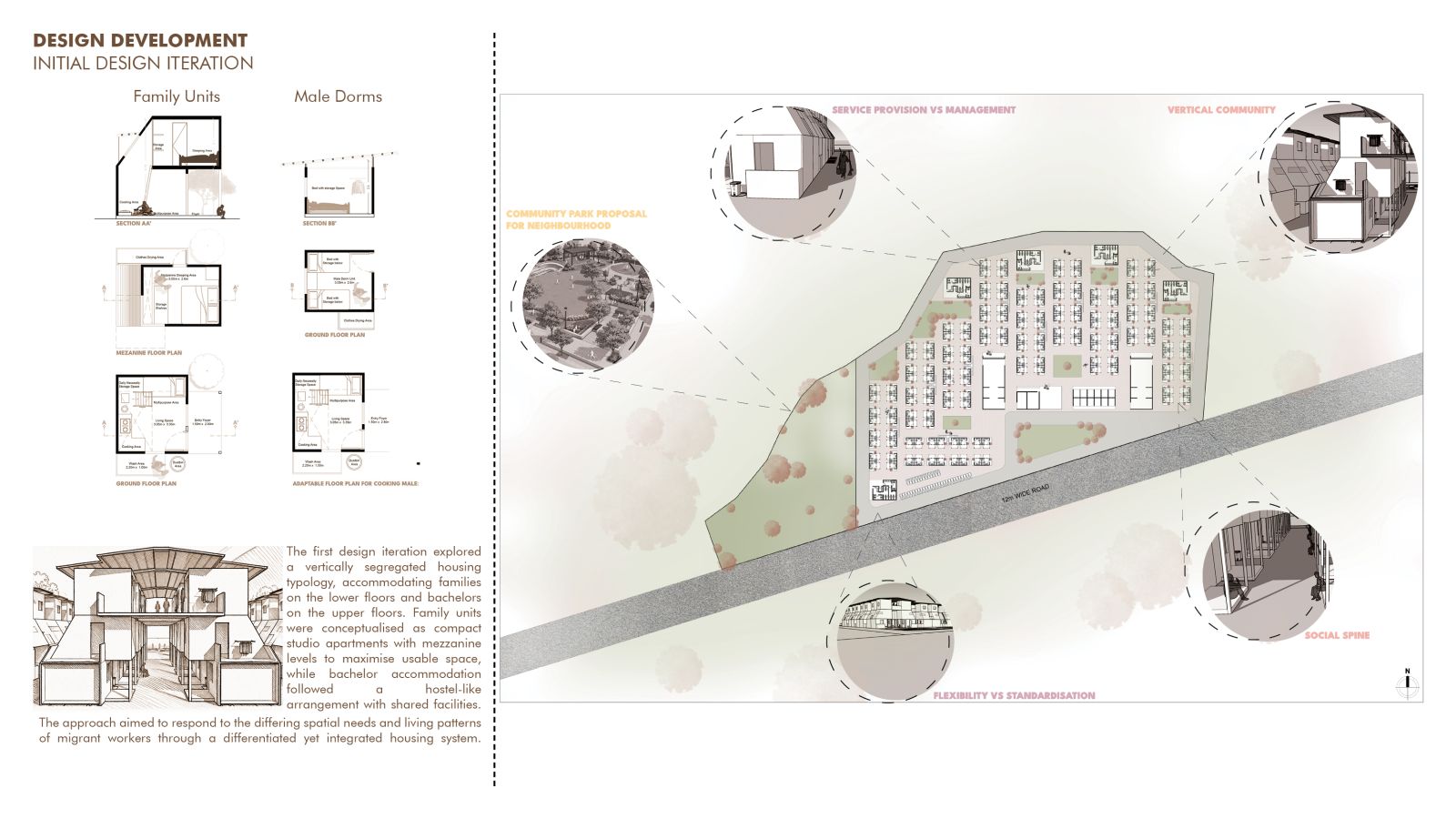
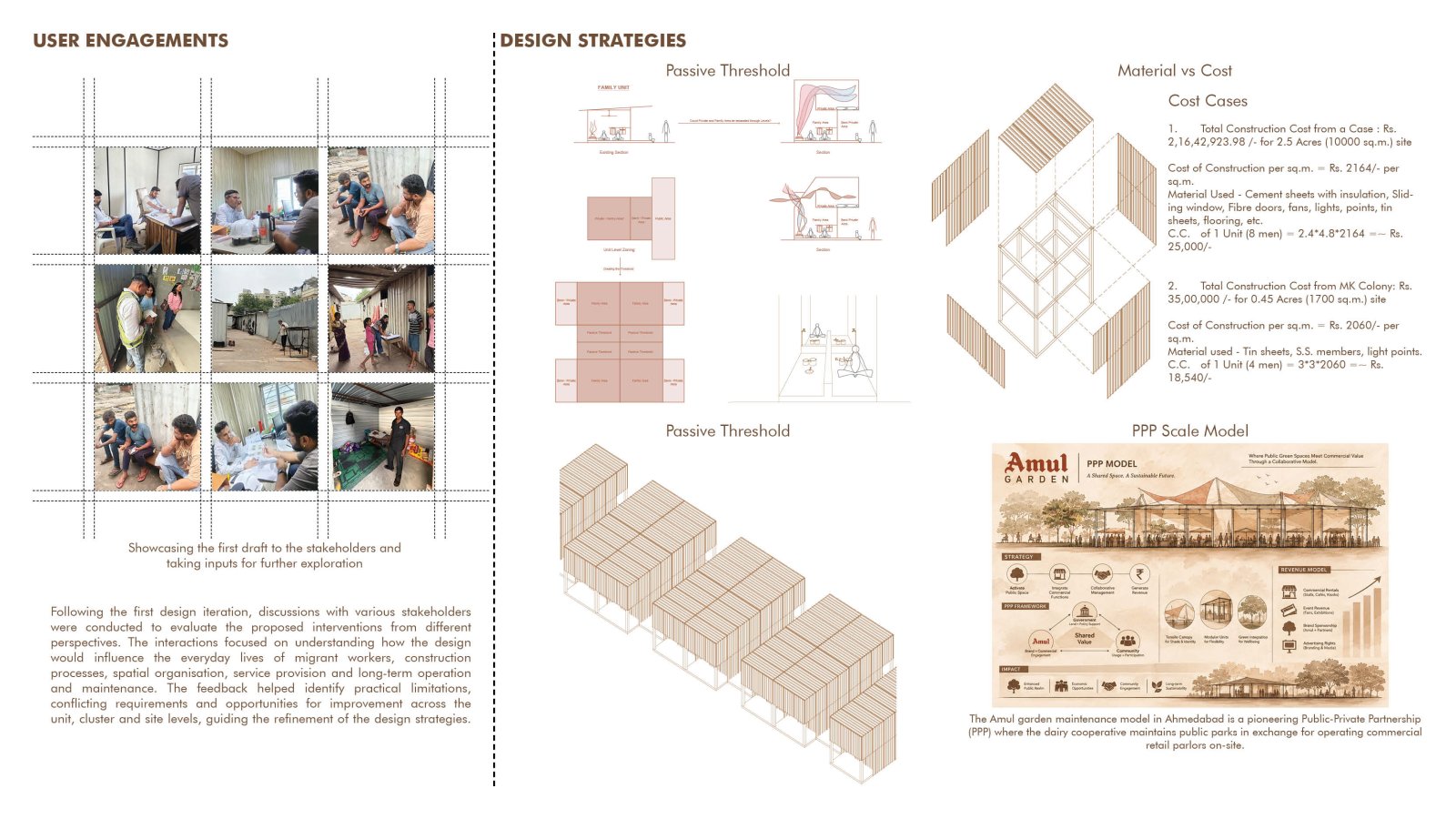
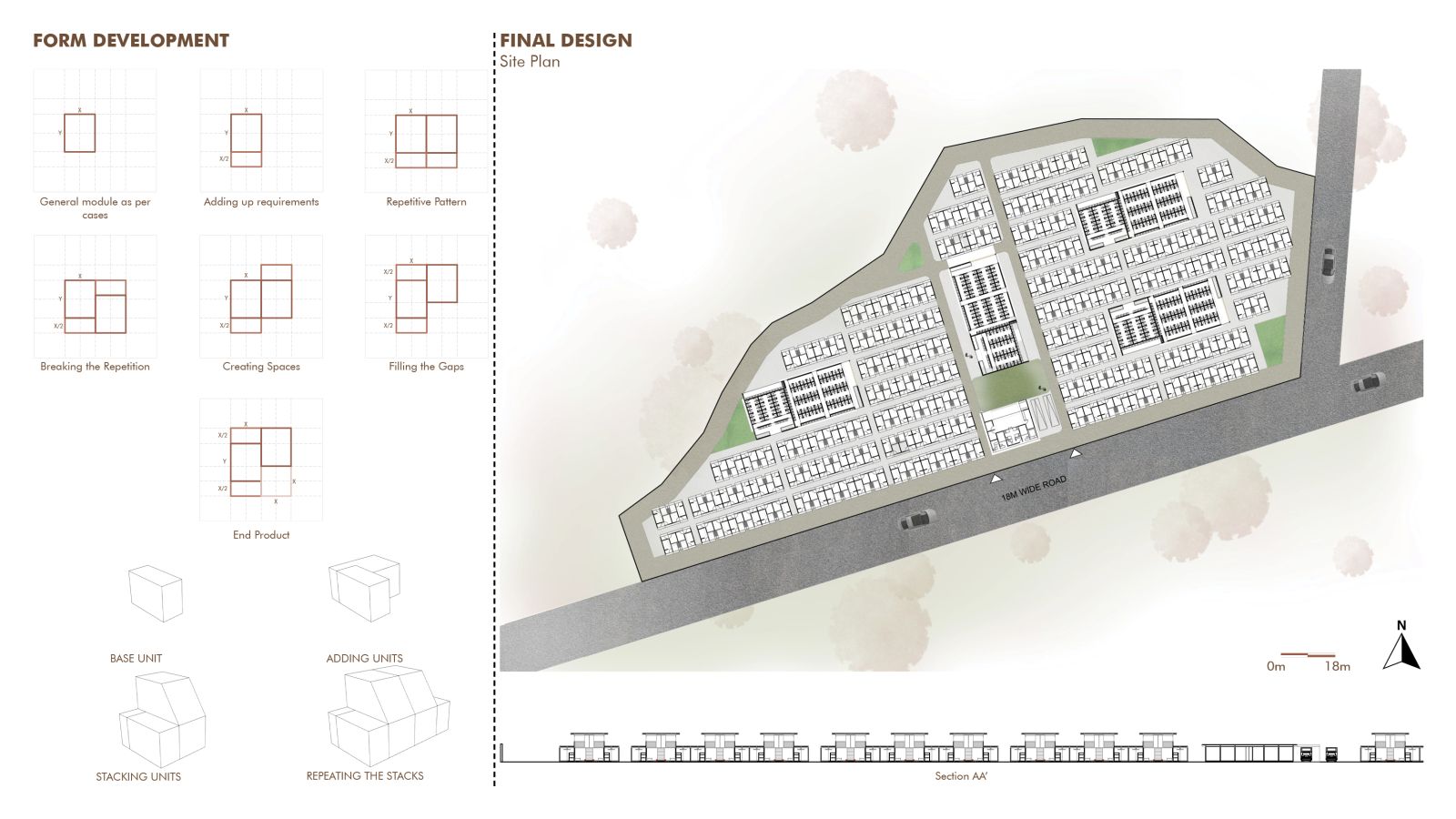
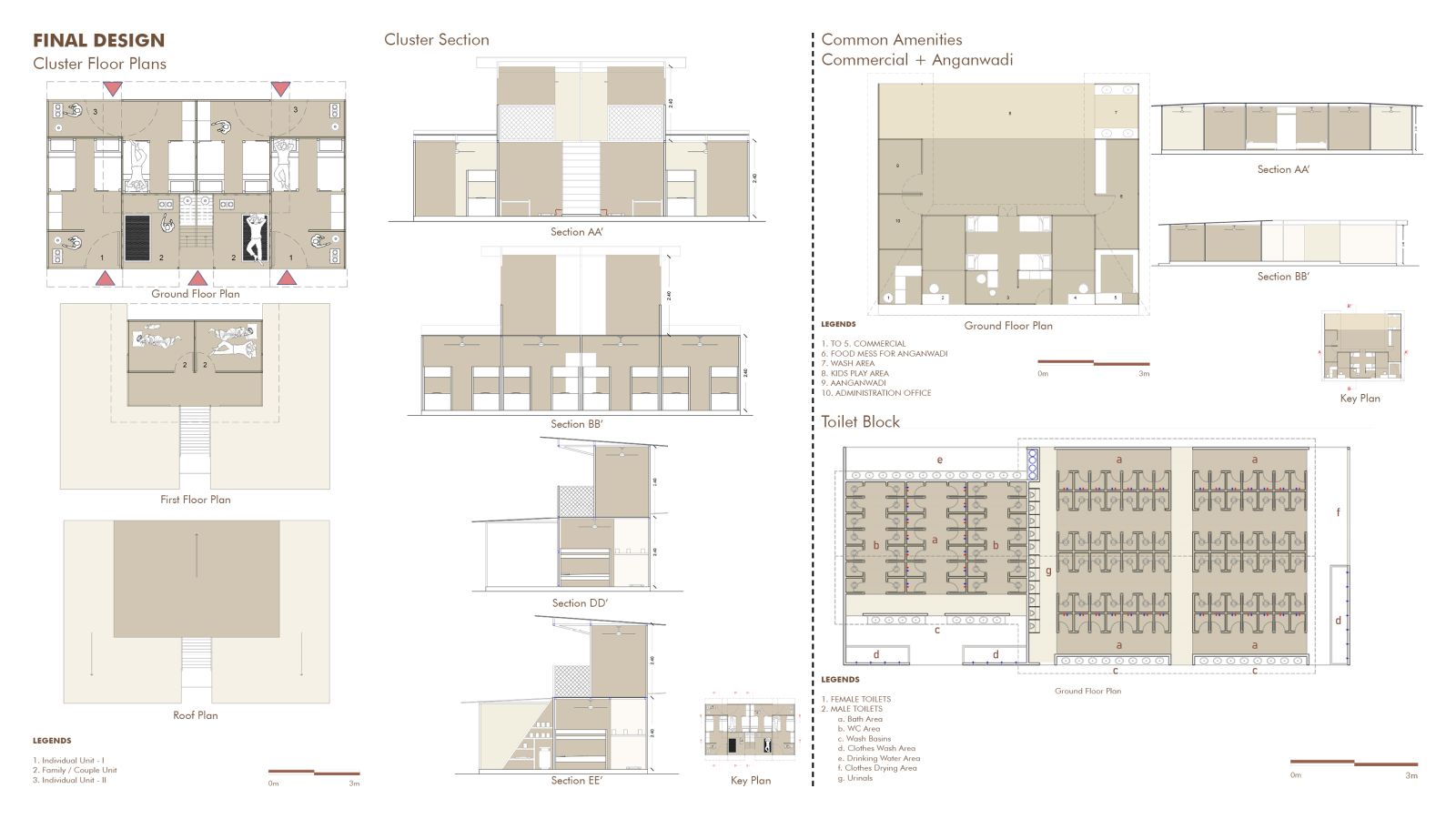
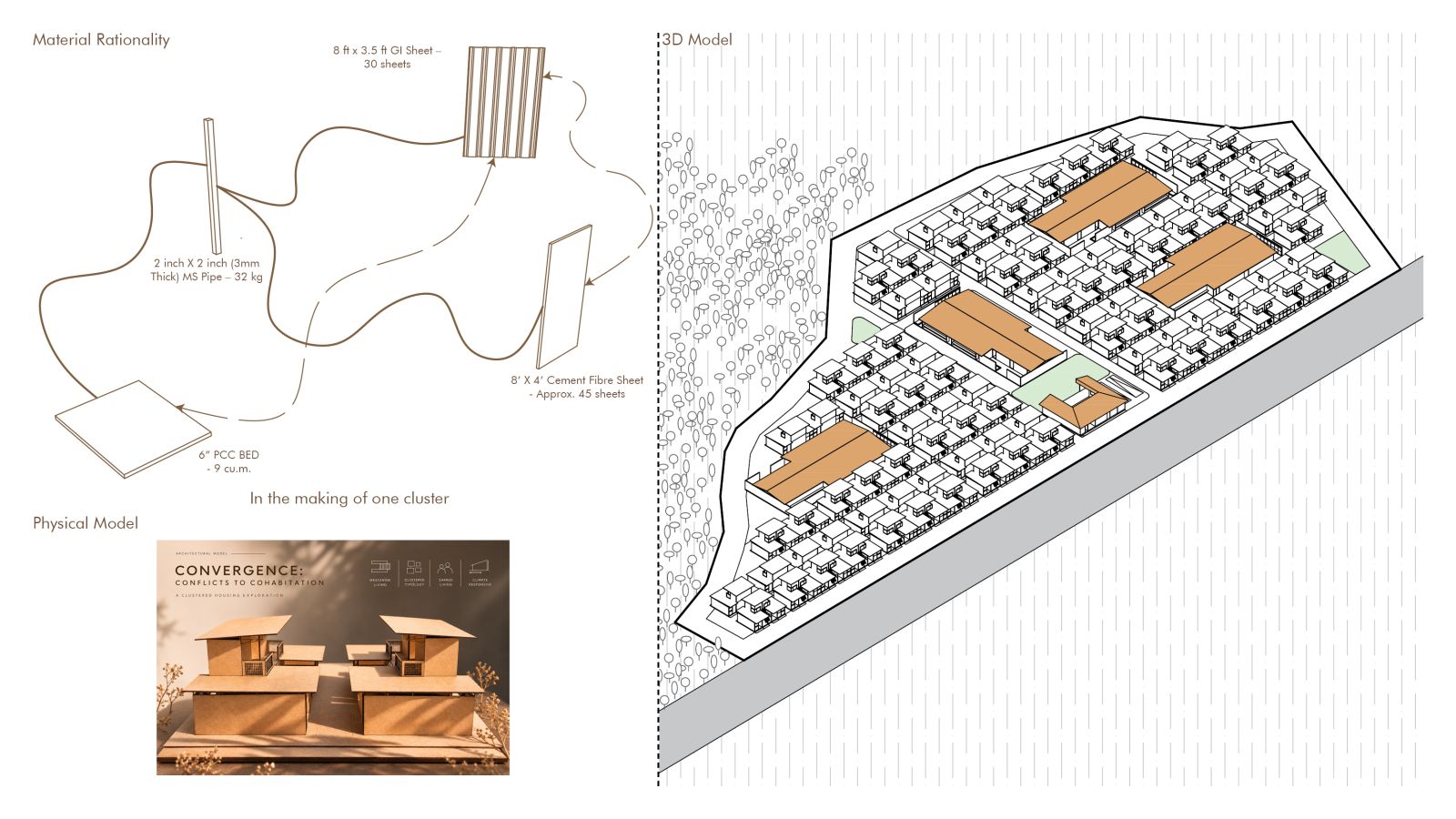
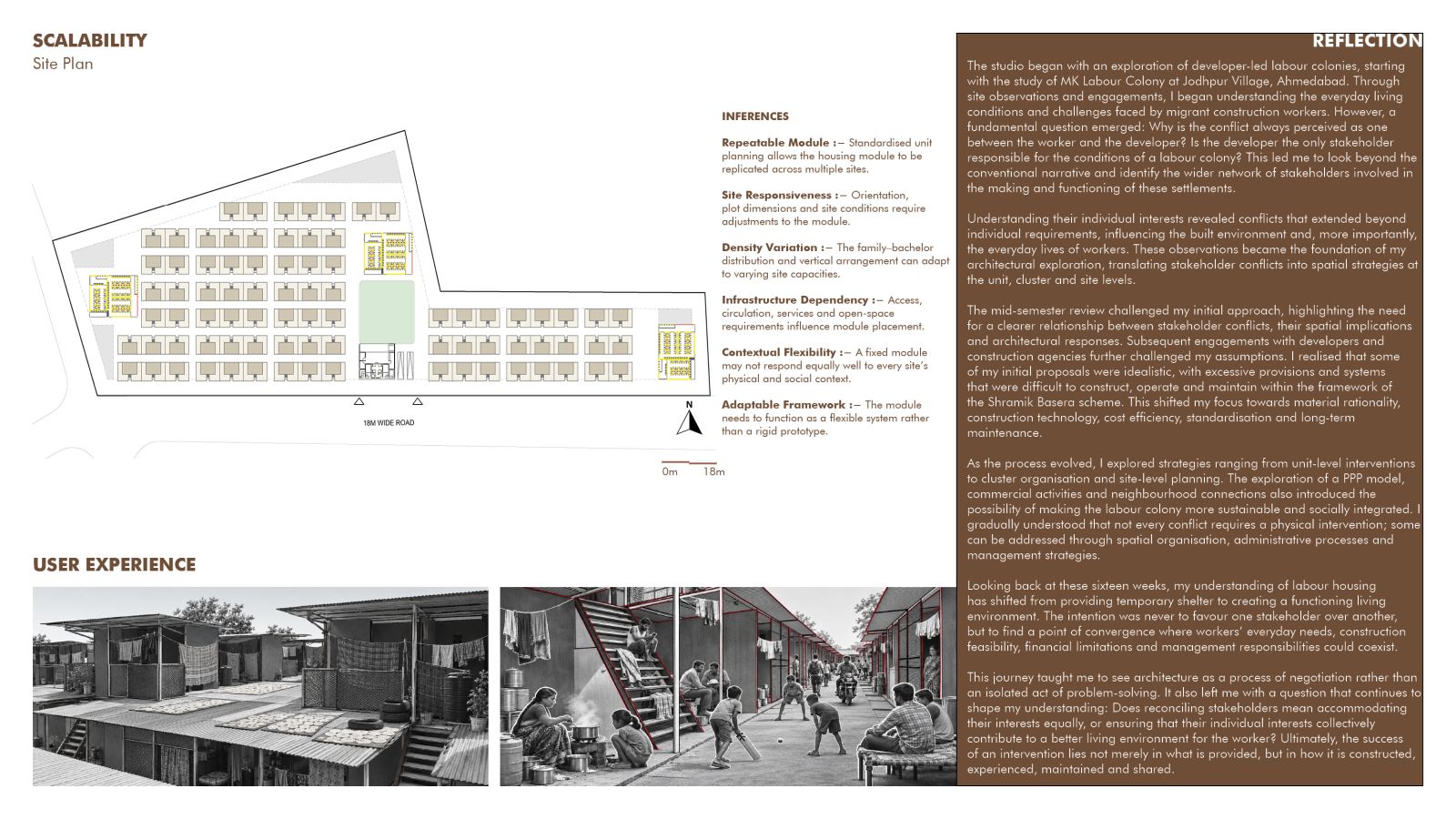
Migrant construction workers form an essential part of the urban construction industry, yet their living environments often remain temporary, standardized and disconnected from the larger urban fabric. This project investigates the making of labor colonies through the lens of multiple stakeholders, questioning the conventional perception of conflict as merely one between workers and developers. Using the Shramik Basera scheme in Ahmedabad as its context, the research examines the interests of migrant workers, welfare authorities, construction agencies, management bodies, NGOs, local institutions and surrounding communities. Through site observations, stakeholder engagements and conflict mapping, it identifies how competing priorities influence the built and unbuilt environment, ultimately shaping the everyday lives of migrant workers. The research translates these conflicts into architectural strategies at three interconnected scales: unit, cluster and site. The interventions explore everyday living requirements, spatial flexibility, material rationality, construction technology, cost efficiency, service provision and long-term maintenance. Additionally, a Public-Private Partnership (PPP) approach, incorporating commercial activities and neighborhood engagement, is explored as a means of supporting the operational sustainability and social integration of the labor colony. The proposal positions architecture as a medium of negotiation, seeking a point of convergence between workers’ everyday needs, construction feasibility, financial constraints and management responsibilities. Rather than prioritizing individual stakeholder interests, it envisions a functioning living environment where these interests collectively contribute to a more dignified, adaptable and sustainable habitat for migrant construction workers.
View Additional Work