Kulkarni Atharva Krishnaji

HD4009

Redefining Temporary

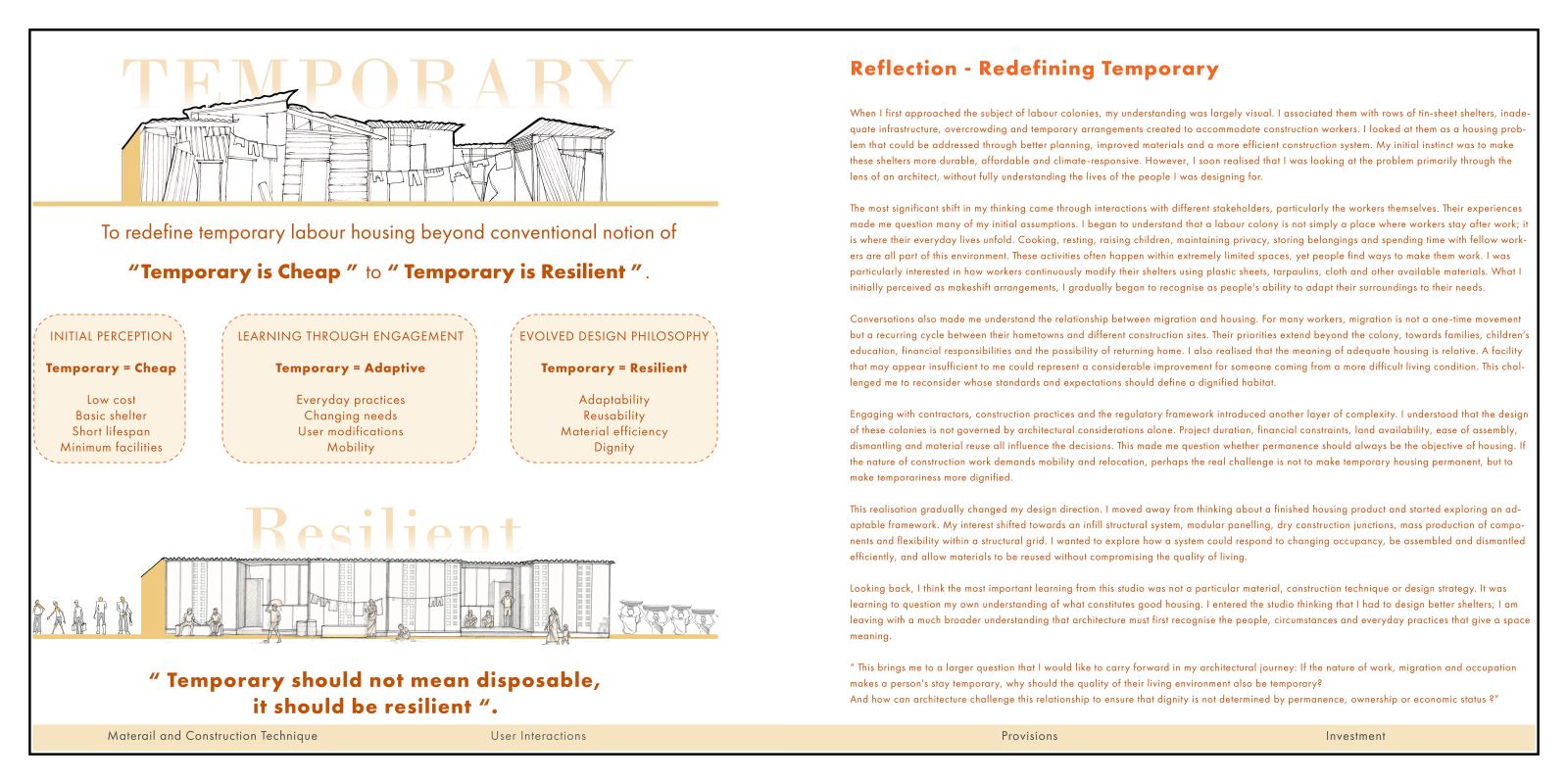
Abstract The design intent is to redefine temporary housing by shifting the conventional perception of “temporary is cheap” to “temporary is resilient.” It aims to create housing solutions for migrant construction workers that go beyond basic, short-term shelter by prioritizing durability, adaptability, affordability, and improved living conditions. Through a design approach that explores appropriate materials, construction techniques, and modular systems, the project seeks to demonstrate how temporary housing can be resilient, comfortable, and capable of responding to the changing needs of workers and their families. Insights gathered through engagements with workers, stakeholders, site observations, and local material suppliers inform the proposed design strategies. These strategies aim to support the construction of shelters from scratch as well as the upgrading and expansion of existing ones, transforming temporary housing from a bare minimum provision into a dignified and resilient living environment.
View Additional Work

Report Content

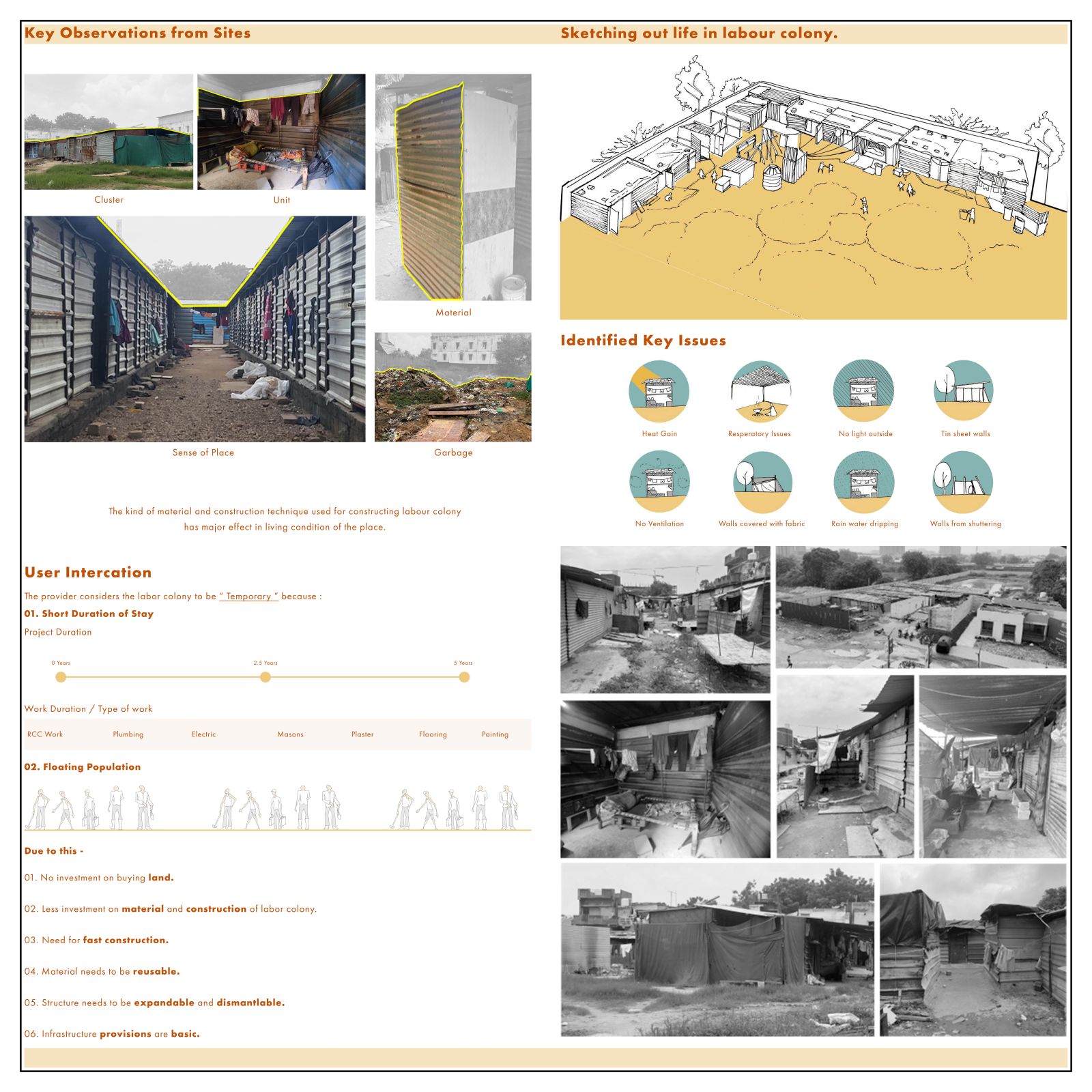
UNDERSTAND - Understanding the existing conditions of labour colonies through site observations, spatial analysis, and everyday challenges. Absorbing the space.

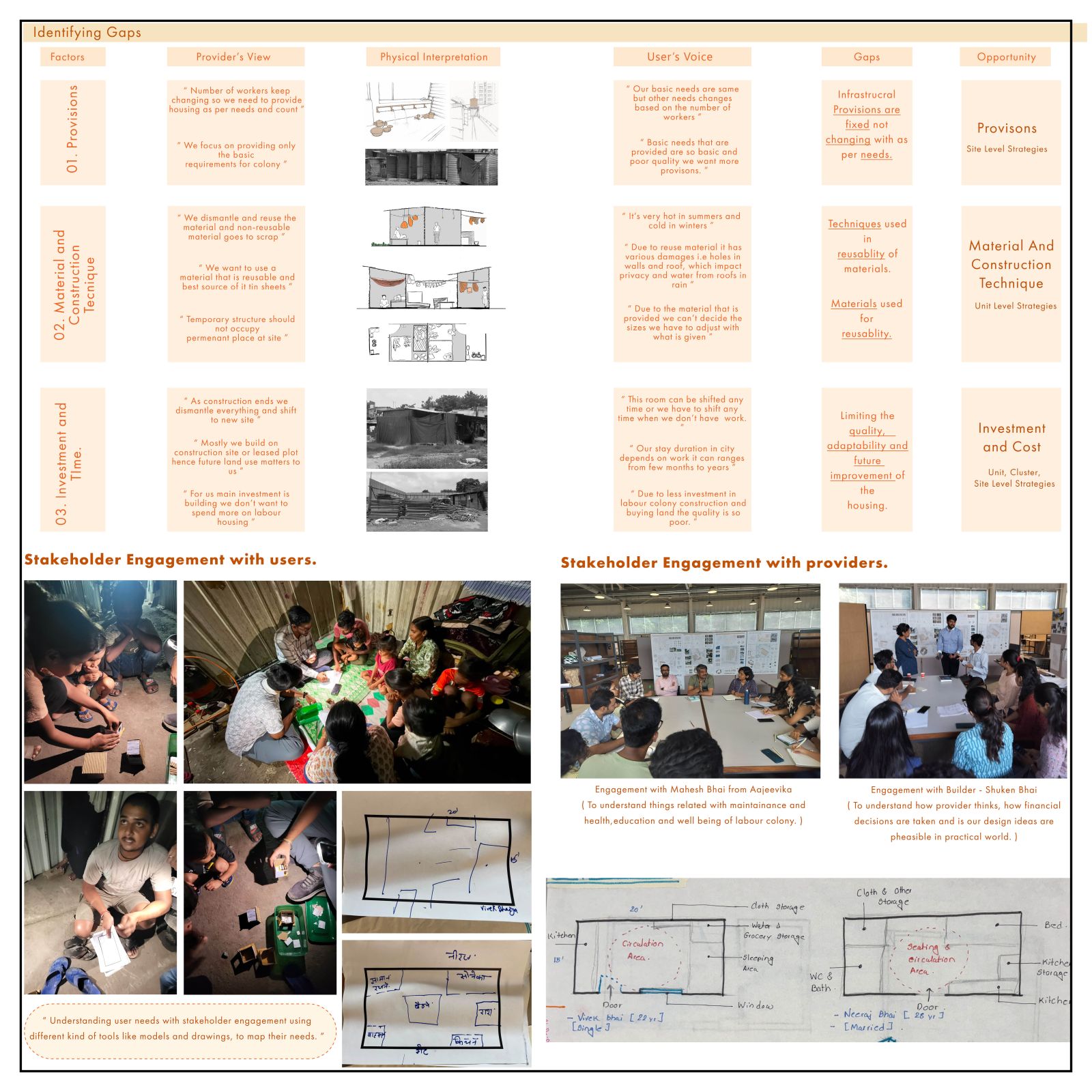
UNDERSTAND - Engaging with workers, NGOs, and housing providers to understand the multiple perspectives shaping labour housing. Translating lived experiences, operational constraints, and expectations into meaningful design considerations.

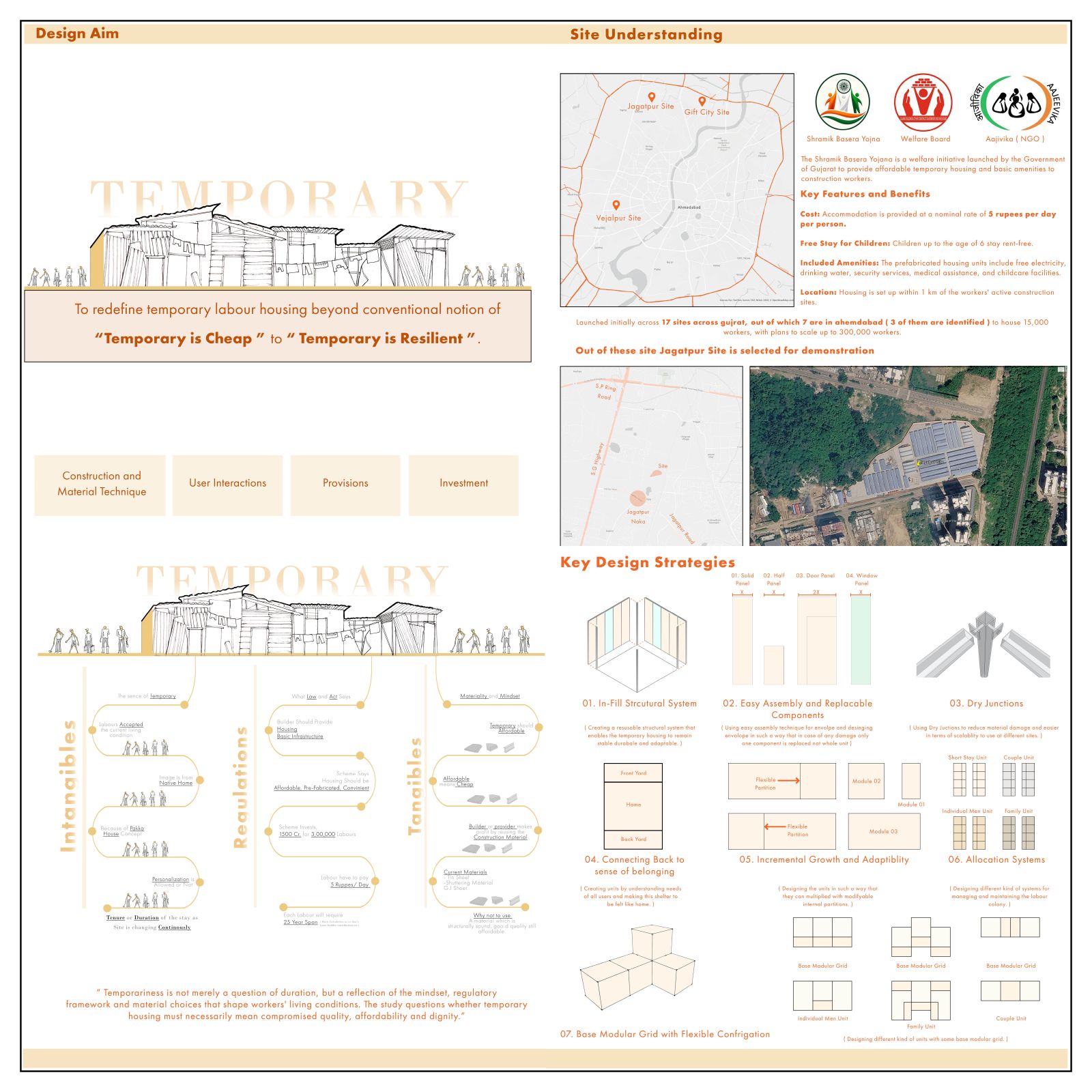
DEFINE - Establishing the design aim of transforming Temporary is Cheap into Temporary is Resilient. Defining the site and developing four interconnected design umbrellas to guide the transition from research to design.

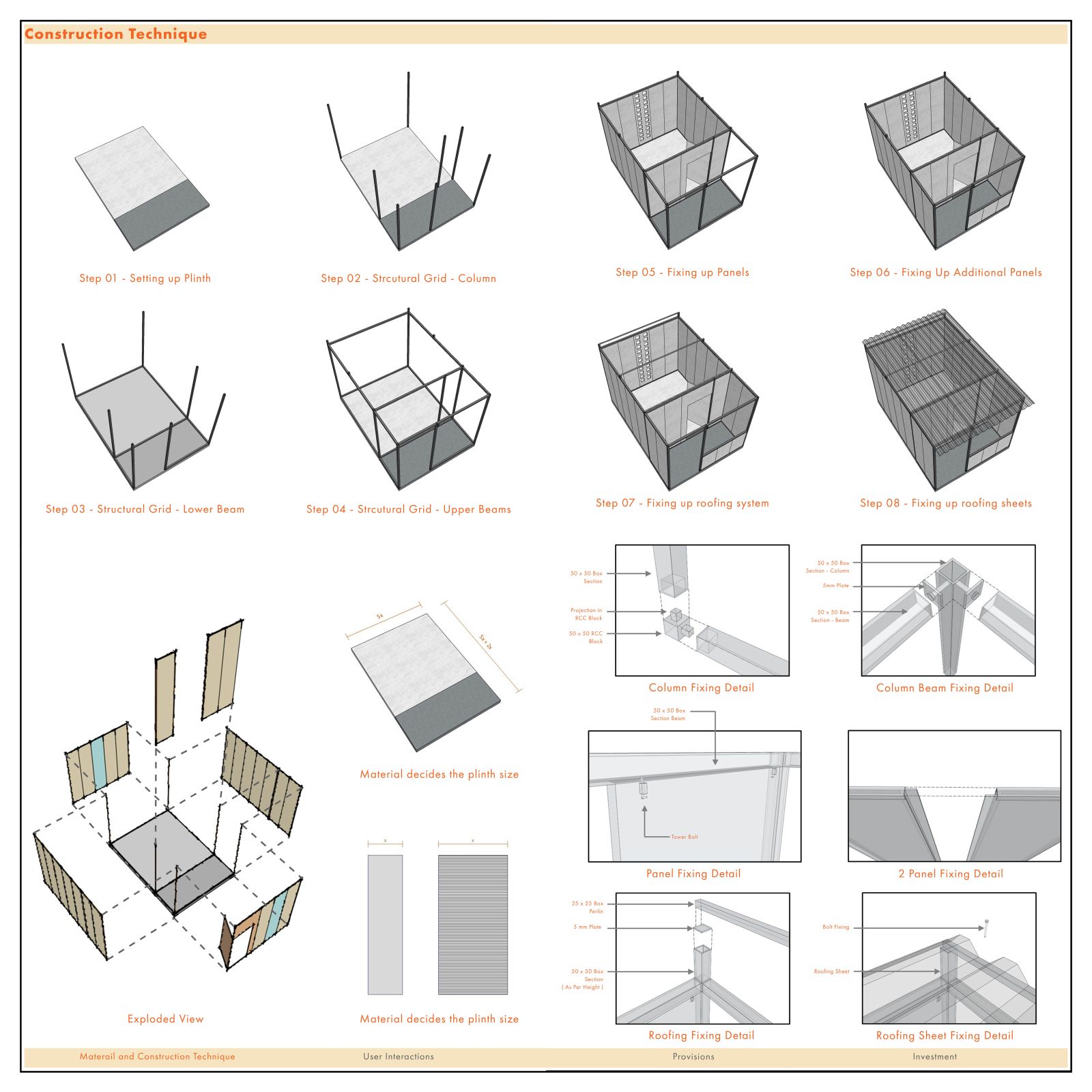
DESIGN - Construction Techniques & Detailing - Umbrella 01 Exploring material-led construction techniques that balance durability, affordability, and ease of assembly. Developing a modular structural and construction framework that supports dismantling, reuse, and adaptability.

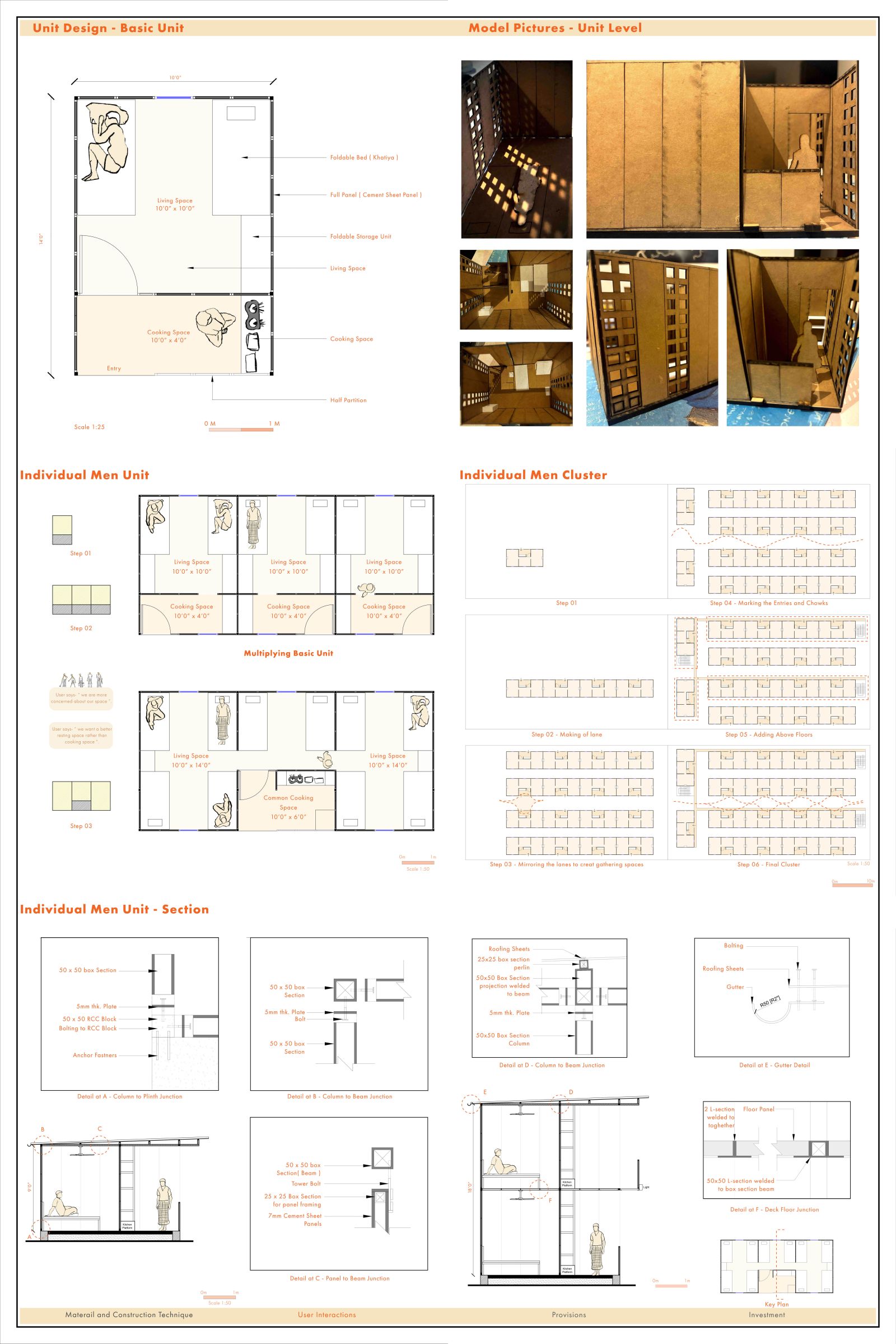
DESIGN - Individual Men: Unit & Cluster Design - Umbrella 02 Translating user engagement with individual male workers into spatial arrangements that respond to privacy, comfort, and everyday routines. Exploring unit configurations and cluster relationships that encourage both individual well-being and collective living.

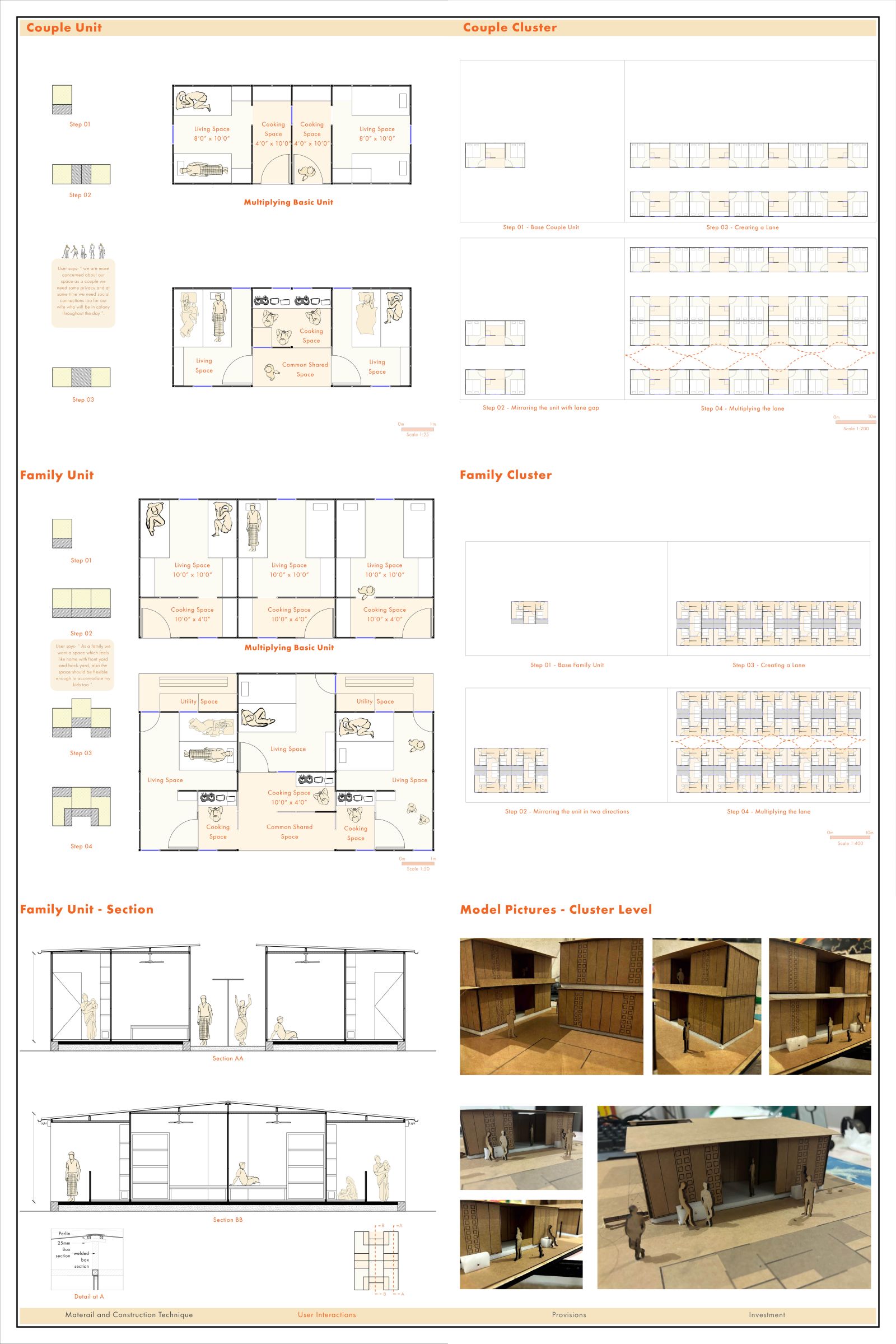
DESIGN - Couples & Families: Unit & Cluster Design - Umbrella 02 Reimagining accommodation for couples and families through changing spatial needs and domestic activities. Developing adaptable unit and cluster configurations that provide privacy, shared spaces, and a stronger sense of belonging.

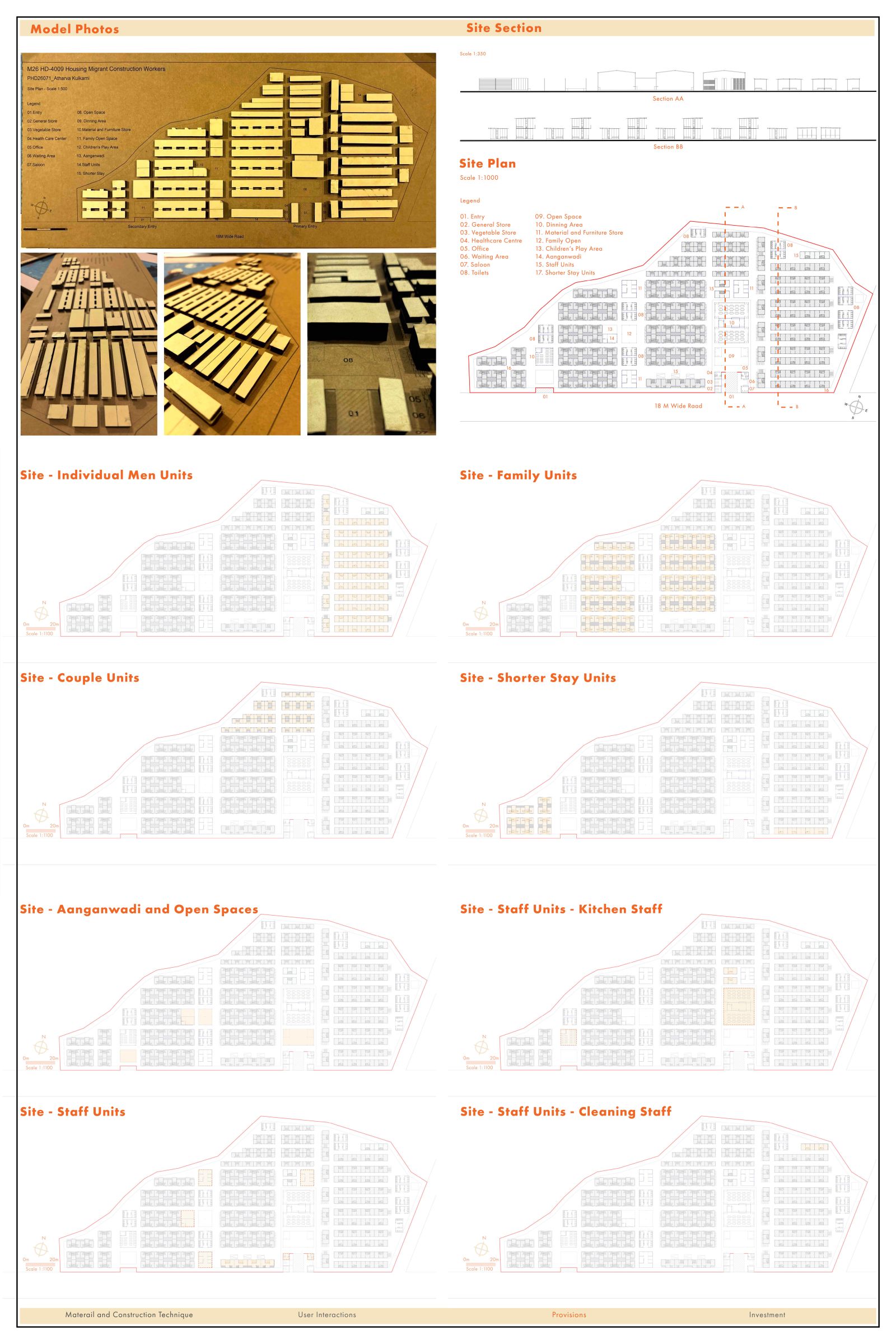
DESIGN - Site Planning & Design Development - Umbrella 03 Extending the design approach beyond individual units to the larger colony framework. Organising circulation, open spaces, infrastructure, and community interactions to create a connected and climate-responsive living environment.

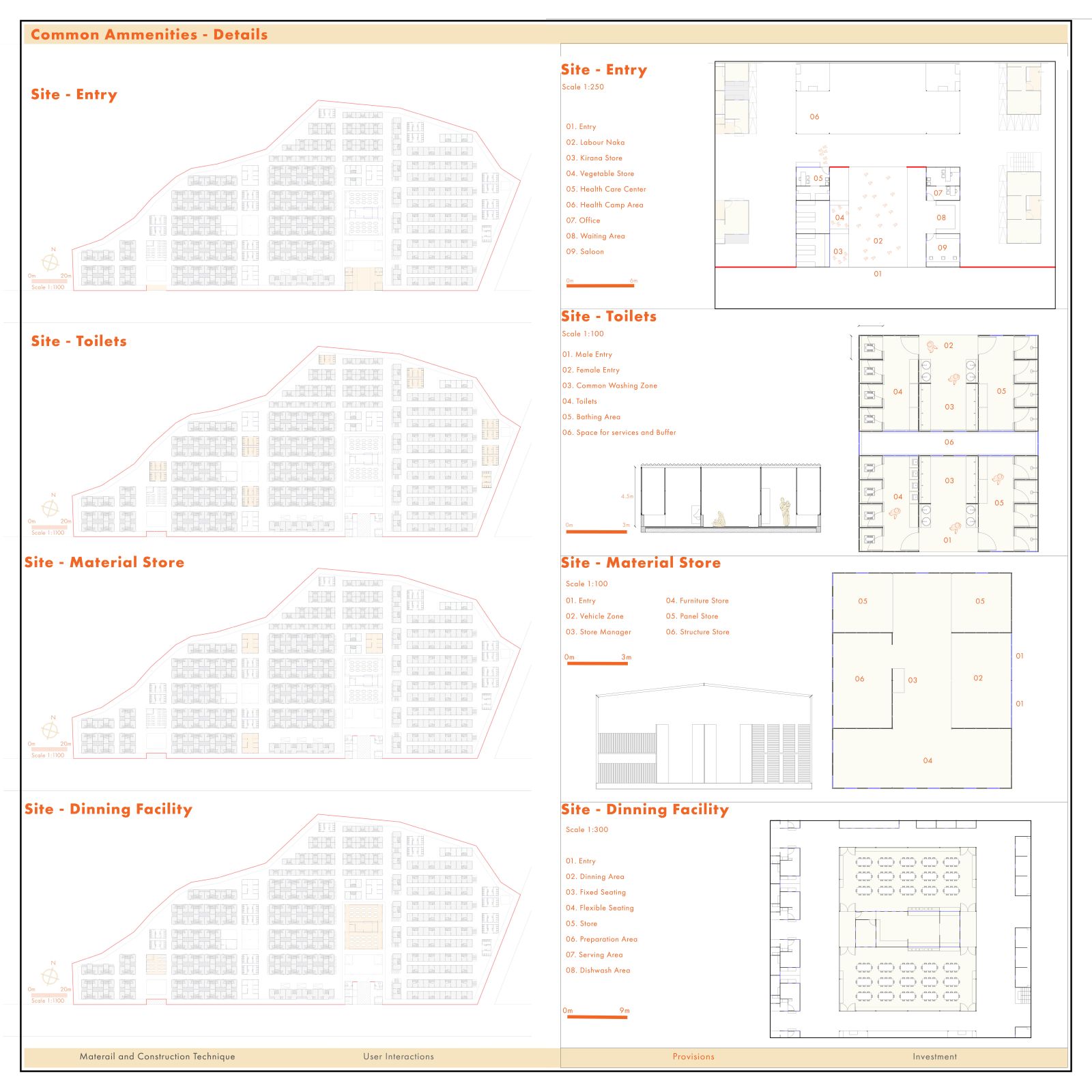
DESIGN - Recognizing common amenities as essential components of a resilient labor colony rather than supplementary facilities. Designing shared spaces that support recreation, social interaction, everyday needs, and community well-being.

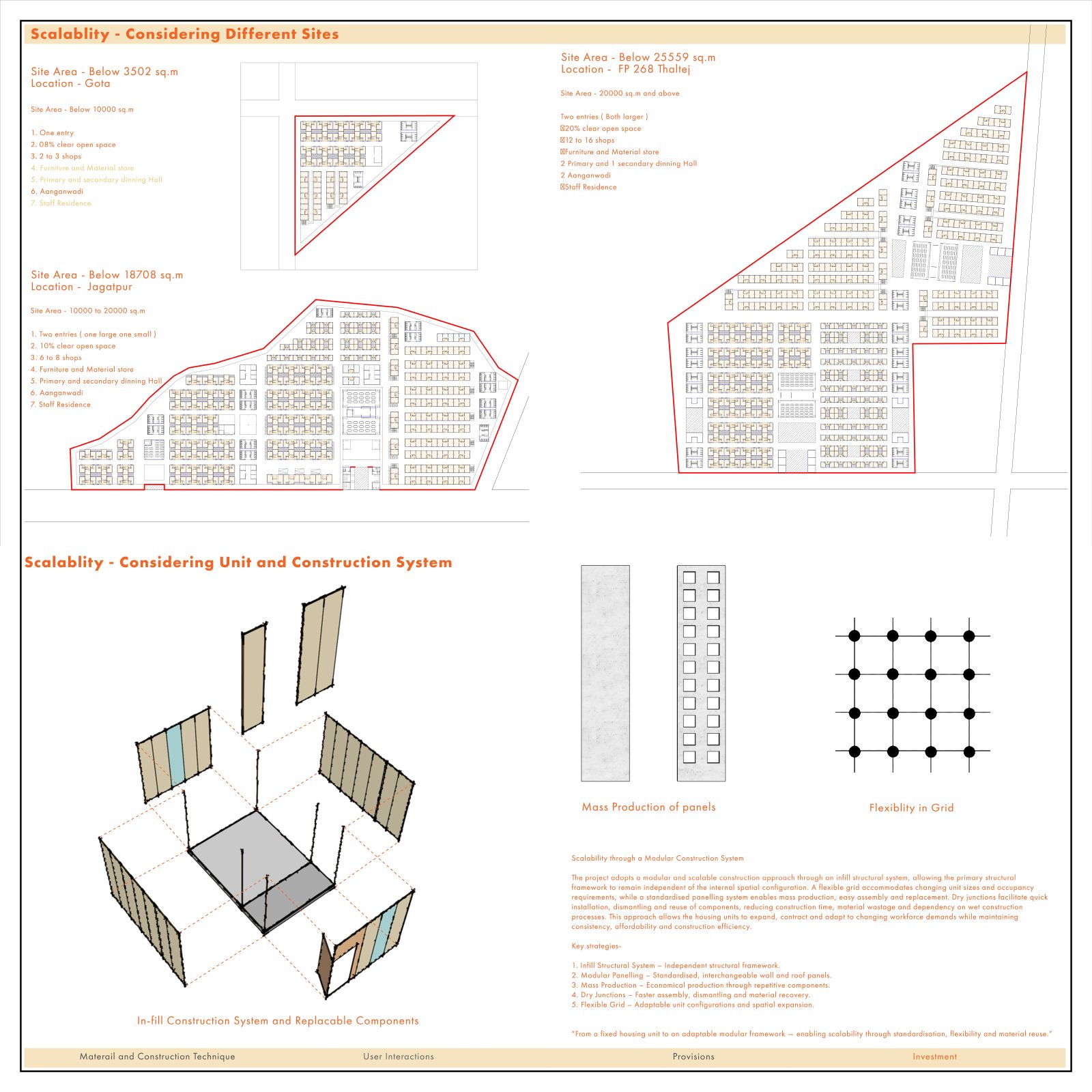
SCALE - Establishing scalability across multiple levels through a flexible grid, infill structural system, panelised construction, and dry joinery. Enabling mass production, efficient assembly, adaptability, and reuse while allowing the system to respond to different site conditions and colony sizes.

REFLECT - Evaluating how the proposed design framework responds to the realities of migrant workers, construction practices, and changing site requirements. Reflecting on the possibility of redefining temporary housing as a resilient habitat.