Gauri Bhujbal

UI4051

PUI24108

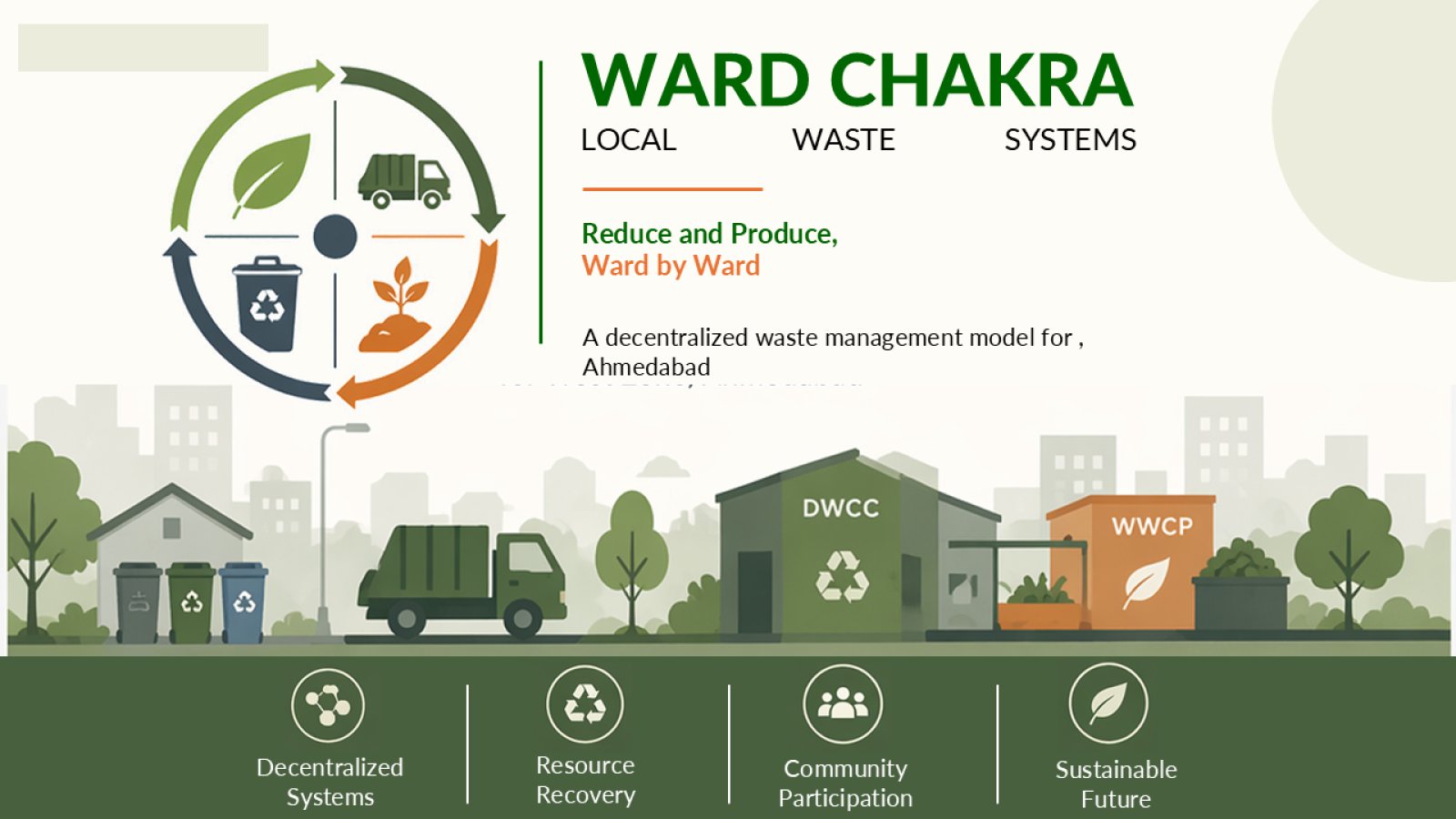
Ward Chakra: Local Waste Systems is a decentralized solid waste management proposal for the West Zone of Ahmedabad aimed at reducing dependency on centralized landfill systems. The project proposes a cluster-based network of Dry Waste Collection Centres (DWCCs) and Wet Waste Composting Plants (WWCPs) integrated with ward-level waste segregation and localized processing. Using spatial analysis, waste generation mapping, land suitability assessment, and financial feasibility studies, the proposal develops an efficient circular waste economy model. The project emphasizes reduced transportation burden, improved resource recovery, community participation, and financially viable implementation through phased infrastructure development between 2027–2032.

View Additional Work
Report Content

This project proposes a decentralized solid waste management framework for West Zone Ahmedabad through ward-level clustering, localized processing, and resource recovery infrastructure.

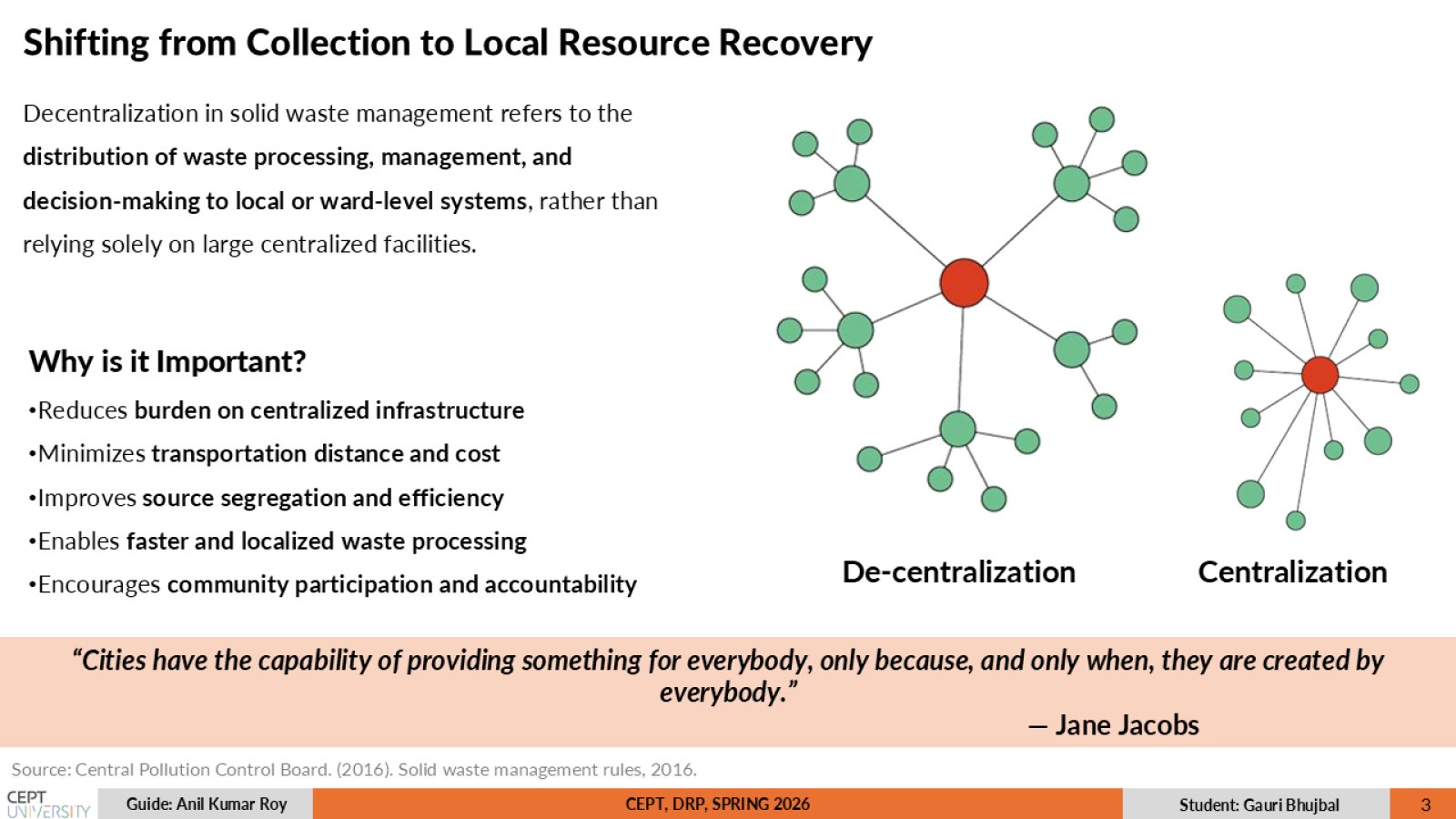
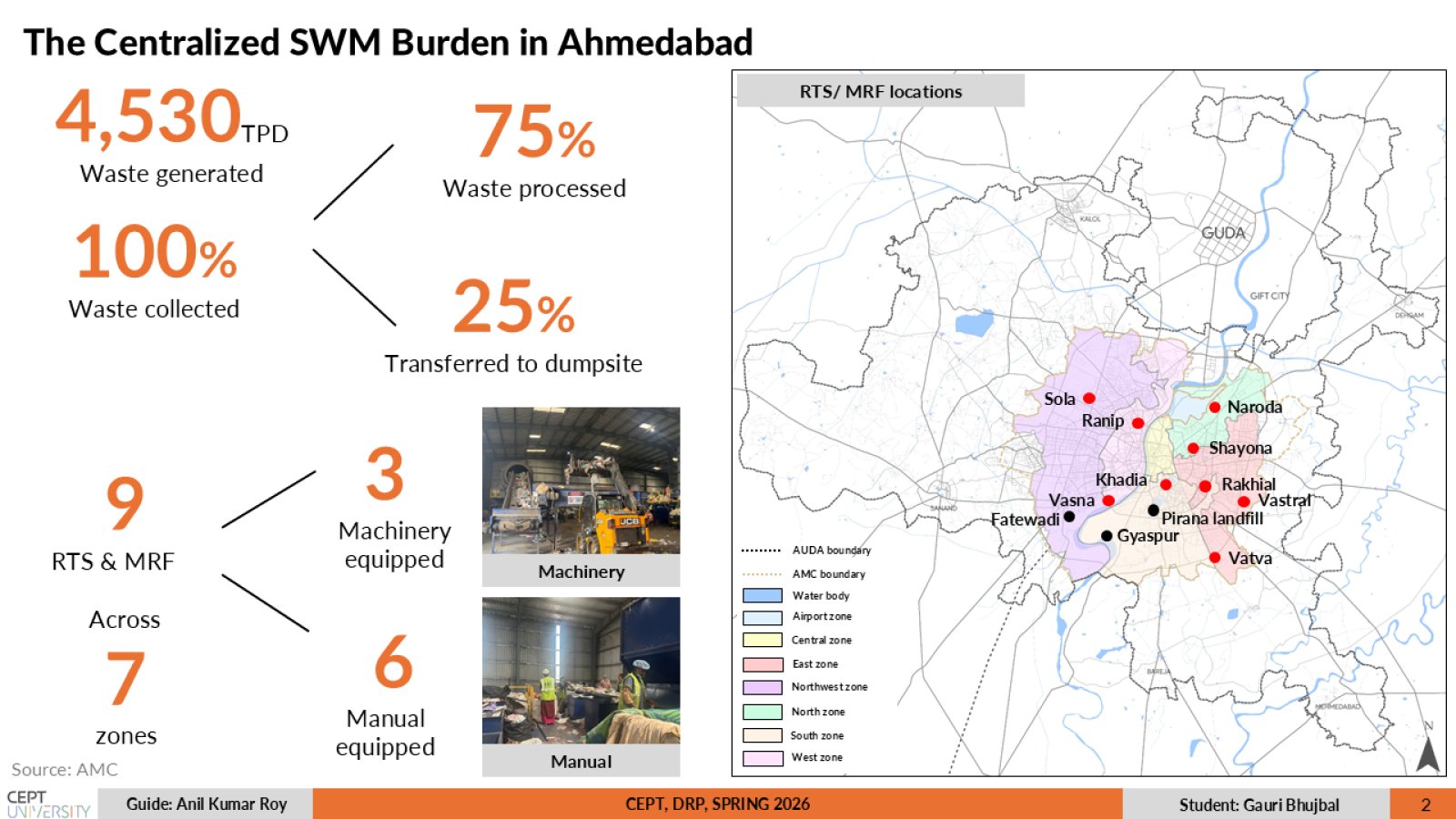
Ahmedabad currently relies heavily on centralized waste processing systems. This creates long transportation routes, higher operational costs, landfill dependency, and weak local accountability.

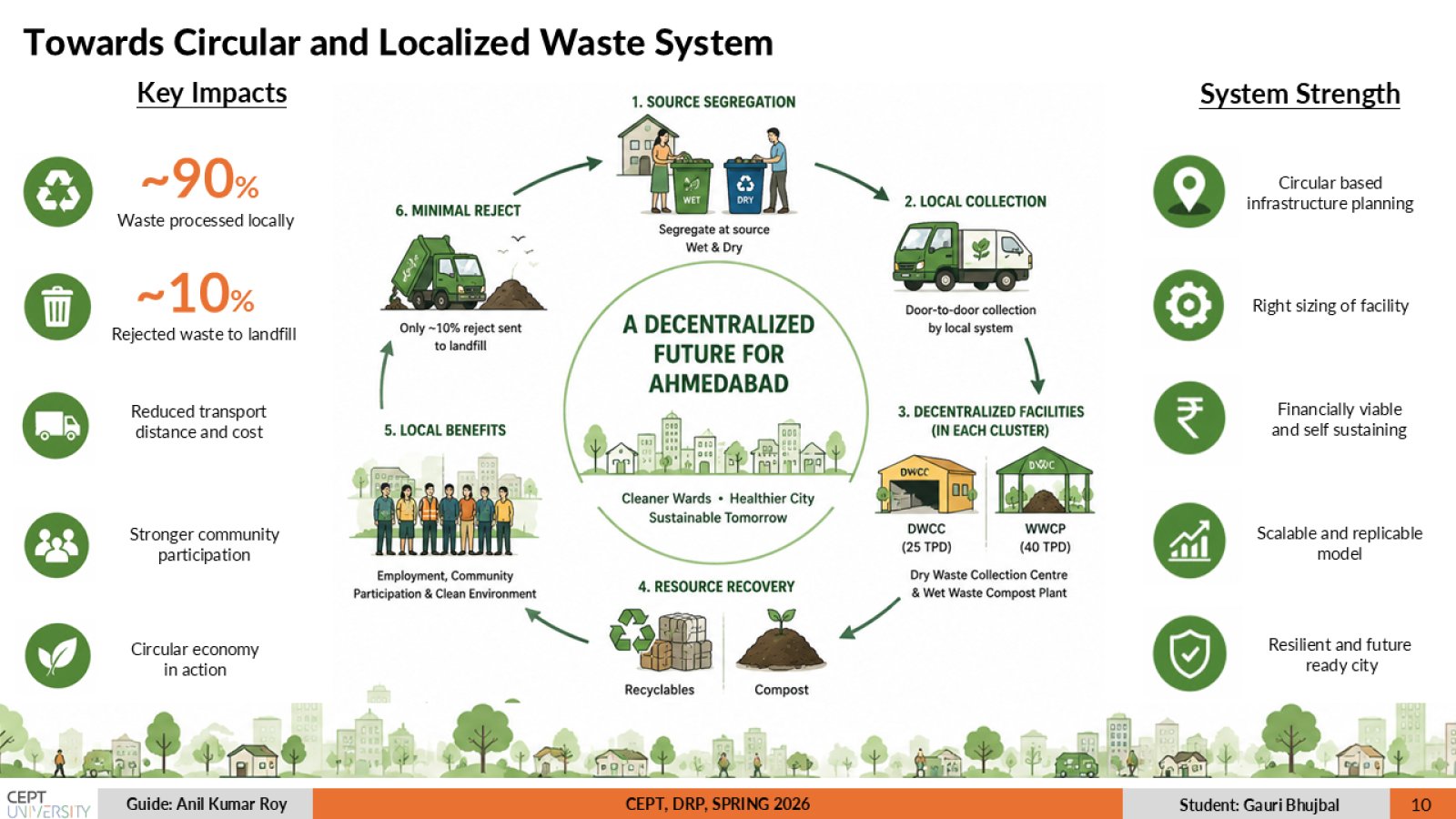
The proposal shifts waste management from a transportation-oriented system to a localized processing and recovery system.

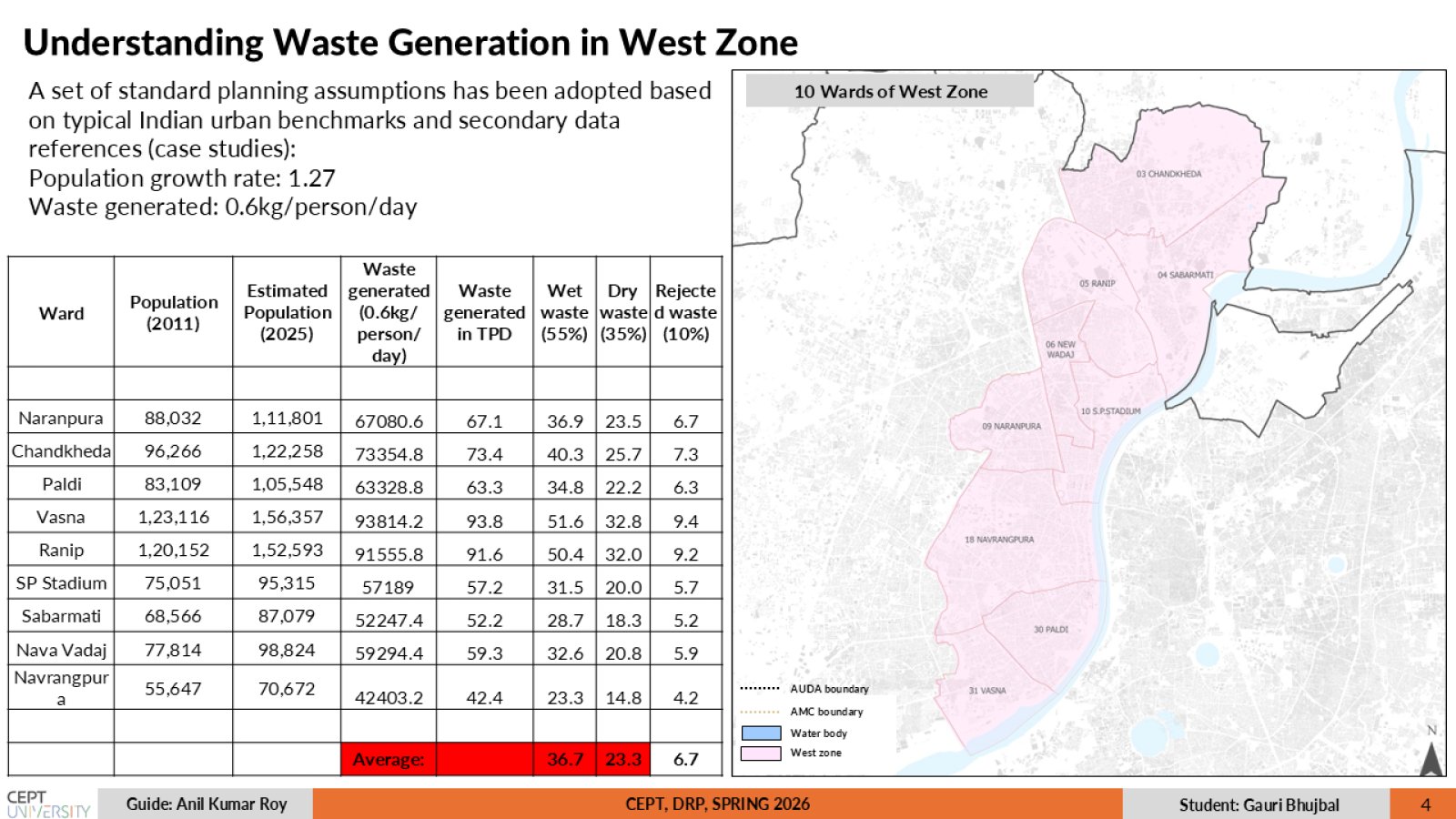
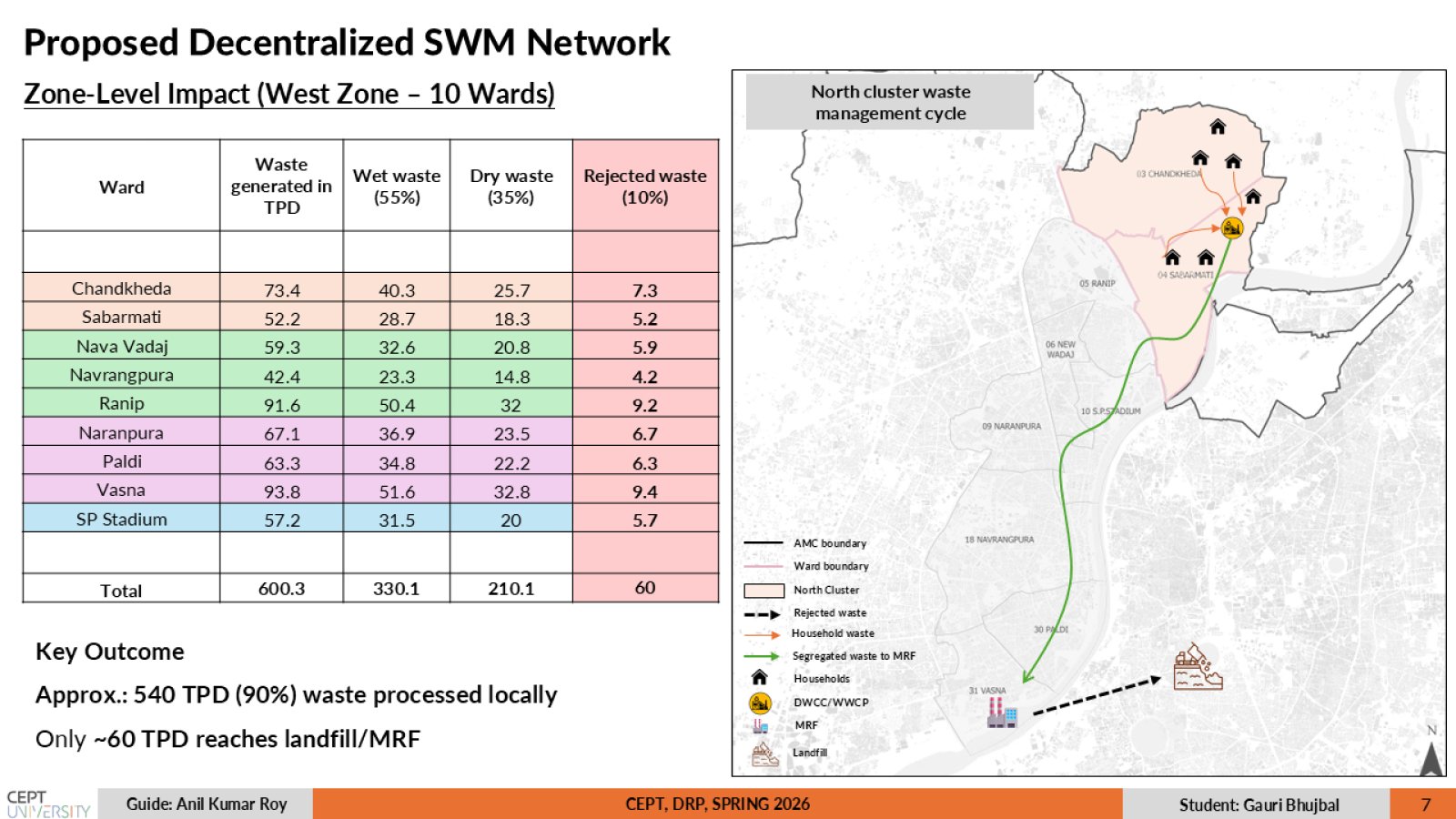
The study identifies spatial variation in waste generation across wards, helping define infrastructure demand and cluster formation.

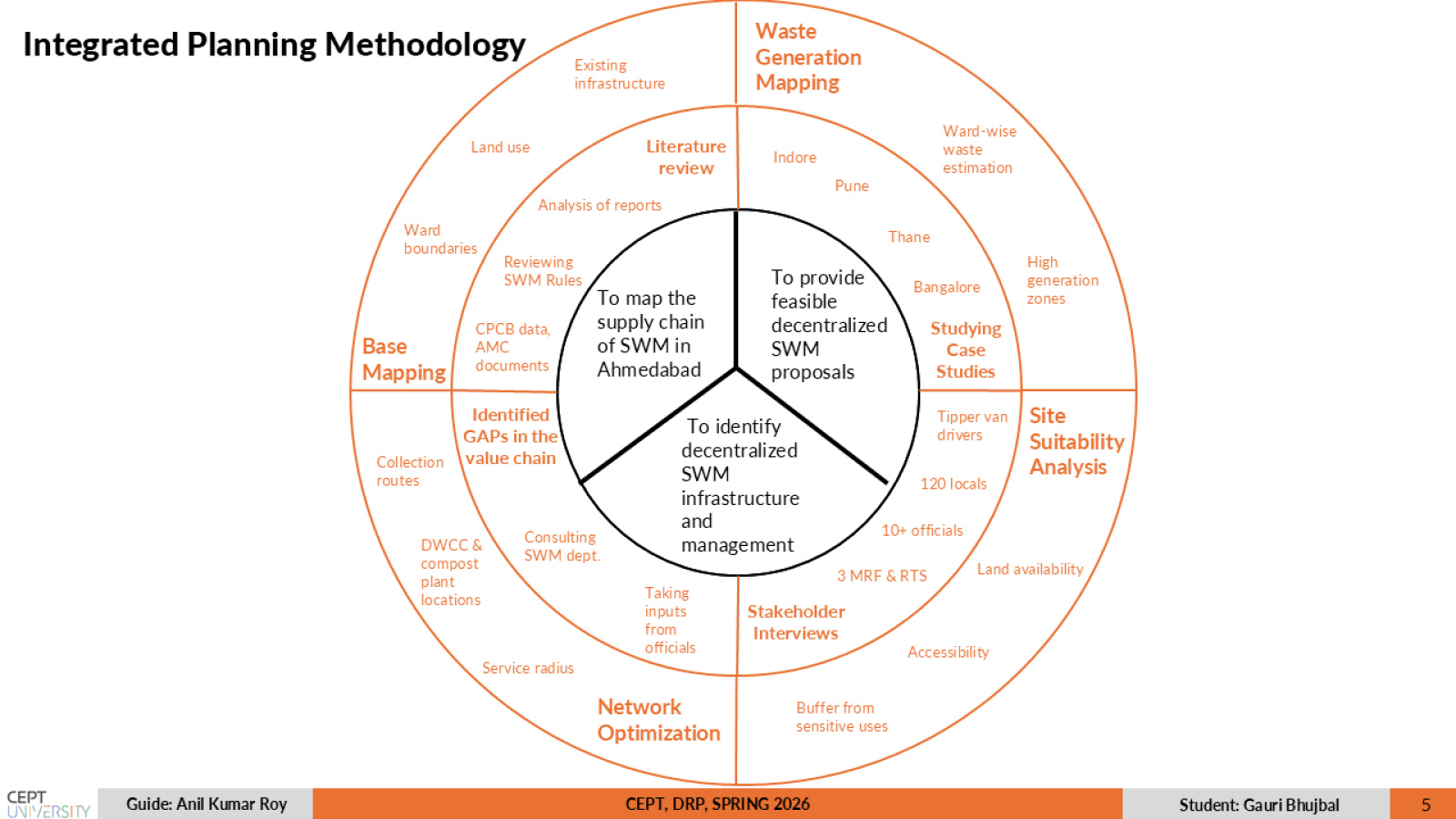
The methodology integrates spatial analysis, infrastructure assessment, stakeholder consultation, and decentralized network optimization.

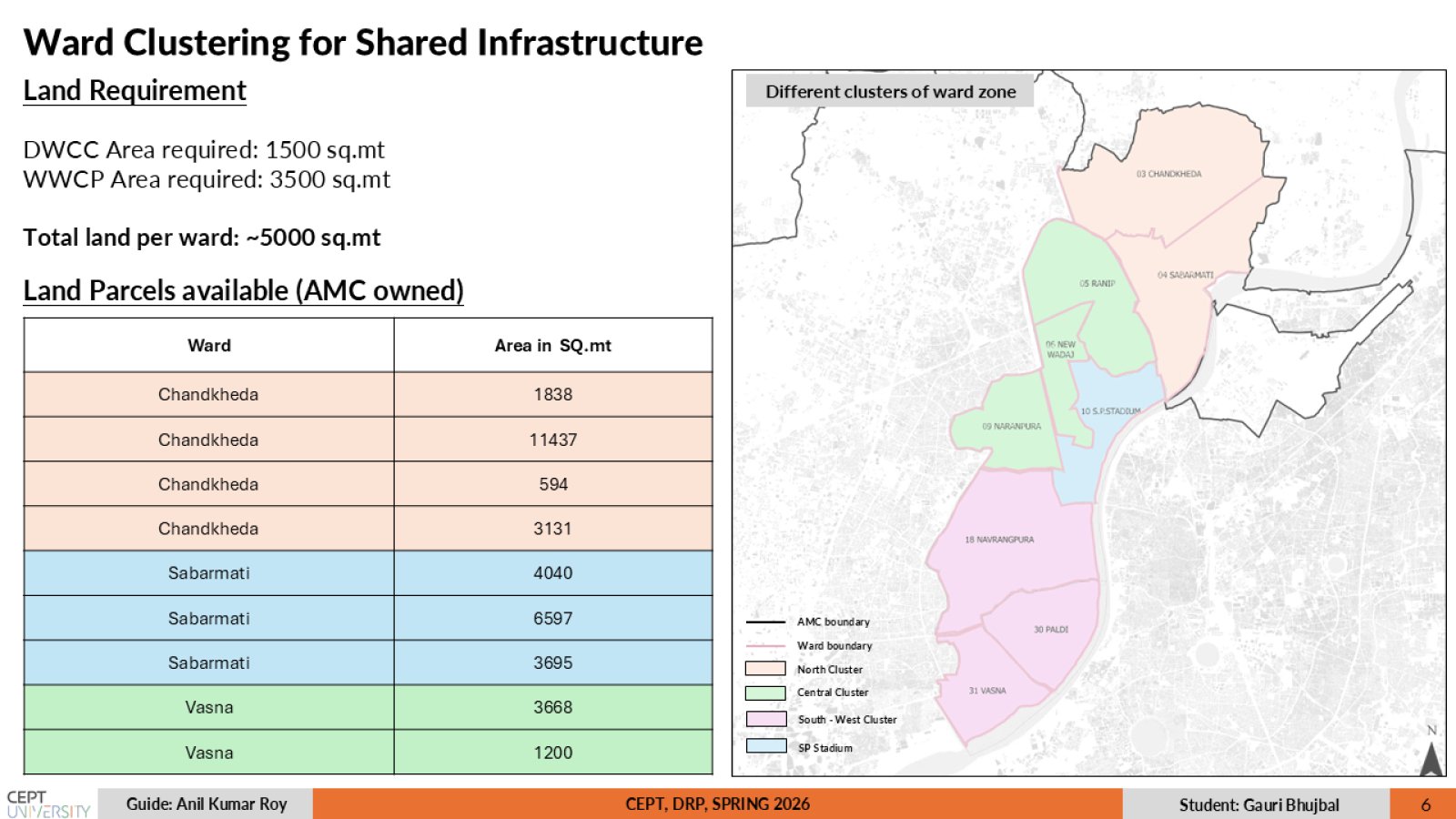
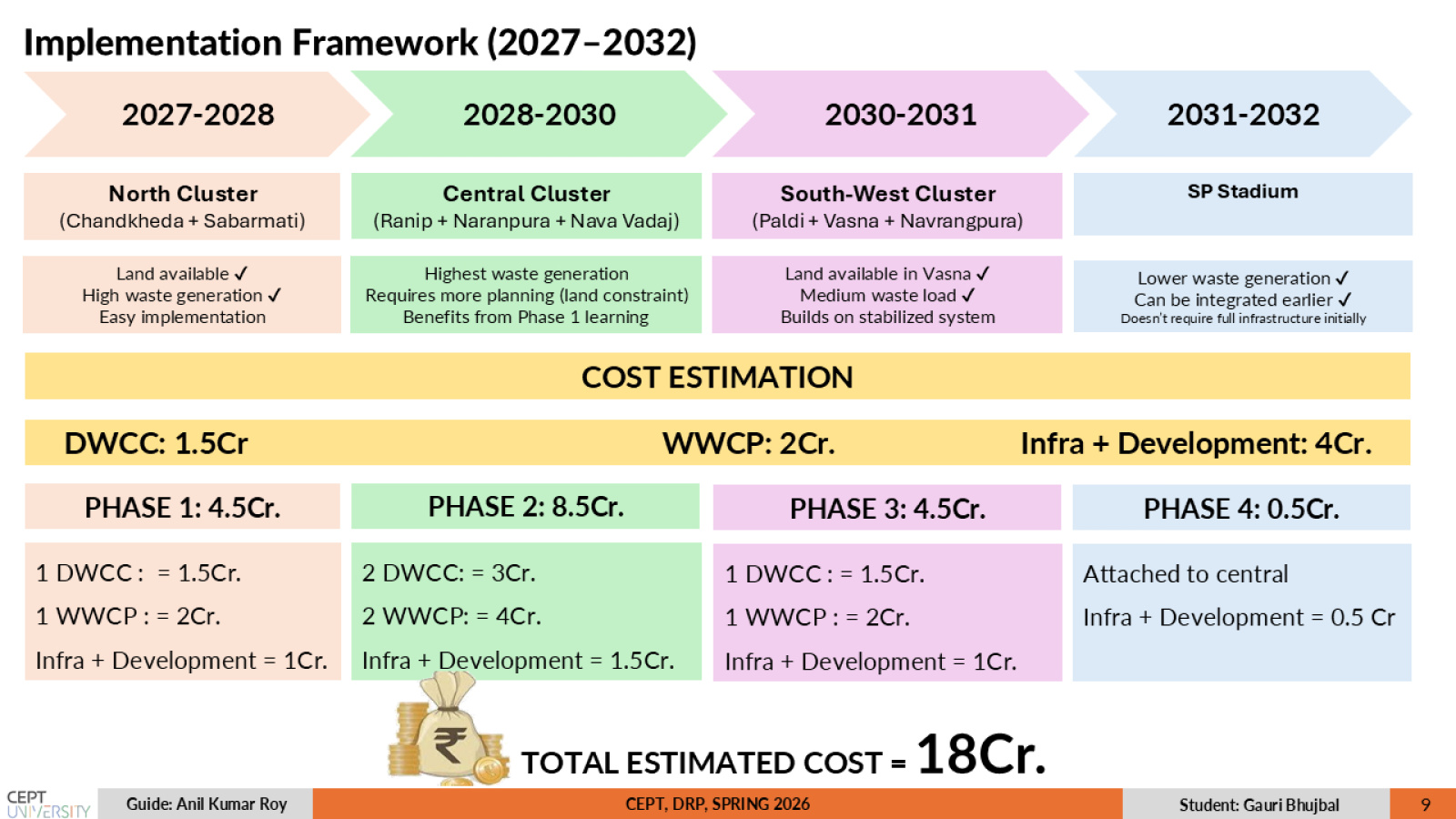
Instead of forcing infrastructure into every ward, the proposal creates strategically shared decentralized clusters based on land availability, proximity, and waste load.

The network ensures that most waste is processed within the zone itself, reducing dependence on centralized facilities.

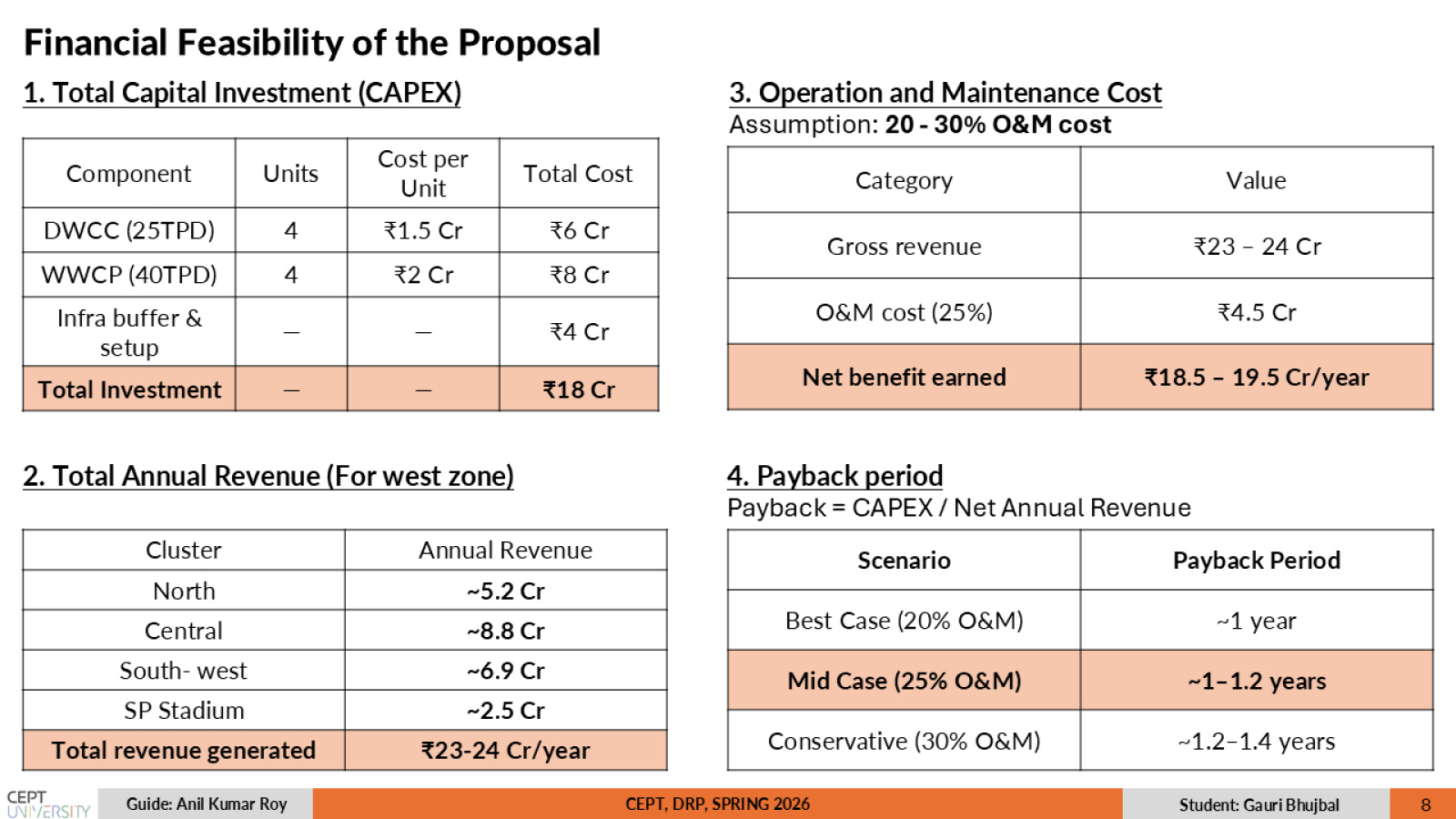
The proposal demonstrates long-term operational viability through resource recovery and reduced landfill dependency.

The implementation strategy prioritizes readiness, land availability, and processing demand while allowing gradual institutional adaptation.

Ward Chakra reimagines waste not as a disposal problem, but as a localized urban resource system.