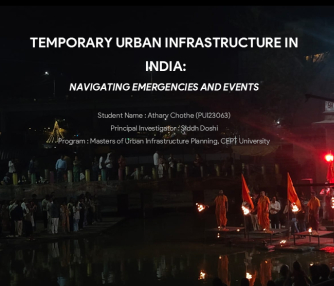
Temporary Urban Infrastructure in India: Navigating Emergencies and Events
"India’s rapidly expanding urban landscape increasingly faces large-scale emergencies and events, such as natural disasters and mass public gatherings. These situations place significant pressure on temporary urban infrastructure, particularly Water, Sanitation, and Hygiene (WASH) systems, which are critical for safeguarding public health and dignity during such periods. Research has shown that WASH interventions play a crucial role in emergency responses, directly influencing health outcomes and service sustainability in crisis settings (Yates et al., 2018).
Despite the importance of these systems, limited research focuses on the performance of urban WASH systems in the context of temporary urban needs specific to India’s emergencies and events. For example, emergency WASH responses in disaster-affected regions of Odisha and Assam have highlighted systemic challenges in ensuring safe water supply and sanitation during relief and recovery operations (Krishnan, 2017). These findings suggest that standard urban WASH planning may not adequately address the dynamic needs of temporary infrastructure during emergencies.
This study aims to explore case studies of major urban events and disaster responses in India to assess existing WASH provisions, identify gaps, and propose requirements for resilient, adaptive WASH systems that can better support cities during emergencies and events."