Your browser is out-of-date!
For a richer surfing experience on our website, please update your browser. Update my browser now!
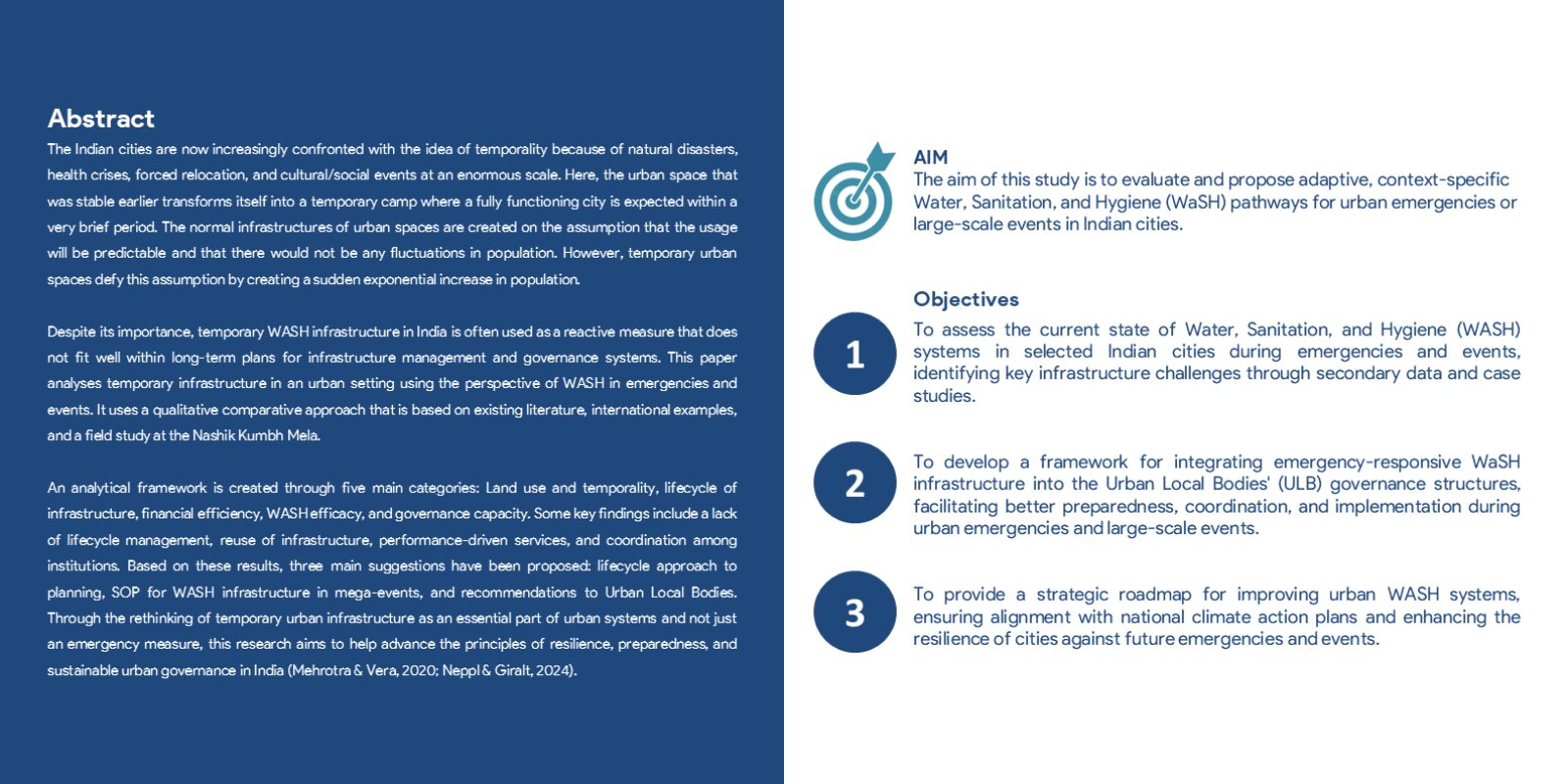
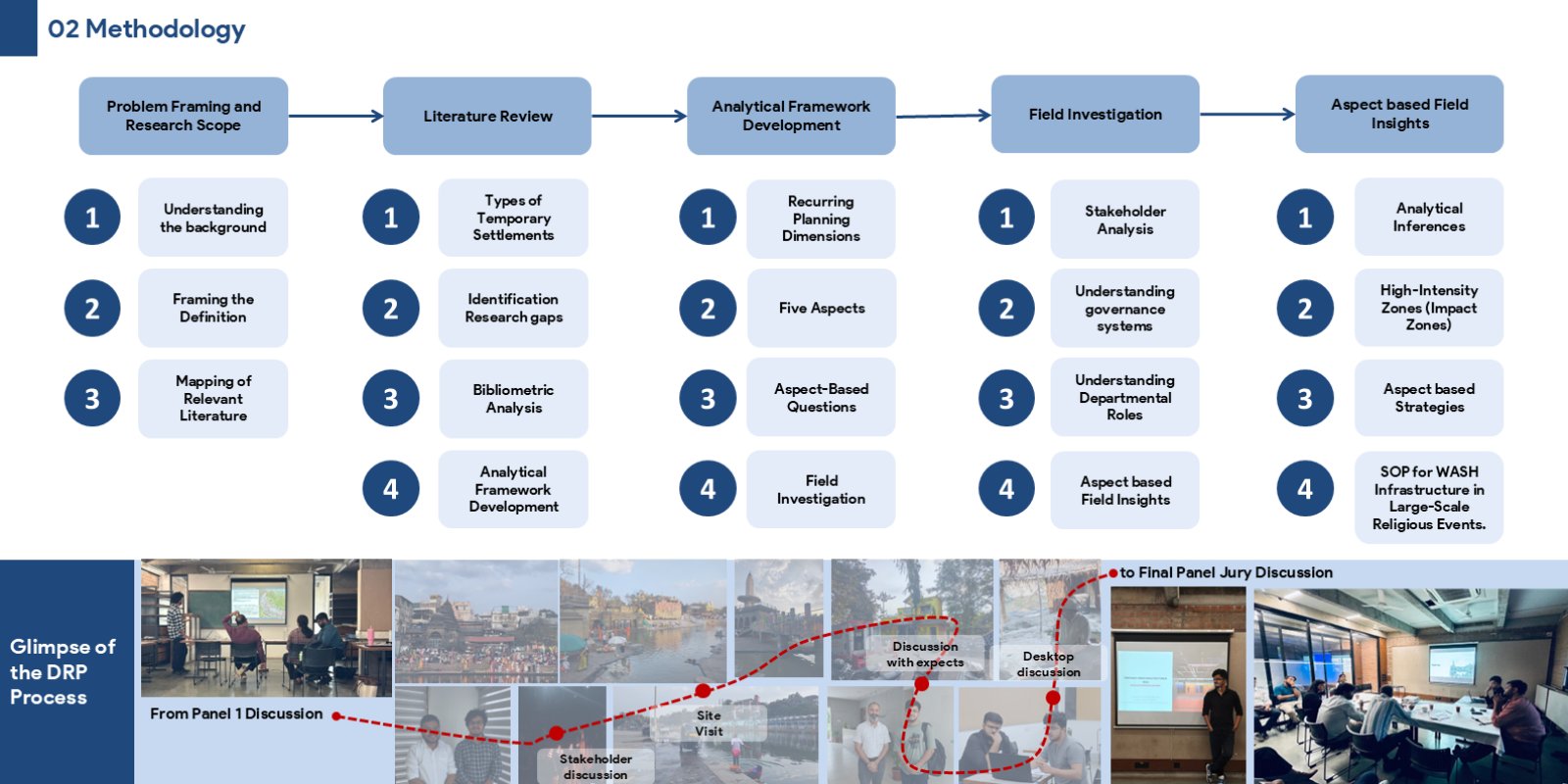
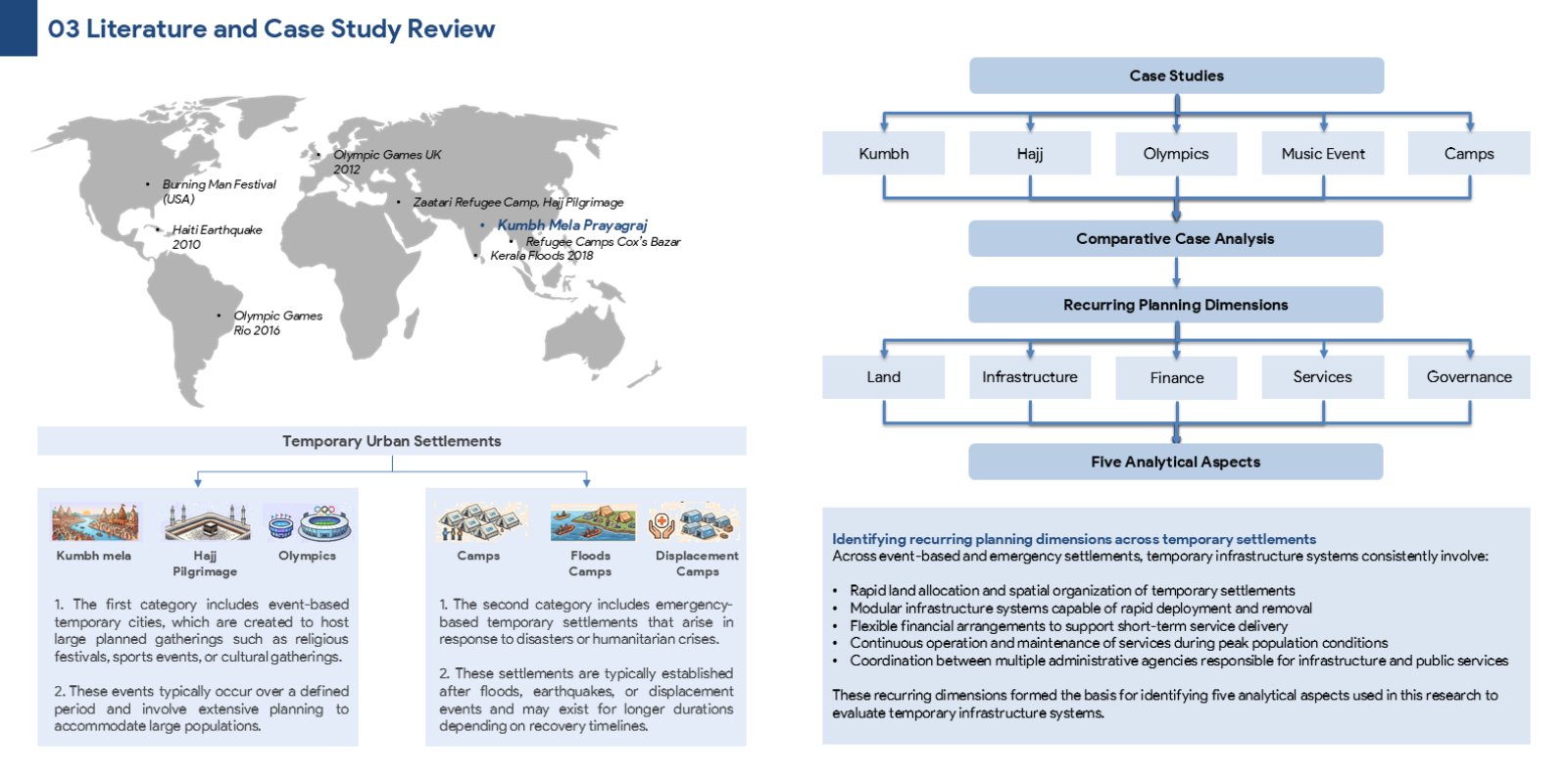
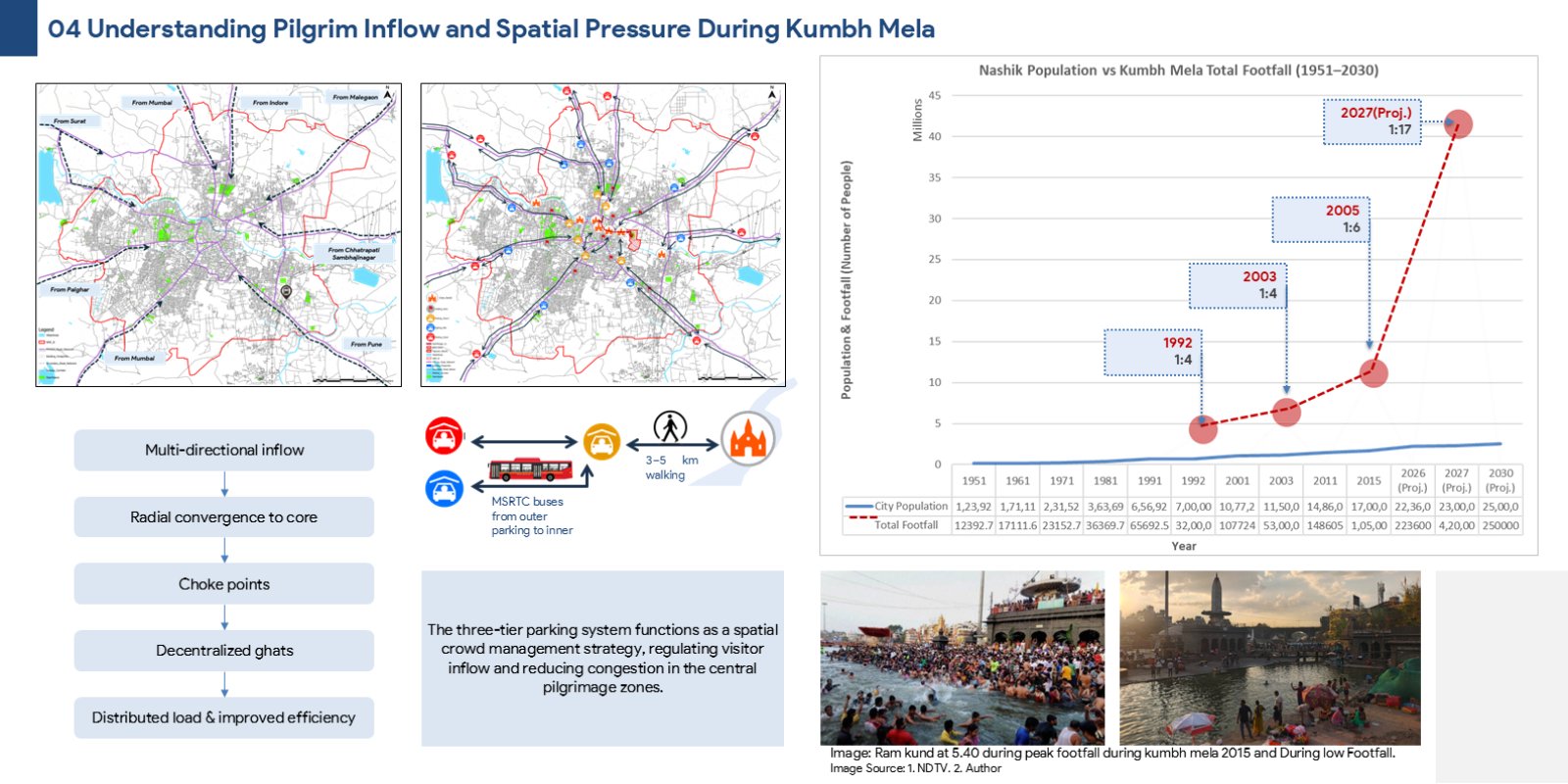
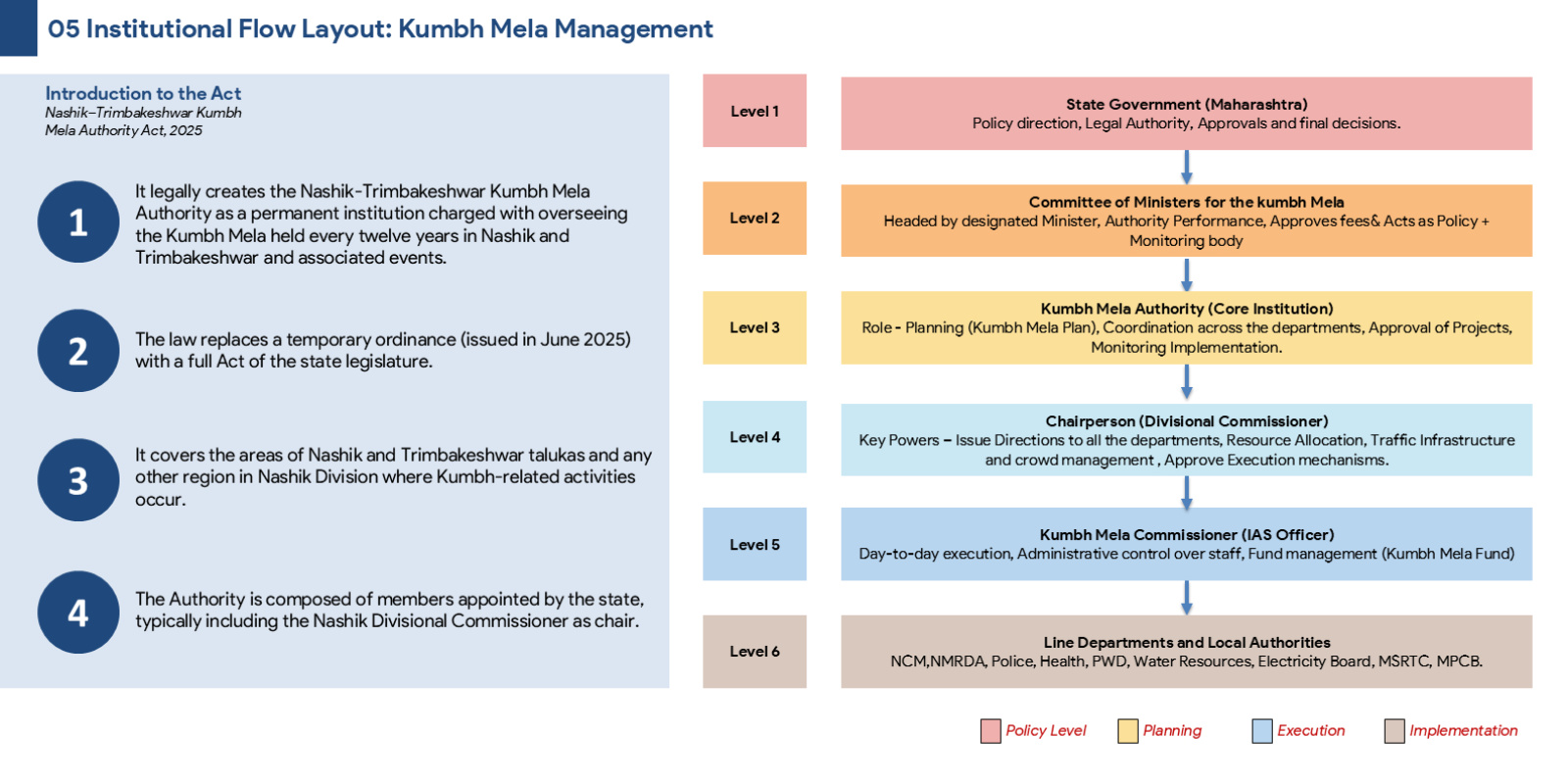
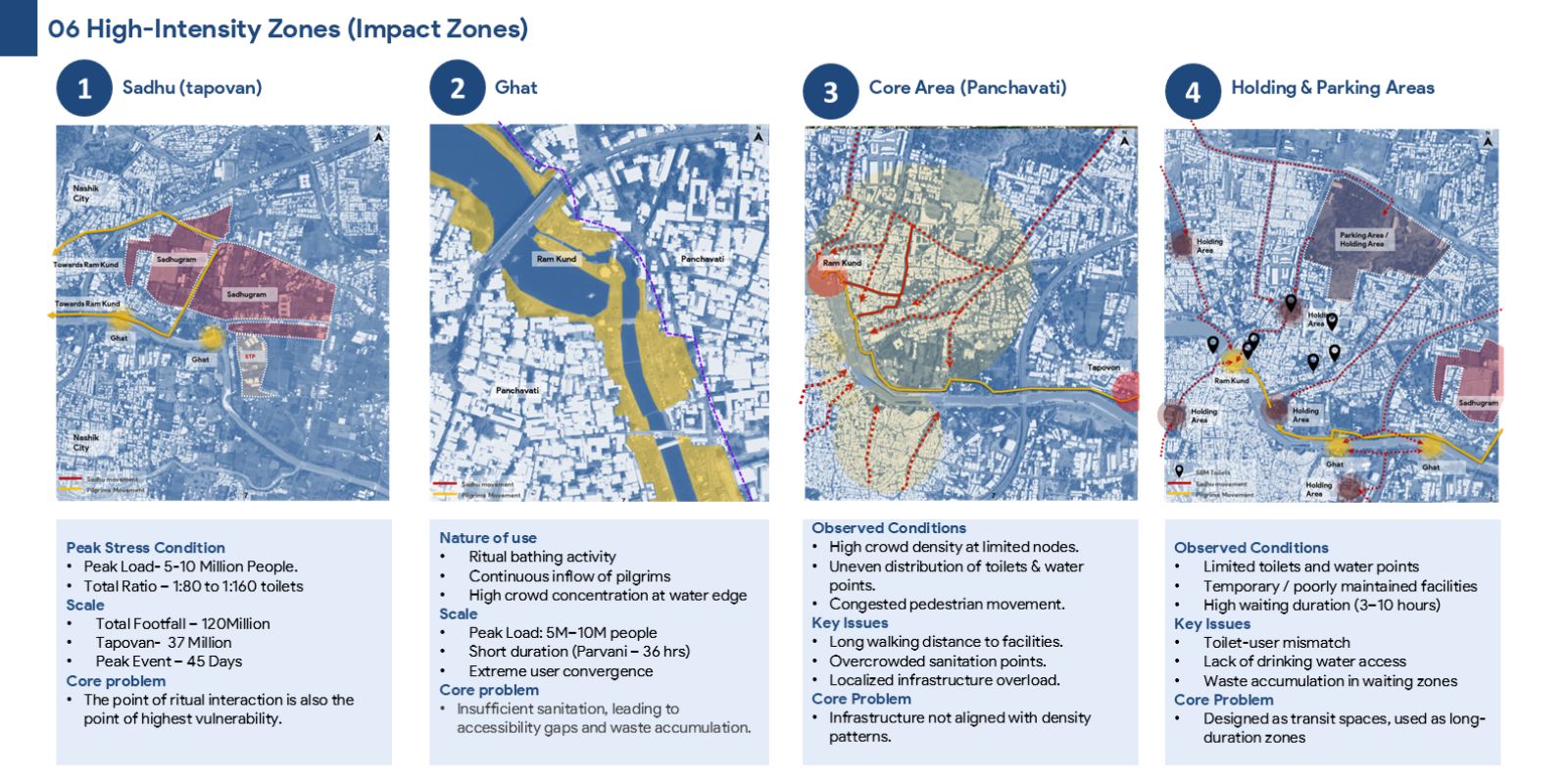
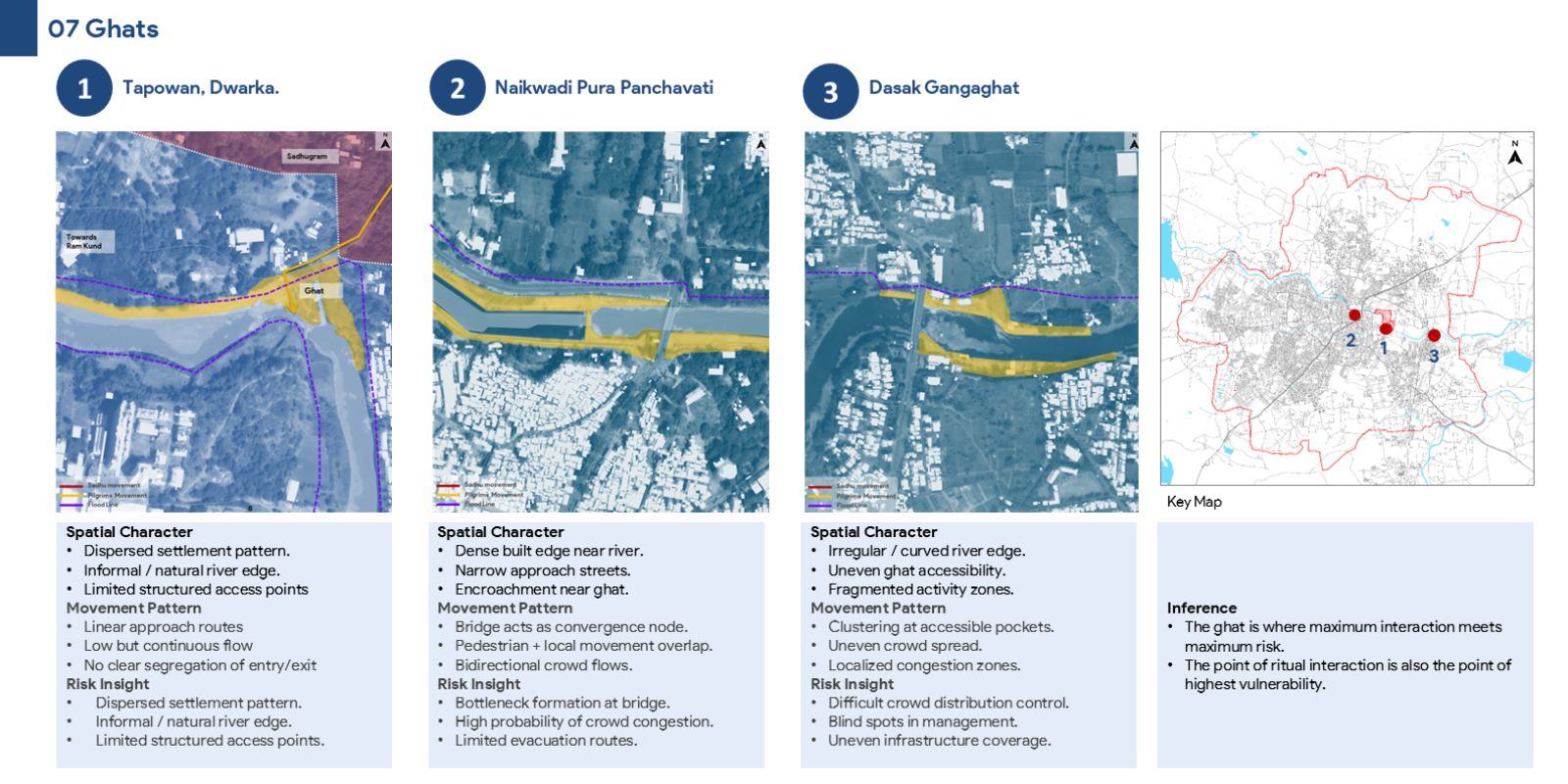
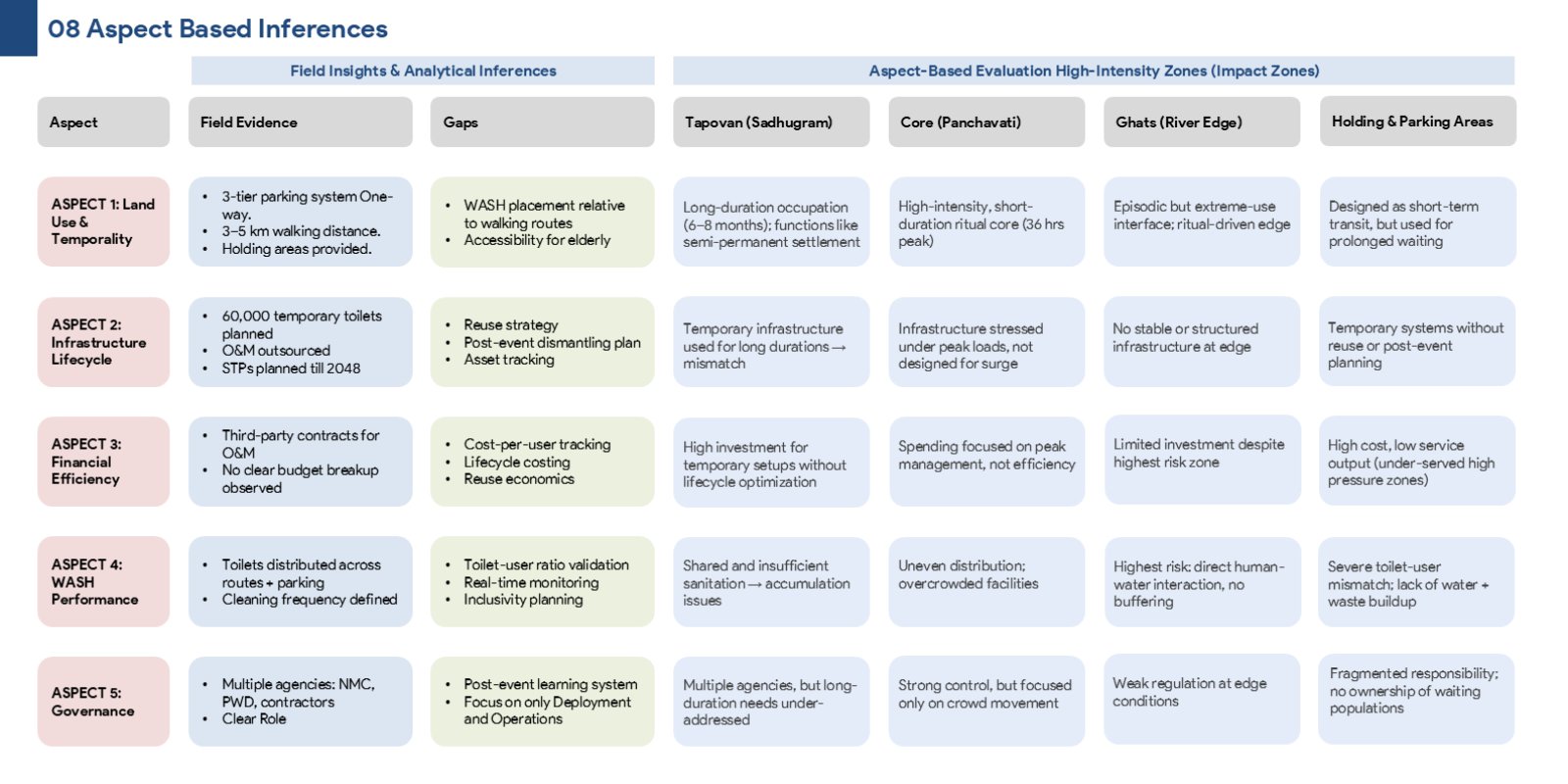
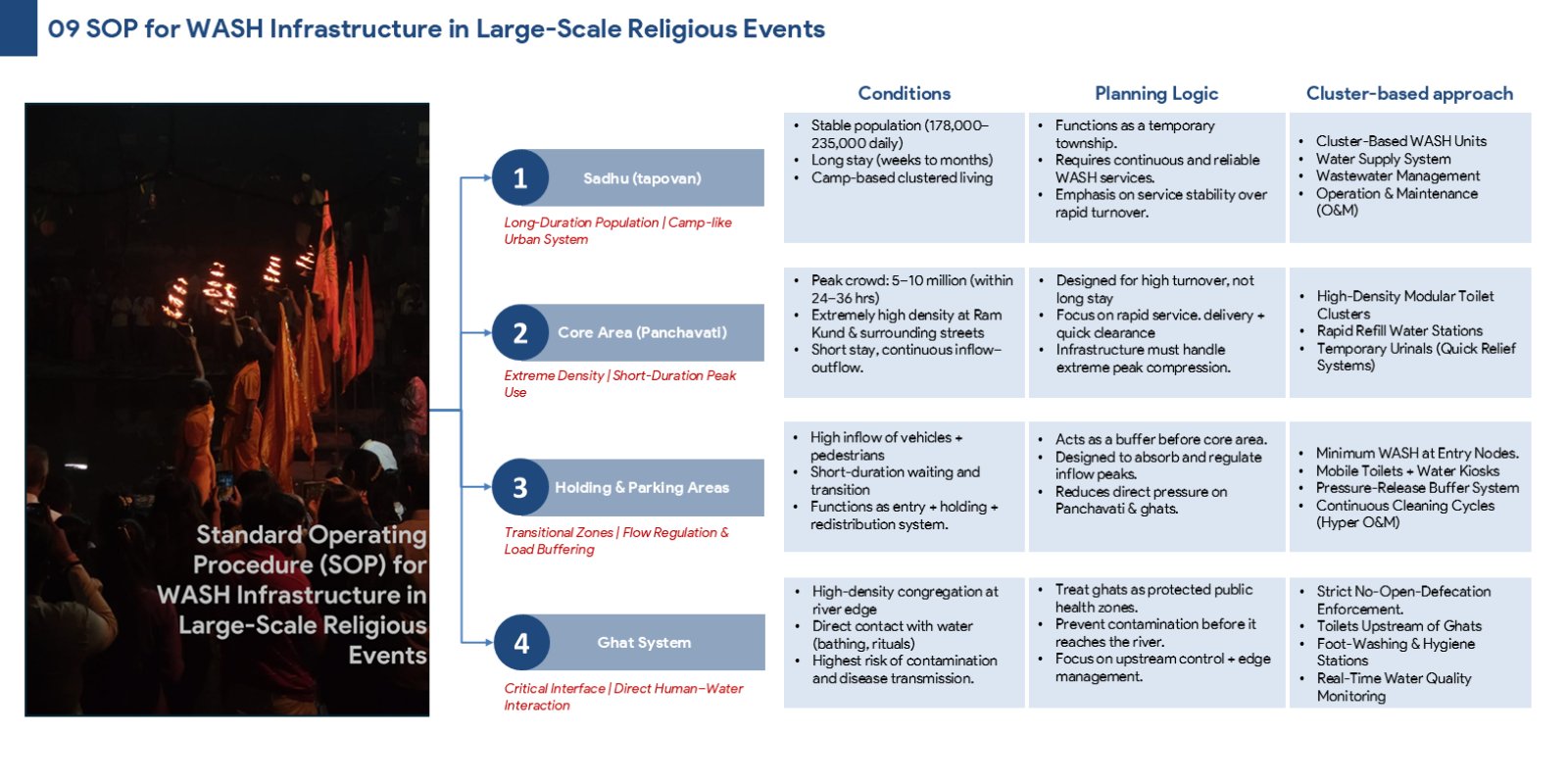
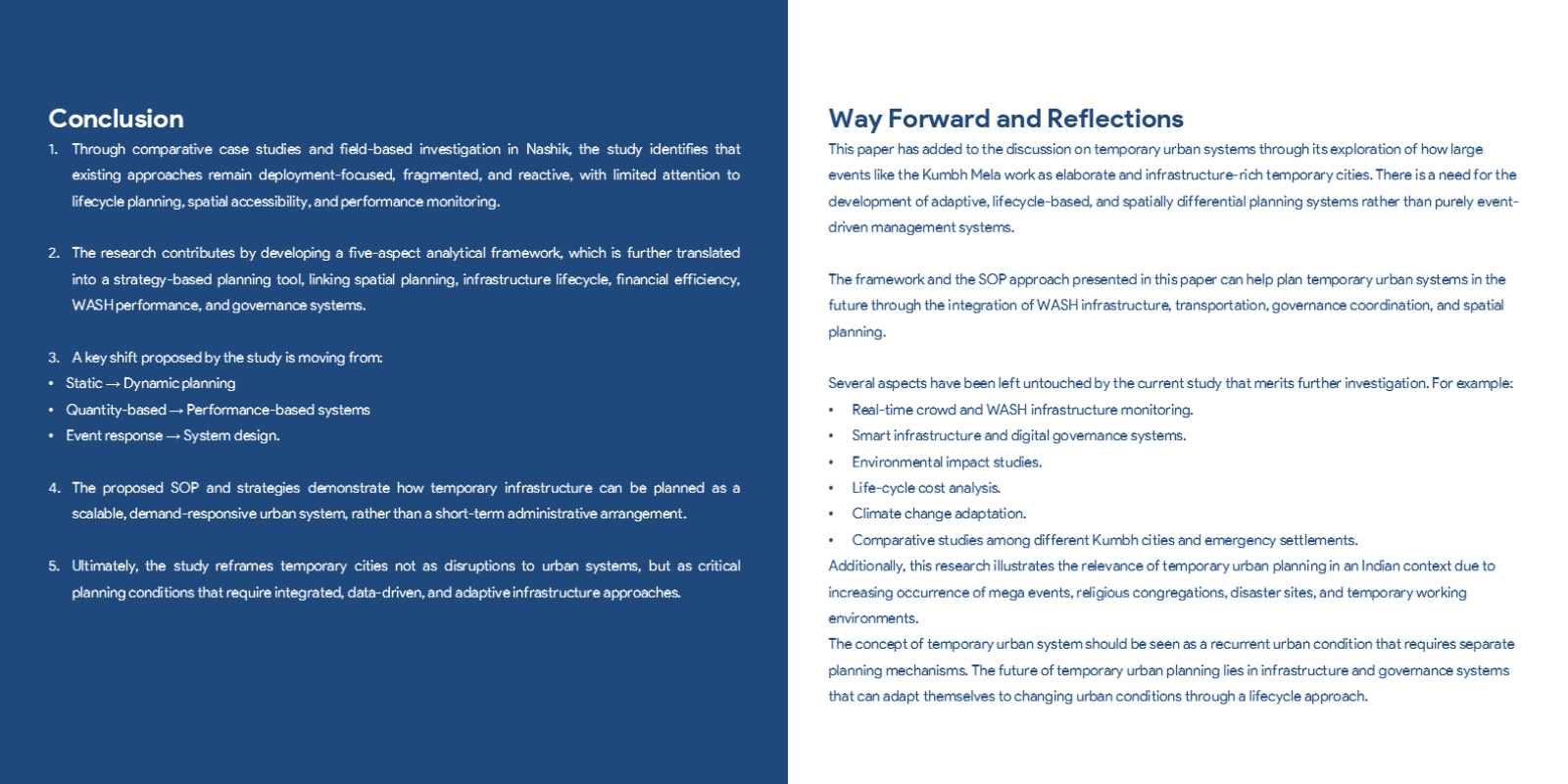
This research project explores the planning and management of temporary urban infrastructure systems in India, focusing on Water, Sanitation, and Hygiene (WASH) services during large-scale events and emergencies. Using the Nashik–Trimbakeshwar Kumbh Mela as the primary case study, the study examines how temporary cities function under extreme population pressure and limited timelines. The research develops an analytical framework based on land use, infrastructure lifecycle, investment efficiency, WASH performance, and governance capacity. Through literature review, case studies, stakeholder consultations, and field investigations, the project proposes adaptive planning strategies and SOPs to improve resilience, sustainability, and institutional preparedness for temporary urban settlements in Indian cities.
View Additional Work