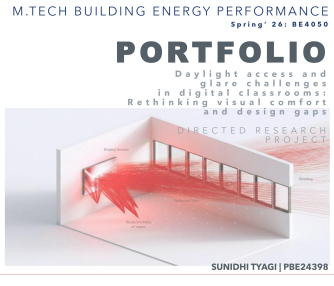
Daylight Access and Glare in Digital Classrooms: Rethinking Visual Comfort and Design Gaps
Classroom daylighting has traditionally been designed
around blackboard teaching, with the focus on uniform illumination, adequate task lighting,
and minimizing discomfort glare for reading and writing activities. However, the rapid
transition toward digital classrooms introduces a fundamentally different visual task: teaching
and learning now revolve around self-luminous LED screens. Unlike chalkboards, digital
classroom LED screens demand careful control of background luminance, veiling glare, and
contrast ratios to remain legible and visually comfortable. This shift challenges conventional
daylighting strategies developed for paper-based tasks and exposes a critical design gap.
In most schools, classrooms originally designed for blackboards are now retrofitted with
digital media, often retaining the original daylighting and window setup. As a result, teachers
and students experience two recurring extremes: windows that create veiling reflections,
screen washout, and uncomfortable luminance contrasts, or over-reliance on blinds and
artificial lighting that reduces daylight autonomy and increases energy demand. Both
outcomes undermine comfort, attention span, and long-term visual health. Existing standards
such as LEED, CIBSE Lighting Guide 5, and Indian codes primarily address horizontal illuminance, often overlooking vertical illuminance and luminance balance essential for
digital screen work.
This study combines field surveys with classroom mapping and user feedback to document
glare and daylight challenges during LED screen activities. The evidence will drive practical
solutions, such as guidelines for optimal layouts, targeted glare prevention, and retrofit
strategies to support clear visibility, student comfort, and energy-efficient digital learning.