Your browser is out-of-date!
For a richer surfing experience on our website, please update your browser. Update my browser now!
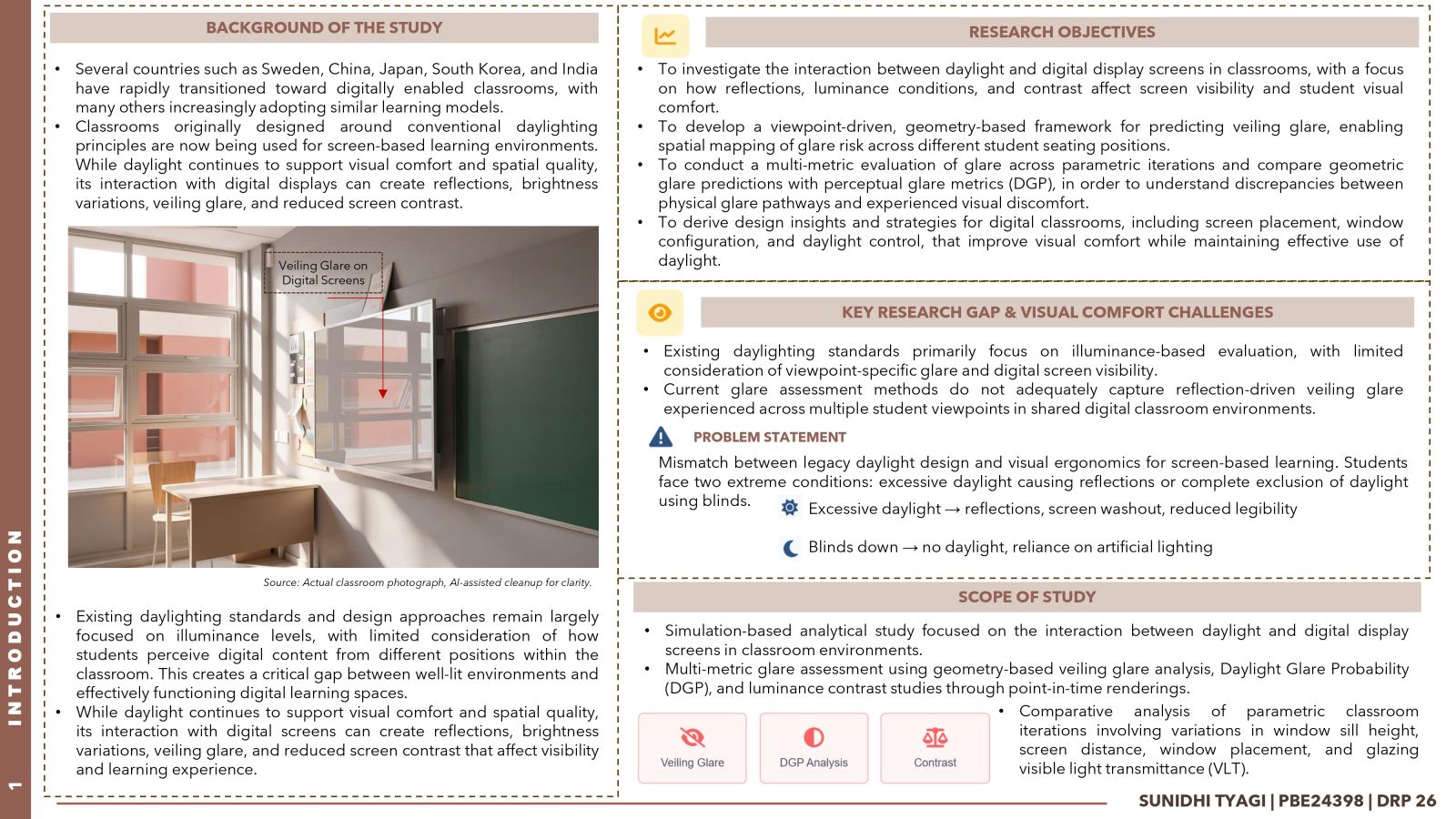
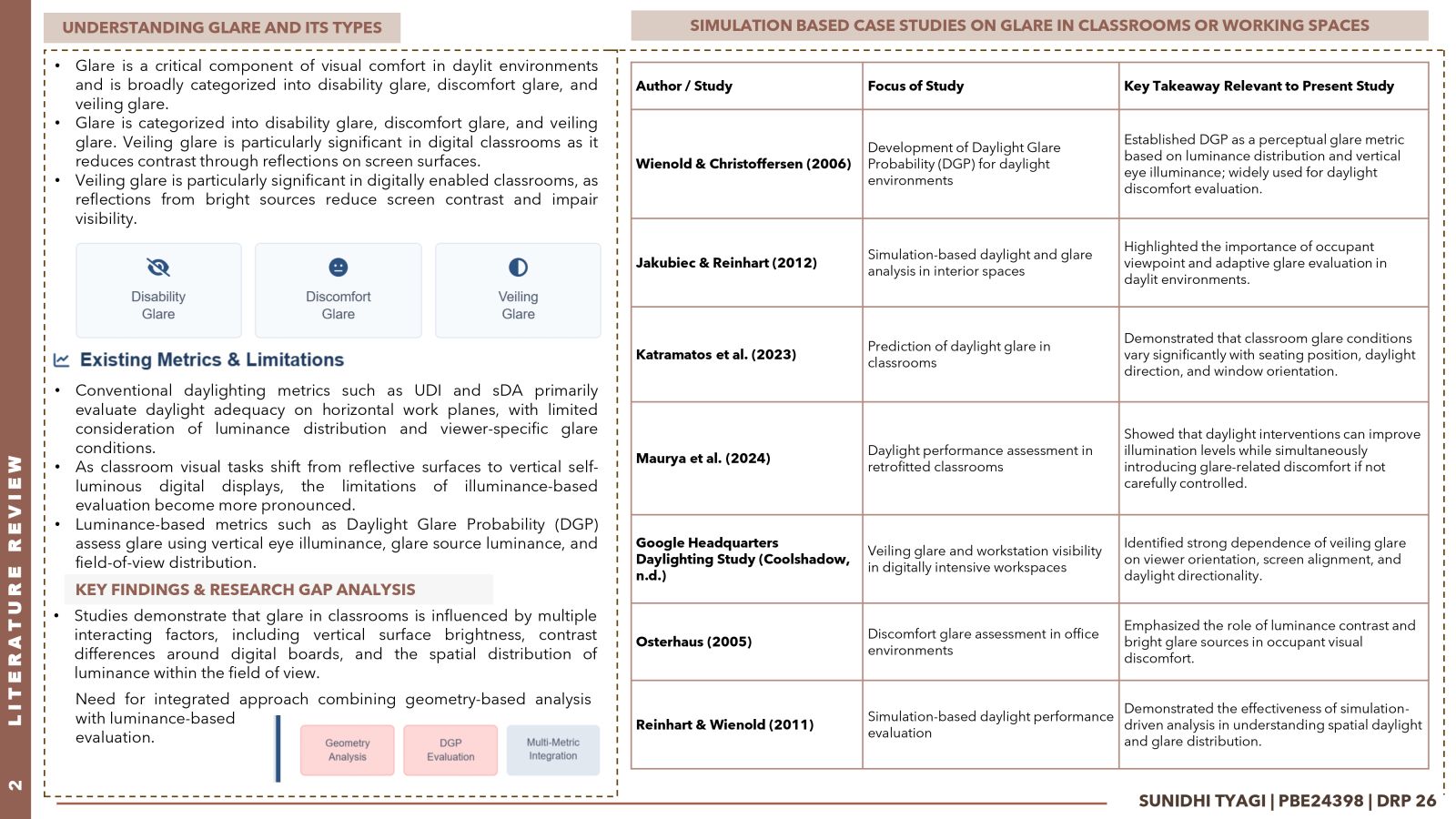
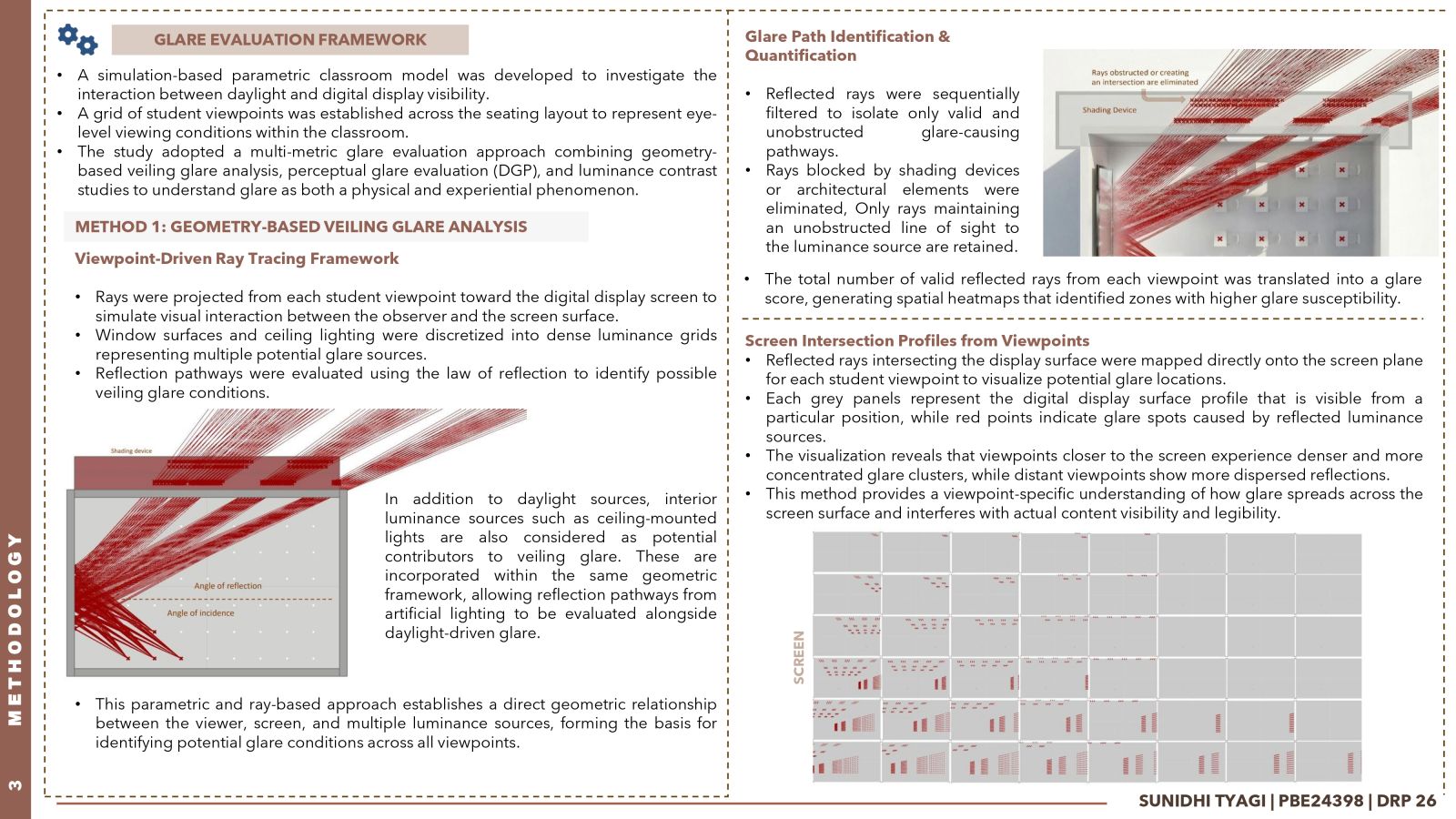
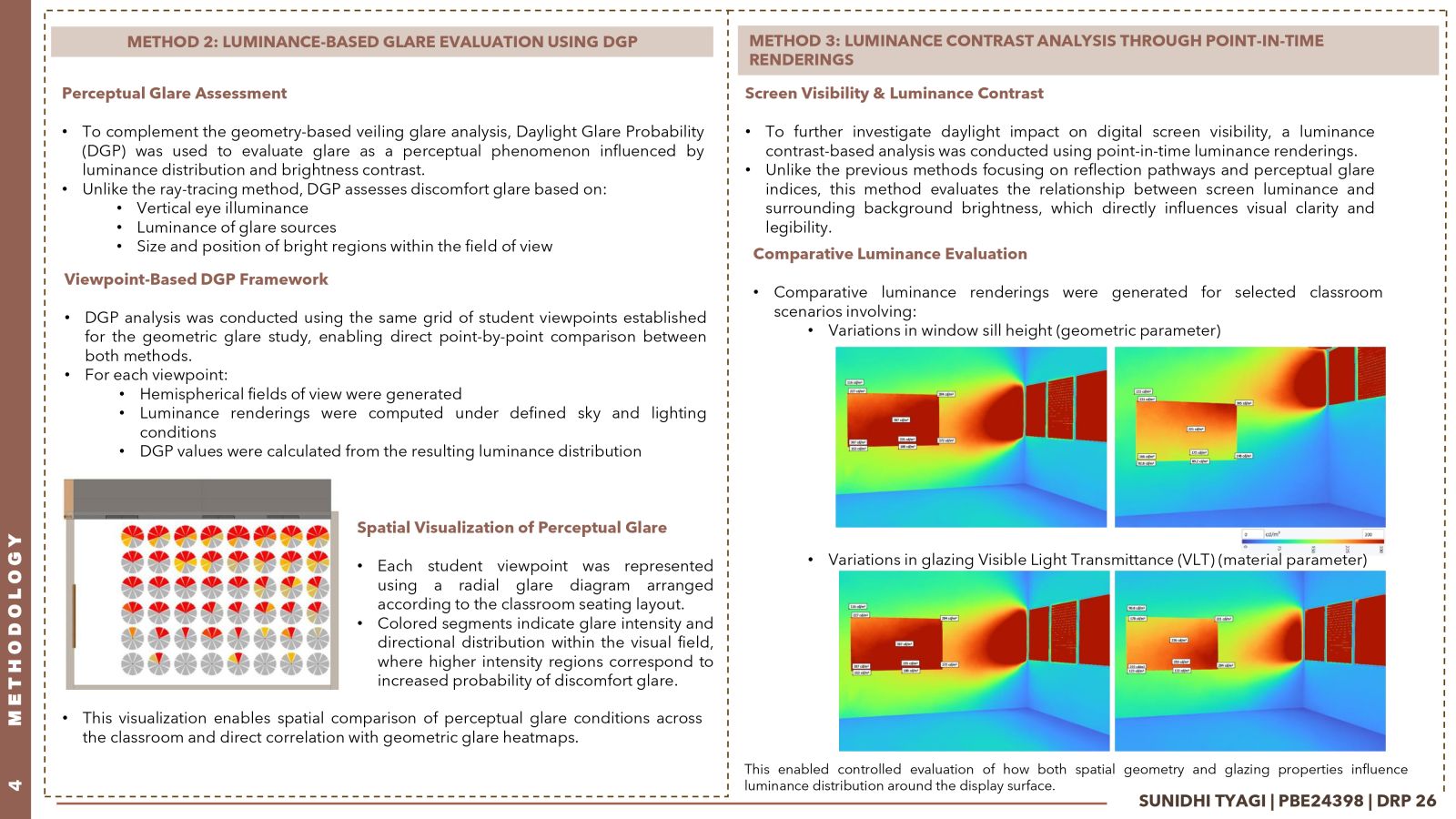
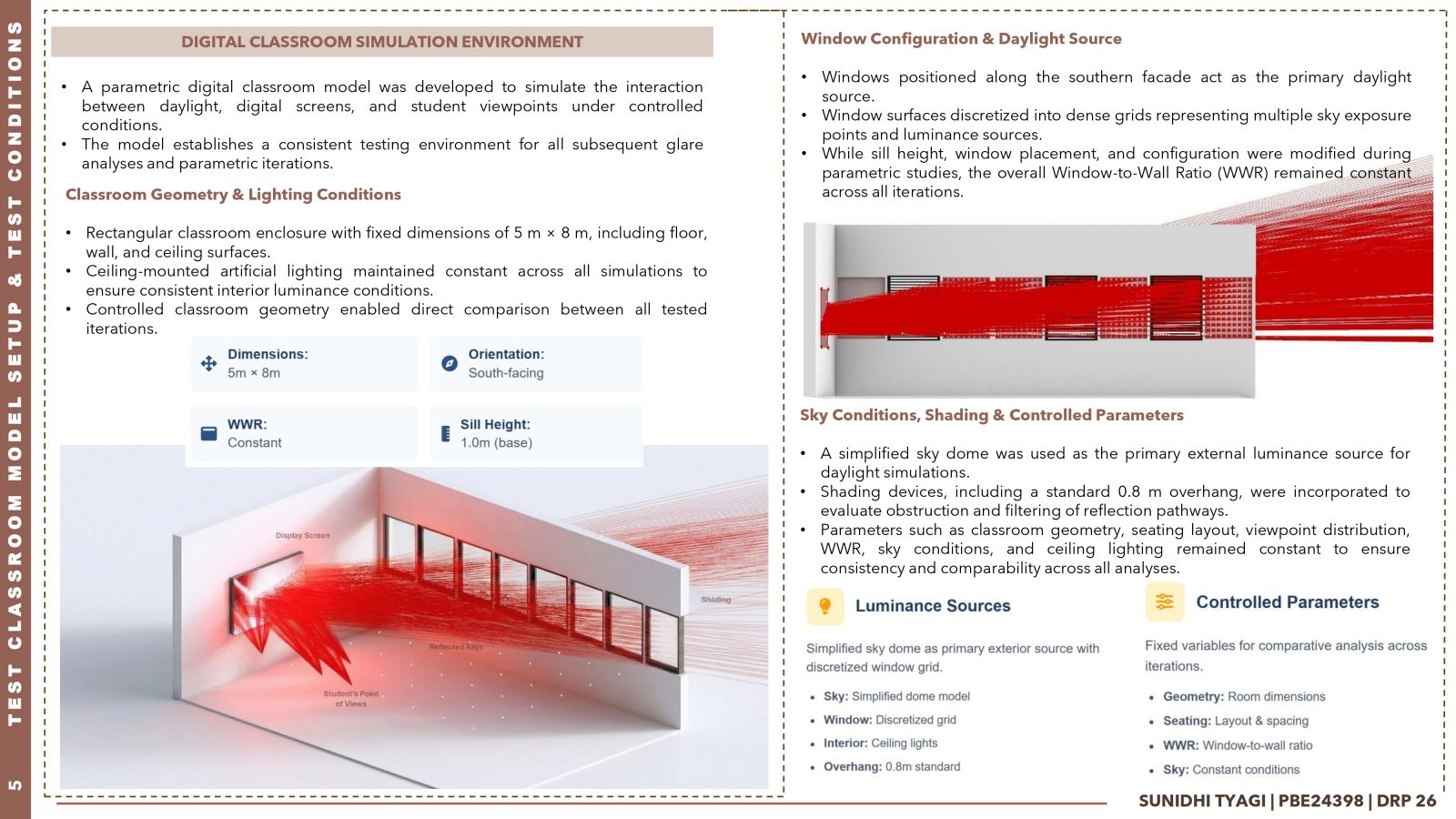
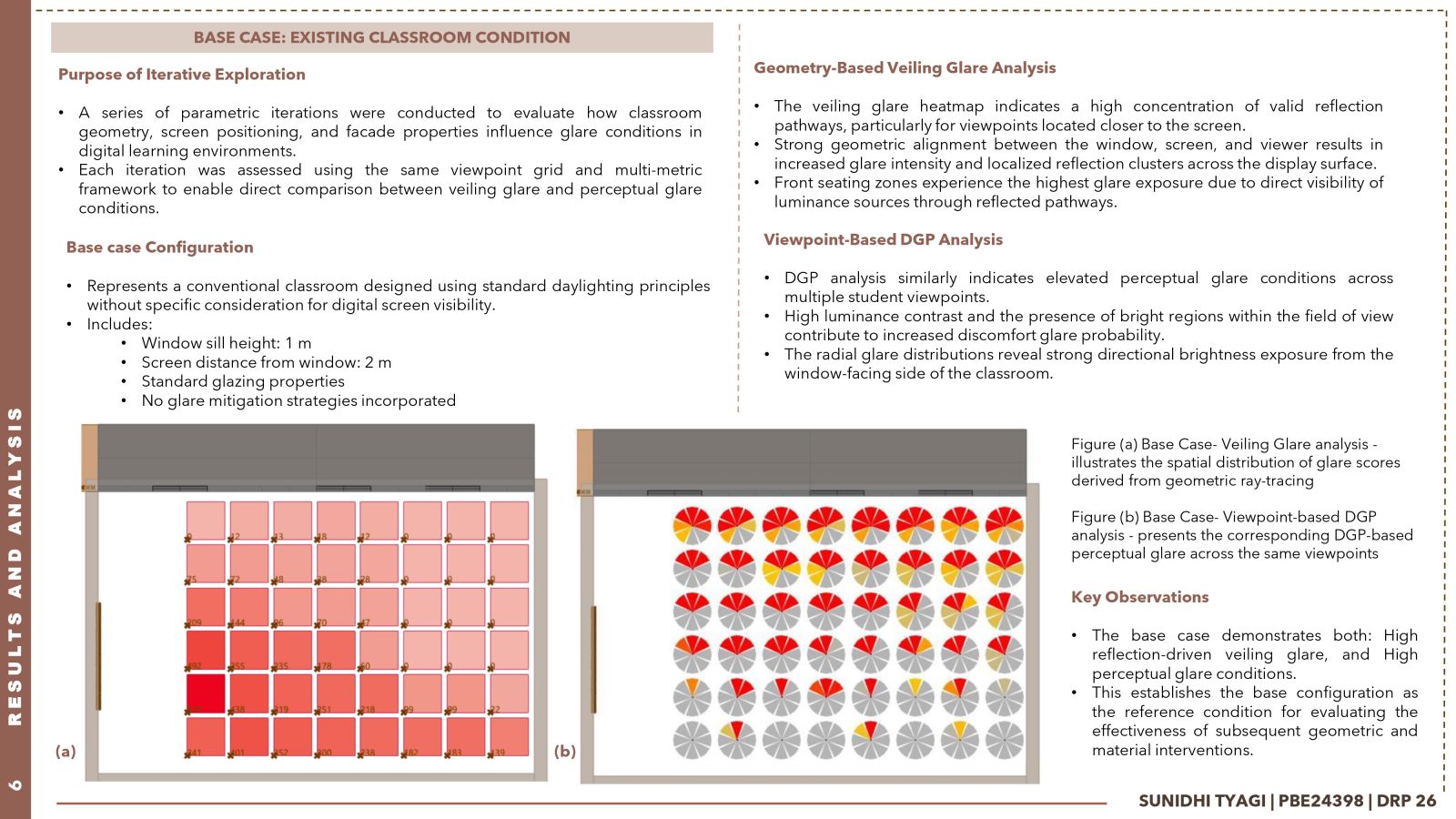
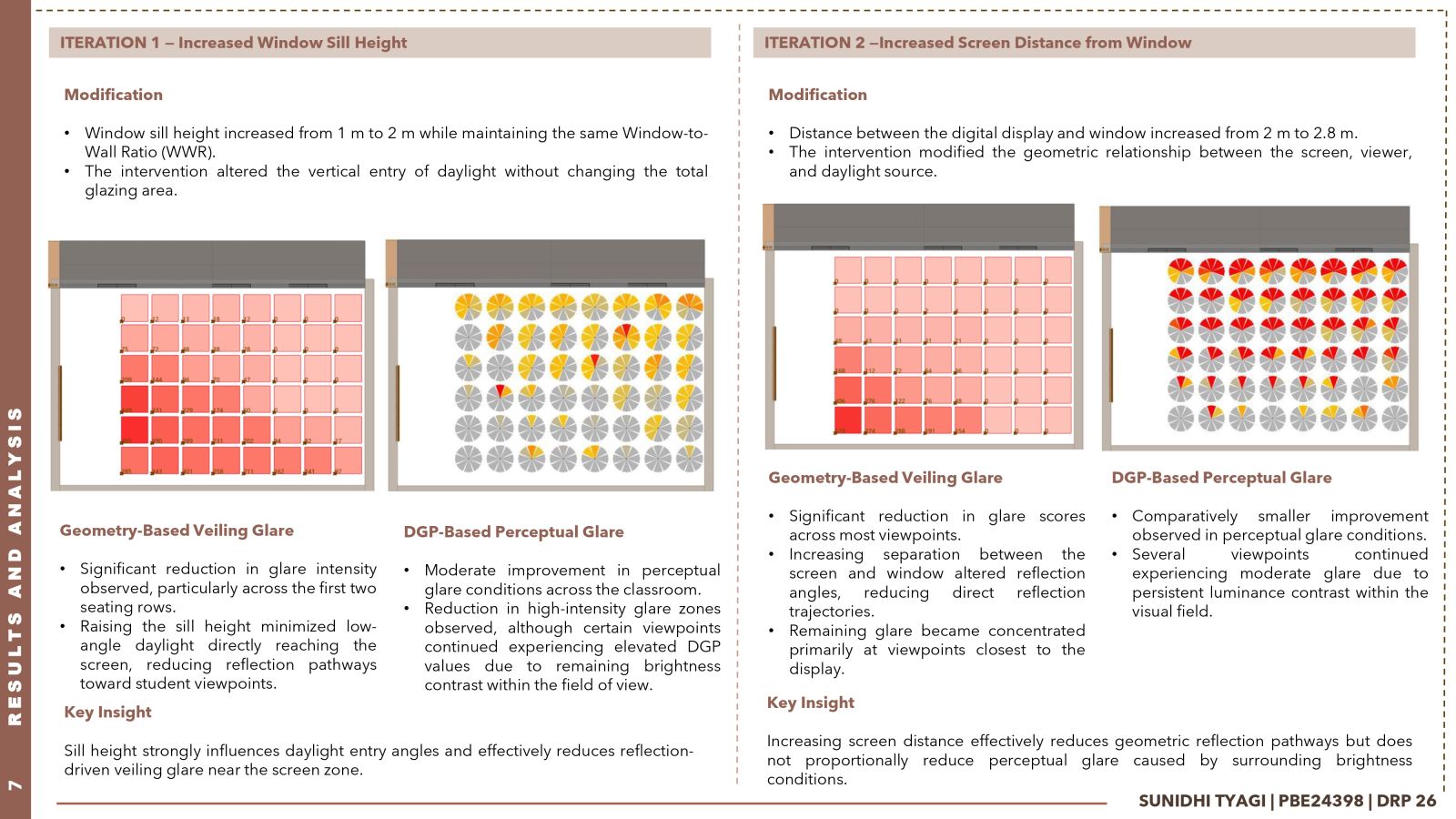
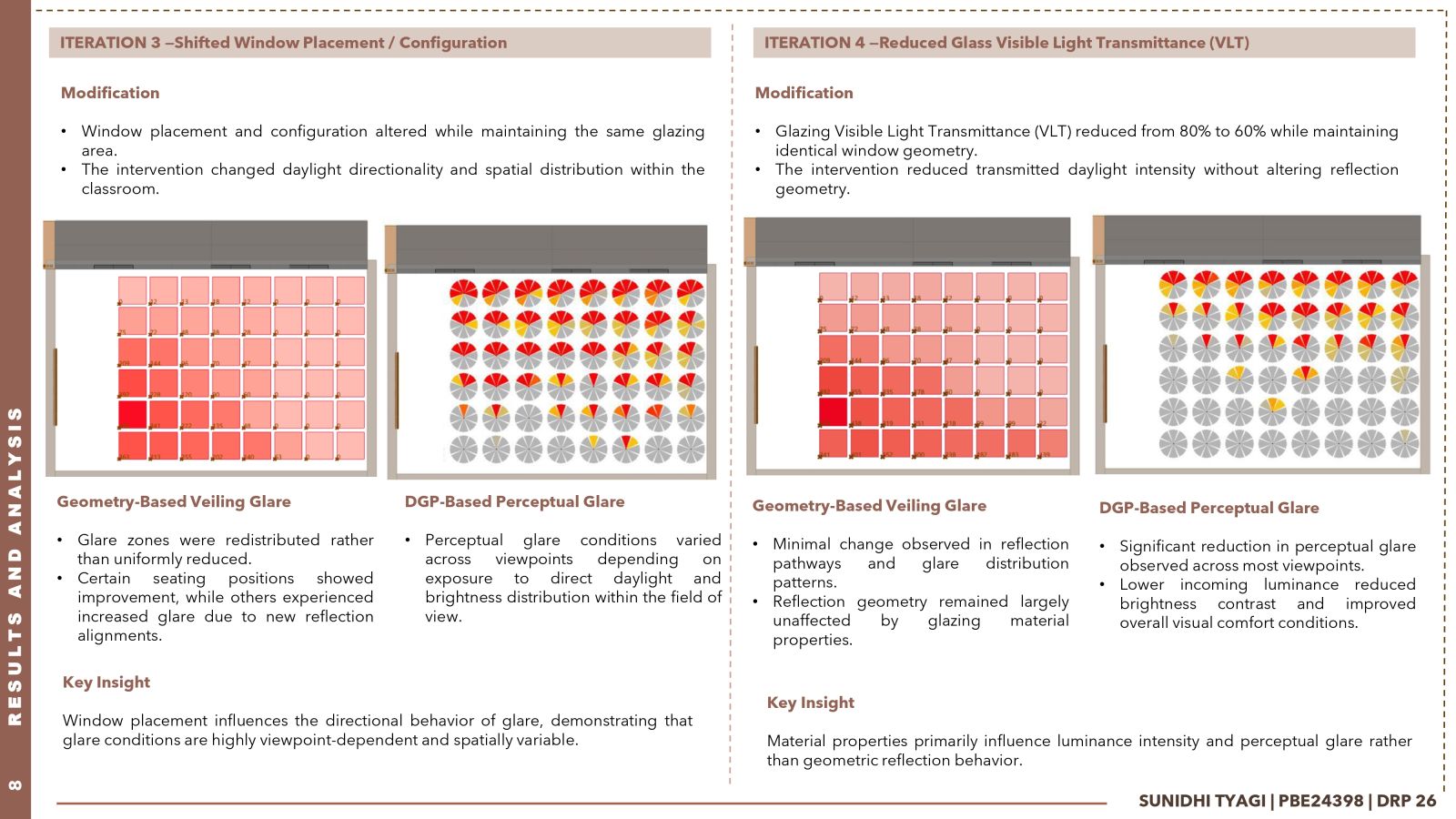
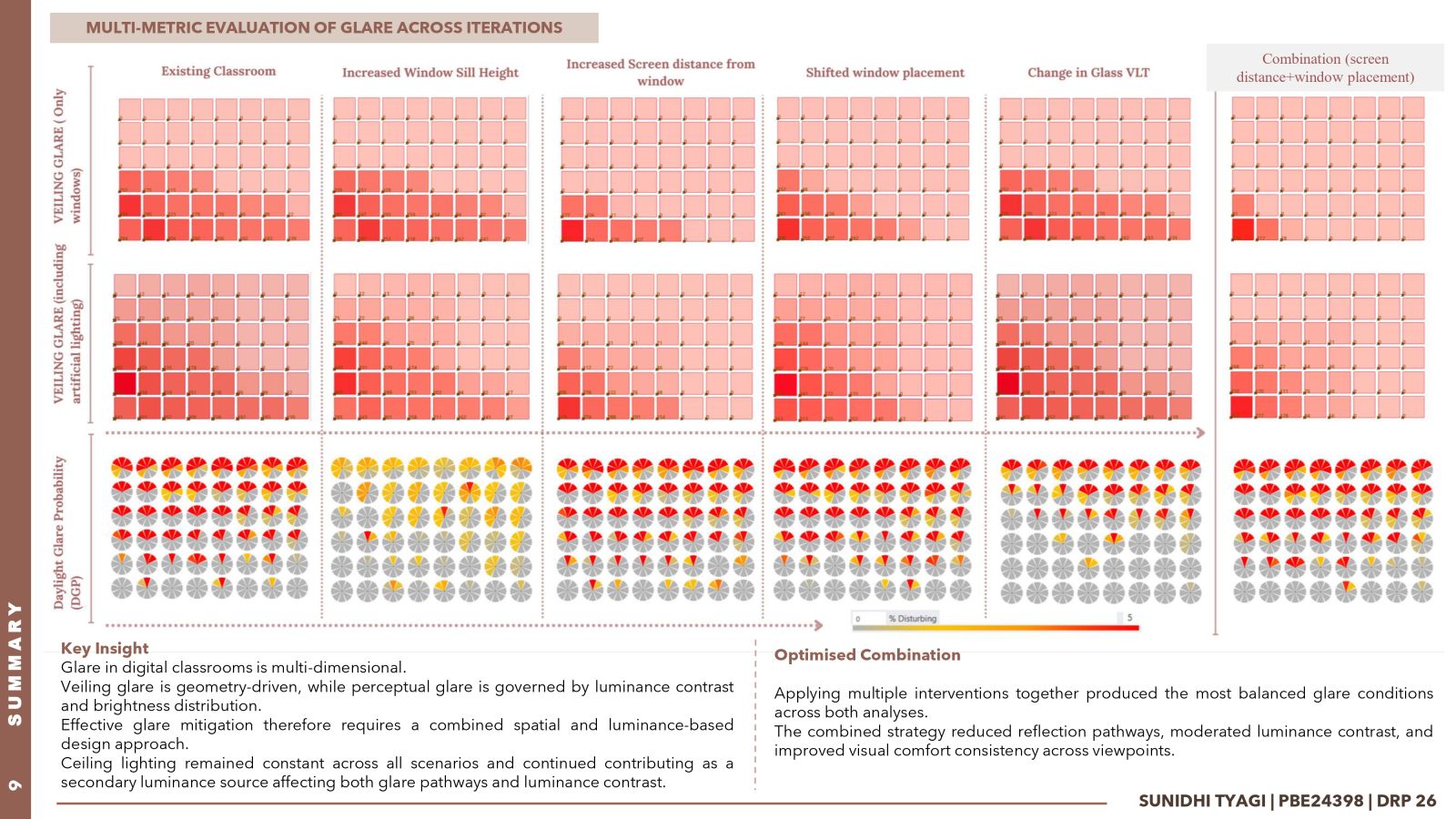
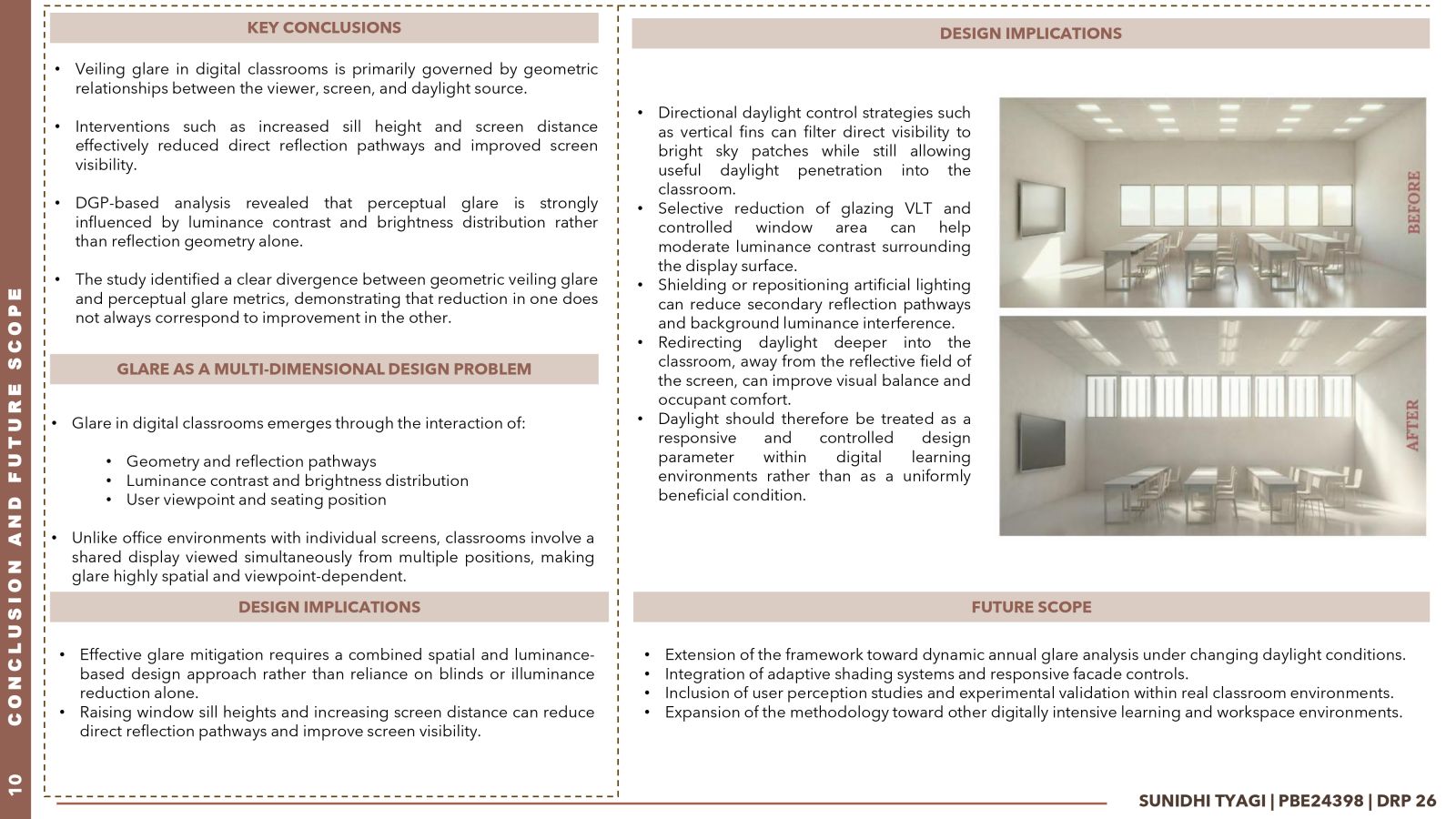
This research investigates the emerging challenge of glare and screen visibility in digitally enabled classrooms, where spaces originally designed for conventional daylighting are increasingly being adapted for screen-based learning. The study focuses on how daylight interacts with digital display screens, producing veiling glare, brightness contrast, and visual discomfort that affect screen legibility and student visual comfort across different seating positions. Using a simulation-based parametric framework, the project combines geometry-based ray tracing, Daylight Glare Probability (DGP), and luminance contrast analysis to evaluate glare conditions through both geometric and perceptual lenses. Multiple classroom iterations involving changes in window configuration, sill height, screen positioning, and glazing properties were analyzed to understand how spatial geometry and luminance distribution influence glare behaviour. The study highlights glare as a multi-dimensional phenomenon governed by reflection pathways, brightness distribution, and occupant viewpoint, emphasizing the need for integrated glare mitigation strategies in digital learning environments.