Your browser is out-of-date!
For a richer surfing experience on our website, please update your browser. Update my browser now!
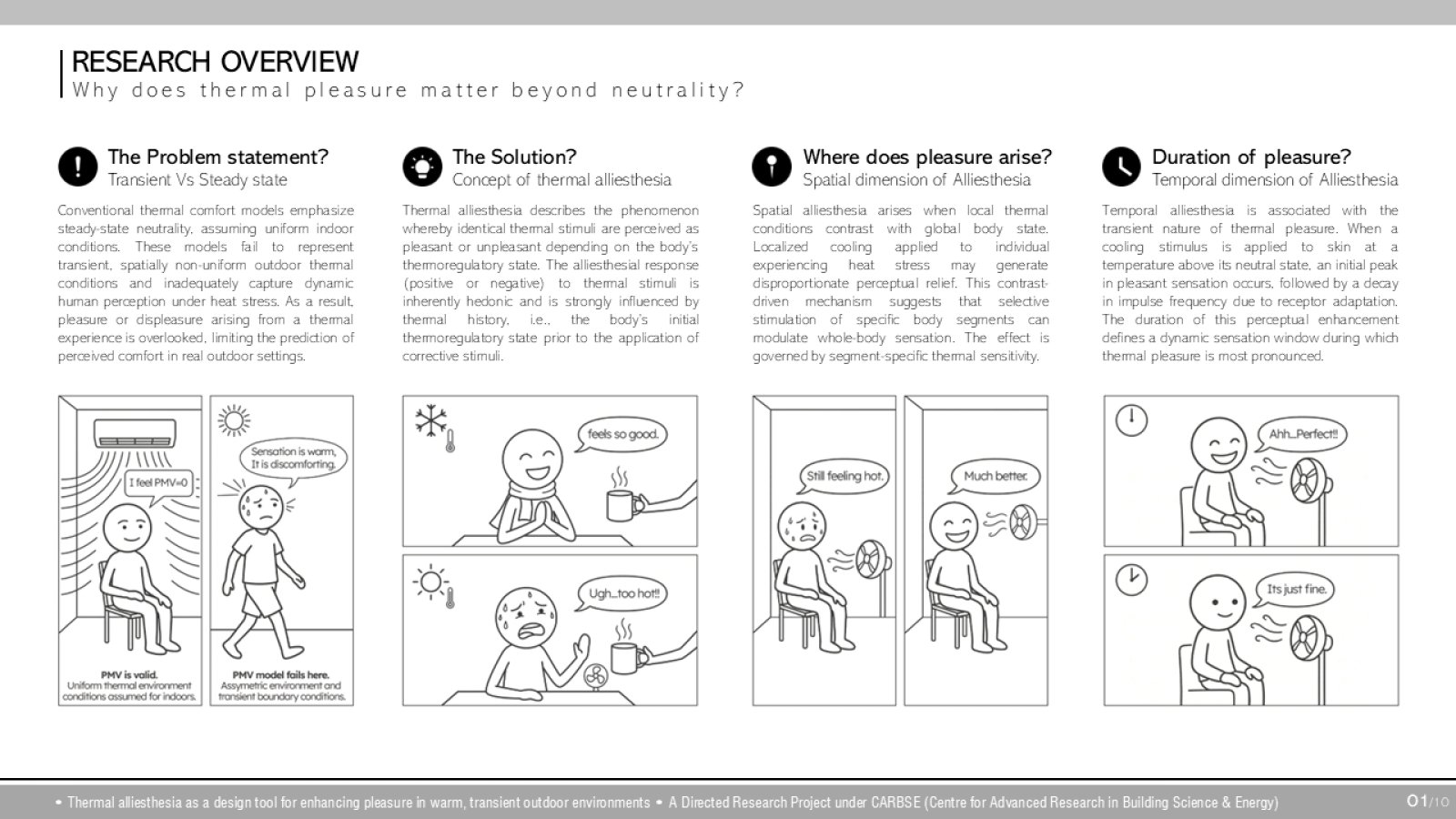
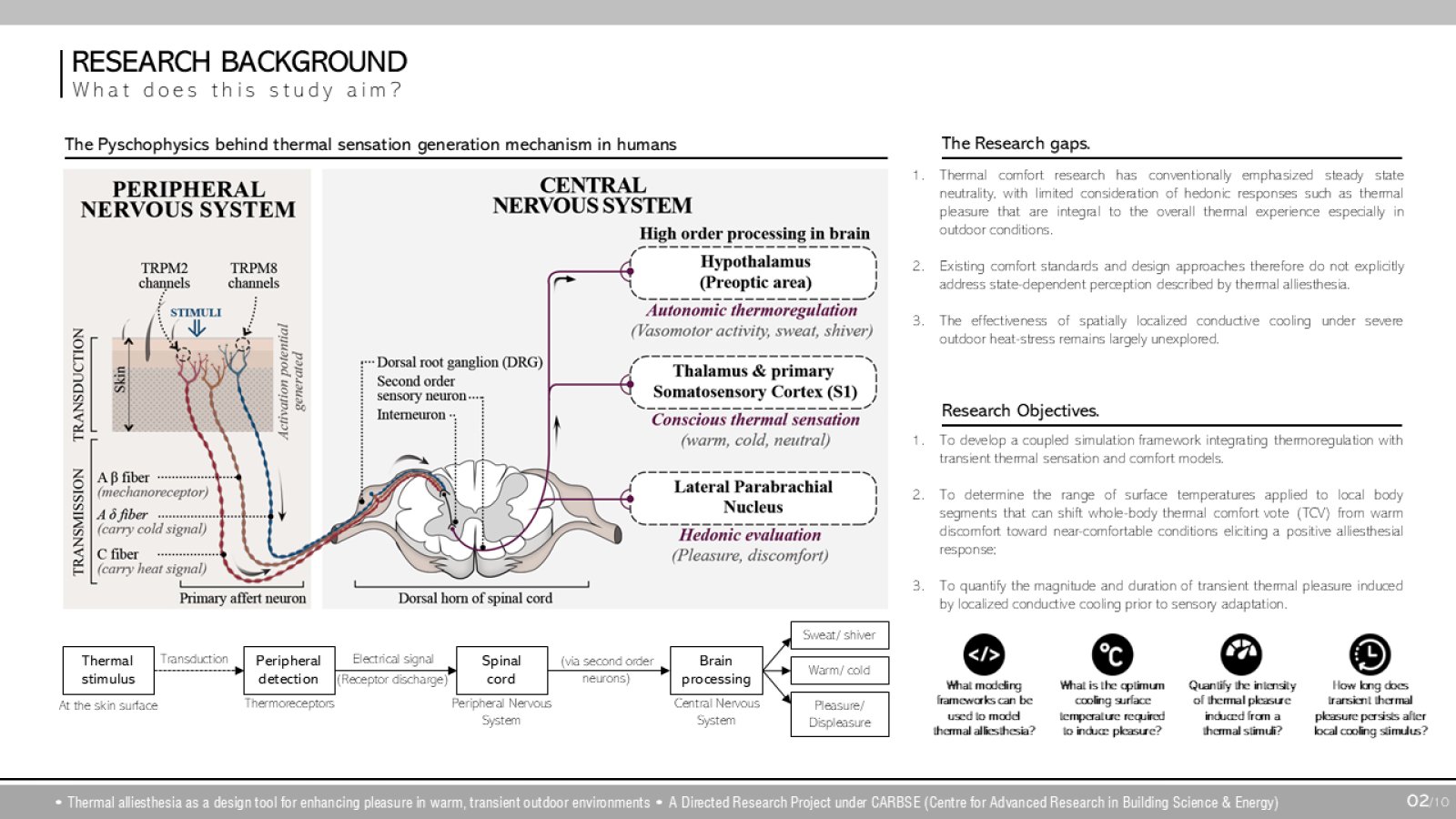
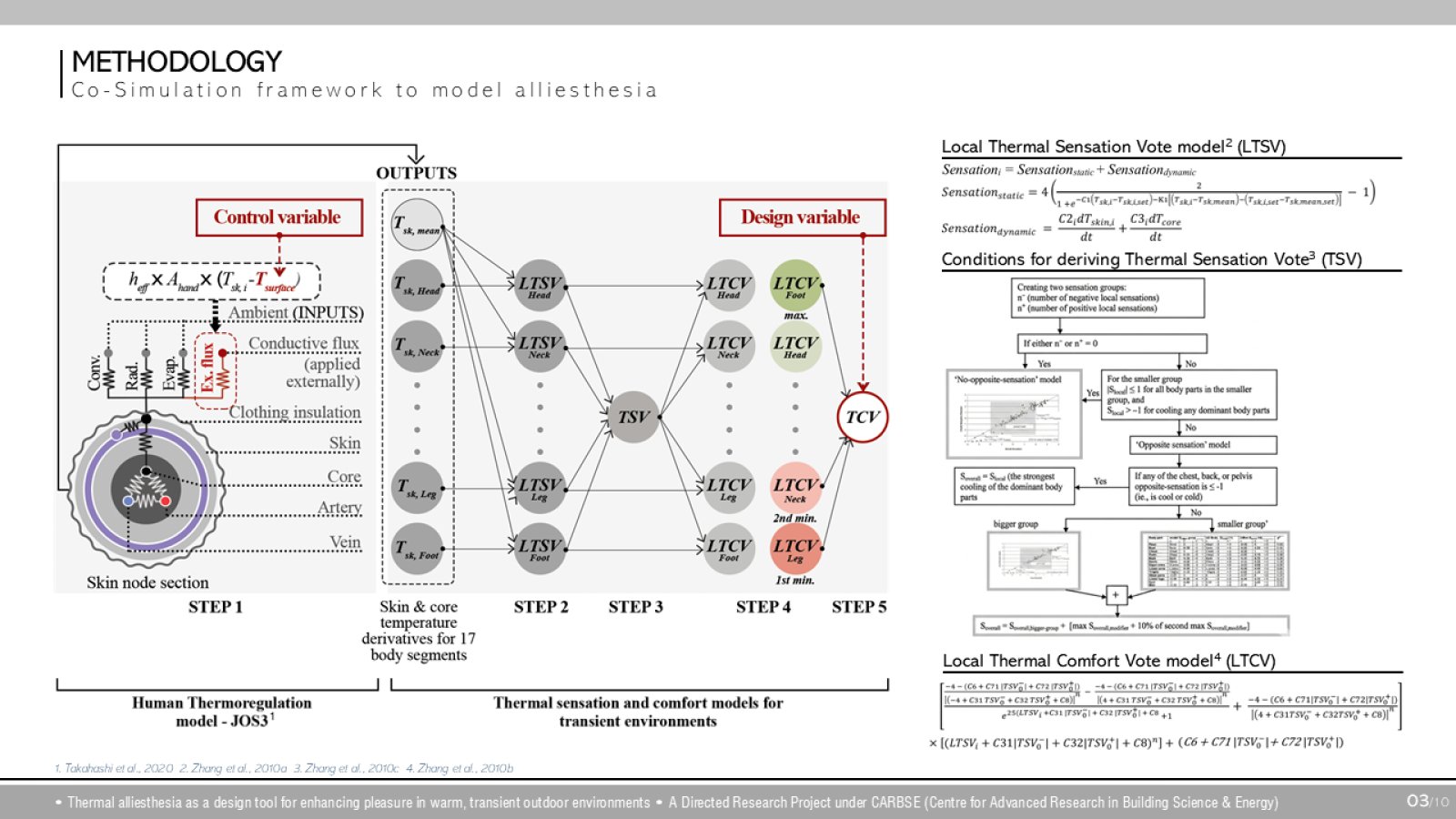
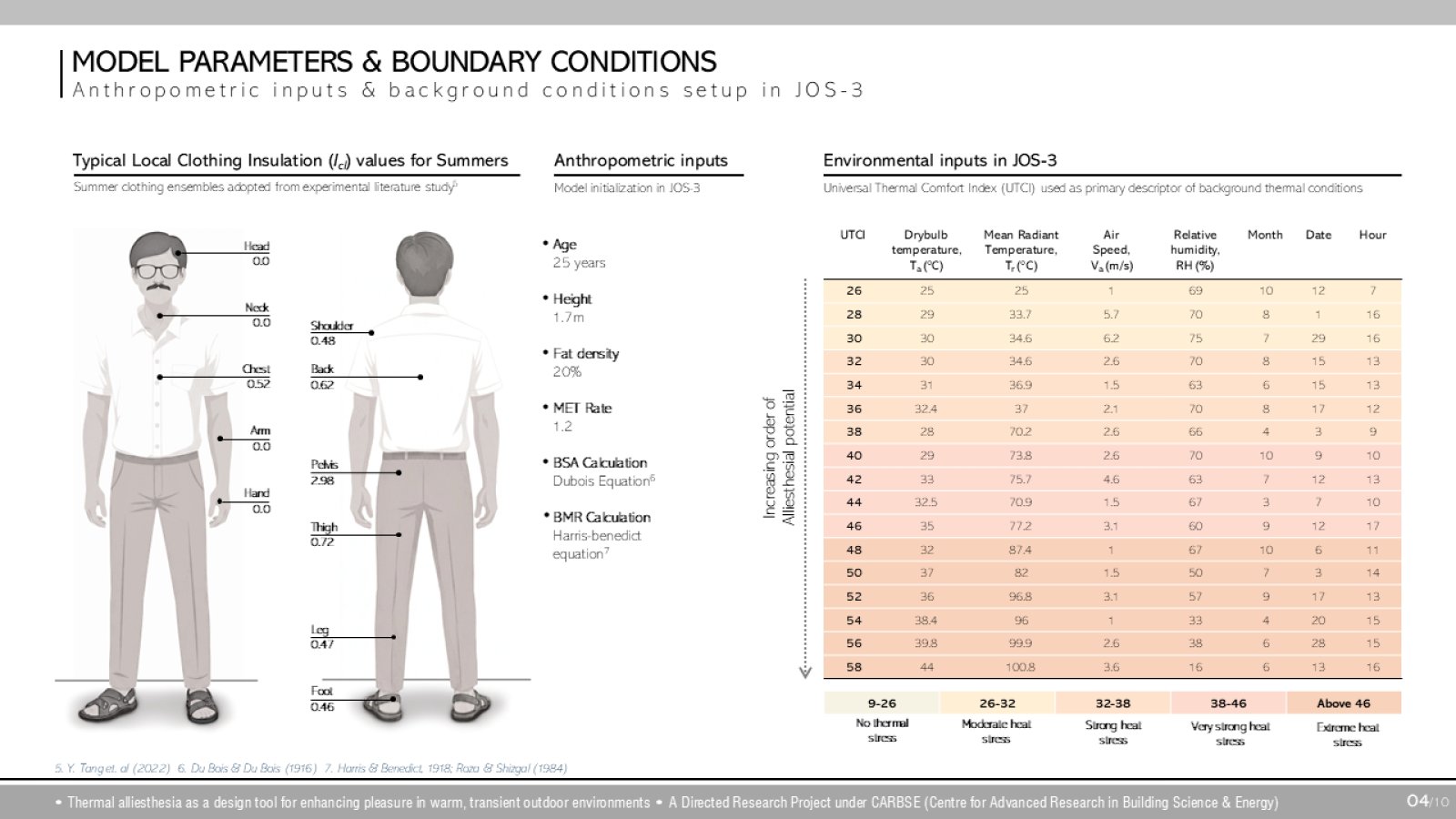
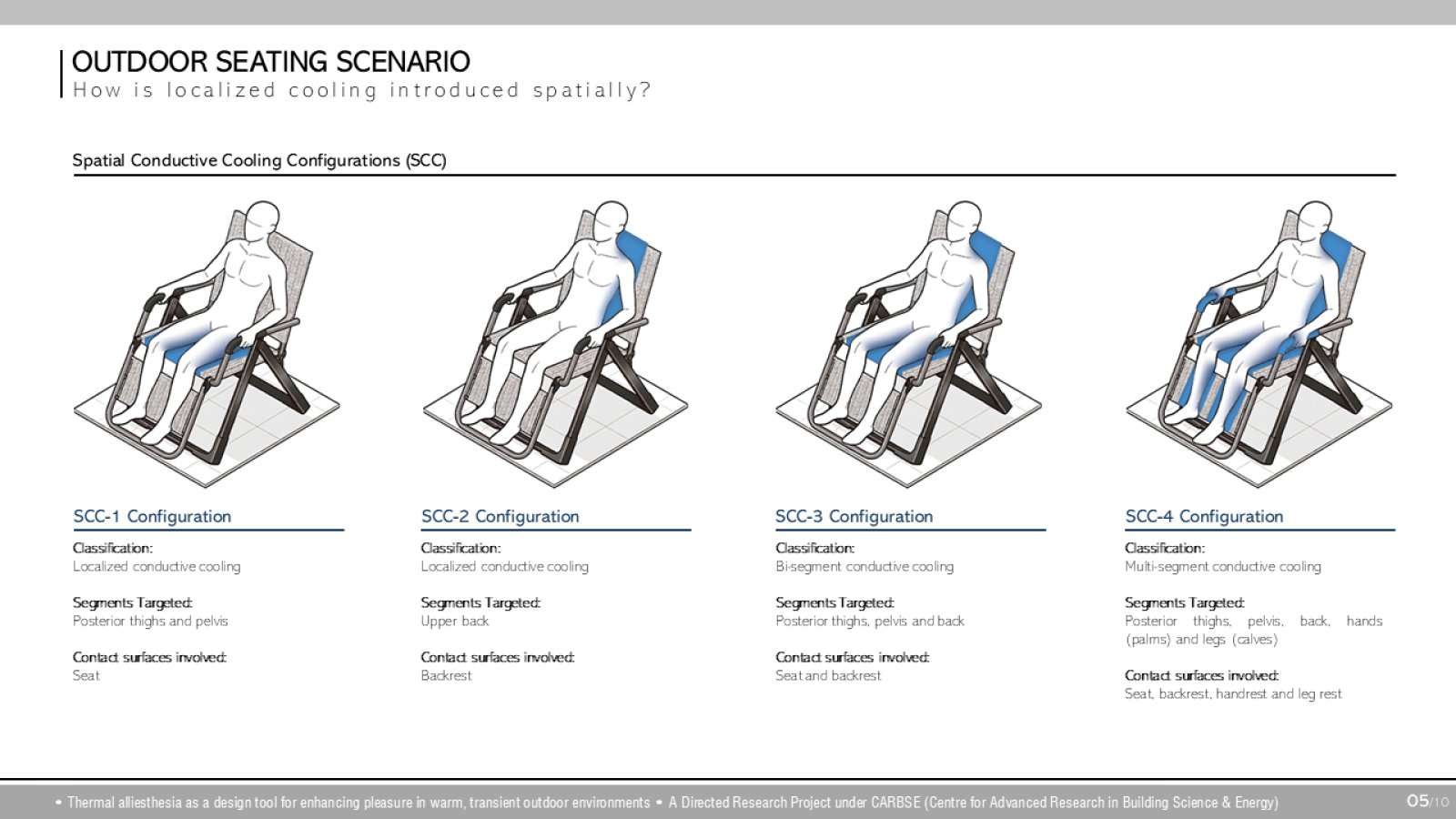
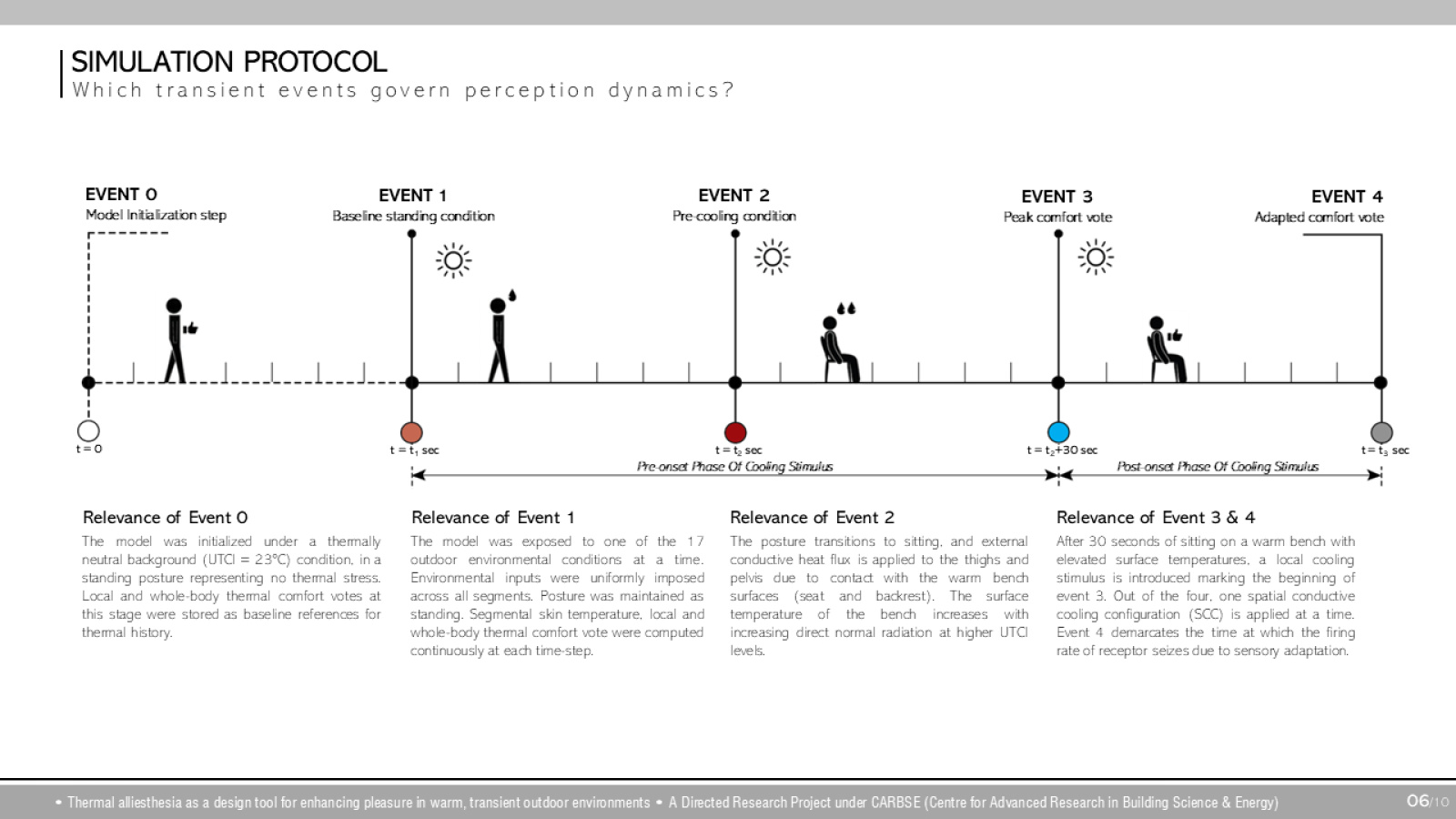
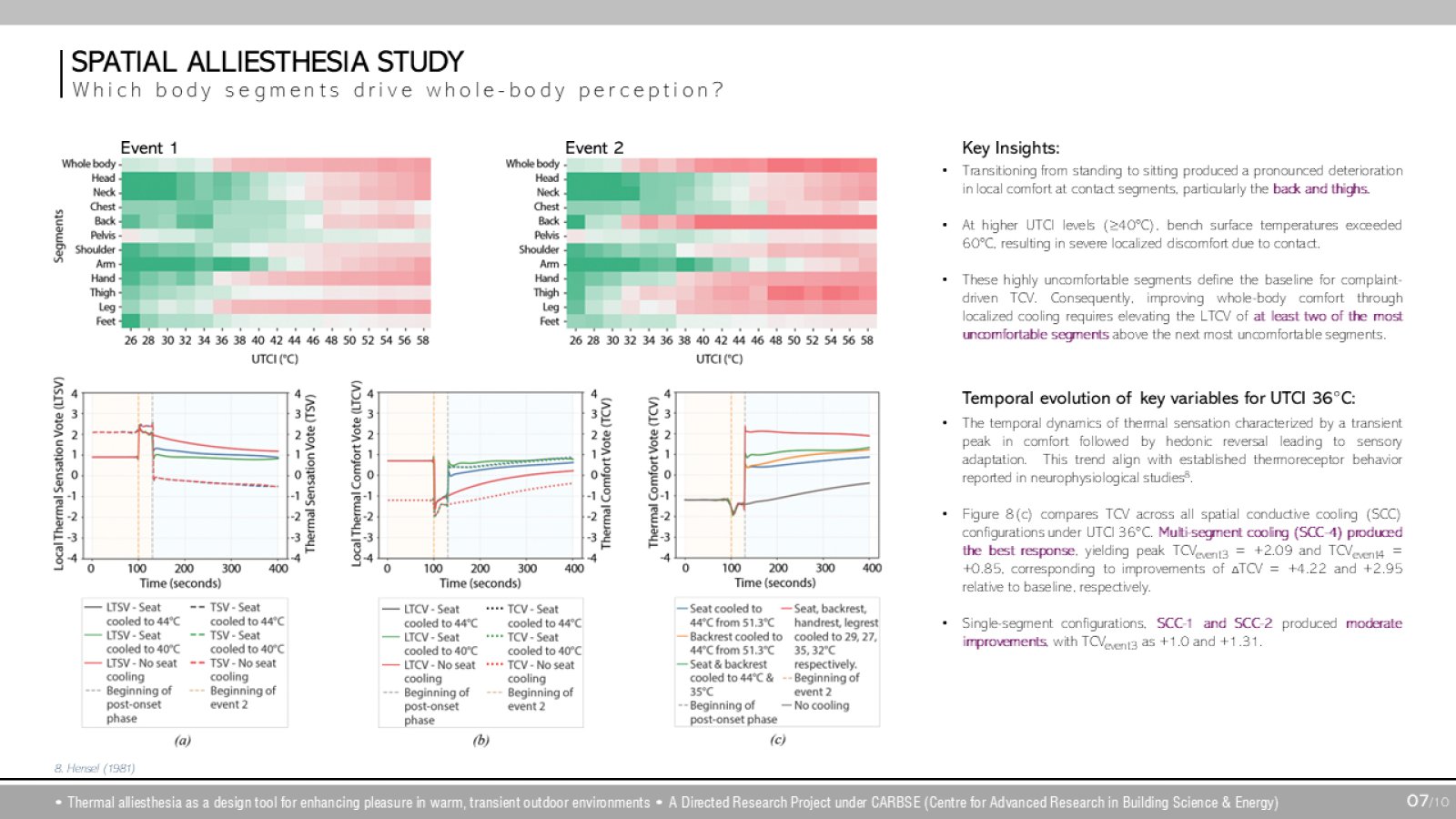
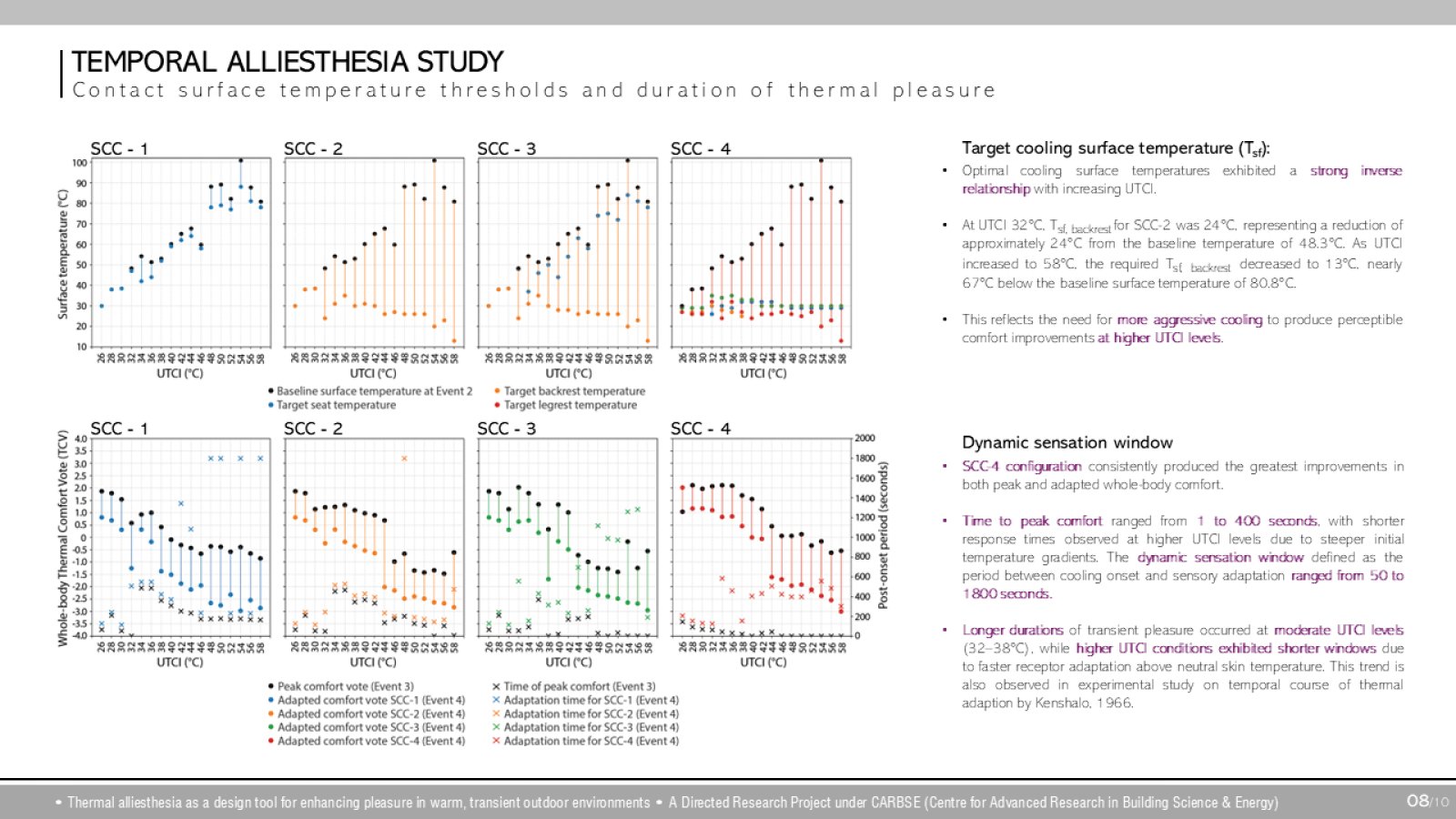
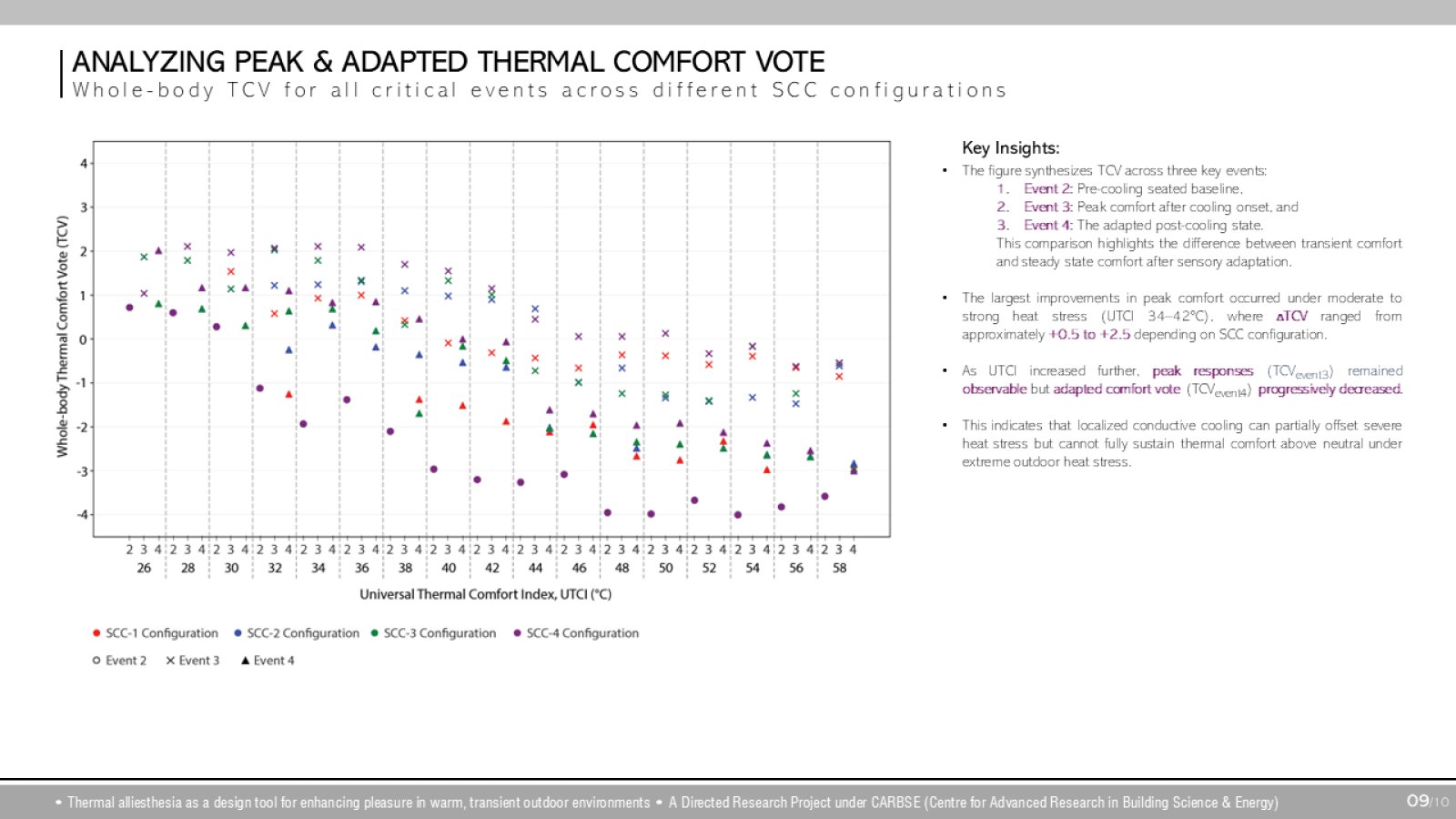
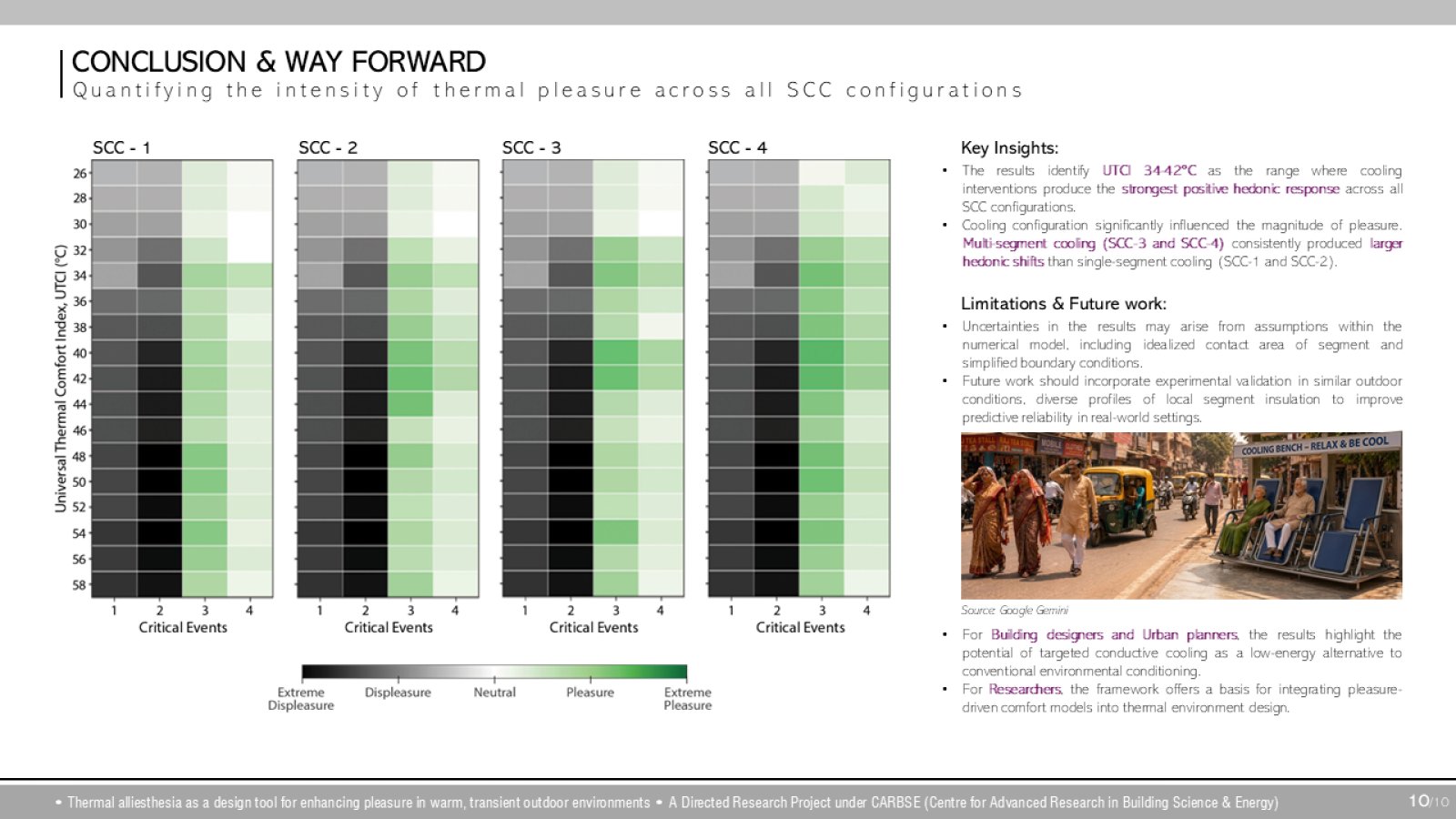
Thermal comfort research has conventionally emphasized thermal neutrality particularly in steady state conditions, with limited attention to thermal pleasure and hedonic valence in transient outdoor environments. Thermal alliesthesia, a state-dependent psychophysiological phenomenon describes how identical thermal stimuli may be perceived as pleasant or unpleasant depending on the human body’s thermoregulatory state. Despite its relevance, it remains largely absent from thermal environment design. This paper investigates thermal alliesthesia as a quantitative design assistance metrics for thermal pleasure under warm outdoor heat stress conditions. The objective is to determine a range of surface temperatures that can be applied to local body segments in outdoor seated conditions to induce sufficient thermal pleasure. These temperature ranges are evaluated for their ability to shift whole-body thermal comfort vote (TCV) from discomfort (due to warm baseline conditions) toward near comfortable across environmental stress levels defined by the Universal Thermal Climate Index (UTCI). The paper also quantifies the duration of thermal pleasure by examining the dynamic sensation time prior to sensory adaptation. The simulation framework involves coupling JOS-3 multi-segment thermoregulation model with thermal sensation and comfort models for non-uniform and transient environments. Numerical simulations were performed for moderate to extreme heat stress conditions (UTCI 26–58 °C) for the city of Ahmedabad across four conductive cooling configurations: seat cooling, backrest cooling, combined seat - backrest cooling, and a multi-segment case including hands and legs. Results indicate that localized conductive cooling can elicit positive alliesthesial responses by improving whole body thermal comfort vote even under severe heat stress. Comfort peaks during the post-onset transient phase before gradually declining with sensory adaptation. Required surface temperatures decrease with increasing UTCI. Multi-segment stimulation enhances both peak and adapted TCV, while further improvements in local comfort vote show diminishing influence on whole-body comfort perception beyond a threshold.
View Additional Work