Your browser is out-of-date!
For a richer surfing experience on our website, please update your browser. Update my browser now!
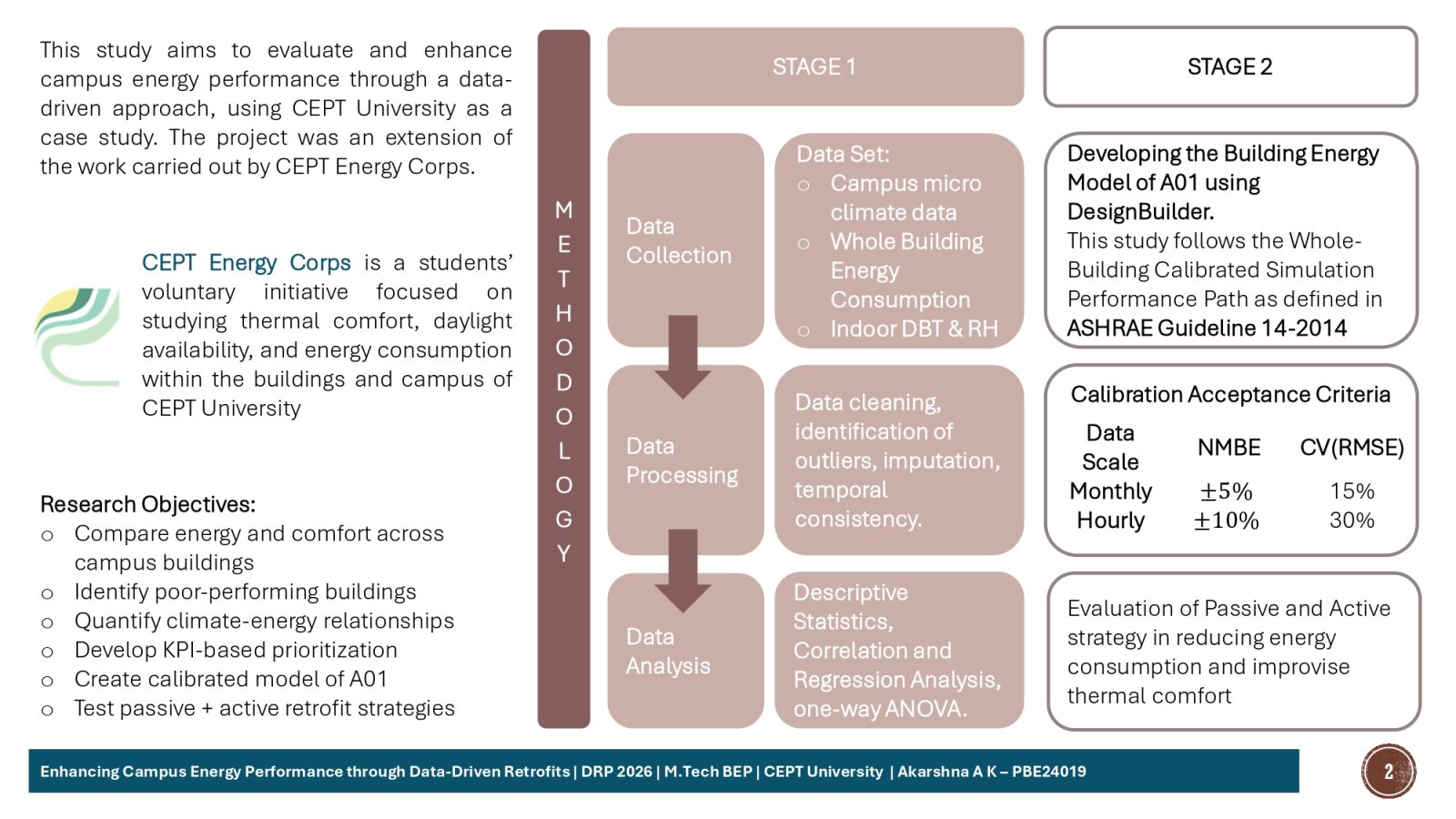
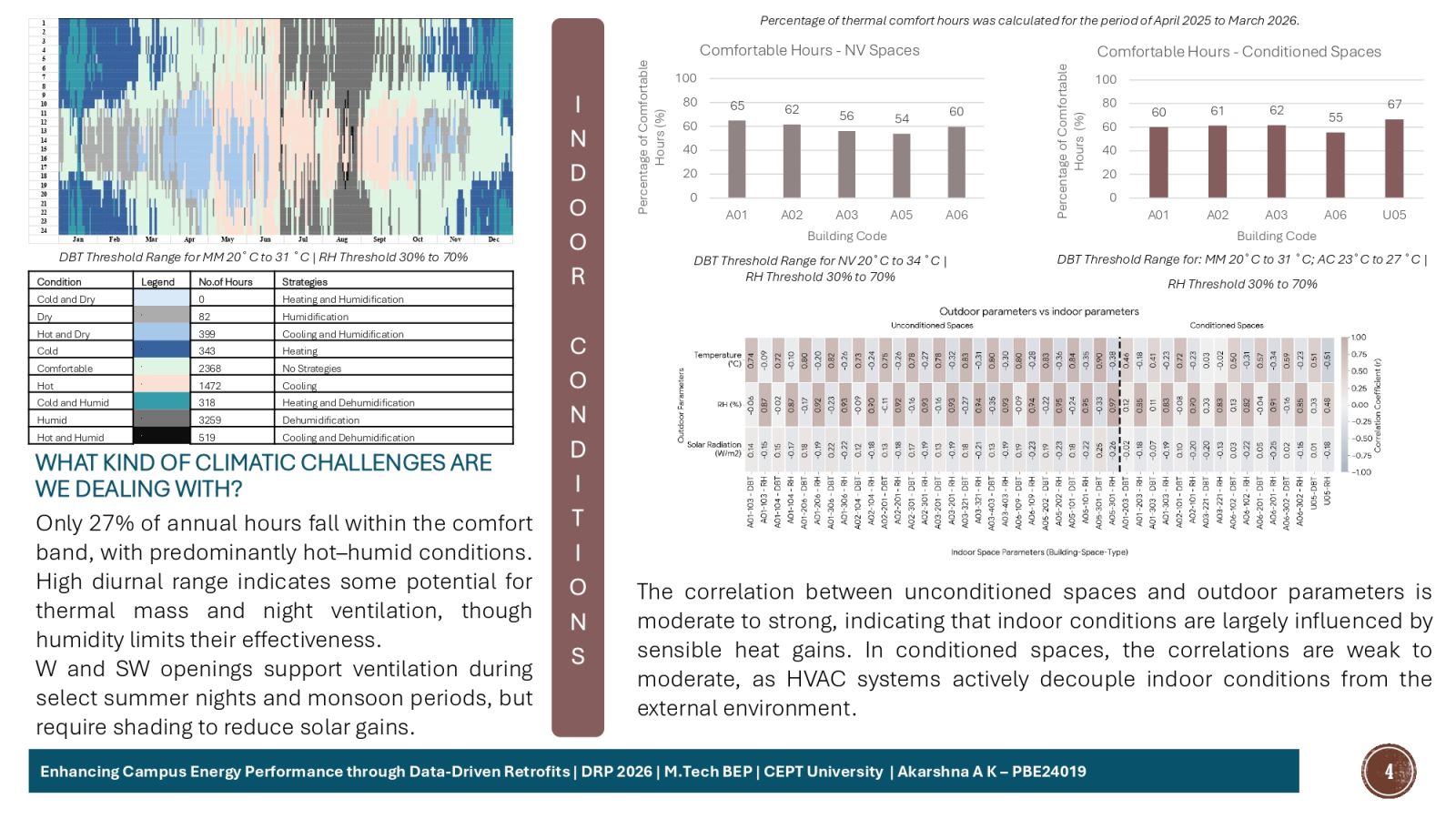
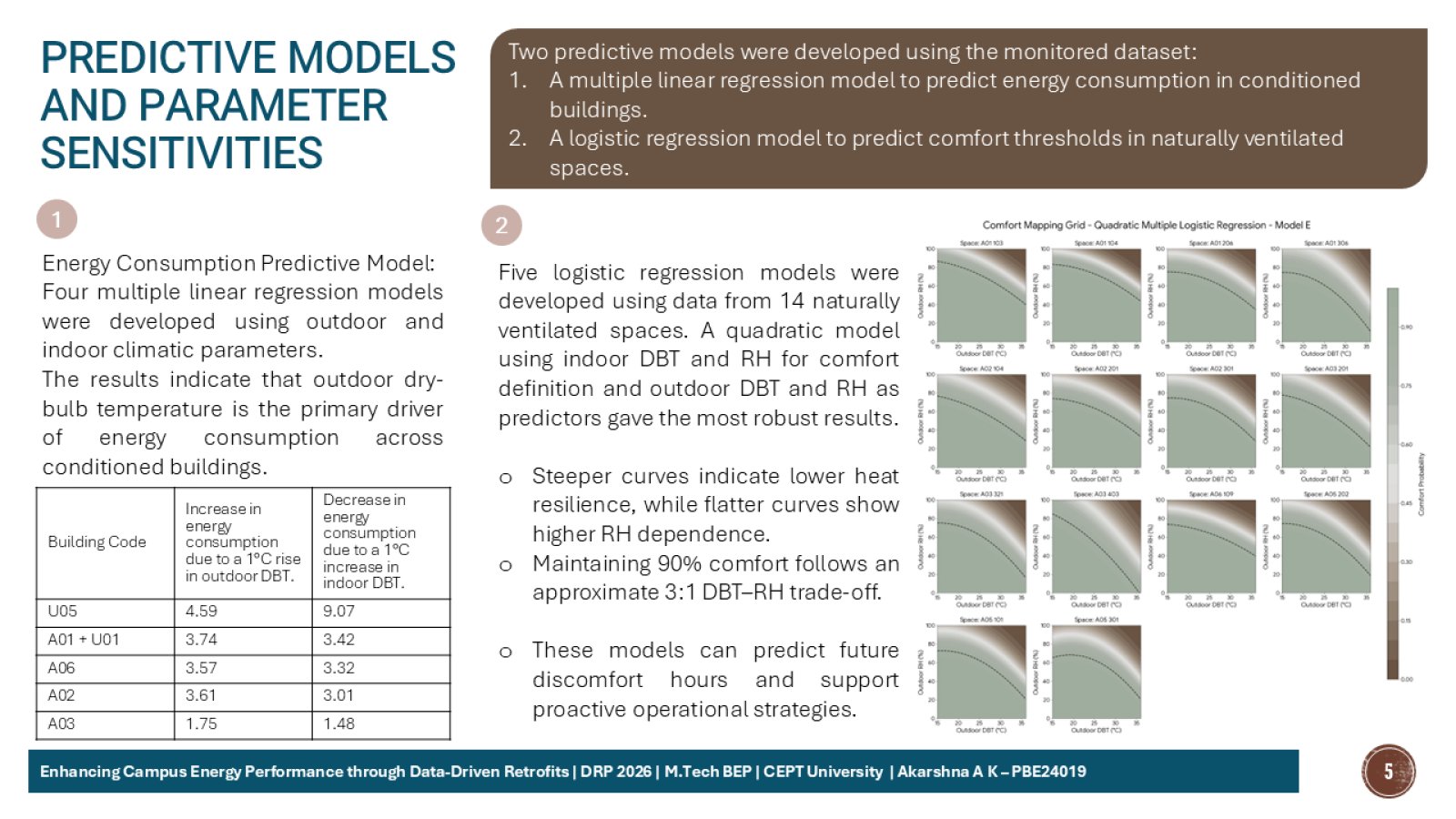
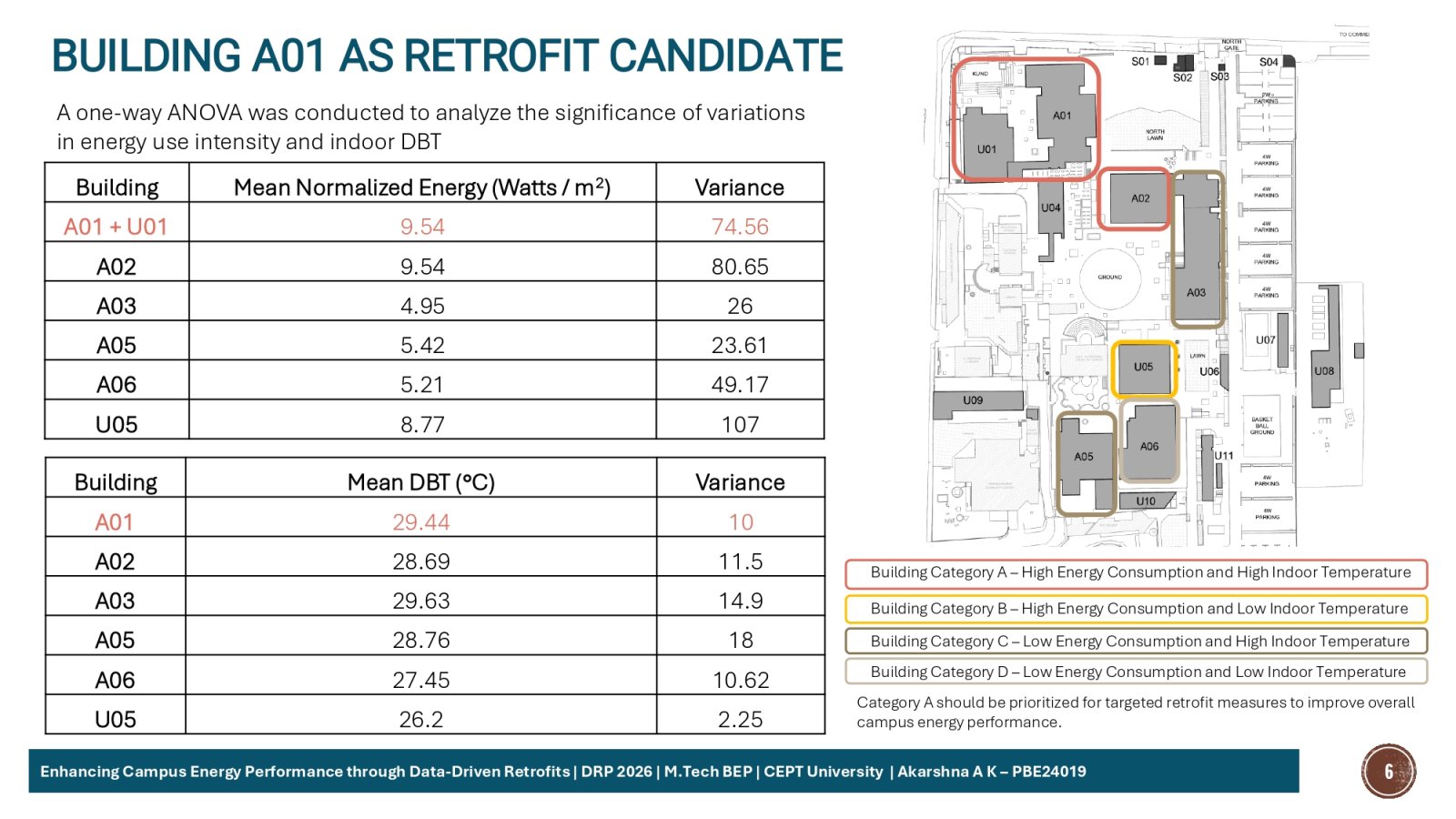
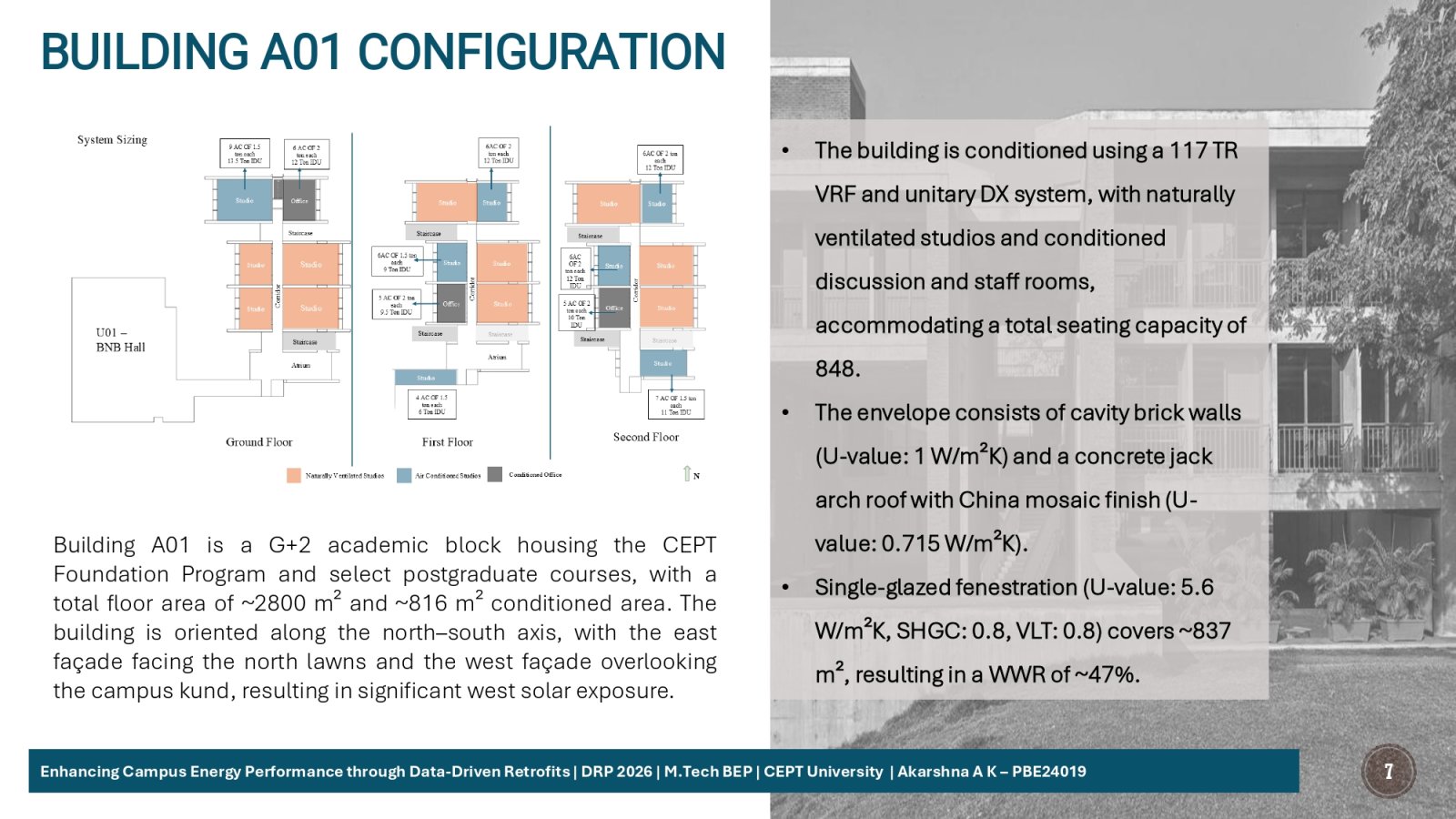
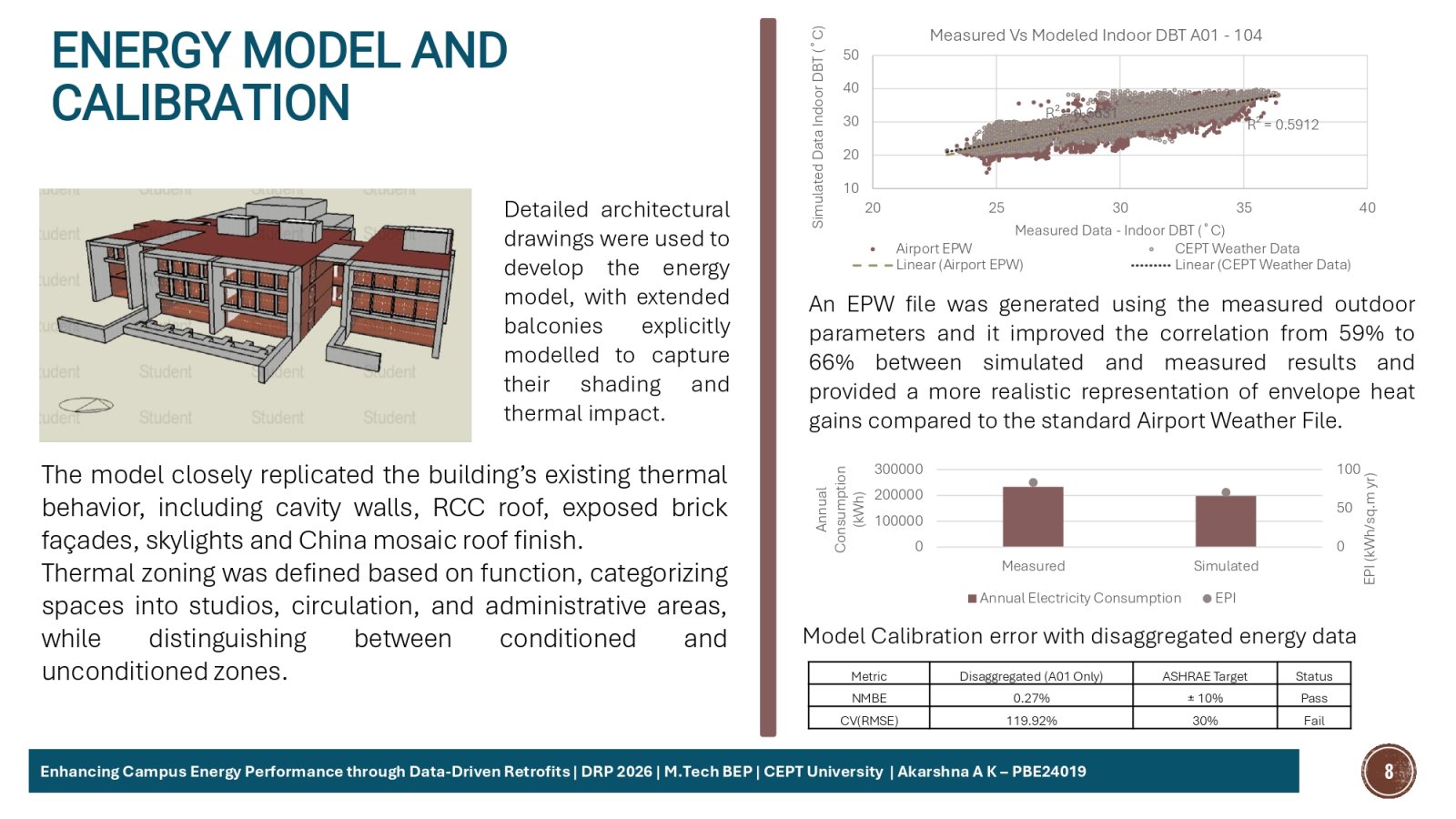
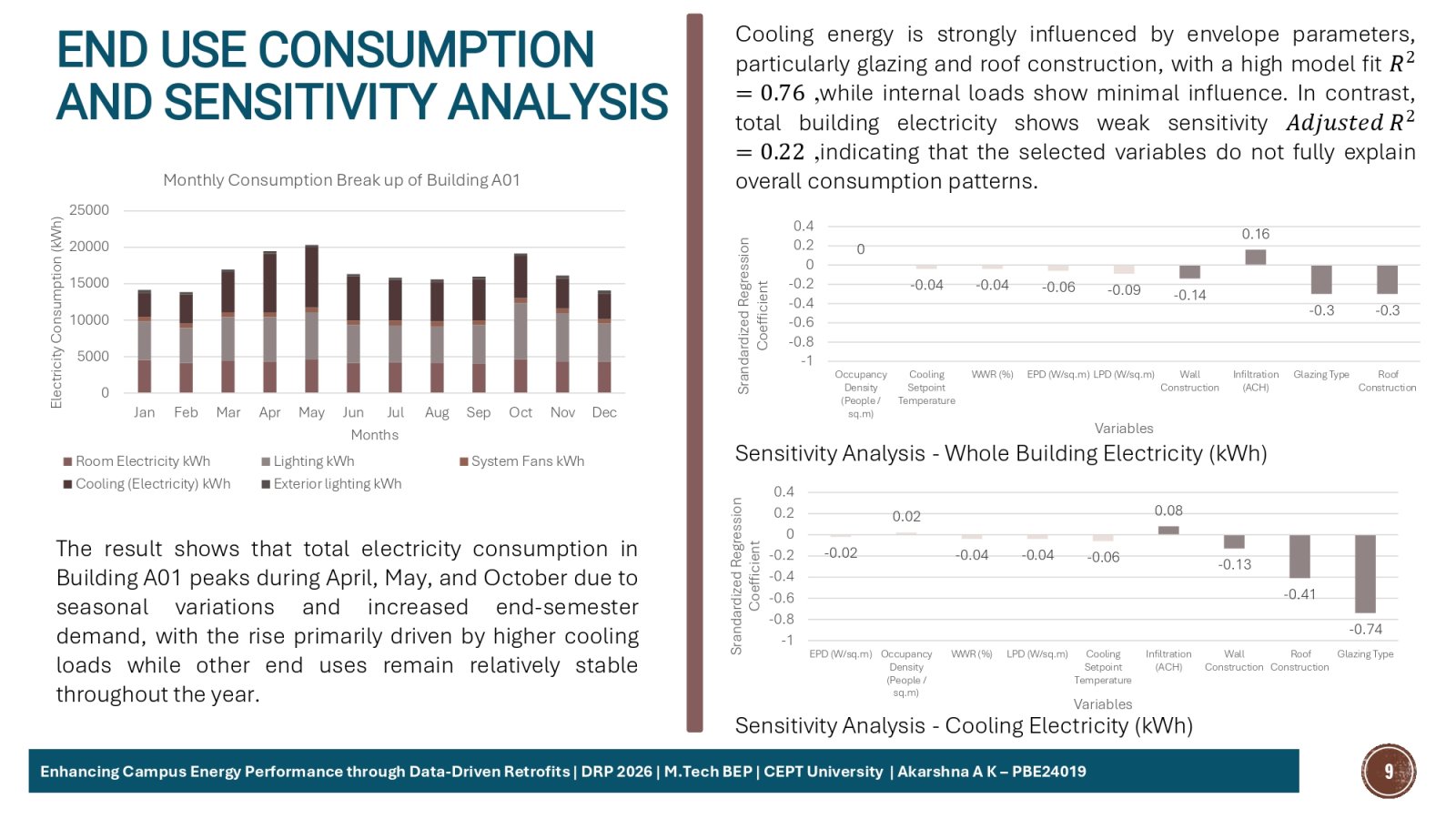
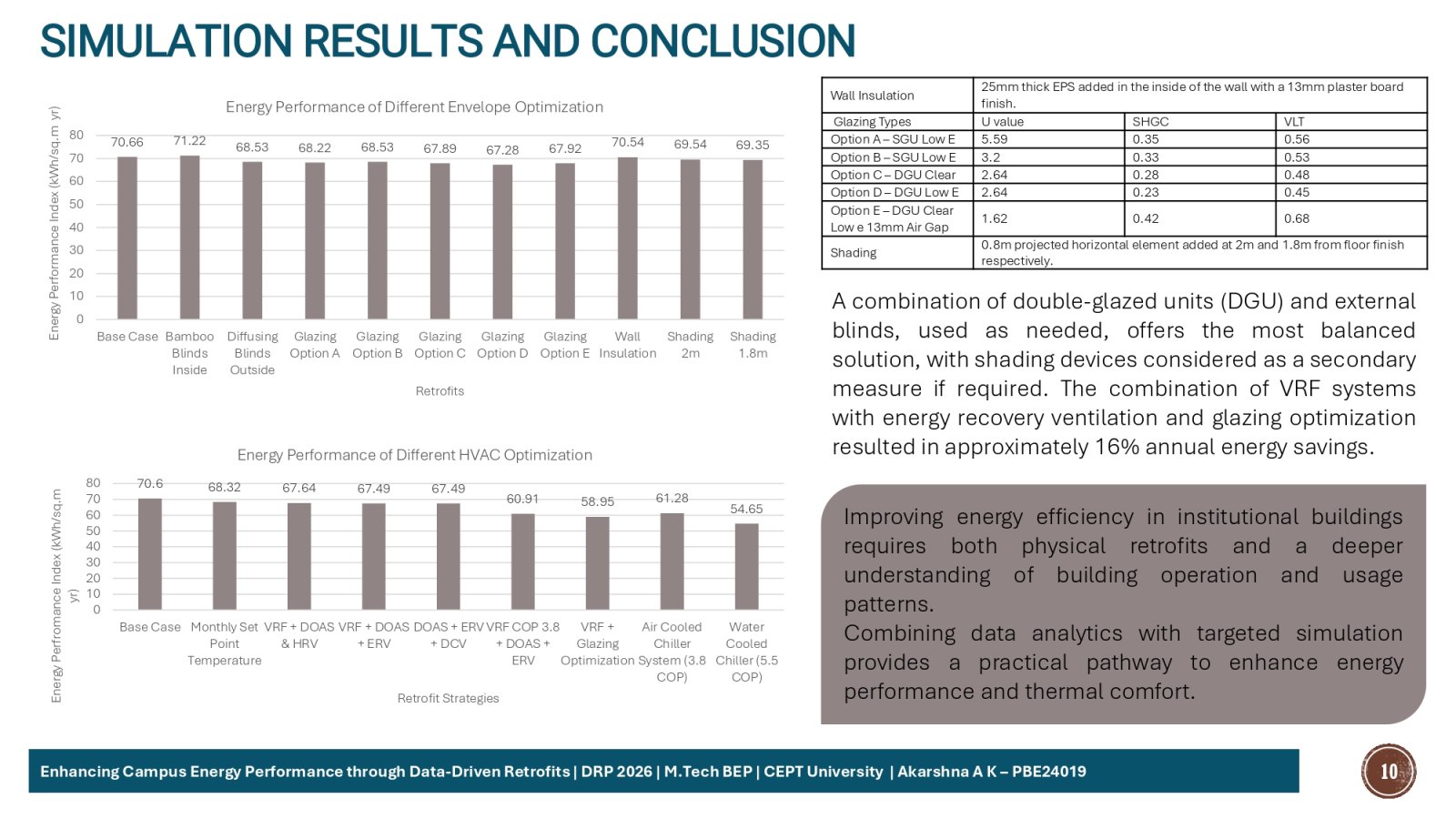
This study explores how measured building performance data can be used to improve energy efficiency and thermal comfort in institutional campuses. Using CEPT University as a case study, the research combines climate analysis, energy monitoring, indoor comfort assessment, statistical modelling, and calibrated building simulation to identify operational inefficiencies and retrofit opportunities. Campus-level analysis was used to understand the relationship between climate, comfort, and energy use, followed by a detailed simulation study of Building A01. The findings highlight the importance of combining passive design strategies, operational understanding, and targeted retrofits to create more energy-efficient and comfortable learning environments.